RSI-Anything: Unlocking Recursive Self-Improvement with World Models
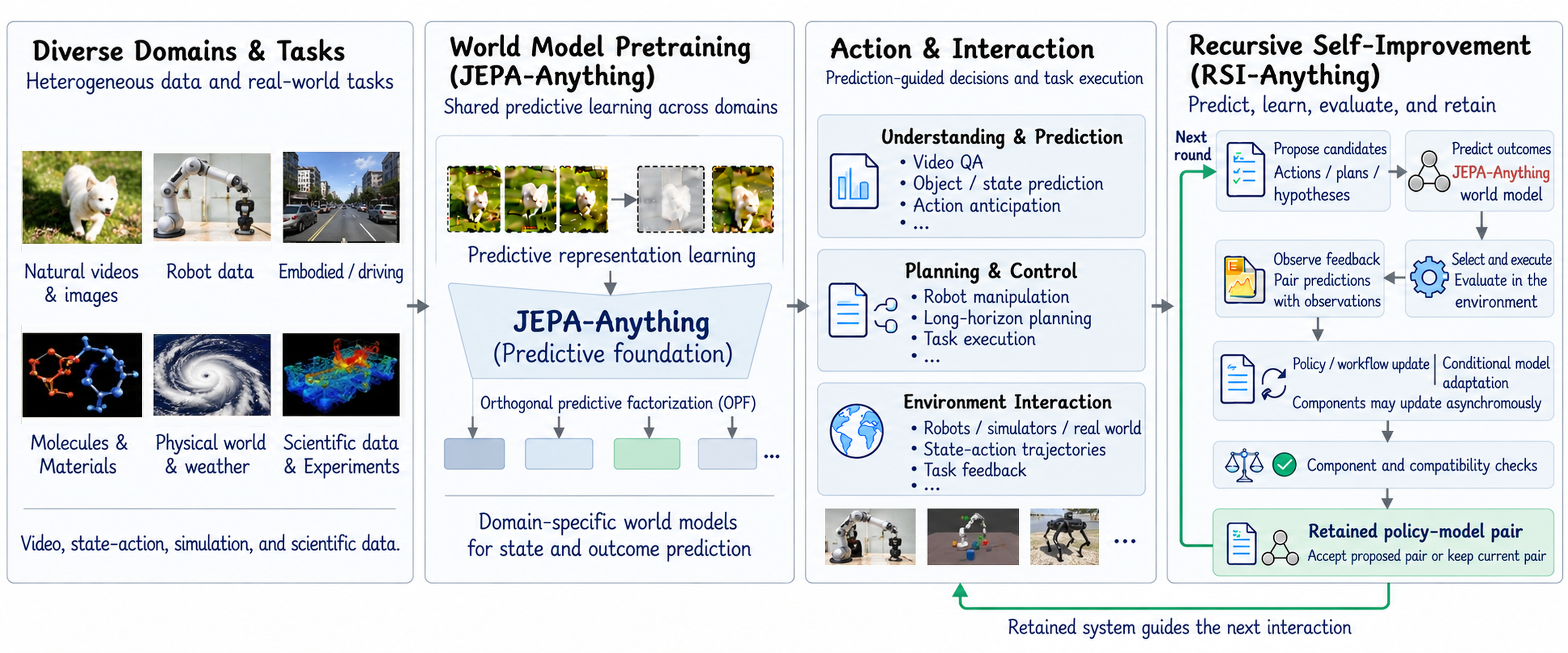
Abstract: Recursive self-improvement (RSI) aims to transform interaction experience into persistent improvements, yet external feedback is costly and world-model predictions may become unreliable as policies evolve. We introduce RSI-Anything, a domain-general framework built on JEPA-Anything that uses predictive world models to guide action and learning-data selection. Observed feedback drives policy or workflow improvement and conditional world-model adaptation, while component and compatibility checks govern the retention of updated policy-model pairs. Across diverse computational and scientific domains, RSI-Anything demonstrates substantial gains. In code repair, with the coder fixed, success increases from 26.3% with a static verifier to 29.2% through predictive selection and 31.2% after world-model adaptation, at comparable test usage. Graphical user interface (GUI) evaluations showed higher task completion, while average actions decrease by 39.4%. Across five successive policy versions, laboratory-planning scores more than double from 21.80% to 46.01%. In reaction optimization, RSI-Anything achieves 96.15% mean best observed yield versus 82.16% for Bayesian optimization under the same 40-experiment budget. An end-to-end immune-science application further connects workflow evolution and predictive modeling with therapeutic hypothesis generation. These results demonstrate how predictive world models and retained system updates enable recursive improvement across diverse environments.
Paper Prompts
Sign up for free to create and run prompts on this paper.
Top Community Prompts
Explain it Like I'm 14
1. What is the paper about?
The paper introduces a system called RSI-Anything. Its goal is to help artificial intelligence systems improve themselves over time.
The system does this by combining two ideas:
- A policy, which is the AI’s strategy for deciding what to do.
- A world model, which is like an internal simulator that predicts what might happen after an action.
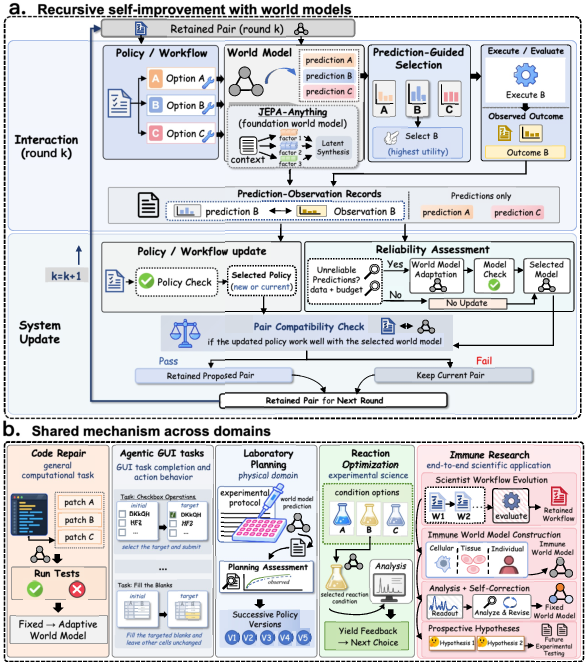
For example, before an AI chooses a computer-program repair, a laboratory experiment, or a button to click on a screen, the world model tries to predict the result. The AI then chooses the action that seems most useful. After seeing the real result, it learns from the difference between its prediction and reality.
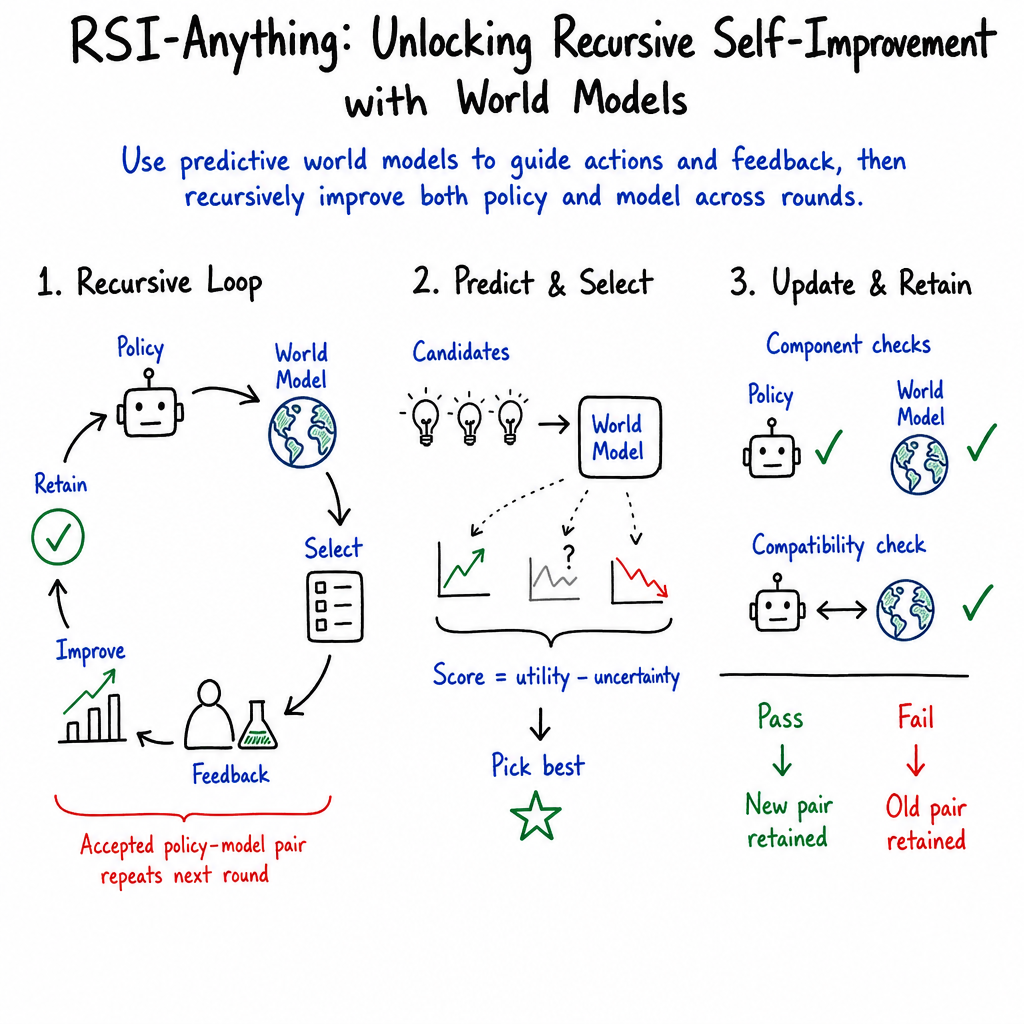
This creates a repeating improvement cycle:
- The AI suggests possible actions.
- The world model predicts their results.
- The AI chooses an action to try.
- It receives real feedback.
- It updates its strategy or its world model.
- It keeps the improved version only if it actually works better.
2. What questions did the researchers ask?
The researchers wanted to know:
- Can predictions help an AI choose better actions?
- Can an AI improve its own strategy after receiving feedback?
- Can the world model also improve when its predictions are wrong?
- Is it useful to check the policy and world model together, rather than separately?
- Can the same general method work in very different areas, such as programming, computer interfaces, laboratory planning, chemistry, and immune science?
- Can the AI make progress while using only a limited number of tests or experiments?
A major challenge is that changing one part of the system can affect the other part. If the policy changes, it may begin choosing actions that the world model has never seen before. This can make the world model less accurate. Therefore, RSI-Anything checks whether new versions of the policy and world model work well together before keeping them.
3. How did the researchers study this?
The basic idea
The researchers built RSI-Anything on top of a predictive system called JEPA-Anything. In simple terms, this system learns important patterns from information without needing to recreate every detail.
The world model acts somewhat like a person imagining different futures. If an AI is considering several actions, the model estimates what could happen after each one.
For instance, imagine a computer-programming AI has four possible fixes for a broken program. Instead of testing all four fixes, it can use its world model to predict which fix is most likely to work. It then tests the most promising one.
Feedback and updating
The researchers used two kinds of updates:
- Policy updates: The AI learns how to choose or create better actions.
- World-model updates: The prediction system learns to make more accurate forecasts.
The system does not automatically keep every update. It performs checks similar to quality-control tests:
- Did the new policy perform better?
- Did the new world model make more accurate predictions?
- Do the new policy and world model work well together?
- Did the update obey the task’s rules and limits?
If the answer is no, the system keeps the older version.
Areas tested
The researchers tested RSI-Anything in several settings:
- Code repair: Choosing among possible fixes for broken computer programs.
- GUI tasks: Using graphical interfaces, such as clicking checkboxes or completing spreadsheet tasks.
- Laboratory planning: Choosing steps and settings for scientific procedures.
- Reaction optimization: Selecting chemical-reaction conditions to obtain a high product yield.
- Immune science: Using a predictive model to study immune-system interventions and suggest possible treatments.
The experiments tried to make fair comparisons. For example, in code repair, the same coding AI and roughly the same number of online tests were used for different selection methods.
4. What did the researchers find?
Code repair
The world model helped the system choose better code fixes.
On the CodeContests benchmark:
| Method | Successful repairs |
|---|---|
| Random selection | 26.0% |
| Static verifier | 26.3% |
| RSI-Anything with a fixed world model | 29.2% |
| RSI-Anything with an updated world model | 31.2% |
This means that using predictions improved the result from 26.3% to 29.2%. Updating the world model improved it further to 31.2%.
Importantly, these gains happened without using many more online tests. This suggests that the AI was making better choices rather than simply trying many more possibilities.
GUI tasks
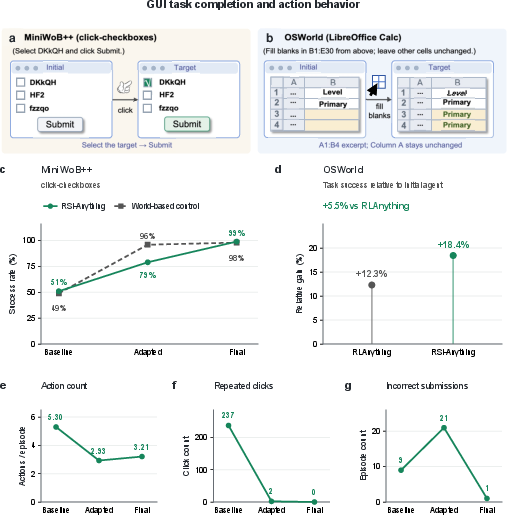
In a checkbox-clicking task, success increased from 51% for the starting system to 99% after improvement.
The final system also:
- Used about 39.4% fewer actions.
- Reduced repeated clicks from 237 to 0.
- Reduced incorrect submissions from 9 to 1.
This is important because a good computer-using AI should not only finish tasks. It should also avoid wasting actions and making careless mistakes.
On the more difficult OSWorld benchmark, RSI-Anything also performed better than the comparison systems.
Laboratory planning
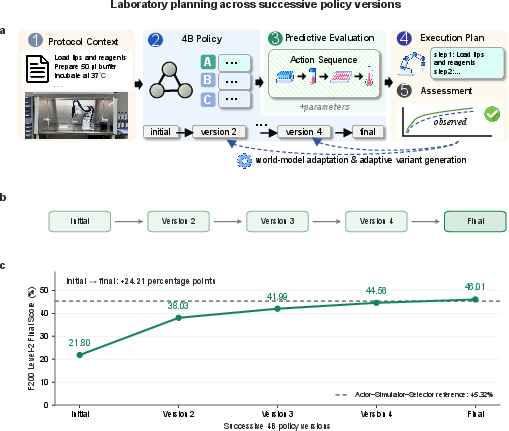
The researchers tested five versions of a laboratory-planning AI. Its score improved each time:
- Version 1: 21.80%
- Version 2: 38.03%
- Version 3: 41.99%
- Version 4: 44.56%
- Version 5: 46.01%
The final version scored more than twice as high as the first version. This shows that the system can preserve useful improvements across multiple rounds instead of starting over each time.
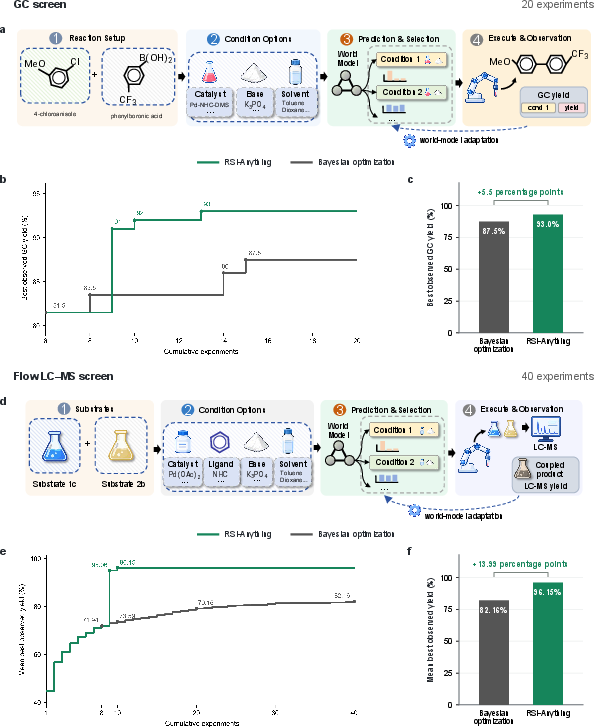
Chemical reaction optimization
The system also helped choose chemical experiments.
In one test, after 20 experiments:
- RSI-Anything found a reaction yield of 93.0%.
- Bayesian optimization found a yield of 87.5%.
In another test, after 40 experiments:
- RSI-Anything reached an average best yield of 96.15%.
- Bayesian optimization reached 82.16%.
A reaction yield is the amount of desired chemical product made. Higher yields generally mean that the experiment is more successful and wastes less material.
These results matter because laboratory experiments can be expensive, slow, or difficult. Choosing better experiments can save time and resources.
Immune science
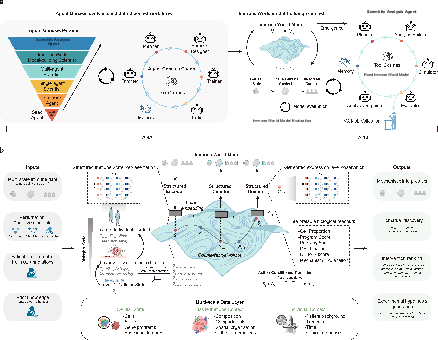
In the immune-science example, RSI-Anything helped connect:
- The improvement of scientific-agent workflows.
- The creation of a model that predicts immune-system changes.
- The analysis of possible treatments.
- The generation of a new treatment idea.
The system eventually suggested testing a treatment combining SIRPα inhibition with changes to the IL-36γ pathway. This was a hypothesis for future experiments, not proof that the treatment works.
5. Why are these results important?
The paper suggests that AI systems may become more useful when they can do more than learn from past examples. They can also:
- Imagine possible results before acting.
- Choose which actions are most worth testing.
- Learn from mistakes.
- Improve their prediction system.
- Keep successful improvements for future tasks.
- Reject changes that do not work well.
The most important idea is that the AI improves as a complete system. The strategy and the world model must be checked together because they depend on each other.
6. Possible impact and limitations
If this approach works reliably, it could help create AI systems that improve while using fewer tests, experiments, or human evaluations. Possible applications include:
- More effective programming assistants.
- Computer agents that use websites and software more carefully.
- Robots and laboratory systems that plan experiments efficiently.
- Scientific tools that help researchers explore new medicines or materials.
However, the results do not mean that AI can improve without limits or human supervision. The system still depends on:
- Accurate feedback.
- Good safety rules.
- Enough data to judge whether predictions are reliable.
- Careful testing of new versions.
- External experiments or evaluations in many real-world situations.
The immune-science example also produces a hypothesis, not a confirmed medical treatment. Any real treatment would require extensive laboratory and clinical testing.
Overall, the paper presents RSI-Anything as a general method for building AI systems that learn from experience, predict the future, and keep only improvements that have been tested and shown to work.
Knowledge Gaps
Knowledge gaps, limitations, and open questions
The paper leaves the following issues unresolved:
- Causal contribution of individual components: The experiments do not fully disentangle the effects of world-model prediction, uncertainty estimation, policy updating, model adaptation, pairwise retention, and workflow revision. Controlled ablations are needed to determine which components produce the reported gains.
- Incomplete description of implementation details: The paper does not provide sufficiently specific information about the architectures, training objectives, hyperparameters, update schedules, uncertainty estimators, reliability thresholds, acceptance gates, or candidate-ranking algorithms used in each domain.
- Unclear definition of “recursive self-improvement”: Some experiments evaluate fixed-policy predictive selection, some evaluate successive policy versions, and others evaluate workflow search. The extent to which each setting performs genuine recursive improvement rather than ordinary model selection or iterative optimization remains unclear.
- Limited scale and statistical power of several evaluations: Code repair uses 200 tasks, GUI results appear to rely on relatively small task sets, laboratory planning follows one sequence of five policy versions, and reaction optimization covers only two screens. Larger task collections, more seeds, and independent repetitions are needed to establish robustness.
- Insufficient statistical reporting across domains: Confidence intervals, significance tests, variance estimates, and per-task or per-seed results are not consistently reported for GUI, laboratory planning, reaction optimization, and immune-science experiments.
- Potential dependence on development and evaluation data: The paper does not clearly establish whether task instances, feedback records, benchmark examples, or experimental conditions used for updates overlap with those used for acceptance or final evaluation. Stronger separation of training, gate, audit, and test data is needed to rule out leakage.
- Unclear independence of successive laboratory-planning evaluations: The five policy versions are evaluated on the same 200-task benchmark and originate from one self-improvement process. This may permit adaptation to benchmark-specific patterns and does not establish generalization to unseen protocols or tasks.
- Limited baseline coverage: Comparisons are primarily against random selection, static verifiers, Bayesian optimization, or selected reference systems. The paper does not consistently compare against strong alternatives such as model-predictive control, active learning, ensemble uncertainty methods, reinforcement learning, evolutionary search, or simpler feedback-based adaptation.
- No consistent compute- and cost-normalized comparison: Online test calls or experiment counts are reported in some settings, but total training compute, inference cost, memory use, adaptation cost, and human or laboratory labor are not systematically compared with baselines.
- Unresolved reliability under policy distribution shift: The framework acknowledges that policy updates change the candidate distribution, but the experiments do not quantify how rapidly world-model accuracy degrades after policy changes or how reliably the proposed checks detect this degradation.
- Weakly validated uncertainty estimates: The framework permits uncertainty-aware selection and adaptation triggers, but calibration, coverage, out-of-distribution detection, and acquisition quality are not comprehensively evaluated across domains.
- Potential selection bias in feedback: Because only selected candidates receive external evaluation, the resulting prediction–observation data may be highly nonrepresentative. The paper does not determine whether the adaptation procedure can recover from systematic under-sampling of poor, uncertain, novel, or unsafe candidates.
- Risk of self-reinforcing model errors: A predictor that incorrectly ranks candidates may cause the system to collect feedback only from its preferred regions, reinforcing its own biases. The paper does not analyze this failure mode or provide guarantees for exploration and error correction.
- No formal convergence or improvement guarantees: The retention mechanism accepts updates under empirical gates, but there is no theoretical guarantee that accepted policy–model pairs improve over time, avoid oscillation, or converge under nonstationary candidate distributions.
- Unclear effectiveness of pairwise compatibility checks: Pair acceptance is presented as central, but the paper does not report ablations showing whether pair checks prevent harmful policy–model combinations or outperform independent component validation.
- Potential overfitting to acceptance criteria: Since update and retention decisions rely on prespecified metrics and gates, systems may optimize those criteria without improving the underlying task objective. The paper does not test for metric gaming or specification gaming.
- Limited analysis of negative or catastrophic updates: The framework can retain the current pair when an update fails, but it does not describe rollback mechanisms, checkpoint histories, recovery after corrupted feedback, or safeguards against rare high-impact failures.
- Insufficient treatment of nonstationary environments: The task specification is fixed within each run, whereas real environments may change in objectives, interfaces, action availability, constraints, or outcome distributions. The behavior of RSI-Anything under environmental drift is not evaluated.
- Restricted multistep planning validation: The formalism supports imagined trajectories, but most reported evidence concerns one-step selection or domain-specific ranking. The benefits and failure modes of long-horizon world-model rollouts are not empirically established.
- Unclear role of imagined data: The paper defines admission criteria for imagined trajectories but does not provide systematic experiments comparing external-only training, imagined-only augmentation, mixed training, and different evidence-quality thresholds.
- Insufficient exploration of feedback scarcity: The results use specific budgets, such as three repair rounds or 20–40 experiments, but do not characterize performance as a function of feedback budget or identify when world-model adaptation becomes worthwhile relative to additional external evaluations.
- Limited transfer across tasks and domains: Although the framework is described as domain-general, each application appears to use a domain-specific adapter, predictor, verifier, and objective. Cross-task transfer of policies, world models, representations, or update rules is not demonstrated.
- Unclear reproducibility of domain adapters: The action encodings, state representations, outcome readouts, and evidence mappings required to instantiate the framework may involve substantial domain engineering. The paper does not quantify this engineering effort or show that independent researchers can reproduce the adapters.
- Code-repair gains remain modest and benchmark-specific: The improvement from 26.3% to 31.2% hidden-test success is relatively small in absolute terms, and the paper does not establish whether it persists on harder, larger, adversarial, or contamination-resistant coding benchmarks.
- Possible limitations of execution-based verification: Code-repair selection relies on online test suites whose coverage may not reflect hidden-test correctness. The paper does not analyze whether world-model selection improves semantic correctness, security, efficiency, or robustness beyond benchmark test passing.
- GUI results may not generalize beyond narrow tasks: The strongest action-efficiency results come from click-checkboxes, a relatively structured environment. Broader GUI tasks with changing layouts, ambiguous goals, irreversible actions, and long-horizon dependencies require more extensive evaluation.
- Unclear source of GUI improvements: Because both the policy and world model are updated, the paper cannot establish whether improvements arise from better visual grounding, action policies, memory, interface-specific heuristics, or predictive modeling.
- Reaction-optimization conclusions are narrow: Results are based on two Suzuki–Miyaura screens and a single comparison with Bayesian optimization. Generalization to other reaction families, substrates, laboratories, noise levels, failed experiments, and continuous or high-dimensional condition spaces remains untested.
- Experimental variability is undercharacterized: The reaction experiments do not clearly report replicate measurements, measurement noise, failed or invalid runs, batch effects, or uncertainty in yield estimates. These factors are important for assessing whether the observed gains are statistically and practically meaningful.
- Best-observed-yield is an incomplete objective: Optimizing the best observed yield may overlook selectivity, cost, reaction time, robustness, scalability, safety, waste, and reproducibility. Multi-objective optimization under realistic laboratory constraints remains unresolved.
- Physical-world safety is not empirically validated: The framework includes safety and operational constraints in its formulation, but the experiments do not demonstrate that these constraints reliably prevent hazardous laboratory actions, invalid protocols, or unsafe GUI operations.
- Immune-science results stop at hypothesis generation: The nominated SIRP–IL-36 therapeutic combination is not experimentally validated in the paper. Its biological efficacy, toxicity, mechanism, patient-population relevance, and reproducibility remain open questions.
- Evidence provenance and scientific validity remain uncertain: The immune-science workflow combines model forecasts, experimental evidence, and agent-generated analysis, but the paper does not quantify how often the system produces unsupported claims, propagates erroneous evidence, or confuses correlation with causal intervention effects.
- Human oversight requirements are unspecified: The paper does not define when expert review is required, how experts interact with acceptance gates, or how disagreements between model predictions and domain experts are resolved.
- No evaluation of adversarial or malicious feedback: The framework assumes that feedback and evidence are valid. Its robustness to corrupted labels, misleading demonstrations, prompt injection, poisoned experiment records, or adversarial candidate generation is unexplored.
- Long-term retention effects are unknown: The experiments cover only a small number of update cycles. It remains unclear whether repeated updates eventually cause capability drift, catastrophic forgetting, accumulating bias, increasing computational cost, or degradation on previously solved tasks.
- Memory and data-growth costs are not assessed: Since feedback histories and versioned prediction–observation records accumulate across cycles, the paper does not evaluate storage, retrieval, curation, and computational costs over long deployments.
- No principled method for choosing update frequency: The framework allows asynchronous policy and world-model updates, but it does not establish how to select update schedules, allocate shared budgets, or decide when adaptation is preferable to continued data collection.
- Performance under sparse or delayed feedback is unknown: Most formulations assume that feedback can be linked to the selected prediction and action. Delayed, partial, noisy, ambiguous, or long-horizon outcomes are not systematically addressed.
- Representation adequacy is not established: JEPA-style latent predictions may omit task-relevant details even when latent or outcome-level metrics appear accurate. The paper does not test whether latent predictive quality correlates with decision quality across all domains.
- The claimed domain generality is not fully demonstrated: The applications share a high-level procedure but differ substantially in models, feedback, metrics, and update pathways. It remains unresolved whether a common framework provides meaningful advantages over independently engineered domain-specific systems.
Practical Applications
Immediate Applications
- Software engineering: prediction-guided code repair and test selection. Integrate an RSI-Anything-style selector into automated program-repair systems. Given several candidate patches, a world model can rank patches by predicted execution behavior before running the test suite, reducing unnecessary test executions and prioritizing more promising repairs. Execution results can then update the predictor for later repair rounds. Evidence: hidden-test success increased from 26.3% with a static verifier to 29.2% with predictive selection and 31.2% after model adaptation, with approximately the same online test usage. Potential product/workflow: an IDE or CI/CD service that proposes multiple patches, predicts likely test outcomes, runs tests selectively, and retains validated repair strategies. Dependencies and assumptions: candidate patches must be syntactically and semantically executable; training and validation data must reflect the target codebase; hidden-test performance must be monitored to prevent overfitting to visible tests; model updates require versioning and rollback safeguards.
- Software engineering: adaptive debugging and regression triage. Use the predictive model to prioritize which bug hypotheses, commits, or regression tests should receive expensive execution or human review. Feedback from failed tests can update rankings and identify code regions where the model is unreliable. Potential product/workflow: a regression-triage agent connected to repository history, test infrastructure, and issue trackers. Dependencies and assumptions: the system needs sufficiently representative historical failures and reliable mapping between predicted outcomes and actual test results. It should assist, rather than autonomously approve, security- or safety-critical patches.
- GUI automation and robotic process automation. Apply the framework to desktop, web, and enterprise software agents that must choose among multiple interface actions. The world model can predict the next interface state, detect likely misclicks, and choose shorter action sequences. Evidence: on MiniWoB++ click-checkboxes, success increased from 51% to 99%, mean actions decreased by 39.4%, repeated clicks fell to zero, and incorrect submissions were substantially reduced. OSWorld performance also improved relative to the initial agent and RLAnything. Potential product/workflow: adaptive browser automation, spreadsheet assistants, customer-service workflow agents, and accessibility tools that learn from interaction outcomes. Dependencies and assumptions: interfaces must expose sufficiently observable state; interface changes can invalidate the model; incorrect actions may cause irreversible effects, so confirmation gates and action constraints are required.
- Enterprise workflow optimization. Treat a persistent agent workflow—not only model weights—as the policy being improved. Organizations can compare alternative tool-use sequences, prompts, retrieval strategies, and escalation rules, retaining only workflows that improve task success under matched evaluation conditions. Potential product/workflow: an operations platform that A/B-tests agent workflows for claims processing, document handling, procurement, or help-desk resolution. Dependencies and assumptions: the organization must define measurable objectives, preserve audit logs, and separate update data from held-out evaluation data. Changes should be evaluated for fairness, privacy, and compliance, not just task completion.
- Laboratory planning and protocol assistance. Use predictive action-conditioned models to rank possible laboratory steps, check reagent and instrument constraints, and generate protocol-aligned sequences for human scientists or laboratory robots. The system can learn from successive evaluations of proposed plans. Evidence: five retained policy versions increased the LabHorizon score from 21.80% to 46.01%; the final system achieved 0.700 accuracy on next-action selection. Potential product/workflow: an electronic-laboratory-notebook assistant that proposes the next safe step, checks inventory and instrument availability, and produces an execution-ready plan for human approval. Dependencies and assumptions: laboratory state must be accurately represented; protocols, safety rules, reagent availability, and instrument interfaces must be formalized; benchmark improvements may not directly translate to wet-lab reliability.
- Reaction-condition optimization in chemistry. Use the world model to rank catalyst, ligand, base, solvent, and process-condition combinations before conducting experiments. Measured yields update the model and guide subsequent experiments under a fixed experimental budget. Evidence: RSI-Anything achieved 93.0% versus 87.5% yield after 20 experiments in one screen, and 96.15% versus 82.16% after 40 experiments in another, relative to Bayesian optimization. Potential product/workflow: a chemistry decision-support system integrated with laboratory information-management systems, robotic liquid handlers, GC/LC–MS instruments, and experiment schedulers. Dependencies and assumptions: reactions must be sufficiently standardized and measurable; yield alone may not capture selectivity, cost, toxicity, or scalability; model uncertainty and out-of-distribution conditions require explicit experimental validation.
- Active learning for expensive scientific measurements. Generalize the candidate-selection mechanism to prioritize which simulations, measurements, or experiments should be performed when each evaluation is costly. This is applicable to materials screening, energy-storage experiments, biological assays, and climate or fluid simulations. Potential product/workflow: a budget-aware experiment planner that distinguishes predicted evidence from externally measured evidence and allocates measurements to maximize utility or information gain. Dependencies and assumptions: candidate spaces must be defined, outcome metrics must be reliable, and uncertainty estimates must be calibrated. Selection bias is a central risk because the model learns primarily from candidates it chose to evaluate.
- Scientific-agent workflow management. Use component and policy–model compatibility checks to retain validated combinations of scientific-agent workflows and predictive models. This can improve reproducibility by recording which workflow, model version, data, and evidence source produced each result. Potential product/workflow: a versioned scientific-agent registry with automated acceptance tests, provenance tracking, rollback, and audit reports. Dependencies and assumptions: acceptance criteria must be declared in advance; evaluations need independent or held-out data; scientific validity cannot be reduced solely to an automated score.
- Policy and public-sector decision support. Apply the framework to prioritize inspections, service interventions, or resource-allocation options when outcomes can be observed over time. For example, a public agency could predict the consequences of alternative inspection schedules and evaluate only a selected subset. Potential product/workflow: budget-aware planning tools for infrastructure maintenance, environmental monitoring, or public-service scheduling. Dependencies and assumptions: deployment should initially remain advisory; decisions affecting rights or access to services require human oversight, transparency, bias testing, and legally compliant data governance. Predictions must not be treated as evidence of causal effects without appropriate study designs.
Long-Term Applications
- Autonomous or semi-autonomous robotic laboratories. Combine reaction optimization, laboratory planning, visual state estimation, and recursive workflow retention into closed-loop robotic experimentation. A robot could propose a condition, execute it, analyze the result, update its world model, and retain a better planning policy. Required development: robust action-conditioned models, standardized laboratory APIs, fault recovery, multi-objective optimization, and safety-certified acceptance checks. Dependencies and assumptions: reliable sensing and calibration, reproducible physical execution, sufficient experiment throughput, and safeguards against unsafe or chemically invalid exploration are essential.
- Adaptive drug-discovery and therapeutic-design systems. Extend the immune-science application into systems that forecast cellular, tissue, or patient-level responses to interventions, rank combinations for validation, and use experimental evidence to revise hypotheses. The reported SIRP–IL-36 hypothesis illustrates the type of output, but not clinical efficacy. Required development: prospective validation in independent biological systems, causal modeling, uncertainty calibration, toxicity and pharmacokinetic modeling, and eventually preclinical and clinical trials. Dependencies and assumptions: immune-state representations must capture relevant biological heterogeneity; model predictions must not substitute for experimental validation; patient data require strict privacy and regulatory controls.
- Closed-loop materials and energy discovery. Apply prediction-guided experimentation to battery electrolytes, catalysts, photovoltaics, hydrogen systems, and carbon-capture materials. The system could optimize performance while simultaneously considering cost, durability, toxicity, resource availability, and manufacturability. Required development: multimodal world models that represent synthesis conditions, physical properties, degradation, and scale-up constraints. Dependencies and assumptions: laboratory-scale performance may not predict industrial-scale behavior; optimization must be multi-objective and robust to measurement noise and changing equipment.
- Long-horizon embodied robotics and industrial control. Use retained policy–world-model pairs for warehouse robots, manufacturing systems, agricultural machines, or assistive robots. The predictor could simulate candidate action sequences, while compatibility checks prevent a policy update from being deployed unless it remains safe with the current model. Required development: high-fidelity or hybrid simulators, uncertainty-aware planning, sim-to-real adaptation, formal safety constraints, and recovery from unmodeled states. Dependencies and assumptions: physical environments are only partially observable and may change over time; model errors can cause physical harm. Deployment should therefore use staged testing, conservative exploration, and human override mechanisms.
- Personalized healthcare and adaptive treatment planning. In the long term, predictive models could rank treatment or monitoring strategies using patient-specific state representations and update recommendations from observed outcomes. The recursive mechanism could help adapt clinical decision-support policies as evidence accumulates. Required development: causal and longitudinal patient models, prospective clinical evaluation, calibration across demographic groups, and integration with clinical workflows. Dependencies and assumptions: observational feedback is confounded and selectively collected; treatment recommendations require clinician review and regulatory approval. The framework’s candidate-selection bias must be addressed before drawing clinical conclusions.
- Autonomous research agents that improve their own scientific workflows. A research agent could iteratively revise literature-search strategies, simulation pipelines, experiment-design procedures, and analysis workflows, retaining changes only when they improve results on matched and held-out evaluations. Potential system: a reproducible “research operating system” combining workflow search, predictive modeling, tool orchestration, provenance, and independent audit. Dependencies and assumptions: scientific success must be defined beyond benchmark scores, including reproducibility, novelty, correctness, and external validation. Preventing self-reinforcing errors and fabricated evidence will require independent verifiers and immutable provenance.
- General-purpose adaptive digital assistants. World-model-guided recursive improvement could support assistants that learn a user’s preferred workflows, predict the consequences of actions across applications, and reduce unnecessary interactions. Required development: privacy-preserving on-device learning, personalization without harmful behavioral inference, secure permission management, and robust handling of changing applications. Dependencies and assumptions: user feedback is sparse and potentially ambiguous; the assistant must distinguish preference adaptation from unsafe automation. Sensitive actions such as financial transfers, medical changes, or account deletion require explicit confirmation.
- Financial planning and risk-management tools. Prediction-guided selection could prioritize which scenarios, stress tests, or portfolio actions deserve costly analysis, while retaining only strategies that improve risk-adjusted performance under historical and simulated evaluations. Required development: nonstationary market modeling, adversarial robustness, uncertainty calibration, and regulatory-compliant auditability. Dependencies and assumptions: historical feedback is not a reliable guarantee of future returns; model adaptation can amplify regime-specific errors. Such systems should remain decision-support tools rather than autonomous trading or credit-allocation authorities.
- Policy experimentation and adaptive public administration. Governments could use world models to compare policy interventions in simulations, select limited real-world pilots, and update implementation workflows from measured outcomes. Applications might include traffic management, energy demand response, environmental enforcement, and emergency logistics. Required development: transparent causal evaluation, representative simulations, equity constraints, and mechanisms for public accountability. Dependencies and assumptions: social systems are highly nonstationary and affected by strategic responses; predicted outcomes may be unreliable outside the observed policy range. Real-world pilots must include safeguards, opt-out provisions where appropriate, and independent impact assessment.
- Scalable infrastructure for safe recursive improvement. A broader long-term contribution is a standard framework for managing evolving policy–model pairs: versioned components, evidence provenance, reliability monitoring, compatibility tests, held-out audits, rollback, and budget accounting. This could become a common deployment layer for adaptive AI systems across sectors. Dependencies and assumptions: the framework requires standardized interfaces for states, actions, outcomes, verifiers, and safety constraints. Its effectiveness depends on reliable acceptance metrics; otherwise, recursive updates may preserve or magnify systematic errors rather than produce genuine improvement.
Glossary
- Acquisition rule: A strategy for selecting candidates, often by balancing expected utility and information value. “An explicitly enabled information-seeking acquisition rule can instead prioritize uncertain candidates for evaluation.”
- Action-conditioned prediction: Prediction whose output depends on a proposed action or intervention. “encoding and action-conditioned latent prediction are written as”
- Asynchronous update: An update process in which different system components may be revised at different times. “The policy and world model can evolve asynchronously”
- Bayesian optimization: A sequential optimization method that uses a probabilistic model to choose promising experiments or evaluations. “comparing RSI-Anything with Bayesian optimization”
- Brier score: A scoring rule measuring the accuracy and calibration of probabilistic predictions. “the five-class Brier score”
- Candidate distribution: The distribution of possible actions or candidates generated by a policy. “changing the policy changes the candidate distribution on which its predictor must be evaluated.”
- Calibration: The degree to which predicted probabilities correspond to observed frequencies. “The assessment applies the specified error, calibration, drift, and coverage criteria”
- Compatibility check: An evaluation determining whether updated system components work effectively together. “component and compatibility checks determining which policy--model pair is retained.”
- Cross-embodiment dataset: A dataset containing data from agents or systems with different physical forms or embodiments. “Vision-language-action and cross-embodiment datasets motivate action-conditioned models for physical systems”
- Deferred readout: A model component that converts an internal or latent prediction into an interpretable outcome prediction. “The readout converts the predicted latent target into an outcome prediction”
- Distribution-sensitive score: A metric that evaluates the quality of an entire predicted probability distribution rather than only a point estimate. “probabilistic predictions can additionally use distribution-sensitive scores or calibration measures.”
- Drift: A change in the relationship between inputs, predictions, and outcomes over time or across system versions. “The assessment applies the specified error, calibration, drift, and coverage criteria”
- Evidence provenance: Information describing the origin and reliability level of evidence used by a system. “The verifier records validity , utility components , evidence provenance”
- Feedback budget: The limited amount of external evaluation or interaction available for improving a system. “Selection returns a feasible candidate or batch whose evaluation cost fits the remaining feedback budget.”
- Foundation model: A broadly pretrained model that serves as a reusable basis for specialized tasks or applications. “Single-cell foundation models and perturbation predictors support cellular-response forecasting”
- Graphical user interface (GUI): A visual interface through which users or agents interact with software. “We evaluated graphical user interface (GUI) task completion”
- Hidden-test evaluation: Assessment performed on test cases whose contents are not available during system development. “with online tests supplying feedback and hidden tests measuring final success.”
- Imagined trajectory: A predicted sequence of states, actions, or outcomes generated without executing the actions in the external environment. “For applications using imagined trajectories for learning”
- Information-seeking acquisition: Candidate selection intended to obtain informative feedback, especially where model uncertainty is high. “An explicitly enabled information-seeking acquisition rule can instead prioritize uncertain candidates for evaluation.”
- Joint embedding: A representation-learning approach in which related inputs or targets are mapped into a shared latent space. “Building on joint-embedding predictive architectures”
- Latent state: An internal, typically unobserved representation of the state of a system. “recombines their outputs into a complete latent state”
- Multistep rollout: A simulated sequence of future transitions generated by repeatedly applying a policy and predictive model. “Multistep planning additionally requires an adapter that propagates a planning state.”
- Orthogonal predictive factorization (OPF): A method that decomposes latent targets into complementary factors and predicts them separately before recombining them. “Its orthogonal predictive factorization (OPF) decomposes latent targets into complementary factors”
- Outcome readout: A function that translates a predicted latent representation into a task-specific outcome or utility estimate. “A deterministic readout returns a point prediction”
- Policy–model pair: The jointly retained combination of an action-generating policy and a predictive world model. “ensuring that retained policy--model pairs improve subsequent interaction and learning.”
- Predictive world model: A model that forecasts how actions affect future states or outcomes. “World models predict the effects of candidate actions on subsequent states or outcomes”
- Preference learning: Learning from comparisons between alternatives rather than from absolute labels. “preference learning compares alternatives using their evaluated outcomes”
- Prospective evaluation: Assessing likely future consequences before executing an action. “World models thus provide a predictive foundation for improvement under limited external feedback.”
- Recursive self-improvement (RSI): A process in which a system uses experience from one cycle to modify itself and improve later performance. “Recursive self-improvement (RSI) turns interaction experience into lasting improvements”
- Reagent: A chemical substance used to cause or participate in a laboratory reaction. “LabHorizon evaluates laboratory actions subject to reagent, instrument, and ordering constraints”
- Retrosynthesis: Planning the synthesis of a target molecule by reasoning backward toward simpler precursor compounds. “ReactionT5 is a reaction-pretrained transformer that supports product, retrosynthesis, and yield prediction”
- Self-correction: The process by which a system detects and revises its own analysis, decisions, or outputs. “In the analysis stage, model forecasts and experimental evidence inform intervention ranking and self-correction.”
- Suzuki–Miyaura coupling: A palladium-catalyzed chemical reaction that forms a carbon–carbon bond between an organoboron compound and an organic halide. “We evaluated this process in two Suzuki--Miyaura screens”
- Task-state transition: A change from one system or environment state to another caused by an action or intervention. “The joint transition readout is needed only for applications that perform multistep rollouts.”
- Therapeutic hypothesis generation: The process of proposing experimentally testable medical or biological treatment ideas. “In therapeutic hypothesis generation, self-correction removed the screened cytokine-pair candidates”
- Uncertainty penalization: Reducing the score of candidates whose predicted outcomes are uncertain. “ when uncertainty penalization is enabled”
- Validation-gated memory evolution: Updating an agent’s memory only when the proposed change passes validation criteria. “Recuris couples Experiential and Working Memory with validation-gated memory evolution”
- World-model adaptation: Updating a predictive model using new observations to improve its forecasts. “Feedback-driven world-model adaptation produced an additional gain over fixed-model selection.”
- Yield prediction: Forecasting the quantity or percentage of product produced by a chemical reaction. “our chemistry adapter combines this reaction-prediction backbone with the predictive design of JEPA-Anything for action-conditioned yield forecasting.”

