Wiggling Through the ICM: Multi-Resolution Radio Imaging of a Tailed Radio Galaxy in MACS J1354.6+7715
Published 4 Feb 2026 in astro-ph.GA | (2602.04962v1)
Abstract: Tailed radio galaxies are powerful tracers of interactions between active galactic nuclei (AGN) and the intracluster medium (ICM), providing unique insights into cluster dynamics. We present LOw Frequency ARray (LOFAR) 144 MHz and uGMRT 400 MHz observations of the cluster MACS J1354.6+7715 (z = 0.3967) to investigate the radio emission associated with its member galaxies and the cluster environment. The dominant tailed radio galaxy in the cluster exhibits a sharply bent tail extending over approximately 300 kpc, with the spectral index steepening from approximately -0.46 +/- 0.21 near the AGN core to approximately -2.43 +/- 0.30 in the outermost regions. Synchrotron modelling of the tail yields a radiative age of 150 +/- 10 Myr, implying a galaxy velocity of 1956 +/- 130 km s-1, which is of order ~ 0.9 times the escape velocity. We find no evidence of relics or halos in our radio images, and the X-ray morphology from Chandra appears relatively undisturbed, suggesting that the system is a pre-merging candidate. Our results indicate that the radio galaxy is undergoing its first infall into the cluster, providing an excellent laboratory for studying the impact of the ICM on AGN activity and galaxy evolution, and demonstrating how multi-frequency radio observations of tailed galaxies can uniquely probe both AGN lifecycles and the early stages of cluster assembly.
The paper presents high-resolution multi-frequency imaging that details the NAT radio galaxy’s morphology and its interaction with the intracluster medium.
It employs LOFAR and uGMRT data with matched beam calibration and spectral index mapping to constrain synchrotron aging, estimating a radiative age of 150 Myr.
The study infers a high galaxy velocity relative to the cluster’s escape speed, suggesting a pre-merger scenario and challenging standard spectral aging models.
Multi-Resolution Radio Imaging of a Tailed Radio Galaxy in MACS J1354.6+7715
Introduction and Scientific Context
The study "Wiggling Through the ICM: Multi-Resolution Radio Imaging of a Tailed Radio Galaxy in MACS J1354.6+7715" (2602.04962) presents an in-depth analysis of the radio and multi-wavelength properties of a narrow-angle tailed (NAT) radio galaxy embedded in the galaxy cluster MACS J1354.6+7715 (z=0.3967). Through high-resolution imaging using LOFAR at 144 MHz and uGMRT at 400 MHz, the paper addresses the interactions between AGN jets and the intracluster medium (ICM), evaluates the radiative aging of the relativistic electron population, and constrains the dynamical state of the host cluster. The study places particular emphasis on the capacity of radio galaxies to act as diagnostics for ICM conditions and cluster assembly processes in the absence of classical relic or halo emission.
Data Acquisition and Methods
The core data set comprises 8-hr LOFAR High Band Antenna observations, incorporating baselines up to ∼1430 km (yielding $0.3''$ angular resolution at 144 MHz), and archival uGMRT Band-3 observations at 400 MHz. Absolute flux scales were carefully cross-calibrated (LOFAR to PB17, with a 3% correction factor), with both arrays' images convolved to a matched synthesized beam and masked at 5σ to ensure consistent spatial sampling for spectral studies.
A multi-stage calibration pipeline was used. For LOFAR, the Dutch and international stations were independently processed, with direction-dependent ionospheric calibration and stringent astrometric refinement using VLASS-based models. Imaging incorporated uv-tapering for sensitivity to both compact and diffuse structures, and multi-scale cleaning was essential for deconvolving the extended tail features. uGMRT data utilized the CAPTURE pipeline in CASA, with eight rounds of self-calibration and robust RFI excision. A flux scale uncertainty of 20% (LOFAR) and 10% (uGMRT) was adopted.
Observational Results
Radio Morphology
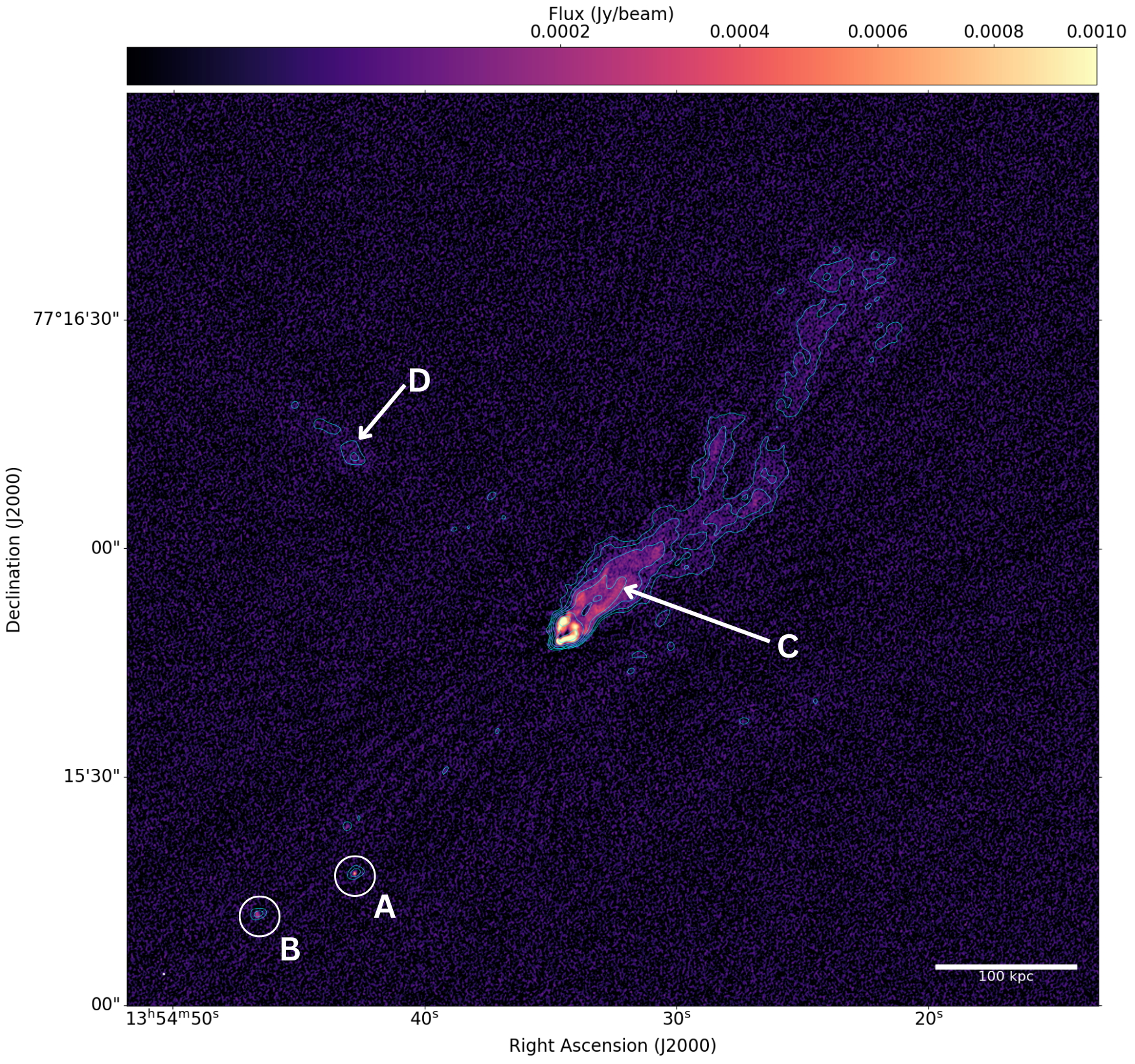
The cluster core contains two compact sources, one coincident with the BCG, but the dominant radio feature is a sharply bent NAT radio galaxy (source C) ∼219 kpc projected from the cluster center. The tail extends for ∼300 kpc (projected), exhibiting multiple bends and an abrupt termination in areas of decreasing X-ray surface brightness. The jet collimation and tail curvature are characteristic of strong ram-pressure stripping in a non-central, high-velocity galaxy moving through a dense but relatively undisturbed ICM.
Figure 1: High-resolution LOFAR image of the NAT radio galaxy, revealing the collimated tail and compact AGN core.
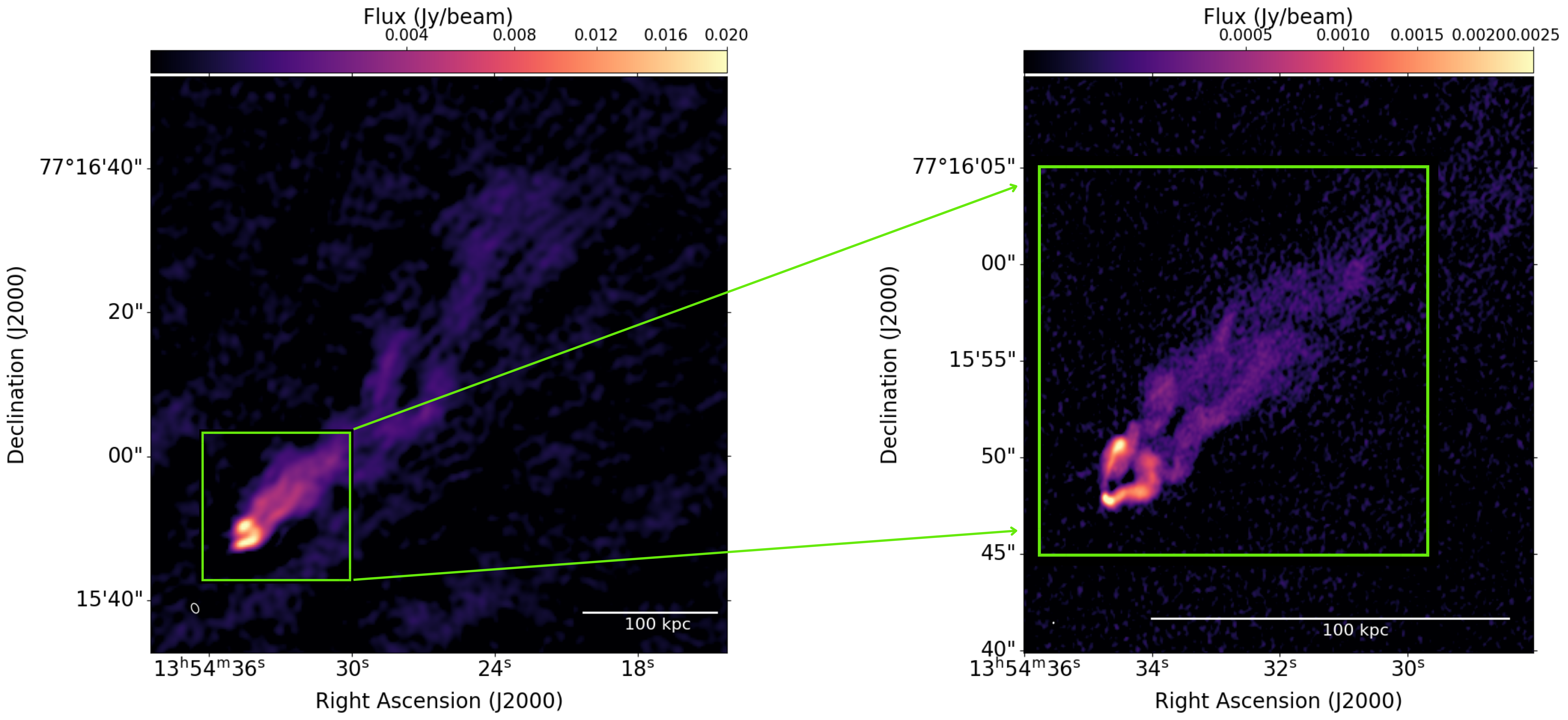
A zoom-in of the jet base and tail termination further demonstrates sharp environmental interaction:
Figure 2: Intermediate- and high-resolution views of the core and inner tail structure, highlighting abrupt tail bending within ∼5 kpc (projected) of the nucleus.
Spectral Structure
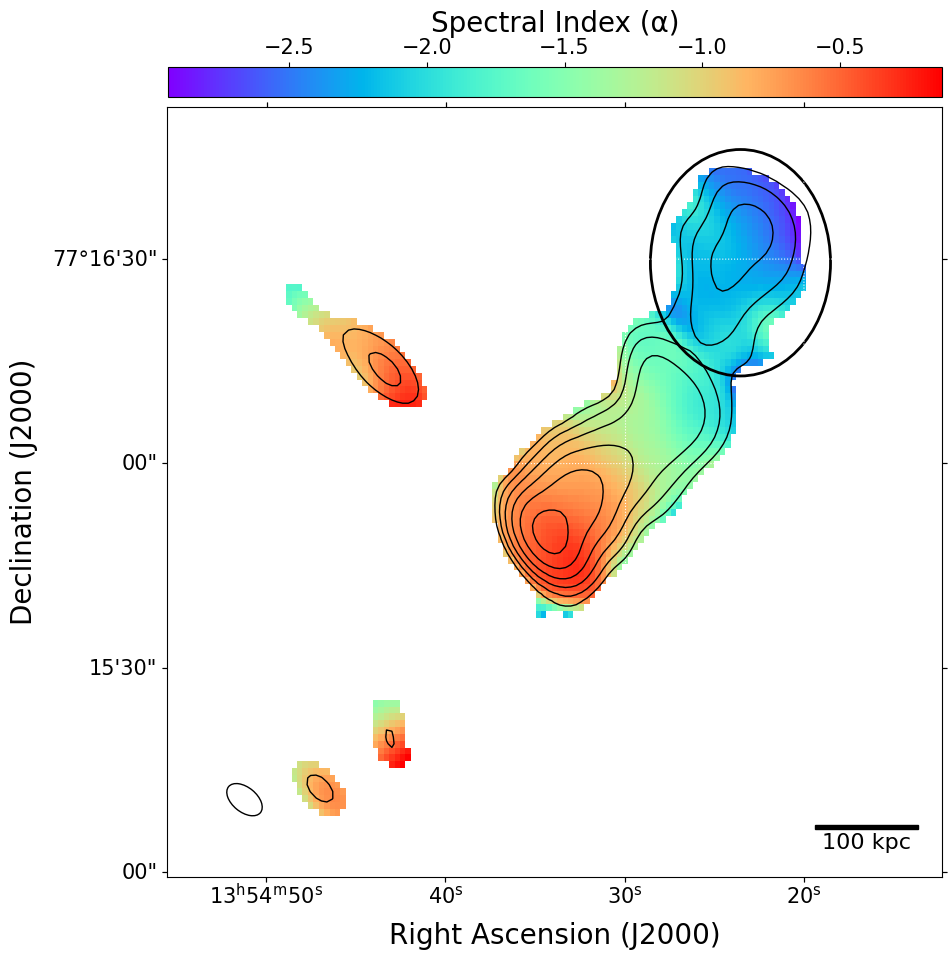
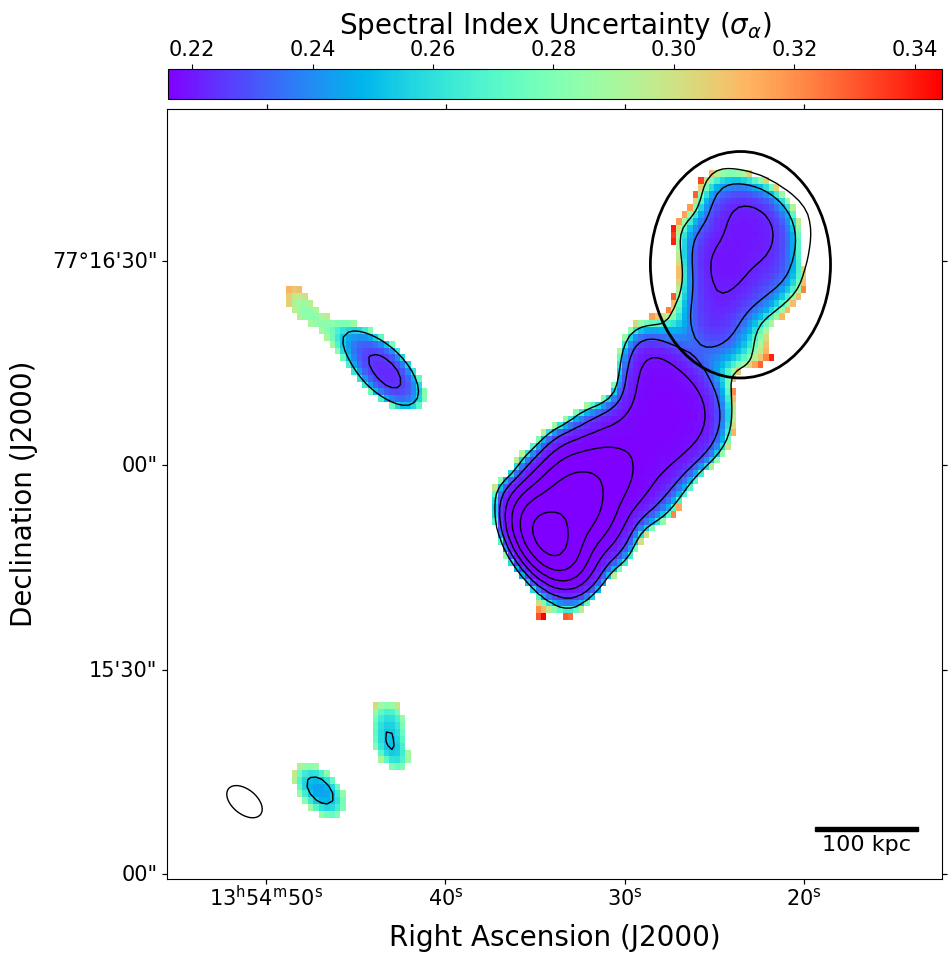
A matched-resolution spectral index map (144–400 MHz) traces the evolution of the tail's spectral properties. The head shows α≈−0.46±0.21, steepening monotonically along the tail to α≈−2.43±0.30 at its end—consistent with synchrotron and inverse-Compton losses acting on plasma advected from the AGN.
Figure 3: Spectral index map (left) and statistical uncertainty (right), revealing systematic steepening outward along the tail.
No evidence for diffuse halos, relics, or inter-cluster bridges was found even at low surface brightness levels, setting a 3σ upper limit of 2.94 mJy/beam for any putative halo emission, further supported by the compactness and regularity of the X-ray surface brightness.
Spectral Aging Analysis and Dynamical Inference
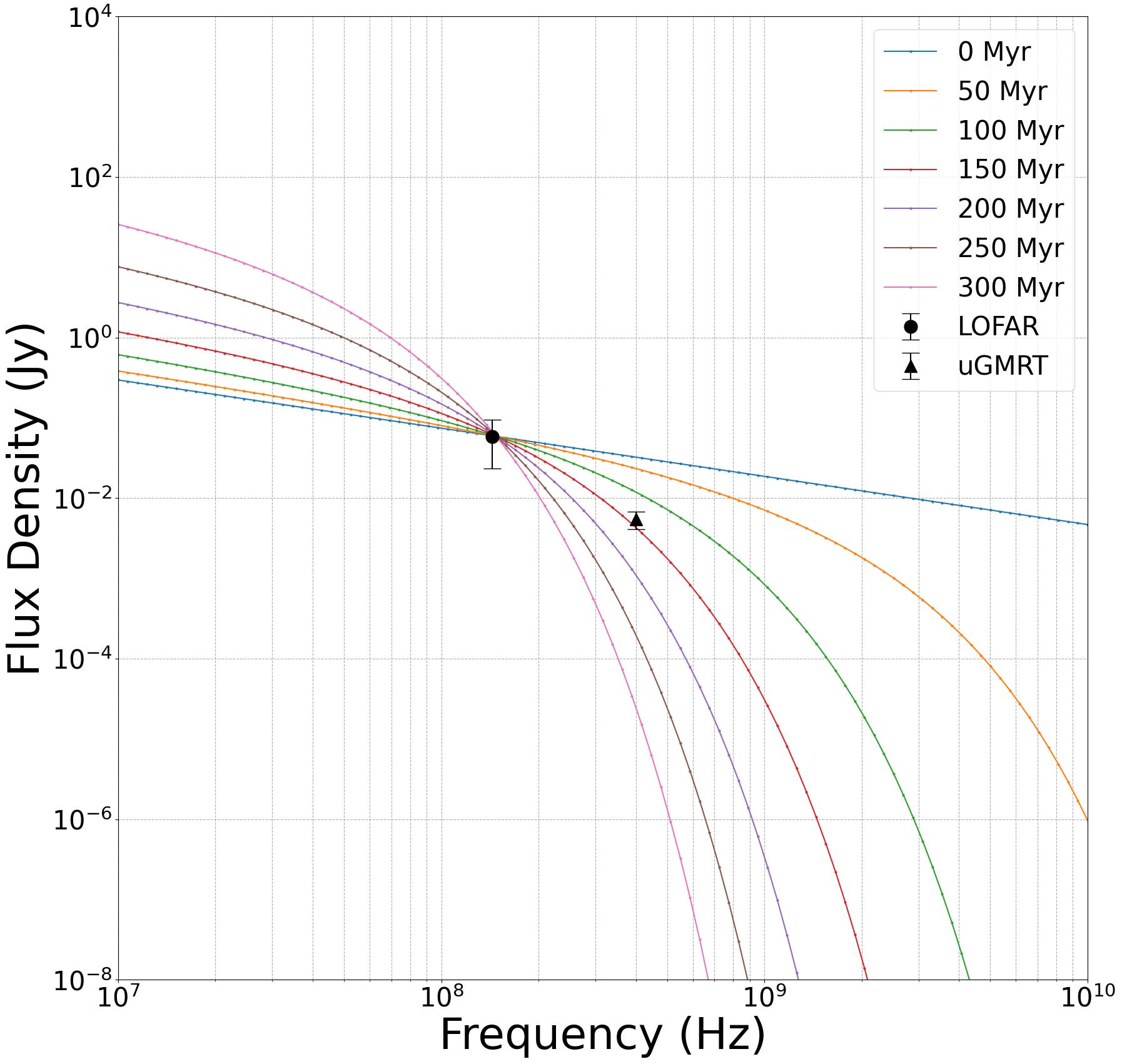
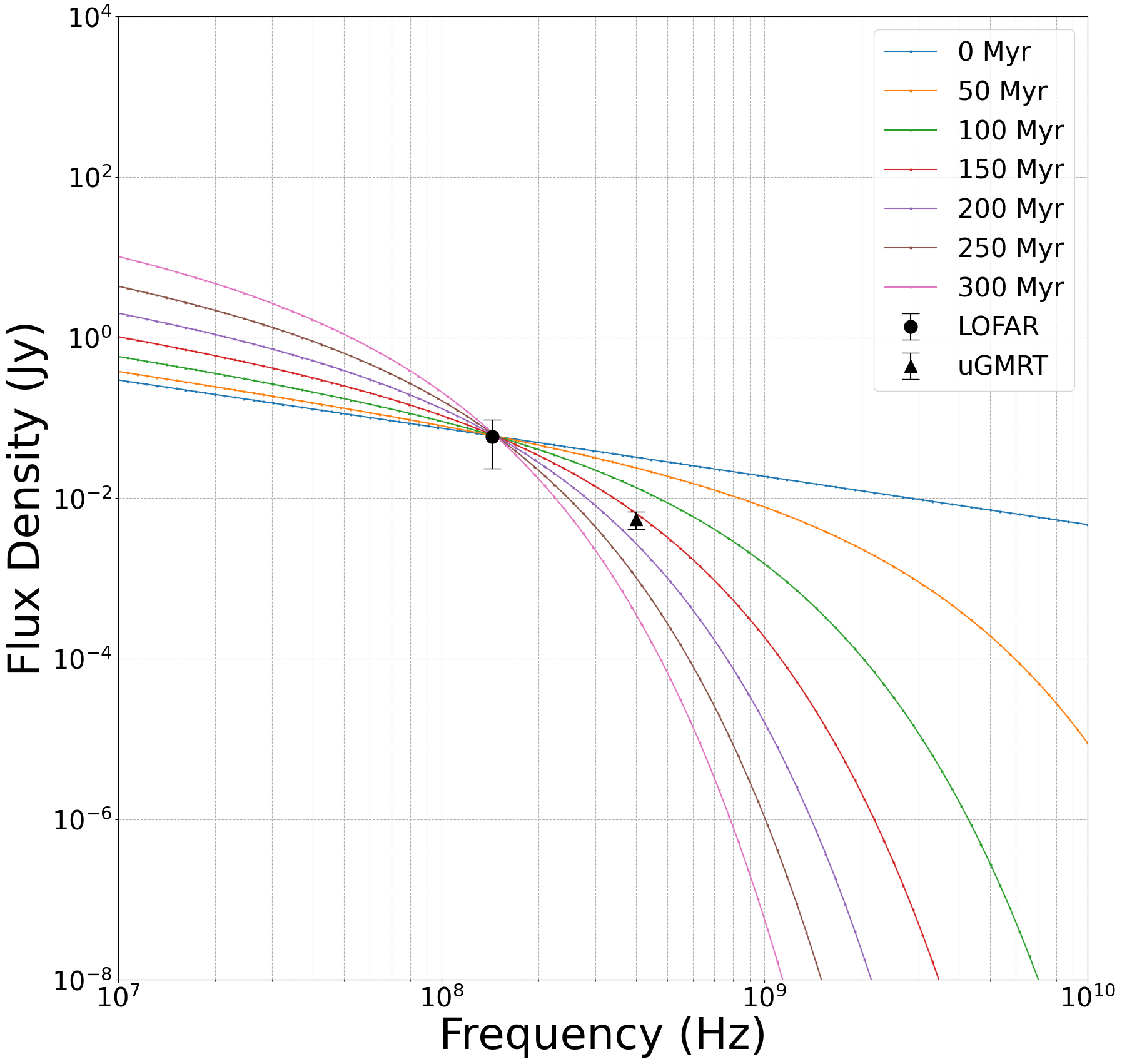
Synchrotron aging models (Jaffe–Perola and Tribble variants, with B=BCMB/3) were fit to the integrated flux in 90 kpc regions along the tail. An injection index αinj=−0.6 was fixed, and the fits yield a radiative age trad=150±10 Myr. This is robust to the chosen spectral aging formalism, with both JP and Tribble models converging within uncertainties.
Figure 4: Comparison of observed flux densities with JP (left) and Tribble (right) spectral aging models, showing a consistent radiative age of ∼150 Myr.
Given the tail's Lproj∼300 kpc, this implies a bulk galaxy velocity vgal=1956±130 km/s, ∼0.9vesc, and 1.7×σclus (σclus≈1186 km/s from scaling relations). This velocity is at the high end of what is dynamically feasible for cluster galaxies, supporting a first-infall scenario.
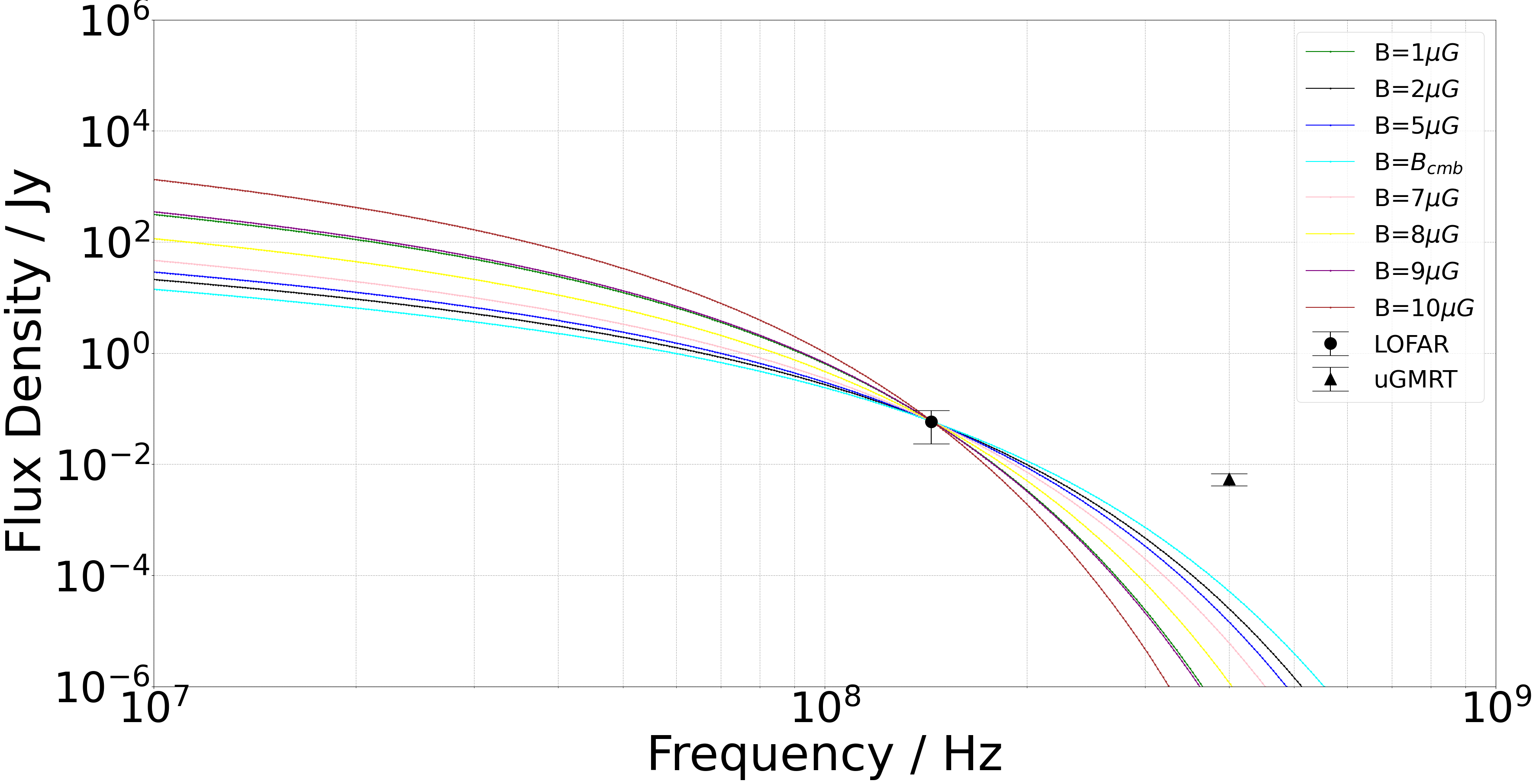
The spectral age is significantly shorter than the dynamical age expected if the galaxy were moving at σclus (tdyn∼270 Myr). Forcing the spectral model to this longer timescale produces spectra that underpredict the 400 MHz flux by a large margin, for any reasonable B (as shown in Fig. 9), and underscores the incompatibility of standard JP/Tribble models with a virialized velocity vector. This strengthens the claim that the host is not a relaxed cluster member but a rapidly infalling galaxy.
Figure 5: Spectral aging model at t=270 Myr for various B, showing a mismatch with observed flux densities.
Multi-wavelength Interpretation
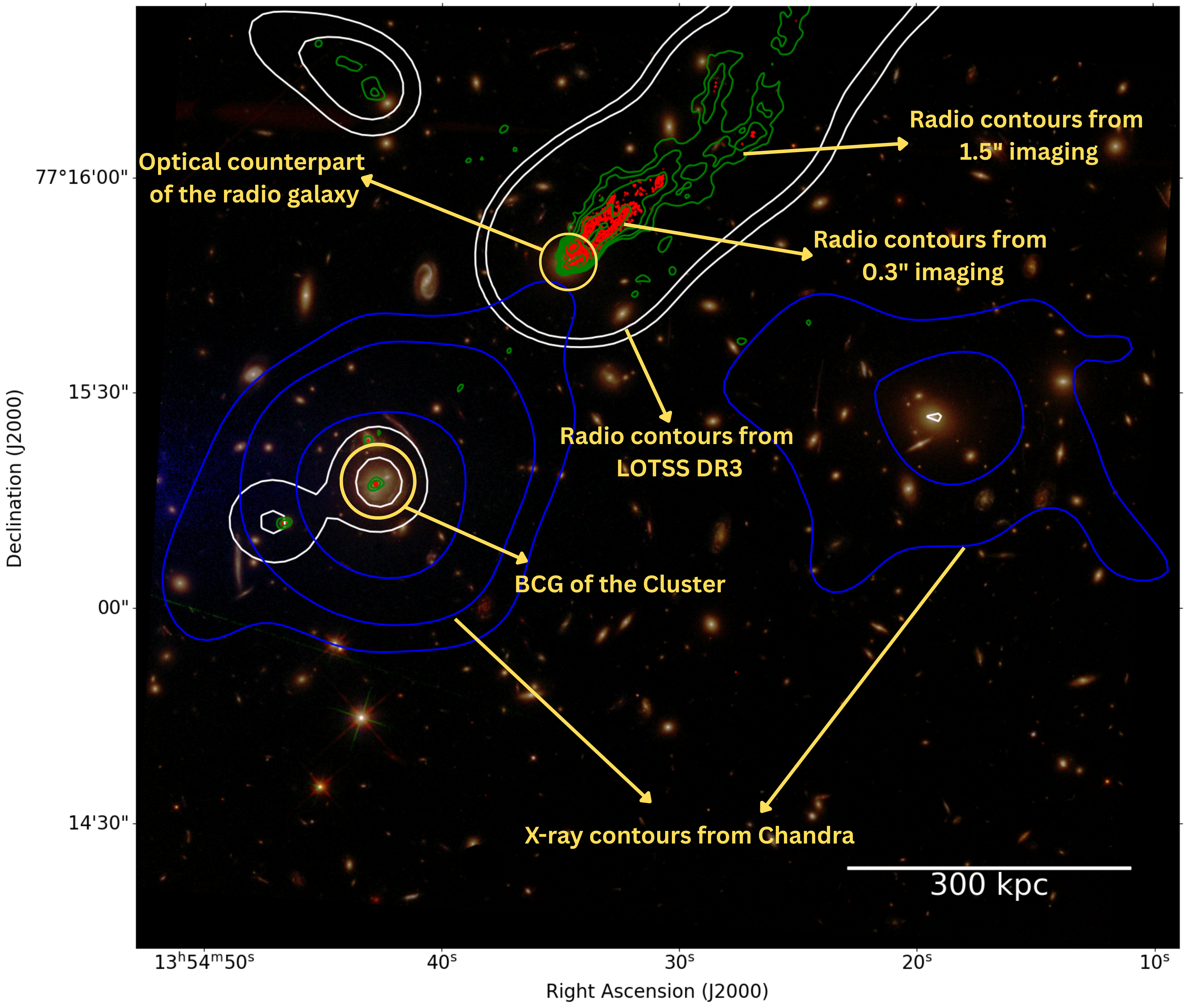
Chandra X-ray data reveal a bimodal distribution with two emission peaks (main and possibly secondary subclusters), separated by ∼450 kpc. The surface brightness is smooth with no significant shocks or front features, consistent with a pre-merger scenario. The radio galaxy's location and tail orientation suggest it is at ∼0.16R200 from the primary BCG and moving through the ICM without strong turbulence or cluster-wide shocks.
Figure 6: Composite HST/X-ray/radio image; red contours mark fine radio structure, blue contours the X-ray ICM, and HST shows optical hosts.
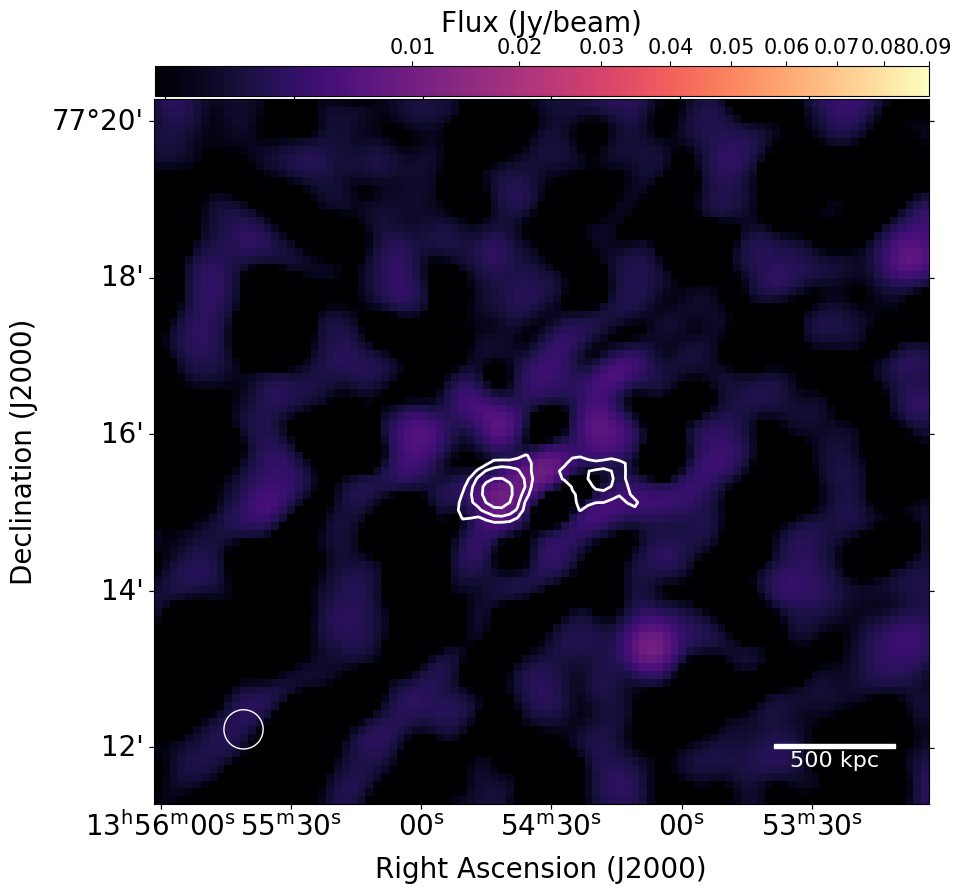
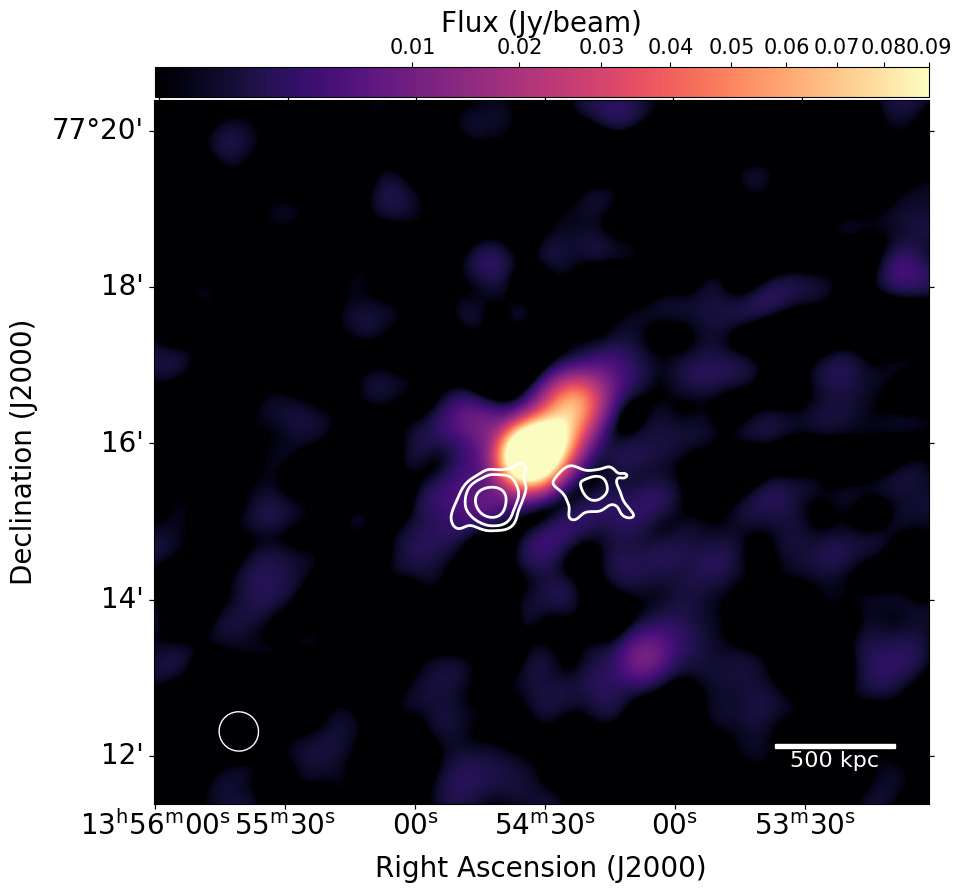
Diffuse emission subtraction confirms the lack of detectable radio halos or bridges, with the residual maps showing only noise, even at low dynamic range.
Figure 7: LOFAR maps after compact source subtraction (left) and full emission (right), overlaid with X-ray contours—no diffuse halo is detected.
Theoretical and Practical Implications
The results provide strong evidence for the use of NAT radio galaxies as precise diagnostics of ICM bulk flows, ram pressure, and the infall histories of cluster subpopulations. The mismatch between dynamical and radiative ages, even with robust spectral modeling and resolved imaging, highlights limitations of simple spectral aging interpretation, confirming recent analyses in FR-I/II systems [see, e.g., Mahatma et al. 2020]. The lack of classical non-thermal cluster-scale emission (halos/relics/bridges) in this dynamically young system aligns with recent statistical results constraining the occurrence and timing of these features to post-merger or highly turbulent phases.
The high vgal/vesc ratio and its morphological consequences inform models of AGN fueling, jet–ICM feedback, and the stripping and quenching processes relevant to massive infalling galaxies. In particular, the case of MACS J1354.6+7715 underscores that prominent radio tails and AGN activity can persist well outside the cluster core, with environmental interactions dominating jet propagation and energy dissipation.
Technically, the work showcases the efficacy of modern low-frequency, high-dynamic-range imaging (LOFAR, uGMRT) in resolving galaxy-cluster interactions, and highlights the continuing need for expanded frequency leverage and more sophisticated spectral models—including time-variable magnetic fields and possible reacceleration—in the interpretation of AGN tail aging.
Conclusion
This study has provided a comprehensive, high-fidelity analysis of a tailed radio galaxy in the pre-merger cluster MACS J1354.6+7715, demonstrating: (1) the utility of resolved spectral mapping and dynamical inference for constraining cluster kinematics; (2) the remarkable absence of classical diffuse radio emission, reinforcing the pre-merger interpretation; and (3) a persistent inconsistency between standard spectral aging models and cluster dynamics, inviting further advances in both modeling and methodology. These results will inform both theoretical treatments of ICM–AGN interaction and the planning of future surveys—SKA-class instruments will be particularly important for extending spectral age diagnostics and robustly detecting low-surface-brightness, non-thermal cluster components.