Abacus: Optimizing AI Data Processing with Smart Trade-Offs
This presentation introduces Abacus, a cost-based optimizer for semantic operator systems that use large language models to process data. We explore how Abacus intelligently navigates trade-offs between cost, latency, and quality when executing AI-powered data transformations, achieving significant improvements over baseline systems through its novel Pareto-Cascades optimization approach.Script
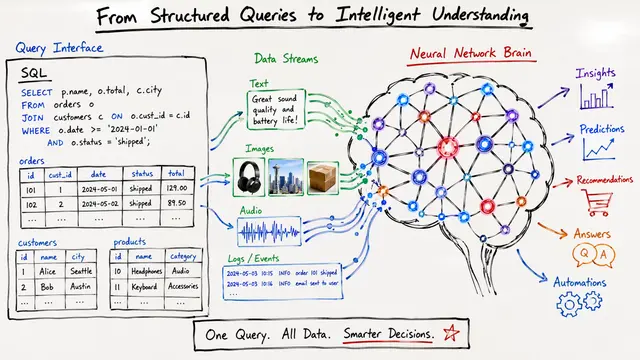
Processing documents with large language models can cost hundreds of dollars for a single task, yet cheaper models often sacrifice the quality you need. Abacus solves this by automatically finding the sweet spot between cost, speed, and accuracy for AI-powered data processing.
The key insight is that semantic operators, AI-powered transformations specified in natural language like filter or map, can be implemented in dozens of different ways using different models and techniques. Each implementation offers a different trade-off between what it costs, how long it takes, and how good the results are.
Abacus works by compiling your AI program into a logical plan, then systematically exploring the space of possible physical implementations. It samples a subset of these implementations, estimates their performance on your actual data, and uses a technique called Pareto-Cascades to select the optimal plan for your specific objectives and constraints.
When the researchers tested Abacus on biomedical and legal document tasks, it achieved dramatic improvements. Given a budget constraint of just 1 dollar, Abacus found plans that met the cost limit while maintaining quality close to the expensive unconstrained solution.
The current implementation adds some overhead during the optimization phase itself, as it must sample and evaluate different operators sequentially. Future work could pipeline this sampling process to reduce latency, and incorporate learned embeddings to make even smarter choices about which implementations to try.
Abacus opens the door to practical, cost-effective use of large language models for data processing across domains like biomedical research and legal analysis. To explore how optimization can make AI data processing both powerful and affordable, visit EmergentMind.com and create your own video about cutting-edge research.