JFinBench: A Continuously Refreshable Japanese Financial Benchmark from the Latest Certification Exams
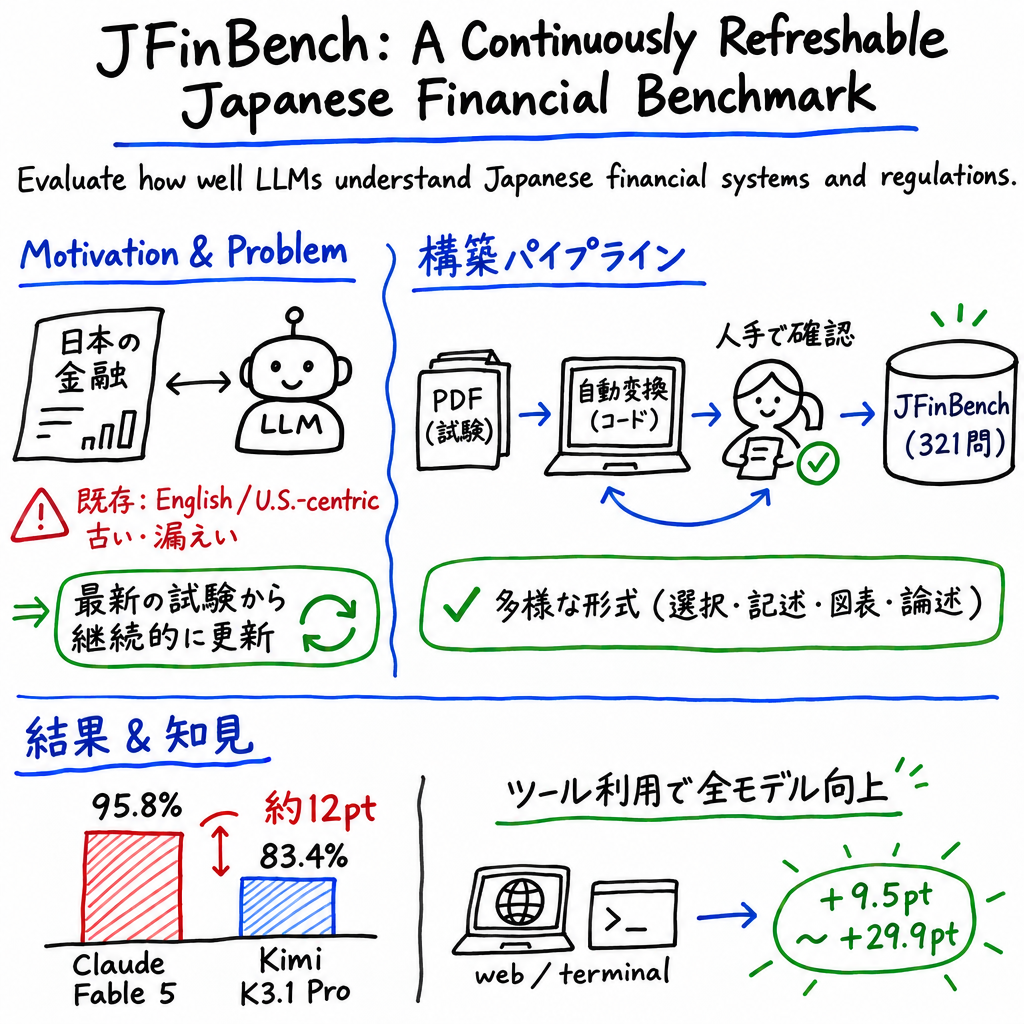
Abstract: LLMs are increasingly applied to finance, creating a need for benchmarks that evaluate their capabilities across financial systems with different regulations and practices. However, existing financial benchmarks provide limited coverage of country-specific financial systems, and they are difficult to keep up to date as released questions leak into training data. We introduce JFinBench, a Japanese financial benchmark comprising 321 examples from the 2026 editions of six regularly administered certification exams covering accounting, tax, financial planning, and banking. To construct it, we develop a human-in-the-loop agentic pipeline in which a coding agent writes exam-specific conversion code and a review page, while a human verifies every example and feeds corrections back to the agent. This pipeline adapts to heterogeneous exam formats and reduces the effort of incorporating new exam editions, enabling periodic refreshes that mitigate data contamination. Evaluating 12 recent LLMs, we find that Claude Fable 5 and GPT-6 Astra exceed 93% overall, while even the best open-weight model, Kimi K3.1 Pro, trails Claude Fable 5 by 12 percentage points. When models can additionally use a terminal and web access, they retrieve the knowledge they lack and every model improves. The gap narrows but about 4 points remain, and the ranking of models stays largely the same, suggesting that knowledge held in the model itself remains valuable even with tools. We release the dataset, the evaluation code, and the construction pipeline.
Paper Prompts
Sign up for free to create and run prompts on this paper.
Explain it Like I'm 14
1. What is this paper about?
This paper introduces JFinBench, a test designed to measure how well LLMs—such as ChatGPT-like systems—understand Japanese finance.
The test uses questions from six real Japanese professional exams. These exams cover topics such as:
- Accounting and bookkeeping
- Tax law
- Financial planning
- Banking
- Auditing
- Corporate law
The researchers wanted to create a test that is accurate, focused on Japan, and regularly updated. This is important because financial rules and tax laws can change, and old test questions may eventually appear in an AI’s training data.
2. What questions were the researchers asking?
The paper mainly asks:
- Can AI systems answer difficult questions about Japanese finance?
- How well do different AI models perform compared with one another?
- Do Japanese exam questions provide a better test of financial knowledge than older benchmarks?
- Can the test be updated easily when new exams are released?
- Do AI tools, such as web searches and calculators, help models answer correctly?
- When models make mistakes, are the problems caused by missing knowledge, poor reasoning, or calculation errors?
3. How did the researchers conduct the study?
Building the benchmark
The researchers collected 321 questions from six exams held in 2026. The questions included several formats:
- Multiple-choice questions
- Short answers
- Questions requiring numbers to be calculated
- Forms with many blanks
- Long essay answers
- Questions involving images or diagrams
A normal PDF-reading program could not always understand the exam pages correctly. For example, it might lose the layout of a table or miss part of a diagram.
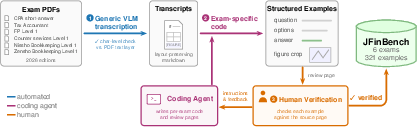
To solve this, the researchers created a process involving both AI and people:
- An AI system converted exam pages into organized text.
- A coding AI wrote special programs for each exam format.
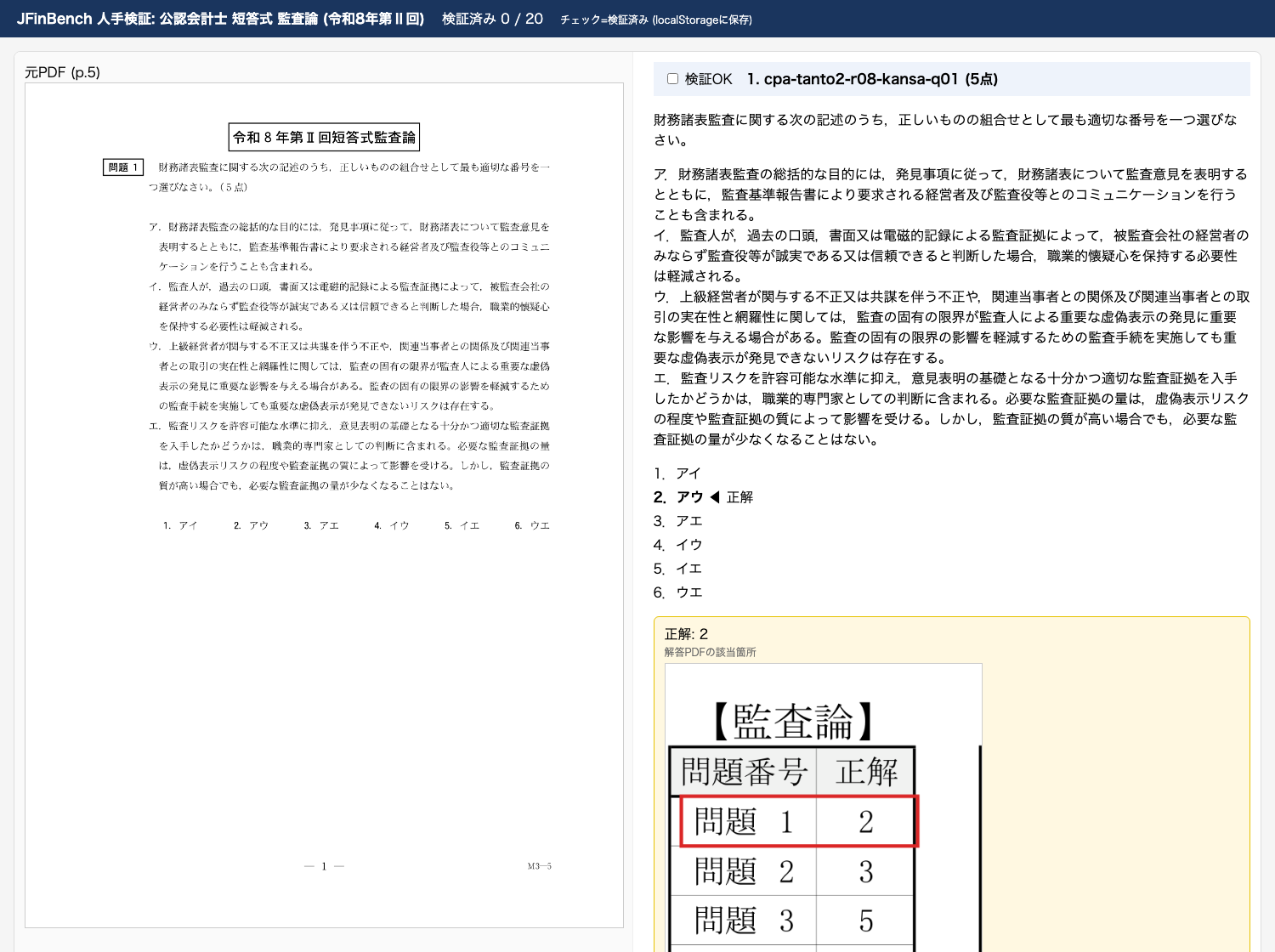
- A human expert checked every question against the original exam page.
- When the human found a mistake, the coding AI corrected its program.
- The human checked the corrected version again.
This is called a human-in-the-loop system. It is similar to having a robot do most of the work while a teacher checks its homework and explains its mistakes.
The full checking process took about 12 hours, or roughly two hours for each exam.
Testing the AI models
The researchers tested 12 LLMs. Some were proprietary models, meaning their creators keep much of their internal technology private. Others were open-weight models, whose model files are more openly available.
The models were tested in two situations:
- Without tools: They had to answer using only what they already knew.
- With tools: They could use a computer terminal, web searches, and calculation programs.
The researchers repeated the tests several times because AI answers can change from one attempt to another.
Different answers were graded in different ways. For example:
- Multiple-choice answers were checked against the correct option.
- Numerical answers were accepted if they were mathematically equivalent.
- Forms received partial credit for each correctly completed blank.
- Essays were graded according to how many important points they included.
4. What did the researchers find?
Some models performed very well without tools
The strongest models were:
| Model | Overall score without tools |
|---|---|
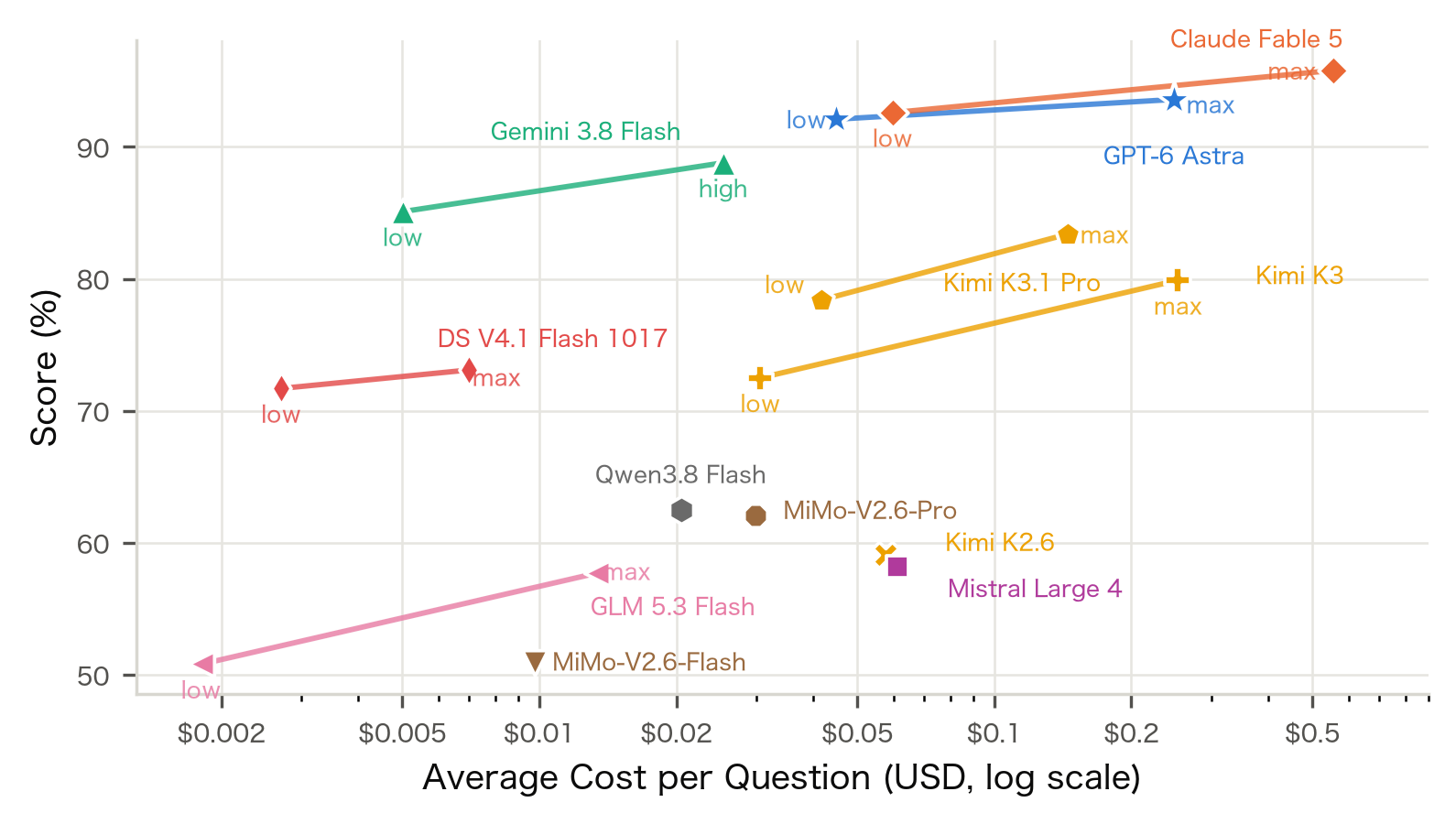
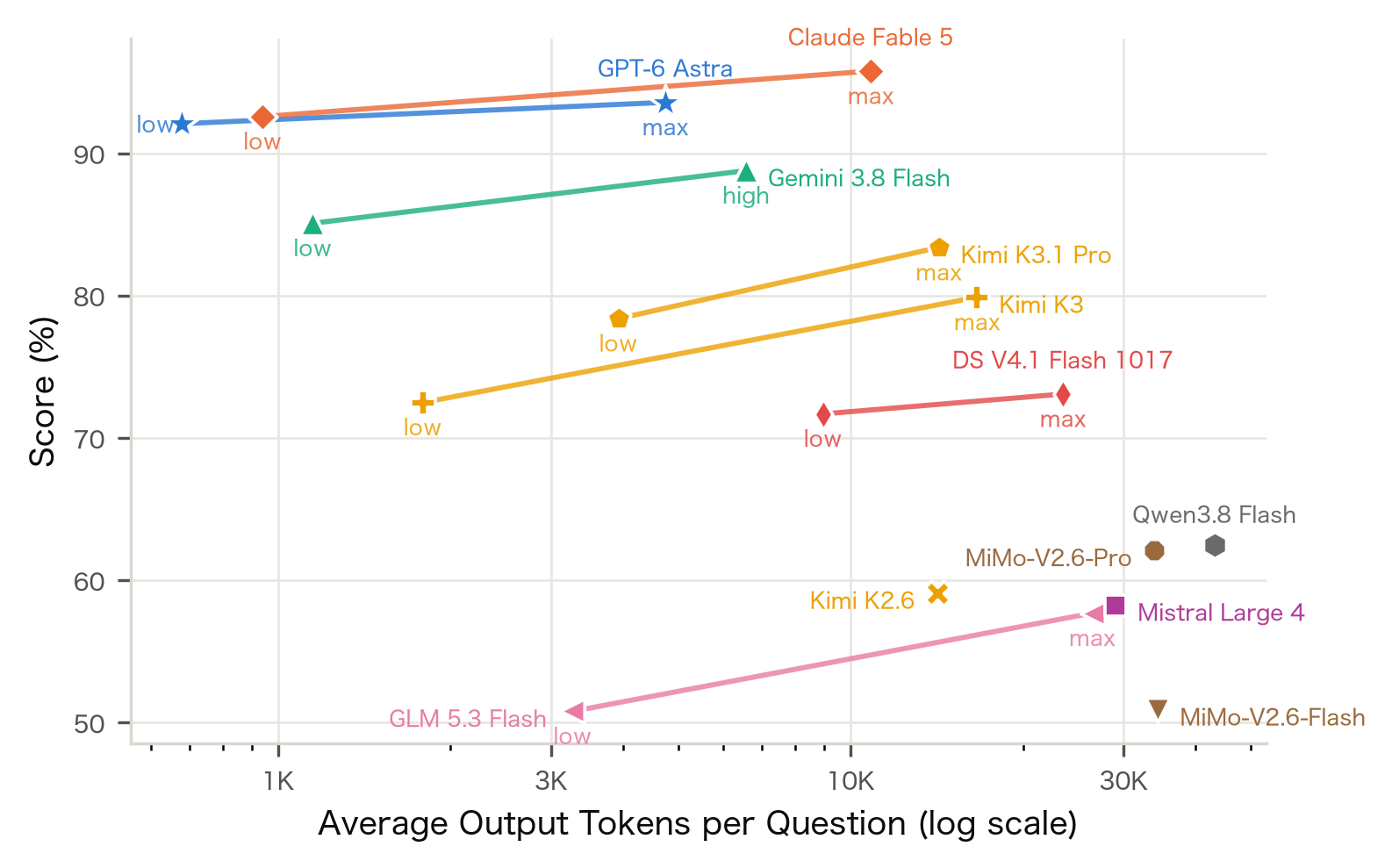
| Claude Fable 5 | 95.8% |
| GPT-6 Astra | 93.6% |
| Gemini 3.8 Flash | 88.8% |
| Kimi K3.1 Pro, best open-weight model | 83.4% |
The best proprietary models scored above 93%. However, the best open-weight model scored about 12 percentage points lower than the top model.
The leading models did especially well on accounting, financial planning, banking, and bookkeeping. The hardest area was the tax accountant exam, where even the best model scored below 80%.
Missing knowledge caused most mistakes
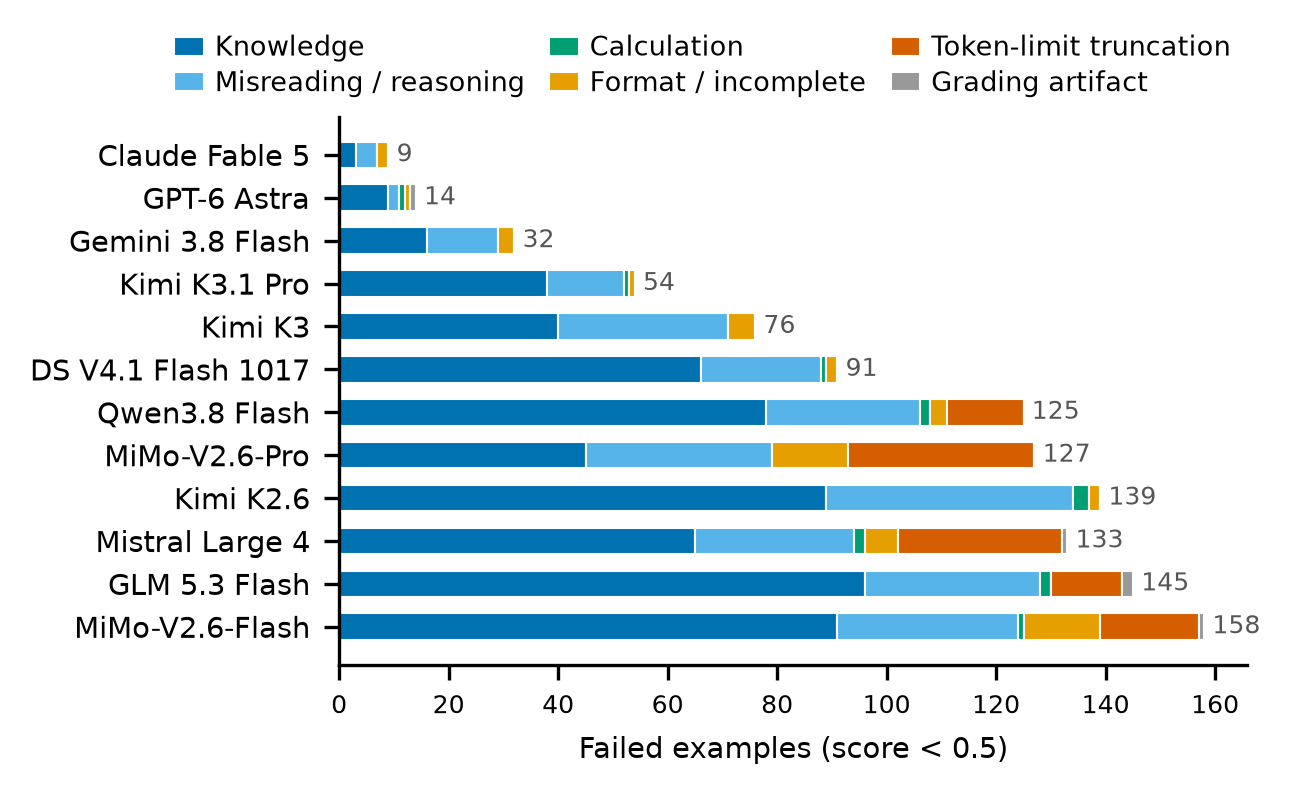
The researchers examined incorrect answers and grouped the mistakes into categories. The most common problem was missing or incorrect knowledge.
For example, a model might understand the general purpose of a tax law but fail to remember its exact conditions or requirements.
Calculation mistakes were less common. This suggests that the models usually struggled more with knowing the correct rules than with doing arithmetic.
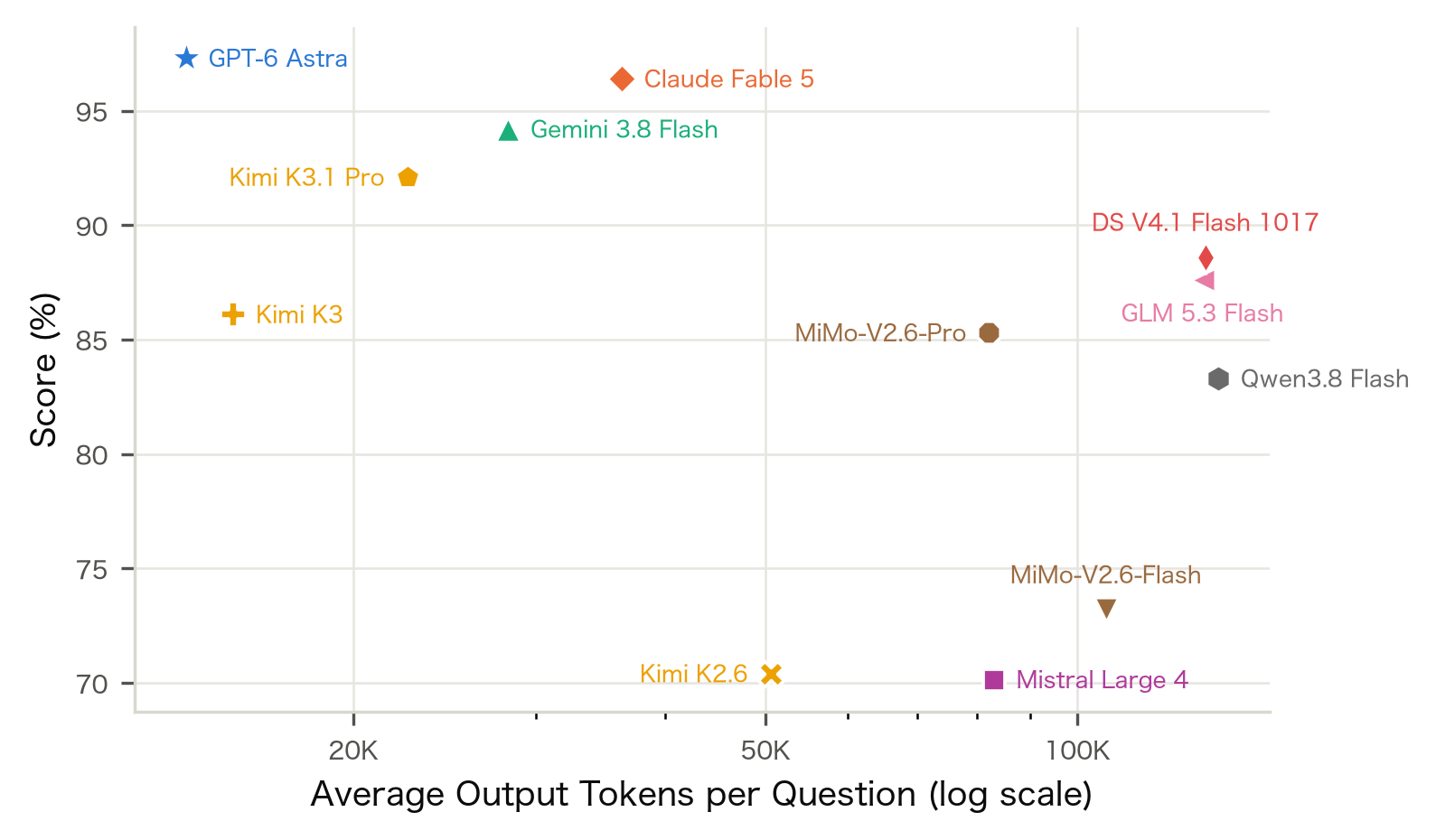
Some models also produced extremely long reasoning responses and ran out of space before giving a final answer.
Tools helped every model
When the AI systems could search the web and use calculators, every model improved.
Examples include:
- The best proprietary model rose from 95.8% to 96.4%.
- The best open-weight model rose from 83.4% to 92.9%.
- Some weaker models improved by more than 20 percentage points.
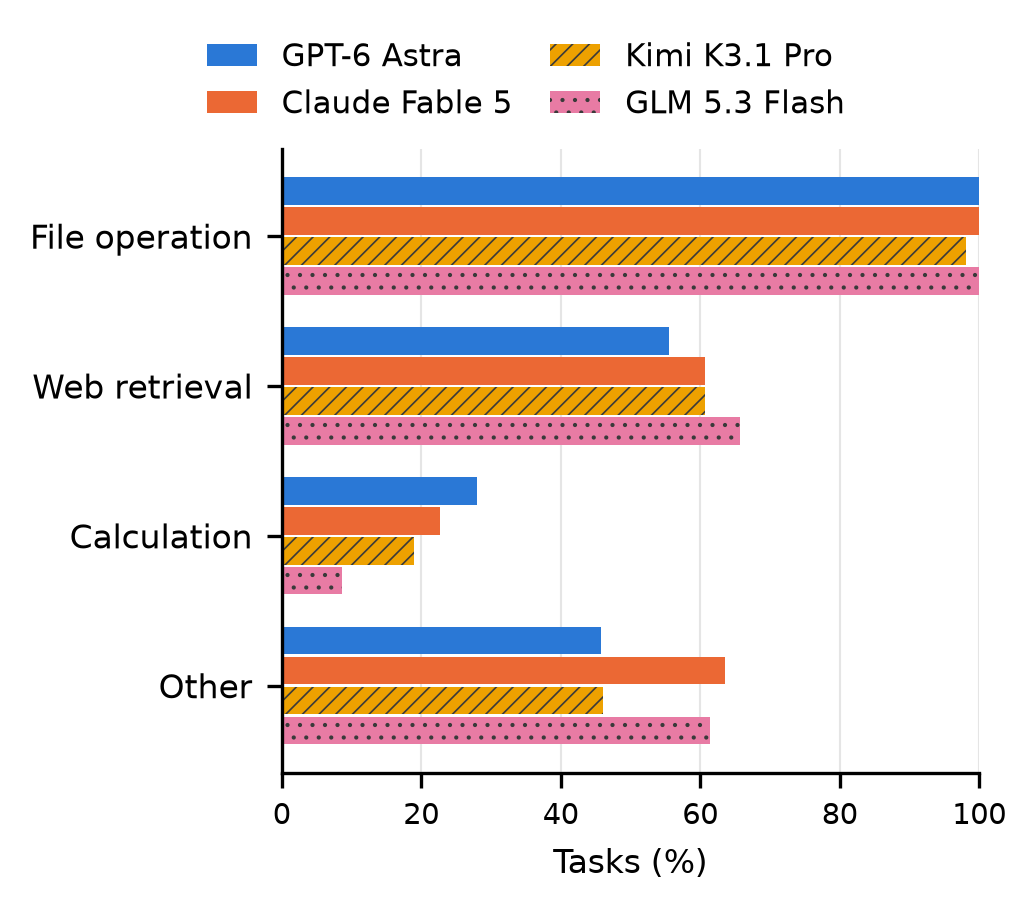
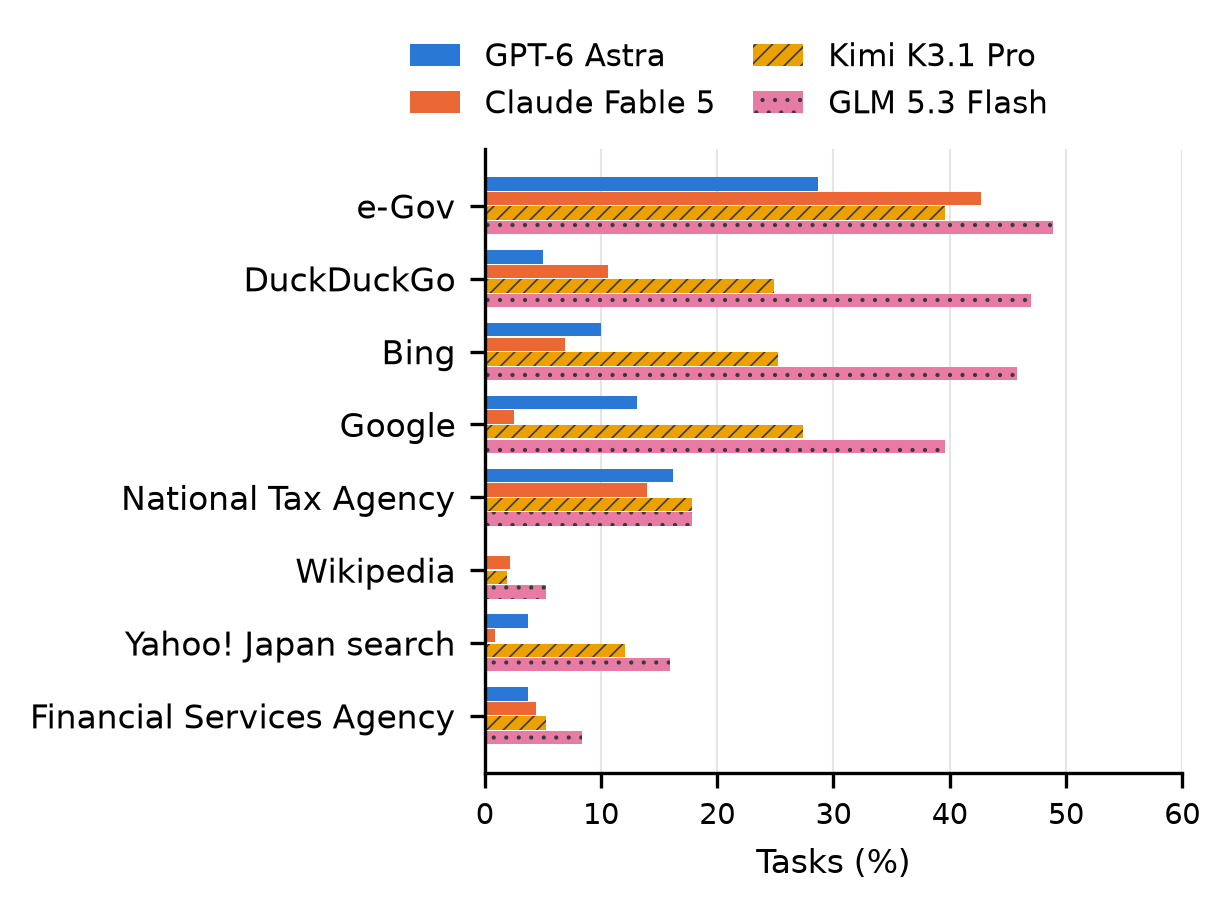
The models often searched Japan’s official government database for laws and regulations. They also used computer programs to calculate taxes, depreciation, and other financial values.
However, tools did not completely remove the differences between models. The best models were still generally the best after receiving access to the web and a terminal.
The gap between the best proprietary and open-weight models fell from about 12 points to about 4 points, but it did not disappear.
5. Why are these findings important?
JFinBench is useful for several reasons.
First, it tests knowledge that many other AI evaluations ignore. Most financial benchmarks focus on English and the United States. JFinBench instead focuses on Japanese laws, rules, exams, and financial practices.
Second, the benchmark can be updated. New tax rules and accounting standards appear regularly, so a test based only on old questions may become outdated. Using new exam editions helps keep the test fresh.
Third, fresh questions make it harder for AI systems to simply memorize the answers. This is known as data contamination: if test questions appear online and later become part of an AI’s training data, the AI may seem intelligent simply because it has seen the answers before.
Fourth, the study shows that web access is useful, but it does not replace knowledge already stored inside a model. A model needs enough background knowledge to know:
- What information to search for
- Which sources are trustworthy
- How to use the information it finds
6. Overall conclusion and possible impact
The paper shows that current AI models can perform very well on many Japanese financial questions, but they are not equally capable. Leading proprietary models are strong, while open-weight models still have room to improve, especially in specialized Japanese tax knowledge.
JFinBench could help researchers and companies:
- Compare financial AI systems more fairly
- Track whether models improve over time
- Find weaknesses in financial knowledge
- Test whether models understand new laws and regulations
- Build safer financial assistants
However, a high score on JFinBench does not mean that an AI is qualified to replace a tax accountant, auditor, or financial professional. Financial mistakes can seriously harm people, so AI answers should still be checked by trained humans.
In simple terms, the paper creates a regularly updated school exam for financial AI. It shows that some AI systems know a great deal about Japanese finance, that others still lack important knowledge, and that access to reliable online tools can help—but cannot completely replace deep understanding.
Practical Applications
Immediate Applications
- Model selection and quality assurance for Japanese financial AI (industry: banking, insurance, accounting, tax, fintech; academia)
- Potential workflow: evaluate candidate models on the six exam areas, report performance separately for tax, accounting, financial planning, banking, and auditing, and select models according to the risk of each task.
- Assumptions/dependencies: benchmark access and licensing must permit the intended use; exam performance must correlate with real operational accuracy; deployment still requires domain-specific testing, monitoring, and human review.
- Grounded Japanese financial question-answering assistants (industry: retail banking, wealth management, insurance, tax services)
- Potential product: a retrieval-augmented assistant that cites the relevant statute, specifies the effective date, performs calculations in a sandbox, and flags uncertain cases for a licensed professional.
- Assumptions/dependencies: authoritative sources must be current and correctly interpreted; retrieval systems must distinguish statutes from unofficial commentary and answer keys; the assistant must not be marketed as a substitute for a CPA, tax accountant, financial planner, or lawyer.
- Automated regression testing for finance-focused LLMs (software and AI engineering)
- Potential tool: a continuous-evaluation dashboard showing scores by exam, question type, statutory basis date, cost per question, and tool-use configuration.
- Assumptions/dependencies: future benchmark editions should be incorporated to reduce contamination; evaluation scores should be supplemented with manually reviewed business cases and safety tests.
- Testing of financial agents that browse and calculate (fintech, enterprise software, AI infrastructure)
- Potential workflow: ingest a user scenario, retrieve the applicable law as of a specified date, calculate the result programmatically, produce citations, and route the output to a reviewer.
- Assumptions/dependencies: web content may be incomplete or adversarial; tools need access controls, provenance logging, sandboxing, and safeguards against consulting prohibited or contaminated answer material.
- Japanese financial education and exam preparation (education and professional training)
- Potential product: a tutor that identifies whether a learner’s problem is missing knowledge, misreading, calculation, or answer-format failure, then recommends targeted exercises.
- Assumptions/dependencies: official exam material and answer keys may have copyright or usage restrictions; AI-generated explanations require teacher or practitioner review; learners should be told that AI performance does not establish professional competence.
- Curriculum and assessment research in Japanese finance (academia and professional bodies)
- Potential research workflow: test a model before and after Japanese legal-financial fine-tuning, compare closed-book and statute-retrieval conditions, and measure accuracy, citation quality, cost, and calibration.
- Assumptions/dependencies: LLM-as-a-judge scoring can introduce bias; human validation remains necessary, especially for essays, equivalent legal phrasing, and complex calculations.
- Procurement and governance criteria for financial-sector AI (policy, regulators, risk and compliance)
- Potential control: make benchmark results, error categories, tool traces, and post-deployment incident rates part of an AI system card or procurement dossier.
- Assumptions/dependencies: benchmark scores alone do not demonstrate legal compliance, fairness, robustness, or suitability for high-stakes decisions; regulators would need task-specific thresholds and independent audit procedures.
- Personal financial self-service with human escalation (daily life and consumer finance)
- Assumptions/dependencies: outputs must be labeled as informational; users need clear warnings about changing laws, incomplete facts, and tax or investment consequences; high-impact recommendations should be escalated to qualified professionals.
Long-Term Applications
- A continuously refreshed evaluation infrastructure for regulated AI (AI research, finance, medicine, law, public administration)
- Potential infrastructure: a versioned “live benchmark” platform that automatically ingests new official documents, preserves page images and structured records, records the applicable legal date, and publishes evaluation splits.
- Assumptions/dependencies: source organizations must regularly publish usable materials; licensing and copyright issues must be resolved; OCR/VLM transcription and agent-generated parsers require expert verification to prevent silent data corruption.
- Regulation-aware financial co-pilots for professionals (accounting, tax, auditing, banking, wealth management)
- Potential product: an auditable tax or accounting co-pilot that maintains a source trail, uses versioned regulations, performs independent calculation checks, and requires professional approval before submission.
- Assumptions/dependencies: substantially higher reliability and calibration are needed than demonstrated by exam scores; professional liability, data confidentiality, explainability, and integration with official filing systems remain unresolved.
- Localized open-weight financial models (AI model development and sovereign technology)
- Potential workflow: train or adapt a Japanese finance model, evaluate it on future unseen exam editions, and compare it with a retrieval-only baseline and a larger general model.
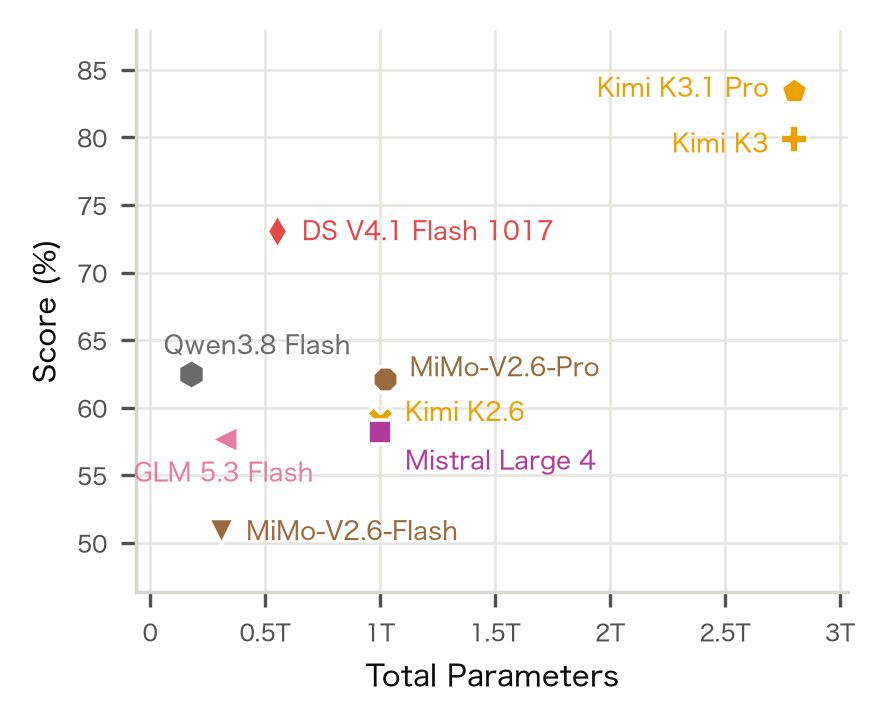
- Assumptions/dependencies: acquiring sufficiently diverse and legally usable training data is difficult; benchmark contamination can inflate apparent progress; parameter count alone will not guarantee better specialized knowledge.
- Adaptive legal and accounting knowledge systems (enterprise knowledge management and regulatory technology)
- Potential tool: a temporal regulation graph linking each answer to the exact law, interpretation, effective date, amendment history, and calculation assumptions.
- Assumptions/dependencies: complete versioned legal corpora and reliable amendment tracking are required; legal interpretation cannot always be reduced to retrieval; conflicts between statutes, administrative guidance, and case law need expert handling.
- Benchmark-driven autonomous financial operations (finance, enterprise automation, robotics/software agents)
- Potential workflow: agent reads source documents, extracts structured data, performs calculations in a sandbox, checks applicable rules, drafts an output, and requests human approval.
- Assumptions/dependencies: deployment requires secure access to enterprise systems, robust identity and authorization controls, deterministic calculation modules, comprehensive audit logs, and testing on realistic confidential data.
- Public-sector monitoring of AI readiness for national financial services (policy and economic planning)
- Potential policy use: publish minimum evaluation protocols for AI used in financial advice, require disclosure of statutory coverage dates, and fund open datasets or models for domestic-language financial services.
- Assumptions/dependencies: scores must be interpreted alongside privacy, bias, robustness, cybersecurity, and consumer-harm assessments; public release of exam questions may increase contamination and reduce long-term diagnostic value.
- High-confidence consumer financial planning assistants (daily life, retirement, inheritance, insurance, household budgeting)
- Potential product: a scenario planner that displays assumptions, computes multiple alternatives, cites current rules, highlights uncertainty, and automatically refers complex cases to a licensed adviser.
- Assumptions/dependencies: users must provide accurate and complete information; regulations and personal circumstances can change; systems require strong privacy protections, suitability checks, bias testing, and professional oversight.
Glossary
- Agentic evaluation: Assessment of an AI system performing tasks autonomously through iterative interaction with tools and an environment. “a framework for agentic evaluation that runs each task in an isolated container”
- Agent harness: A software framework that manages an AI agent’s interaction with tools while completing an evaluation task. “Each model is evaluated with Harbor's Terminus-2 agent harness”
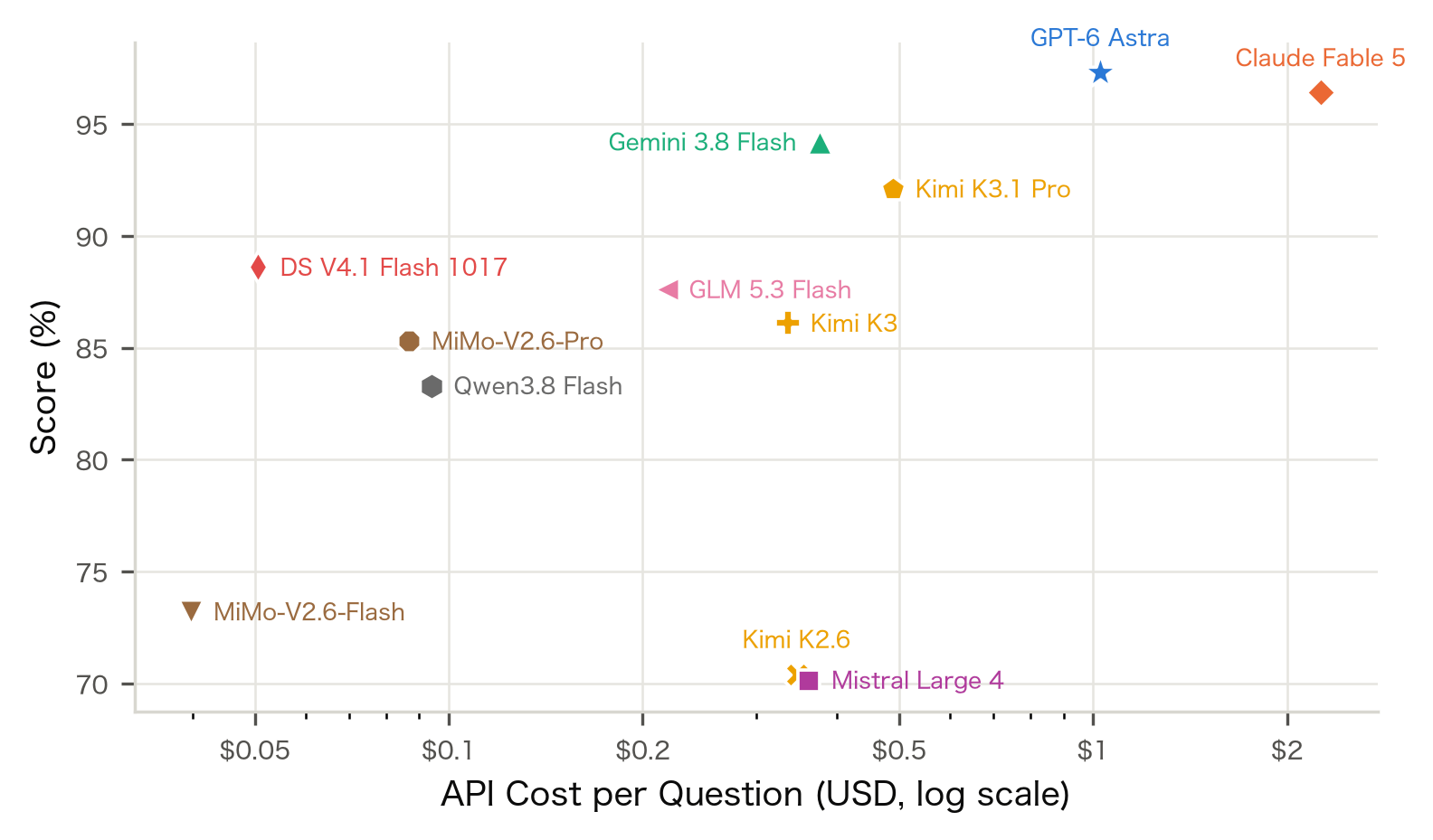
- API cost: The monetary charge incurred when using a model through an application programming interface, typically based on token usage. “plots overall score against API cost per question”
- Answer-key contamination: The presence of benchmark answers in a model’s training or accessible evaluation data, potentially inflating performance. “Because the web may contain the published answers”
- Benchmark contamination: The incorporation of benchmark questions into a model’s training data, causing evaluation scores to reflect memorization. “questions from past exam editions may test rules that no longer apply”
- Blank-level partial credit: A grading method that awards credit separately for each correctly completed blank in a structured response. “Form: blank-level partial credit, i.e., the fraction of blanks matching the answer key”
- Character multiset: A representation that records the frequency of each character in a text, regardless of character order. “Each transcript is compared with the PyMuPDF-extracted text as character multisets”
- Cohen’s kappa: A statistic measuring inter-rater agreement while correcting for agreement expected by chance. “The labels agree on 26 of 30 (Cohen's )”
- Cost accounting: Accounting concerned with measuring and allocating the costs of producing goods or providing services. “Level~1 covers advanced financial and cost accounting”
- Data contamination: The leakage of evaluation material into a model’s training data or other information sources used during evaluation. “A persistent challenge for benchmark-based evaluation is data contamination”
- De facto standard: A practice or system that is widely treated as standard despite not being formally designated as such. “Japan's de facto standard bookkeeping certification”
- EDGAR: The U.S. Securities and Exchange Commission’s electronic database of corporate filings. “agents research recent SEC filings with web search and EDGAR access”
- Equivalence judge: An automated evaluator that determines whether a response is substantively equivalent to a reference answer despite differences in wording. “Short answer: an equivalence judge that accepts mathematically or legally equivalent phrasings”
- Exam-specific conversion code: Program code tailored to transform the source material and format of a particular examination into structured evaluation examples. “a coding agent writes exam-specific conversion code”
- Financial accounting: The branch of accounting that records and reports an organization’s financial transactions and position. “namely financial accounting, management accounting, auditing, and corporate law”
- Financial benchmark: A standardized dataset or evaluation suite for measuring the performance of AI systems on financial tasks. “We introduce JFinBench, a Japanese financial benchmark”
- Financial planning: The process of analyzing financial circumstances and making plans concerning resources, investments, insurance, taxes, and retirement. “covering accounting, tax, financial planning, and banking”
- Free-response: An assessment format in which the respondent generates an answer rather than selecting from predefined options. “free-response, form, and essay answers graded with rubrics”
- Hallucination: The generation of information that is unsupported by or absent from the source material. “flagging omissions and hallucinations for inspection”
- Human-in-the-loop: A system design in which humans supervise, verify, or correct the output of an automated process. “we develop a human-in-the-loop agentic pipeline”
- In-context reasoning: Reasoning performed using information supplied within the current prompt or interaction rather than only stored model knowledge. “Results without tools measure parametric knowledge and in-context reasoning”
- LLM-as-a-judge: The use of a LLM to evaluate the quality or correctness of another model’s output. “following the LLM-judged failure analysis of Terminal-Bench”
- Live benchmark: An evaluation benchmark periodically refreshed with newly released material to reduce memorization and contamination. “live benchmarks such as LiveCodeBench”
- MCQ: Multiple-choice question, an assessment item requiring selection from a set of alternatives. “MCQ: regex-based answer extraction”
- Model parameters: Learned numerical values that encode patterns and knowledge in a machine-learning model. “knowledge stored in the model's parameters”
- Open-weight model: A model whose learned weights are publicly available, allowing others to run or modify it. “the best open-weight model, Kimi K3.1 Pro”
- Parametric knowledge: Information encoded within a model’s learned parameters rather than retrieved from external tools or sources. “Results without tools measure parametric knowledge”
- Post-training: Training performed after a model’s initial pretraining, often to improve instruction following, reasoning, or domain performance. “which points to the effect of post-training”
- Reasoning effort: A configurable inference setting that controls how much computational or token budget a model uses for reasoning. “settings, such as reasoning effort, that control how much test-time compute they spend”
- Regex-based answer extraction: The use of regular expressions to identify and extract an answer from generated text. “MCQ: regex-based answer extraction”
- Rubric-based grading: Evaluation according to predefined criteria or required answer components. “Essay: rubric-based grading, where the key points of the answer key serve as the rubric”
- Sampling parameters: Settings that control the stochastic generation behavior of a LLM, such as temperature or nucleus sampling. “We use the developer's recommended sampling parameters where published”
- Statutory basis date: The date used to determine which laws and regulations are considered applicable for an examination or evaluation. “the statutory basis date”
- Structured answer form: A response format consisting of multiple organized fields or blanks that must be completed. “Form examples require a structured answer form with up to dozens of interdependent blanks”
- Test-time compute: Computational resources expended while a model is generating an answer, including additional reasoning tokens. “how much test-time compute they spend”
- Token-limit truncation: Premature termination of a model’s output because it reaches the maximum permitted number of tokens. “generation, including reasoning tokens, hits the output-token limit with no final answer”
- Trajectory: The recorded sequence of actions, tool calls, observations, and responses produced by an AI agent during a task. “we audit every trajectory with an LLM”
- Visual LLM (VLM): A model capable of processing and generating language from visual inputs such as images or document pages. “transcribe it into markdown with a VLM”
- Web retrieval: The process of obtaining information from online sources during model inference. “Web retrieval occurs in 56 to 66\% of the tasks”
- Open-weight model: A LLM whose learned parameters are released publicly for inspection or use. “the best open-weight model, Kimi K3.1 Pro”

