Engineering Reliable Coding Agents: Evaluating and Operating the System Around the Model
Abstract: AI coding agents are commonly evaluated as models but deployed as systems. Their reliability depends not only on model capability, but on the harness, execution state, retrieval, memory and state management, permissions, review interfaces, and resource allocation. This monograph examines those boundaries and develops a framework for evaluating and operating coding agents reliably. It synthesizes 164 scholarly works, 100 practitioner records, 29 benchmark records, and 17 author-system case records through a structured multivocal review, targeted update audits, software-engineering coverage analysis, and distributed-systems evidence synthesis. Across this evidence, many apparent model failures originate elsewhere in the system, while improvements at one layer often fail to propagate to end-to-end outcomes. Evaluation and operation are treated as a dependency chain in which weaknesses in task construction, execution environments, retrieval, state management, verification, or observability can invalidate downstream conclusions. The monograph contributes a versioned catalog of 206 reliability records: 193 gated practices, including 56 developed in depth, plus 13 research leads; an evidence ledger; a framework for dependency and repair asymmetry across the agent lifecycle; measurements and failure cases from operated agent systems; runnable evaluation and reliability protocols; and five reusable agent skills with evidence maps. Together, these provide a system-level methodology for distinguishing model capability from infrastructure effects, designing defensible evaluations, and building systems that recover safely when components fail. The review is structured rather than exhaustive, evidence strength varies by topic, and results depend on workload and configuration. The methods record which search lanes were executed, which remain unexecuted, and limits on evidence-grading claims.
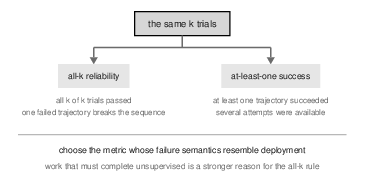
Paper Prompts
Sign up for free to create and run prompts on this paper.
Top Community Prompts
Explain it Like I'm 14
1. What is the paper about?
The paper, “Engineering Reliable Coding Agents,” studies how to make AI tools that write computer code more dependable.
The main idea is that an AI coding agent is not just the LLM producing code. It is part of a larger system that includes:
- The computer environment where it runs
- The information it can search and remember
- The permissions it has
- The tests used to check its work
- The people who review its changes
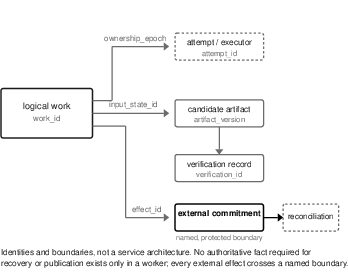
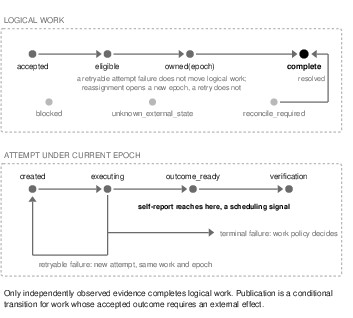
- The systems that save its progress and recover from failures
- The way time, money, and computing power are allocated
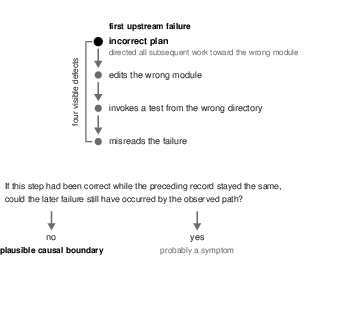
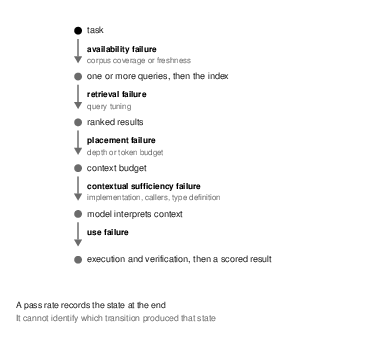
The paper argues that an agent can appear to fail because of the model, even when the real problem is somewhere else. For example, the agent might not have been given the right files, might have run incomplete tests, or might have lost important information during a restart.
2. What questions does the paper try to answer?
The paper asks questions such as:
- How should we fairly measure whether a coding agent is good?
- How can we tell whether an improvement is real or just caused by an easier test?
- How can we check that the agent’s code actually works, rather than trusting what it says?
- What should happen when the agent crashes, loses information, or makes a dangerous request?
- How much access should an agent have to files, tools, and credentials?
- How can people review an agent’s work effectively?
- How should organizations manage many agents while controlling cost, time, and computing resources?
- How can we separate a problem caused by the AI model from a problem caused by the surrounding software system?
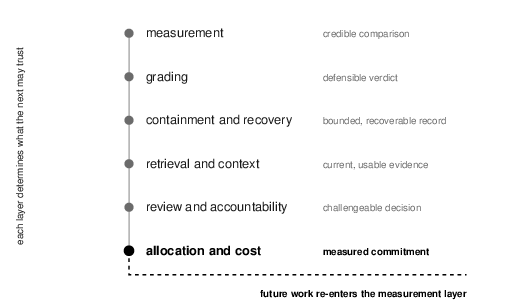
The authors organize these questions into a chain:
measurement → grading → safety and recovery → information and memory → human review → resource allocation
Each step depends on the one before it. If the first measurement is poor, later decisions may also be wrong.
3. How was the research carried out?
This is mainly a technical review and engineering guide, rather than one experiment with a single group of participants.
Reviewing existing research
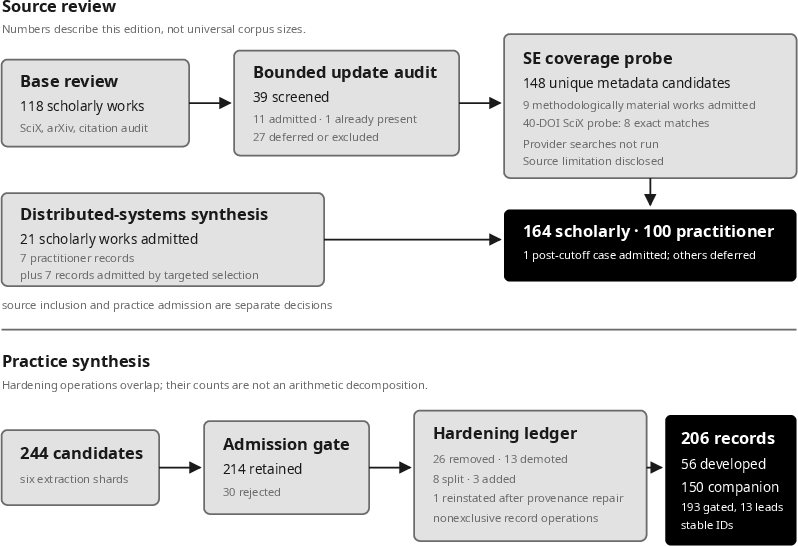
The author collected and examined many different kinds of sources:
| Type of source | Number |
|---|---|
| Scholarly research papers | 164 |
| Practitioner and industry records | 100 |
| Benchmark records | 29 |
| Cases from systems operated by the author | 17 |
A benchmark is a standardized test used to compare systems. It is similar to giving different students the same exam. However, the paper warns that a benchmark can be misleading if the questions are too easy, incomplete, or already known by the AI.
The review was multivocal, meaning it used both academic research and practical reports from engineers. This was important because some real-world problems are described in company reports or incident write-ups rather than in academic papers.
Searching for sources
The author used search and retrieval tools to find relevant material. These tools searched for sources using both:
- Keyword matching, like looking for exact words
- Dense retrieval, which tries to find documents with similar meanings even when they use different words
The tools helped find and organize sources, but the author made the final decisions about which sources to trust and how strong their evidence was.
Grading the evidence
The sources were placed into four broad groups:
- Strong evidence: A careful comparison or measurement directly supports the claim.
- Directional evidence: The evidence suggests something may work, but does not fully prove it.
- Corroborating evidence: Several practical examples show that an idea is believable.
- Null or conflicting evidence: Some results do not support the expected conclusion or disagree with other findings.
The author also performed checks for duplicate sources, weak claims, missing information, and conclusions that were stronger than the evidence allowed.
Studying real agent systems
The paper also includes measurements and failure examples from systems operated by the author. These examples help show how problems happen in practice. However, the author clearly states that these personal cases are not independent proof that the same problem happens everywhere.
Creating recommended practices
From the evidence, the author created a catalog of 206 reliability records:
- 193 were accepted as practices
- 56 were explained in detail
- 13 were listed as possible research topics rather than firm recommendations
The paper also provides checklists, testing procedures, and other materials that organizations can use to examine their own coding-agent systems.
4. What are the main findings?
Reliability depends on the whole system
The most important finding is that reliability is not only a property of the AI model.
A model may write good code, but the final result can still be unreliable if:
- The agent receives incomplete information
- The tests do not check the important behavior
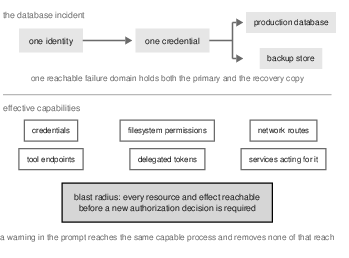
- The agent has too many permissions
- Its work is not saved correctly
- A restart causes it to forget important decisions
- A reviewer cannot see what the agent did
- Different agents interfere with one another
- The system reports success without independently checking it
This is similar to judging a delivery driver only by the driver’s skill while ignoring the car, the map, the road, and the delivery instructions.
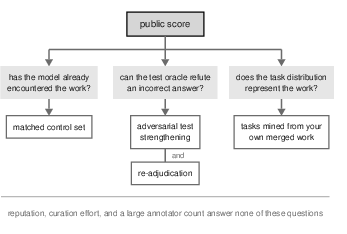
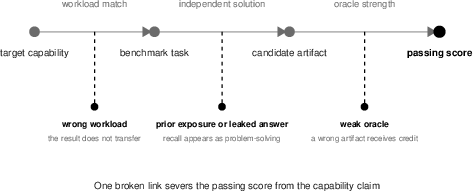
Scores can be misleading
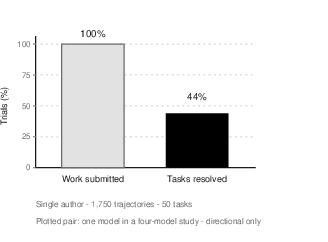
A high score does not always mean that a coding agent is better. The score might be high because:
- The tasks were unusually easy
- The tests did not cover important cases
- The benchmark had information the model had already seen
- A grading system rewarded the appearance of success instead of real correctness
The paper therefore recommends preserving detailed, item-by-item results instead of reporting only one overall score.
Later improvements cannot fix earlier measurement problems
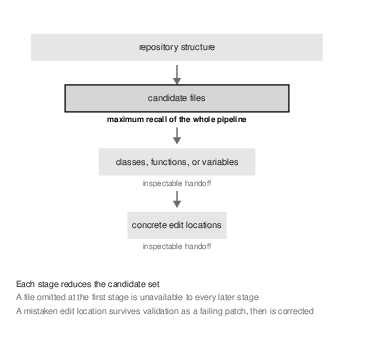
The paper describes a repair asymmetry. This means that fixing a problem early in the process is often much more important than adding more tools later.
For example:
- More test runs cannot fix a test set that does not represent real work.
- More automatic graders cannot fix a confusing grading rule.
- More agents cannot fix a retrieval system that gives them the wrong files.
- Better reports cannot recover information that was never recorded.
In simple terms, putting better software on top of bad measurements does not make the conclusions trustworthy.
Systems need safe recovery
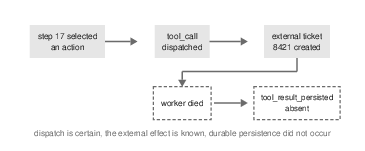
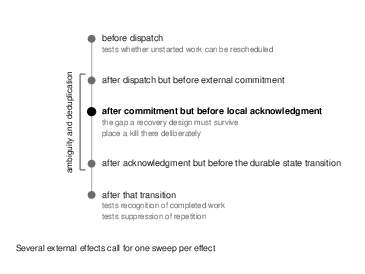
Coding agents can crash, lose network access, or be interrupted while changing files. A reliable system should therefore:
- Save important state
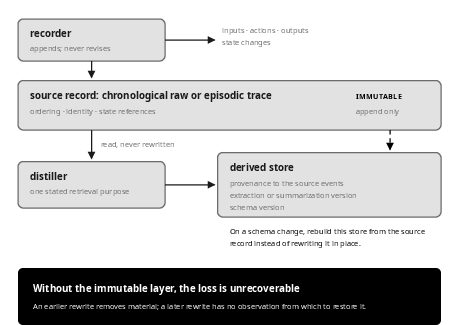
- Keep a record of what happened
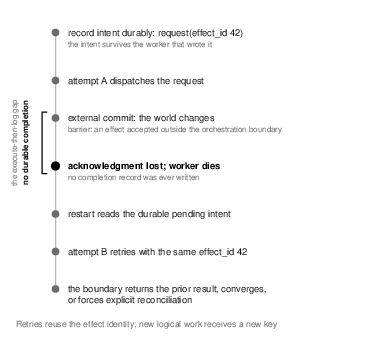
- Retry operations safely
- Avoid repeating an action that could cause damage
- Separate normal work identities from emergency recovery identities
- Test recovery procedures instead of assuming they work
The paper calls some operations idempotent. An idempotent operation can be repeated without causing extra damage. For example, checking whether a file exists is usually safe to repeat, while charging a credit card twice is not.
Human review must be designed carefully
Human review is not automatically effective. Reviewers need to see the evidence that matters, including:
- What the agent changed
- Which tests were run
- Which decisions were uncertain
- What permissions the agent used
- Whether the result was independently verified
The paper also warns that agreement between an automated grader and a human does not necessarily mean the grader is correct. Both may share the same misunderstanding.
The paper’s own evidence has limits
The author openly reports several limitations:
- The review was structured but not completely exhaustive.
- Some major research databases could not be searched because access was unavailable.
- Many recommendations have only directional or practical evidence.
- Results may change depending on the type of code, repository size, model, and system setup.
- The author did not obtain outside reviewers to measure agreement about the evidence grades.
This honesty is important because it prevents the paper from presenting engineering suggestions as universal scientific laws.
5. Why are these findings important?
AI coding agents may eventually work on large and important software projects. If organizations trust them without checking the entire system, several problems could occur:
- Bugs could be introduced into production software.
- Private information or credentials could be exposed.
- An agent could make changes it was not allowed to make.
- A system could claim that a task was complete when it was not.
- A failure could be difficult to investigate because important records were missing.
- Organizations could spend large amounts of money on agents without receiving better results.
The paper’s approach is to treat an AI coding agent more like a worker in a large factory than like a simple chatbot. The factory needs rules, safety equipment, records, inspections, emergency procedures, and managers. Similarly, an AI coding system needs careful tests, limited permissions, saved progress, useful logs, human checks, and recovery plans.
Conclusion: What could this research change?
The paper encourages companies and researchers to stop asking only, “How capable is the AI model?” Instead, they should also ask:
“Can the whole system use this model safely, measure it fairly, and recover when something goes wrong?”
Its practical impact could include:
- Better tests for coding agents
- More honest comparisons between different systems
- Safer permissions and stronger isolation
- Easier investigation of failures
- More useful human review
- Lower costs through better scheduling
- Fewer situations where an agent appears successful but has actually failed
The central lesson is simple: a reliable coding agent requires a reliable system around it. Improving the model matters, but it is only one part of the job.
Knowledge Gaps
The paper leaves the following knowledge gaps, limitations, and open questions unresolved:
- External reproducibility of evidence grading: No external graders completed the blinded sample, so the reliability of the four evidence-group labels and the reproducibility of practice admissions remain unknown.
- Correctness of the grading framework: Even if future reviewers agree with the author’s labels, the paper does not establish that the labels accurately represent the quality or causal strength of the underlying evidence.
- Search coverage beyond SciX and OpenAlex: ACM Digital Library, IEEE Xplore, and Scopus searches were not executed, leaving unknown how many relevant software-engineering studies were missed.
- Incomplete venue coverage: The observed mismatch between SciX and non-TSE records does not quantify corpus recall, topic-search recall, or equivalence with publisher-native indexes.
- Unresolved DBLP candidates: Thirty-four potentially relevant works identified after the cutoff were deferred, so the catalog may omit evidence that could alter its conclusions or practice classifications.
- Non-replayability of the original search process: Not every machine-issued query was preserved, preventing exact byte-for-byte replication of the initial literature retrieval and screening process.
- Potential selection and author-judgment bias: Final source inclusion, evidence grading, practice admission, chapter selection, and prose interpretation were controlled by a single author, despite automated challenge passes.
- No estimate of evidence-selection error: The paper does not measure how often a second research team would include different sources, assign different evidence groups, or derive different practices.
- Limited independence of practitioner evidence: Practitioner records are grouped by independence keys, but the validity of those keys and the extent of shared reporting or survivorship bias are not empirically established.
- Weak prevalence estimates for operational failures: Many proposed controls are supported by mechanisms, incidents, or case reports rather than data estimating how frequently the corresponding failures occur in deployed coding-agent systems.
- Limited external validity of author-system measurements: The original measurements and failure cases come from systems operated by the author and may not transfer to other organizations, repositories, models, harnesses, or governance environments.
- Uncertain scale transfer: The paper focuses on large organizational repositories, including systems with millions or tens of millions of lines, but does not establish whether its practices have comparable benefits or costs in small repositories or different organizational scales.
- Uncertain transfer from adjacent literatures: Claims about fleet scheduling, observatory scheduling, compute clusters, build systems, inference serving, and multi-agent systems are used to motivate coding-agent research, but their effects on coding-agent workloads remain unmeasured.
- No integrated causal evaluation of the dependency chain: The paper argues that measurement, grading, containment, retrieval, review, and allocation interact, but it does not experimentally quantify how failures at one layer propagate through the entire chain.
- No validated model of repair asymmetry: The proposed idea that downstream machinery cannot repair upstream evidence loss is conceptually important, but its magnitude, boundary conditions, and operational decision value are not empirically tested.
- Unresolved attribution of end-to-end improvements: The framework identifies infrastructure effects, but the paper does not provide a validated causal methodology for separating improvements due to the model from those due to the harness, retrieval, memory, permissions, verification, or review system.
- Insufficient evidence for recommended control combinations: Individual mechanisms may have support, but the paper does not establish whether bundles of controls produce additive, redundant, synergistic, or counterproductive effects.
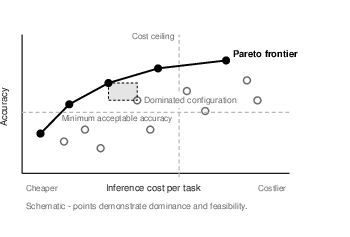
- Unknown operational cost of reliability controls: The effects of proposed practices on compute use, latency, engineering effort, review burden, developer throughput, and monetary cost are not consistently quantified.
- Unresolved trade-offs between reliability and autonomy: The paper discusses containment, verification, and human gates but does not determine how much autonomy can safely be granted under different task risks, organizational constraints, or failure costs.
- Unvalidated human-review interventions: The effectiveness of review interfaces, escalation rules, provenance displays, and risk-based human oversight is not established through controlled studies with realistic reviewers and workloads.
- Unknown reviewer behavior under agent-generated volume: The paper assumes scarce review capacity but does not measure how reviewers’ accuracy, fatigue, trust, or attention change when agents produce many candidate changes.
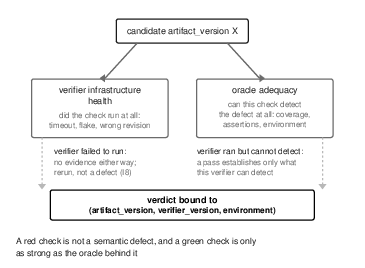
- No established method for detecting hidden test inadequacy: Passing tests are treated as potentially insufficient evidence, but the paper does not validate a general procedure for detecting when tests fail to exercise the modified behavior.
- Unresolved benchmark representativeness: The framework identifies workload validity and benchmark contamination as concerns, but it does not establish which benchmark properties best predict production coding-agent reliability.
- No broad contamination estimates: The paper discusses contamination risks but does not quantify how often coding-agent benchmarks overlap with model training data, evaluation prompts, public repositories, or previously observed tasks.
- Limited evidence for retrieval and context recommendations: Repository retrieval, context budgets, freshness checks, memory, and compaction are treated as central mechanisms, but comparative evidence across repositories, languages, indexing systems, and agent architectures remains incomplete.
- Unknown interaction between retrieval failures and model capability: The paper does not quantify whether stronger models are more robust to missing, stale, empty, or misleading retrieval results.
- Unresolved durability and recovery effectiveness: Durable state, idempotent retries, replayable traces, and fault injection are proposed as controls, but their effect on successful recovery, recovery time, duplicate side effects, and residual authority is not established across realistic failure scenarios.
- Incomplete security evaluation: The discussion includes isolation, injection defenses, identity separation, and authority boundaries, but the paper does not provide comprehensive adversarial testing across prompt injection, credential compromise, cross-repository access, tool abuse, and recovery-path attacks.
- Unknown correlated-failure behavior: The system model emphasizes independently failing components, but it does not sufficiently test correlated failures such as shared identity providers, common retrieval indexes, model endpoint outages, or compromised observability systems.
- No validated reliability thresholds: The minimum reliability pass proposes success floors, cost ceilings, and containment checks, but the paper does not establish threshold values or show that passing the protocol predicts safe production behavior.
- Unresolved statistical power in realistic agent comparisons: The paper recommends repeated and paired comparisons, but the appropriate sample sizes for heterogeneous, nonstationary, long-horizon coding tasks remain unclear.
- Unknown stability over time: Capability measurements, model behavior, pricing, retrieval indexes, and tool interfaces can change rapidly; the paper does not quantify how frequently evaluations must be repeated to remain valid.
- Limited evidence for dynamic allocation and model routing: The research agenda identifies topology selection, fleet scheduling, and cost-aware routing as open areas, but it does not demonstrate that these strategies improve quality-adjusted throughput under real coding-agent workloads.
- Unresolved definition of reliability across objectives: The paper distinguishes correctness, reliability, performance, cost, safety, and usability, but it does not provide a universally validated method for combining these dimensions into deployment decisions.
- No long-term production outcome study: The paper does not show whether the proposed practices reduce escaped defects, security incidents, rollback rates, maintenance costs, or organizational harm over extended deployment periods.
Practical Applications
Immediate Applications
The paper’s most immediately deployable contributions are operational controls for organizations already experimenting with AI coding agents. They do not require a new model; they require instrumentation, workflow changes, access controls, and disciplined evaluation.
- Enterprise software engineering: establish a minimum reliability pass before expanding agent use.
- Potential workflow: CI pipeline or evaluation service producing a paired outcome distribution, cost-quality report, authority-boundary test, verified repository transition, failure corpus, and promotion decision.
- Dependencies: Stable task and baseline versions, repeatable environments, access to execution traces, and enough runs to characterize variance. The protocol is an entry point rather than a reliability certificate.
- Software delivery: replace aggregate benchmark scores with execution-based release gates.
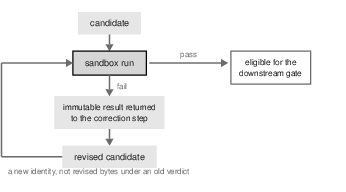
- Potential product: An agent “correction gate” integrated into CI/CD that blocks a pull request until the claimed behavior is independently reproduced.
- Dependencies: Tests must exercise the relevant behavior; otherwise, passing tests may create false confidence. Full-repository validation may be infeasible in large codebases, requiring risk-based subsets.
- Security and platform engineering: enforce capability-boundary testing.
- Potential tools: Automated authorization regression tests, sandbox policies, capability manifests, and “deny-path” test suites for agent tools.
- Dependencies: Fine-grained identities, auditable permission decisions, isolated execution environments, and recovery credentials that are not identical to production credentials.
- Cybersecurity: isolate agents and independently verify consequential actions.
- Sectors: Secure software development, cloud operations, DevSecOps, and infrastructure-as-code.
- Dependencies: Strong sandboxing, separation of duties, trusted verification components, and clear definitions of which actions are consequential.
- Incident response and reliability engineering: build replayable traces and failure taxonomies.
- Potential tools: Agent observability platforms, trace viewers, replay harnesses, fault-injection suites, and failure dashboards.
- Dependencies: Comprehensive event schemas, privacy and secret-redaction mechanisms, deterministic or sufficiently controlled replay environments, and agreement on failure categories.
- Continuous integration and distributed systems: make agent workflows durable and retry-safe.
- Potential workflow: Durable issue-to-pull-request pipelines that resume after worker failure without duplicating commits, deployments, comments, or external side effects.
- Dependencies: Durable storage, idempotency keys, explicit state transitions, lease or ownership management, and safeguards against retries repeating non-idempotent actions.
- Repository management: measure retrieval quality and freshness.
- Potential products: Repository indexes, dependency-aware localization tools, freshness monitors, and retrieval evaluation dashboards.
- Dependencies: Complete repository metadata, language-specific parsers, cross-repository dependency visibility, access-aware indexing, and tests that measure task-level usefulness rather than retrieval volume alone.
- AI platform operations: monitor context budgets and cross-session memory.
- Potential workflow: A restartable agent session that stores task state, evidence, unresolved risks, and prior tool results in inspectable files rather than relying only on a model’s implicit conversational memory.
- Dependencies: Storage and retention policies, secret handling, versioned context artifacts, and mechanisms for detecting stale or contradictory memory.
- Human-computer interaction and software review: redesign review interfaces around risk and evidence.
- Potential product: A pull-request interface with evidence panels, provenance indicators, risk-based routing, and mandatory human gates for high-impact transitions.
- Dependencies: Trace completeness, usable information presentation, reviewer training, and sufficient review capacity. More information can reduce effectiveness if the interface creates excessive cognitive load.
- Governance and compliance: create an evidence ledger for agent-generated changes.
- Sectors: Regulated software, finance, healthcare IT, public-sector systems, and internal AI governance.
- Dependencies: Stable identifiers, retention policies, access controls, provenance integrity, and organizational agreement about evidence grades.
- Research and academia: use paired, repeated, cost-aware evaluations of coding agents.
- Potential output: More reproducible benchmark reports and open evaluation protocols that expose infrastructure effects rather than attributing every difference to the model.
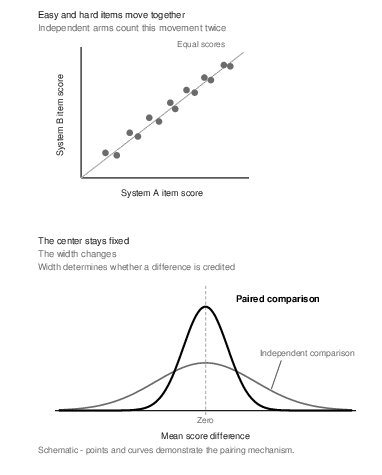
- Dependencies: Representative task distributions, uncontaminated workloads, transparent system configurations, and statistical methods appropriate for paired and variable outcomes.
- Education and training: teach system-level AI engineering rather than model-only evaluation.
- Dependencies: Access to sandboxed agent systems, realistic repositories, and instructors able to assess infrastructure and governance issues in addition to generated code quality.
Long-Term Applications
The paper also motivates applications whose feasibility depends on larger datasets, further empirical validation, interoperability standards, or research into workload-specific behavior. These are best treated as development and research agendas rather than established deployment recipes.
- Autonomous software factories for large organizations.
- Potential product: A distributed agent operating system with contracts for identity, authority, persistence, ordering, ownership, observation, and recovery.
- Dependencies: Reliable cross-repository indexes, durable orchestration, conflict-aware concurrency, strong governance, and evidence that factory-level performance transfers beyond the paper’s local and case-based measurements.
- Dynamic agent topology and task allocation.
- Sectors: Enterprise software, robotics software, cloud operations, and complex engineering workflows.
- Dependencies: Valid workload models, reliable estimates of task difficulty and risk, coordination protocols, and experiments demonstrating that additional agents improve end-to-end outcomes rather than merely increasing activity and cost.
- Cost-aware fleet scheduling and model routing.
- Potential product: A policy-controlled router and scheduler for coding-agent fleets, analogous to a cluster scheduler but aware of correctness, review capacity, and failure recovery.
- Dependencies: Calibrated estimates of quality and uncertainty, stable pricing and latency data, workload-specific evaluation, fair allocation policies, and safeguards against optimizing cost at the expense of safety.
- Risk-adaptive human oversight.
- Sectors: Healthcare software, financial systems, critical infrastructure, and public services.
- Dependencies: Valid risk models, accountable human ownership, explainable escalation decisions, legally acceptable audit trails, and evidence that automation does not conceal important uncertainty.
- Formal reliability certification for coding-agent systems.
- Potential output: An industry standard, procurement checklist, or assurance label for agent platforms used in regulated environments.
- Dependencies: Independent replication, external grader calibration, standardized workloads, agreed definitions of reliability, and evidence that controls remain effective across architectures and scales.
- Cross-domain autonomous engineering systems.
- Dependencies: Domain-specific safety cases, real-time constraints, validated simulators, hardware-in-the-loop testing, sector regulation, and much stronger guarantees than those needed for ordinary repository changes.
- Policy frameworks for accountable agent deployment.
- Sectors: Government procurement, regulated finance, healthcare, defense, and critical infrastructure.
- Dependencies: Jurisdiction-specific legal standards, interoperable audit formats, protection of proprietary code and personal data, and careful distinction between engineering evidence and legally sufficient assurance.
- Benchmark ecosystems that evaluate complete systems rather than models alone.
- Dependencies: Representative and uncontaminated workloads, transparent benchmark versions, executable grading, reproducible environments, and methods for reporting null or conflicting results.
- Automated evidence-quality and experiment-design assistants.
- Potential product: An evaluation-design linter for agent experiments and production rollout plans.
- Dependencies: Well-validated methodological rules, domain expertise, human adjudication, and protection against treating automated checks as independent evidence graders.
- Self-healing agent infrastructure with bounded recovery authority.
- Sectors: Continuous delivery, cloud infrastructure, robotics operations, and laboratory automation.
- Dependencies: Correct state-machine design, idempotent effects, independently tested recovery paths, fault injection, observability across component boundaries, and assurance that recovery cannot amplify a compromised or incorrect agent action.
Glossary
- Ablation: An experiment that removes or changes one system component to measure its contribution. “Baselines, ablations, and cost-accuracy tradeoffs”
- Adjudication: The formal resolution of disagreements or ambiguous decisions during review. “The author made the final inclusion, evidence-group, and practice-admission decisions.”
- Benchmark contamination: The presence of evaluation data or tasks in a model’s prior training or exposure, potentially inflating its measured performance. “Another method checks whether a score was earned on work the model had already encountered.”
- BM25: A probabilistic lexical-information-retrieval ranking algorithm that scores documents according to query-term frequency and document length. “It combined INDUS dense retrieval with BM25 lexical retrieval through reciprocal-rank fusion.”
- Capability boundary: The empirically observed limit separating actions a system can perform from actions it cannot or should not perform. “runnable protocols for local evaluation, capability-boundary testing, recovery testing, trace analysis, and release decisions”
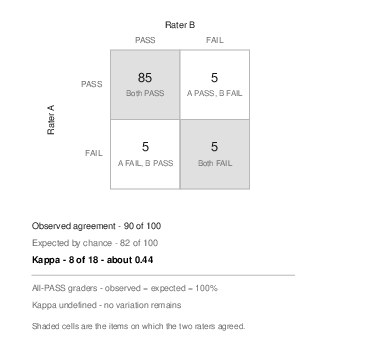
- Cohen’s kappa: A statistic measuring agreement between two annotators while correcting for agreement expected by chance. “a script that can report pairwise Cohen's kappa”
- Construct validity: The degree to which a measurement actually represents the theoretical property it is intended to measure. “work on construct validity in software engineering”
- Correlation: A statistical measure of association between variables, indicating how changes in one relate to changes in another. “The Spearman correlation between urgency rank and a binary indicator”
- Dense retrieval: Information retrieval using vector representations to identify semantically similar documents rather than relying only on exact term matches. “It combined INDUS dense retrieval with BM25 lexical retrieval through reciprocal-rank fusion.”
- Distributed system: A system whose components operate across multiple processes or machines and must coordinate despite independent failures. “reliability stops being a property of the model and becomes a property of the system”
- Durable execution: Execution designed to preserve workflow progress and state across process, machine, or service failures. “durable execution, repository state, verification, human control, and fleet allocation”
- Evidence group: A classification indicating the strength and type of support for a scoped claim. “assign an evidence group”
- Evidence ledger: A structured record linking claims to the evidence that supports, limits, or contradicts them. “an evidence ledger linking claims to their support”
- Fault containment: The restriction of a failure so that it cannot spread to unrelated components, resources, or authority domains. “fault-containment guard”
- Fault injection: Deliberately introducing failures into a system to test its detection, containment, and recovery behavior. “fault-injection recovery testing”
- Fleiss’s kappa: A chance-corrected agreement statistic applicable when three or more annotators classify the same items. “Fleiss's kappa when three readers participate”
- Inference serving: The infrastructure and processes used to provide model predictions to clients, typically under latency, capacity, and concurrency constraints. “Four scholarly systems papers on inference serving”
- Idempotent retry: A retry operation designed so that repeating it produces the same effective result as performing it once. “Persistent agent state, durable workflows, and idempotent retries”
- Independence key: A grouping identifier used to prevent multiple reports of the same incident or claim from being counted as independent evidence. “Repeated practitioner accounts of one incident shared an independence key”
- INDUS: A dense-retrieval system or retrieval method used by the paper’s local scholarly search layer. “It combined INDUS dense retrieval with BM25 lexical retrieval through reciprocal-rank fusion.”
- Inter-rater agreement: The degree to which independent reviewers assign the same labels or judgments to the same items. “reports no inter-rater agreement value”
- Lexical retrieval: Information retrieval based primarily on matching words or textual tokens between a query and documents. “BM25 lexical retrieval”
- Multivocal review: A literature review that combines scholarly research with practitioner or grey literature. “This practitioner lane makes the review multivocal”
- Observability: The ability to infer a system’s internal state from its recorded outputs, events, and measurements. “failures at component boundaries and a recovery procedure can pass while depending on credentials”
- Oracle strength: The degree to which an evaluation oracle can reliably determine whether a system’s output is correct. “Benchmark contamination, oracle strength, and workload validity”
- Paired comparison: An experimental design that compares two conditions on the same items or matched units to reduce irrelevant variation. “a paired distribution”
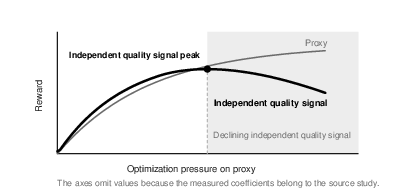
- Proxy metric gaming: Optimizing a measurable surrogate in a way that improves the metric without improving the intended underlying objective. “Proxy metric gaming and layered evaluation signals”
- Reciprocal-rank fusion: A method for combining rankings from multiple retrieval systems by aggregating the reciprocal positions of documents. “It combined INDUS dense retrieval with BM25 lexical retrieval through reciprocal-rank fusion.”
- Recovery path: The sequence of mechanisms by which a system restores safe operation after failure. “whose compromise would also destroy the recovery path”
- Repository-scale scoping: Defining a study or system boundary in relation to the size, structure, and dependencies of a software repository. “scheduling with repository-scale scoping”
- Retrieval boundary: The limit defining which information a retrieval system can return or treat as available. “a retrieval boundary that treats an empty result as authoritative”
- Schema validation: The automated checking of data against a predefined structural and type specification. “validated against a JSON Schema”
- Selection bias: Systematic distortion caused by the way observations, records, or participants are selected. “practitioner reports are vulnerable to selection, survivorship, and reporting bias.”
- Spearman correlation: A rank-based correlation coefficient measuring the monotonic association between two variables. “The Spearman correlation between urgency rank”
- Survivorship bias: Error arising when analysis considers only successful or surviving cases while ignoring failures or discarded cases. “practitioner reports are vulnerable to selection, survivorship, and reporting bias.”
- System boundary: The conceptual or operational line distinguishing a system and its responsibilities from its surrounding environment. “I still describe the relevant system boundary when a familiar tool plays an unfamiliar role.”
- Task distribution: The population and composition of tasks used to evaluate a system, including their difficulty and characteristics. “a task distribution that excludes production work”
- Threat model: An explicit account of possible adversaries, hazards, attack paths, or failure conditions relevant to a system. “supports a mechanism, threat model, comparison design”
- Topology: The structural arrangement of components, agents, services, or communication relationships in a system. “topology, and resource allocation”
- Transfer validity: The extent to which a result or practice applies beyond the conditions, workload, or environment in which it was established. “Transfer is especially substantial in Part VI”
- Workload validity: The degree to which an evaluation workload represents the real-world work for which a system is intended. “Benchmark contamination, oracle strength, and workload validity”

