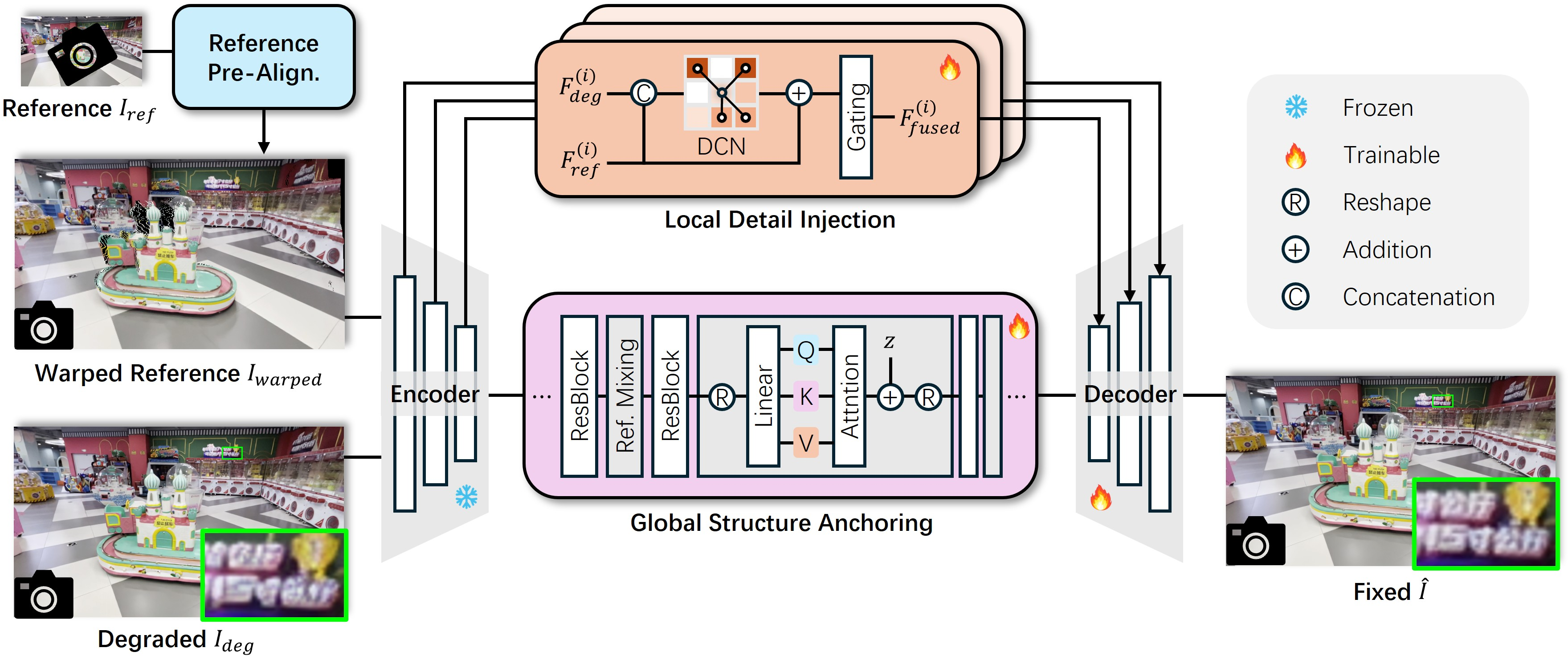
- The paper introduces UniFixer, a plug-and-play reference-guided framework that mitigates spatial, temporal, and backbone degradations in diffusion-based view synthesis.
- It employs a three-stage pipeline—Reference Pre-Alignment, Global Structure Anchoring, and Local Detail Injection—to enhance structure and recover fine-grained textures.
- Experimental results show significant PSNR improvements and robust zero-shot generalization across both explicit and implicit generative synthesis methods.
Universal Reference-Guided Fixing in Diffusion-Based View Synthesis: An Expert Analysis of UniFixer
Motivation and Degradation Analysis
Diffusion-based generative models have become the dominant approach in novel view synthesis (NVS) and stereo conversion (SC). Despite the advantages of explicit Depth-Warp-Inpaint (DWI) and implicit end-to-end paradigms, both suffer significant structural and texture artifacts attributable to pixel-to-latent compression and generative hallucination. These degradations are exacerbated by multiple factors—spatial resolution, temporal dynamics, and backbone architecture—and exhibit distinct, non-overlapping distributions in feature space, as evidenced by t-SNE visualizations.

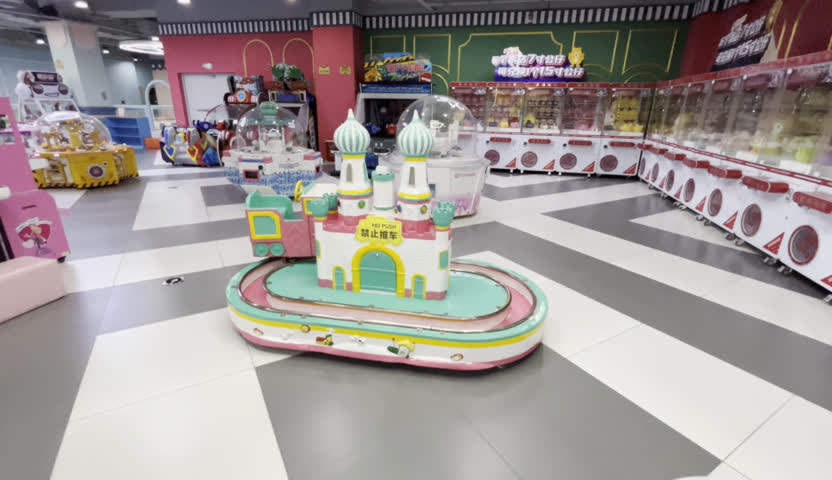
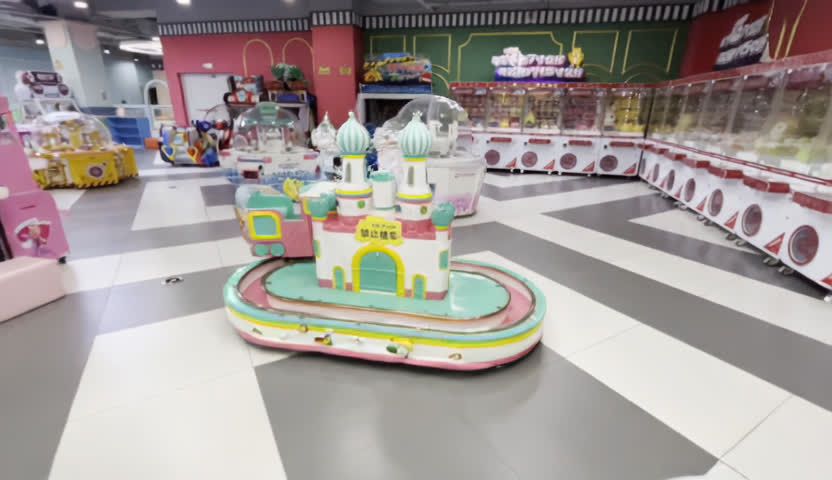
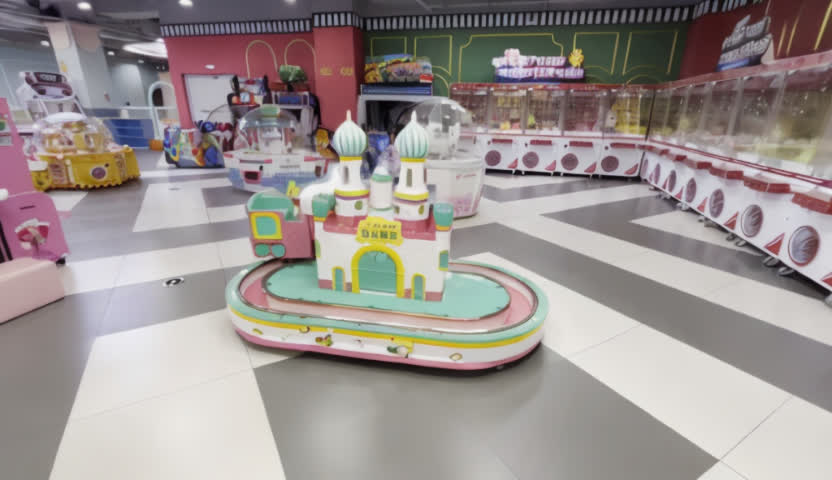
Figure 1: t-SNE analysis reveals the impact of spatial, temporal, and backbone-related degradation on feature distributions, with UniFixer consistently pushing clusters toward ground truth.
UniFixer addresses these challenges by providing a plug-and-play reference-guided fixing framework. The approach targets the broad and variable landscape of diffusion degradation, aiming for robust zero-shot generalization without retraining.
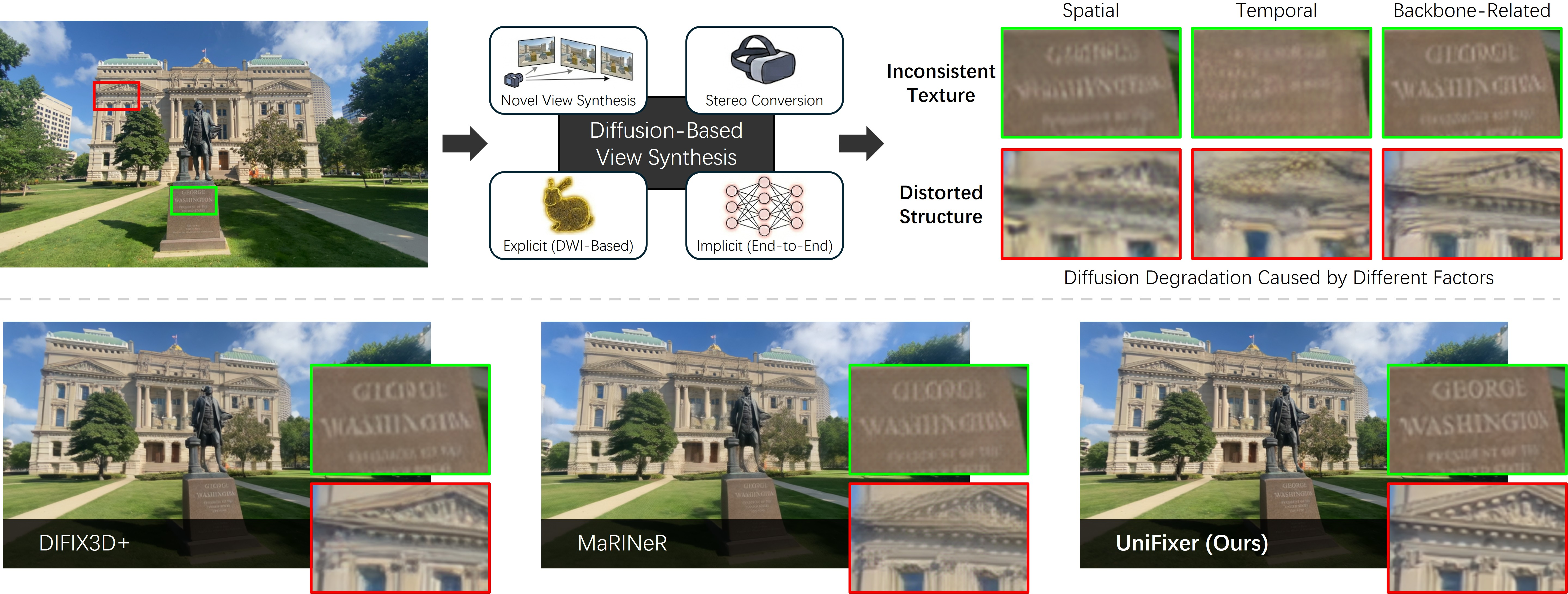
Figure 2: Comparative overview highlighting the limitations of previous fixers versus the broad applicability and superior performance of UniFixer across diverse degradation modes.
UniFixer Architecture
The UniFixer pipeline is structured into three stages—Reference Pre-Alignment (RPA), Global Structure Anchoring (GSA), and Local Detail Injection (LDI)—forming a coarse-to-fine enhancement strategy.
Experimental Evaluation and Numerical Results
UniFixer was trained on a large-scale dataset (DL3DV), achieving convergence within modest computational resources. Evaluation spanned explicit (VACE, ViewCrafter, Mono2Stereo, StereoCrafter) and implicit (ReCamMaster, StereoPilot) view synthesis baselines across tasks and degradation conditions.
Across all degradation types (spatial, temporal, backbone), UniFixer demonstrates strong numerical gains over state-of-the-art fixers (DIFIX3D+, MaRINeR):
- Spatial Degradation: UniFixer registered PSNR improvements up to 0.47 dB and consistently lower FID, LPIPS, and DISTS for all tested scales.
- Temporal Degradation: Maintained performance with increasing frame stride, showing robust temporal artifact suppression.
- Backbone-related Degradation: Exhibited superior gains across both UNet and DiT architectures, highlighting backbone-agnostic generalization.
Results extend to stereo conversion and implicit synthesis, with UniFixer achieving up to 1.9 dB PSNR improvement and pronounced reductions in perceptual and distributional metrics.
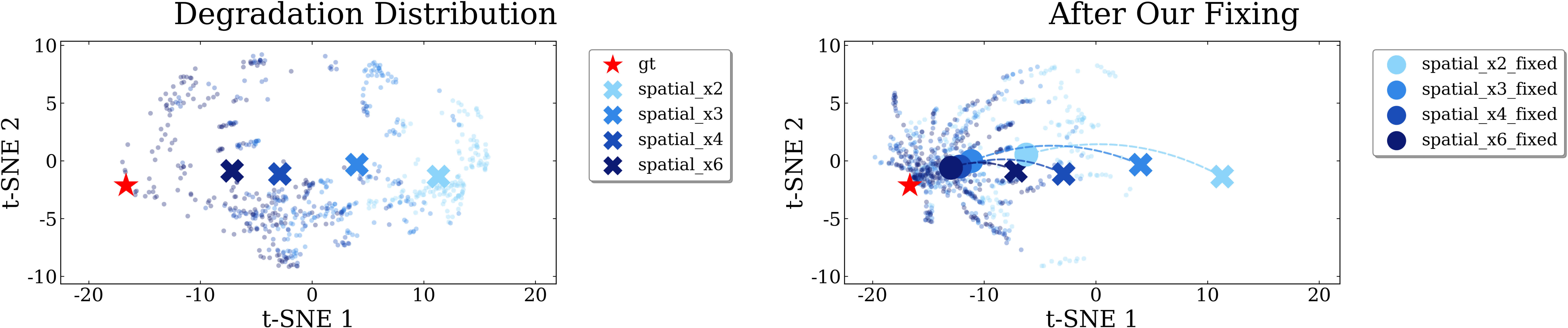
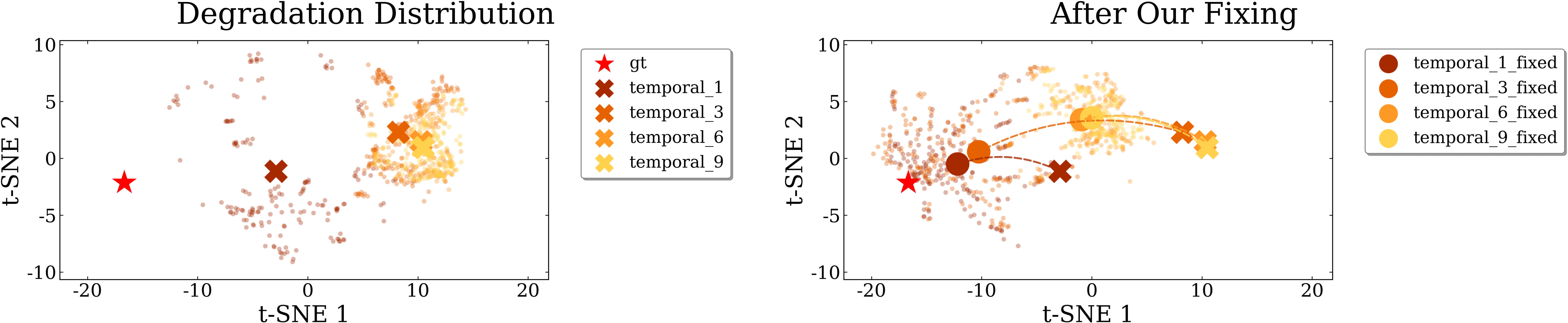

Figure 4: Spatial degradation fixing results demonstrating UniFixer's consistent enhancement across increasing resolution scaling factors.
Ablation and Component Analysis
Ablative studies confirm the synergistic benefits of UniFixer's components. RPA substantially improves correspondence accuracy, GSA provides structure regularization, and LDI enables texture fidelity. Warping-based referencing outperforms convolution, attention, and feature matching paradigms, substantiated by both quantitative and visual evidence.
Practical and Theoretical Implications
UniFixer's universal applicability allows seamless integration into existing pipelines. Its coarse-to-fine modular architecture maximally exploits reference information, circumventing domain-specific retraining and resisting both spatial and semantic distribution shifts. The method's zero-shot performance robustness point toward practical viability in AR/VR, immersive content creation, and 3D video synthesis. Theoretically, the approach emphasizes task-generalizable enhancement via local correspondence search, offering a template for plug-and-play refinement modules in generative vision tasks.
Future Directions
Key unresolved challenges include robust handling of extreme viewpoint disparity (where flow estimation fails) and addressing multi-depth ambiguities in explicit pipelines. Future developments may focus on hybrid geometric-semantic warping frameworks, improved flow estimation in implicit settings, and advanced confidence mapping for finer uncertainty management. There is also scope for extending UniFixer to non-visual generative tasks suffering similar latent-space degradation phenomena.
Conclusion
UniFixer delivers a universal, reference-guided, plug-and-play fixing framework for diffusion-based view synthesis, demonstrating robust zero-shot generalization and outperforming prior art across spatial, temporal, and architectural degradation modes. Its coarse-to-fine refinement strategy and warping-based referencing establish new standards in high-fidelity, degradation-resistant generative synthesis, with broad implications for both practical deployment and future research in generative vision systems (2605.12169).