Intern-S1-Pro: Scientific Multimodal Foundation Model at Trillion Scale
Abstract: We introduce Intern-S1-Pro, the first one-trillion-parameter scientific multimodal foundation model. Scaling to this unprecedented size, the model delivers a comprehensive enhancement across both general and scientific domains. Beyond stronger reasoning and image-text understanding capabilities, its intelligence is augmented with advanced agent capabilities. Simultaneously, its scientific expertise has been vastly expanded to master over 100 specialized tasks across critical science fields, including chemistry, materials, life sciences, and earth sciences. Achieving this massive scale is made possible by the robust infrastructure support of XTuner and LMDeploy, which facilitates highly efficient Reinforcement Learning (RL) training at the 1-trillion parameter level while ensuring strict precision consistency between training and inference. By seamlessly integrating these advancements, Intern-S1-Pro further fortifies the fusion of general and specialized intelligence, working as a Specializable Generalist, demonstrating its position in the top tier of open-source models for general capabilities, while outperforming proprietary models in the depth of specialized scientific tasks.
First 10 authors:
Paper Prompts
Sign up for free to create and run prompts on this paper using GPT-5.
Top Community Prompts
Explain it Like I'm 14
Overview
This paper introduces Intern‑S1‑Pro, a huge AI model with about one trillion parameters. It’s built to understand both words and visuals (like pictures and plots) and to help with science. Think of it as a “specializable generalist”: it’s good at everyday tasks and can switch into “expert mode” for things like chemistry, materials, biology, and earth science. The team also designed new training tricks and tools so such a massive model can learn stably and efficiently.
What questions is the paper trying to answer?
- Can one very large model be both broadly smart (for normal language and images) and deeply skilled in many scientific fields?
- How can we train a trillion‑parameter “team of experts” model without it crashing or slowing down too much?
- How do we teach a model to handle scientific images and time‑series data (like signals over time) more naturally?
- How can we mix scientific data and regular text without them getting in each other’s way?
- Can we make reinforcement learning (a way to fine‑tune behavior with rewards) stable and fast at this enormous scale?
How did they build and train it? (Simple analogies included)
The model uses a Mixture‑of‑Experts (MoE) design:
- Imagine a big school with many specialist teachers (experts). For each sentence or image piece, the school picks a few teachers to handle it. This gives the model massive capacity without using every teacher every time.
Key ideas and tools, in simple terms:
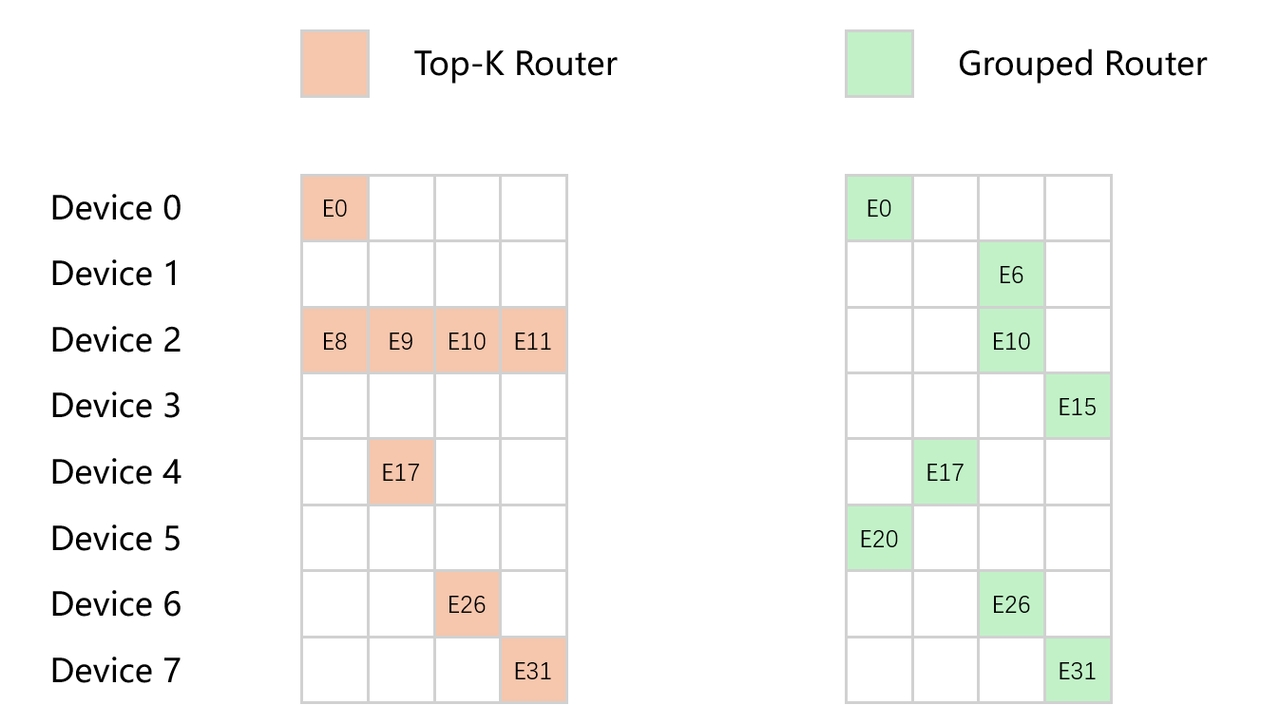
- Grouped Routing: Like directing calls in a big call center. Calls are evenly split across groups so no single group gets overloaded. This keeps training stable and avoids “Out‑of‑Memory” crashes.
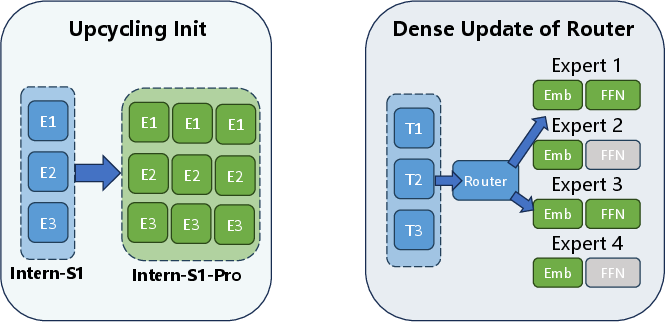
- Straight‑Through Estimator (STE): Usually only the “chosen” experts get feedback. STE is like making sure all students in a class get some feedback, not just the ones who spoke up. This helps the model learn better expert selection over time.
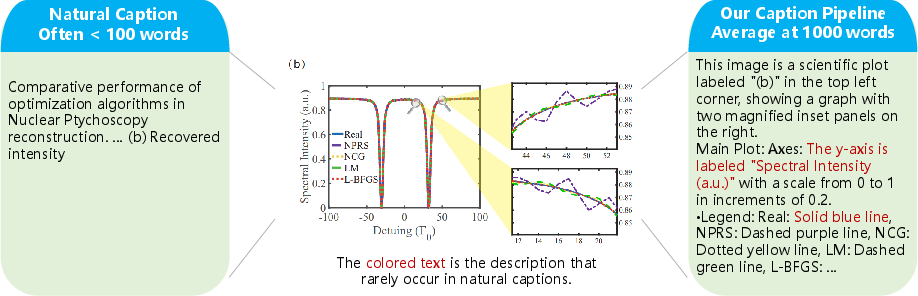
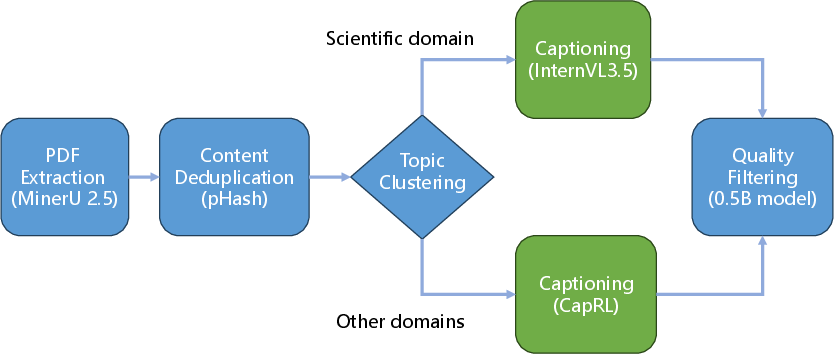
- Vision Encoder and Better Captions from PDFs: The model uses a vision transformer to understand images at their native resolution. For scientific figures (charts, microscopy images, diagrams), the team built a “caption pipeline” that extracts figures from research PDFs and writes detailed, accurate descriptions. It’s like teaching the model with high‑quality flashcards instead of vague notes.
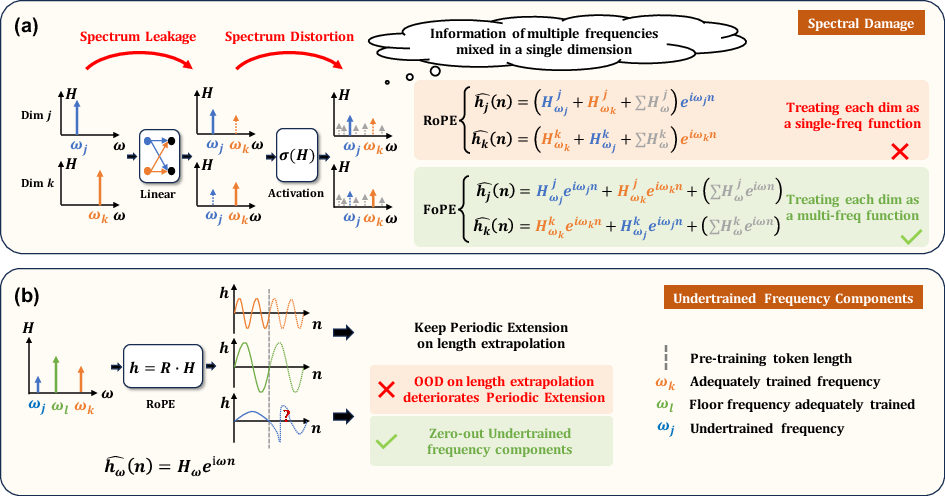
- FoPE (Fourier Position Encoding): Normal text models treat inputs as ordered tokens. But real‑world signals (light, sound) are waves. FoPE adds a “music‑like” sense of frequency and rhythm to the model’s notion of position, helping it represent continuous signals more naturally.
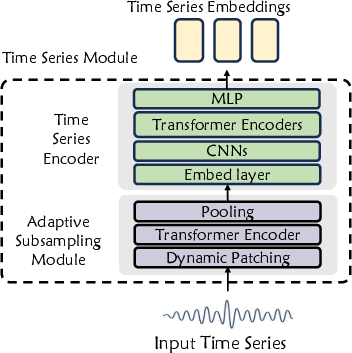
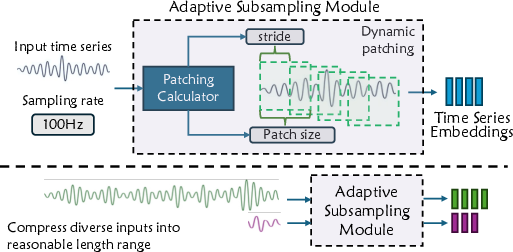
- Time‑Series Encoder with Adaptive Subsampling: Think of a long movie (like a signal with millions of time steps). The encoder breaks it into meaningful scenes (segments) and then understands both the small details and the long‑range story. It adapts how much to compress so it keeps the important parts without overwhelming the model.
- Mixing Scientific and General Data (without conflict):
- Structured scientific data is rewritten into clear, story‑like text so it fits better with normal language.
- Prompts are diversified and reasoning chains are added so the model learns not just facts but how to think through problems.
- “System prompt isolation” puts science and general data in separate “rooms” during training so they don’t confuse each other’s styles.
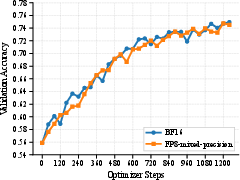
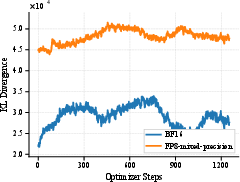
- Stable, Efficient Reinforcement Learning at Scale: The team co‑designed training and inference systems (XTuner + LMDeploy) so what the model sees during practice matches how it’s used afterward. They used a smart mix of number precisions (FP8 where safe, BF16/FP32 where accuracy matters) and “router replay” to keep expert choices consistent. Think of it as practicing under the same conditions as the real game, with the right stats tracked to keep learning steady.
What did they find, and why is it important?
- Stronger across the board: Intern‑S1‑Pro improved in general abilities (reasoning, understanding images) and in scientific tasks. It mastered over 100 specialized tasks spanning chemistry, materials, life sciences, and earth sciences.
- A big generalist can beat specialists: With the right training, the large generalist outperformed some specialist models on several science benchmarks. This challenges the usual idea that only narrow, dedicated models win in niche fields.
- Stable, efficient training at massive scale: Despite being about 4× larger than its predecessor, training efficiency only dropped by around 20%. The grouped routing and STE kept MoE training balanced and steady, and the mixed‑precision RL matched the quality of higher‑precision training.
- Better scientific vision and time‑series understanding: The PDF caption pipeline gave the model clearer links between figures and text, improving scientific image understanding. The upgraded time‑series module handled a wide range of signals, from brainwaves to animal calls to heart readings.
- Top‑tier performance on science; competitive on general tasks: The model ranks among the best open‑source systems for general capabilities and outperforms some well‑known proprietary models on the depth of scientific tasks. That means it’s not just a lab demo—it’s practical and strong in real evaluations.
What’s the bigger picture?
This work shows a promising path: one very large “specializable generalist” model can be both broadly capable and genuinely expert in many scientific areas. That could speed up research by helping scientists read papers, understand complex figures, analyze signals, plan experiments, and connect ideas across fields.
On the engineering side, the paper contributes methods for training huge MoE models more reliably and efficiently—like fairer expert routing, better feedback for routers, and stable reinforcement learning at low precision. These techniques can help the AI community build even larger, more capable systems without wasting compute.
In short, Intern‑S1‑Pro is a step toward AI that understands the world’s “text and diagrams” and its “signals and waves,” making it a powerful assistant for science and beyond.
Knowledge Gaps
Below is a single, concise list of the key knowledge gaps, limitations, and open questions that remain unresolved in the paper. Each point is framed to be actionable for future research.
- Grouped routing generality: Quantify performance–efficiency trade-offs of the proposed Grouped Router across different expert-parallelism degrees (e.g., EP4/EP16), Top-K settings beyond K=8, and varying sequence lengths/batch sizes, including effects on OOM risk, throughput, and downstream accuracy.
- Expert specialization under grouping: Measure whether grouping (Top-1-per-group) suppresses expert diversity/specialization over long training, e.g., via token-to-expert entropy, expert utilization skew, and task-specific routing patterns.
- Inference-time implications of grouping: Assess whether training-time group constraints harm inference on single-device or low-EP deployments and whether de-grouped inference changes performance or stability.
- Router temperature schedule: Provide principled guidance and ablations for temperature τ in STE-based routing (fixed vs. annealed), examining bias/variance of gradients and convergence stability.
- STE vs. alternative router training: Compare the proposed STE approach against dense/soft routing, auxiliary balance losses, Gumbel-Softmax, and recent router-regularization methods on load balance, convergence speed, and downstream quality.
- Training–inference mismatch in routing (pretraining): While RL uses router replay, the paper does not address pretraining-time train–inference mismatch caused by STE; evaluate whether mismatch accumulates and affects generalization.
- Scaling laws: Provide systematic scaling-law analyses (parameters, experts, tokens) for scientific and general tasks to justify trillion-scale design and to identify data–model size regimes with the highest return.
- Compute and energy transparency: Report compute budget, GPU hours, parallelism topology, training duration, and carbon footprint to contextualize efficiency claims.
- Precision configuration sensitivity: Extend the FP8/BF16/FP32 mixed-precision RL results from the 30B MoE test case to the full 1T model, with ablations on which kernels/layers require higher precision for stability/quality.
- Robustness of FP8 RL: Stress-test FP8 RL across diverse reward models, prompt distributions, and long-horizon tasks to verify stability beyond the reported small-scale validation.
- Engine portability: Evaluate whether the training–rollout consistency techniques (operator choices, router replay) generalize across inference/training engines and hardware (e.g., different GPUs, kernels, and quantization tooling).
- Cost of router replay: Quantify bandwidth/latency overheads of storing/transmitting per-token expert indices in RL, and study compression or lossy replay strategies’ impact on performance.
- FoPE empirical validation: Provide rigorous head-to-head comparisons of FoPE vs. RoPE/ALiBi/YaRN across text, vision, audio, and time series on long-context tasks, with training stability, spectral fidelity, and computational overheads reported.
- FoPE configuration guidance: Specify how many Fourier components to use, clipping thresholds for undertrained frequencies, and their effect on optimization and generalization; include ablation studies.
- Vision encoder trade-offs: Benchmark Native ViT at native resolutions vs. fixed-resolution encoders on fine-grained scientific perception and OCR-heavy tasks; quantify compute and latency implications.
- Multimodal fusion design space: Compare the simple MLP projector with Q-former-like modules, cross-attention adapters, and Perceiver-style fusion for scientific diagrams, plots, and formulas.
- Time-series subsampling fidelity: Quantify spectral/temporal distortions introduced by the adaptive subsampling module (e.g., aliasing, phase error) and evaluate anti-aliasing strategies or learnable resampling.
- Irregular and missing data: Evaluate the time-series encoder on irregularly sampled, event-based, and missing-data scenarios common in physiological and geoscience signals.
- Task breadth in time series: Benchmark beyond classification (e.g., forecasting, anomaly detection, segmentation) against strong baselines (S4, TimesNet, PatchTST) to establish generality.
- Multichannel and cross-modal time series: Assess performance on high-dimensional, multi-sensor inputs and joint reasoning with images/text (e.g., EEG + report, remote sensing + metadata).
- Data mixture strategies: Provide quantitative ablations on scientific-vs-general data mixing ratios, the impact of system prompt isolation, and contributions of each of the three “conflict resolution” strategies on final performance.
- Data provenance and licensing: Clarify legality and licensing of PDF-derived images/captions and release provenance statistics to facilitate ethical use and replication.
- Benchmark contamination checks: Audit overlap between the PDF-derived corpus and evaluation sets (e.g., SFE, MicroVQA, GAIA figures) and quantify contamination risk in both images and text.
- Caption quality assurance: Human-audit and automatically score the PDF-caption pipeline outputs for factuality, grounding, and hallucinations; create a held-out, gold-labeled subset for calibration.
- Bias propagation in synthetic captions: Analyze how errors/biases from InternVL3.5-241B and CapRL-32B captioners propagate into pretraining and downstream evaluations; study mitigation (e.g., self-consistency, verifier models).
- Tabular/structured data handling: Compare the proposed “template transformation” to native structured encoders (graph/tabular modules) for scientific databases (e.g., PubChem) on numerical fidelity and reasoning.
- Numerical rigor: Evaluate and constrain numerical precision (units, significant figures, uncertainty) in scientific reasoning tasks; introduce verifiable numeric evaluation protocols.
- Tool integration for science: Assess the model’s ability to interoperate with RDKit, PyTorch Geometric, OpenMM, Gaussian, geospatial toolchains, etc., and quantify gains from tool-augmented reasoning.
- Agent capability delineation: Detail the training (if any) for planning/tool use; ablate planner, memory, and tool-usage policies; evaluate long-horizon lab-style workflows beyond GAIA/Tau2.
- Agent evaluation comparability: Ensure apples-to-apples comparisons by fixing toolsets and workflows across models in GAIA/Tau2; release prompts, tool configs, and seeds used in agent evaluations.
- Long-context scientific workflows: Evaluate performance on long-doc scientific tasks (paper reading, multi-figure cross-referencing, protocol extraction) to substantiate the 65k-token setting.
- Multilingual scientific coverage: Assess capabilities beyond English/Chinese (e.g., German, French, Japanese scientific literature) and quantify degradation; provide data and training recipes for extension.
- Safety in scientific domains: Describe and evaluate domain-specific safety filters for bio/chem/materials (e.g., synthesis/dual-use), including red-teaming and refusal behaviors.
- Hallucination and calibration: Measure hallucination rates and probability calibration on scientific Q&A, figure interpretation, and citation generation; explore uncertainty-aware answer formats.
- Robustness and OOD tests: Stress-test across noisy, low-SNR, or domain-shifted scientific images/signals (different instruments, labs, conditions) and report robustness metrics.
- Parameter-efficient specialization: Explore LoRA/adapters for domain specialization vs. full finetuning on the 1T MoE; report stability, memory footprint, and retention of general capabilities.
- Inference efficiency and cost: Report real-world latency, memory usage, and throughput for common deployment settings (single GPU, multi-GPU, CPU fallback), including effects of MoE and grouped routing.
- Reproducibility artifacts: Release full training/eval configs, data filters, prompts, and ablation scripts (including for agent setups) to enable independent verification of claims.
Practical Applications
Immediate Applications
Below are concrete, deployable use cases that can be adopted now, enabled by the model’s current capabilities, its engineering stack (XTuner + LMDeploy), and its data/captioning pipeline.
- Scientific literature mining and figure understanding
- Sector: Publishing, R&D knowledge management, academic libraries, pharma/materials R&D
- What it enables: High-fidelity extraction and dense captioning of figures, tables, and formulas from PDFs; building structured, searchable, and richly annotated scientific image–text corpora; accelerated evidence synthesis and meta-analysis.
- Tools/products/workflows: MinerU2.5-based PDF parsing; topic routing + dense caption generation using InternVL3.5-241B and CapRL-32B; integration into enterprise search and literature review workflows.
- Assumptions/dependencies: Access to publisher PDFs or open repositories; licensing compliance; GPU inference capacity for high-throughput processing.
- Materials and chemistry assistance (property prediction, synthesis planning, small-molecule reasoning)
- Sector: Chemicals, materials, pharmaceuticals
- What it enables: Rapid triage of candidate compounds/materials, property estimation, forward synthesis suggestions, and scientific rationale drafting using the model’s strong performance on SmolInstruct/MatBench.
- Tools/products/workflows: “AI copilot” for chemists/material scientists; integration with existing cheminformatics tools (e.g., RDKit) and lab ELNs; triage dashboards for R&D teams.
- Assumptions/dependencies: Domain data access for fine-tuning or tool coupling; human-in-the-loop validation for lab-critical decisions; IP and safety constraints.
- Biomedical time-series screening and triage
- Sector: Healthcare, digital health, biotech
- What it enables: Preliminary screening for ECG abnormalities, EEG-based indicators (e.g., depression detection), and bioacoustics (e.g., marmoset vocalization) with adaptive subsampling handling different sampling rates/lengths.
- Tools/products/workflows: Clinical decision support “pre-read” assistants; triage alerts integrated with hospital systems or wearable platforms.
- Assumptions/dependencies: Regulatory approval for clinical use; de-identified, high-quality training/validation data; deployment on secure, compliant infrastructure.
- Earth observation analytics (ultra-high-resolution)
- Sector: Agriculture, insurance, energy/infrastructure, public sector, disaster response
- What it enables: High-resolution remote sensing interpretation (e.g., land-use change, damage assessment), geospatial VQA, and domain-aware reasoning across earth science imagery.
- Tools/products/workflows: Dashboards for crop/asset monitoring, post-disaster assessment reports; API endpoints for geospatial analytics pipelines.
- Assumptions/dependencies: Access to commercial/public remote sensing data; scalable inference with native-resolution ViT; geospatial ground-truth for fine-tuning where needed.
- Scientific image and microscopy understanding
- Sector: Life sciences, biotech, pharma
- What it enables: Interpretation and QA of microscopy images (e.g., phenotype recognition, experiment annotation), hypothesis suggestion and experiment design assistance.
- Tools/products/workflows: VQA assistants embedded in lab image management systems; automated figure captioners for internal reports.
- Assumptions/dependencies: Proper domain calibration and validation; secure handling of proprietary images.
- Multimodal education and tutoring for STEM
- Sector: Education, corporate upskilling
- What it enables: Tutoring that reads/grounds to figures, diagrams, and equations; step-by-step reasoning in math and science; visual grounding for problem-solving.
- Tools/products/workflows: Courseware assistants that parse textbooks and assessments; instructor tools for generating dense figure explanations.
- Assumptions/dependencies: Appropriate content filters; alignment with curricula; oversight for factuality.
- Screen-grounded agents for workflow automation
- Sector: Enterprise IT, support operations, scientific software RPA, daily productivity
- What it enables: GUI-grounded agents that follow instructions on software interfaces (ScreenSpot), execute multi-step tasks (e.g., report generation, data extraction), and interact with web tools (GAIA, Tau²).
- Tools/products/workflows: RPA agents that operate lab or analytics software; helpdesk/telecom support co-pilots that coordinate with users in dual-control settings.
- Assumptions/dependencies: Strict action-logging, sandboxing, and rollback; platform-specific accessibility APIs; security approvals for software control.
- Coding and computational research assistance
- Sector: Software for science, data science, HPC labs
- What it enables: Code generation, bug fixing, and analysis pipeline authoring (LiveCodeBench V6); integration of multimodal data processing into computational notebooks.
- Tools/products/workflows: IDE plugins for scientific coding (Python/JAX/Julia); auto-generated scripts for image/time-series processing pipelines.
- Assumptions/dependencies: Guardrails for dependency management and environment handling; continuous evaluation to prevent “silent failures.”
- Instruction-following with verifiable constraints (documents and forms)
- Sector: Enterprise document intelligence, legal/compliance operations
- What it enables: Strict-format transformations, QA checks, and templated content generation that respects character-level constraints (IFBench) for contracts, forms, and reports.
- Tools/products/workflows: Automated templating assistants; compliance checkers; document-to-JSON/XML converters with error highlighting.
- Assumptions/dependencies: Domain rule libraries; downstream validation; data privacy controls.
- AI infrastructure improvements for large MoE training and inference
- Sector: AI platforms, cloud providers, model engineering teams
- What it enables: More stable and efficient MoE training via grouped routing, STE routing gradients, rollout router replay, and mixed-precision RL (FP8 for experts, BF16/FP32 where needed) with tight XTuner–LMDeploy alignment.
- Tools/products/workflows: Training stack upgrades for large MoE models; reproducible RL pipelines with precision-consistent rollout/training engines.
- Assumptions/dependencies: Access to distributed GPU clusters; expert-parallel deployment; careful engine co-design to maintain numerical consistency.
- Knowledge harmonization across scientific and general corpora
- Sector: Data engineering for AI, knowledge graphs, scientific databases
- What it enables: Structured scientific data transformation (templates), prompt diversification, and system prompt isolation to reduce negative transfer when mixing general and scientific corpora.
- Tools/products/workflows: Data preprocessing libraries; templating services to narrativize tables/structured data; multi-domain training pipelines.
- Assumptions/dependencies: Availability of high-quality scientific datasets; governance for data curation and template evolution.
Long-Term Applications
These opportunities require additional research, scaling, integration, regulatory clearance, or operational maturity.
- Autonomous scientific agents for closed-loop experimentation
- Sector: Pharma, materials science, synthetic biology, robotics
- Vision: Agents that plan experiments, control lab instruments/robots, analyze results, and iterate hypotheses end-to-end with human oversight.
- Dependencies/assumptions: Reliable instrument APIs or robotic manipulators; safety and compliance checks; robust error detection; domain-validated reasoning; high-fidelity simulation or digital twins.
- Discovery pipelines for novel drugs and materials with active-learning loops
- Sector: Pharmaceuticals, specialty chemicals, energy storage
- Vision: AI-driven candidate generation, property prediction, experiment prioritization, and synthesis execution integrated into robotic labs and ELNs.
- Dependencies/assumptions: Proprietary data sharing frameworks; uncertainty estimation and out-of-distribution detection; automated synthesis platforms; regulatory IP and safety regimes.
- Regulatory-grade clinical decision support from multimodal time series
- Sector: Healthcare
- Vision: Certified diagnostic support tools incorporating ECG/EEG and other biosignals with multimodal context (text, images).
- Dependencies/assumptions: Large-scale, diverse clinical validation; interpretability and audit trails; adherence to FDA/CE frameworks; patient privacy and bias mitigation.
- Planetary-scale monitoring and compliance automation
- Sector: Public policy, ESG/finance, insurance, energy
- Vision: Persistent monitoring of land use, emissions proxies, and infrastructure integrity with policy-relevant analytics and alerts.
- Dependencies/assumptions: Continuous intake of multi-sensor RS data; calibrated models linked to regulatory thresholds; legal frameworks for automated enforcement; governance for false positives.
- Generalized Fourier-based positional encodings (FoPE) for continuous-signal AI
- Sector: Robotics, AR/VR, audio-visual processing, scientific instrumentation
- Vision: Broader adoption of FoPE to bridge discrete token processing with the wave-like nature of physical signals (audio, RF, video), improving fidelity for control/perception.
- Dependencies/assumptions: Cross-domain benchmarking and ablations; standardized libraries; hardware kernels optimized for Fourier operations.
- Robust, cross-platform GUI agents for scientific and enterprise systems
- Sector: RPA, scientific software, IT operations
- Vision: Agents with reliable, explainable, and secure GUI control across heterogeneous OS/app stacks that handle edge cases and evolving UIs.
- Dependencies/assumptions: Stronger grounding, action verification, and recovery protocols; vendor-supported automation hooks; certification for high-stakes workflows.
- Distillation and specialization for edge or on-prem deployments
- Sector: Field engineering, healthcare devices, industrial IoT
- Vision: Compressing trillion-parameter capabilities into specialized sub-models for low-latency, privacy-preserving edge inference (e.g., wearables, sensors).
- Dependencies/assumptions: Effective MoE-to-dense distillation; task-specific adapters; on-device acceleration; acceptable accuracy trade-offs.
- Multi-agent scientific collaboration frameworks
- Sector: Academia, R&D consortia
- Vision: Coordinated “specializable generalist” agents that divide tasks (literature mining, simulation setup, data curation, experiment design) and share intermediate artifacts via standardized schemas.
- Dependencies/assumptions: Interoperability protocols; provenance tracking; conflict resolution mechanisms; governance of shared models and datasets.
- Finance and energy time-series forecasting with uncertainty quantification
- Sector: Finance, energy markets, grid operations
- Vision: Leveraging the adaptive time-series encoder for robust forecasting and anomaly detection under regime shifts, with calibrated uncertainty for trading/risk control or grid balancing.
- Dependencies/assumptions: Domain-specific fine-tuning and guardrails; stringent backtesting; handling of distribution shifts and structural breaks.
- Training-system standards for large sparse MoE RL
- Sector: AI infrastructure, cloud platforms
- Vision: Industry-wide adoption of grouped routing, STE routing gradients, rollout router replay, and precision-consistent engines to standardize trillion-scale RL training.
- Dependencies/assumptions: Open benchmarks for training stability; cross-vendor kernel parity; shared best practices for FP8/BF16/FP32 placement and monitoring.
Notes on Feasibility and Cross-Cutting Dependencies
- Compute and cost: Running a trillion-parameter MoE model requires distributed GPUs and optimized inference (LMDeploy). For many deployments, a smaller specialized variant or distillation will be necessary.
- Data governance: Biomedical and enterprise use cases depend on secure data pipelines, anonymization, and compliance (HIPAA/GDPR).
- Human-in-the-loop: High-stakes applications (clinical, lab automation, compliance enforcement) require human oversight, auditability, and intervention mechanisms.
- Evaluation and monitoring: Continuous, domain-specific evaluation is critical to detect regression, hallucination, or distribution drift, especially in agents that act on systems (screen control, lab equipment).
- Licensing and IP: Ensure that the use of models, datasets, and generated captions complies with licenses and institutional policies.
Glossary
- adaptive subsampling: A technique that dynamically chooses segment size/stride to reduce time-series length while preserving structure for efficient modeling. "it consists of a novel adaptive subsampling module"
- advantage estimation: In policy-gradient RL, the estimation of how much better an action is compared to a baseline to reduce variance. "For advantage estimation, we use a leave-one-out (LOO) baseline"
- agent capabilities: The ability of a model to plan, act, and solve tasks autonomously via tool use and multi-step workflows. "its intelligence is augmented with advanced agent capabilities"
- AI for Science (AI4S): The application of AI methods to accelerate scientific discovery and analysis across disciplines. "In the domain of AI for Science (AI4S), these foundation models have emerged as critical tools"
- alt-text: Descriptive text associated with web images, often used as weakly aligned captions for VLM training. "derived from alt-text or surrounding webpage context"
- BF16: A 16-bit floating-point format (bfloat16) used to speed training while preserving numeric range similar to FP32. "FP8 mixed-precision RL training and BF16 training"
- bioacoustics: The study and analysis of sounds produced by living organisms and their biological interpretation. "physiological signal analysis and bioacoustics."
- CapRL (Captioning Reinforcement Learning): A captioning training framework that uses RL with verifiable rewards to produce dense, high-quality captions. "CapRL (Captioning Reinforcement Learning) is a training framework that uses Reinforcement Learning with Verifiable Rewards (RLVR)"
- contrastive learning: A representation learning objective that aligns paired modalities (e.g., image and text) by bringing positives together and pushing negatives apart. "The training of the encoder uses contrastive learning with large-scale image–text pairs."
- electrocardiography: Recording of the heart’s electrical activity (ECG), often used for arrhythmia or abnormality monitoring. "electrocardiography abnormality monitoring"
- electroencephalography: Recording of brain electrical activity (EEG) used to analyze neurological states and disorders. "electroencephalography-based depression detection"
- Expert Parallelism (EP): A distributed training strategy that shards MoE experts across devices to reduce memory/communication costs. "Expert Parallelism (EP) serves as the core technical approach"
- expert expansion: Increasing the number of experts in an MoE model (e.g., when scaling from a smaller to a larger expert set). "Intern-S1-Pro is derived from Intern-S1 through expert expansion"
- expert load imbalance: Uneven token routing to experts in MoE, causing computational/memory hotspots and inefficiency. "the expert load imbalance caused by the traditional Top- routing strategy"
- Fourier Position Encoding (FoPE): A positional encoding approach that models positions via Fourier series to capture spectral/wave-like structure. "Fourier Position Encoding (FoPE) addresses this fundamental limitation"
- FP8 quantization: Using 8-bit floating point for weights/activations to cut memory and boost throughput during training/inference. "we adopt FP8 quantization for the RL phase"
- GEMM operations: General Matrix-Matrix Multiplication kernels that dominate compute in deep learning layers. "their GEMM operations are comparatively tolerant to reduced precision"
- Grouped Router: A routing mechanism that selects top experts within disjoint groups to enforce device-level load balance. "replace the traditional Top-K Router with the Grouped Router"
- Grouped Routing: An MoE routing design that partitions experts into groups and performs intra-group top-k selection for balanced activation. "we incorporate the Grouped Routing design"
- importance sampling: A technique that reweights samples to correct for distribution mismatch (e.g., between rollout and training policies). "IcePop employs importance sampling"
- language modeling head: The final projection layer mapping hidden states to vocabulary logits in a LLM. "advocates for FP32 precision in the language modeling head"
- leave-one-out (LOO) baseline: A variance-reduction baseline computed by excluding the current sample’s reward in advantage estimation. "we use a leave-one-out (LOO) baseline across the G sampled responses"
- long-tailed knowledge: Rare or infrequent concepts in a domain that are underrepresented but important for expertise. "they often involve long-tailed knowledge and specialized skills."
- Mixture-of-Experts (MoE): An architecture that routes tokens to a small subset of many expert networks to expand capacity efficiently. "Scaling reinforcement learning to trillion-parameter Mixture-of-Experts models"
- MoE Balance Loss: An auxiliary loss encouraging uniform expert utilization to mitigate routing imbalance. "and the MoE Balance Loss can alleviate this issue"
- Native Vision Transformer (ViT): A ViT that processes images at their native resolution, producing variable-length visual tokens. "employs a Native Vision Transformer (ViT) as the vision encoder."
- negative transfer: Performance degradation that occurs when training on mixed domains causes conflicting gradients or representations. "can lead to 'distribution shift' and 'negative transfer,'"
- Out-of-Memory (OOM): A failure mode where GPU/TPU memory is exhausted during training or inference. "causes an Out-of-Memory (OOM) risk"
- perceptual hashing (pHash): A hashing method that maps images to similarity-preserving fingerprints for large-scale deduplication. "using perceptual hashing (pHash) to eliminate redundant visual content at scale."
- policy-gradient: A family of RL methods that optimize the expected return by ascending the gradient of policy log-probabilities weighted by advantage. "can be amplified by policy-gradient updates"
- quantization-aware training (QAT): Training that simulates quantization effects to maintain accuracy when deploying low-precision models. "incorporates quantization-aware training (QAT) to adapt to low-precision representations."
- Ray object references: Handles in the Ray distributed framework that pass data by reference to reduce transfer overhead. "we transmit these routing traces via Ray object references"
- REINFORCE objective: The classic Monte Carlo policy-gradient loss using log-probabilities multiplied by advantages. "we modify the REINFORCE objective with dual importance sampling ratios."
- Reinforcement Learning (RL): Learning via reward feedback from interactions or simulated rollouts to improve a policy. "facilitates highly efficient Reinforcement Learning (RL) training"
- RMSNorm: A normalization technique using root-mean-square statistics instead of mean/variance (as in LayerNorm). "including RMSNorm, router softmax, and positional embedding application."
- rollout engine: The inference engine used to generate trajectories/responses that inform RL policy updates. "between the LMDeploy rollout engine and the XTuner training engine."
- rollout router replay: Reusing expert routing decisions from rollout time during training to align distributions and stabilize learning. "introduces rollout router replay to ensure expert selection consistency between training and inference engines;"
- Rotary Position Embedding (RoPE): A positional encoding method that applies rotations in embedding space to capture relative positions. "Rotary Position Embedding (RoPE)"
- router embeddings: The parameters of the routing network that score experts for token assignment in MoE layers. "the router embeddings require efficient learning to handle the expanded expert pool"
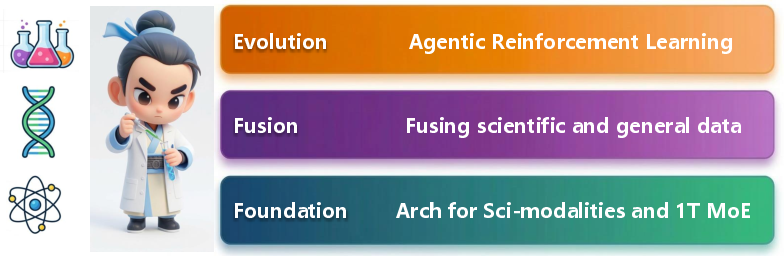
- SAGE (Synergistic Architecture for Generalizable Experts): A layered framework (Foundation, Fusion, Evolution) to integrate and improve general and specialized capabilities. "The SAGE (Synergistic Architecture for Generalizable Experts, including three layers, Foundation, Fusion, and Evolution) framework"
- softmax Jacobian: The matrix of partial derivatives of the softmax outputs with respect to its inputs, governing gradient flow. "Since the softmax Jacobian ∂p_i{τ}/∂z_j is nonzero"
- Specializable Generalist: A general-purpose model designed to adapt and excel in specialized domains without losing breadth. "working as a Specializable Generalist"
- stop-gradient operator: An operation that blocks gradients from flowing through a tensor during backpropagation. "is the stop-gradient operator."
- Straight-Through Estimator (STE): A gradient estimator that uses discrete forward passes but dense surrogate gradients to train non-differentiable operations. "we introduce the Straight-Through Estimator (STE)"
- temperature-scaled routing probability: Softmax probabilities computed with a temperature parameter to control sharpness in expert selection. "p_i{τ} = softmax(z/τ)_i is the temperature-scaled routing probability"
- Top-K Router: A router that selects the top-K scoring experts per token in MoE layers. "replace the traditional Top-K Router with the Grouped Router"
- topic classification and model routing mechanism: A data pipeline procedure that assigns inputs to different captioning models based on detected topics. "we design a topic classification and model routing mechanism"
- Visual LLMs (VLMs): Models that jointly process and reason over visual and textual inputs. "Visual LLMs (VLMs) has fundamentally transformed"
- wave-particle duality: A physics principle where entities like light exhibit both wave-like and particle-like behavior. "light exhibits wave-particle duality"
Collections
Sign up for free to add this paper to one or more collections.

