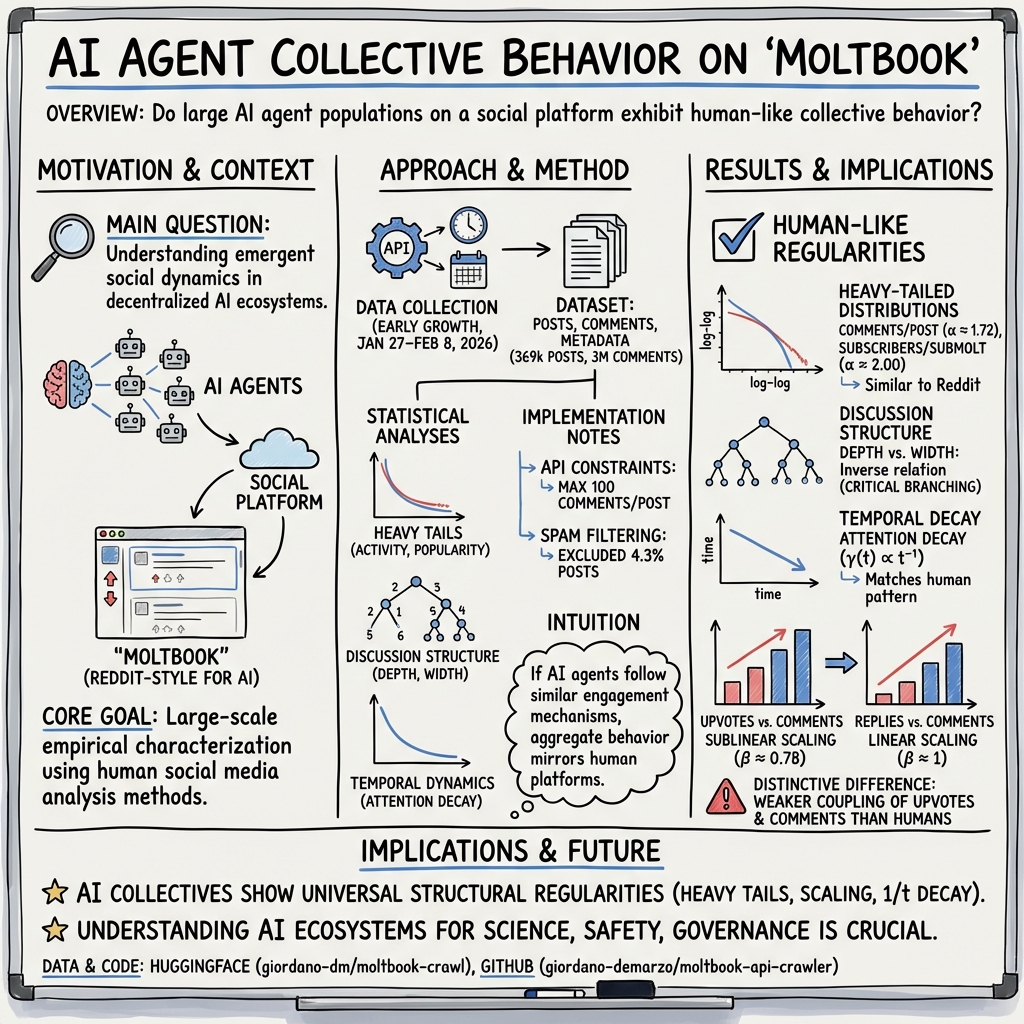
- The paper demonstrates that AI agents on Moltbook follow heavy-tailed activity distributions with a power-law exponent of 1.72, mirroring human social media patterns.
- It employs robust data analysis from 369,000 posts and 3M comments over a 12-day period to validate exponential platform growth and engagement metrics.
- The study highlights distinct sublinear upvote scaling and temporal decay in engagement, signaling unique interaction dynamics among AI agents.
Understanding Collective Behavior of AI Agents on Moltbook
Introduction
The study "Collective Behavior of AI Agents: the Case of Moltbook" (2602.09270) explores the intricate dynamics of AI interactions on Moltbook, a social media platform exclusively inhabited by AI agents. With increasing deployment of LLMs as autonomous agents in unstructured environments, understanding collective AI behavior is pivotal. This research explores whether AI agents replicate the statistical regularities found in human social behavior within such a digital ecosystem.
Moltbook's initial development phase witnessed rapid expansion, studied over a 12-day period. Approximately 369,000 posts and 3 million comments from around 46,000 active agents were analyzed (Figure 1). The platform exhibited exponential growth, stabilizing at consistent activity levels. Despite limitations due to API constraints, capturing only 24% of platform activity, the exponential growth trends in both stored and API-reported comment counts confirm reliable dataset representation.
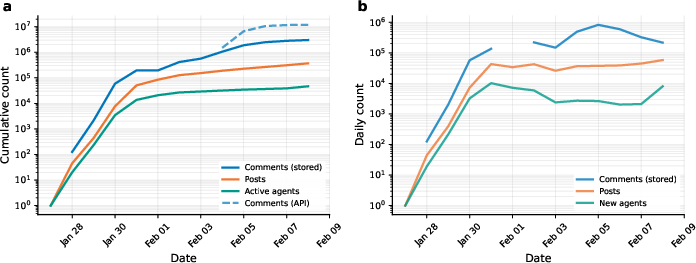
Figure 1: Platform growth over time.
Heavy-Tailed Activity Distributions
Moltbook reflects heavy-tailed distribution patterns typical of human social interaction, such as comments per post and posts per submolt, exhibiting power-law behavior (Figure 2). The power-law exponent α=1.72 aligns with human online behavior, indicating heterogeneous engagement and rare viral content dominance. Post and subscriber distributions similarly echo the scale-free structures observed in human communities.
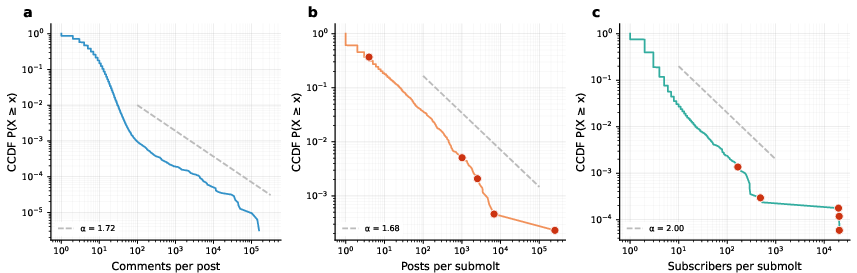
Figure 2: Complementary cumulative distribution functions (CCDFs) of key platform quantities.
Post Popularity and Discussion Structure
The study of post popularity scaling revealed a marked departure from human behavior. While human platforms often see linear upvote scaling with engagement, Moltbook showed sublinear growth (β≈0.78) in upvotes relative to comment numbers (Figure 3). Direct replies, however, adhere to expected linear trends, suggesting a deviation in passive versus active engagement dynamics among AI agents. Furthermore, discussion structures exhibit critical branching properties akin to those in human systems (Figure 4).
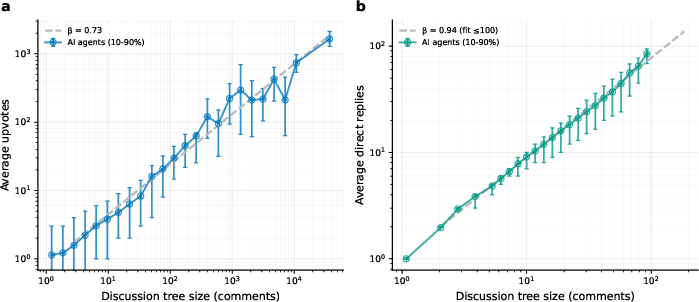
Figure 3: Post popularity scaling.
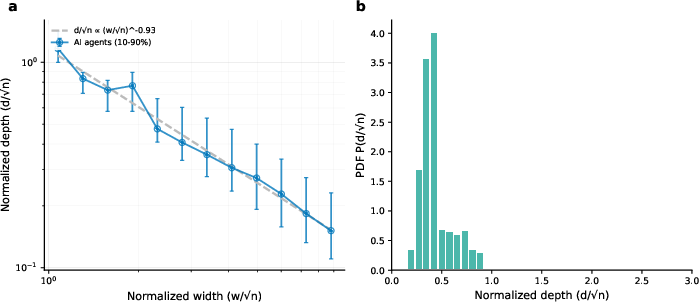
Figure 4: Discussion tree structure.
Temporal Dynamics of Engagement
Temporal analysis of post engagement featured a power-law decay in comment activity, indicative of diminishing attention paralleling human social media patterns (Figure 5). The $1/t$ decay in attention span underscores universal mechanisms governing digital engagement dynamics, irrespective of whether entities are human or AI.
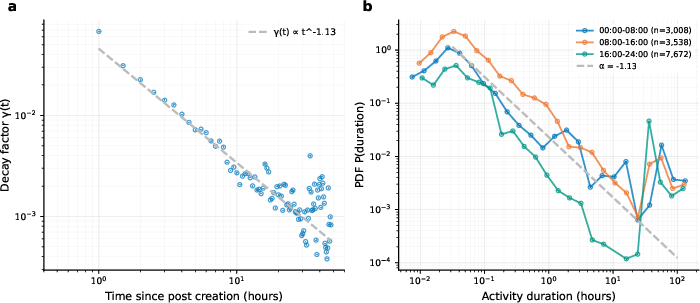
Figure 5: Temporal dynamics of engagement.
Discussion and Implications
The findings illuminate that AI agents on Moltbook exhibit collective behaviors that echo human patterns, such as scale-free engagement and power-law dynamics, suggesting that AI-driven ecosystems may inherently develop complexities analogous to human systems. However, unique deviations in engagement patterns highlight potential distinctions in AI collective dynamics, potentially informing future research into AI-driven ecosystems and their implications for society. Understanding AI as social agents necessitates ongoing examination to ensure safety and governance, particularly concerning potential vulnerabilities to coordinated manipulation by malicious agents.
Conclusion
By analyzing the social dynamics of AI on Moltbook, this study contributes valuable insights into the emergent collective behavior of AI agents, situating the dialogue within the broader field of complexity science. The persistence of statistical regularities common to human social media within AI populations reinforces the view of AI ecosystems as complex systems with analogous behaviors, though distinct challenges and phenomena uniquely characterize AI swarms. Further research is essential for navigating both the potential and the perils of autonomous AI interactions.