- The paper introduces URSA, a modular framework integrating LLM-driven agents to automate planning, execution, and hypothesis refinement in scientific research.
- It demonstrates enhanced efficiency by optimizing simulation tasks, notably improving inertial confinement fusion design with fewer computational evaluations.
- The system’s collaborative agent design not only streamlines complex workflows but also addresses challenges like computational safety and model integrity.
Overview of URSA: The Universal Research and Scientific Agent
URSA presents an innovative modular framework for the integration of LLMs in scientific research. Developed at Los Alamos National Laboratory, URSA is designed to enhance the efficiency of research processes by leveraging a suite of specialized AI agents. These agents perform tasks such as hypothesis formulation, planning, execution, and utilizing scientific simulations. The framework aims to overcome current bottlenecks in scientific research, particularly those related to the high computational costs of physics simulations and the inefficiencies in simulation priority planning.
Architecture of URSA
URSA is composed of several interoperable agents, each serving a specific function within the research workflow. These agents are structured using LangGraph, a system that facilitates complex interactions between LLMs.
Planning Agent
The Planning Agent functions by decomposing complex research queries into manageable sub-tasks. It uses a sequence of LLM-driven nodes to generate, critique, and refine a step-by-step plan until an optimized workflow is established.
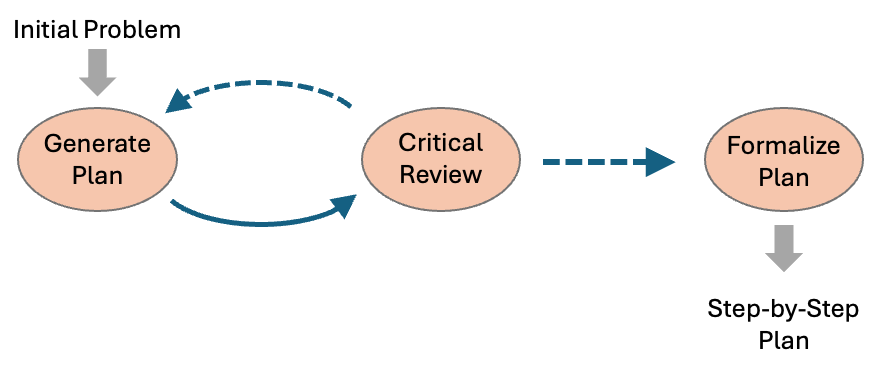
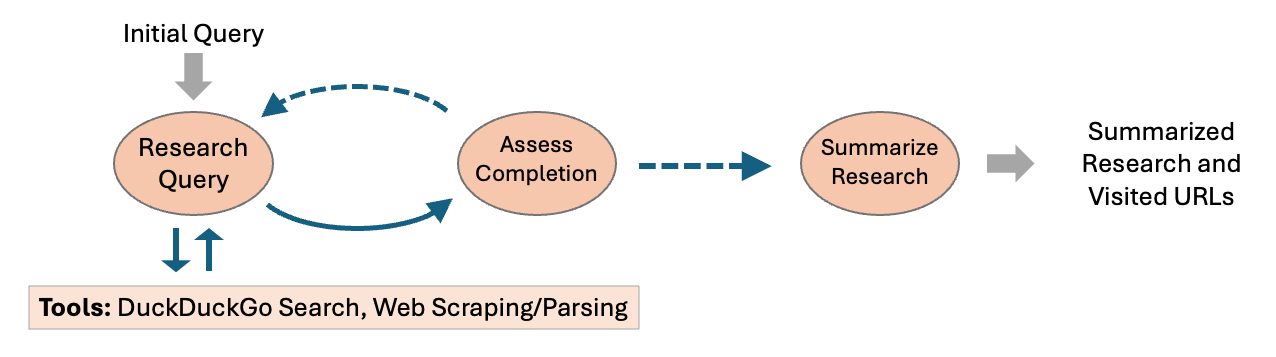
Figure 1: Graphical workflow for the Planning Agent (left) and Research Agent (right).
Execution Agent
The Execution Agent executes computational tasks, including code generation and the handling of scientific simulations. It supports tool calls and performs detailed safety checks on operations to ensure robustness and security.
Research Agent
This agent specializes in information aggregation from web sources, using search and data parsing tools to gather and synthesize relevant data, providing fundamental support for hypothesis-driven tasks.
Hypothesizer Agent
The Hypothesizer facilitates collaborative iteration on hypothesis formation using a debate-style interaction between internal agents. This agent iteratively refines hypotheses based on modeled critiques and competitive arguments.
ArXiv Agent
The ArXiv Agent autonomously accesses and analyzes scientific papers from ArXiv, summarizing contextual literature relevant to the target research query. It processes images and text to give comprehensive literature overviews.
Experimental Demonstrations
URSA's capabilities were showcased in several experimental contexts, demonstrating both simple and complex problem-solving.
Surrogate Model Building
Using data from Helios simulations, URSA built Bayesian neural networks and Gaussian processes as surrogate models, assessing their predictive capabilities and quality through automated workflows.
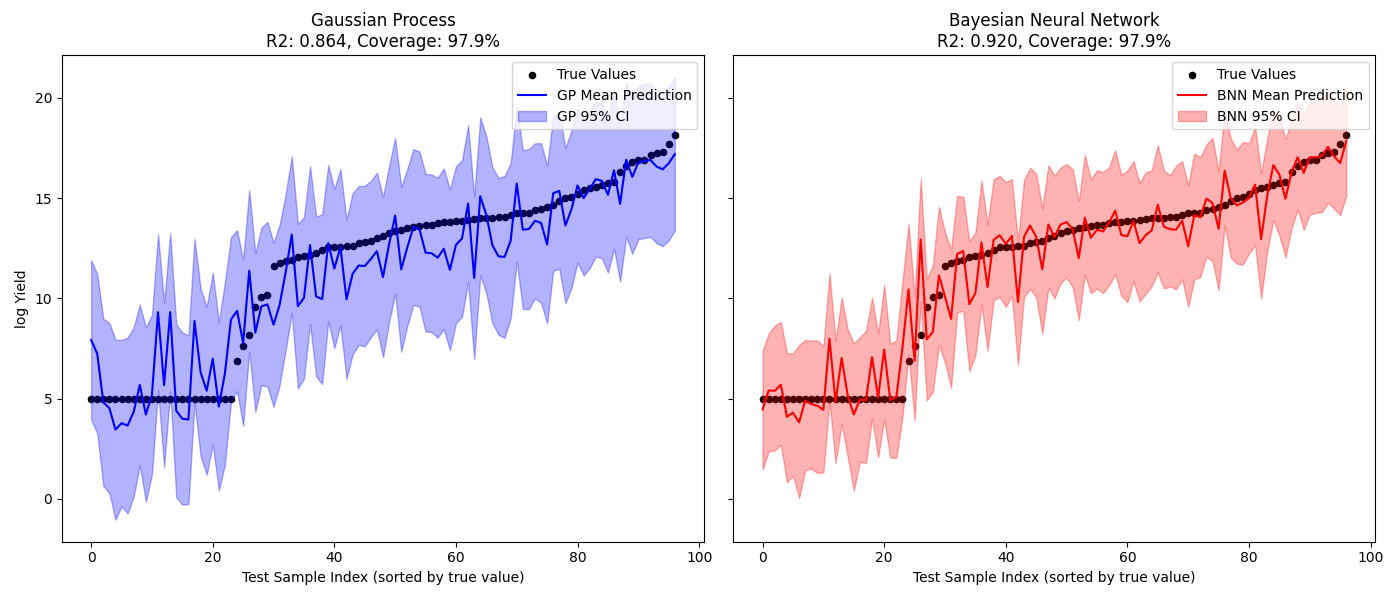
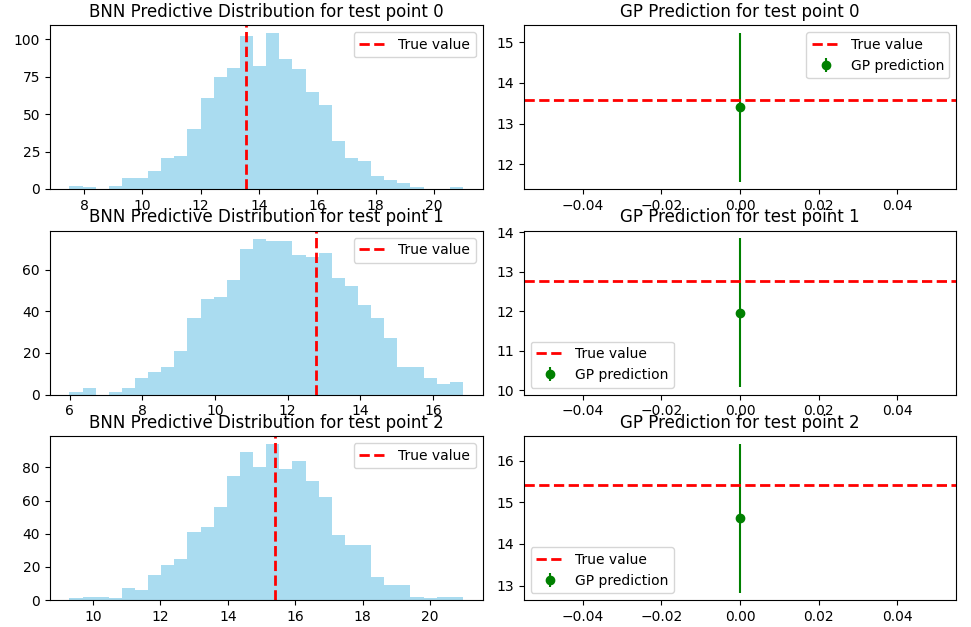
Figure 2: Prediction of log neutron yield in an ICF target from Helios simulation using Gaussian processes and Bayesian neural networks.
Inertial Confinement Fusion Optimization
The URSA framework successfully optimized the design of fusion capsules using Helios simulations faster and more effectively than traditional Bayesian methods. The system was particularly adept at identifying high-performing solutions with fewer computational evaluations.
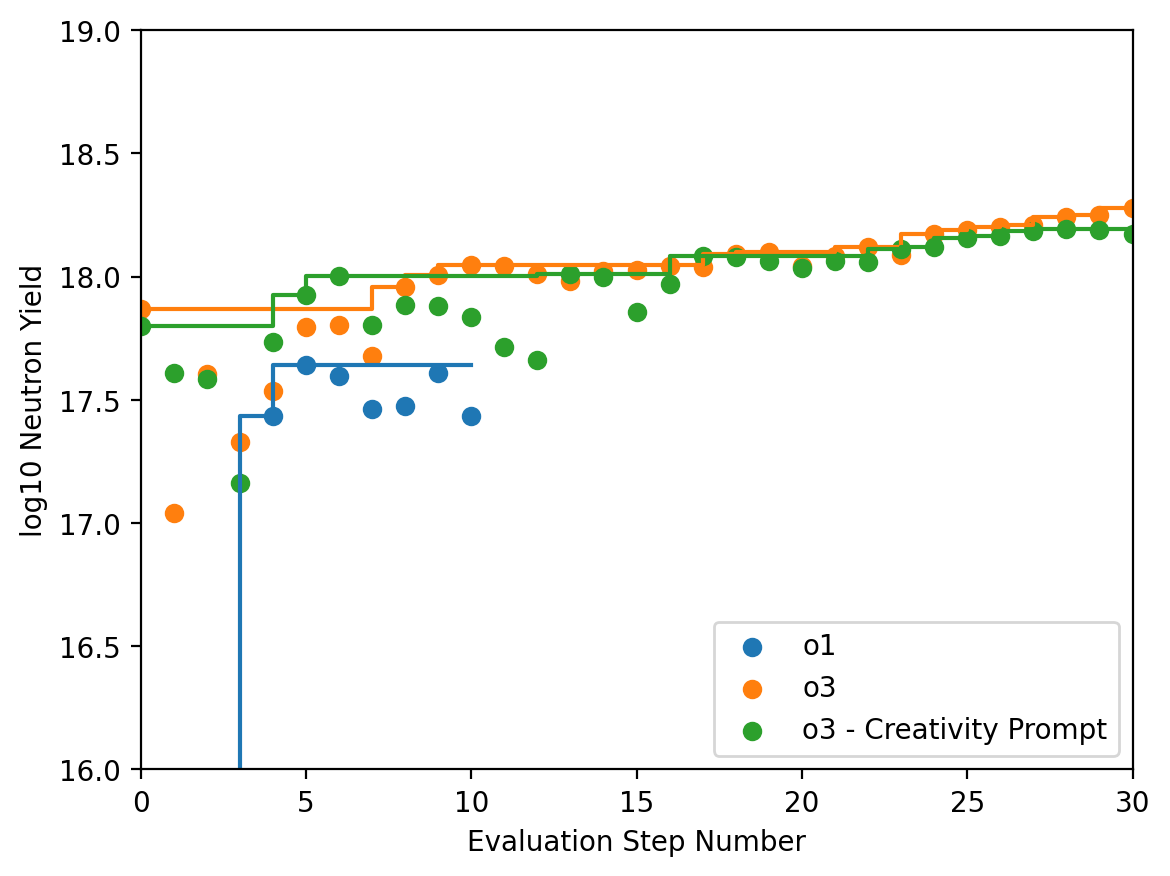
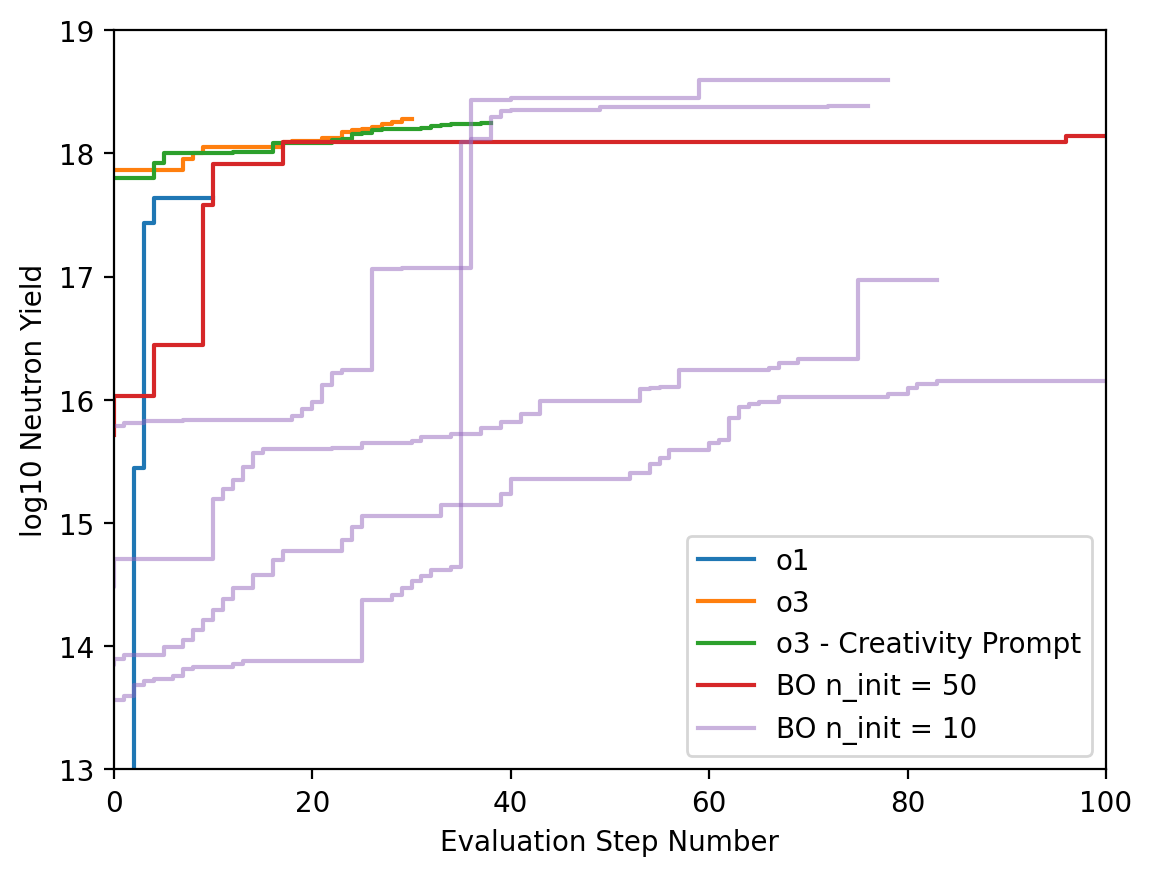
Figure 3: Comparison of URSA to Bayesian optimization for designing a direct-drive ICF design, showing URSA's efficient convergence.
Discussion and Implications
URSA showcases significant potential to increase productivity in scientific research, providing direct integration of AI agents with traditional scientific processes. The system's flexibility in agent composition and task execution illustrates a substantial advancement toward automating complex scientific discovery. Further developments could explore enhanced LLM training specific to scientific disciplines or extend workflow parallelization to improve efficiency further.
Despite its promising performance, computational safety and data integrity remain critical challenges, highlighting the need for robust sandboxing environments. Future enhancements could address model hallucinations and reinforce safety protocols to assure trust in AI-driven research processes.
Conclusion
URSA represents a methodical step toward realizing AI's potential in scientific domains. By integrating LLM-driven agents into the research lifecycle, the system is poised to transform scientific inquiry, paving the way for rapid innovation in complex scientific fields while managing the ethical and practical challenges inherent in AI technology proliferation.