QuantumQA: Teaching AI the Laws of Physics
This presentation examines QuantumQA, a novel approach to training language models for scientific reasoning in quantum mechanics. The work addresses two critical challenges: the lack of large-scale, physics-consistent training datasets and the tendency of standard reinforcement learning methods to reward plausible but physically incorrect outputs. By combining a rigorously validated dataset of 92,749 quantum mechanics problems with a verification-aware reward modeling architecture that enforces physical constraints through symbolic solvers, the authors demonstrate that an 8-billion parameter model can match or exceed the scientific reasoning capabilities of models 20 times its size.Script
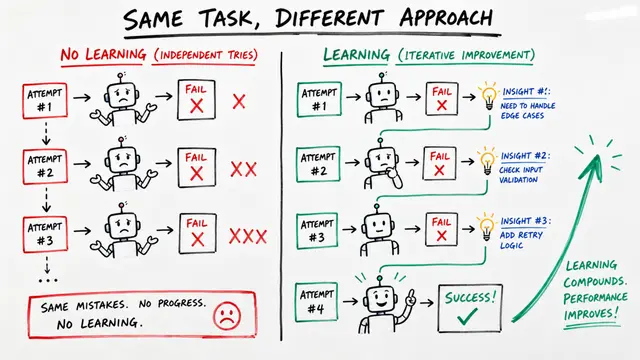
Standard reinforcement learning for language models has a dangerous flaw: it rewards outputs that sound scientifically plausible, even when they violate the fundamental laws of physics. When you ask a model to solve a quantum mechanics problem, it might generate a derivation that reads fluently but contains mathematical contradictions or physical impossibilities that no human expert would accept.
The authors built QuantumQA, a dataset of 92,749 quantum mechanics problems, using a hybrid verification protocol that layers automated symbolic checking with semantic auditing by language models, followed by strict human review. Any batch with more than 5 percent rejected samples is discarded entirely, ensuring that every training example is both physically consistent and logically rigorous.
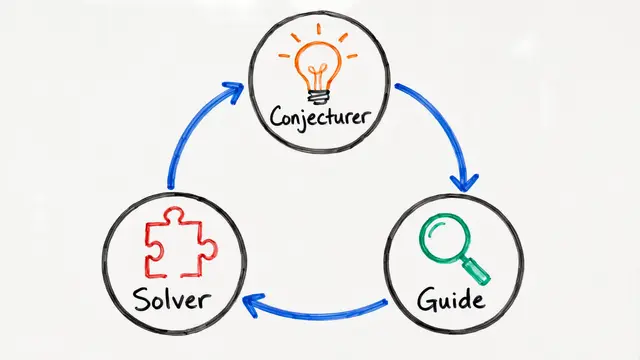
Rather than relying on a single reward signal, their verification-aware reward model fuses two sources: deterministic feedback from a scientific execution suite that validates mathematical correctness and physical laws, and dense semantic scores covering instruction adherence and cases where symbolic verification cannot apply. An adaptive fusion mechanism dynamically weights these signals at the dimension level, preventing the model from exploiting gaps in either verification source.
The results are striking. An 8-billion parameter model trained with verification-aware reinforcement learning achieves 68 percent accuracy on complex quantum mechanics problems, matching or exceeding models with over 160 billion parameters. On the problem solving subset, it outperforms ChatGPT 5 despite the enormous parameter gap, demonstrating that physics-grounded reward modeling can substitute for raw scale.
Critically, these improvements are not artifacts of verbosity. The reinforcement learning policies exhibit a negative correlation between solution quality and token length, meaning better answers are actually shorter. Error analysis reveals that the model reduces logical and physical violations by 13 percentage points compared to supervised baselines, confirming that the verification architecture suppresses hallucination rather than rewarding fluent nonsense.
The core insight is that process-level verification grounded in deterministic physical constraints offers a principled alternative to simply scaling model size for scientific reasoning. The architecture is domain-agnostic: with adapted symbolic solvers, the same principles transfer to classical mechanics, chemistry, and beyond. If you want to explore how verification-aware reinforcement learning could reshape AI for science, visit EmergentMind.com to dive deeper and create your own video summaries.