Omni-SimpleMem: Autoresearch-Guided Discovery of Lifelong Multimodal Agent Memory
This presentation explores how an autonomous research pipeline called AutoResearchClaw systematically discovered and optimized Omni-SimpleMem, a state-of-the-art memory architecture for AI agents operating in multimodal, long-horizon environments. Through 50 autonomous experiments, the system achieved dramatic performance improvements by discovering architectural innovations, fixing bugs, and optimizing retrieval mechanisms—demonstrating that autoresearch can outperform traditional optimization in complex AI system domains.Script
What if an AI could design its own memory system—autonomously proposing architectures, debugging code, and iterating through dozens of experiments without human intervention? That's exactly what happened when researchers unleashed AutoResearchClaw, an autonomous research pipeline that discovered Omni-SimpleMem, achieving a 214% improvement in memory performance for multimodal AI agents.
The challenge isn't just building agent memory—it's navigating a design space where architectural choices, code bugs, and prompt engineering interact in unpredictable ways. Traditional hyperparameter tuning can't touch this complexity. The researchers needed a system that could think like a researcher, and that's where AutoResearchClaw comes in, orchestrating a 23-stage research loop that generates hypotheses, implements code changes, diagnoses failures, and decides whether to keep or revert each experiment.
Over 39 experiments on one benchmark alone, the pipeline made breakthroughs that no human might have anticipated.
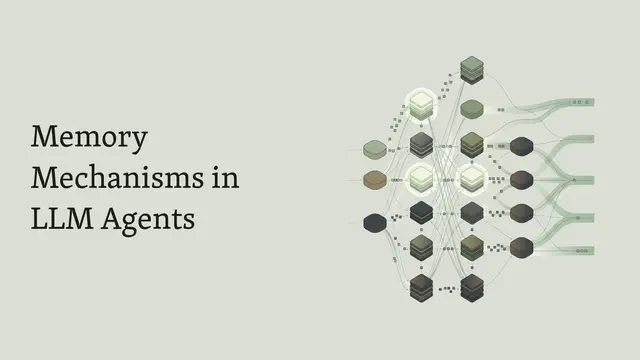
The discovered architecture reveals three core innovations. First, selective ingestion—novelty detectors filter redundant content before anything hits storage, using CLIP for vision, voice activity detection for audio, and Jaccard filtering for text. Second, hybrid retrieval—the system combines dense semantic search, sparse keyword matching, and knowledge graph traversal, merging results in a carefully discovered order that maximizes precision. Third, pyramid expansion—information loads hierarchically, starting with compact summaries and expanding to full detail only when the query context has room. Each piece was discovered and validated through autonomous experimentation, not manual design.
Here's what's striking: the biggest performance jumps didn't come from tuning learning rates or adjusting thresholds. A single bug fix—correcting output verbosity to match the expected response format—delivered a 175% improvement. Switching from summary-based to full-text retrieval for evaluation compliance was another massive gain. Prompt engineering, specifically where constraints were injected in the system context, yielded a 188% boost on certain task categories. These discoveries reveal that in tightly coupled AI systems, the real optimization frontier isn't in numerical parameters—it's in code, architecture, and language.
The results speak clearly. Omni-SimpleMem achieved F1 scores up to 0.810 on memory-intensive benchmarks, leaving prior state-of-the-art systems trailing by more than 25 percentage points. It's not just accurate—it's fast, processing up to 5.81 queries per second with 8 parallel workers, a 3.5 times speedup over the nearest competitor. And these gains hold across different language model backbones, confirming the architecture's robustness. This isn't incremental progress—it's a new capability class for agent memory.
Omni-SimpleMem proves that autonomous research pipelines can discover architectures humans might never design, especially when bugs, prompts, and system components are deeply entangled. The future of AI system optimization may not be in our hands—it may be in the hands of systems that can research themselves. Visit EmergentMind.com to explore this paper further and create your own research videos.