Intelligent AI Delegation: Frameworks, Protocols, and Sociotechnical Considerations
This lightning talk explores a comprehensive framework for intelligent AI delegation that addresses the emerging challenges of autonomous agent ecosystems. As AI agents become more complex and autonomous, traditional delegation approaches prove inadequate. The presentation examines how principles from organizational theory, cryptographic verification, and market coordination can be synthesized into adaptive protocols that balance efficiency, accountability, and safety. We'll explore task decomposition strategies, trust calibration mechanisms, monitoring approaches, and the sociotechnical considerations necessary to preserve meaningful human control while enabling scalable agent economies.Script
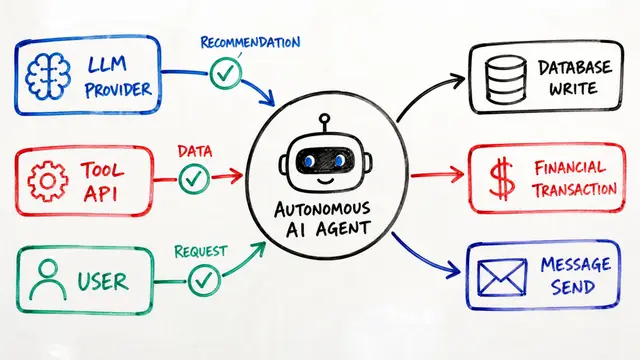
What happens when AI agents start delegating tasks to other AI agents, forming complex chains of authority and responsibility? As autonomous systems grow more capable, we face a critical challenge: building delegation protocols robust enough for an emerging economy of intelligent agents.
Building on this challenge, let's examine why traditional approaches fall short.
The authors identify four critical failure modes in existing delegation systems. Principal-agent misalignment worsens as agents gain autonomy, while agent-to-agent delegation creates new vulnerabilities. When delegation chains deepen, accountability becomes dangerously diffused, and simple heuristics cannot manage the resulting complexity.
To address these challenges, the researchers propose a five-pillar framework.
Each pillar addresses a distinct challenge. Dynamic assessment ensures capability matching, while adaptive execution enables real-time responses to failures or specification changes. Structural transparency leverages cryptographic primitives for verifiable completion, and market coordination replaces centralized registries with competitive bidding mechanisms.
Task decomposition is formalized as an optimization problem balancing three objectives. The contract-first approach ensures each subtask is recursively refined until its completion criteria become precisely verifiable through smart contracts, fundamentally reducing downstream ambiguity.
Consider how the system responds dynamically to changing conditions. Environmental triggers like specification changes, resource fluctuations, or delegatee failures prompt real-time re-evaluation. The orchestration strategy varies by network topology: centralized models risk bottlenecks, while decentralized markets leverage auctions and backup clauses, though they must carefully avoid oscillatory dynamics from over-triggering.
The framework carefully distinguishes trust as dynamic, contextual belief from reputation as verifiable performance history. Multi-axis monitoring combines outcome and process-level observation, augmented with cryptographic primitives for privacy-preserving verification, while graduated authority mechanisms allow agents to earn expanded permissions over time.
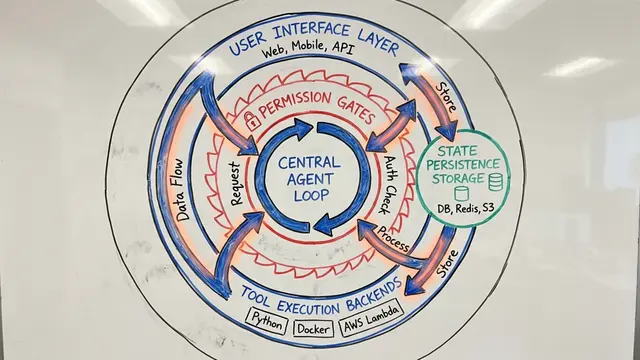
Permission handling follows least privilege principles with delegation capability tokens facilitating attenuated rights propagation. The security architecture operates across infrastructure, access control, interface, and identity layers, addressing threats ranging from malicious actors to system-level attacks like cognitive monocultures and protocol exploits.
Beyond technical mechanisms, the framework addresses critical human factors. Cognitive friction sustains meaningful oversight, while liability firebreaks contain responsibility within delegation chains. The authors emphasize curriculum design to preserve workforce skills and human agency through explicit authority transfer points.
This framework represents a foundational step toward scalable, verifiable agent economies where safety and efficiency coexist through protocol-level accountability. To explore the full technical specifications and sociotechnical considerations, visit EmergentMind.com to learn more.