Deep GraphRAG: Hierarchical Graph Retrieval
This presentation explores Deep GraphRAG, a novel approach that balances global comprehensiveness with local efficiency in knowledge retrieval. The method combines hierarchical graph traversal with dynamic reinforcement learning to improve multi-hop reasoning while maintaining computational efficiency.Script
When you need to find information scattered across vast knowledge networks, do you go deep into details or stay high-level for the big picture? This fundamental trade-off has plagued retrieval systems for years, and today we explore how Deep GraphRAG solves it with a balanced hierarchical approach.
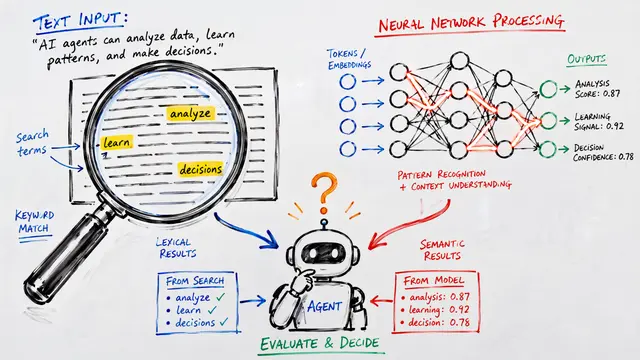
Building on this challenge, GraphRAG systems face a critical dilemma where they must choose between thoroughness and speed. The authors identify that vector-based retrieval fundamentally struggles when tasks require understanding relationships and connections across different parts of a knowledge base.
Let's establish the foundation that makes hierarchical graph retrieval both necessary and possible.
Traditional GraphRAG approaches organize knowledge into hierarchical communities, but they rely on rigid retrieval patterns. The key insight is that different questions require different levels of graph exploration to find optimal answers.
The field has been dominated by two extreme approaches that represent opposite ends of the efficiency spectrum. Microsoft's Global Search and various local search methods each excel in their domain but fail to adapt dynamically to question complexity.
Now let's examine how Deep GraphRAG bridges this gap with intelligent hierarchical traversal.
The researchers introduce a sophisticated multi-stage approach that combines the best of both worlds. Their system intelligently navigates from high-level community summaries down to specific entities, using beam search to maintain multiple promising paths while avoiding local optima.
This architectural overview reveals the two-part design that makes Deep GraphRAG effective. The retrieval module performs intelligent graph traversal through hierarchical communities, while the integration module uses advanced reinforcement learning to distill and synthesize the retrieved knowledge into coherent, relevant responses.
Each retrieval phase serves a distinct purpose in the hierarchical strategy. The system starts broad with macroscopic community filtering, then progressively narrows focus while maintaining multiple candidate paths through beam search with a width of 3.
The foundation of effective retrieval lies in careful graph construction. The researchers use a sophisticated pipeline that not only extracts entities and relationships but also performs intelligent entity resolution and hierarchical community detection to create a rich, navigable knowledge structure.
The knowledge integration component introduces a novel approach to multi-objective reinforcement learning.
Traditional reinforcement learning often suffers from the seesaw effect where optimizing one reward comes at the expense of others. The Dynamic Weighting GRPO algorithm tracks learning progress across all objectives and dynamically adjusts reward weights to ensure balanced improvement across relevance, faithfulness, and conciseness.
The dynamic weighting mechanism operates on a simple but powerful principle: rewards that improve slowly receive higher attention. By tracking learning slopes and normalizing change rates, the system automatically focuses optimization effort on the objectives that need the most improvement.
Let's examine how Deep GraphRAG performs across different question types and datasets.
The evaluation design reflects real-world query complexity by categorizing questions based on their structural requirements in the knowledge graph. This taxonomy allows precise measurement of how different retrieval strategies perform across varying reasoning demands.
The results demonstrate Deep GraphRAG's effectiveness, particularly on global questions requiring cross-community reasoning. The dramatic improvement from 10% to 56.25% on HotpotQA global questions showcases the power of hierarchical retrieval, while the 86% latency reduction proves efficiency gains are achievable.
Perhaps most impressively, the compact 1.5 billion parameter model trained with DW-GRPO achieves 94% of the 72 billion parameter model's performance. This demonstrates that the dynamic weighting approach not only improves large models but enables effective knowledge distillation to practical deployment sizes.
These results reveal broader implications for knowledge retrieval and reasoning systems.
The evaluation reveals that Deep GraphRAG excels at complex global reasoning but sometimes struggles with comprehensive questions that require both broad context and fine-grained details. The authors acknowledge that hierarchical summarization can occasionally obscure important local facts, pointing toward future research directions.
Beyond the specific results, this work establishes a new paradigm for adaptive information retrieval that intelligently balances depth and breadth based on query requirements. The dynamic reinforcement learning approach has applications far beyond graph retrieval, potentially transforming how we optimize complex AI systems with competing objectives.
Deep GraphRAG demonstrates that the global-local retrieval trade-off is not a fundamental limitation but an optimization challenge that can be solved through intelligent hierarchical navigation and dynamic multi-objective learning. For more cutting-edge AI research insights, visit EmergentMind.com to stay at the forefront of these rapidly evolving fields.