Foundational Models for 3D Point Clouds: A Survey and Outlook
This survey explores how foundational models, which have revolutionized 2D image and text understanding, are being adapted to comprehend 3D point cloud data. The paper categorizes existing approaches into three main strategies: direct adaptation of 2D models, dual encoder architectures, and triplet alignment methods that unify text, images, and 3D representations. By examining these methodologies, the survey addresses the critical challenge of limited 3D training data and charts a path toward AI systems that can truly understand and interact with three-dimensional environments.Script
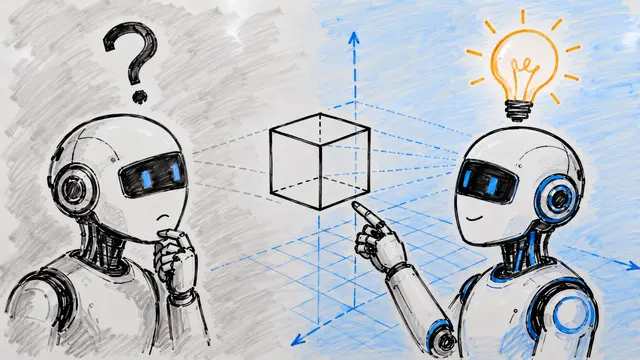
Can machines truly see in three dimensions the way we do? While foundational models have mastered images and text, the 3D world remains a frontier where data scarcity and computational costs create unique challenges that demand innovative solutions.
Building on that frontier, let's examine why 3D understanding poses such distinctive obstacles.
The authors identify a critical bottleneck: point clouds, which represent 3D data as unordered coordinate sets, lack the large training datasets that powered breakthroughs in 2D vision. This scarcity has sparked creative approaches that borrow knowledge from the data-rich 2D domain.
The survey reveals three distinct strategies researchers have developed to bridge this dimensional divide.
These first two approaches take fundamentally different paths. Direct adaptation essentially expands existing 2D architectures to digest point cloud inputs, while dual encoders run separate pathways that learn to align 2D and 3D representations through contrastive learning, exemplified by models like CrossPoint.
Going beyond pairwise connections, triplet alignment takes the most ambitious approach by establishing a shared feature space where language, images, and 3D data all speak the same semantic language, unlocking open-world classification capabilities.
This taxonomy illustrates how different architectural choices shape the way models process point cloud data at the scene level. The diagram reveals that the field has converged on these three core strategies, each making different trade-offs between computational efficiency, representation fidelity, and the degree of alignment across modalities.
The practical implications are substantial. These foundational model adaptations don't just improve traditional 3D tasks; they fundamentally expand what's possible by enabling models to understand 3D objects using natural language descriptions, effectively breaking free from the constraints of pre-defined category lists.
Yet significant hurdles remain. The authors emphasize that while transfer learning helps, the field still needs 3D datasets that match the scale and diversity of ImageNet or LAION. Additionally, making these models adapt dynamically to new scenarios without costly retraining represents an ongoing research frontier.
This survey arrives at a pivotal moment. As we push toward embodied AI systems that navigate and manipulate the physical world, whether in robotics, autonomous vehicles, or immersive computing, the ability to leverage foundational models for 3D understanding becomes not just useful but essential for the next generation of intelligent systems.
This comprehensive survey charts the landscape where 2D intelligence meets 3D reality, revealing both the ingenious strategies researchers have developed and the exciting challenges that lie ahead. Visit EmergentMind.com to explore more cutting-edge research at the intersection of foundational models and spatial understanding.