An exact information theory of generalization phase transitions in Bayesian diffusion models
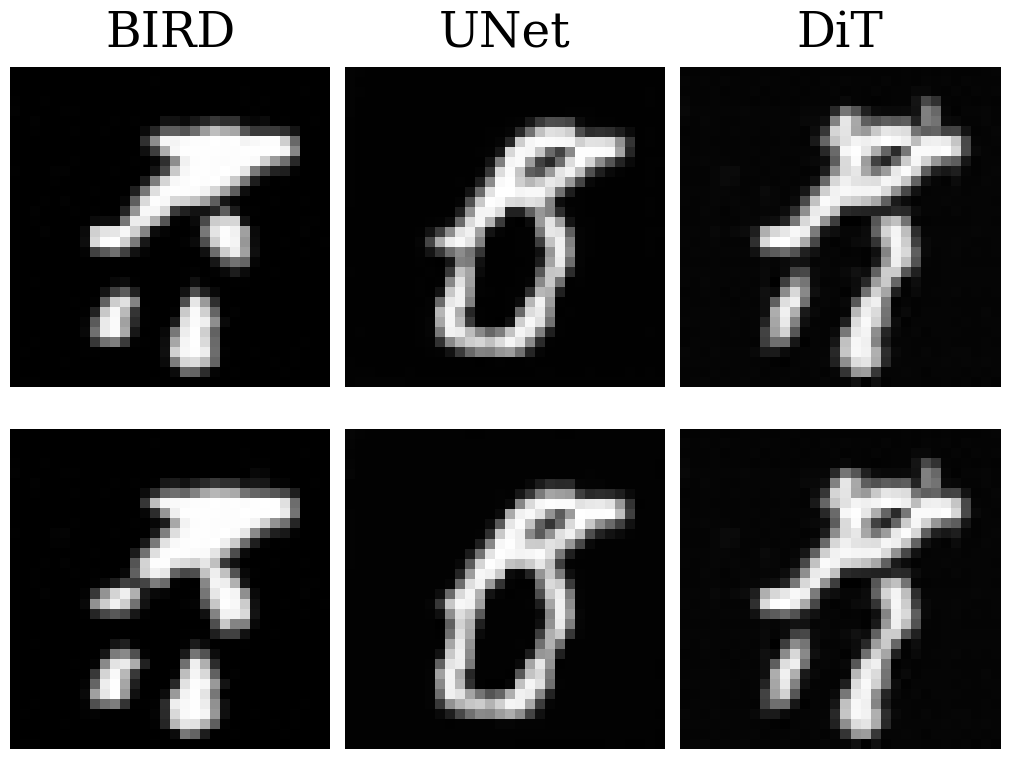
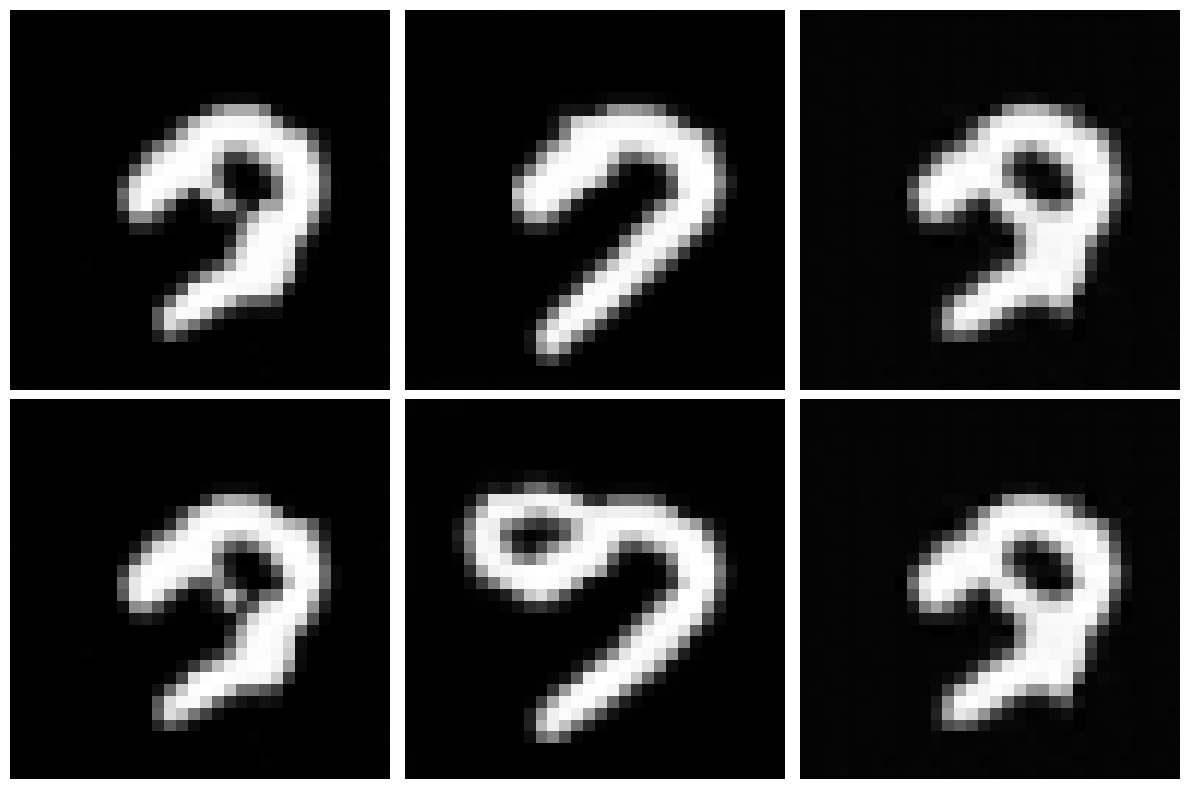
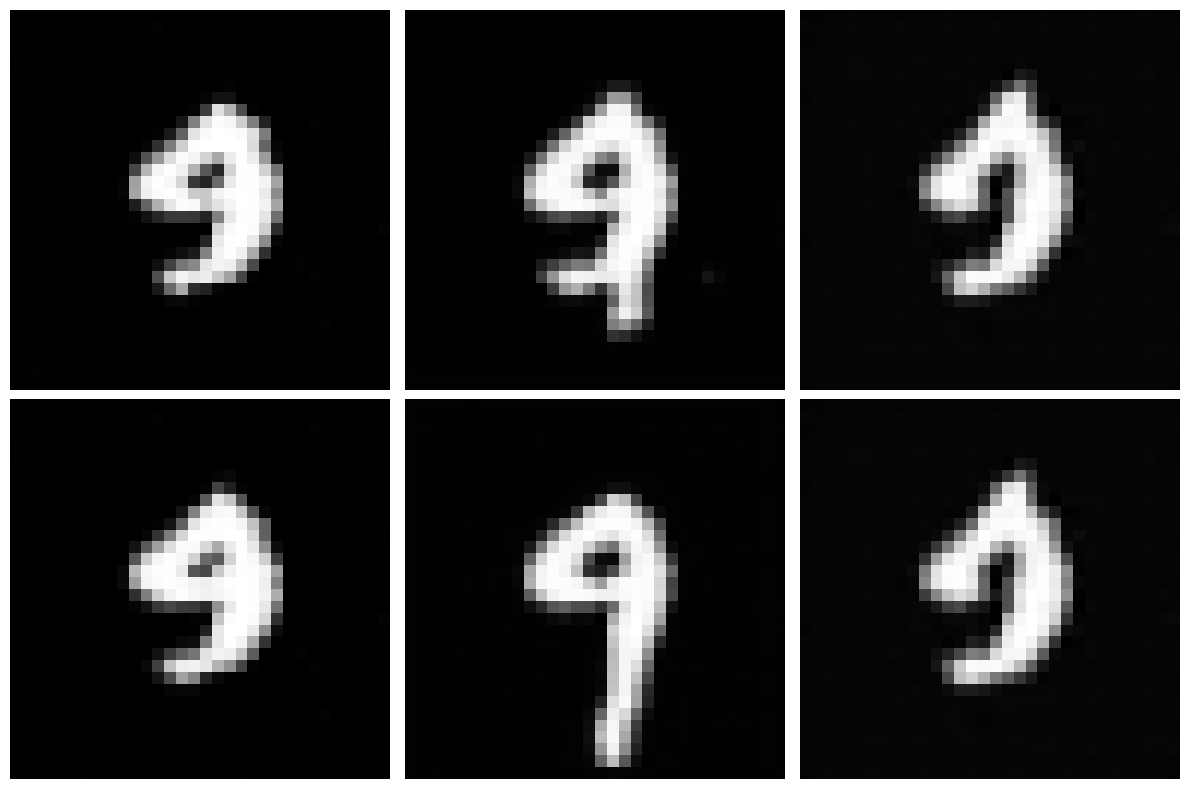
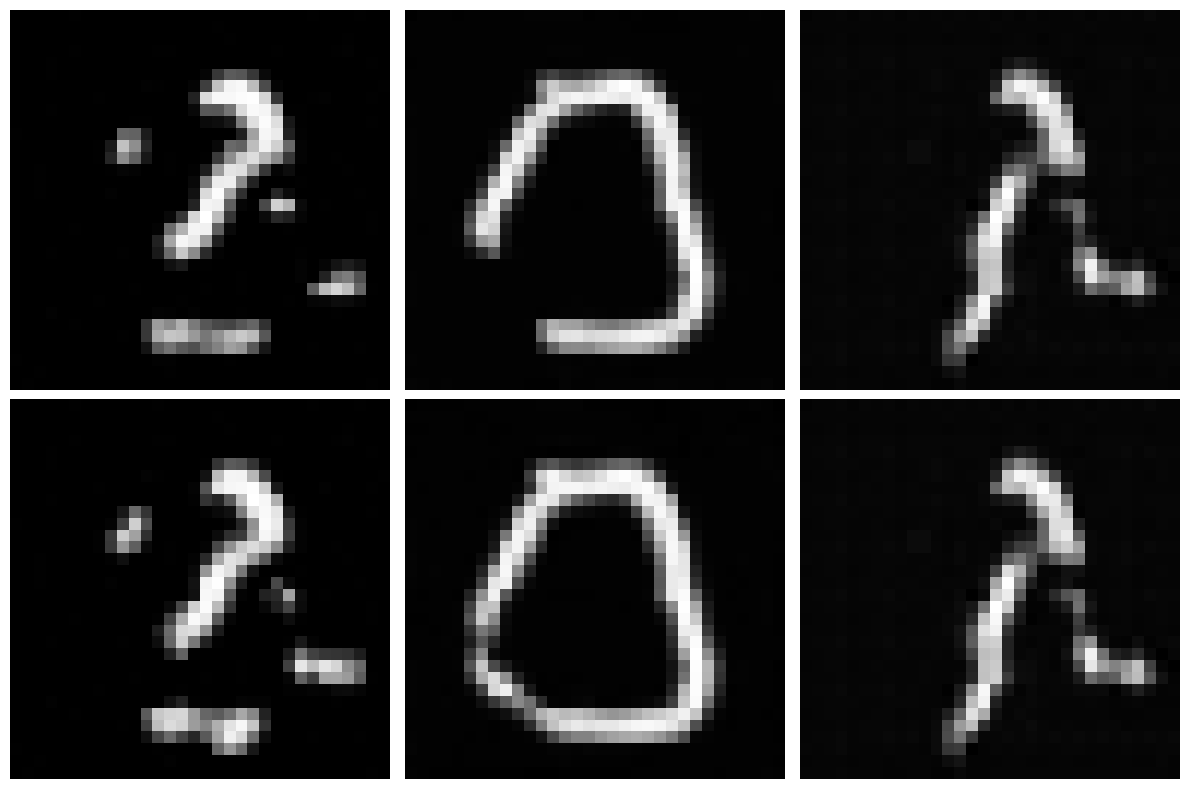
Abstract: How diffusion models circumvent the curse of dimensionality to learn complex distributions over high dimensional spaces from a finite training set, instead of memorizing it, remains a fundamental mystery. To address this, we introduce analytically tractable Bayesian information restricted diffusion (BIRD) models, in which each pixel observes restricted information about noisy data. A BIRD model time-reverses diffusion by inferring which past training sample produced its current restricted observation using the Bayesian posterior. This model class generalizes existing analytical diffusion models that use spatially local information restriction. We show that spatially local BIRD models closely approximate trained diffusion models \textit{early in training}, across different architectures such as UNets and DiTs. Under minimal assumptions on the data distribution, we identify an information-theoretic phase boundary between memorization and generalization in the joint space of amount of training data, time in the reverse generative process, and amount of information restriction: a BIRD model memorizes when the mutual information between its restricted noisy observations and the training data exceeds the log number of training points, and it generalizes otherwise. Experiments across a range of datasets confirm our theoretically predicted location for the transition. We find that generation proceeds near the edge of memorization: both spatially local BIRD models and early-training diffusion models track the memorization-generalization phase boundary by increasingly restricting information over time. Overall, our results reveal a fundamental role for information restriction in generative AI to circumvent the curse of dimensionality.
Paper Prompts
Sign up for free to create and run prompts on this paper using GPT-5.
Top Community Prompts
Explain it Like I'm 14
What is this paper about?
This paper tries to answer a big question about AI image generators called diffusion models: How do they learn to create new, realistic images from a limited training set without just memorizing the pictures they saw? The authors introduce a simple, math-friendly way to think about these models called BIRD (Bayesian Information Restricted Diffusion), and they show exactly when a model will memorize versus when it will truly generalize.
What questions are the authors asking?
- When do diffusion models switch from “memorizing the training images” to “creating new images that follow the same style and rules”?
- Why doesn’t this switch require a massive amount of data, even though images are very high-dimensional?
- Can we predict this switch using a simple information rule?
- Do real diffusion models (like UNets and diffusion transformers) behave like this simple theory predicts, especially early in training?
How did they study it? (Simple explanation of the approach)
Think of the model as a guessing game:
- Forward step (noising): Take a clean image (like a cat). Add noise so it becomes a blurry, noisy image.
- Reverse step (denoising): Start with noise and try to recover a clean image.
In their BIRD model, each pixel in the image is like a “little detective.” But here’s the twist: each detective is only allowed to see a limited part of the noisy image—usually a small patch around itself (this is the “information restriction”). Then, using Bayes’ rule (a way to update beliefs given evidence), the pixel guesses which training image could have produced the noisy patch and moves toward the average of those likely training pixels.
Key ideas in everyday language:
- Information restriction: Don’t let each pixel see the whole image—only a local patch. This makes the guessing problem harder, which helps avoid memorization.
- Mutual information: Imagine how many yes/no questions the pixel’s patch answers about which training image produced it. That’s the “amount of information” the patch gives.
- Phase transition: There’s a sharp boundary between two behaviors:
- Memorization: If the patch reveals too much information, the model can identify a specific training image and copy it.
- Generalization: If the patch doesn’t reveal enough, the model blends knowledge from many training images and creates something new but consistent.
They tested this theory on real datasets (like CIFAR-10, CelebA, MNIST) and on different model types (UNets and Diffusion Transformers). They also compared to the model’s behavior very early in training, when its learned rules are still simple.
What did they find and why is it important?
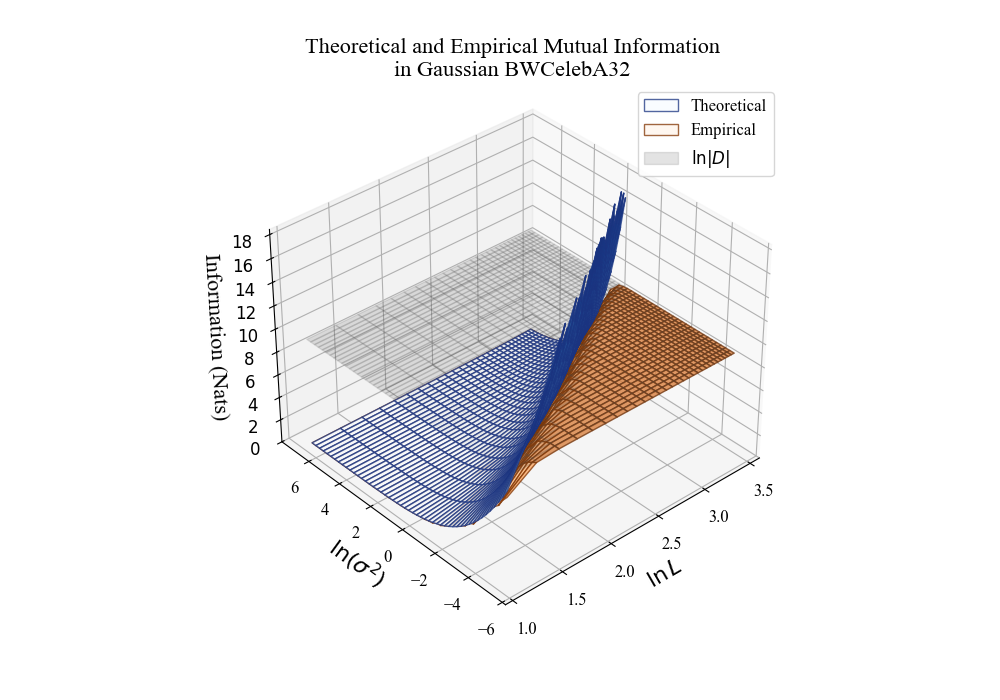
- A simple rule for memorization vs. generalization:
- Let be the mutual information (how much the patch tells you about the original image).
- Let be the number of training images.
- The boundary is:
- Memorize if
- Generalize if
- In words: If your patch reveals more information than what’s needed to uniquely name a training image, the model memorizes; otherwise, it generalizes.
- Real models behave like BIRD early in training:
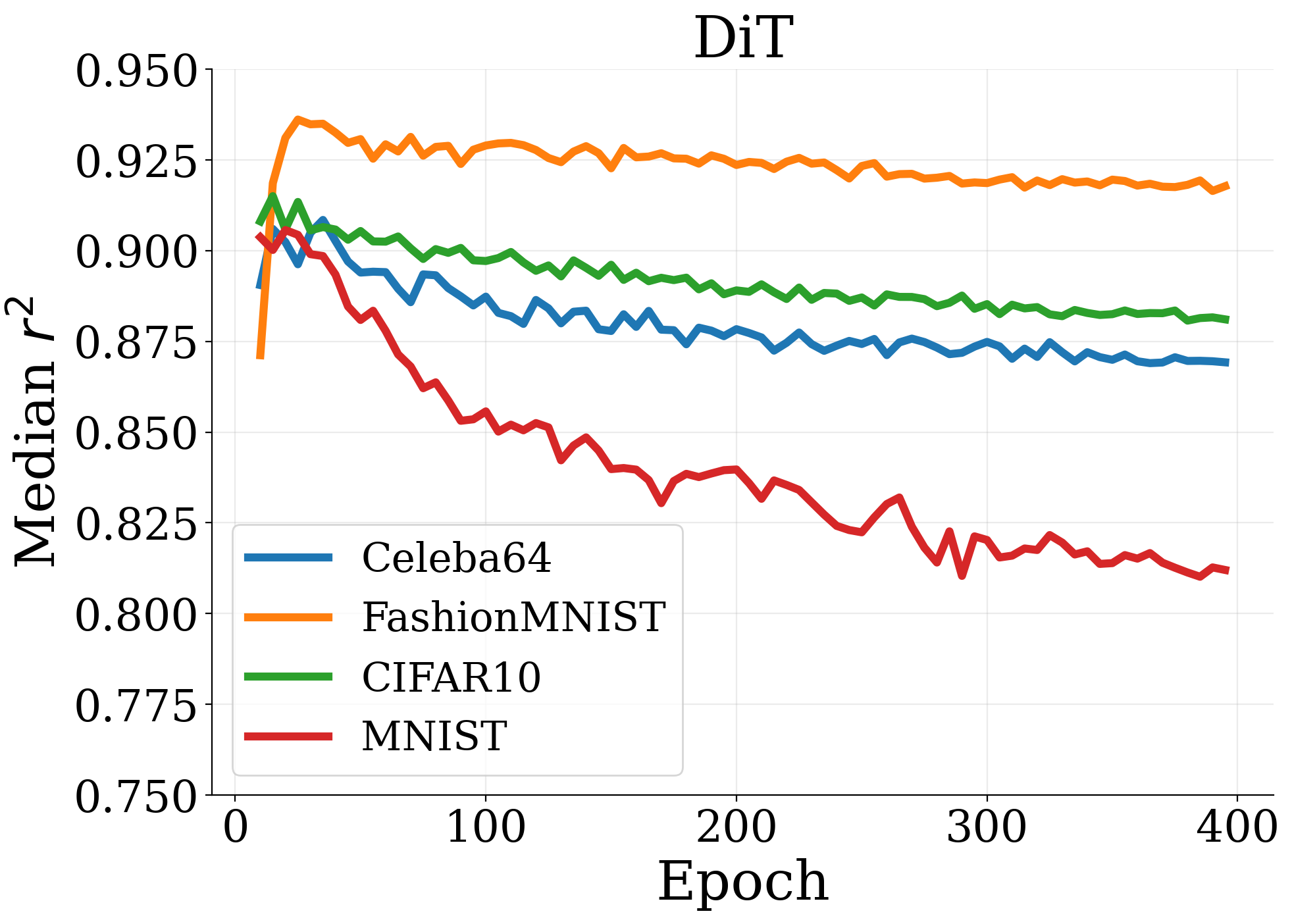
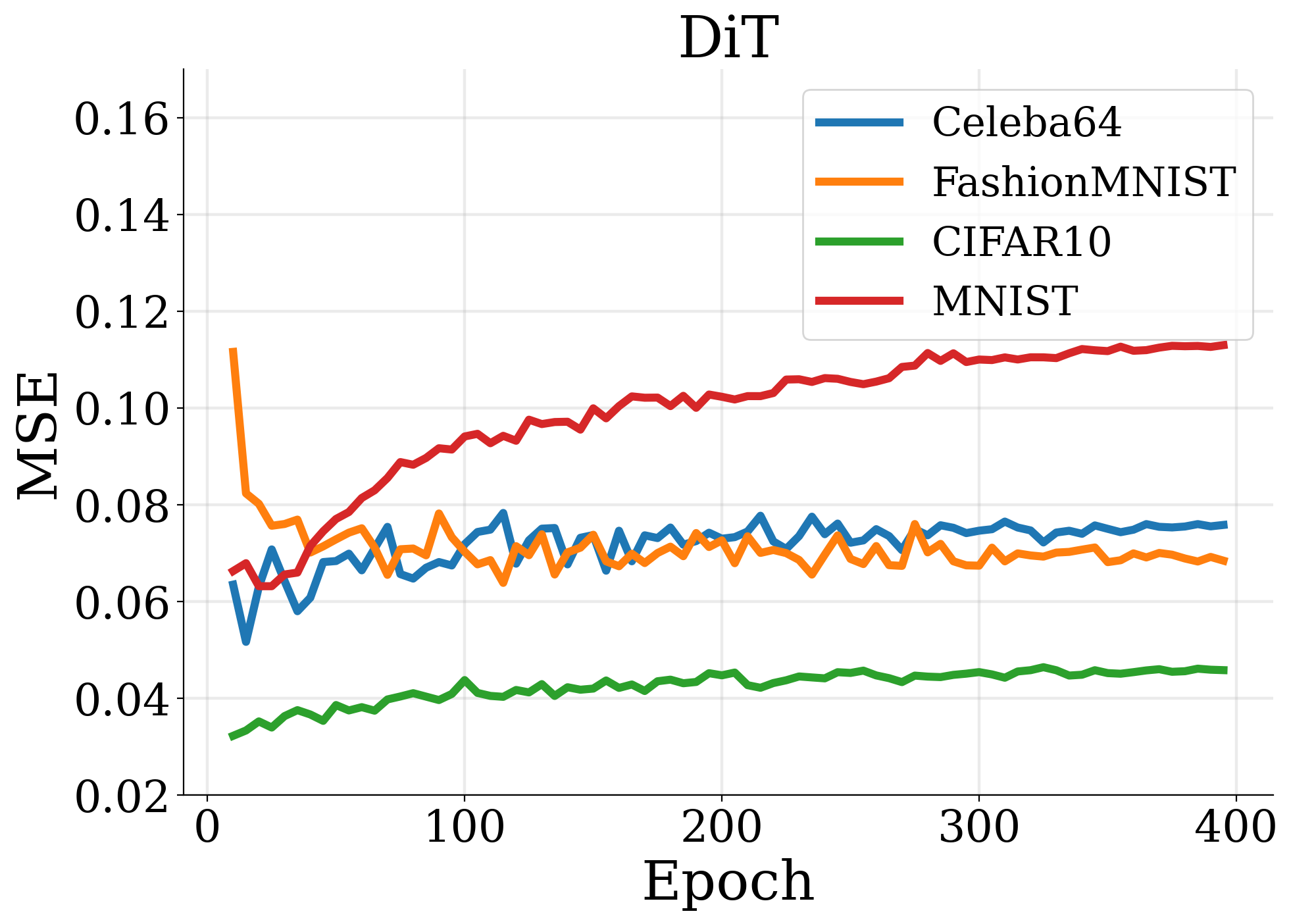
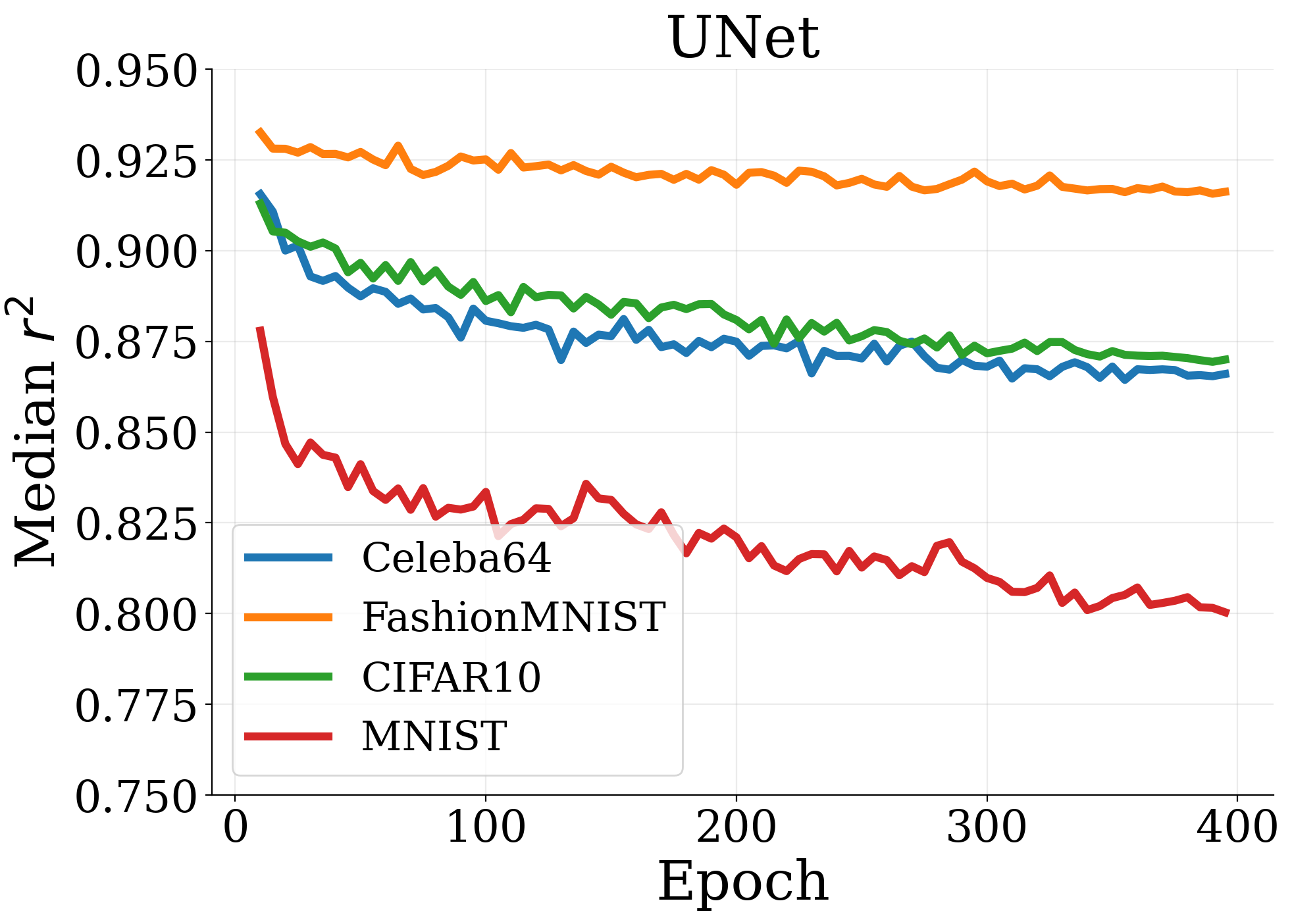
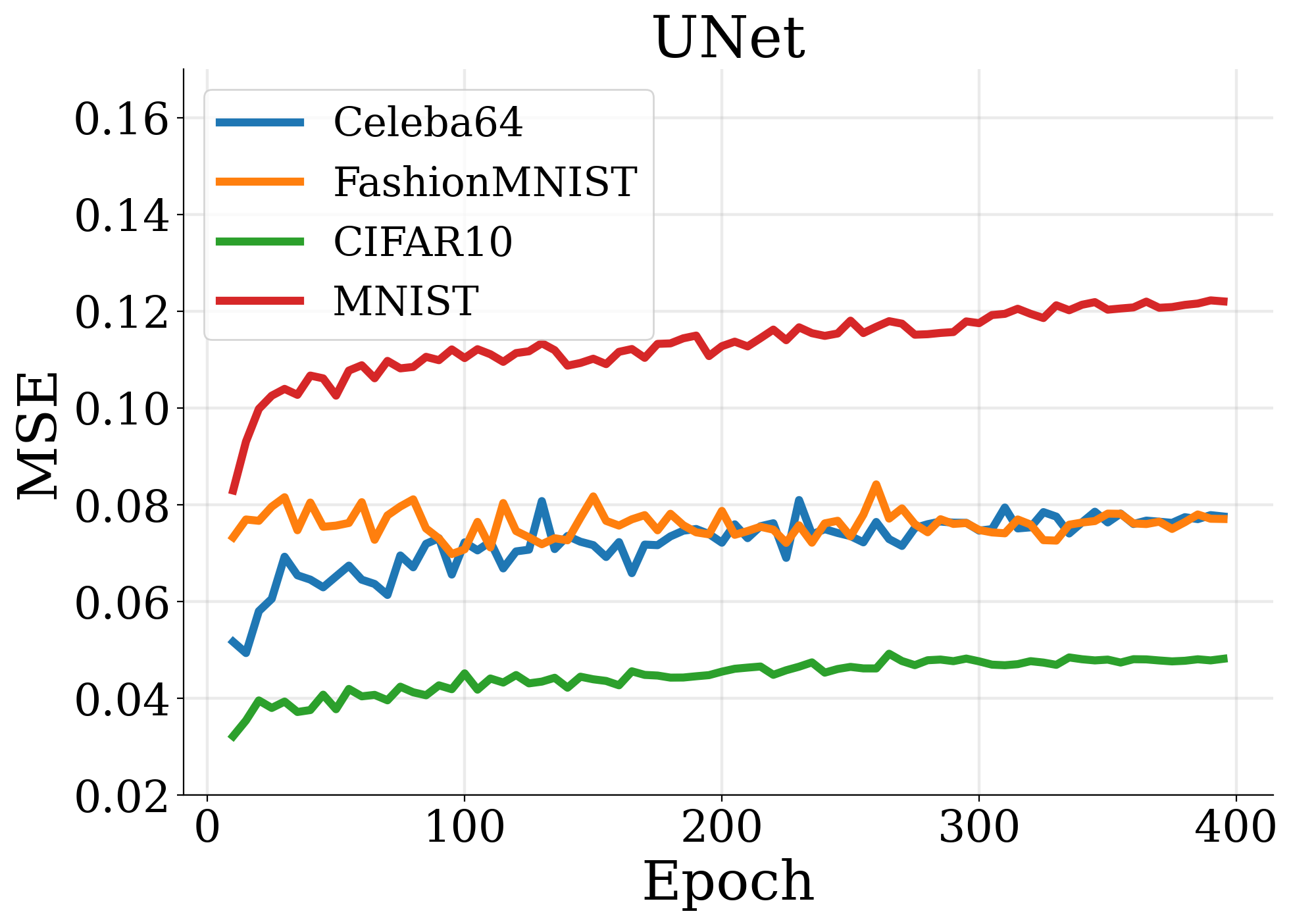
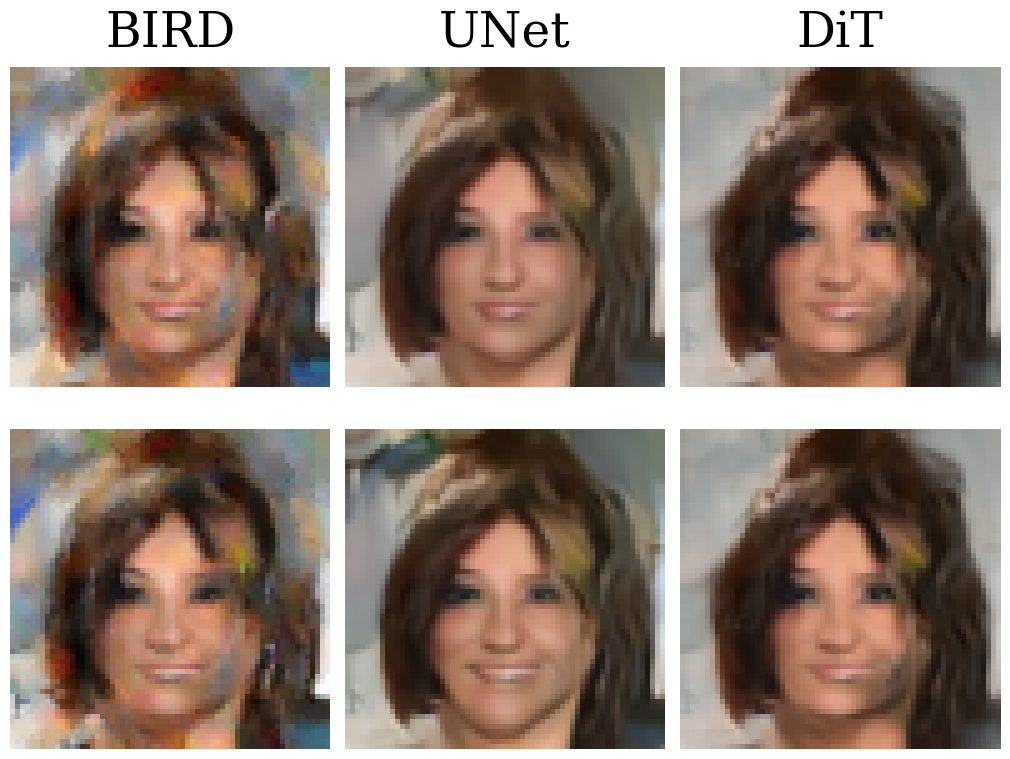
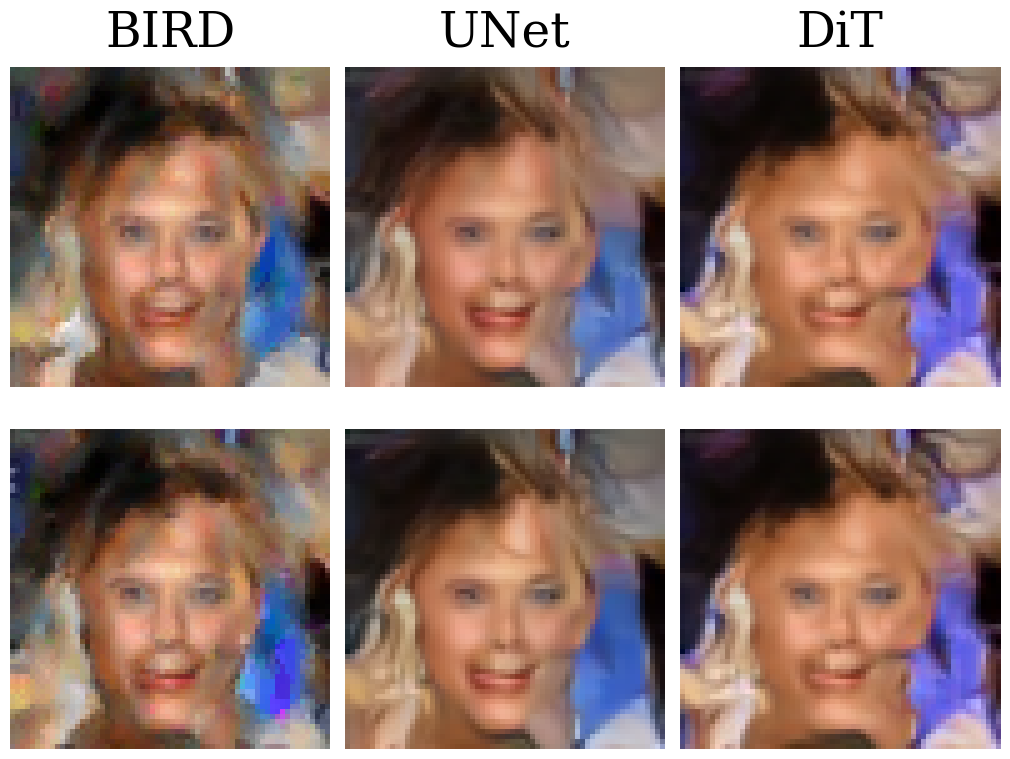
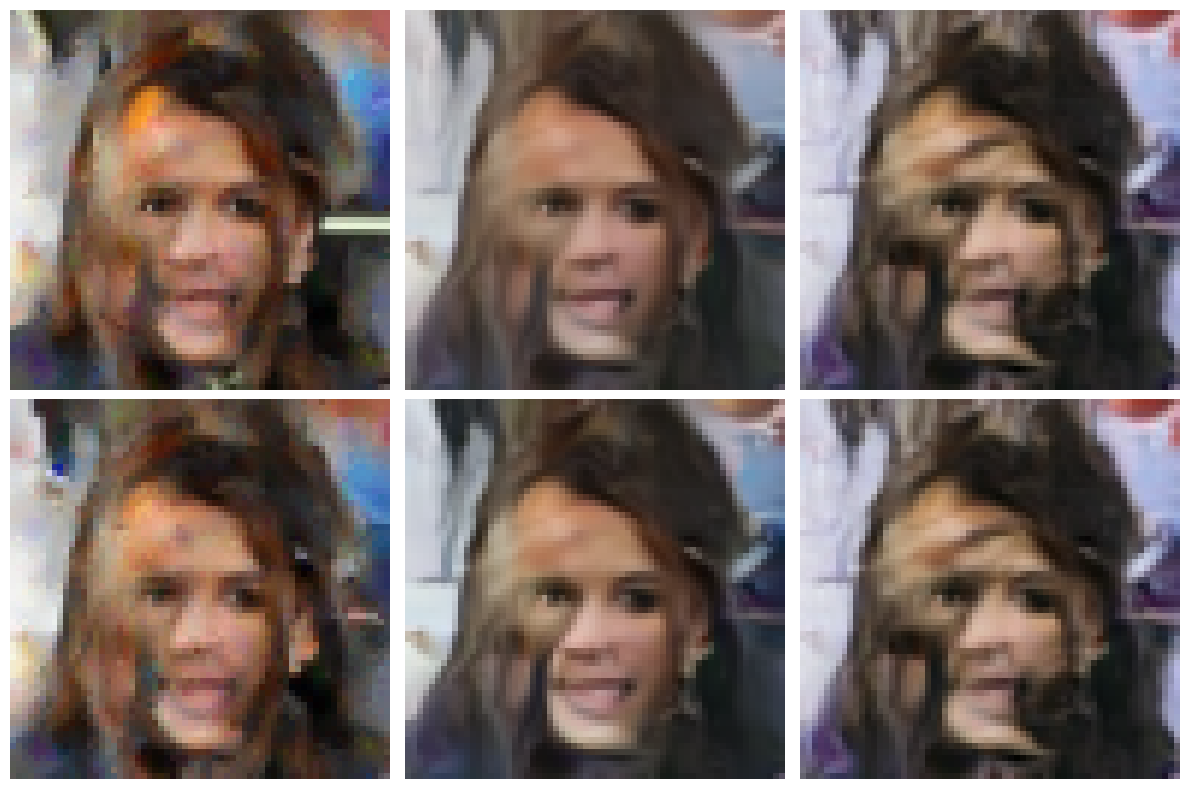
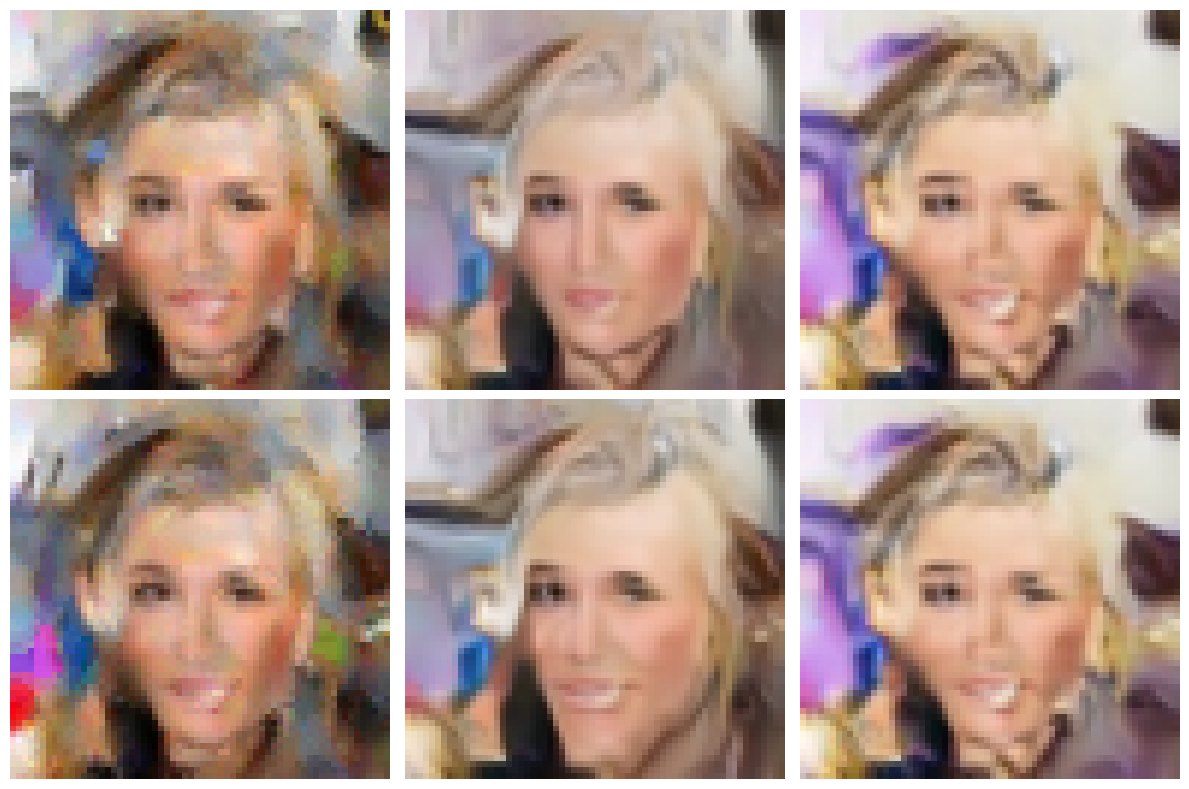
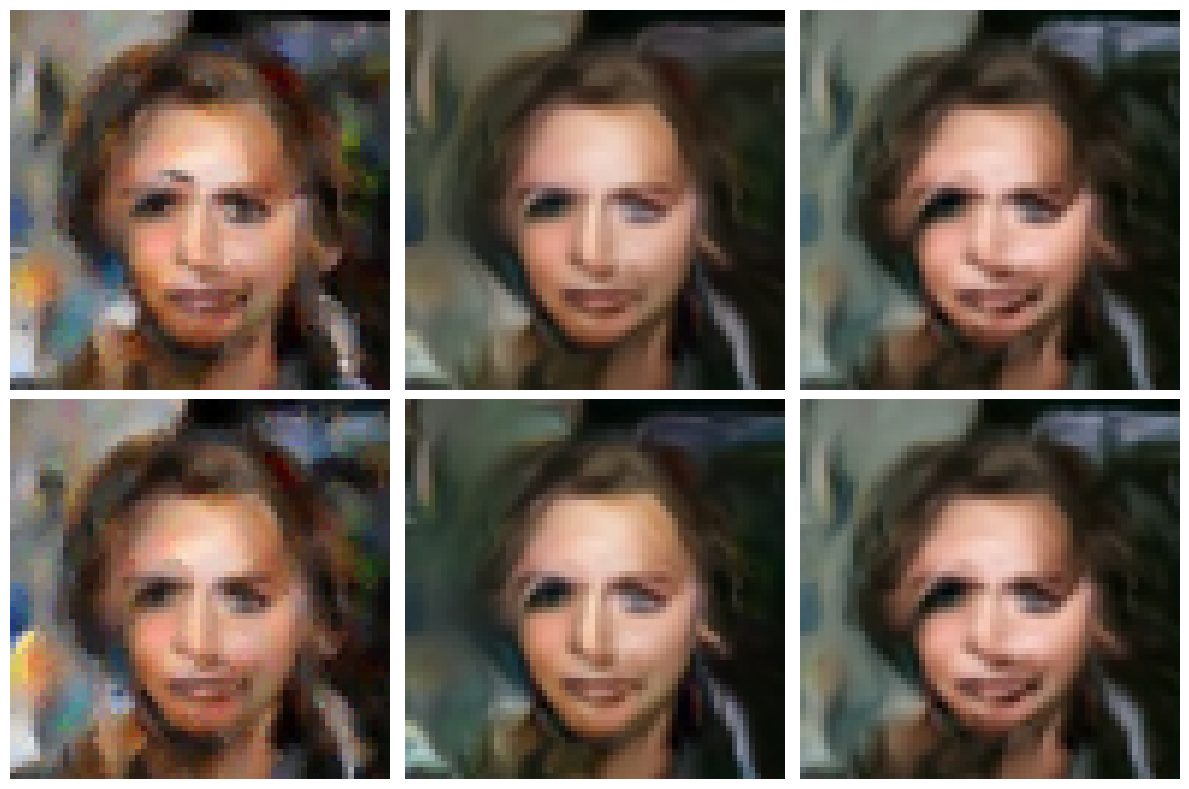
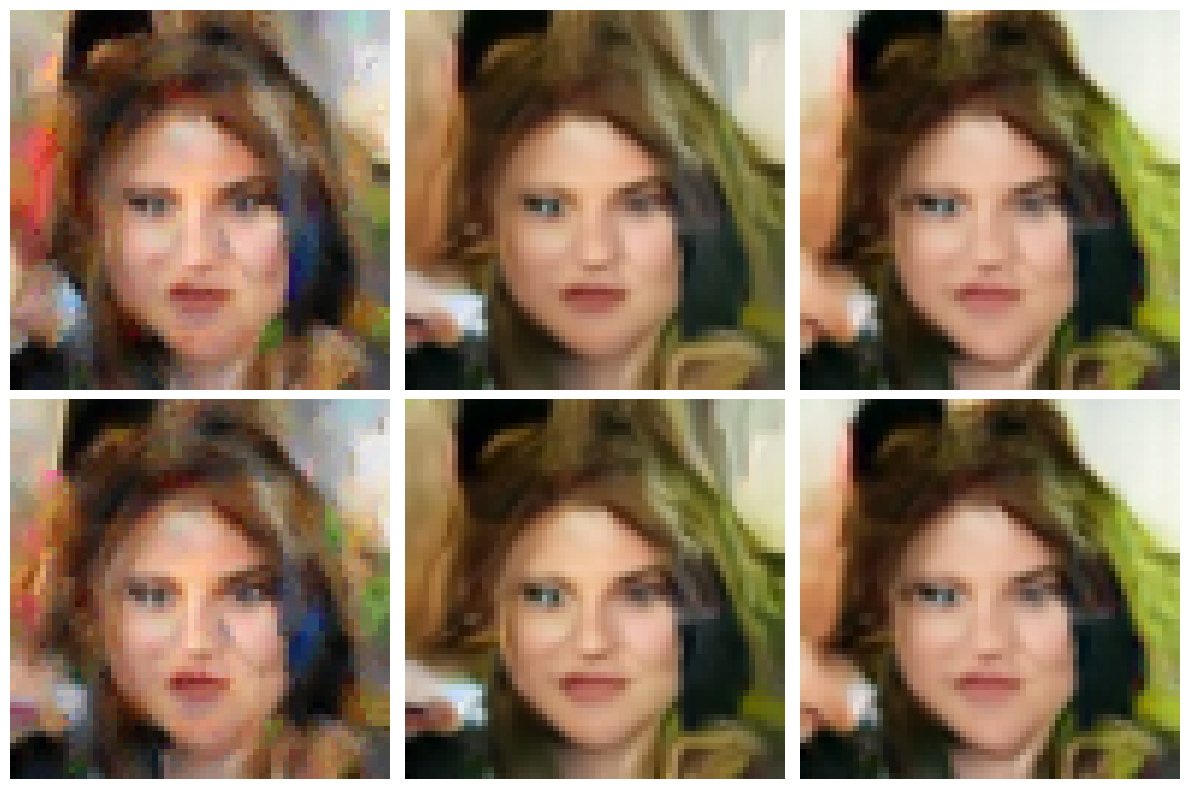
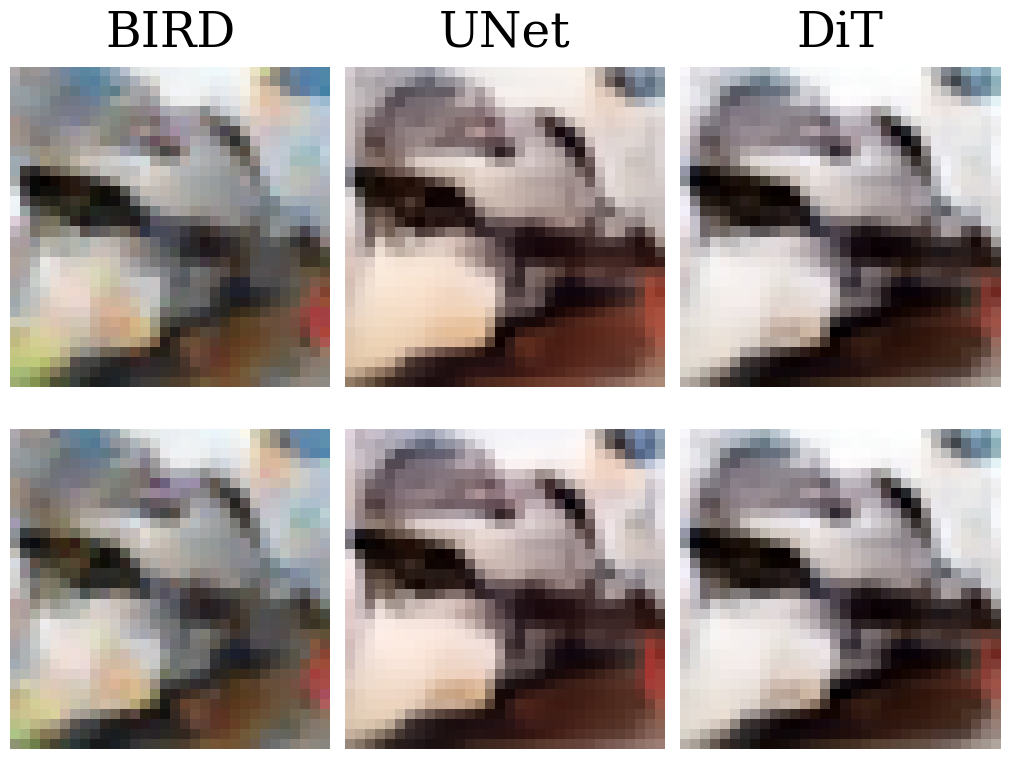
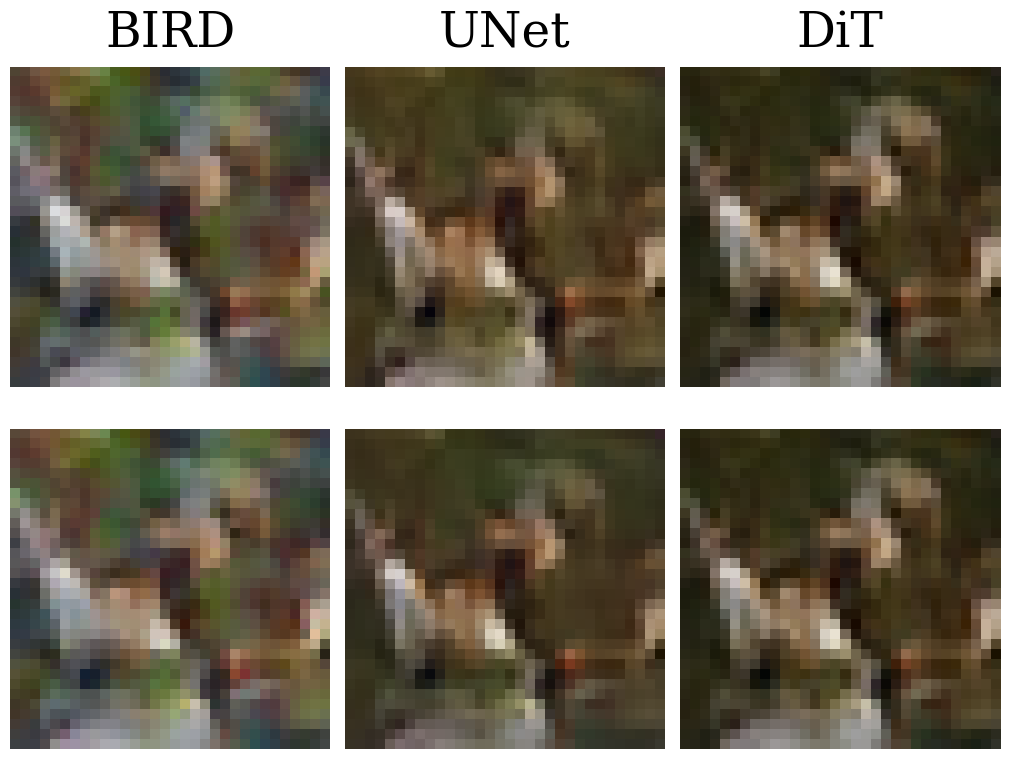
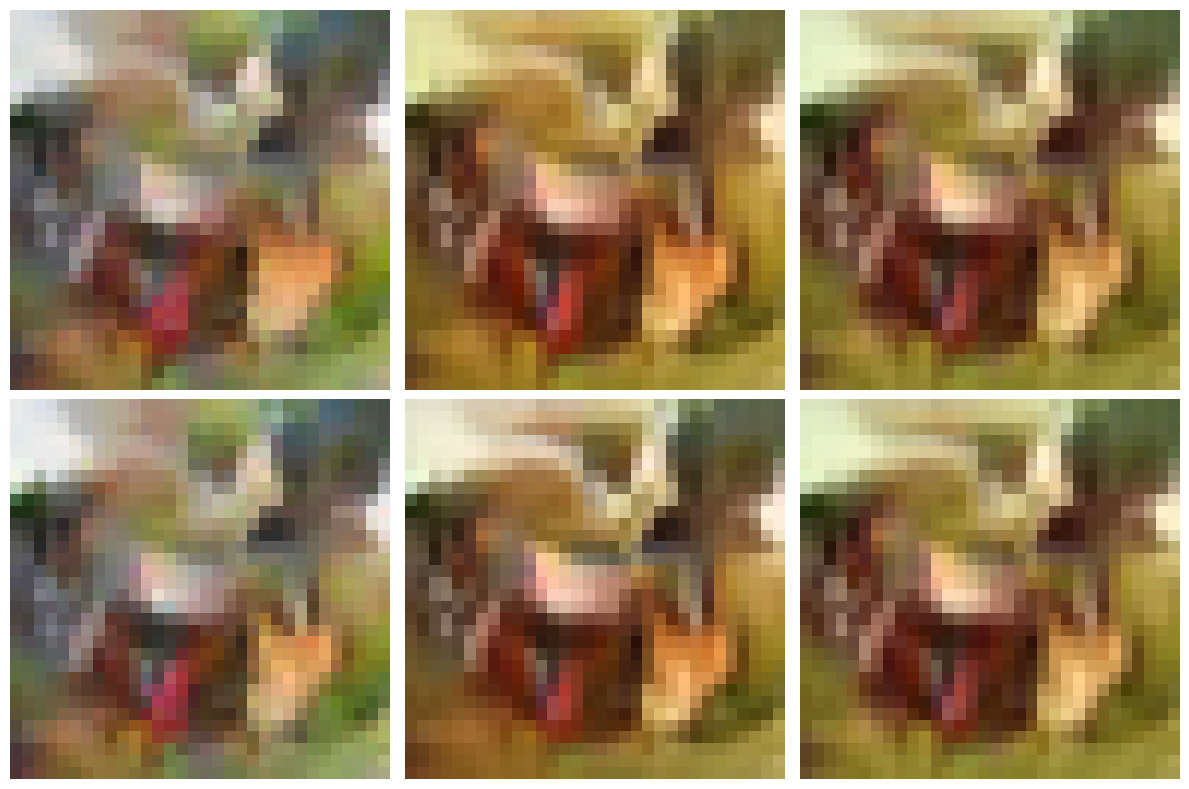
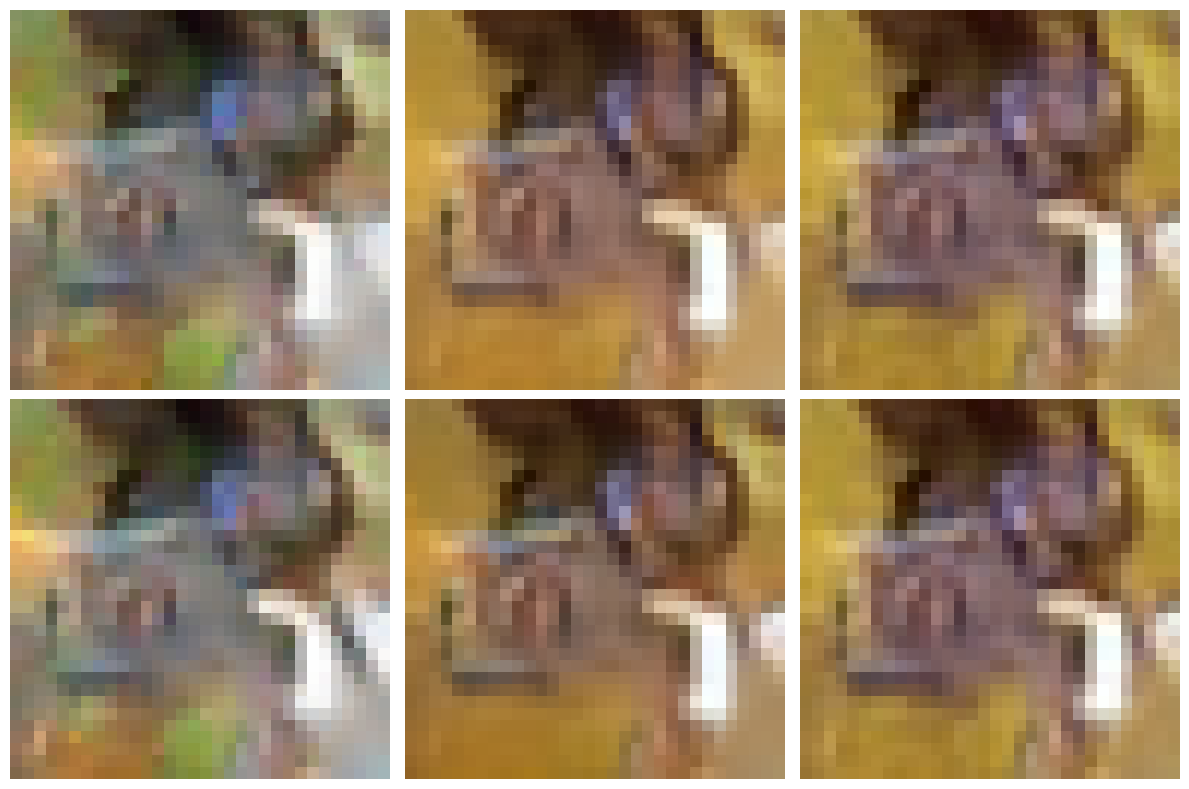
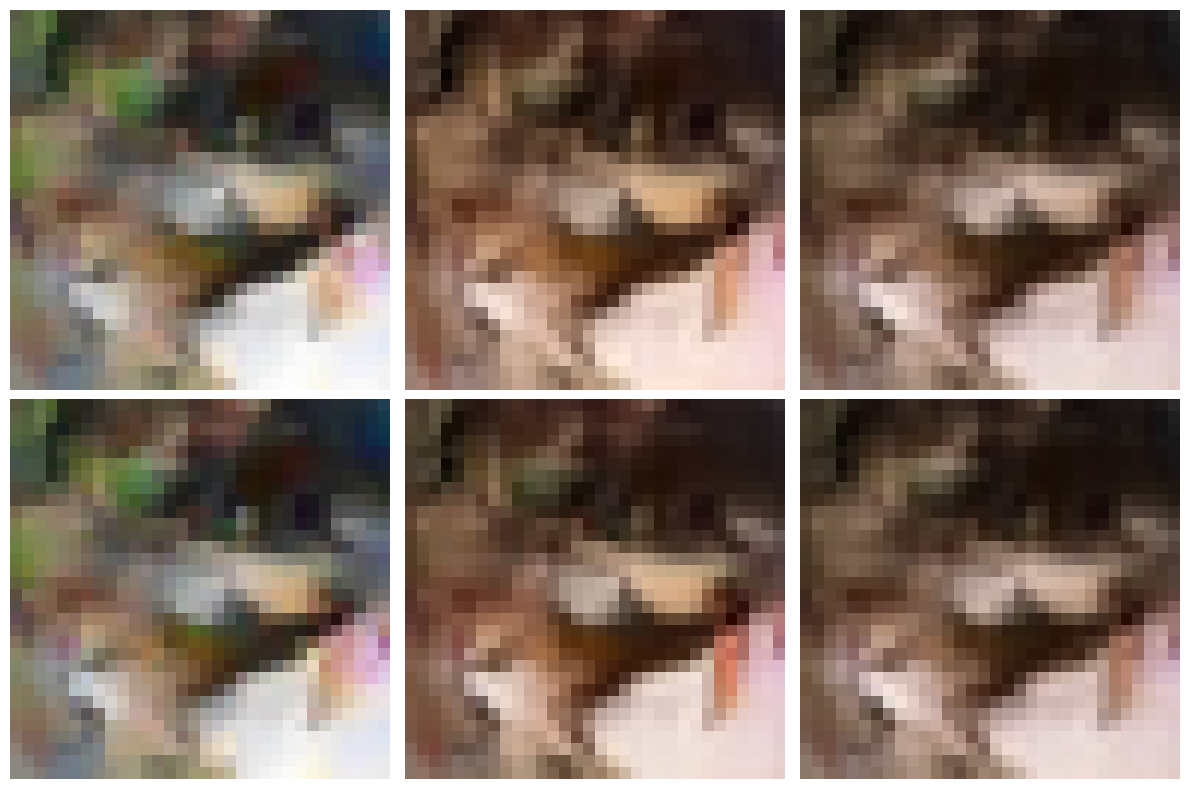
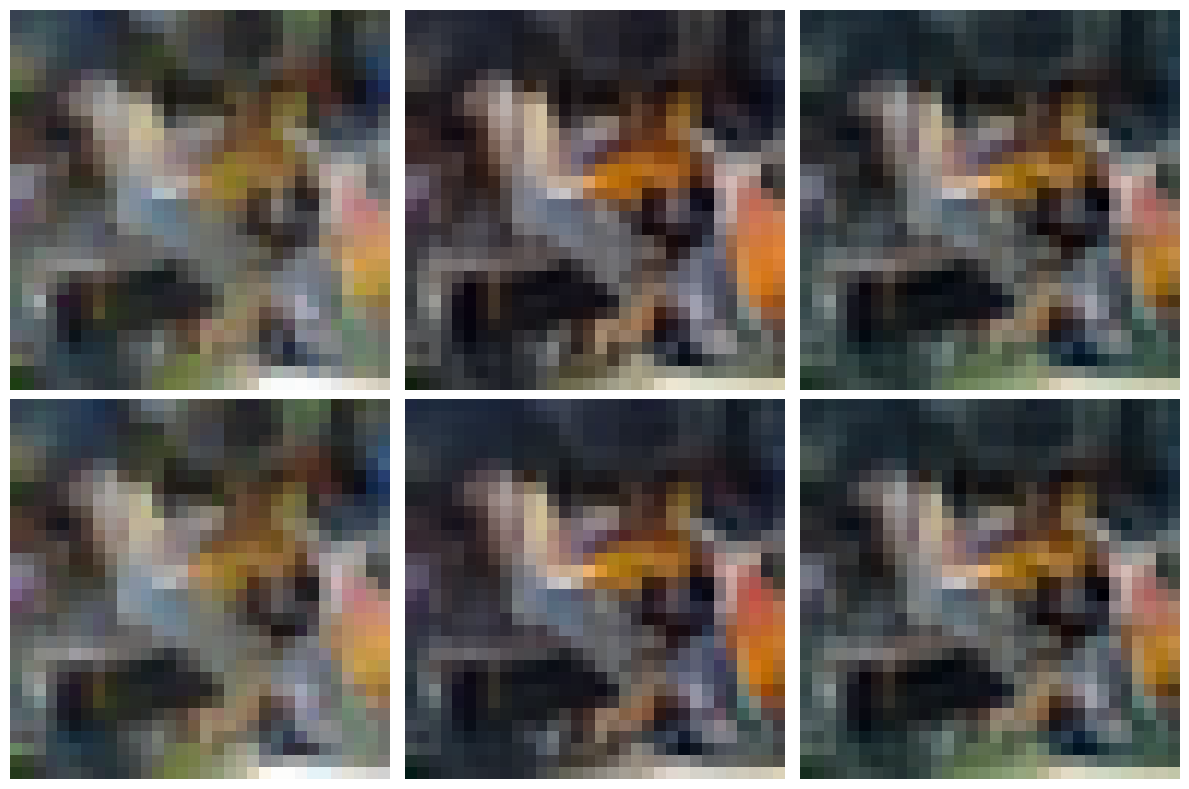
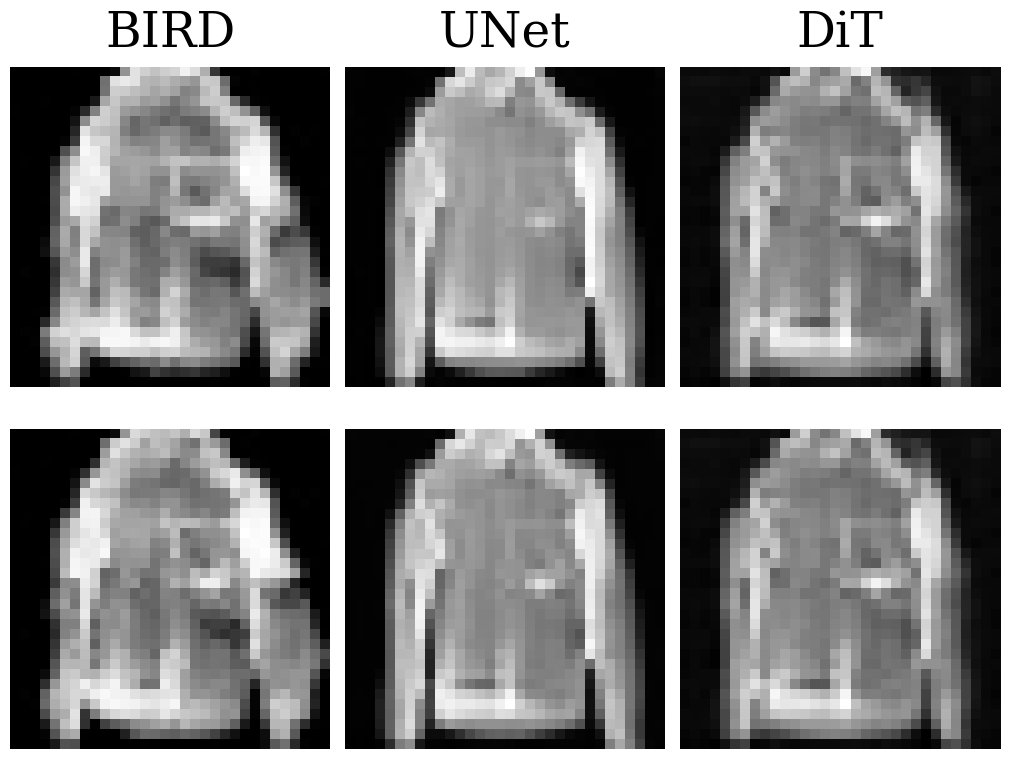
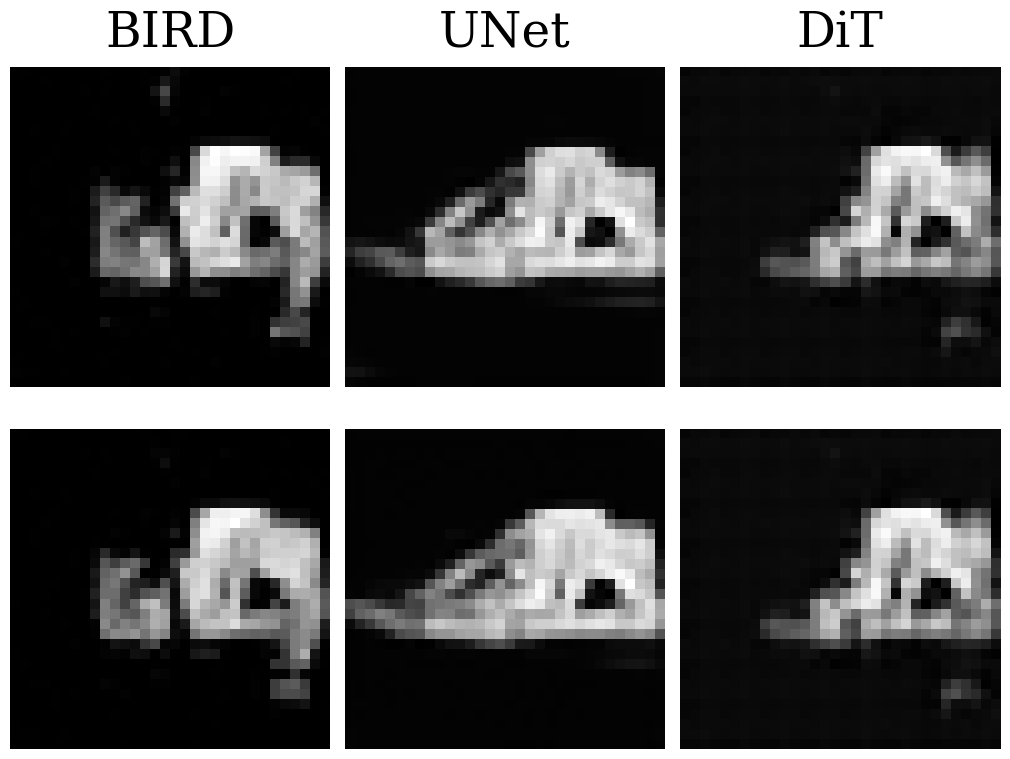
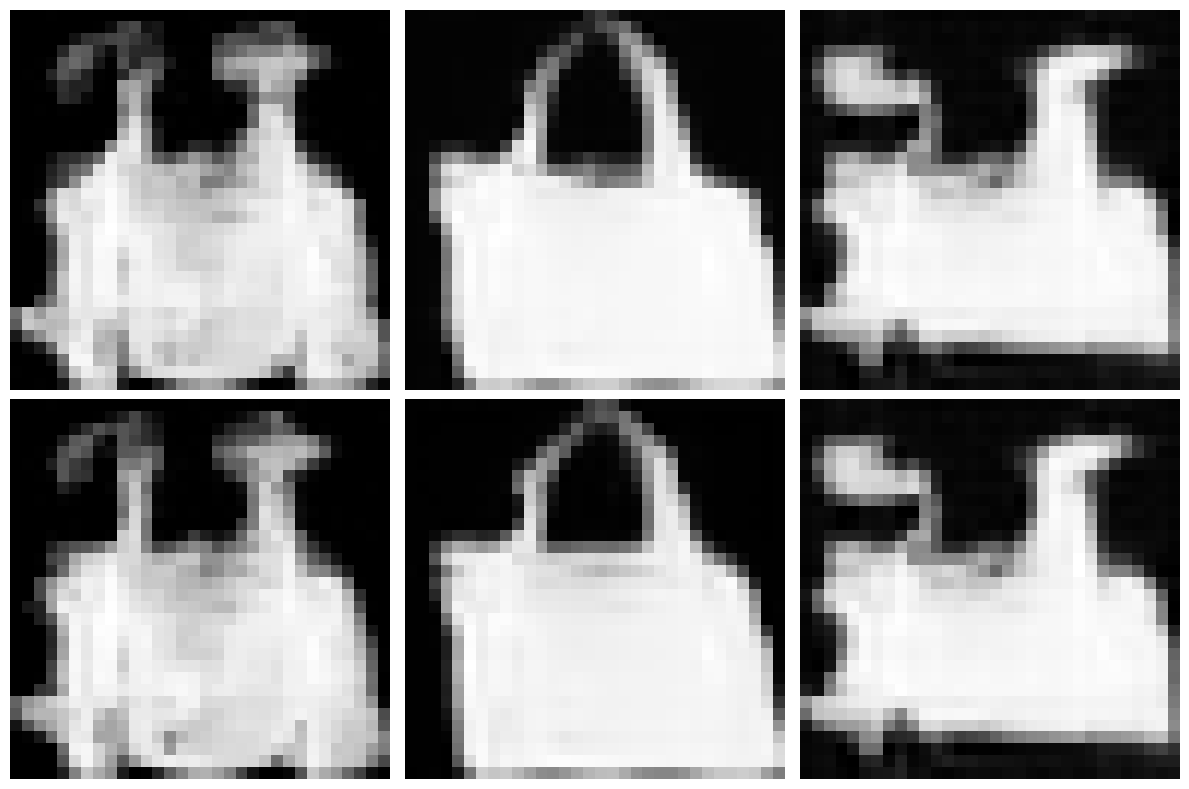
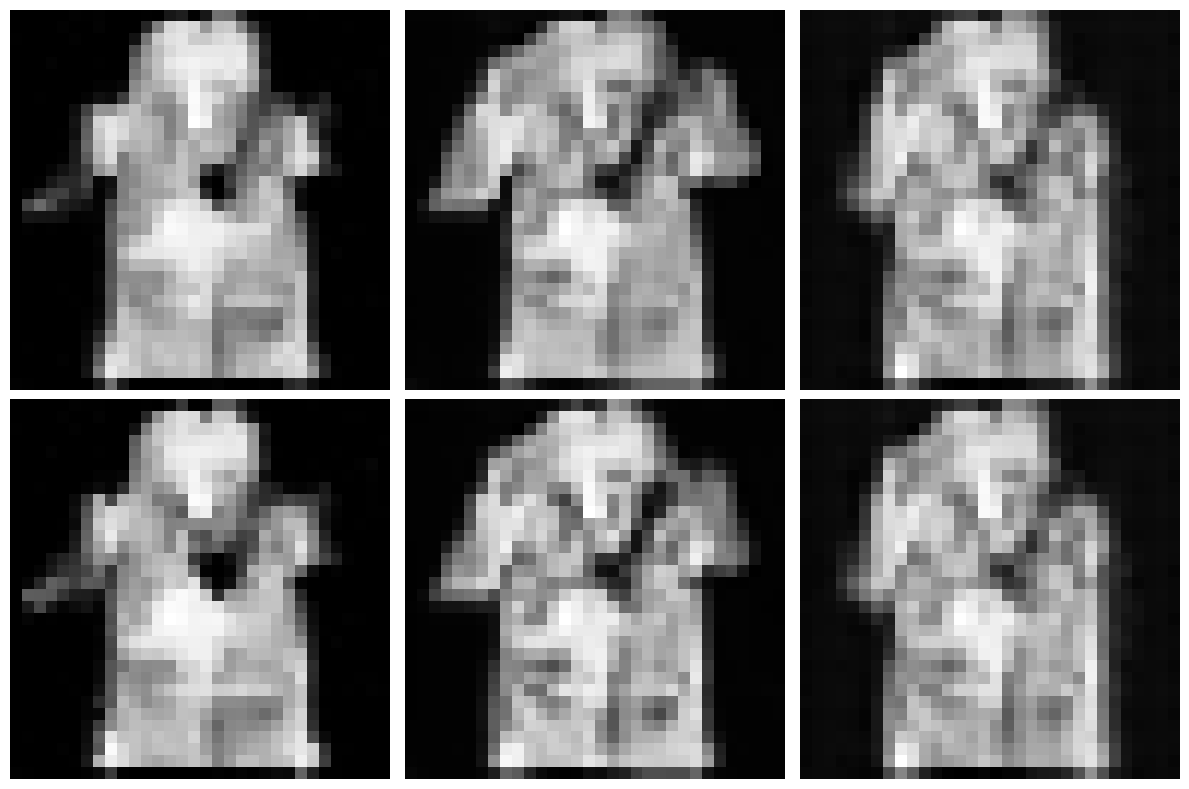
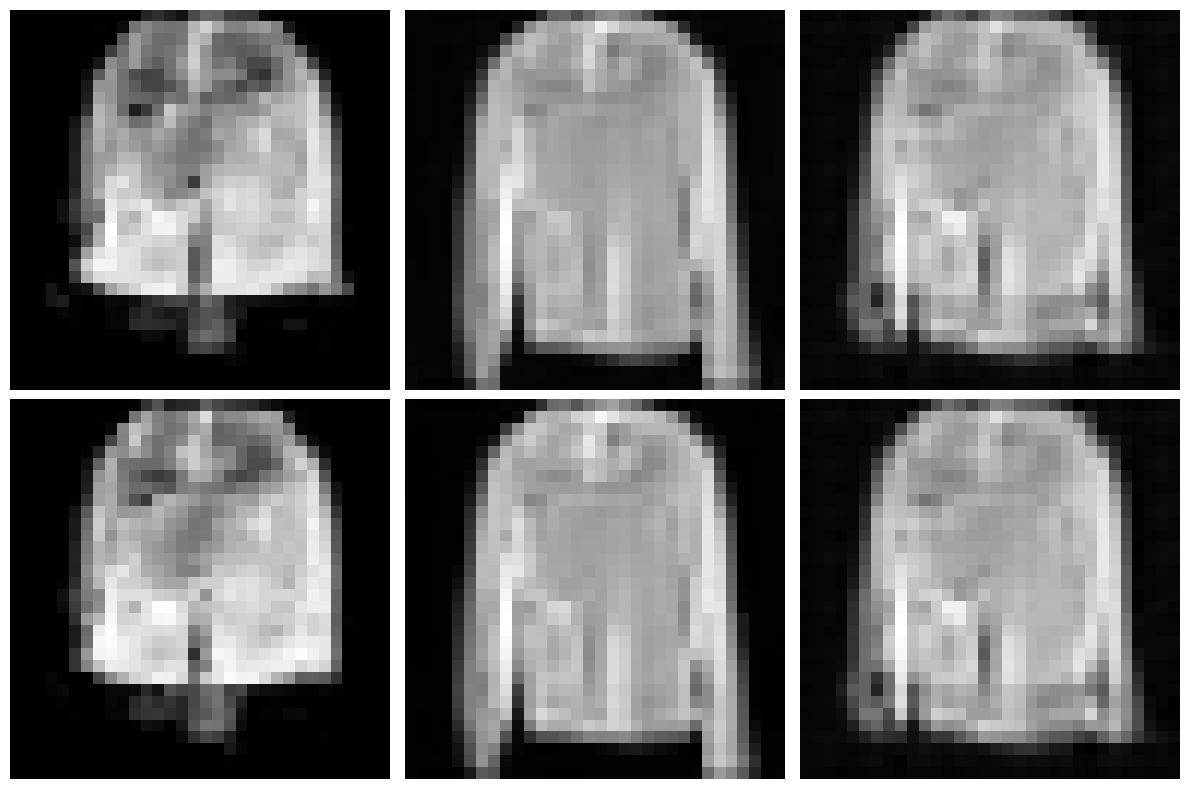
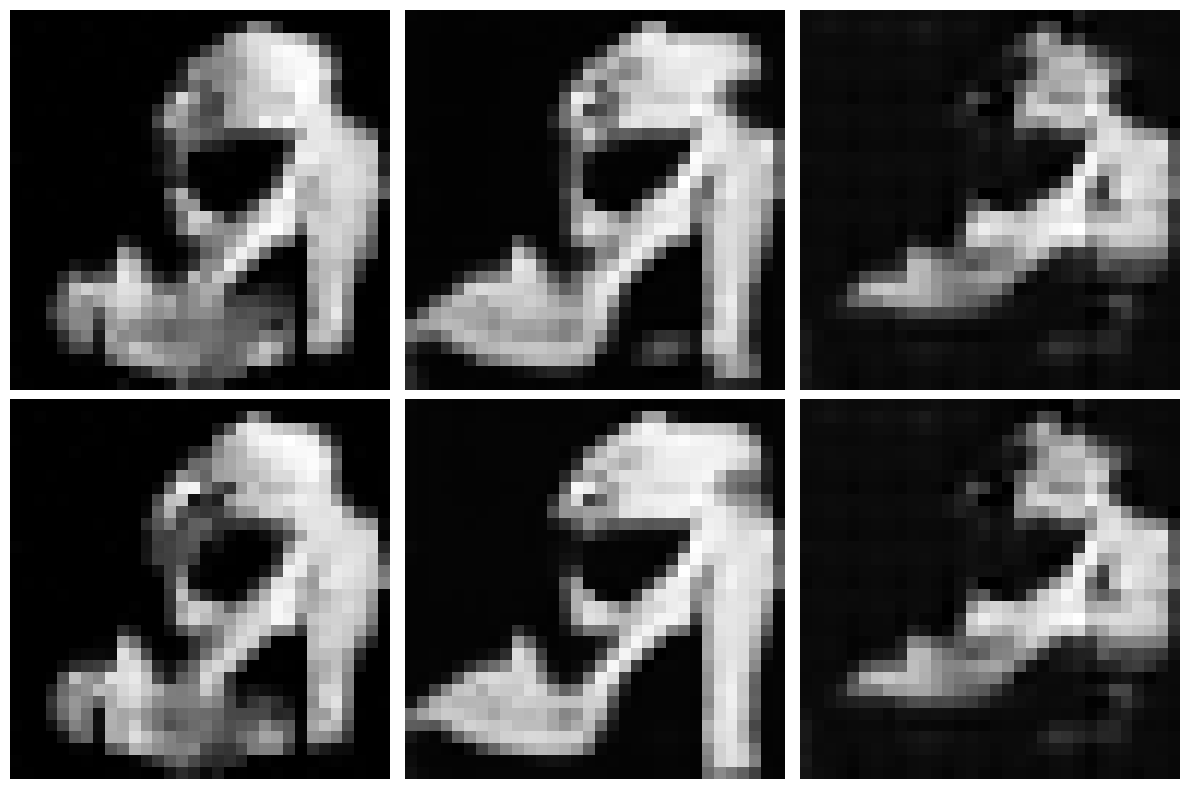
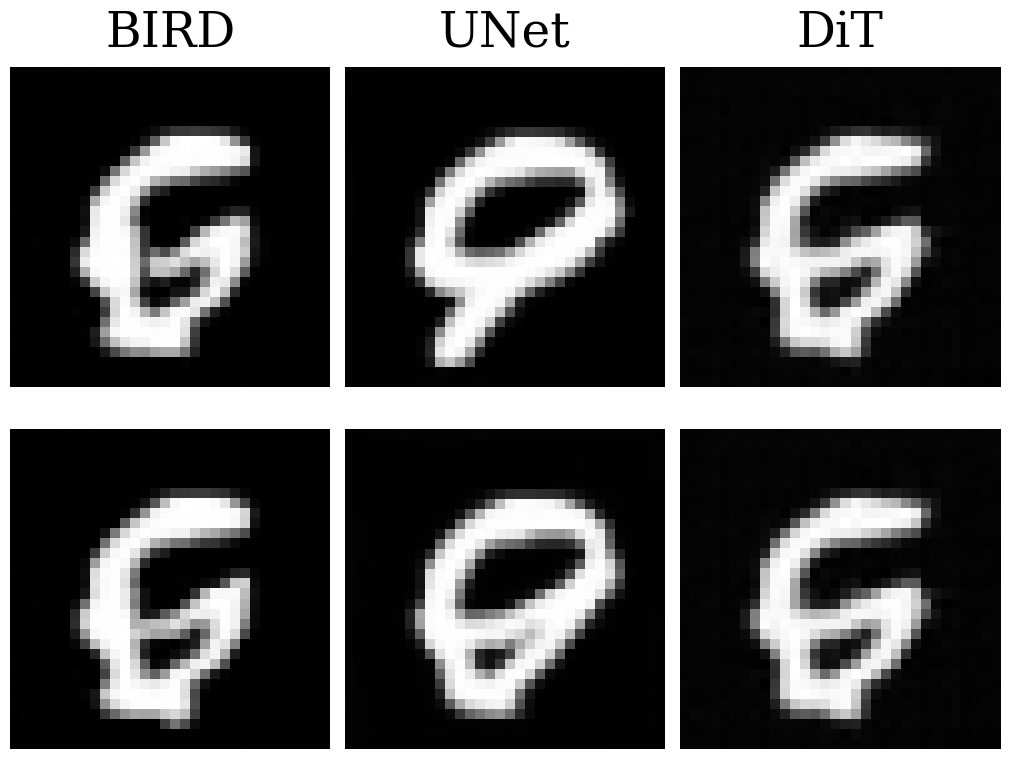
- UNets and diffusion transformers trained for just a short time produced images that matched the BIRD model’s predictions very closely.
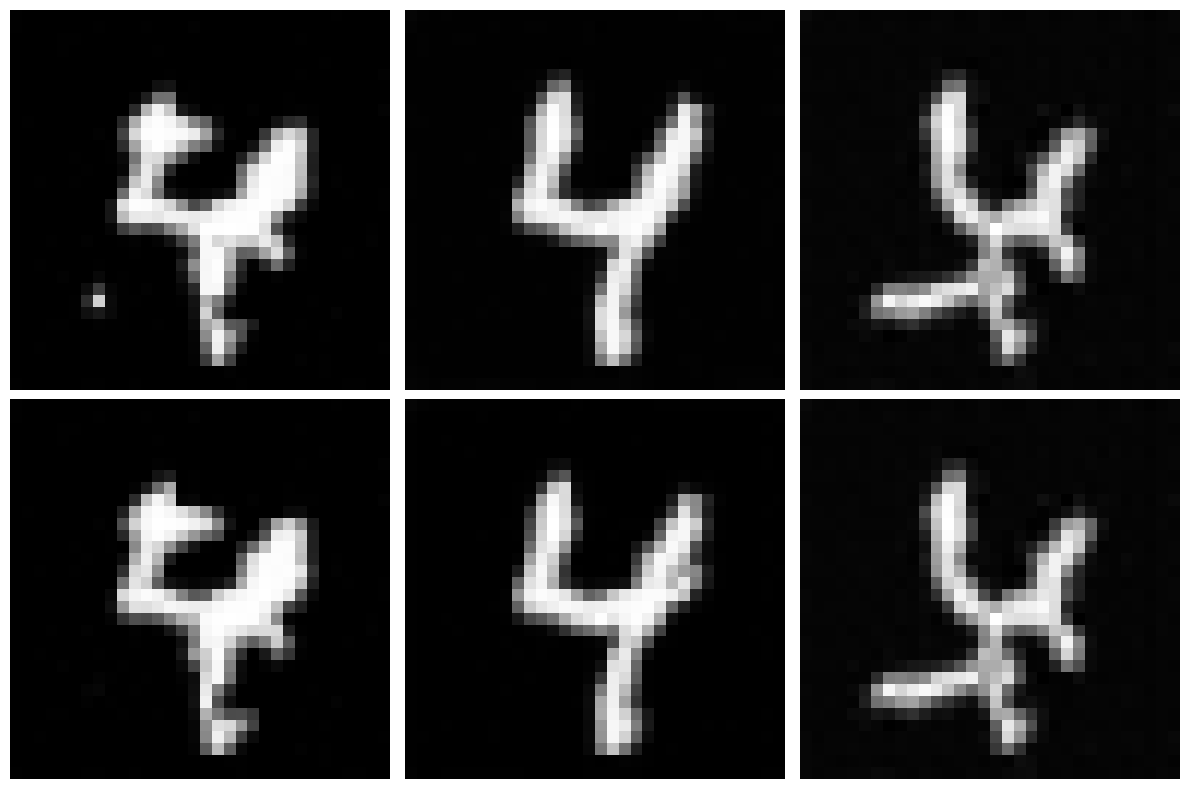
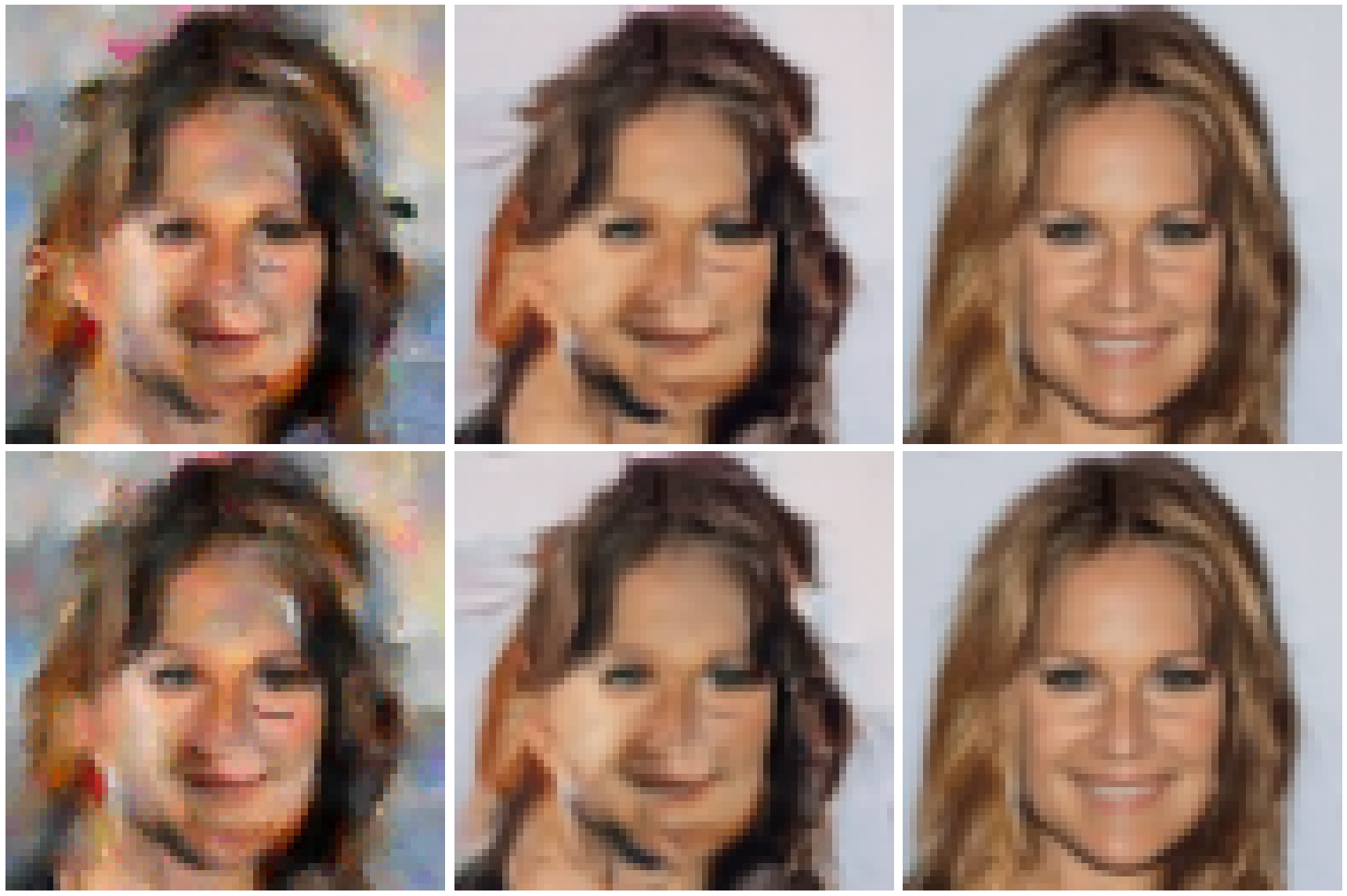
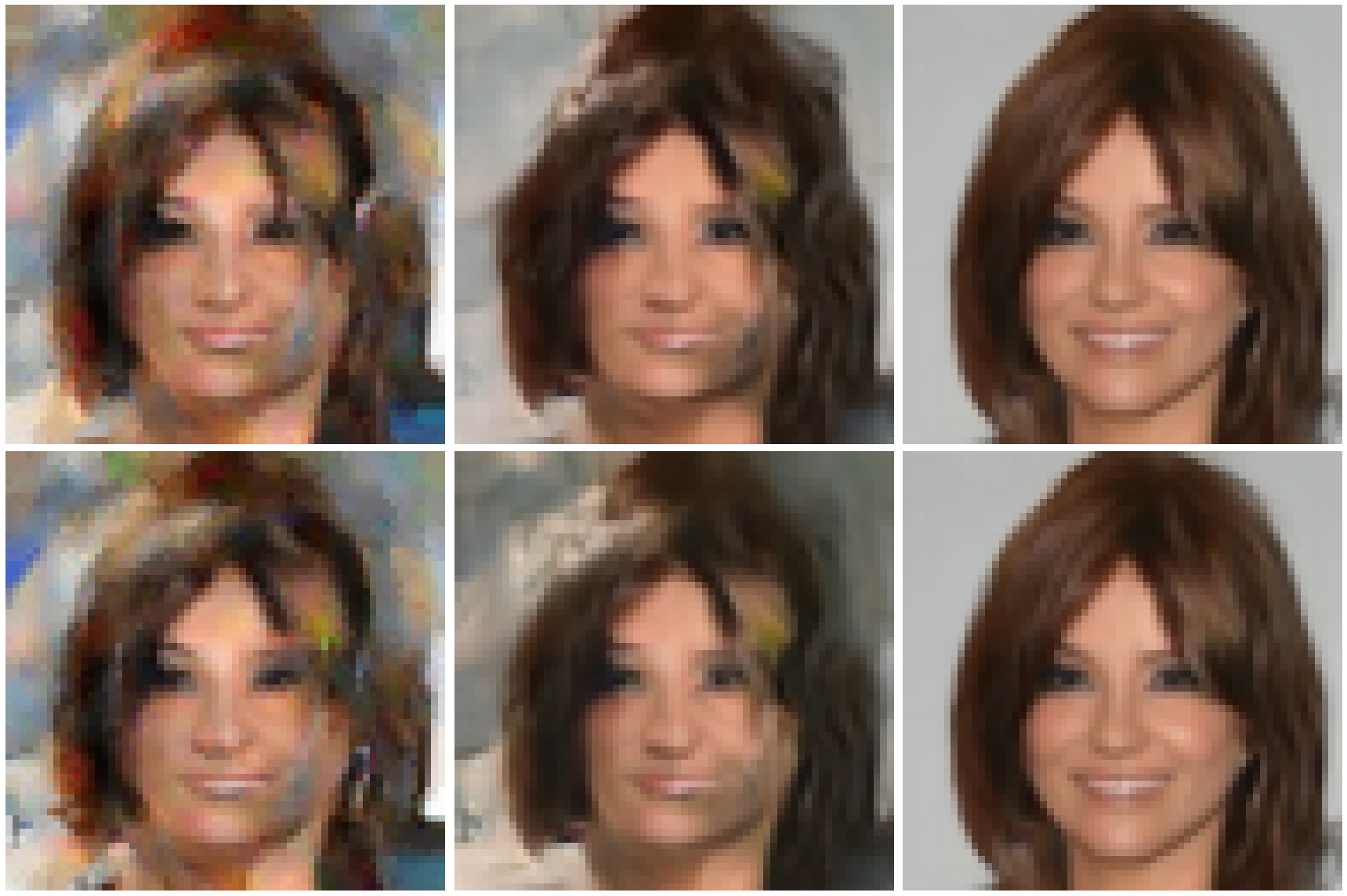
- Two different models trained on different halves of the dataset still produced almost the same images from the same noise—just like BIRD predicts when it’s in the generalization zone. This is strong evidence that the theory captures what real models are doing early on.
- There’s a “critical patch size” that moves over time:
- As the model denoises (noise goes down over time), the patch size needed to avoid memorization also goes down. Early on, you can use bigger patches; later, you need smaller patches to stay safe from memorizing.
- Good generation tends to happen right at this “edge of memorization.” That’s where the model gets the most useful information without crossing into copying.
- Natural images help avoid the “curse of dimensionality”:
- Many natural images have “scale-invariant” statistics (their structure looks similar across scales). The authors show that for such images, the number of training images needed to generalize well grows surprisingly slowly with image size.
- Instead of needing data that grows like the total number of pixels (which would be huge), the data requirement grows like where is image side length and is small (around 0.1–0.3 in real images). For perfectly scale-invariant images (), this growth basically disappears. This explains why diffusion models can generalize with reasonable dataset sizes.
Why does this matter? (Implications and impact)
- Practical training tip: Restricting information (like using local patches) helps models avoid memorization and encourages true creativity. This matches how many diffusion models naturally behave early in training.
- Safer, more general models: Running “near the edge of memorization” seems to give the best results—getting enough detail without copying specifics from the training set. This could guide how we design architectures and training schedules.
- Predicting data needs: The simple rule—compare “information from the patch” to “log of dataset size”—lets you estimate how much data you need to avoid copying for a given noise level and patch size.
- Theoretical clarity: The BIRD framework provides an exact, easy-to-understand information rule for when models memorize versus generalize—something that was previously a mystery for complex, high-dimensional data like images.
Bottom line
By giving each pixel only limited information and using Bayes’ rule to make the best guess, diffusion models can learn to create new images without memorizing. The paper gives a clean, exact condition for the switch between memorizing and generalizing and shows that real models follow this pattern—especially early in training. This helps explain why diffusion models work so well with realistic amounts of data and how to keep them generating, not copying.
Knowledge Gaps
Below is a single, concrete list of the paper’s unresolved knowledge gaps, limitations, and open questions that future work could address.
- Finite-sample theory: Provide non-asymptotic bounds quantifying how accurately the relation S[P_train(ϕ|C)] ≈ ln|D| − I(ϕ; C) holds at realistic dataset sizes and observation dimensions, including explicit rates and constants.
- Tail assumptions: Extend the main phase-transition proof beyond sub-exponential posterior tails to heavy-tailed, multimodal, or sparsity-dominated data distributions; characterize when the equality criterion ln|D| = I(ϕ; C) breaks down.
- Mutual information estimation on real data: Replace Gaussian upper bounds with tighter, data-driven MI estimators (e.g., spectral corrections, kNN/neural MI estimators) and calibrate the gap between true MI and the bound across datasets and timesteps.
- Pointwise phase boundary: Empirically validate the claimed pointwise condition for individual observations (rather than averages) and quantify the spread of per-sample posterior entropies around the transition.
- Finite-resolution constants: The scaling law ln|D| ∼ L_Iε lacks constants needed to predict practical dataset sizes; estimate these constants per dataset and resolution, and verify scaling at higher resolutions.
- Nonstationarity and inhomogeneity: Theoretical results often assume translational invariance or rely on second-order stationary statistics; extend the analysis to nonstationary images (e.g., faces) and spatially varying ε or power spectra.
- Patch geometry and anisotropy: Analyze how the critical scale L_c depends on patch shape and orientation (not only square patches), particularly for anisotropic textures; derive optimal geometry per noise level.
- Color and channel correlations: Generalize MI bounds to multi-channel images with cross-channel covariance; quantify how RGB correlations shift L_c and denoising performance.
- Beyond spatially local restriction: Test and analyze BIRD channels that are nonlocal (e.g., random projections, multiband Fourier/wavelet observations, low-rank/global token summaries) and compare their L_c(σ_t) to local patches.
- Conditional generation: Extend the theory to conditional diffusion (class labels, text prompts), replacing ln|D| with conditional entropy (e.g., ln|D_y|) and MI with I(ϕ; C | y); empirically validate phase boundaries under classifier-free guidance.
- Latent diffusion: Translate the framework to latent spaces (VAE/autoencoder backbones), deriving L_c and MI in latent coordinates and relating latent-space ε to pixel-space ε.
- Training dynamics and inductive bias: Provide a theoretical account of why early-trained UNets/DiTs approximate spatially local BIRD (e.g., via NTK/linearization), and identify when/why later training deviates; characterize how architecture and optimization implicitly induce an information restriction schedule.
- Coordinated multi-pixel inference: BIRD treats per-pixel posteriors independently; develop theory for joint multi-pixel inference or message passing across pixels and quantify how joint inference modifies the phase boundary.
- Schedule design at the edge of memorization: Derive and learn an adaptive schedule L(t) that provably tracks ln|D| = I(ϕ; C_t) during generation; test whether staying near the boundary consistently minimizes denoising error across datasets and model scales.
- Solver dependence: Assess whether the MI-based transition accurately predicts memorization under different samplers (e.g., DDIM few-step ODE, stochastic samplers) and non-standard noise schedules (VE vs VP, heavy-tailed noise).
- Robustness to data augmentations and near-duplicates: Quantify how augmentations (crops/flips) and dataset duplicates change the effective ln|D| and shift L_c; propose estimators of the “effective dataset size” driving the transition.
- Practical diagnostics: Develop tractable training-time proxies (e.g., posterior entropy estimators, MI surrogates from model logits) to detect impending memorization and guide regularization or information restriction.
- Privacy implications: Convert the MI threshold into formal membership-inference or reconstruction risk bounds for diffusion models; explore whether enforcing I(ϕ; C) < ln|D| yields privacy guarantees.
- Heavy-compute scalability: Posterior computation over all training samples is O(|D|) and infeasible at scale; study approximate nearest-neighbor/posterior thinning schemes and their impact on the phase boundary and denoising quality.
- Realistic, large-scale validation: Validate the theory on higher-resolution and large-scale datasets, and on state-of-the-art models (long training, large DiTs/UNets), including late-training behavior where current predictivity declines.
- Extensions beyond images: Generalize the theory to audio, video, 3D, and discrete token domains; characterize ε-like parameters and spectral scales for these modalities and test ln|D| ∼ sizeε predictions.
- Boundary/equivariance effects: Provide a phase-transition analysis for equivariant and boundary-broken BIRD variants (ES/ELS), quantifying how equivariance and boundary terms shift L_c and denoising performance.
Practical Applications
Immediate Applications
Below is a concise set of practical applications that can be deployed now, derived from the paper’s findings on Bayesian Information Restricted Diffusion (BIRD) models and the information-theoretic phase boundary between memorization and generalization.
- Memorization risk auditing for diffusion models (sector: software/ML, policy)
- Application: Integrate an auditor that computes the entropy deficit ln|D| − S[P_train(ϕ | C)] and/or a Gaussian upper bound on mutual information I(ϕ; C) to flag regimes where models are likely to memorize.
- Tools/workflows:
- Spectral and covariance estimation from training data.
- A “risk dashboard” plotting entropy deficit vs noise σ_t and patch scale L to identify the edge-of-memorization.
- Assumptions/dependencies: Requires estimators of mutual information or its Gaussian bounds; assumes sub-exponential posterior tails, high observation dimension, and large dataset limits for the sharp phase characterization.
- Dataset sizing calculator for image diffusion (sector: software/ML, data operations, media)
- Application: Estimate minimum dataset sizes using ln|D| ∼ L_Iε (ε≈0.1–0.3 for natural images) to avoid memorization at target image resolution L_I.
- Tools/workflows:
- A “dataset budgeting” utility that ingests image PSD and outputs recommended |D| scaling.
- Assumptions/dependencies: Relies on near scale-invariant power spectral density P(k) ∝ k−(2−ε); provides conservative guidance when using Gaussian bounds.
- Patch-scale and attention-window scheduling to stay on the edge of memorization (sector: software/ML)
- Application: Set and adapt spatial locality (patch size L or attention window size) over reverse-time t so L(t) ≈ L_c(t), balancing denoising performance and generalization.
- Tools/workflows:
- Training-time controllers that restrict attention windows or receptive fields as σ_t decreases.
- Precomputed L_spec from PSD to align L with effective linear denoising length.
- Assumptions/dependencies: Requires accurate PSD/covariance; early-training regimes of UNets/DiTs match spatially local BIRD behavior.
- Early-training QA via BIRD prediction matching (sector: software/ML, academia)
- Application: Use spatially local BIRD models as “sanity checks” to compare early-model outputs (UNets, DiTs) with predicted samples to detect training pathologies.
- Tools/workflows:
- Case-by-case r² agreement checks (~0.85–0.93 reported) across datasets and architectures in early epochs.
- Assumptions/dependencies: Valid primarily in early training; approximate locality holds across architectures.
- Privacy and copyright compliance checks (sector: policy, media, enterprise ML)
- Application: Certify “non-memorizing” regimes by verifying ln|D| > I(ϕ; C) is not violated; maintain generation near the phase boundary to reduce training-image reproduction risk.
- Tools/workflows:
- Compliance reports that include entropy deficit curves and locality schedules.
- Assumptions/dependencies: Audits depend on MI estimation quality and training-time control of receptive fields.
- Robust image denoising/restoration with locality-aware Bayesian patching (sector: healthcare imaging, remote sensing, mobile photography)
- Application: Improve denoising by choosing patch sizes L ≥ L_spec while avoiding memorization (L < L_c); apply BIRD-inspired posterior mean inference at the patch level.
- Tools/workflows:
- Spectral-scale calculators to derive Wiener-like filter radius L_spec.
- Patch-based MMSE estimators constrained by locality.
- Assumptions/dependencies: Requires access to representative training distributions; linear-denoising intuition (Wiener filter radius) aligns with L_spec.
- Synthetic data generation guidelines (sector: finance, retail analytics, media)
- Application: Use entropy deficit monitoring and locality schedules to ensure synthetic outputs generalize beyond the training set (reduce leakage).
- Tools/workflows:
- “Memorization guardrails” added to diffusion workflows; continuous monitoring of ln|D| − S[P_train(ϕ | C)].
- Assumptions/dependencies: Works best on image-like data; for tabular/time-series, define modality-appropriate “restricted observations.”
- Education and reproducible labs (sector: academia, education)
- Application: Classroom and research labs that replicate the memorization–generalization boundary, compute Gaussian MI bounds from real datasets, and visualize L_c(t) and L_spec(σ_t).
- Tools/workflows:
- Open-source notebooks implementing BIRD inference channels and mutual information curves.
- Assumptions/dependencies: Requires foundational statistics (PSD, covariance), and computing support for experiments.
- Cross-architecture consistency checks (sector: software/ML)
- Application: Validate that different models (UNets/DiTs) trained on disjoint subsets still generalize by producing consistent outputs when fed the same noise in early training.
- Tools/workflows:
- Consistency tests across subsets and architectures, tied to BIRD predictions.
- Assumptions/dependencies: Robust in early training; consistency can degrade later without proper locality control.
Long-Term Applications
The following applications require further research, scaling, or development to mature into deployable solutions.
- Memorization-safe diffusion frameworks with adaptive information restriction (sector: software/ML, enterprise)
- Vision: Training/inference engines that enforce dynamic locality schedules, provably staying in generalization regimes while retaining denoising performance.
- Potential products: “BIRD-guard” training controllers and inference plugins for major diffusion frameworks.
- Dependencies: Richer MI estimators, integration with architectural inductive biases (linearity, smoothness), and standardized controls for attention/receptive fields.
- Regulatory standards and audits based on MI/log|D| criteria (sector: policy, governance)
- Vision: Industry-wide standards that require reporting of dataset size, PSD-derived locality schedules, and memorization risk summaries.
- Potential tools: Certifying bodies’ audit suites; “non-memorization certificates” for generative deployments.
- Dependencies: Agreement on measurement protocols, conservative bounds for non-image modalities, and legal acceptance.
- Automated training controllers that track L_c(t) (sector: software/ML)
- Vision: Controllers/compilers that instrument models to restrict or expand locality over reverse time, keeping generation near the edge-of-memorization for optimal denoising.
- Potential tools: Attention-window schedulers, dynamic gating of cross-token interactions, multi-scale curriculum generators.
- Dependencies: Accurate online estimators for L_c(t), robust patch scheduling in transformers/U-Nets at scale.
- Data-efficient, high-resolution generative modeling (sector: remote sensing, medical imaging, media production)
- Vision: Exploit near scale-invariance to circumvent the curse of dimensionality, enabling large images without exponential data growth.
- Potential products: Satellite-imagery synthesis/restoration systems that scale with ln|D| ∼ L_Iε rather than dimensionality.
- Dependencies: Stable scale-invariant statistics at target resolutions; strong locality control across time and scales.
- Cross-modal extensions (audio, video, 3D) (sector: multimedia, robotics)
- Vision: Generalize information restriction to time-frequency patches (audio), spatiotemporal patches (video), or local neighborhoods (3D), deriving analogous phase boundaries.
- Potential tools: Modality-specific “restricted observation” channels and MI bounds.
- Dependencies: Appropriate PSD-like statistics, posterior tail conditions, and modality-appropriate locality operators.
- Architecture search guided by information restriction (sector: software/ML research)
- Vision: Design inductive biases that synergize with BIRD principles (e.g., linearity, smoothness, equivariance) to maximize generalization for given |D|.
- Potential tools: AutoML loops that tune locality schedules, dilation rates, and attention scopes using entropy deficit metrics.
- Dependencies: Unified metrics across architectures/datasets; efficient MI approximations for large models.
- Model watermarking and inversion-risk reduction (sector: policy, security)
- Vision: Reduce training-data inversion/regurgitation by operating deliberately within generalization regimes; watermarking tuned to locality constraints.
- Potential tools: Risk scores linked to entropy deficit; watermarking schemes adapted to restricted observation schedules.
- Dependencies: Proven connections between memorization risk, inversion attacks, and locality; standards for secure deployment.
- Community benchmarks based on entropy deficit curves (sector: academia, standards)
- Vision: New benchmarks for generalization vs memorization that report ln|D| − S[P_train(ϕ | C)] across σ_t and L, alongside sample quality metrics.
- Potential tools: Open datasets with PSD annotations; leaderboards tracking “generalization safety.”
- Dependencies: Shared measurement protocols and baselines across modalities, agreement on reporting formats.
- Inference-time schedulers for “edge-of-memorization” generation (sector: software/ML)
- Vision: Adjust receptive fields or context windows at inference to minimize training-data recall risk while preserving output quality.
- Potential products: Plugins that adapt locality per step in the reverse diffusion process.
- Dependencies: Fast MI proxies at inference time; compatibility with existing ODE/SDE samplers.
- Integration with differential privacy and data governance (sector: policy, enterprise ML)
- Vision: Combine DP training with BIRD-inspired locality controls to achieve stronger guarantees against memorization.
- Potential tools: Joint DP-locality training schedules; governance policies that codify both mechanisms.
- Dependencies: Research on interplay between DP noise and locality restriction, practical performance at scale.
Notes on common assumptions and dependencies across items:
- The sharp phase transition characterization relies on large |D| and high observation dimensions, with posterior distributions having sub-exponential tails.
- Many practical estimates use Gaussian upper bounds on mutual information derived from second-order statistics (covariance, PSD), which are conservative and may overbound MI for complex real data.
- Spatially local BIRD models closely match UNets/DiTs early in training; later stages may introduce additional inductive biases (linearity, smoothness, attention patterns) that must be accounted for.
- For modalities beyond images, analogous restricted-observation definitions and PSD-like statistics are needed to port the framework.
Glossary
- Anisotropic Gaussian bound: A lower bound on the critical scale derived using a Gaussian with full covariance, used to estimate when memorization occurs. "the anisotropic Gaussian bound (Lemma \ref{lemma:gaussian_length_bound_main})"
- Bayes optimal: Refers to the optimal inference procedure under Bayesian decision theory; here, the denoiser that minimizes mean squared error given the training set. "While the Bayes optimal diffusion model is appealing"
- Bayesian guessing game: The interpretation of denoising as inferring which training sample produced an observation by evaluating posteriors. "the Bayesian guessing game performed by a pixel"
- Bayesian information restricted diffusion (BIRD) models: A class of diffusion models in which each pixel infers the source training sample using only restricted information about the noisy image. "we introduce analytically tractable Bayesian information restricted diffusion (BIRD) models"
- Critical patch scale: The patch size at which the model transitions between generalization and memorization for a given noise level. "critical patch scale "
- Curse of dimensionality: The exponential growth of data requirements with ambient dimension that typically hampers learning in high-dimensional spaces. "curse of dimensionality"
- Diffusion transformer (DiT): A transformer-based architecture for diffusion models. "diffusion transformers (DiTs)"
- Empirical score function: The score (gradient of log-density) computed from a finite training set, which often leads to memorization. "empirical score function"
- Entropy density: The per-site limit of entropy for large systems, characterizing extensive randomness. "an entropy density"
- Equivariance: A symmetry property where model outputs transform predictably under input transformations; here, translation equivariance. "(translation) group equivariance"
- Equivariant-local score models (ELS): Analytic diffusion models combining locality and (broken) group equivariance biases. "equivariant-local score models (ELS)"
- Fano's inequality: An information-theoretic inequality relating error probability to mutual information, used to link guessing success and information. "via Fano's inequality"
- Forward diffusion process: The process that gradually adds noise to data to produce noisy intermediates used by diffusion models. "forward diffusion process"
- Gaussian upper bound: An upper bound on mutual information computed assuming Gaussian statistics with matched second moments. "the Gaussian upper bound"
- Information restriction: Limiting the information available to each pixel (e.g., to a local patch) to prevent memorization and promote generalization. "information restriction"
- Isotropic Gaussian: A Gaussian distribution with identity covariance (equal variance in all directions). "a simple isotropic Gaussian "
- Markov chain: A sequence of random variables with the Markov property; here, linking clean data, noised data, and restricted observations. "forward testing Markov chain "
- Minimum mean squared error (MMSE) denoiser: The estimator that minimizes expected squared error given observed data and a prior. "MMSE denoiser"
- Mutual information: A measure of shared information between variables, used to quantify when the model can identify training samples. "the mutual information between the observation and the true data distribution"
- Nearest-neighbor search: Selecting the closest training example to a query under some metric; can cause overfitting in denoising. "nearest-neighbor search"
- Noise-to-signal ratio: The ratio of noise power to signal power at a given time in the diffusion process. "noise-to-signal ratio "
- Phase boundary: The dividing condition (in data size, time, and restriction) separating memorization from generalization. "phase boundary between memorization and generalization"
- Phase diagram: A plot depicting regions (phases) of memorization and generalization under varying parameters. "The phase diagram of the generalization/memorization transition"
- Posterior entropy: The entropy of the posterior distribution over training samples given an observation; low values indicate memorization. "posterior entropy"
- Posterior mean: The expectation under the posterior; the Bayes-optimal denoised estimate. "reverse flows towards the posterior mean"
- Power law spectrum: A frequency-domain characterization where power scales as a negative power of frequency. "power law spectrum"
- Power spectral density: The distribution of signal power over spatial frequencies. "power spectral density "
- Reverse generative process: The backward-time denoising trajectory that converts noise into samples. "time in the reverse generative process"
- Reverse process SDE or ODE: Stochastic or deterministic differential equations used to reverse the diffusion and sample data. "a reverse process SDE or ODE"
- Scale invariant images: Images whose statistics are approximately the same across scales (e.g., with ). "scale invariant images"
- Score function: The gradient of the log-density of the noised data distribution used to define the reverse dynamics. "the score function"
- Spectral length scale: The spatial scale determined by the frequency where noise power matches signal power, guiding effective linear denoising. "spectral length scale"
- Sub-exponential tails: Posterior distributions whose tails decay faster than exponential, an assumption used in the phase-transition proof. "sub-exponential tails"
- Translationally-invariant: Having statistics unchanged under spatial shifts. "translationally-invariant distribution"
- Tweedie's theorem: A result linking denoising (posterior mean) to the score of a Gaussian-corrupted variable. "Tweedie's theorem"
- UNet: A convolutional encoder–decoder architecture widely used in diffusion models. "UNets with self-attention"
- Wiener filter: The optimal linear filter for denoising under Gaussian signal and noise assumptions. "the Wiener filter"
Collections
Sign up for free to add this paper to one or more collections.