- The paper demonstrates that tensor network observer rules are equivalent to gravitational path integral prescriptions, unifying two distinct approaches.
- It leverages random tensor network models to reveal an area law scaling for observer Hilbert spaces and the emergence of conical singularities in the gravitational path integral.
- The study extends the equivalence to closed universes in JT gravity, providing computational tools for evaluating generalized entropies in holographic settings.
Subregion Observer Rules and Generalized Entanglement Wedges
Introduction
This work develops a precise correspondence between tensor network rules for incorporating bulk observers into holographic maps and the path integral methods for defining generalized entanglement wedges, as proposed in recent literature. Notably, the paper demonstrates the equivalence between the observer rules of the Colorado (CO) group and the hollowing prescription in tensor networks derived by Kaya–Rath–Ritchie (KRR), both of which are shown to be concrete manifestations of deeper principles connecting observer inclusion and entanglement wedges beyond AdS/CFT. These results are then extended using KRR's path integral rules to generalize observer rules for closed universes and to clarify the area dependence and entropy contributions of subregion observers in JT gravity, thereby providing new insights into the nontrivial Hilbert space structure even in gravitationally closed systems.
Tensor Network Equivalence and Generalized Wedges
The foundational observation is the equivalence between two independently developed sets of rules for modifying tensor networks: CO's observer rules and KRR's hollowing prescription. Both approaches remove tensors from a designated bulk subregion (observer or otherwise), thereby promoting a subsystem of the effective bulk degrees of freedom to a subsystem of the fundamental Hilbert space, and leaving dangling legs encoding the generalized entropy. This equivalence is formalized in the context of random tensor networks, where the entropy of these promoted degrees of freedom reproduces that of the minimal generalized entropy cut, aligning with the Bousso–Penington (BP) proposal for entanglement wedges in gravitational theories.

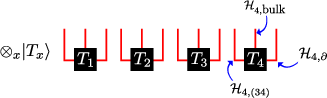

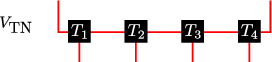
Figure 1: R\'enyi entropy of the observer's subregion as a function of the light probe's relative position.
The identification of subregions with observers leads immediately to nontrivial area contributions interpreted as conical singularities in the gravitational path integral, and to a natural area law estimate for the associated observer Hilbert space, as predicted by the CO rules. This treatment extends to non-isometric codes for closed universes, where promotion of observer regions yields a Hilbert space dimension scaling as dobeAob/4GN, with dob and Aob denoting the effective observer Hilbert space and area of its boundary, respectively.
Gravitational Path Integral Prescription for Subregion Observers
Generalizing from the tensor network setting, the KRR path integral prescription utilizes fixed geometry states to calculate generalized Renyi entropies for arbitrary bulk subregions. Applying KRR's hollowing rule, the path integral is modified so that boundary conditions are inserted not only at the spatial boundary but at the subregion boundary, putting observer worldlines on the same footing as holographic boundaries. For closed universes, this yields a zero entropy for pure bulk states, but in the presence of sufficiently mixed bulk matter, the generalized entropy becomes nontrivial and depends on a balance of area and matter entropy terms, as in the quantum extremal surface prescription.
This is explicitly realized in JT gravity: by inserting a light probe matter field maximally entangled with an external reference, one finds competing extremal surfaces for the entropy calculation—either the empty surface, yielding a flat entropy equal to the probe entropy, or a nontrivial surface, whose dominance is determined by the relative sizes of the area and probe entropy contributions. The transition between these regimes is parameterized by the probe entanglement entropy and the area functional associated with the minimal surface in the geometry.
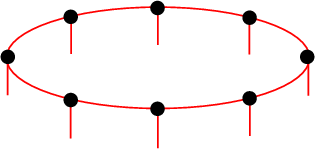
Figure 2: Behaviour of R\'enyi entropy as n→1.
This framework also ensures gauge-invariant specification of observer subregions, either by fixing geometric data locally (e.g. anchoring to a matter probe) or by imposing that the observer's presence is maintained throughout the path integral preparation. In JT gravity, specifying the observer region by proper distance to the matter probe enables explicit numerical evaluation of generalized entropies as a function of geometric and probe parameters.
Hilbert Space Dimension from Entanglement and Variance
The dimension of the fundamental Hilbert space in the presence of a subregion observer is estimated via two independent approaches, both yielding concordant results matching earlier AAIL analyses:
- External Reference Entanglement: Maximally entangling bulk degrees of freedom (including non-backreacting probes) with external references and calculating the generalized entropy leads to a lower bound on the Hilbert space dimension, with the dominant contribution determined by the smallest area cut encompassing the observer.
- Inner Product Variance: Computing the variance of the inner product between external states and evaluating the leading path integral topologies (rigatoni, penne, macaroni) reveals that, when observer subregions are present, the variance is suppressed by the area (e.g., O(e−2S0) in JT gravity), leading again to a Hilbert space scaling of O(e2S0). This is a direct consequence of the modified topologies enforced by the hollowing prescription, which suppresses contributions not directly connecting the observer region across replicas.
Strong numerical results confirm that substantial probe entropy is required to achieve nontrivial observer entanglement entropy, and that the area scaling emerges directly from both analytic and numeric analysis in typical models.
Recovery of the BP Proposal from Observer Rules
The reverse direction is also established: using the AAIL observer path integral rules for pointlike observers in JT gravity, the analysis recovers the BP prescription for generalized entanglement wedges. Specifically, in partially entangled thermal states with a heavy operator insertion serving as a localized observer, the path integral is dominated by pinwheel (cyclically contracted) diagrams, and the resulting entropy is evaluated via a saddle-point analysis. The entropy associated to the observer is then the sum of 2π times the value of the dilaton at the relevant horizons, together with an S0 contribution—a result identical to the BP wedge of the subregion. Hence, the observer rules are identified as a special case of generalized wedge assignments, and the formalism is shown to be insensitive to the size of the region being promoted, encompassing both pointlike and extended observers.
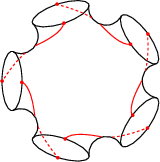
Figure 3: Pinwheel diagram for n=5. Red lines represent operator insertion worldlines of dimension Δ.
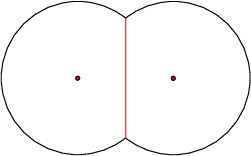
Figure 4: Bulk solution dual to the norm of the PETS state for dob0, with particle worldline and horizons in red.
Implications and Future Directions
From a theoretical perspective, these results sharpen the interplay between tensor network models, gravitational path integrals, and holographic entropy assignments in gravitational systems without asymptotic boundaries. The explicit area dependence of the observer Hilbert space, the suppression of higher-order replica topologies, and the ability of both the CO and KRR rules to seamlessly interpolate between observer promotion and wedge holography provide powerful new calculational and conceptual tools in quantum gravity.
Ensemble averaging and modified path integrals are given a precise operational interpretation: hollowing or observer promotion corresponds to a partial pre-averaging over subregions, which enforces identity gluing along observer boundaries and freely sums over all other topologies, thus realizing boundary/observer symmetry at the path integral level. This links observer rules to gravitational edge mode considerations and potentially to algebraic approaches to closed universe quantum gravity.
Practically, these methods offer concrete frameworks for extracting subregion Hilbert spaces in both toy models and, potentially, full-fledged gravitational systems; the area scaling can guide estimates even beyond semi-classical approximation. Additionally, these techniques—particularly the path integral hollowing—may find application in the study of cosmological and de Sitter quantum gravity, observer-accessible regions, and further extensions of the BP proposal beyond AdS/CFT and JT gravity.
Conclusion
This work establishes an explicit, calculational equivalence between observer rules and generalized wedge assignments in both tensor network and gravitational path integral formalisms. Both the entropy and the Hilbert space dimension for subregion observers exhibit strong area law behavior, controlled by conical defect topologies in the path integral. The techniques developed provide a unifying set of tools for analyzing subregion entropy, observer Hilbert spaces, and the structure of quantum states in closed universes and other non-boundary gravitational contexts. These connections suggest promising avenues for future theoretical and computational developments in holographic quantum gravity, particularly in settings where observers and their algebras play a central role.

