- The paper introduces PAINT, a noise-selection method that enforces prefix constraints in asynchronous action chunking without retraining.
- It employs backward Euler inversion to generate initial noise that aligns with executed action sequences, ensuring smooth transitions.
- Empirical results demonstrate superior prefix consistency and task success over gradient-based methods in simulated and real-world robotics tasks.
Asynchronous Action Chunking via Prefix-Anchored Noise Selection
Background: Action Chunking, Flow Matching, and Latency Constraints
Action chunking policies, particularly those based on flow matching and diffusion architectures, generate temporally coherent, multi-step action sequences in robotics. However, inference latency in these models presents a critical challenge under asynchronous deployment: during the generation of a new chunk, the robot executes the suffix of the previous chunk, resulting in a prefix constraint that the new chunk's initial actions must match the already executed suffix to avoid discontinuities in control. Existing protocols address this via velocity steering during generation, using gradient-based guidance, retraining, or complex sampling strategies to minimize chunk-boundary mismatch.
Noise-Selection Paradigm: The PAINT Framework
This paper reframes asynchronous chunking as a noise-selection problem. Leveraging locality of optimal-transport flow matching, where each action position depends predominantly on corresponding positions in the initial noise, it posits that the prefix constraint can be enforced by selecting an initial noise such that the entire forward ODE produces a chunk respecting the executed prefix.
PAINT (Prefix-Anchored INiTial noise) accomplishes this through backward Euler inversion: using the desired prefix as part of the target chunk and integrating the flow ODE backward to recover an initial noise that enforces this constraint. The repainting rule ensures the suffix of the initial noise is drawn from the prior distribution consistent with the model's generative dynamics, minimizing disruption. Crucially, PAINT requires no retraining, no gradient computation, and no policy modification, acting purely at inference time.
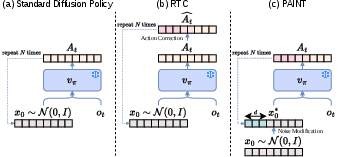
Figure 1: Standard diffusion policy, Real-Time Chunking (RTC) via velocity steering, and PAINT's noise selection approach.
Experimental Evaluation: Simulated and Real-World Results
Simulated Benchmarks
PAINT is benchmarked against a suite of baselines (Naive Async, Temporal Ensembling, B-spline refitting, BID, RTC) on the Kinetix suite, using pretrained flow-matching MLP-Mixer policies. Metrics include prefix consistency (CON), task success rate (SR), and latency robustness under varying inference delays. Across all delay regimes, PAINT-Euler exhibits superior prefix consistency and task success, outperforming RTC (gradient-based guidance) and all non-gradient baselines. The execution-horizon sweeps demonstrate that PAINT maintains robustness with shorter chunk horizons, benefiting from frequent feedback without introducing large boundary mismatches.
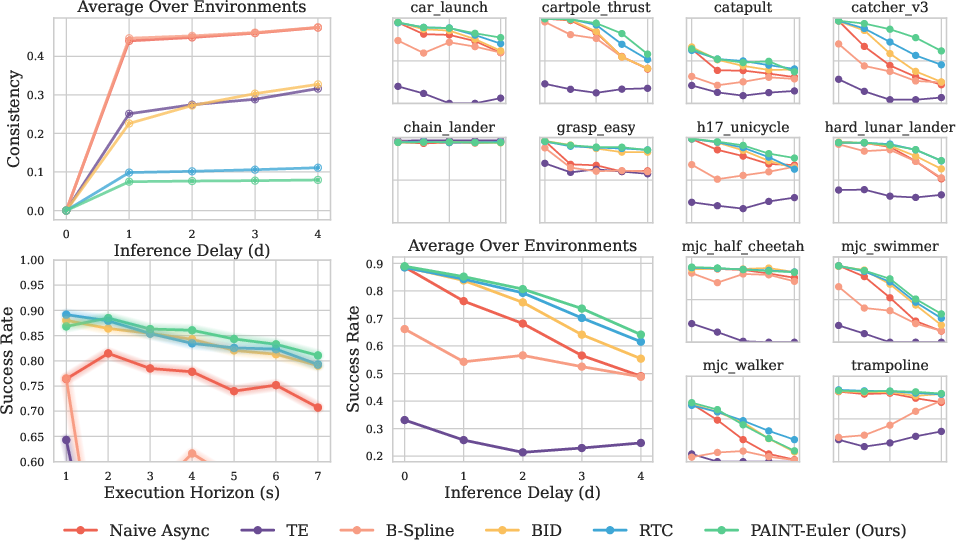
Figure 2: Prefix consistency and success rate comparisons across delay values in simulated Kinetix environments.
Ablation studies over inversion mechanisms (Euler, DPM2, RFM, optimization, Slide-naive) reveal strong delay robustness for backward Euler, with DPM2 offering marginal accuracy improvements at higher computational cost. Optimization-based and slide-naive variants degrade sharply under increased delay, confirming the criticality of high-fidelity inversion.
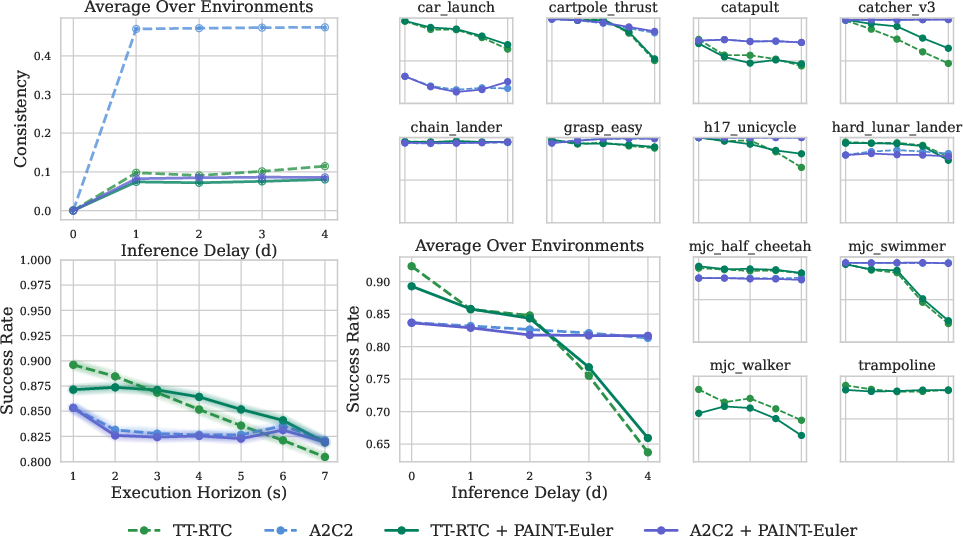
Figure 3: PAINT compared to training-time delay-aware strategies on Kinetix; inference-time noise selection complements training-time adaptation.
Real-World Manipulation Tasks
The real-world suite includes six manipulation tasks across single-arm, bimanual, and humanoid configurations, using GR00T-N1.5 and π0 architectures. PAINT consistently matches or marginally exceeds RTC in success rate and prefix consistency, particularly on continuity-sensitive or contact-rich tasks such as Toy in Drawer, Bimanual Towel Flinging, and Shorts Folding. TE (Temporal Ensembling), serving as a synchronous baseline, underperforms in both rollout time and prefix consistency, further supporting the necessity for explicit prefix constraint enforcement.
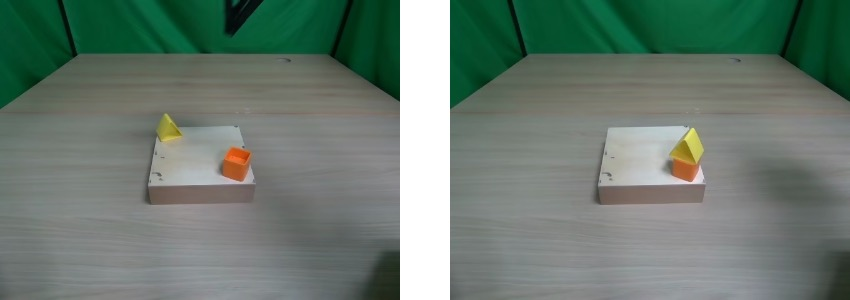
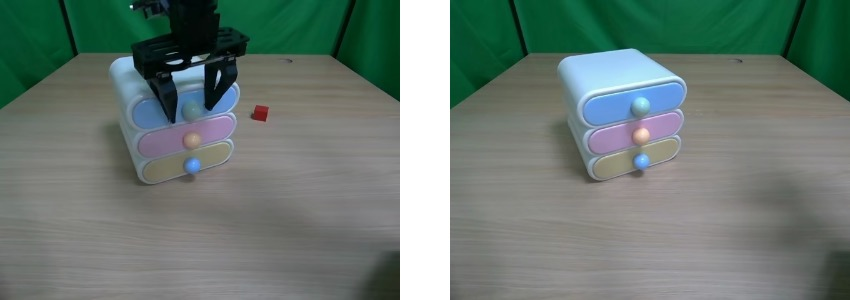
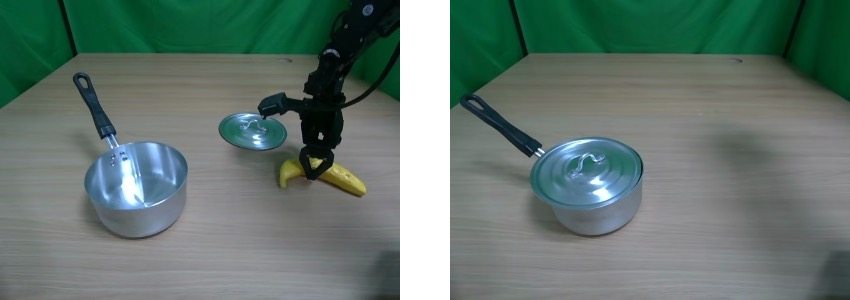
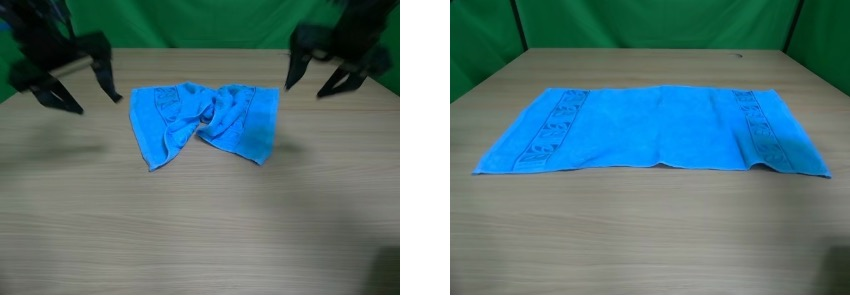
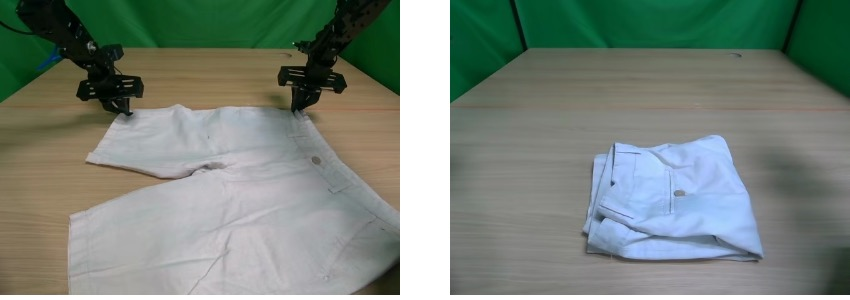
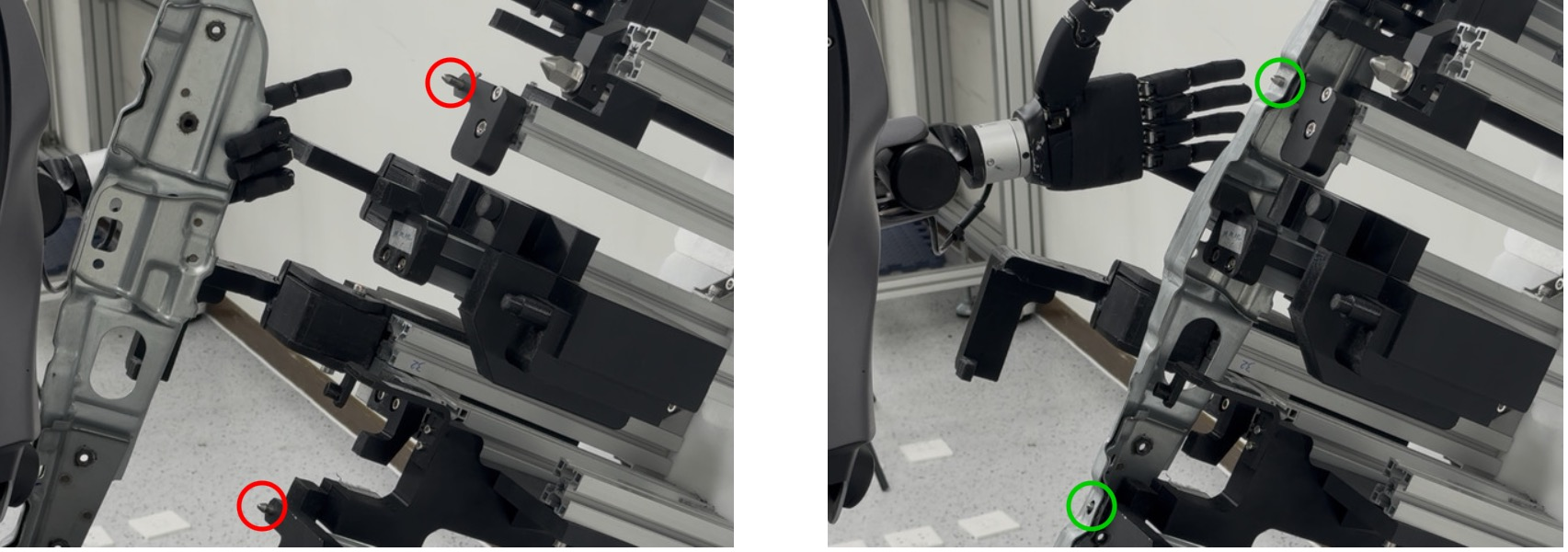
Figure 4: Block Stacking task demonstrates chunk-boundary consistency with PAINT.
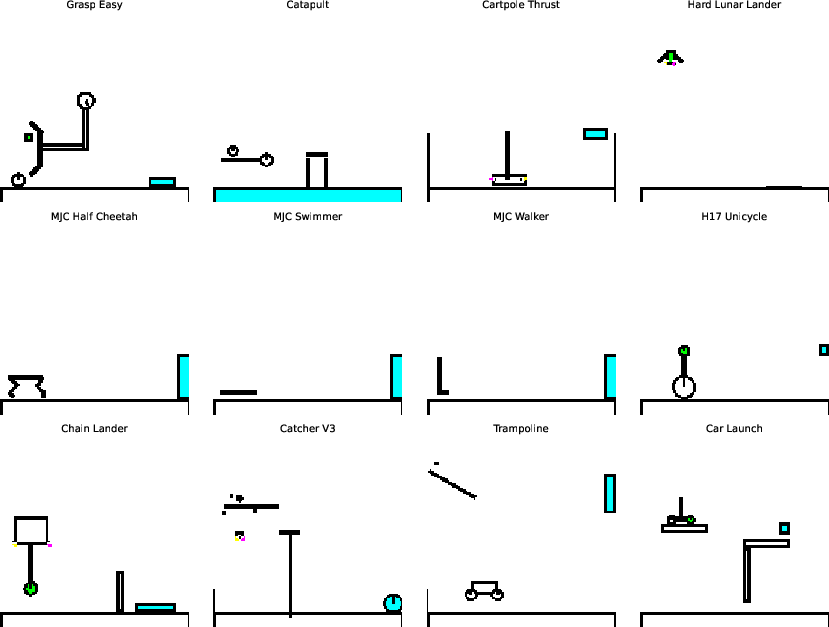
Figure 5: Visualization of 12 environments in Kinetix used for policy evaluation.
Theoretical and Practical Implications
PAINT establishes that robust chunk-boundary consistency can be obtained without intervention during denoising, provided noise locality holds. The method’s compatibility with graph-compiled inference pipelines (TensorRT) underscores its practical value for deployment in latency-critical, large-VLA settings, where gradients are unavailable or prohibitively expensive to compute. The results suggest that noise-space adaptation offers a low-overhead control interface for generative robotic policies.
Theoretically, the locality of optimal-transport flow matching is pivotal: the prefix region of the noise predominantly dictates the prefix of the generated chunk, which may be disrupted by cross-token mixing or multimodal action distributions. PAINT’s reliance on backward ODE integration is justified under linear interpolant regimes; extending to more complex generative flows would require alternative inversion (e.g., DDIM, DPM-Solver) with error correction for curved probability paths.
Limitations and Future Directions
PAINT's efficacy depends on architecture-specific locality between noise and action positions; policies exhibiting substantial cross-position mixing or nonlocal dependencies may degrade its performance. Systematic quantification of locality—potentially via noise-perturbation probes—is warranted. In settings with highly multimodal action distributions or curved generative paths, higher-order inversion techniques or learned corrections could further improve robustness and accuracy.
Real-world experiments predominantly examine a single delay setting; comprehensive delay sweeps on physical hardware are necessary to fully characterize PAINT’s operational envelope. Integration with training-time adaptation strategies (TT-RTC, A2C2) and interfacing with discrete diffusion policies remain promising areas for research.
Conclusion
PAINT introduces a principled, training-free mechanism for enforcing chunk-boundary constraints in asynchronous action chunking for robotic policies, via initial noise selection and ODE inversion. It achieves strong empirical performance in both simulated and real-world settings without retraining or gradient computation, providing an efficient, deployment-ready pathway for real-time adaptation of generative robotics models. The paradigm shift from trajectory-steering to noise-selection substantially simplifies inference-time control and lays the groundwork for future noise-space adaptation protocols in advanced VLA architectures.

