- The paper reveals that LLMs demonstrate significantly higher baseline agreement rates (e.g., 58% vs 14%) than humans, establishing primary monoculture in neutral settings.
- It employs a modified coordination game framework with picking, coordination, and divergence arms to assess response adjustments under different incentives.
- Findings indicate that while both LLMs and humans adjust their behavior, LLMs struggle to de-correlate responses when divergence is rewarded, posing risks in multi-agent applications.
Strategic Algorithmic Monoculture in Coordination Games: Evidence from LLM and Human Subjects
Motivation and Conceptual Framework
This study offers an in-depth experimental investigation into the nature of "algorithmic monoculture"—the phenomenon in which multiple AI agents, especially LLMs, exhibit similar decision patterns in multi-agent environments. The work distinguishes primary monoculture (strict baseline response similarity) from strategic monoculture (active regulation of similarity given explicit incentives), mapping these to classic game-theoretic coordination concepts such as primary and secondary salience. Through coordinated experiments involving both humans and a diverse panel of 16 state-of-the-art LLMs, the study aims to dissect the extent to which LLMs and humans regulate response correlation in both convergence (coordination) and divergence (anti-coordination) settings.
Experimental Design
The primary experiment adapts Mehta et al. (1994)'s coordination game framework, introducing three treatment arms:
- Picking: Participants provide any valid answer (no incentive for or against agreement).
- Coordination: Participants are rewarded for successfully matching the answer of their paired counterpart.
- Divergence: Participants are rewarded for providing a different answer from their paired counterpart.
Each participant (human or LLM) responds to 12 open-ended prompts (e.g., "Name a city in the world"), ensuring lexical heterogeneity. Human incentives are monetary; LLMs are induced via prompt engineering. The metrics of interest are empirical agreement rates within and across pairs, allowing for fine-grained analysis of monoculture effects.
Main Findings: Strategic Monoculture and LLM-Human Asymmetry
Baseline Monoculture
LLMs exhibit markedly elevated primary (baseline) monoculture: in the picking arm, the average agreement rate between two instances of the same LLM is 58%, massively higher than the human baseline (14%).
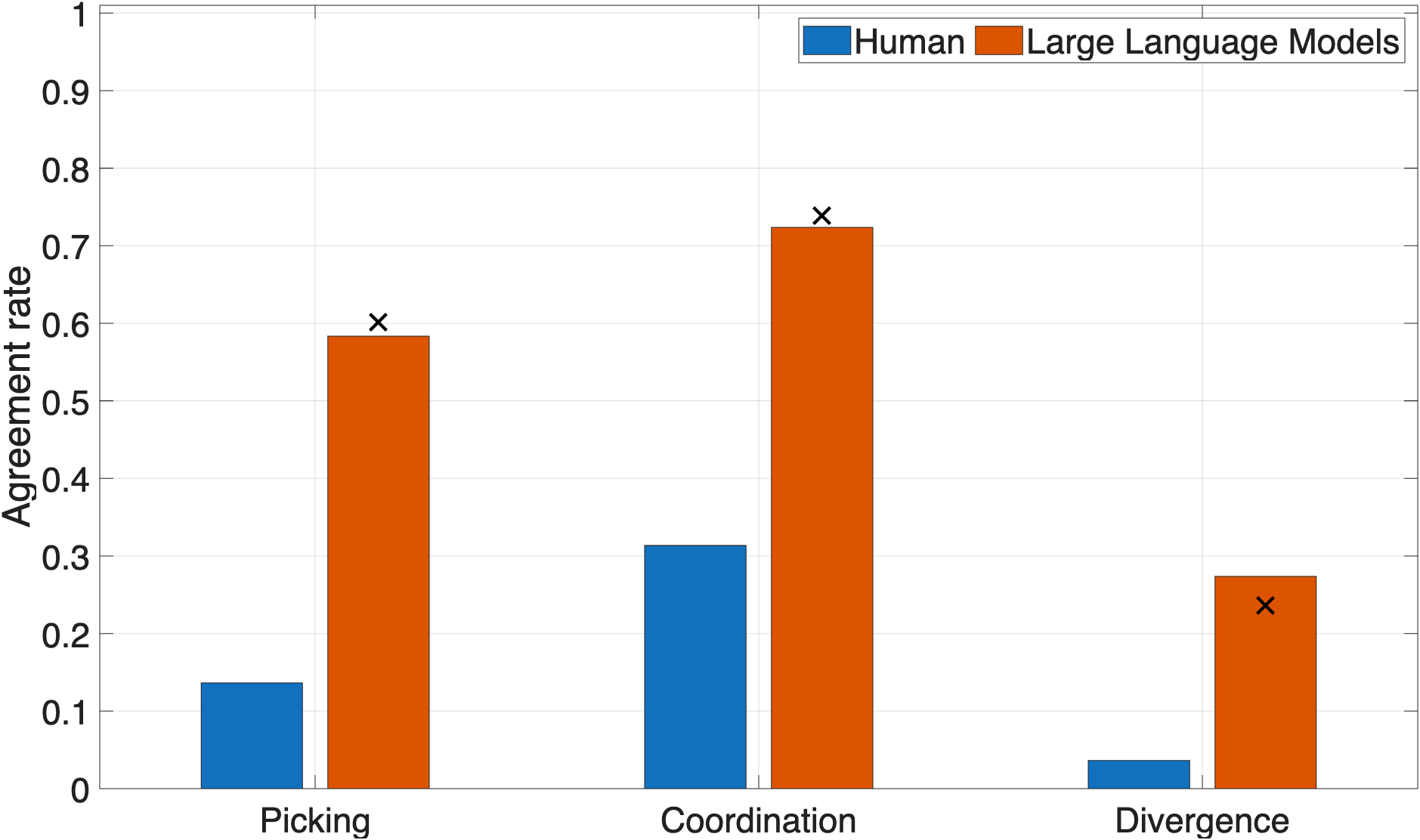
Figure 1: Average agreement rates for humans and LLMs by treatment condition, demonstrating elevated primary monoculture in LLMs and the striking divergence deficit.
Incentive-Driven Adjustment (Strategic Monoculture)
Both LLMs and humans adjust their degree of agreement as expected when incentives are manipulated:
- Coordination Arm: LLM agreement rates rise further (72%), compared to humans (31%).
- Divergence Arm: Agreement rates drop for both classes, but much less so for LLMs (27%) compared to humans (4%).
Crucially, LLMs are highly effective at convergence—finding focal points under incentive—but struggle to de-correlate their actions when divergence is rewarded, even when compared to the least coordinated human baseline.
Monoculture Across Model Pairs
Similarity persists not only among identical LLMs but is also present, though muted, among different LLM architectures. LLM-LLM pairwise agreement rates in neutral settings remain well above those observed in human-human pairs.
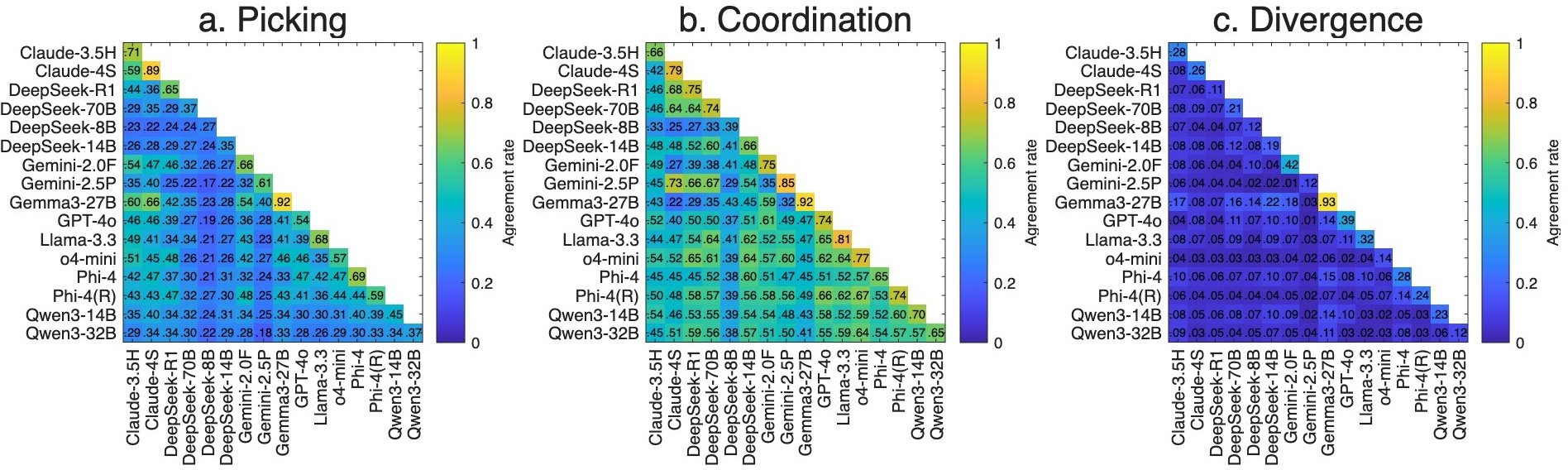
Figure 3: Heatmaps of pairwise LLM-LLM agreement by condition, evidencing strong agreement even across non-identical model pairs.
Role of Capabilities and Randomization
Comprehensive robustness checks indicate that the LLM divergence deficit is not explained by vocabulary constraints (LLMs can enumerate hundreds of valid options per prompt) or entirely by lack of randomness (LLMs can reduce agreement with special randomization prompts, but not to the human level in unconstrained settings).
Manipulating sampling temperature confirms theoretical predictions: higher temperature reduces agreement (mitigates monoculture) across both arms, but also erodes coordination efficacy, highlighting a tradeoff that cannot be circumvented by naïvely increasing sampling entropy.
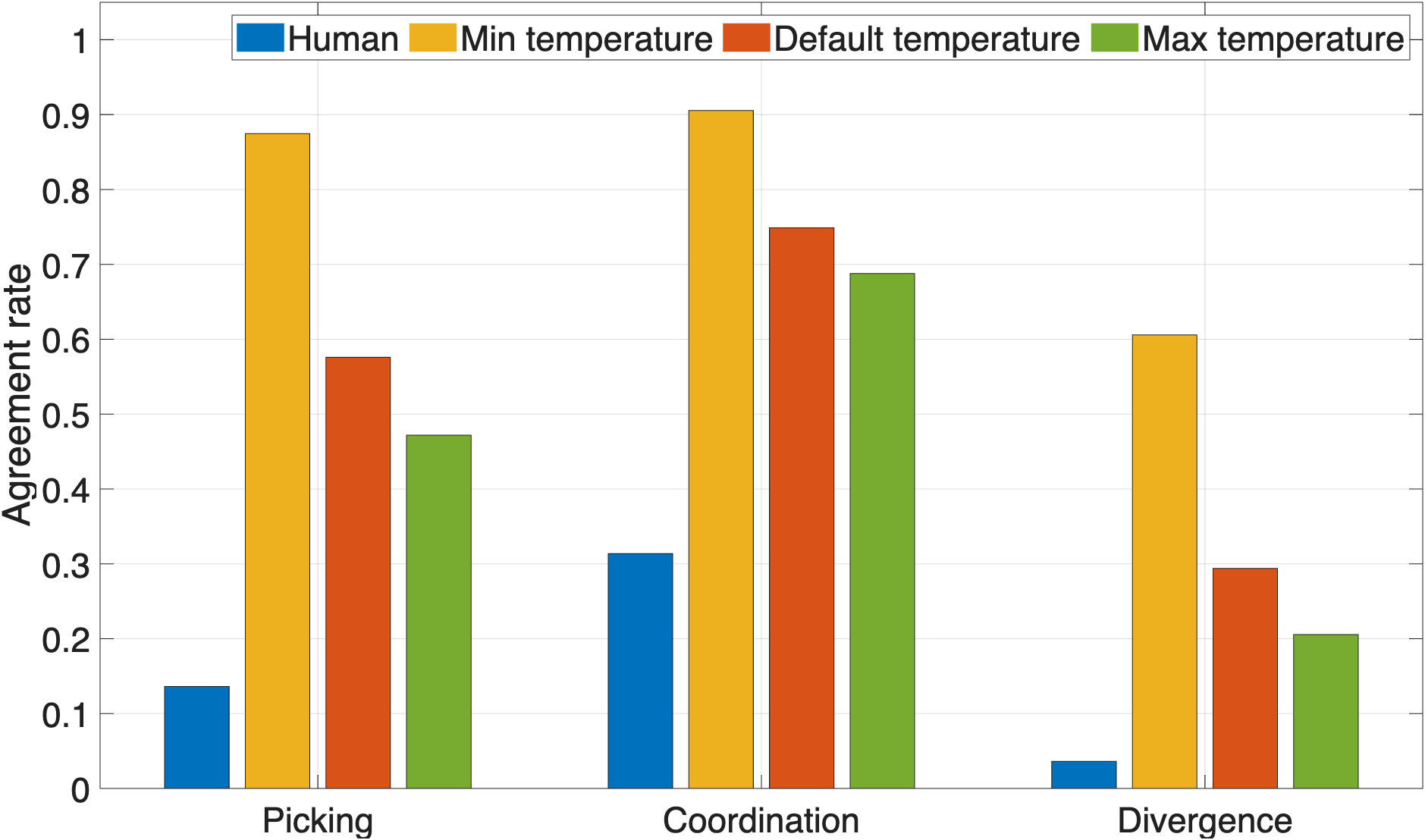
Figure 5: Agreement rates as a function of output temperature, illustrating the tradeoff between improved divergence and degraded coordination.
Directly informing LLMs that they face copies or humans, or endowing them with human-derived persona profiles, modestly reduces monoculture but does not eliminate baseline response correlation. Persona conditioning brings LLM human-likeness closer but leaves a salient residual gap in coordinated divergence.
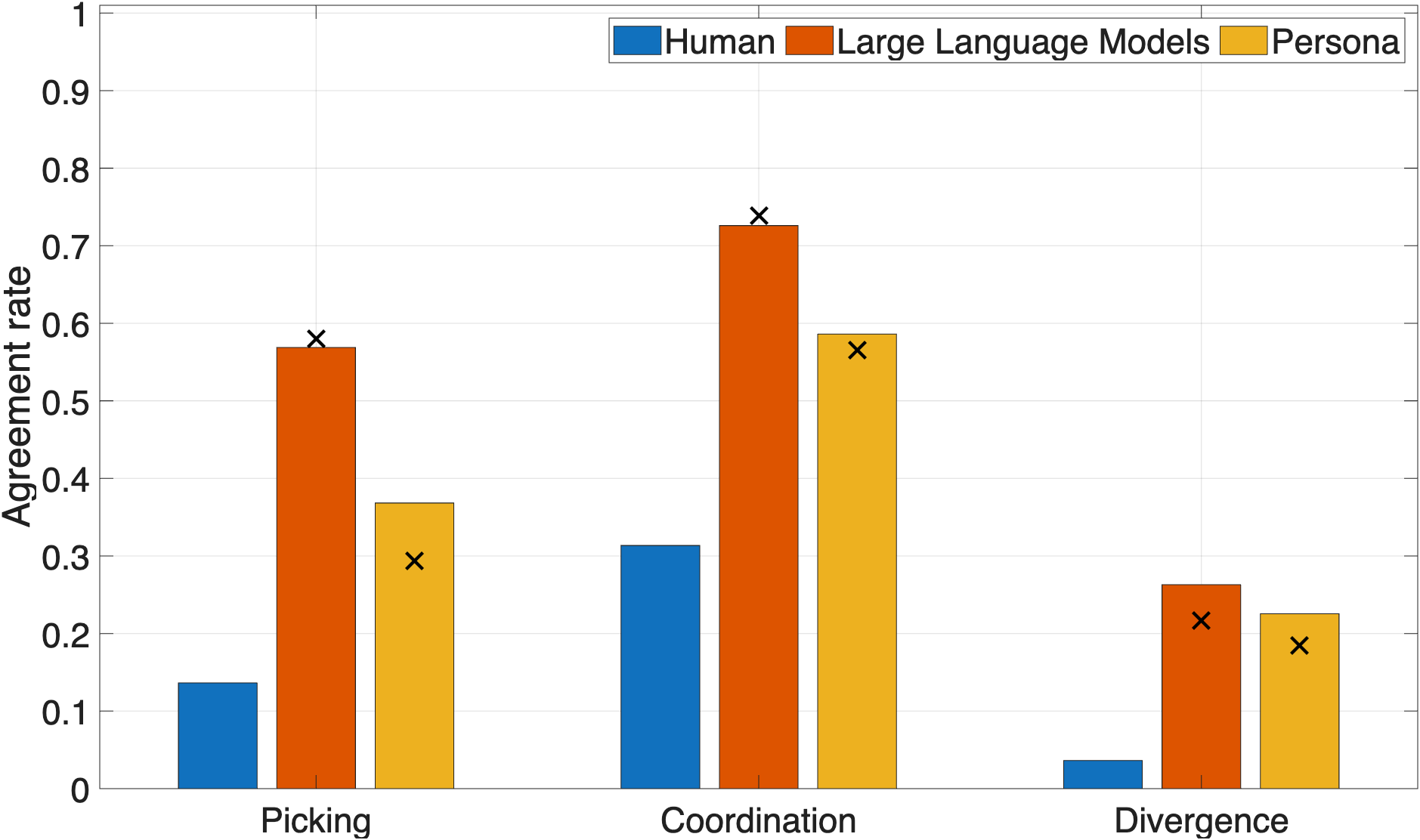
Figure 2: Agreement rates by LLMs with personas, showing only minor attenuation of monoculture relative to human benchmarks.
Analysis of LLM Reasoning
The study utilizes semantic and LLM-as-judge analysis on chain-of-thought (CoT) output to show that LLMs articulate correct strategic logic—identifying salience or the need for obscurity—across conditions. However, this strategic awareness is insufficient to overcome the structural homogeneity induced by architectural and training similarities.
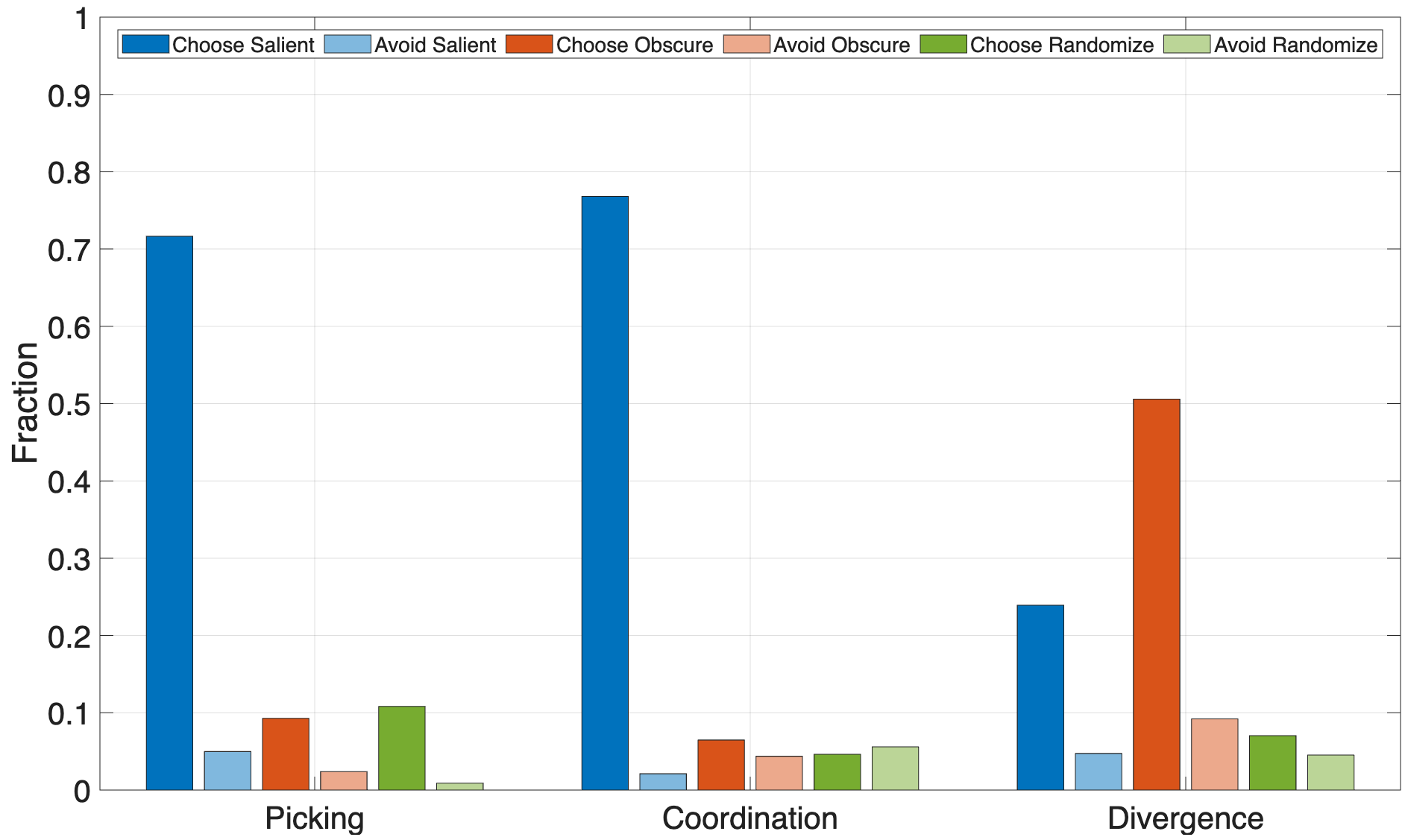
Figure 8: Distribution of semantically tagged reasoning sentences by treatment, confirming LLMs’ explicit strategic reasoning matches incentives but is not reflected in action distribution.
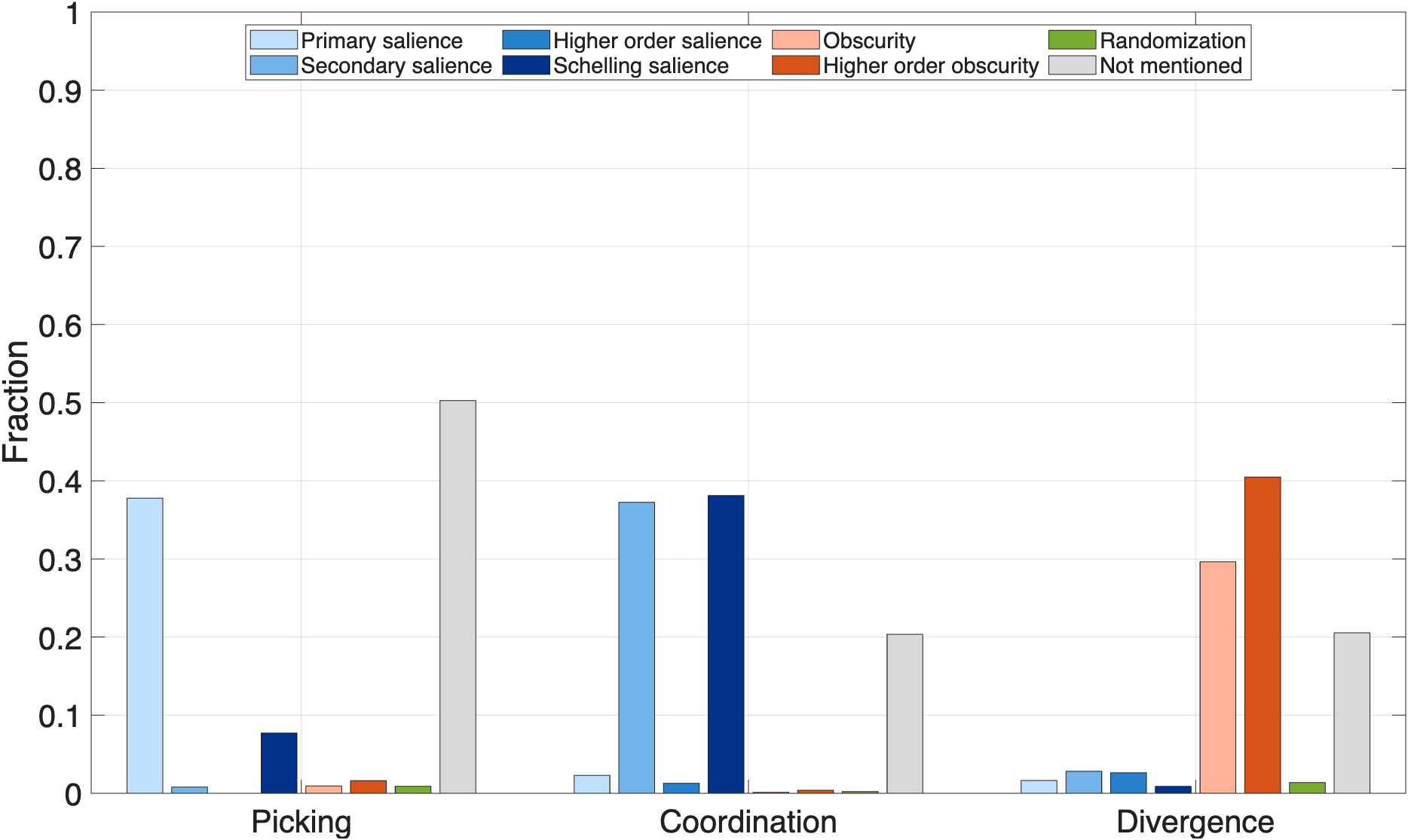
Figure 7: LLM-judge-based classification of strategic reasoning, showing increased articulation of salience in coordination and obscurity in divergence arms.
Theoretical Implications
The empirical results support the theoretical framework: coordination is trivial under shared inductive biases, but divergence requires heterogeneity or reliable randomization. Homogeneity—while advantageous for convergence—is a liability for tasks demanding diverse de-correlated outputs. No LLM in this evaluation attains human-level divergence without explicit randomization, and even persona-conditioned architectures demonstrate only partial mitigation.
Practical and Societal Implications
Findings pinpoint a fundamental risk in deploying multiple LLM-based agents in high-stakes multi-agent environments. The systemic fragility induced by strategic monoculture may have severe implications: for instance, algorithmic hiring systems or investment tools relying on similar LLMs may amplify correlated errors, undermining fairness, meritocracy, and market informativeness. Simply using "more models" or persona assignment does not resolve monoculture unless architectures and initializations are fundamentally diversified.
Directions for Future LLM-Based Multi-Agent Systems
- Model Diversification: True reduction of monoculture will require architectural or initialization heterogeneity beyond prompt-level persona manipulation.
- Controlled Randomization: Mechanisms for verifiable, robust output randomization are essential for applications requiring de-correlation.
- Dynamic Incentive Alignment: Multi-agent orchestration should adaptively manage the tradeoff between convergence—crucial in consensus/coordination tasks—and robust divergence necessary for diversity, robustness, and systemic stability.
- Transparent Reasoning Audits: Continual CoT-based auditing may provide a partial check on emergent undesired monoculture, but must be paired with output-distribution constraints.
Conclusion
This study establishes the prevalence and resilience of algorithmic monoculture in state-of-the-art LLMs, especially in coordination games with explicit incentives. While LLMs exhibit flexible, incentive-responsive behavior, their structural similarity and insufficient randomization render them highly susceptible to unwanted output convergence—posing concrete risks for real-world deployments where diversity of responses is critical. Mitigating strategic monoculture will require advance beyond mere prompt engineering to interventions at the architectural and training-regimen level.
References
For a detailed list of references supporting these analyses and claims, see (2604.09502).