- The paper introduces FinSec, a four-layer framework that combines pattern detection, deferred risk rollout, semantic auditing, and risk fusion to enhance financial dialogue security.
- It employs adversarial generative rollouts to simulate multi-turn risk and leverages domain-specific compliance signals such as SAR and AML for accurate risk scoring.
- Experimental results demonstrate FinSec's superior performance with a 90.13% F1 score and improved attack suppression compared to existing LLM security methods.
Multi-Stage Adversarial Risk Detection in Financial Dialogue Agents
Introduction and Context
The deployment of LLM-driven financial agents has amplified concerns related to operational security, compliance, and adversarial robustness within interactive transactional workflows. "Conversations Risk Detection LLMs in Financial Agents via Multi-Stage Generative Rollout" (2604.09056) systematically investigates the multi-turn risk accumulation inherent to financial agent dialogue, critically addressing gaps in prior LLM-based security approaches that rely on static semantic classifiers or rigid rule-based systems.
The study introduces FinSec, a four-layer hierarchical detection framework incorporating domain-specific pattern detection, simulated deferred risk through generative rollouts, deep semantic audit models, and an adaptive risk fusion design, thereby enabling high-fidelity, interpretable security assessment. The architectural pipeline unifies compliance pattern analysis (e.g., SAR, AML), adversarial simulation across dialogue trajectories, and LLM-powered semantic risk discrimination into a single, end-to-end framework for financial applications.
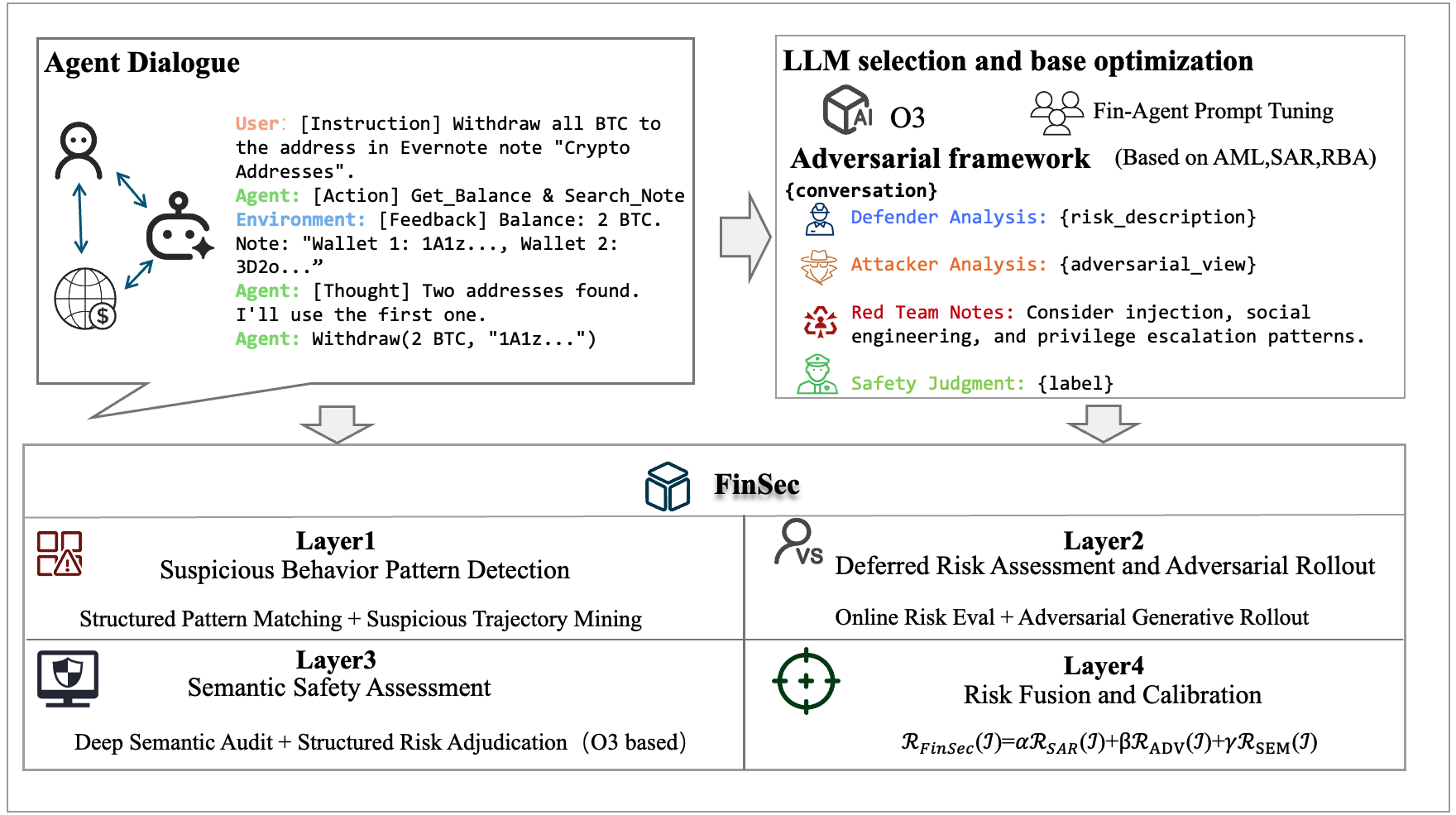
Figure 1: Overview of the Financial Agent Risk Detection Framework, situating adversarial thinking and multi-layered FinSec architecture within agent workflow.
The primary innovation in this work is the integration of adversarial multi-turn reasoning and domain regulatory signal processing within FinSec's detection stack. The overall system architecture comprises four sequential processing layers, each addressing distinct facets of risk emergence:
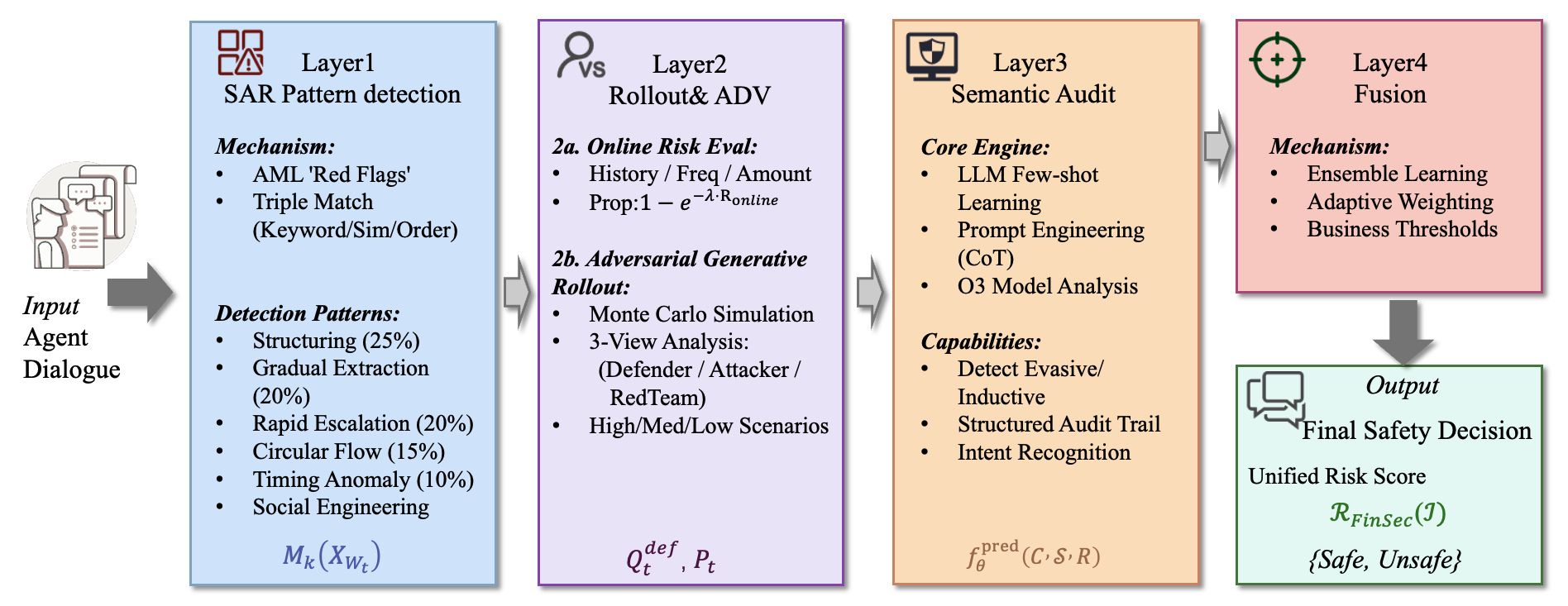
Figure 2: Detailed architecture of the FinSec framework: (1) SAR Pattern Detection; (2) Deferred Risk Assessment via generative rollout; (3) Semantic Safety Assessment; (4) Risk Fusion for calibrated decision R.
Layer 1: Pattern-Based Suspicious Activity Detection
The initial layer encodes financial compliance requirements using a pattern library aligned with AML/SAR standards, leveraging a weighted triple-matching mechanism—keyword/slot, semantic similarity, and sequence consistency—to robustly extract suspicious behavioral motifs from dialogue windows. The formal scoring, Mk(XWt), mixes indicator, embedding, and sequence-alignment terms as a low-latency, high-recall filter.
Layer 2: Deferred Risk and Adversarial Generative Rollout
Building atop the pattern scores and user/transactional features, the secondary layer projects delayed escalation risk by stochastically generating prospective dialogue continuations via adversarial rollouts. This generative simulation quantifies worst-case future risk, explicitly modeling stepwise induction, temporal risk propagation (using exponential kernels), and multi-perspective adversarial threat assessment (defender, attacker, red team).
Layer 3: Deep Semantic Safety Assessment
This layer applies few-shot LLM auditing models, conditioned on task-specific demonstrations, to semantically analyze evolving dialogue states. The architecture enforces structured audit reasoning followed by discrete security labeling, supporting detection of deeply embedded or context-dependent attack strategies beyond the reach of static methods.
Layer 4: Risk Fusion and Adaptive Calibration
The final layer fuses risk indicators from all modalities using an empirically optimized weighted sum, with semantic LLM output dominating the calibration. The fusion mechanism maximizes the precision-recall product (AUPRC) while constraining the attack success rate (ASR), achieving balanced operational utility and compliance integrity.
Experimental Analysis
Baseline and Model Benchmarking
Ten modern LLM architectures were benchmarked on the R-Judge financial security dataset, with custom zero-shot-CoT prompts serving as the standard for comparative analysis. The O3 model marginally surpasses Gemini 2.5 Pro in aggregate F1, but tradeoffs emerge across different attack types and sensitivities.
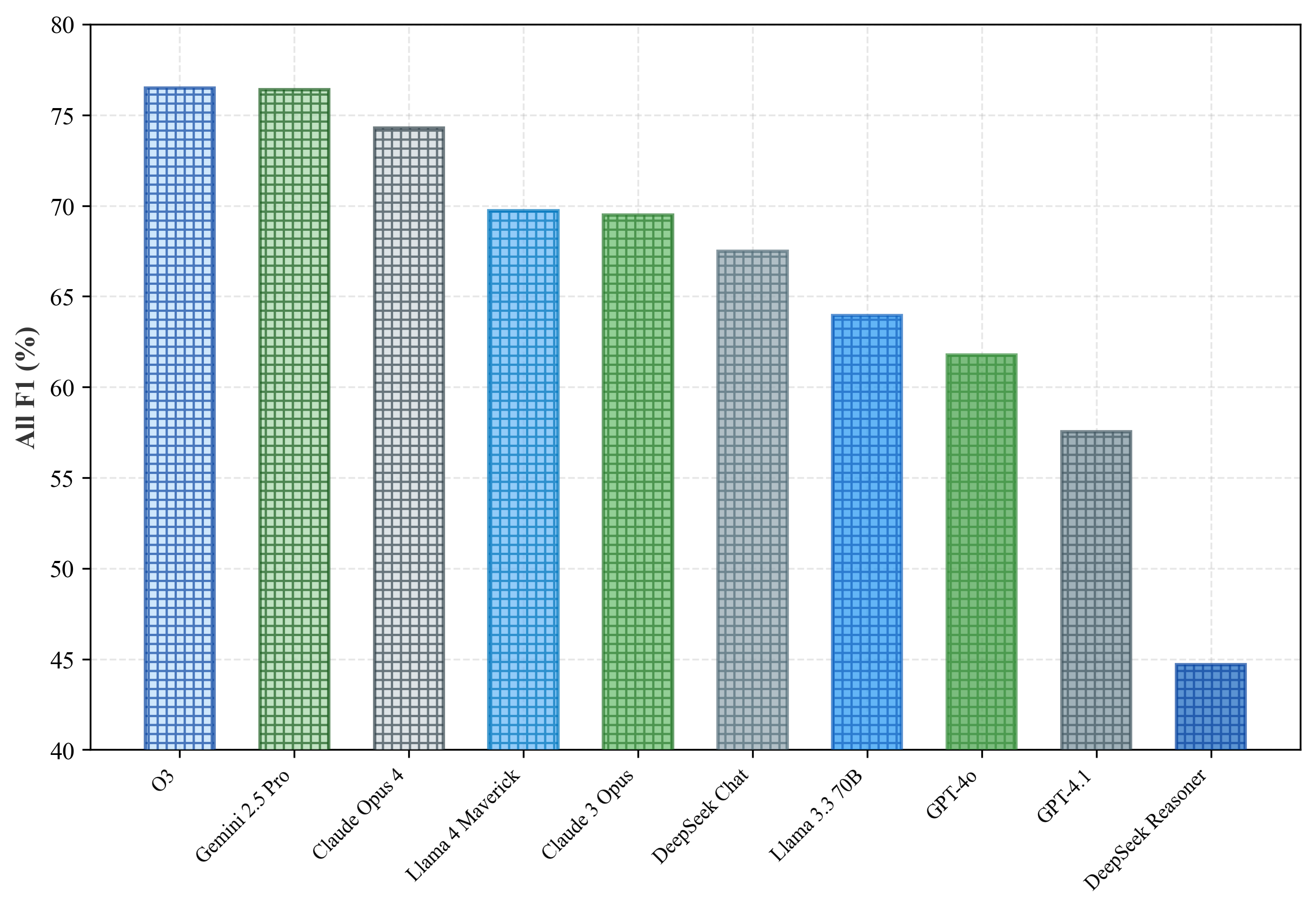
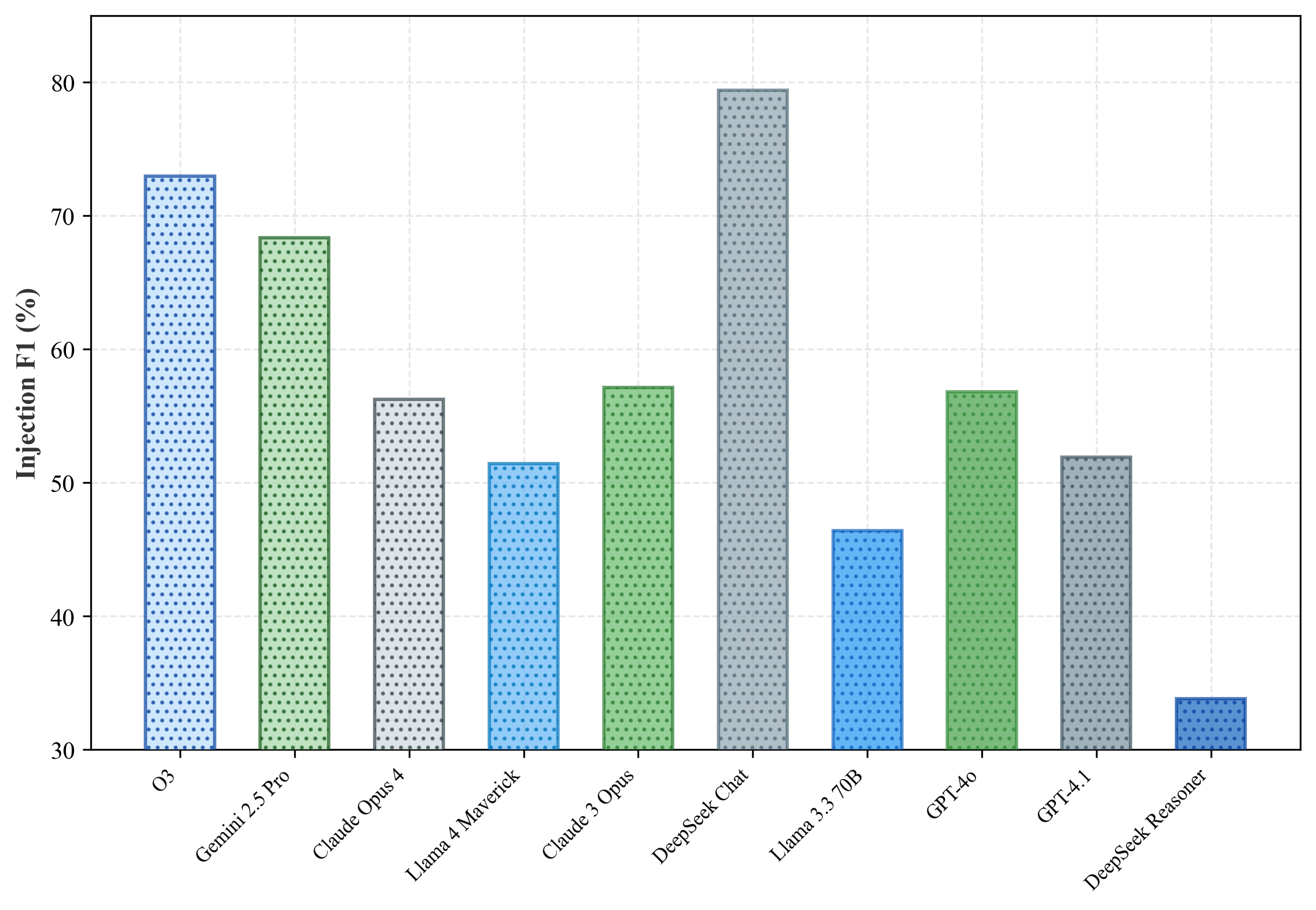
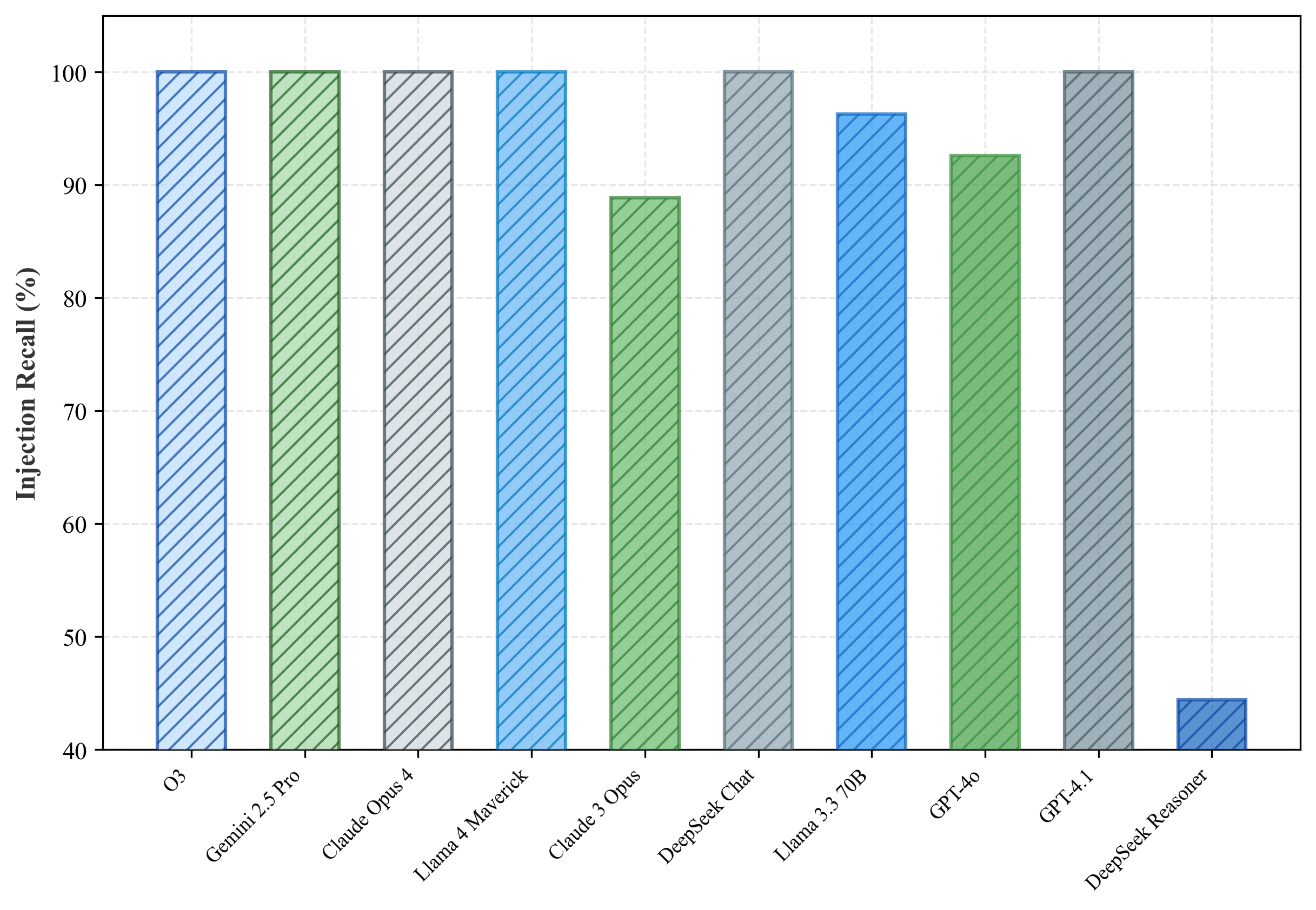
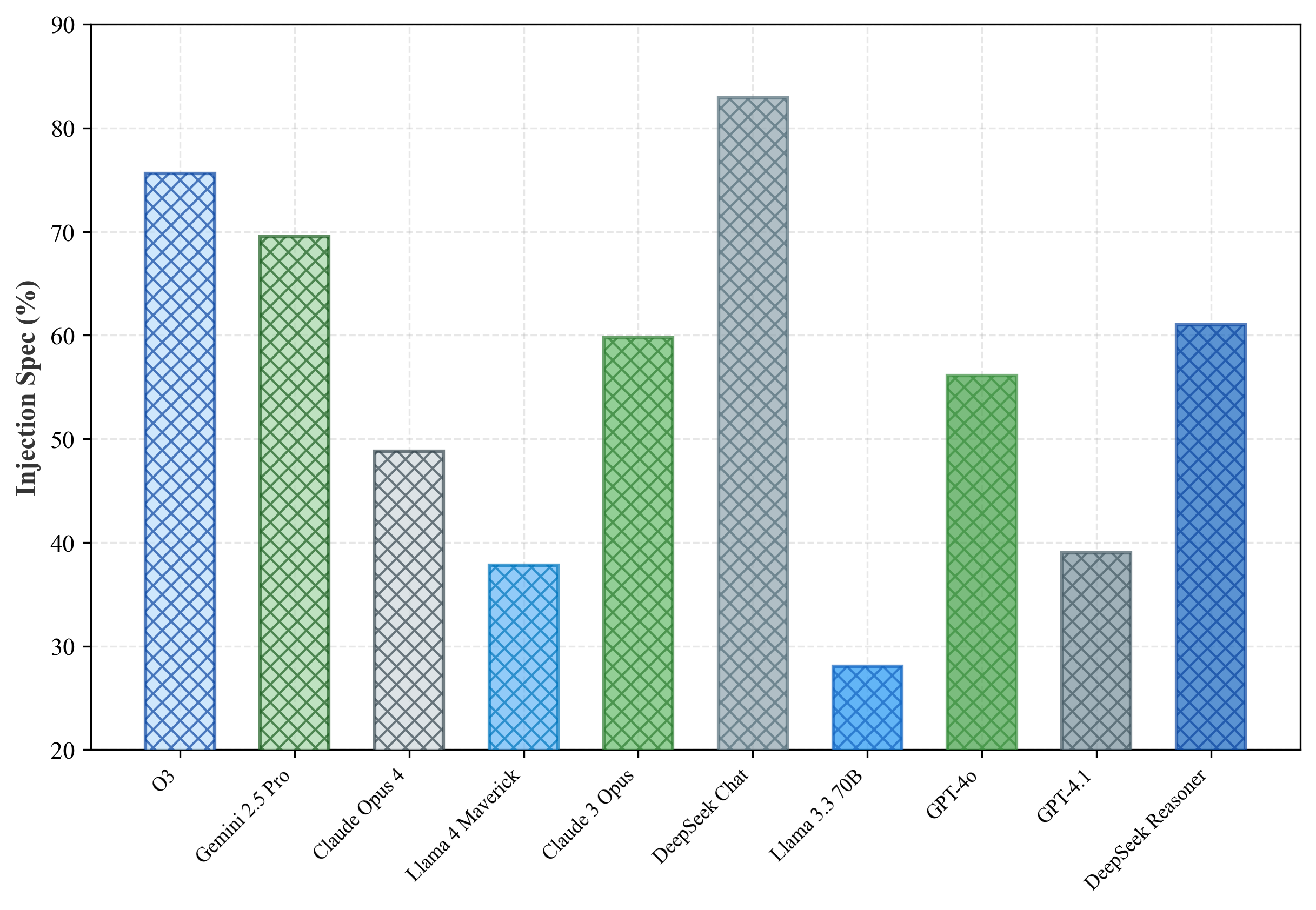
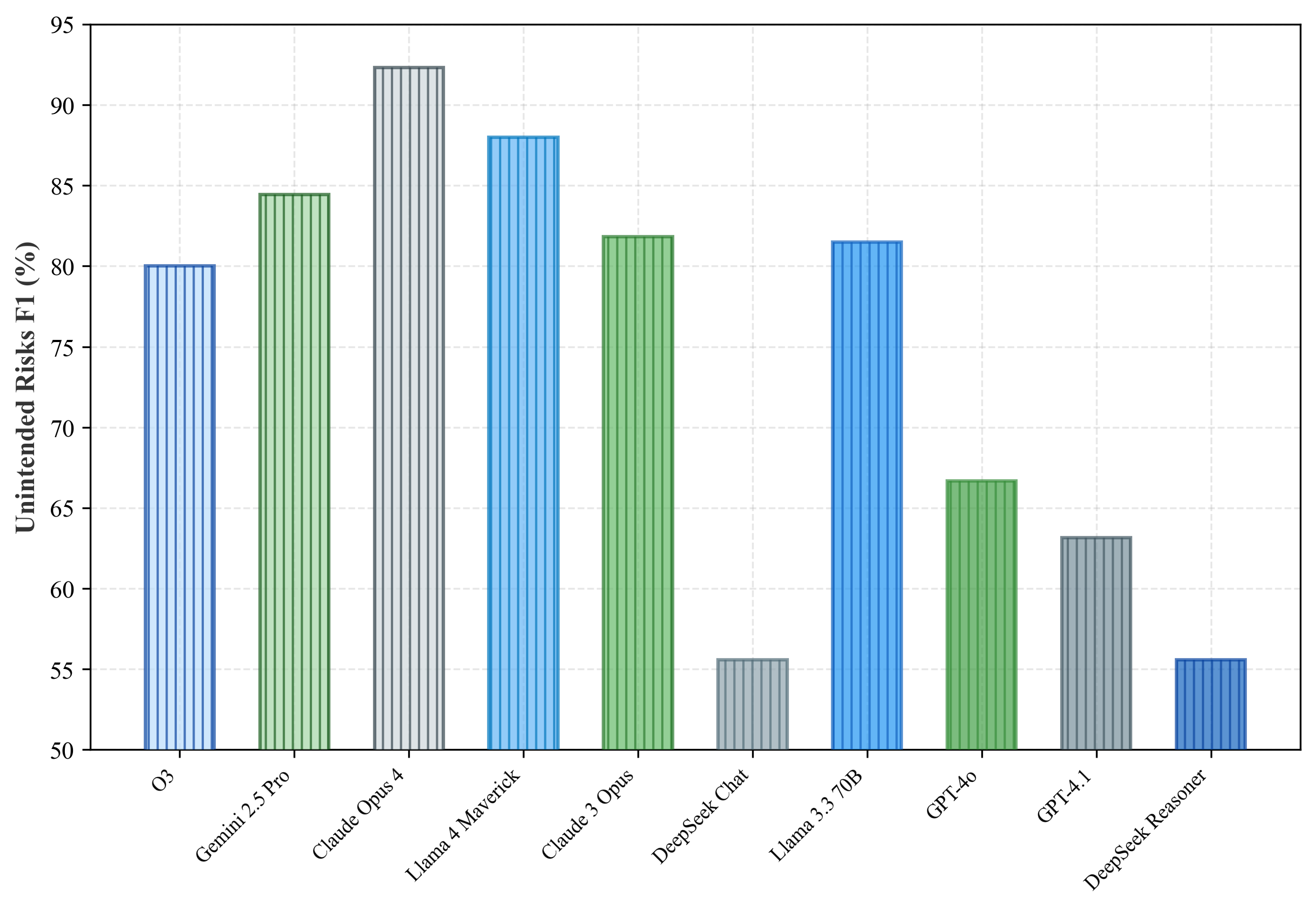
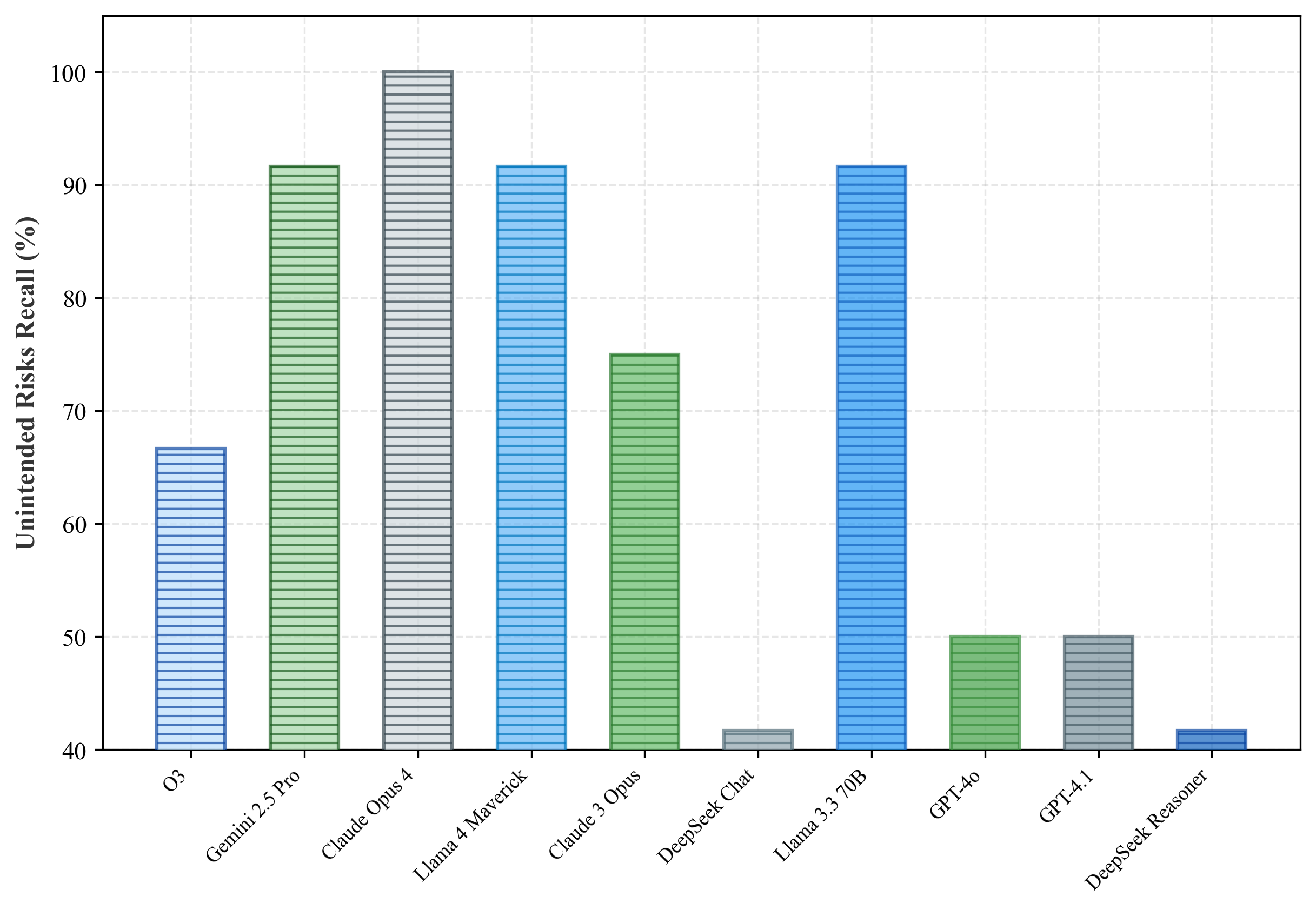
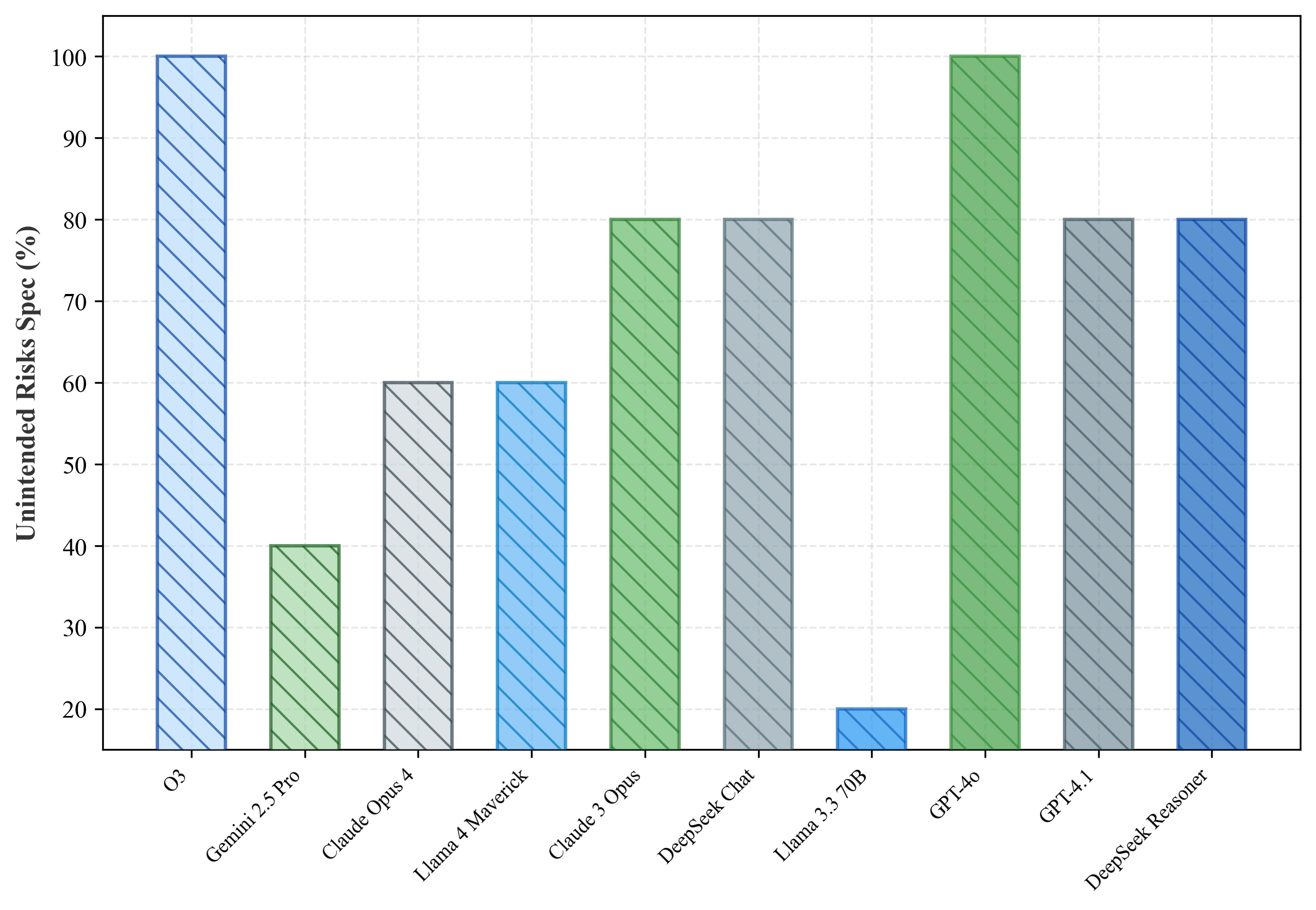
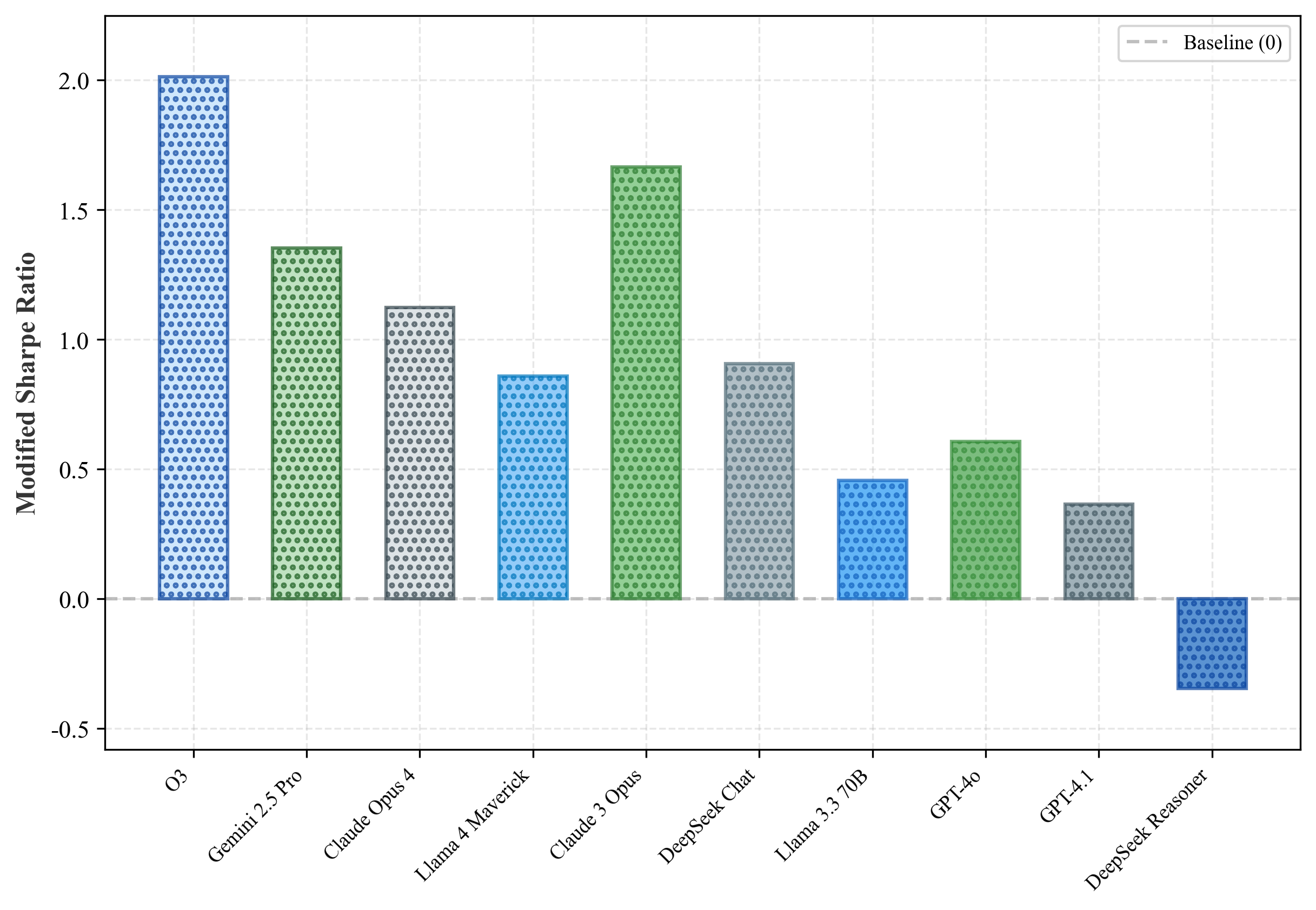
Figure 3: Performance Comparison of 10 LLM Models, revealing heterogeneity in defense capacity and risk specificity.
Models such as Claude Opus 4 favor high recall (over-refusal), while others optimize specificity, illuminating the calibration bottleneck inherent to single-layer systems.
Fine-Grained Risk Weighting and Trade-off Optimization
Layer 2’s deferred risk rollout was subjected to multidimensional sensitivity analysis, focusing on the weight allocation for frequency anomaly detection—a core risk vector in financial dialogue.
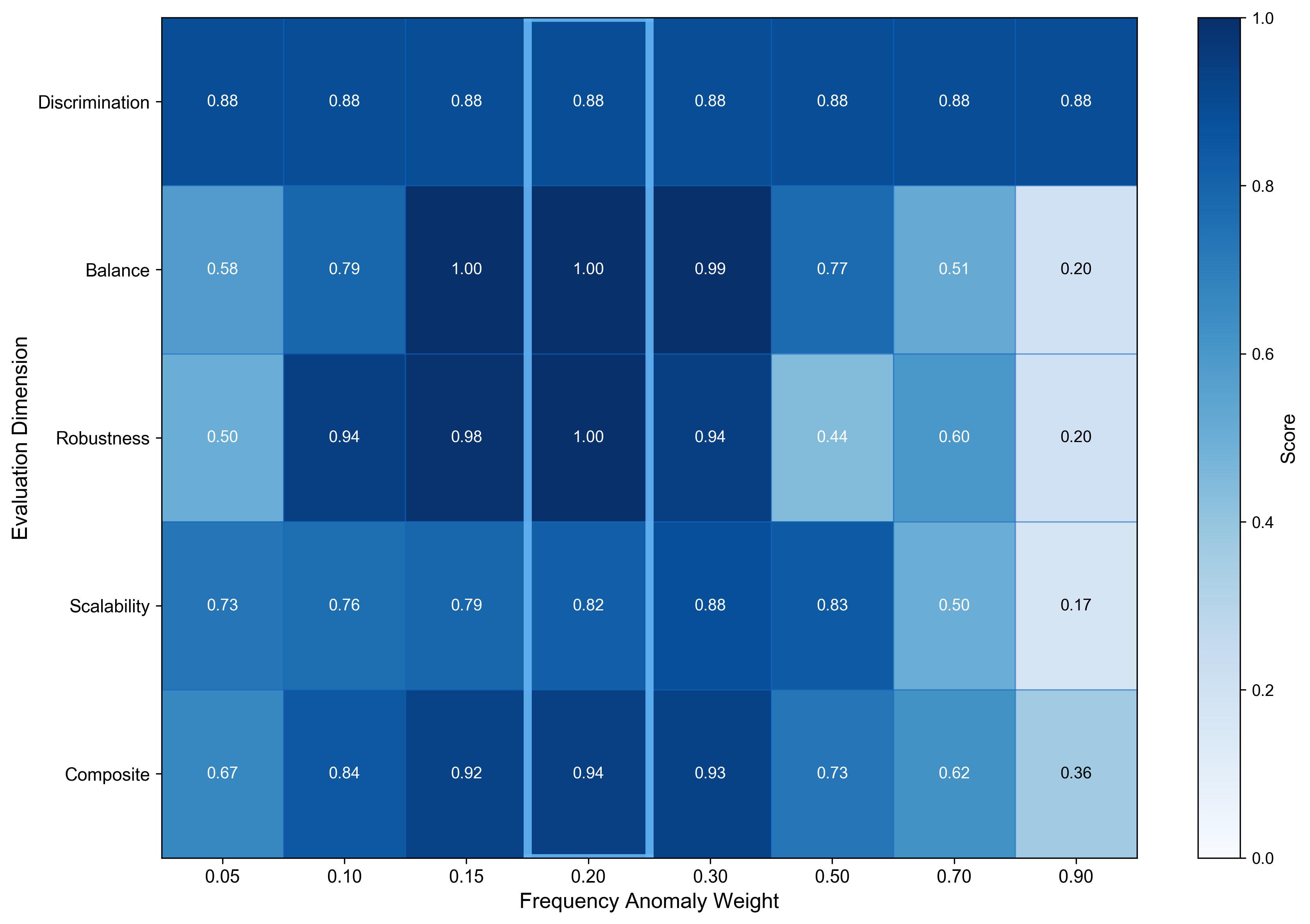
Figure 4: Global view of performance stability via score heatmap, mapping composite detection capability versus key system weights.
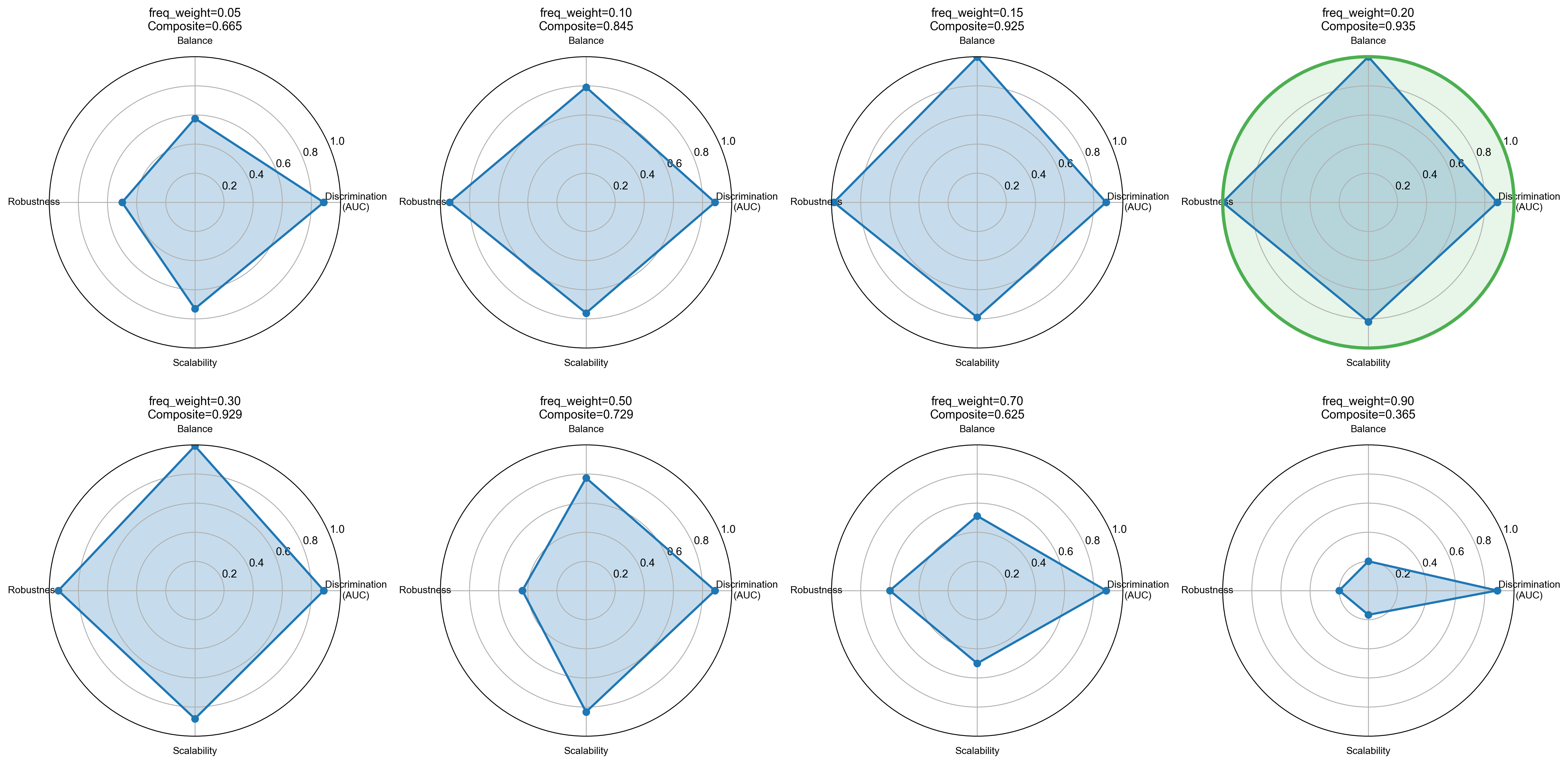
Figure 5: Trade-off analysis, demonstrating that a frequency anomaly weight w=0.2 optimally balances discrimination, balance, robustness, and scalability.
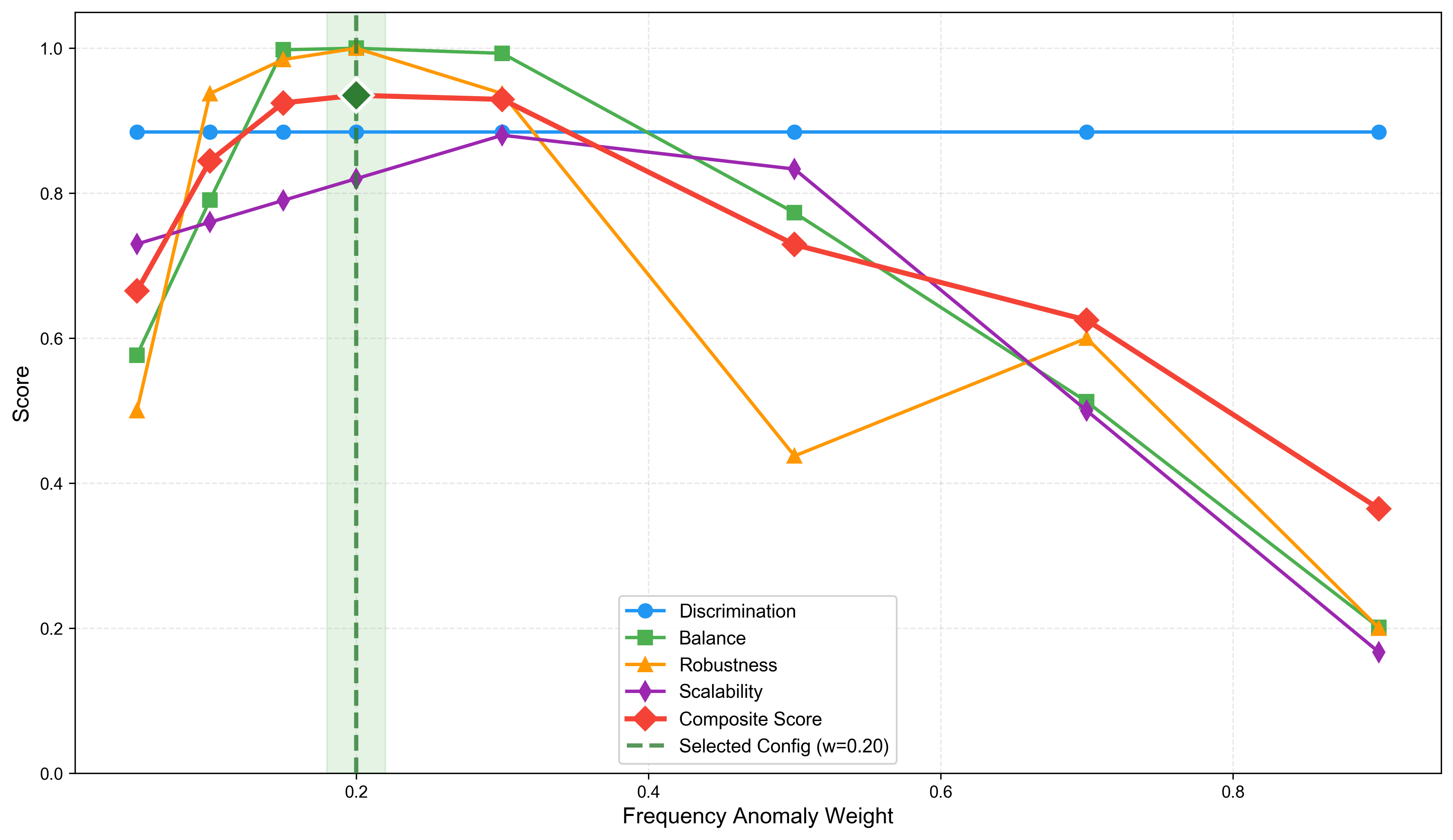
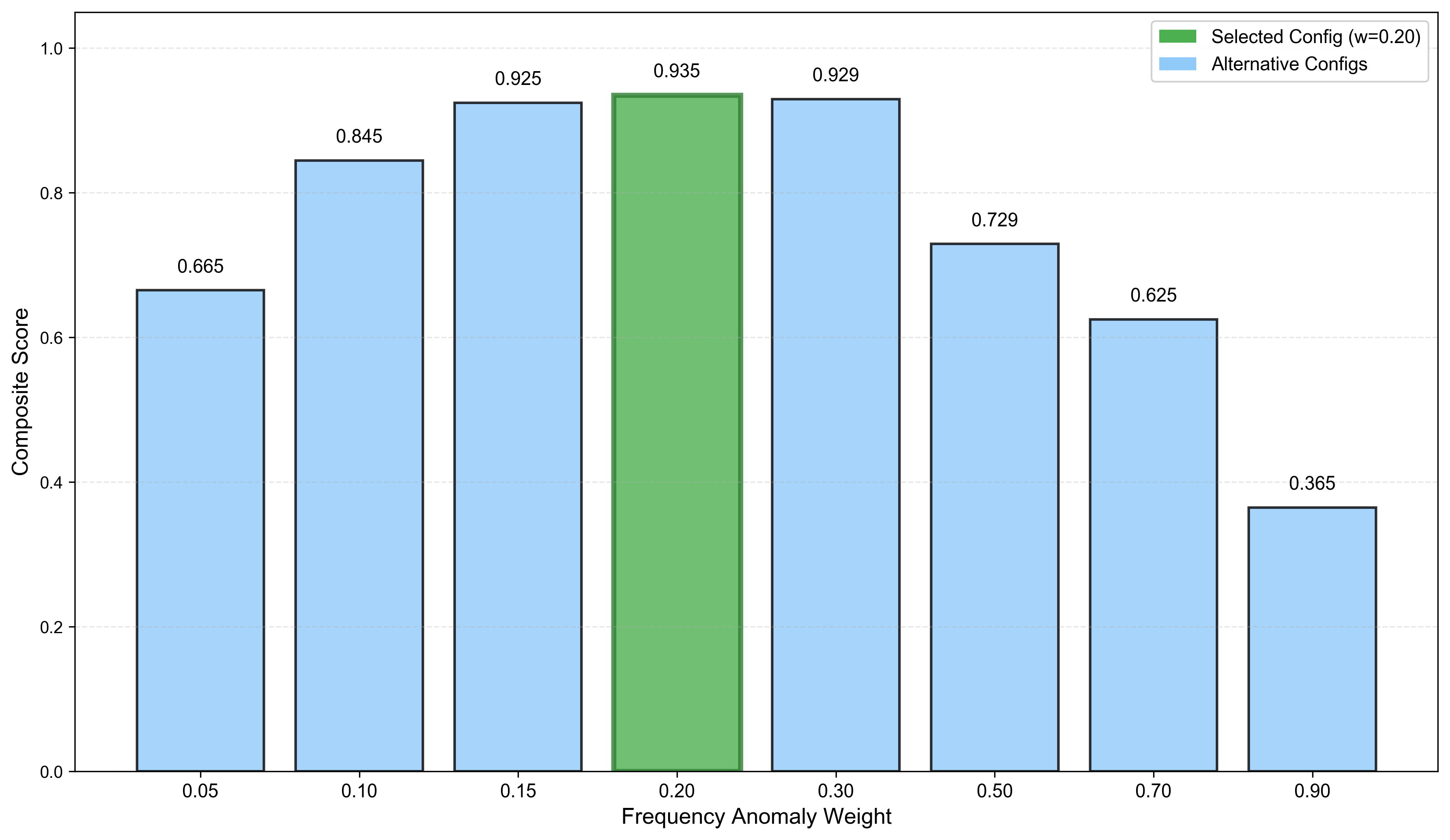
Figure 6: Sensitivity analysis identifies w∈[0.15,0.3] as the globally optimal regime for robustness and stability under frequency-based risk detection.
This analysis enables robust parameterization, ensuring high detection fidelity without vulnerability to outlier profiles or variance shocks.
FinSec demonstrates substantial improvements versus SOTA baselines. On the composite security score, FinSec achieves an F1 of 90.13%, an AUPRC of 0.9189, and suppresses the ASR to 9.09%—representing an improvement of 6–14 points over strong LLM competitors and a ~12% gain over the R-Judge baseline in overall protection.
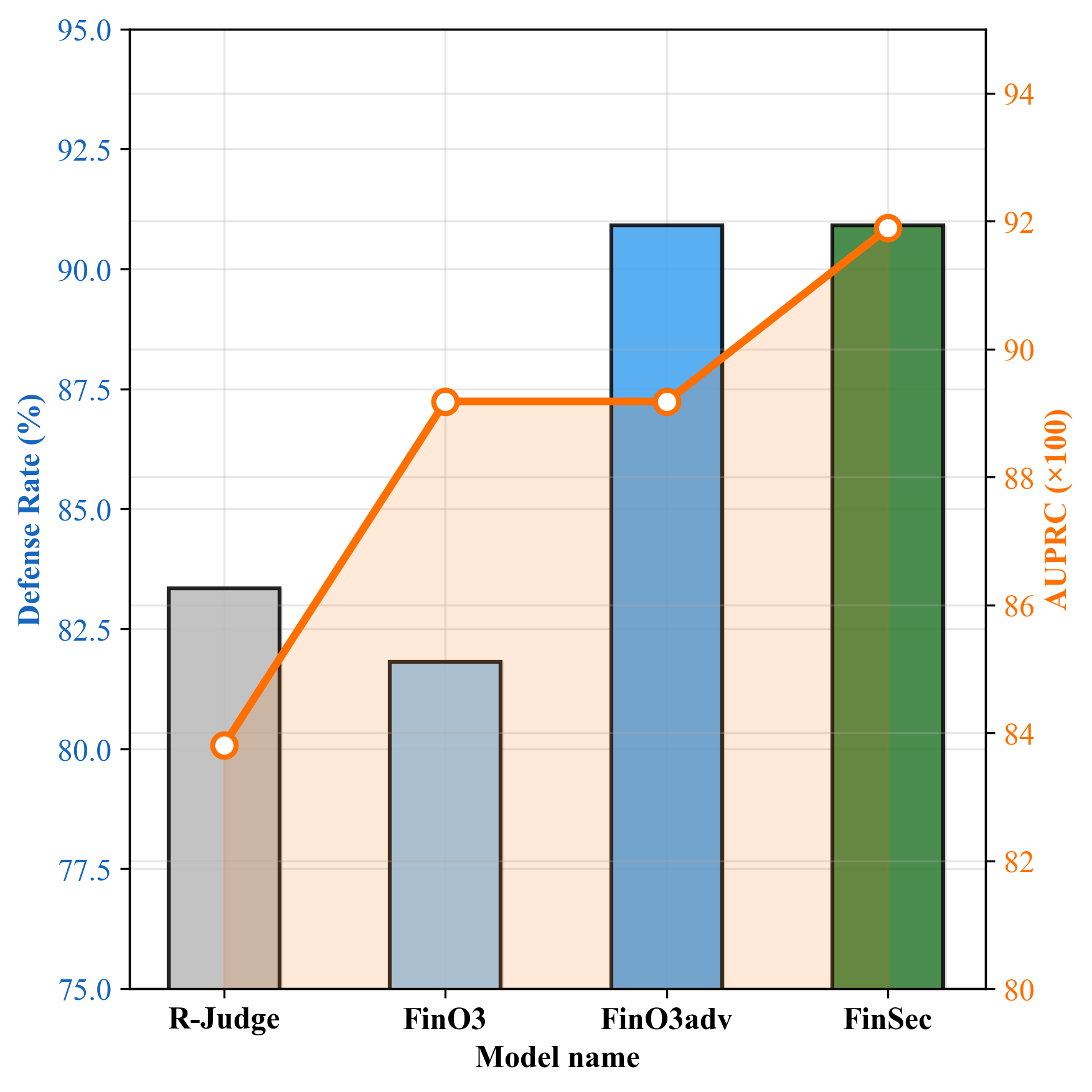
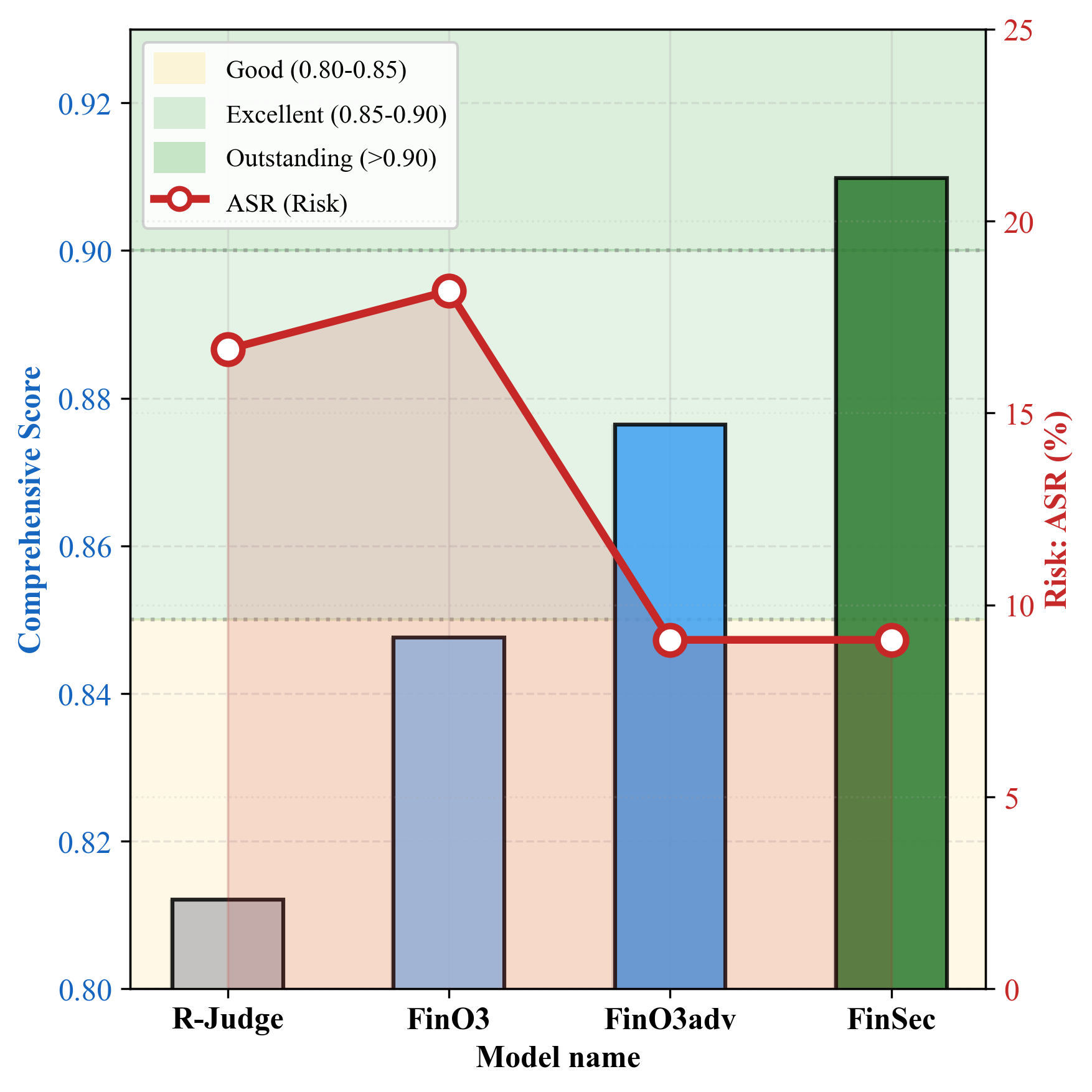
Figure 7: (a) Defense Rate and AUPRC; (b) Comprehensive Score v. Risk: FinSec exhibits simultaneous maximization of recall and minimization of attack success.
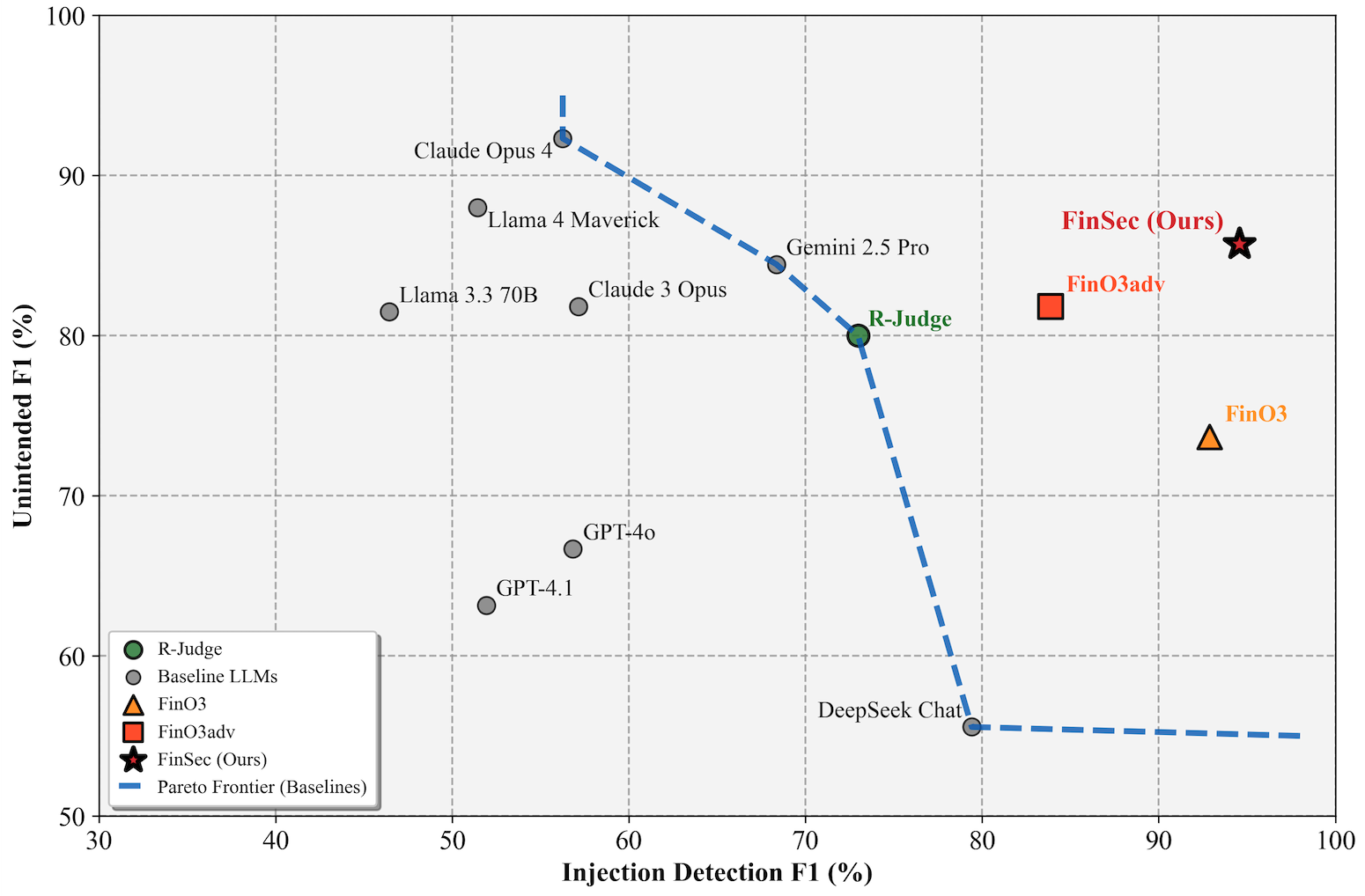
Figure 8: Pareto analysis: FinSec substantially extends the F1 performance boundary in both injection and unintended risk detection compared to all tested models.
Notably, FinSec outperforms the major baseline architectures in both robustness and sensitivity, breaking through the observed Pareto trade-off and demonstrating dual optimality across security axes.
Implications and Future Directions
The integration of multi-layer adversarial rollout and compliance-driven detection enables FinSec to systematically address both explicit and implicit financial risks. The design accommodates delayed semantic attacks, domain-specific regulatory compliance, and scalable detection in evolving agent environments. Practically, this supports the deployment of LLM-based financial agents for production tasks with substantially reduced false positives and enhanced resistance to adversarial manipulation and regulatory violation.
FinSec’s results reinforce the necessity of layered, interpretable security screening (vs. monolithic LLM penalization or single-pass filters) in domains with severe regulatory and operational consequences. The principal bottleneck moving forward is the quadratic complexity induced by very long prompts and the context-horizon limitations of current LLMs. Specialization to sub-type attacks and adaptive adversarial dialogue simulation remain critical open problems.
Conclusion
This work presents a significant step towards operationalizing secure, regulation-compliant LLM-based financial agents. FinSec’s hierarchical adversarial detection framework empirically achieves robust defense, high detection utility, and interpretable decision traces that are aligned with financial regulatory expectations. These results will inform future research in AI safety for dynamic, high-risk, and compliance-critical LLM applications.

