- The paper introduces QARIMA, a hybrid quantum-classical pipeline that replaces traditional ARIMA heuristics with quantum-augmented algorithms for improved time series analysis.
- It employs compact swap tests and shallow variational quantum circuits (VQCs) to refine lag diagnostics, parameter estimation, and moving average calculations.
- Empirical results demonstrate significant forecasting improvements over classical ARIMA on long-memory and quasi-periodic datasets while preserving model interpretability and hardware compatibility.
Quantum-Assisted Time Series Modeling: A Critical Assessment of QARIMA
Introduction
The paper "QARIMA: A Quantum Approach To Classical Time Series Analysis" (2604.08277) proposes a hybrid quantum-classical pipeline—QARIMA—that systematically replaces ARIMA heuristic components (differencing selection, lag identification, parameter estimation) with quantum-augmented algorithms, retaining ARIMA’s structural interpretability while embedding quantum effects via compact swap tests and shallow variational quantum circuits (VQCs). The work is motivated by the limitations of classical ARIMA in capturing long-range and nonlinear dependencies and the demonstrated potential of quantum-inspired primitives in resolving such modeling gaps, especially under realistic, non-trivial autocorrelation regimes.
Methodological Framework
QARIMA is formulated as a modular augmentation of classical ARIMA comprising seven primary quantum-driven stages: (1) quantum-informed differencing order estimation; (2) quantum autocorrelation function (QACF) via swap tests; (3) quantum partial autocorrelation function (QPACF); (4) a delayed-matrix construction aligning quantum projections with time-domain regressors; (5) VQC-based autoregressive (VQC-AR) parameter estimation; (6) VQC-mediated weak lag refinement; and (7) VQC-based moving average (VQC-MA) estimation.
The quantum core is the compact swap test, which estimates amplitude-level cosine similarities between lagged state vectors and parameter vectors (Figure 1), natively producing projection-based diagnostics for lag selection and loss regularization. These diagnostics supplant classical ACF/PACF heuristics and directly feed into the quantum-augmented loss functions for parameter learning.
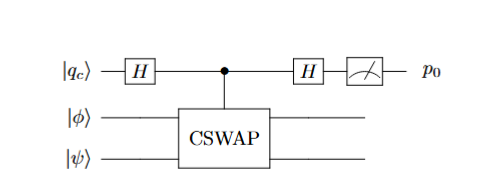
Figure 1: Compact swap test estimating similarity between encoded states ∣ϕ⟩ and ∣ψ⟩; the measured probability p0 underpins all downstream similarity and entropy-based regularization terms.
AR, weak-lag, and MA components are encoded as VQCs, each using fixed-depth Ry layers initialized from OLS (for AR) or conditional-least-squares (for MA) and trained via classical COBYLA to minimize hybrid quantum-classical losses. These losses regularize not only prediction error but also cosine misalignment and entropy penalties on swap test measurements, stabilizing estimates and controlling for quantum shot noise.
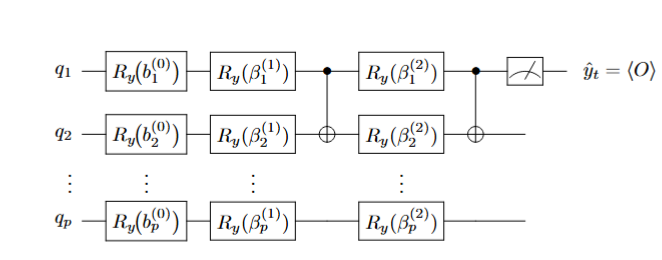
Figure 2: VQC for AR order estimation where OLS-initialized angles prime the circuit, and variational layers enable nonlinear re-embedding across lagged features.
The procedure for weak lag refinement involves additional trainable qubits over the candidate lag set, with frozen anchor blocks retaining main AR structure (Figure 3). L1/L2 penalties on weak coefficients, referenced to their initialization values, enable capacity-controlled model expansion.
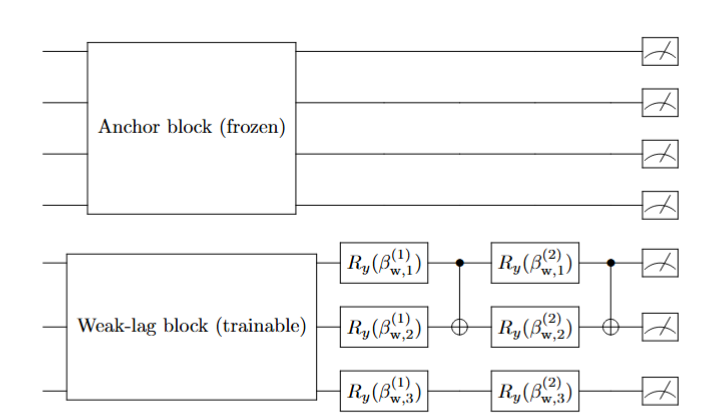
Figure 3: VQC for weak-lag refinement: anchor qubits fixed, weak-lag qubits trainable, and entanglement restricted to the weak block.
The MA estimator uses a similar VQC structure (Figure 4), embedding residual windows extracted from quantum-refined AR fits. Quantum-augmented loss functions control both signal fit and regularization, and output is norm-constrained to prevent overfitting, yielding ARMA parameters that are interpretable but quantum-influenced.
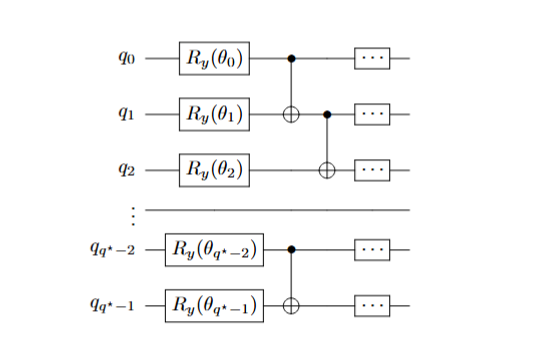
Figure 4: Schematic VQC ansatz for MA coefficient refinement. Qubits encode MA coefficients, processed via entangling layers and optimized to minimize quantum-regularized losses.
Empirical Results Across Datasets
A comprehensive empirical evaluation benchmarks QARIMA against classical ARIMA across five datasets: Sunspots, Mauna Loa CO2, Australian beer production, woollen yarn production, and Sydney summer 2024 temperatures. QARIMA candidate (p,d,q) orders—screened using quantum diagnostics—are consistently compared to pmdarima-selected baselines using out-of-sample (OOS) MSE, MAPE, and Diebold–Mariano (DM) significance tests.
Sunspots: On this long-memory, quasi-periodic series, quantum models with richer AR structure (QARIMA(6–10,1,1/3)) unambiguously outperform the classical ARIMA(2,0,0) baseline in both MSE and MAPE, with DM tests confirming statistical superiority (Figure 5, Figure 6, Figure 7).
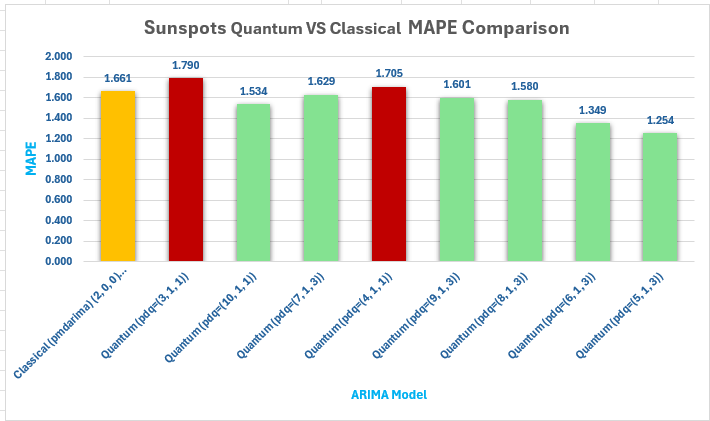
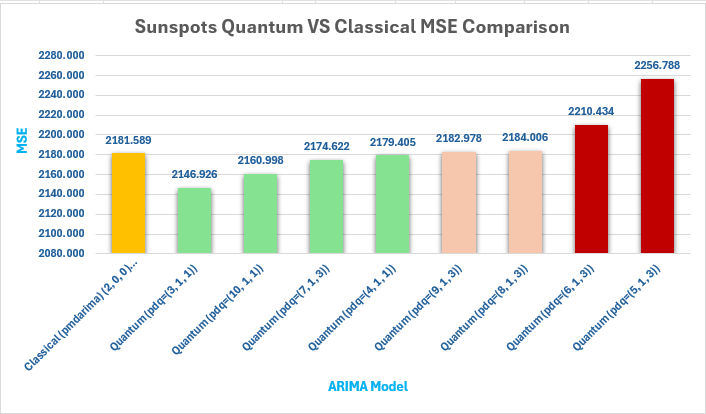
Figure 5: Sunspots OOS MSE and MAPE—QARIMA consistently improves over classical ARIMA in MSE, with top quantum models also achieving lower or competitive MAPE.
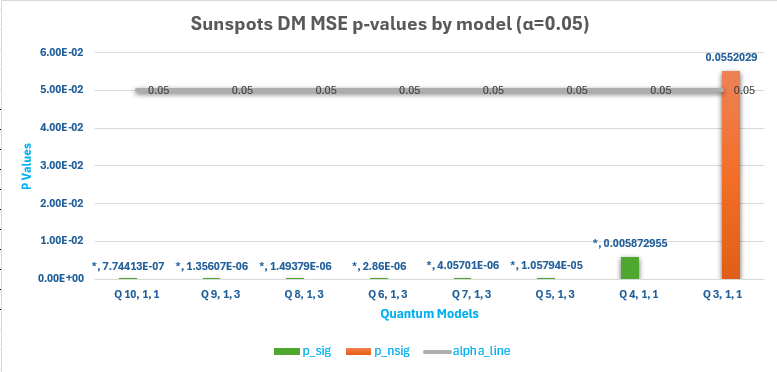
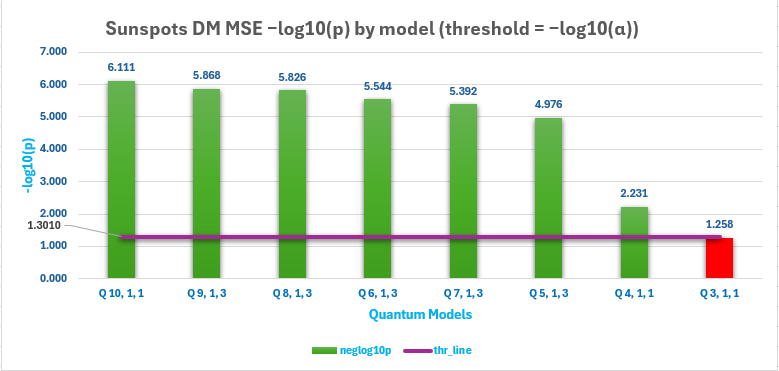
Figure 6: Diebold–Mariano p-values (MSE): all leading quantum models significantly below the α threshold.
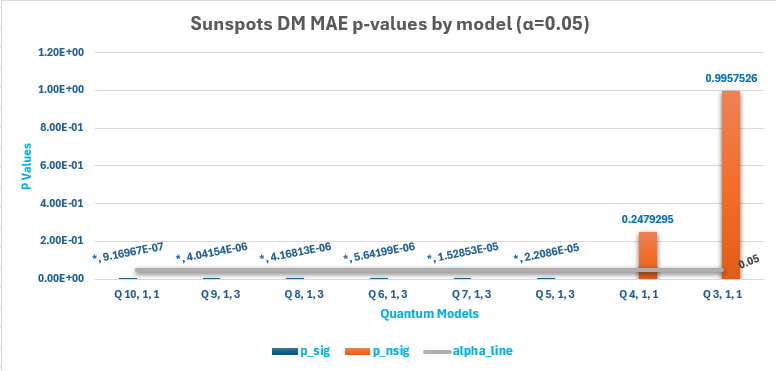
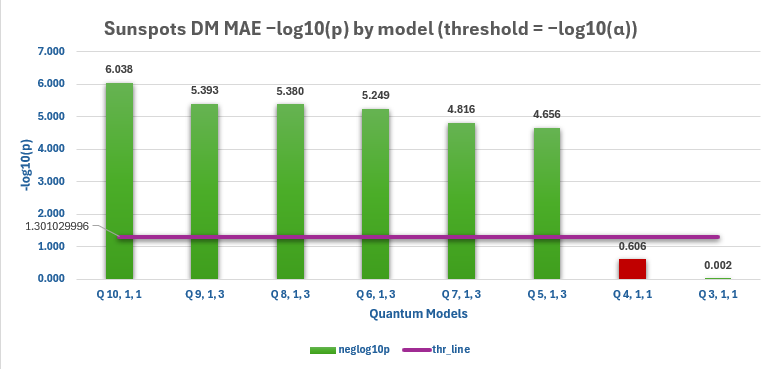
Figure 7: Diebold–Mariano −log10(p) (MAE): quantum models dominating classical baseline.
Mauna Loa CO2: The QARIMA pipeline achieves a 7–8 fold reduction in OOS MSE and MAPE over the classical ARIMA(5,1,0), exclusively for high-p quantum models; DM tests on both loss forms show uniformly strong significance (Figure 8, Figure 9, Figure 10).
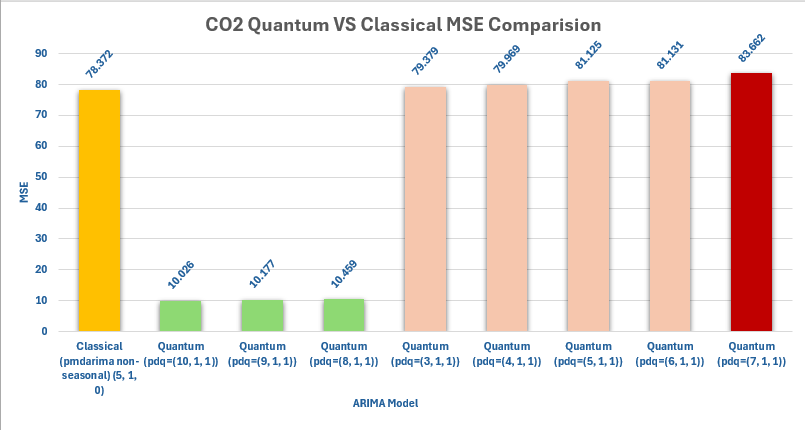
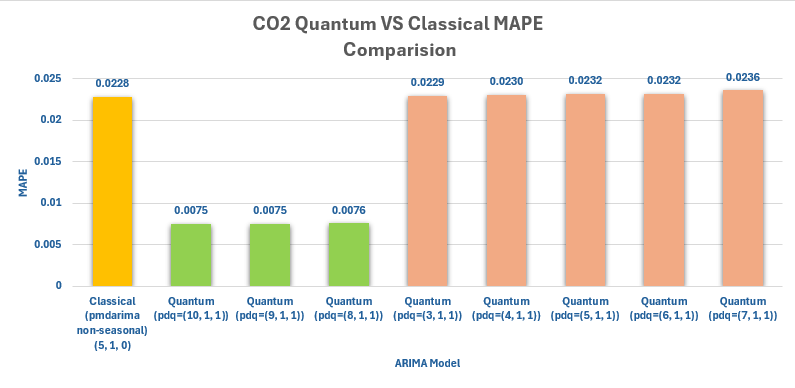
Figure 8: CO∣ψ⟩0 OOS MSE and MAPE: quantum models with large ∣ψ⟩1 orders lead to multi-fold performance improvement.
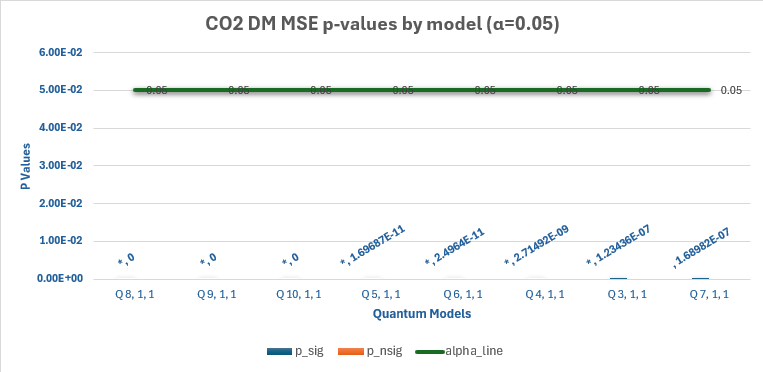
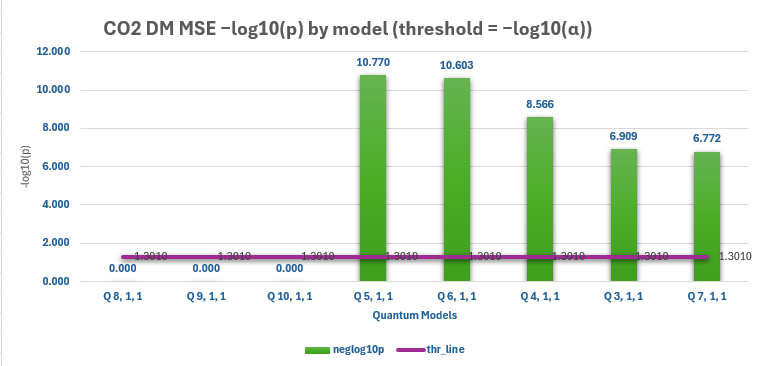
Figure 9: CO∣ψ⟩2 DM (MSE) p-values: all successful quantum models highly significant.
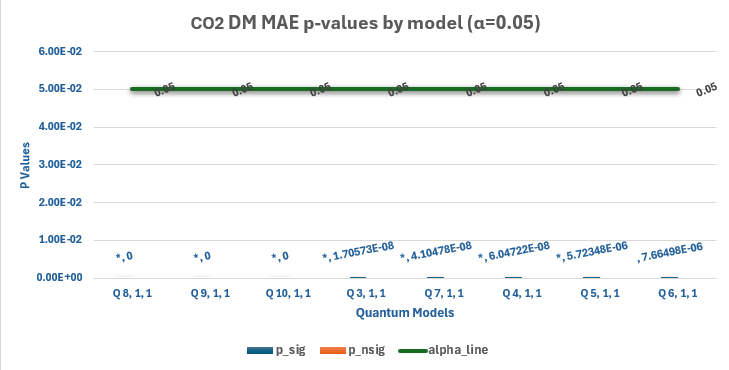
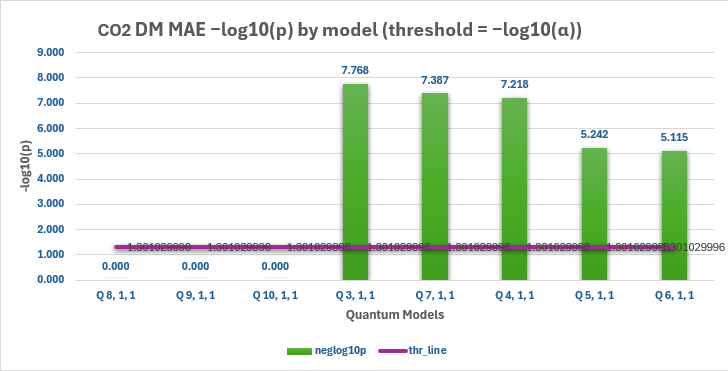
Figure 10: CO∣ψ⟩3 DM (MAE) ∣ψ⟩4: winning quantum models far exceed significance threshold.
Australian Beer: QARIMA produces extreme OOS error reductions—an order-of-magnitude improvement over ARIMA(0,1,1) on the 8-quarter OOS window; all quantum models with ∣ψ⟩5 register highly significant DM scores (Figure 11, Figure 12, Figure 13).
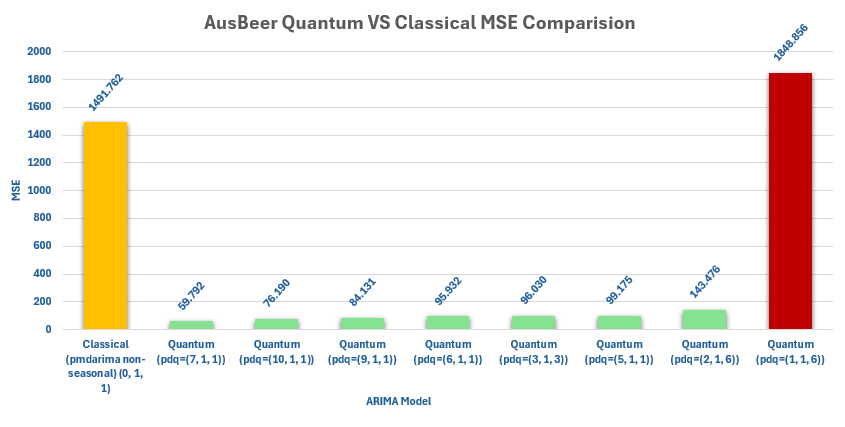
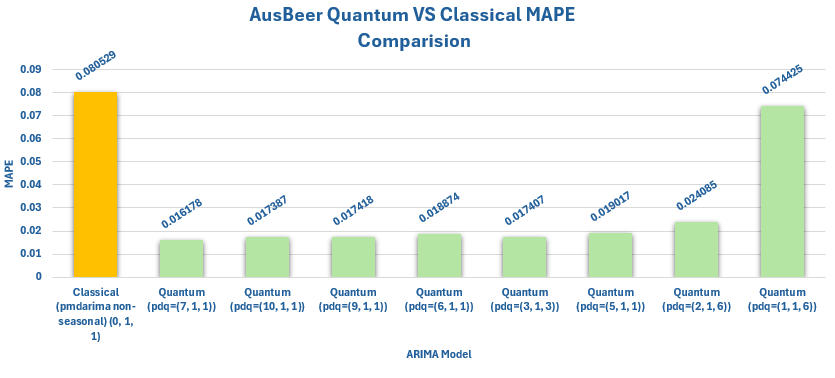
Figure 11: AusBeer OOS error: quantum models outperform classical baseline by an order of magnitude in both MSE and MAPE.
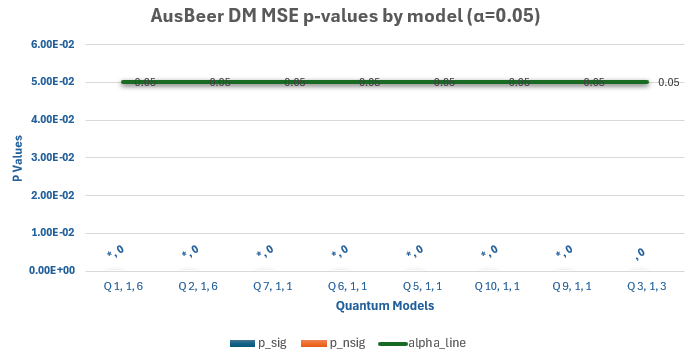
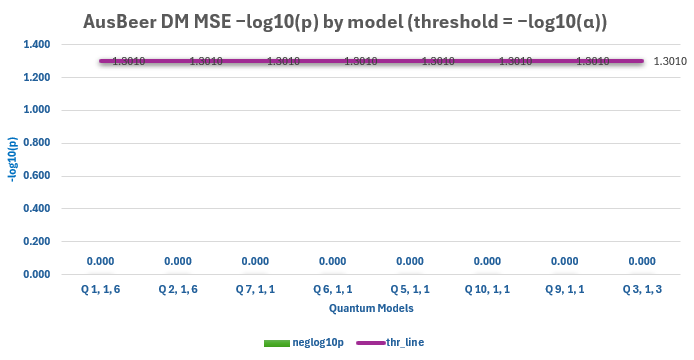
Figure 12: AusBeer DM (MSE) p-values: quantum models all significant.
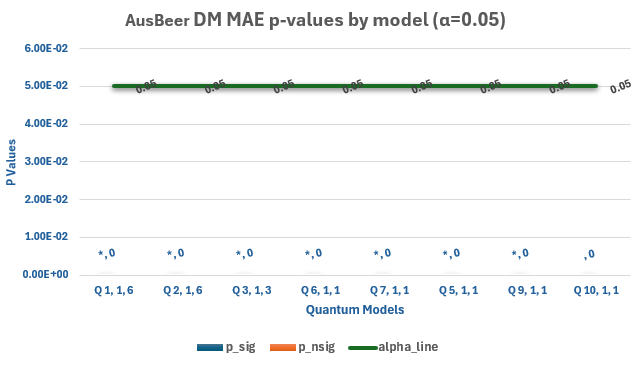
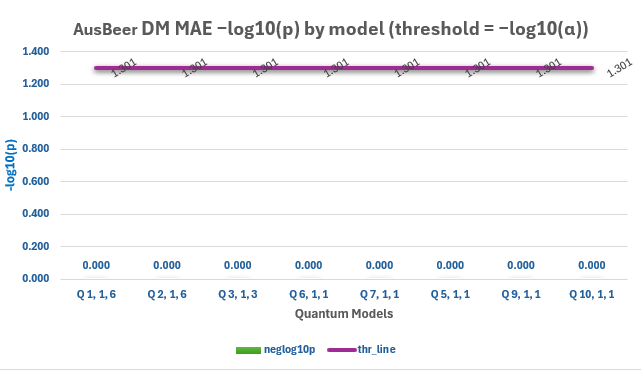
Figure 13: AusBeer DM (MAE) ∣ψ⟩6: quantum winner group far above reference threshold.
Woollen Yarn: In this short-history, low-noise dataset, the classical ARIMA(6,1,0) remains optimal. Quantum variants, while close in a narrow band for ∣ψ⟩7, do not outpace the baseline, and DM tests show significant differences mainly in the direction of higher quantum loss (Figure 14, Figure 15, Figure 16).
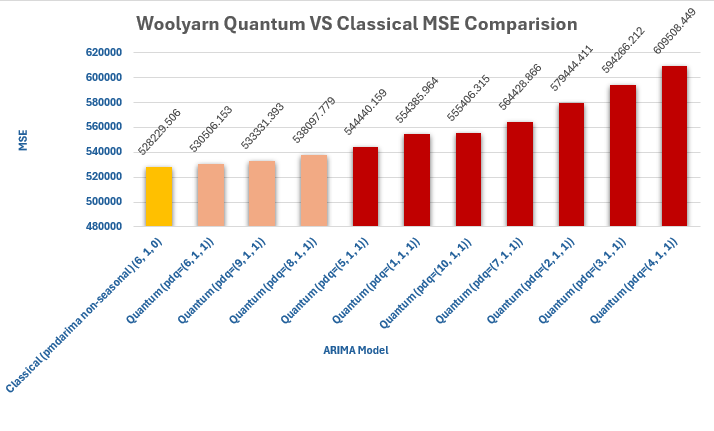
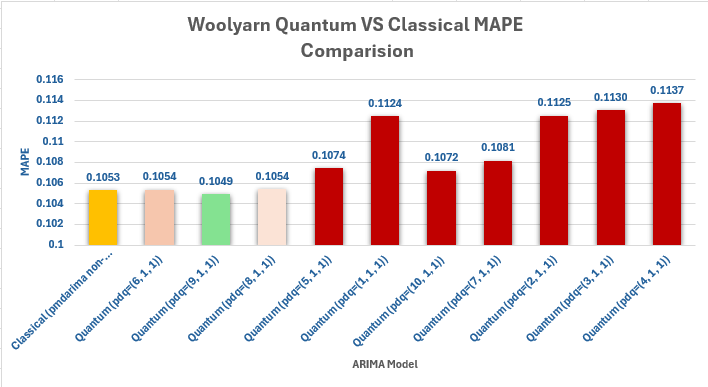
Figure 14: Woolyarn OOS MSE and MAPE: classical baseline at the optimum; quantum runs do not improve.
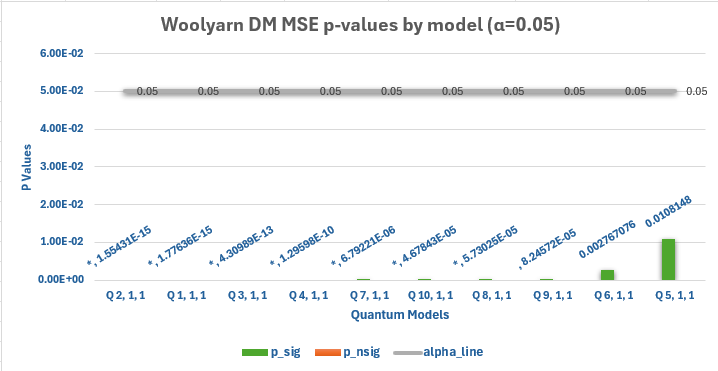
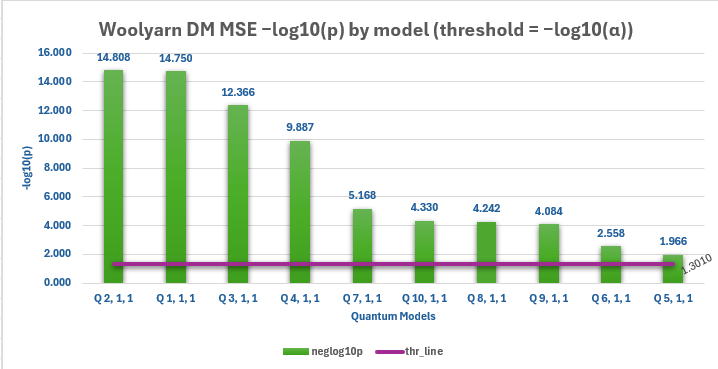
Figure 15: Woolyarn DM (MSE): nearly all quantum models significantly worse than classical.
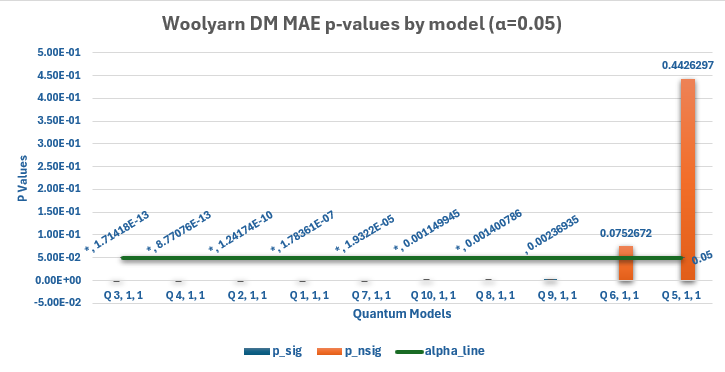
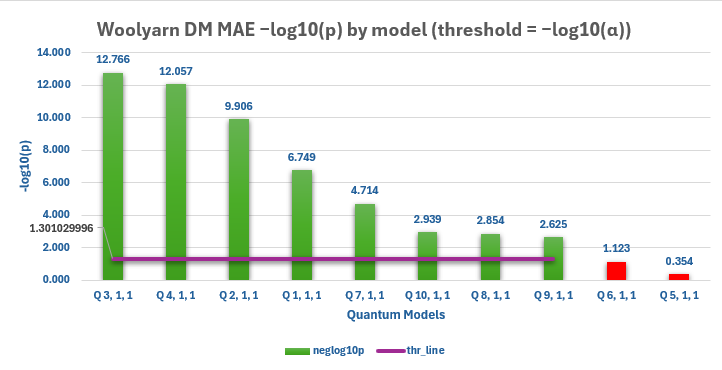
Figure 16: Woolyarn DM (MAE): only Q(6,1,1) and Q(5,1,1) approach parity; all others underperform.
Sydney Summer 2024: On this short, low-variance horizon, QARIMA models (notably Q(3,1,1), Q(4,1,1)) are marginally better than ARIMA(2,0,1), with DM analysis showing significance for only these shallow quantum configurations (Figure 17, Figure 18, Figure 19).
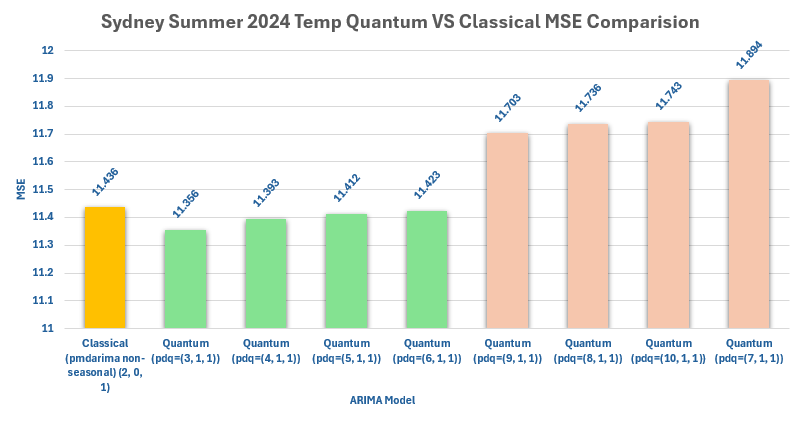
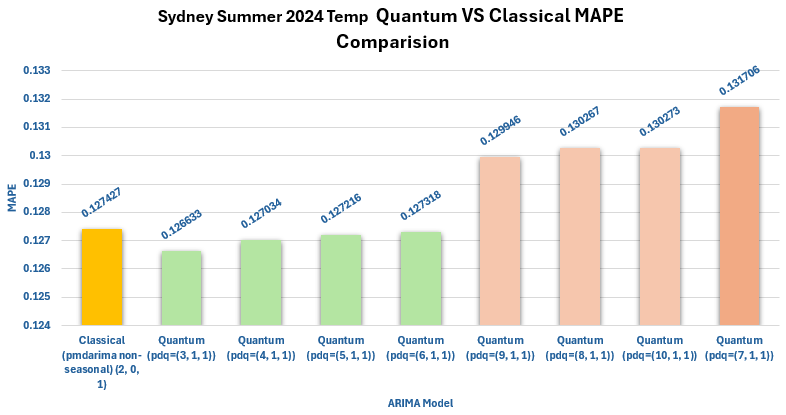
Figure 17: Sydney summer temperature: QARIMA marginally ahead on both OOS MSE and MAPE.
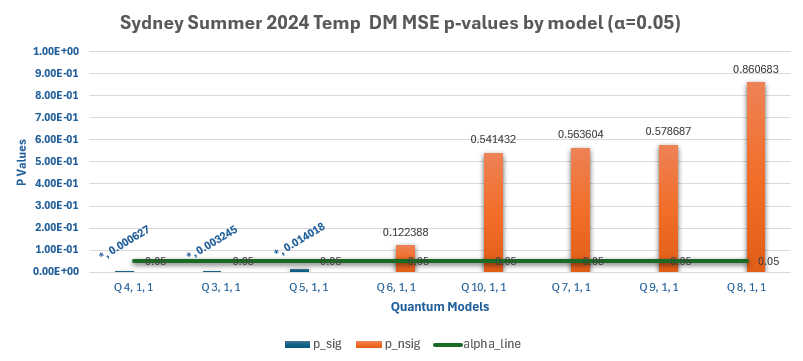
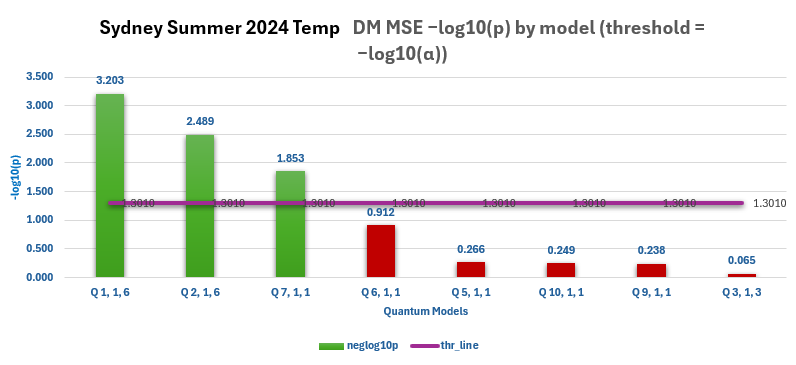
Figure 18: DM (MSE) panel: best quantum models (Q(3,1,1), Q(4,1,1)) just significant.
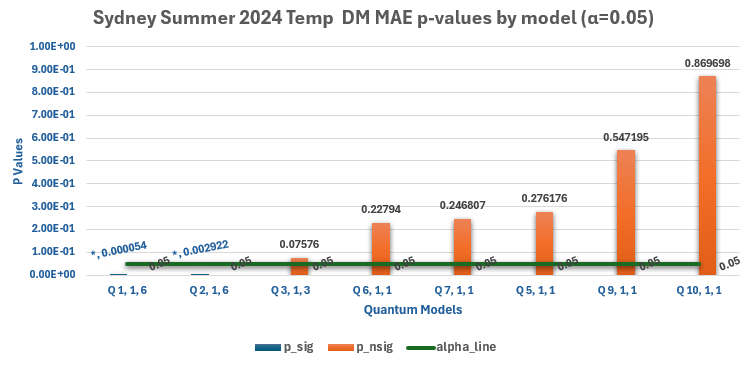
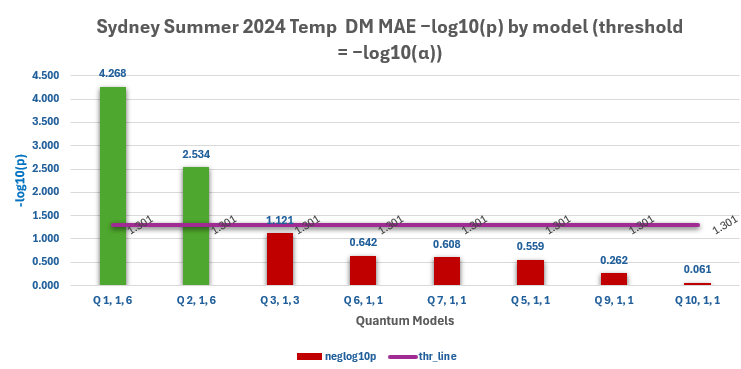
Figure 19: DM (MAE): some MA-heavy quantum models achieve statistical significance in absolute error.
Theoretical and Practical Implications
QARIMA's design ensures that quantum augmentation is explicit and modular—quantum effects are introduced at lag diagnostics, estimation, and order refinement, while ARIMA regularity, interpretability, and parsimony are preserved. Notably, the approach yields capacity-controlled model selection: quantum variants do not automatically outperform, and when data is insufficient (e.g., short/noisy series), the pipeline’s regularization and quantum-informed selection prevent overfitting.
From a theoretical perspective, QARIMA demonstrates that quantum state overlap (via swap test) and VQC-parameterized re-embedding can act as robust regularizers, reducing meta-optimization overhead and decoupling hyperparameter sensitivity. Regularization via entropy (derived from quantum shot statistics) provides additional uncertainty quantification, aligning well with the probabilistic generative structure of ARIMA.
Empirically, the principal numerical claim is that for nonstationary, long-memory, or quasi-periodic data, the quantum-augmented pipeline yields statistically superior OOS performance (MSE, MAPE, and DM significance) compared to classical pmdarima, even with shallow-depth quantum circuits. For canonical, well-behaved or short industrial time series, classical ARIMA remains competitive or preferable—a finding supported by explicit DM tests.
Practically, the QARIMA procedure is amenable to NISQ-era hardware: all quantum subroutines are shallow and use basic primitives (swap test, ∣ψ⟩8, CNOT chains), and the classical optimizer (COBYLA) is compatible with hardware-in-the-loop training. The pipeline is compatible with standard statistical software and can be integrated into existing hybrid modeling workflows, enabling “quantum as a regularizer” without sacrificing interpretability or tractability.
Outlook and Future Work
The developed framework can be extended to multivariate and seasonality-enriched models (e.g., quantum SARIMA), as well as to online/rolling training. The integration of circuit-based quantum hypothesis testing for automated significance evaluation could further formalize order selection. Direct benchmarking of the QARIMA pipeline on real quantum hardware, with adaptive noise mitigation and embedded uncertainty quantification, represents an important next step.
Conclusion
QARIMA demonstrates that quantum-inspired primitives—used judiciously and in isolation—can systematically improve upon classical ARIMA in settings where lag structure and nonlinearity cannot be fully captured by linear models. The empirical analysis across diverse datasets validates these effects, with statistically significant improvements in several domains, while also highlighting cases where classical ARIMA remains maximal. This capacity-controlled, interpretable, and hardware-compatible framework provides a robust architecture for quantum-classical integration in time series analysis.
Reference:
QARIMA: A Quantum Approach To Classical Time Series Analysis (2604.08277)

