- The paper introduces a hybrid surrogate model integrating physics-informed message-passing GNN with a Neural ODE for control-oriented reactor forecasting.
- It achieves accurate reconstruction of uninstrumented thermal states with low MAE and robust long-horizon predictions in varying operational scenarios.
- The framework supports real-time inference and sim-to-real transfer, enabling actionable integration with optimization-based control systems.
Architectural Overview and Methodological Contributions
The paper "Graph Neural ODE Digital Twins for Control-Oriented Reactor Thermal-Hydraulic Forecasting Under Partial Observability" (2604.07292) introduces a hybrid surrogate modeling framework that integrates a physics-informed message-passing Graph Neural Network (GNN) with a continual-time Neural Ordinary Differential Equation (NODE) parameterization. The system is encoded as a directed sensor graph: nodes represent physical components—partitioned into plant, actuator, and ambient types—and edges encode hydraulic connectivity and energy transport mechanisms.
Key methodological innovations are:
- Physics-informed message-passing: Messages on edges correspond to discretized energy-balance approximations, including advective heat transport, convection/conduction, and control/boundary effects. Edge weights are physically contextualized, scaling message strength with flow rates and component metadata.
- Partial observability accommodation and state recovery: A topology-guided missing-node initializer (TGMI) reconstructs temperatures at uninstrumented locations by leveraging 1-hop instrumented neighbors and global context features, then the GNN-ODE performs recursive correction as rollouts proceed.
- Continuous-time, differentiable latent dynamics: NODE integration ensures invariance to measurement rates and robust handling of asynchronous, heterogeneous sensor data. The latent state evolution is parameterized and propagated via a differentiable RK4 scheme.
- Discriminative fine-tuning for sim-to-real transfer: Layerwise learning rates preserve spatial priors from high-fidelity simulation while adapting temporal dynamics rapidly to experimental data, avoiding catastrophic forgetting.
Experimental Testbed and Digital Twin Framework
The benchmark facility—an electrically heated thermal-fluid reactor surrogate—features three hydraulically independent loops and a comprehensive instrumentation suite (Figure 1). The system is discretized as a 17-node graph mapping both instrumented and uninstrumented physical volumes (5 nodes remain permanently uninstrumented).
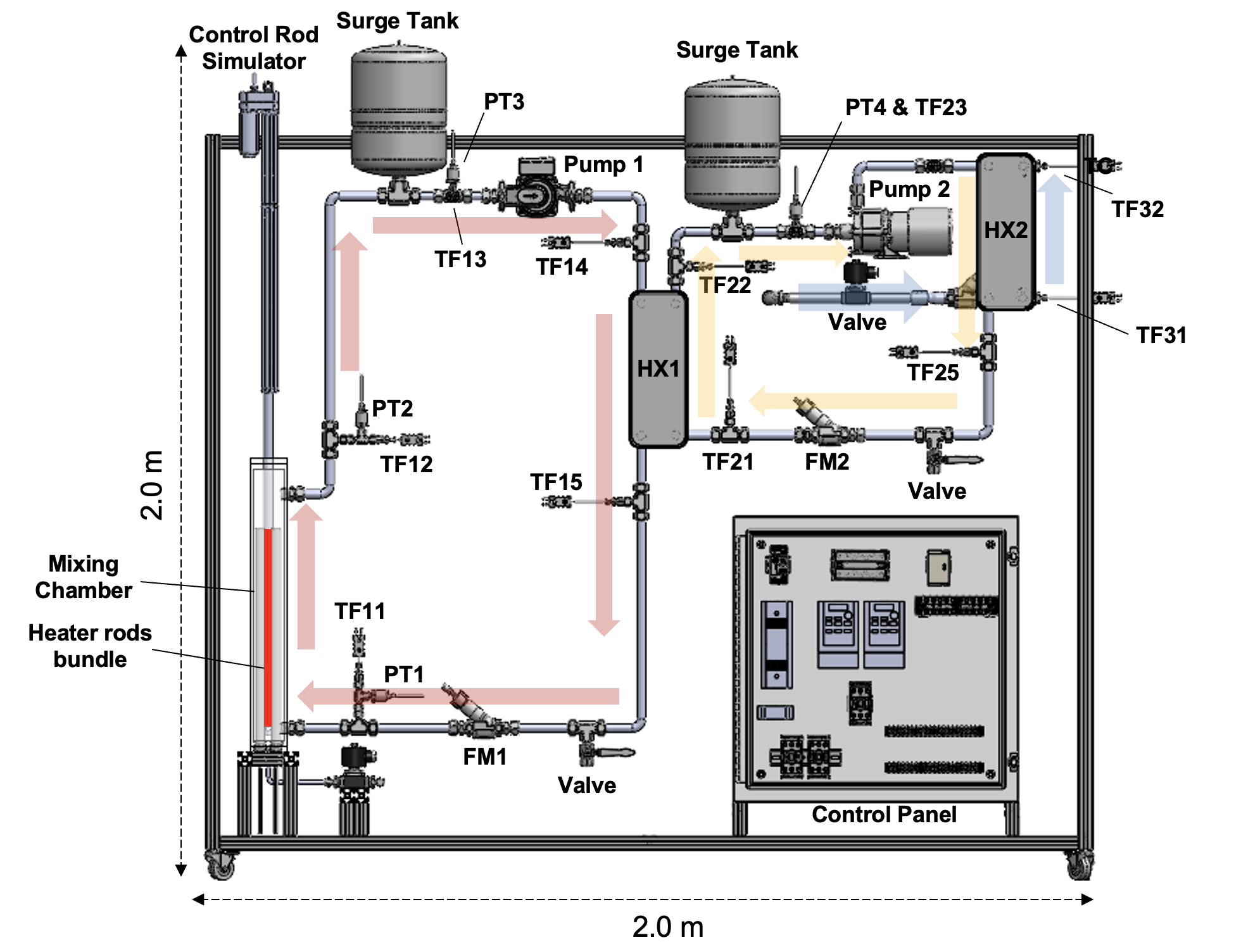
Figure 1: CAD model of the experimental thermal--hydraulic facility illustrating the three-loop configuration and the locations of key instrumentation and control components.
Synthetic data is generated using a System Analysis Module (SAM)-based digital twin, which enables cycle-accurate trajectory generation across hundreds of operational scenarios (Figure 2). The surrogate model is pretrained on these trajectories, with subsequent experimental fine-tuning achieved from only 30 real facility transient sequences.
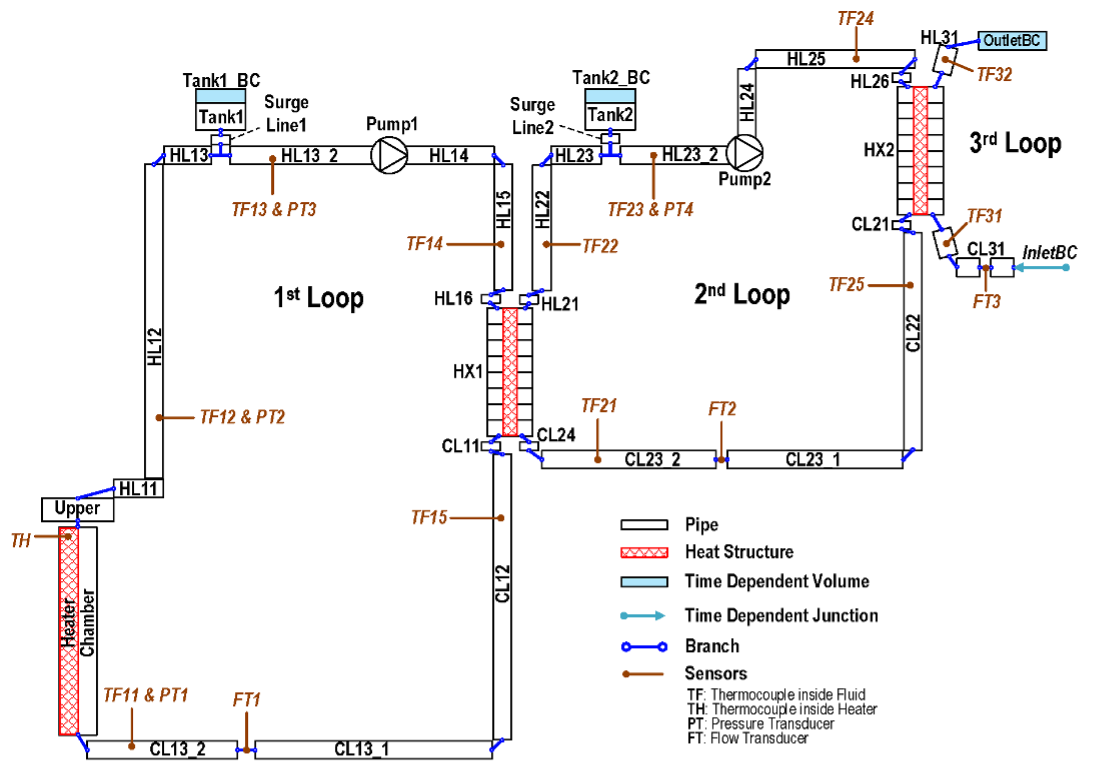
Figure 2: SAM-based digital twin model utilized for synthetic trajectory generation and surrogate pretraining.
Missing-Node Reconstruction
The TGMI achieves accurate initialization of uninstrumented states, with the paper reporting an MAE as low as 0.064 K for the mixing chamber and up to 0.559 K for more remote heat exchanger volumes. The reconstruction R2 reaches 0.995 for several nodes, and inclusion of global context features further reduces error.
Forecasting Across Transient Scenarios
Four challenging test scenarios validate the surrogate's forecasting capability on both observed and missing nodes under variable control actions (Figure 3). Ensemble uncertainty quantification (M=64) is deployed, with prediction quality evaluated via Mean Absolute Error (MAE) in Kelvin. Over a 60 s forecast horizon, the average MAE is 1.20 K for observed nodes and 0.91 K for missing nodes; at 300 s, errors grow to 3.66 K (observed) and 2.18 K (missing), highlighting the temporal robustness of the GNN-ODE compared to fixed-interval architectures.
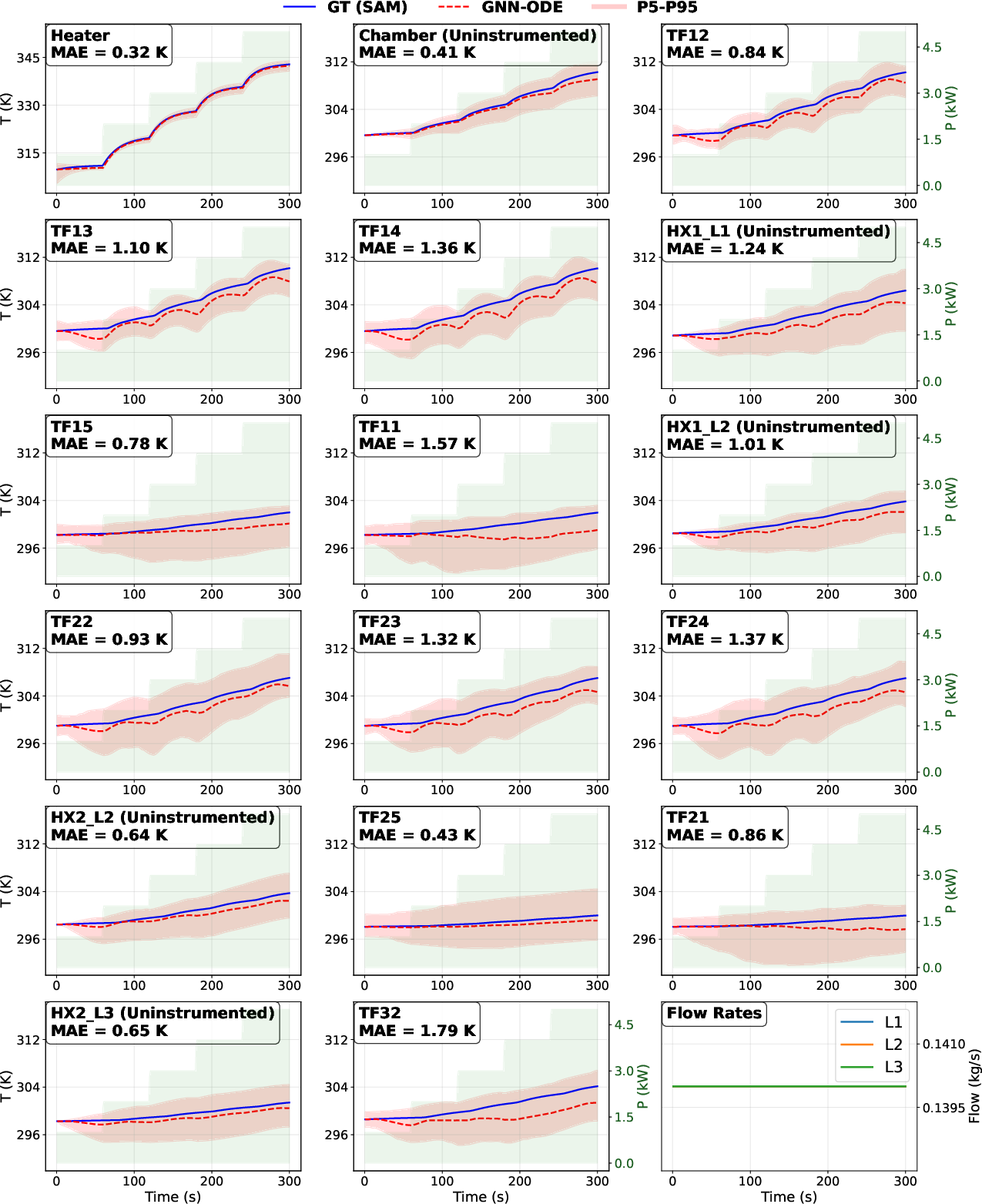
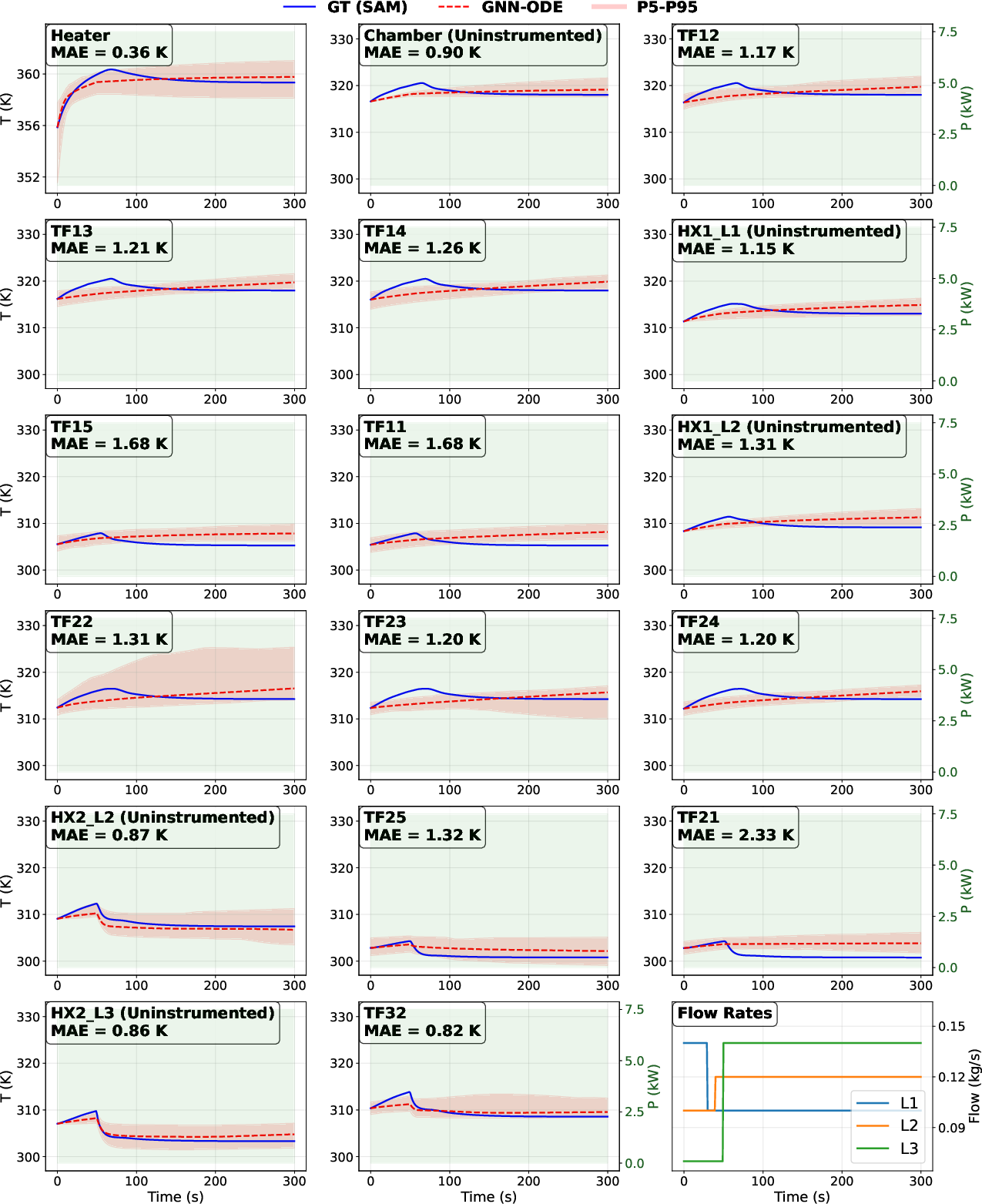
Figure 3: Forecasting comparison across four held-out transient scenarios demonstrating predictive alignment and uncertainty bands for various plant nodes.
Error trajectories versus forecast horizon reveal that initial drift at hidden nodes is rapidly corrected by the GNN-ODE's dynamic rollouts, and that uncertainty inflation is dominated by actuator and flow-rate input variability rather than temperature sensing noise (Figure 4).
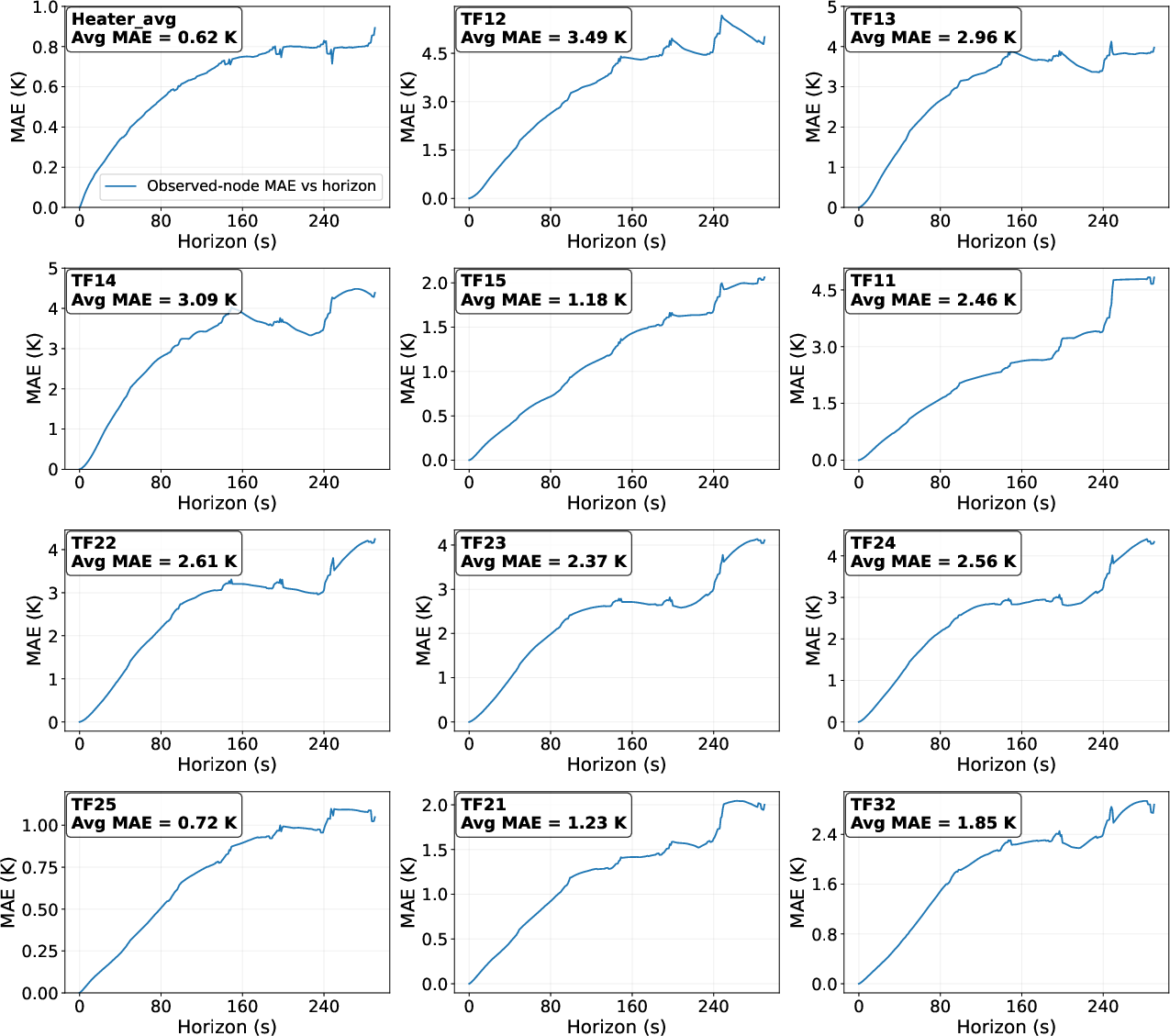
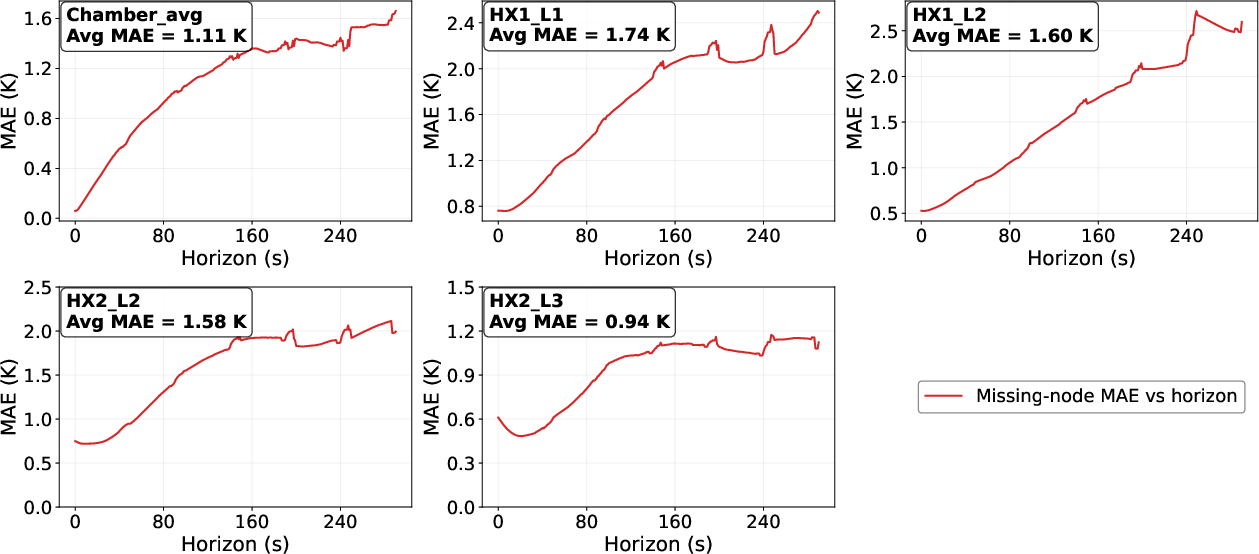
Figure 4: Long-horizon rollout MAE as a function of forecast horizon for both observed and missing nodes.
Sim-to-Real Transfer and Unmeasured State Inference
Following discriminative fine-tuning, the SAM-trained surrogate is deployed on real facility data, including a steep power transient (0→10→5→7 kW). Predictions for observable nodes closely track experimental measurements within ensemble confidence intervals (Figure 5); for permanently uninstrumented nodes, inferred trajectories remain bounded, smooth, and physically plausible (Figure 6).
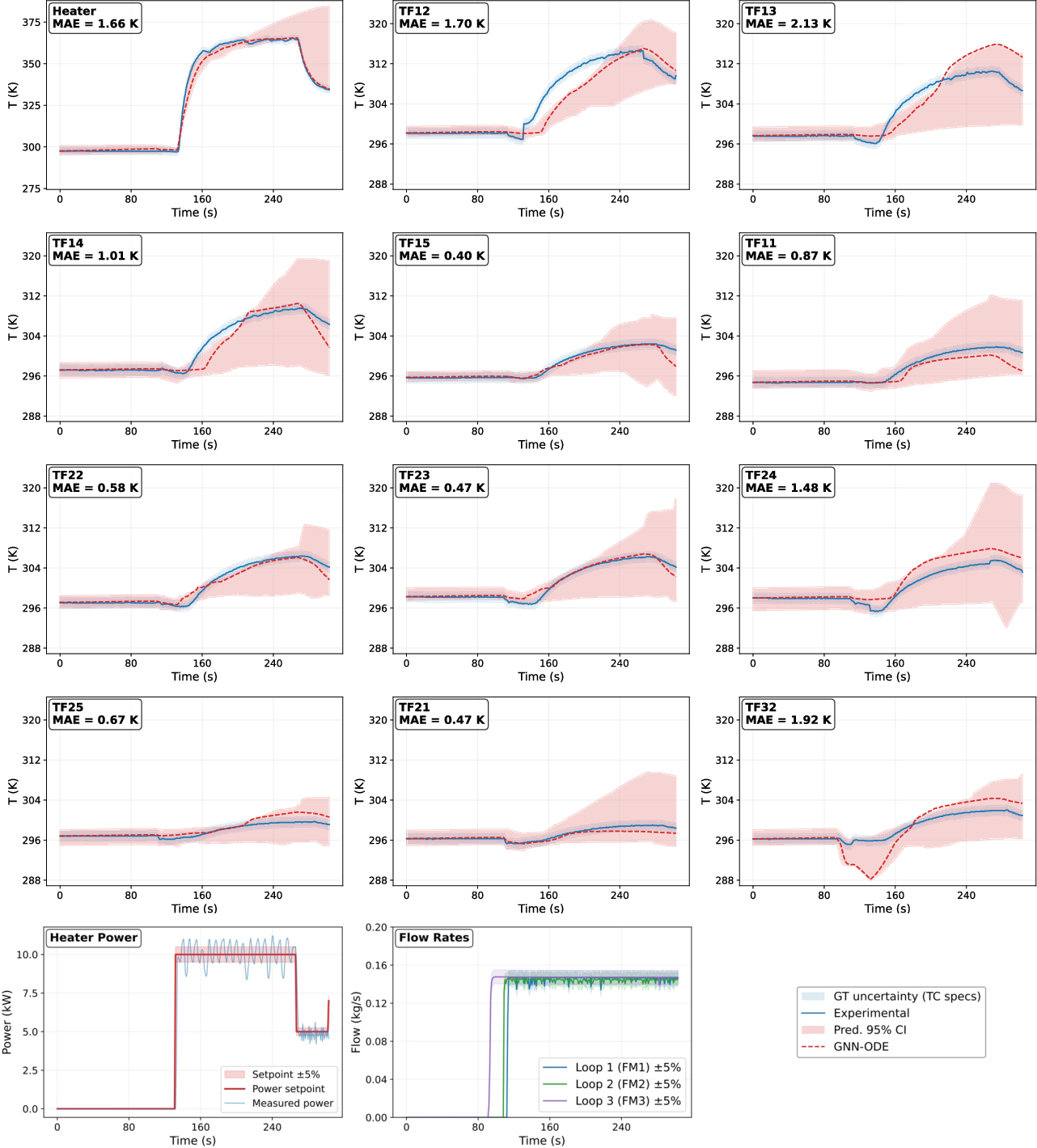
Figure 5: Surrogate ensemble predictions versus experimental measurements for instrumented nodes during steep power changes.
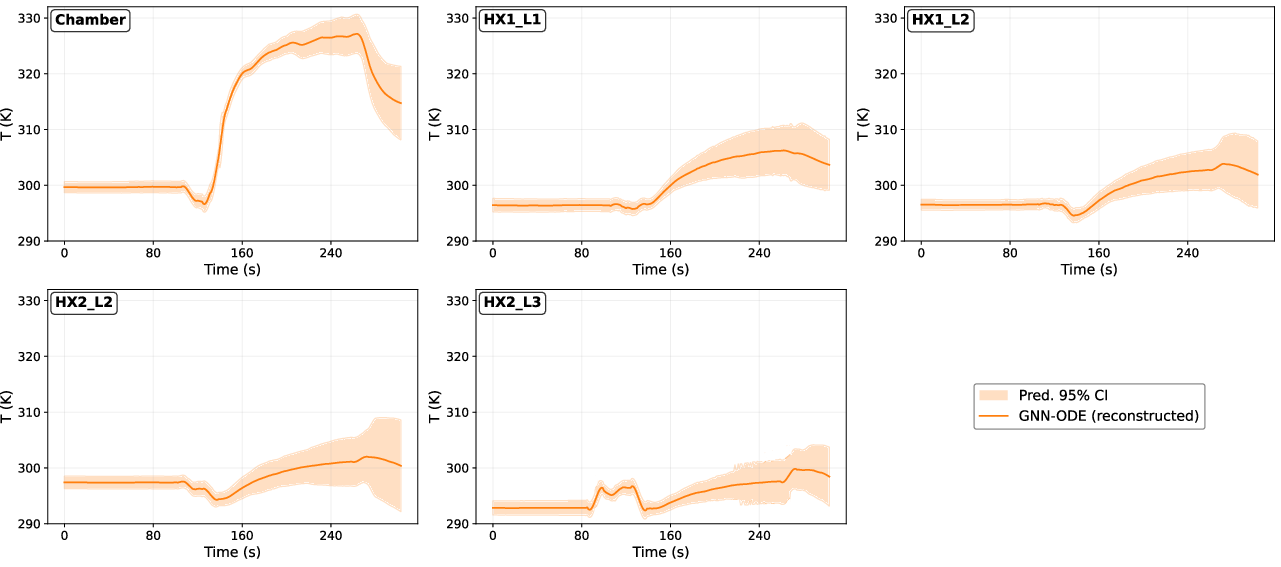
Figure 6: Model-inferred trajectories for uninstrumented (hidden) nodes under partial observability, seeded by TGMI and propagated via GNN-ODE dynamics.
Constitutive Learning and Physical Interpretability
The architecture demonstrates constitutive learning: effective conductance exponents for flow-dependent heat transfer are learned directly from data, yielding α≈0.87 for heat exchangers (close to the standard Dittus-Boelter value $0.8$), and α=0.69–$0.76$ for heater-chamber coupling, reflecting complex 3D mixing and geometric effects. The model thus discovers physically interpretable structure, not simply fitting observed trajectories.
Practical and Theoretical Implications
The GNN-ODE surrogate functions as a virtual sensor array, reconstructing inaccessible thermal-hydraulic states with millisecond-scale inference (up to 105× faster than simulated time on a single GPU). Its differentiable, continuous-time structure enables direct integration with optimization-based control frameworks, supports uncertainty-aware rollout for real-time supervisory loops, and facilitates future expansion to incorporate kinetic feedback and online retraining.
The architecture is inherently topology-agnostic due to its graph-based spatial encoding, making it adaptable to facilities of differing layouts. Preliminary evidence suggests feasibility of topology transfer via pretraining on digital twins, followed by selective fine-tuning. The partial observability mechanisms generalize to scenarios with sensor dropout, unreliable telemetry, and fault-tolerant operation.
Limitations include sensitivity to high-frequency sensor noise in the derivative-driven loss, motivating future work in recursive filtering and noise-mitigation pipelines. Planned extensions target multi-physics coupling (e.g., neutron kinetics), facility topology transfer, and systematic analysis of sensor fault effects.
Conclusion
This paper presents a physics-informed GNN-ODE surrogate for control-oriented thermal-hydraulic forecasting, validated on both high-fidelity simulation and experimental data under partial observability. Numerical results demonstrate robust multi-step prediction accuracy for both instrumented and uninstrumented nodes, rapid inference for real-time operation, and physically interpretable constitutive learning. Integration with digital twin frameworks and differentiable predictive control pipelines positions the method as a versatile tool for autonomous reactor instrumentation and control, with future directions involving kinetic coupling, topology transfer, and reliability analysis.