- The paper reveals that selective, localized gradient updates induce sparse dependencies in large neural models, enabling decomposable inference.
- It introduces a post-training statistical criterion that prunes unsupported parameters, thereby enhancing computational efficiency without retraining.
- The findings suggest that modular, parallel sub-operators can replace monolithic systems, improving scalability and energy efficiency in practical applications.
Detailed Summary and Analysis of "Why Inference in Large Models Becomes Decomposable After Training"
Introduction
The paper "Why Inference in Large Models Becomes Decomposable After Training" challenges the traditional view of post-training inference systems as monolithic operators. It proposes that large model inference systems, after training, become inherently decomposable due to the selective and localized nature of gradient updates during training. This results in inherently sparse dependency structures, contrary to the dense parameter matrices typically employed for inference. The proposed post-training statistical criterion can identify and eliminate unsupported dependencies, reducing the complexity of inference systems.
Model Dynamics and the Emergence of Decomposable Structures
The core assertion of this work is that gradient updates in large neural models are selective and localized. These updates effectively enforce a sort of sparsity within parameter matrices, where many parameters do not receive stable gradient updates and remain near their initial values. Regions that fail to accumulate stable gradient updates manifest as statistically unsupported dependencies, which, after training, can be systematically pruned. This pruning reveals the decomposability of the inference system as a collection of structurally independent substructures.

Figure 1: Schematic structure of a large matrix.
The implication is profound: inference in such models can be executed as a series of independent, parallel sub-operators rather than a single monolithic one. This reorganization preserves the input-output specifications while offering significant computational advantages by simplifying inference execution and controlling complexity.
Statistical Methods for Structural Assessment
The paper describes techniques for distinguishing between dependencies reinforced by training and those remaining from the initial parameter distribution. The null hypothesis assumes parameter values as mere initialization noise unless statistically verified otherwise. Structural annealing systematically removes parameters that do not pass this test, achieving a sparse, more efficient representation.
Additional statistical tests identify whether parameter variations are due to genuine structural preference or are directionless perturbations. These tests further aid in refining the inference system to accentuate truly effective structures formed during training.
Practical Implications and Engineering Considerations
The theoretical insights presented extend practical utility by simplifying system reorganizations without loss of operational fidelity. By articulating inference systems as disconnected weakly connected components, it enables efficient parallel computations and structured, modular execution (Figure 2).
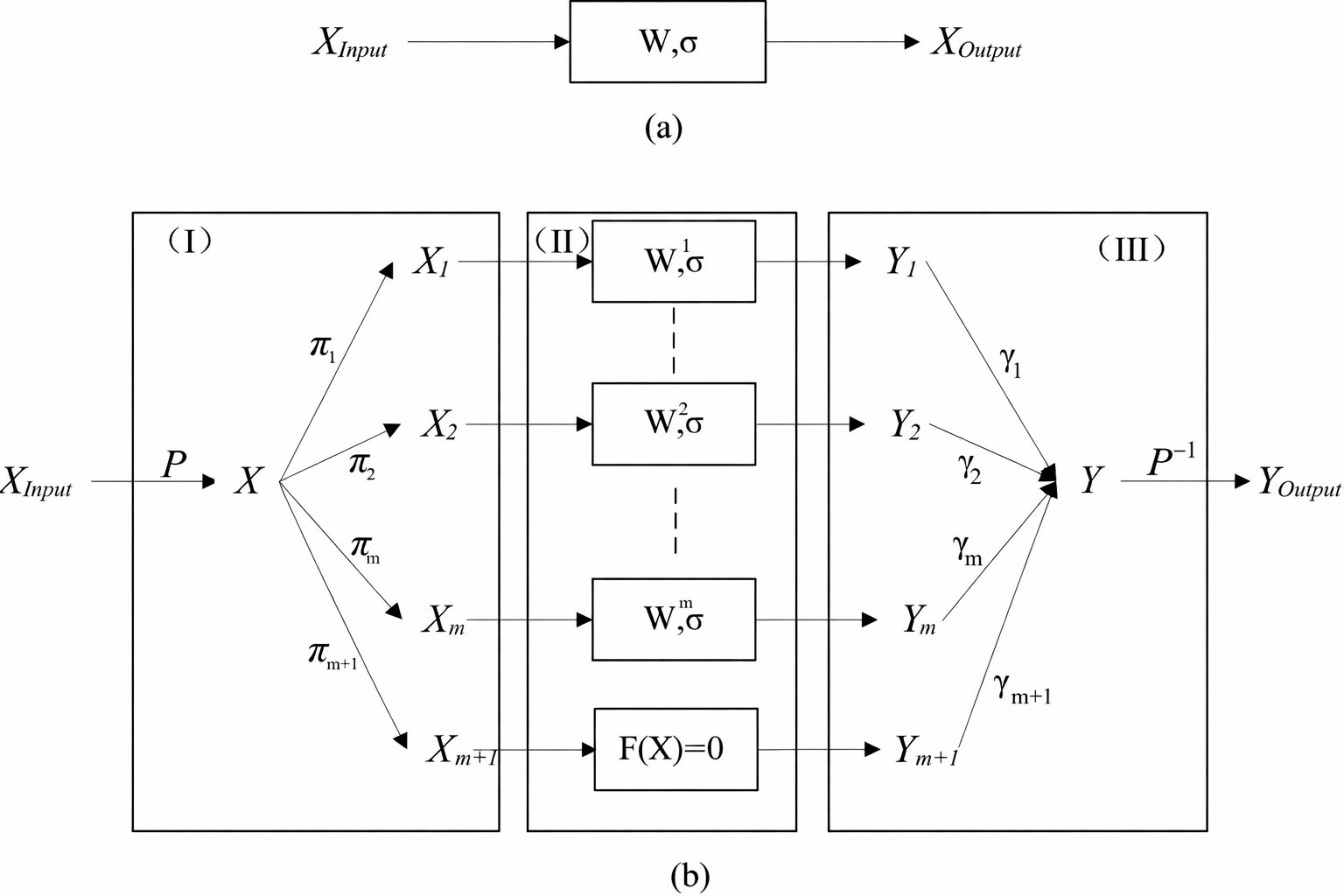
Figure 2: Structural principle of inference system restructuring.
This treatment contrasts sharply with traditional methods such as pruning and architecture search, which do not typically exploit the latent structural insights that emerge from training dynamics. The paper's methodology creates pathways for improving energy efficiency and execution speed without retraining, making it particularly advantageous for deployment in resource-constrained environments.
Future Directions and Conclusion
The findings suggest a shift in direction for future large-scale AI systems. Instead of further enlarging models, the focus should be on leveraging implicit structural regularities arising during training. By making these structures explicit and stable, model scalability and interpretability can improve, facilitating easier model evolution and maintenance.
In conclusion, this work elucidates that large models inherently form decomposable inference structures post-training. By uncovering these latent dynamics and proposing a structured approach to inference system simplification, the paper offers a substantive contribution to the field of AI, specifically impacting how model complexity and system execution are understood and managed.
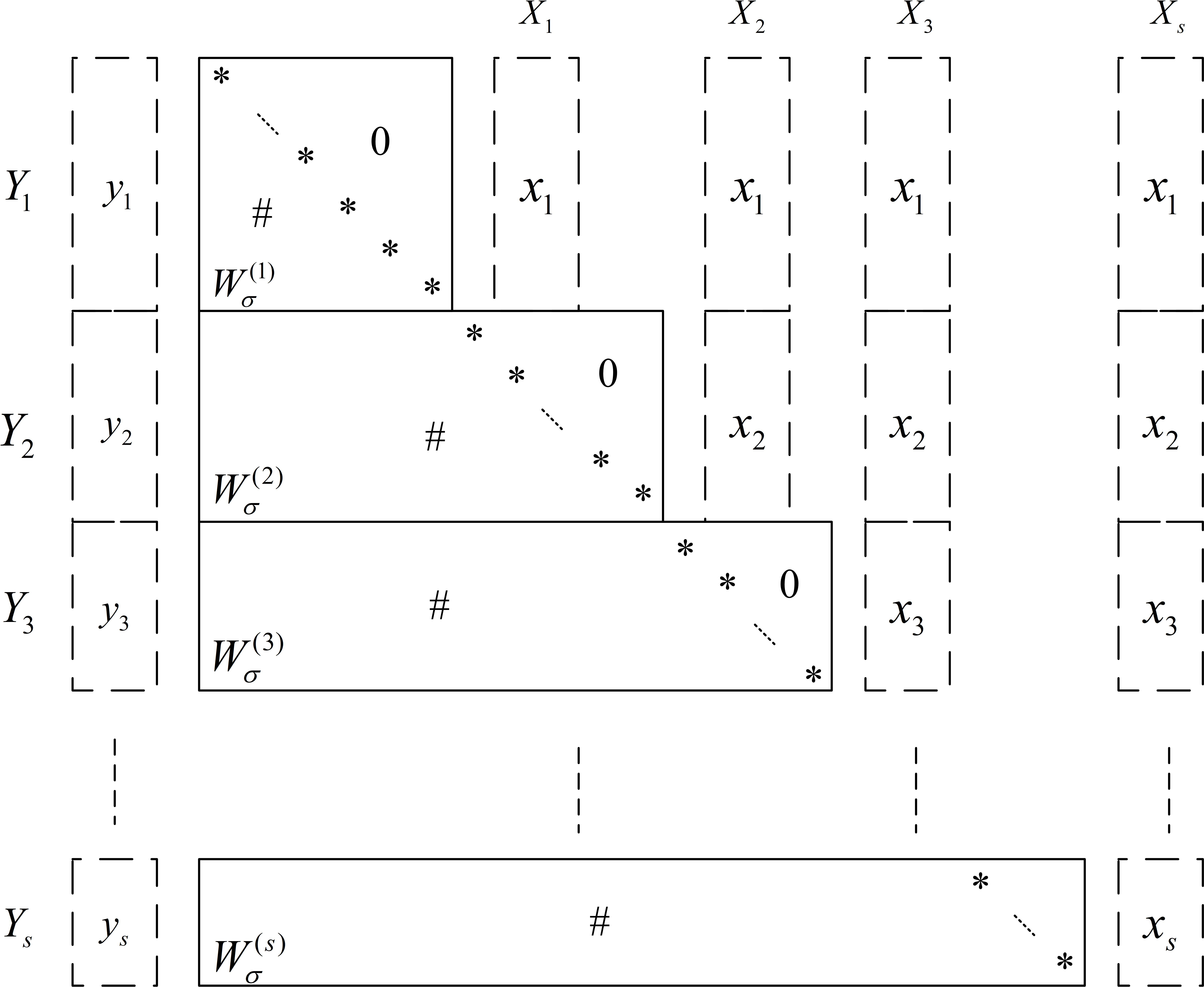
Figure 3: Principle of diagonal-block subdivision in inference restructuring.