SophiaVL-R1: Reinforcing MLLMs Reasoning with Thinking Reward
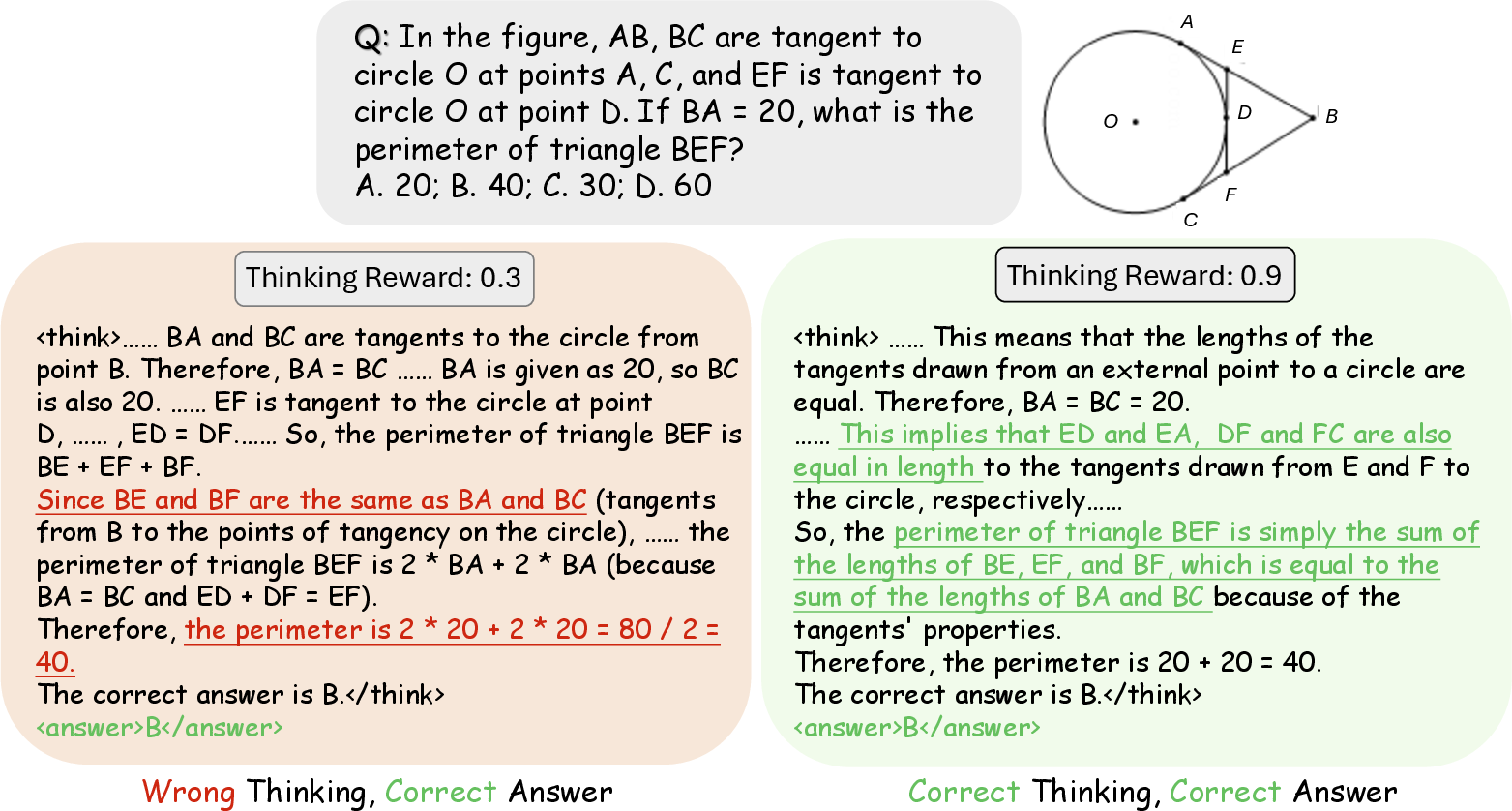
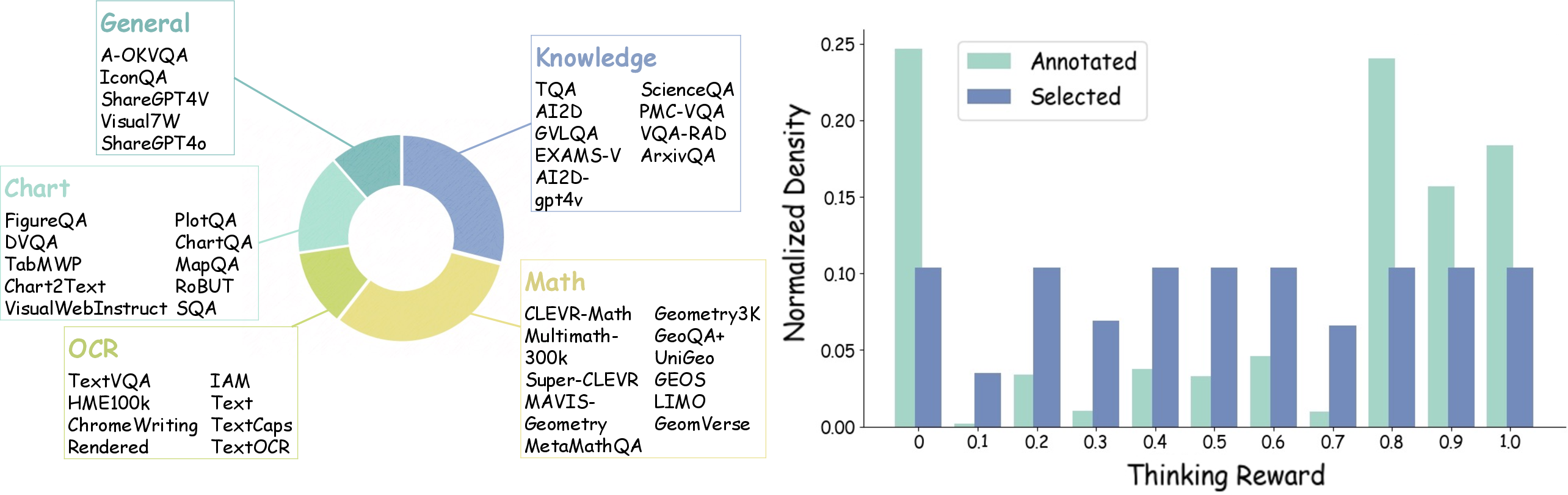
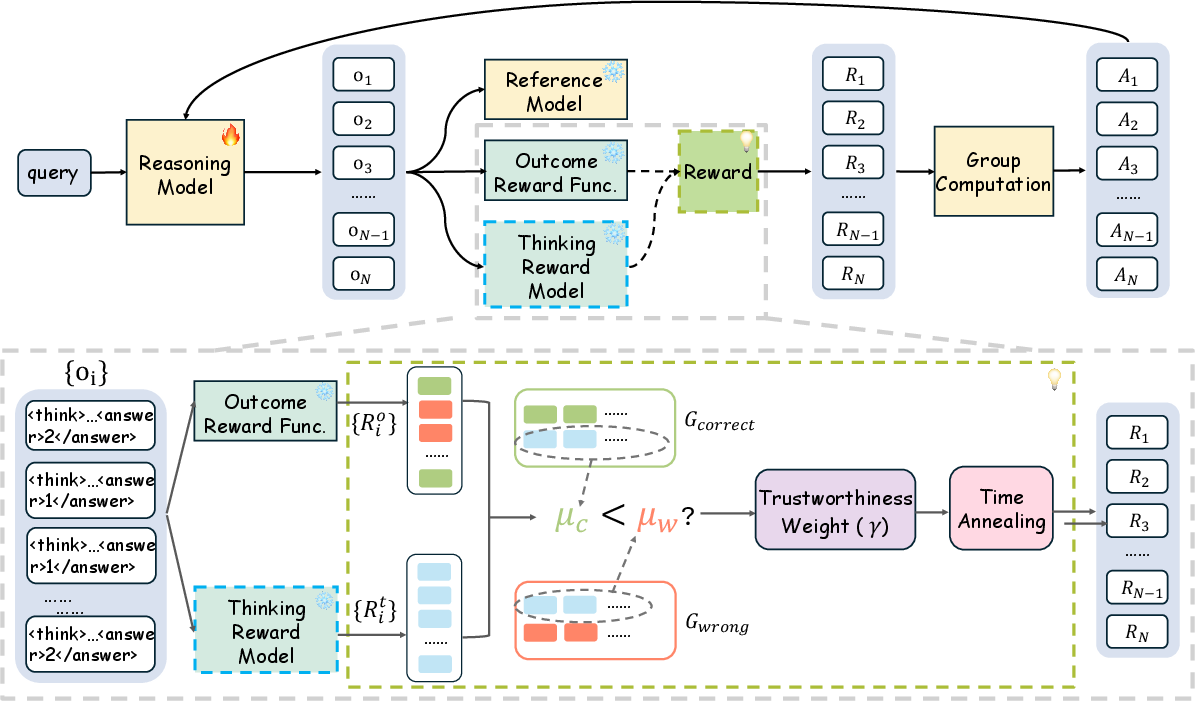
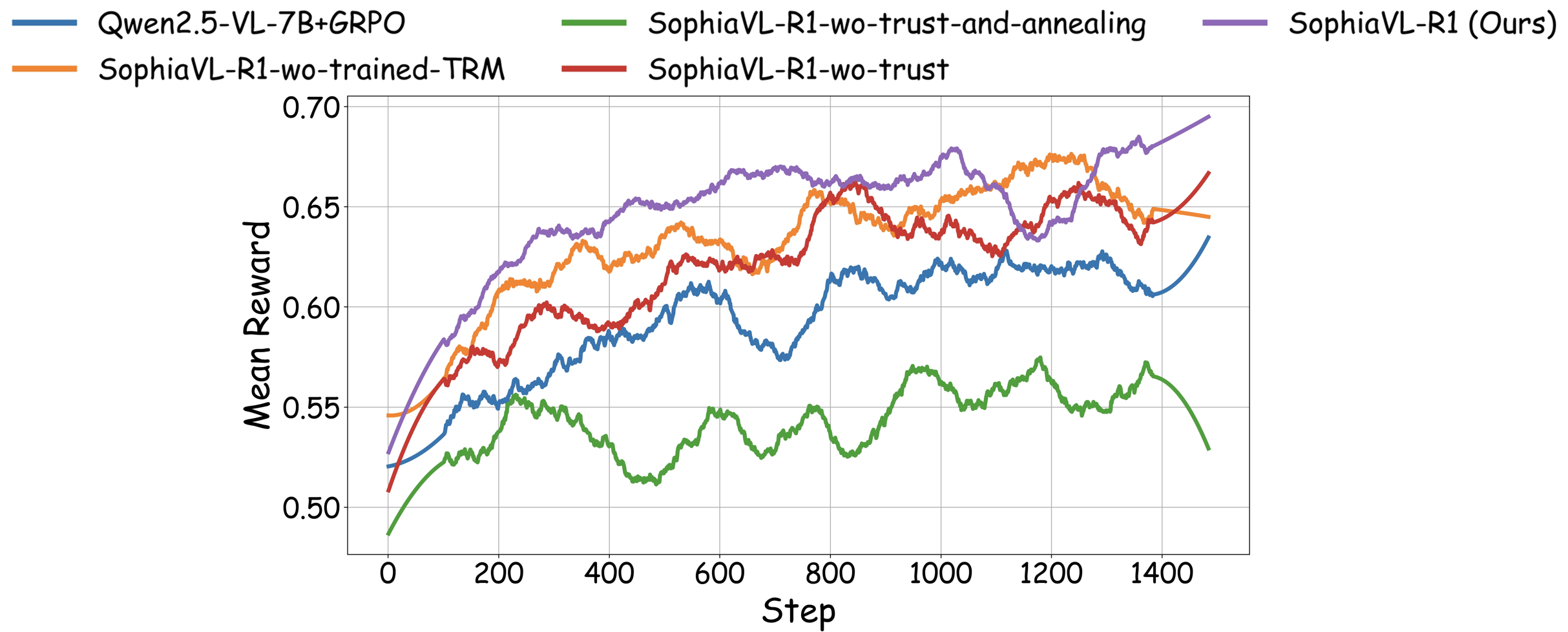
Abstract: Recent advances have shown success in eliciting strong reasoning abilities in multimodal LLMs (MLLMs) through rule-based reinforcement learning (RL) with outcome rewards. However, this paradigm typically lacks supervision over the thinking process leading to the final outcome.As a result, the model may learn sub-optimal reasoning strategies, which can hinder its generalization ability. In light of this, we propose SophiaVL-R1, as an attempt to add reward signals for the thinking process in this paradigm. To achieve this, we first train a thinking reward model that evaluates the quality of the entire thinking process. Given that the thinking reward may be unreliable for certain samples due to reward hacking, we propose the Trust-GRPO method, which assigns a trustworthiness weight to the thinking reward during training. This weight is computed based on the thinking reward comparison of responses leading to correct answers versus incorrect answers, helping to mitigate the impact of potentially unreliable thinking rewards. Moreover, we design an annealing training strategy that gradually reduces the thinking reward over time, allowing the model to rely more on the accurate rule-based outcome reward in later training stages. Experiments show that our SophiaVL-R1 surpasses a series of reasoning MLLMs on various benchmarks (e.g., MathVisita, MMMU), demonstrating strong reasoning and generalization capabilities. Notably, our SophiaVL-R1-7B even outperforms LLaVA-OneVision-72B on most benchmarks, despite the latter having 10 times more parameters. All code, models, and datasets are made publicly available at https://github.com/kxfan2002/SophiaVL-R1.
Paper Prompts
Sign up for free to create and run prompts on this paper using GPT-5.
Top Community Prompts
Collections
Sign up for free to add this paper to one or more collections.