Unified Latents: How to Train Your Latents
This presentation explores a breakthrough framework for learning latent representations in diffusion-based generative models. The Unified Latents approach co-trains a deterministic encoder, diffusion prior, and diffusion decoder to achieve explicit control over latent bitrate while balancing reconstruction fidelity and generative quality. The method achieves state-of-the-art results on ImageNet-512 and Kinetics-600, demonstrating superior training efficiency and sample quality compared to existing approaches including Stable Diffusion-based latents.Script
How do you capture just the right amount of information in a latent space without losing what matters or overwhelming your model? This fundamental tension has plagued generative modeling for years, and the researchers behind Unified Latents have found an elegant solution.
Building on that tension, the core problem is this trade-off: pack too much information into your latents and they become hard to model, but compress too aggressively and you lose critical details. Existing methods like variational autoencoders or latent diffusion models struggle with arbitrary hyperparameters and lack principled ways to control this balance.
The authors introduce a fundamentally different approach to resolve these issues.
Instead of training components separately, Unified Latents co-trains three elements together. The encoder outputs are noise-matched to the prior's minimum noise level, creating a tight coupling that yields an interpretable upper bound on latent information content—the bitrate—which can be directly tuned for different use cases.
This diagram captures the essence of how information flows through the system. An image enters the encoder, gets regularized by the diffusion prior at a controlled noise level, then reconstructs through the diffusion decoder. That fixed connection point between encoder and prior is what makes bitrate explicit and training stable, eliminating the posterior collapse issues that plague traditional variational approaches.
Let's examine what this framework achieves in practice.
Turning to empirical validation, the results are compelling across both image and video domains. On ImageNet, the method achieves an FID of 1.4 while requiring fewer training operations than competing approaches. For video generation on Kinetics-600, it sets a new benchmark with an FVD of 1.3, demonstrating that the framework generalizes effectively beyond static images.
This comparison reveals a crucial insight about the bitrate trade-off. At low loss factors, you get efficient latents perfect for generation, but fine details like small text disappear in reconstruction. At higher loss factors, those details return but at the cost of increased information density. The beauty of this framework is that you can tune this explicitly rather than stumbling upon it through trial and error.
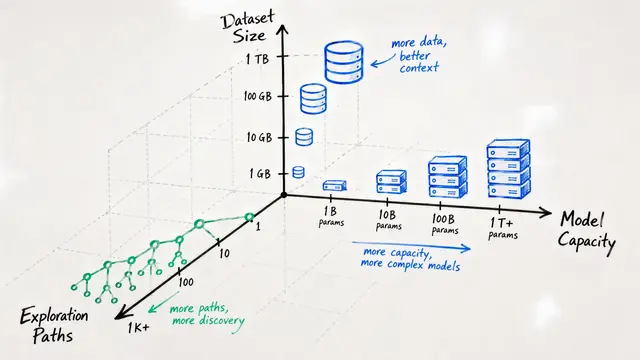
The significance extends beyond benchmark numbers. By making latent information explicit and controllable, the researchers provide tools for principled model design at scale. This matters increasingly as datasets and models grow larger—you need systematic ways to balance compute, quality, and information density rather than relying on empirical exploration of loss weights.
Unified Latents transforms latent representation learning from an art of hyperparameter tuning into a science of information control. Visit EmergentMind.com to explore the full details and see how this framework is reshaping generative modeling.