Privileged Information Distillation for Language Models
This presentation explores a breakthrough in training language models for complex tasks when critical reasoning information is hidden at test time. The paper introduces π-Distill and On-Policy Self-Distillation, novel frameworks that enable models to learn from privileged information during training—such as action traces or hints—while performing effectively without that information during deployment. Through extensive experiments on tool-use benchmarks, the authors demonstrate that these methods outperform traditional approaches, achieve superior out-of-domain generalization, and democratize access to frontier capabilities without requiring expensive proprietary reasoning traces.Script
What if your language model could learn from information it will never see again? Imagine training an AI assistant that watches an expert's complete thought process during practice, but must perform independently when deployed—no hints, no reasoning traces, just raw capability transferred into its weights.
This brings us to a fundamental obstacle in modern AI development.
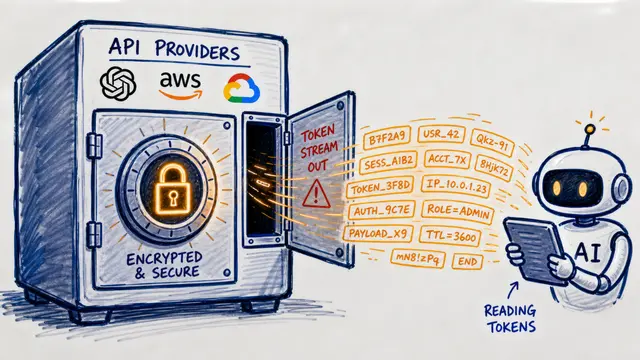
Building on that challenge, the researchers identify three critical barriers. Leading closed-source systems now occlude their Chain-of-Thought reasoning, which fundamentally breaks traditional distillation methods that depend on seeing the complete thought process.
The authors introduce a radically different approach to this problem.
At the heart of their solution is π-Distill, a framework where teacher and student policies share parameters but receive different information. The teacher sees privileged signals like action traces during training, while both policies co-evolve through regularized objectives that transfer knowledge without creating unstable off-policy scenarios.
The authors actually propose two complementary methods. π-Distill uses a joint objective that can emphasize teacher, student, or both through a mixing parameter, proving most robust at the balanced setting. Meanwhile, On-Policy Self-Distillation takes a different tack, sampling from the student and using the privileged teacher as a regularizer, which excels when the privileged information is informationally dense.
Looking at the empirical evidence, this figure reveals something striking about generalization. Across seven out-of-domain datasets in the GEM benchmark suite, both methods not only outperform base models and standard reinforcement learning, they actually surpass approaches that had full access to Chain-of-Thought supervision. Notice how standard off-policy reinforcement learning shows significant degradation, while the privileged information methods prevent such regressions entirely.
The quantitative results are compelling across multiple benchmarks. Beyond the raw performance gains, the authors identify the key factors driving success: the initial divergence between teacher and student policies, and critically, the utility of the privileged information itself. Their ablations reveal that reverse-KL regularization isn't just helpful, it's essential for preventing early training collapse.
The authors are transparent about scope and challenges. Their experiments concentrate on tool-use domains, and they find that not all privileged information is created equal—sometimes the teacher must learn to exploit signals that initially provide minimal utility, adding complexity to the training process.
This work fundamentally changes what's possible in model distillation. By removing the dependency on expensive, proprietary Chain-of-Thought traces, the authors enable smaller, open models to learn complex agentic behaviors from mere action observations—a capability that becomes more potent as base models improve, potentially reshaping how frontier capabilities disseminate through the AI ecosystem.
Privileged information distillation transforms hidden expertise into transferable capability, proving that what matters isn't seeing every thought, but learning to act as if you had. Visit EmergentMind.com to explore the full paper and dive deeper into this breakthrough approach.