Decoding Brain Signals with CSP
This presentation explores Common Spatial Patterns (CSP), a powerful algorithm that transforms raw EEG signals into discriminative features for brain-computer interfaces. We'll cover its mathematical foundation, advanced extensions for robustness and multi-class scenarios, integration with deep learning, and real-world applications in BCI systems.Script
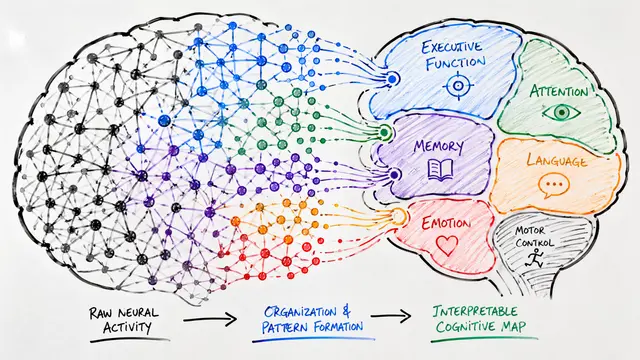
Imagine trying to read someone's intentions directly from their brain waves. Common Spatial Patterns, or CSP, makes this possible by transforming noisy EEG signals into sharp, discriminative features that reveal what a person is thinking or planning to do.
Let's start by understanding the mathematical engine that powers this transformation.
Building on this foundation, CSP learns spatial filters that act like intelligent spotlights, highlighting the brain activity patterns that best distinguish between different mental states. It accomplishes this by solving an elegant mathematical optimization problem using covariance matrices and eigenvalue decomposition.
The mathematical heart of CSP lies in the Rayleigh quotient, which finds the optimal trade-off between maximizing variance in one class while minimizing it in another. This creates filters that are exquisitely tuned to capture the most discriminative spatial patterns in the brain data.
Now let's explore how researchers have enhanced CSP to handle real-world challenges.
To address the reality that brain signals are noisy and non-stationary, robust CSP variants have emerged. Minmax CSP, for example, optimizes filters for worst-case scenarios, ensuring reliable performance even when signal conditions vary unpredictably.
While classic CSP works brilliantly for binary classification, real-world brain-computer interfaces often need to distinguish between multiple mental states. Multiclass extensions use sophisticated techniques like joint diagonalization to handle these more complex scenarios.
Going beyond fixed frequency bands, Spectrally Adaptive CSP recognizes that each person's brain operates with unique frequency signatures. It simultaneously learns both where and at what frequencies to look for discriminative patterns, creating truly personalized spatial-spectral filters.
Let's walk through how CSP transforms raw brain signals into actionable features.
The CSP pipeline follows a systematic approach, starting with clean preprocessed signals and culminating in compact log-variance features. Each step is crucial for extracting the most discriminative information from the complex, high-dimensional EEG data.
Beyond classification, Fuzzy CSP opens the door to regression applications by treating continuous variables as overlapping fuzzy classes. This innovation allows CSP to predict quantities like reaction time or mental workload levels rather than just discrete categories.
Modern applications increasingly combine CSP with deep learning for enhanced performance.
CSP-Net architectures elegantly marry domain knowledge with data-driven learning by embedding CSP filters directly into neural networks. This hybrid approach preserves the interpretable, neuroscience-motivated structure of CSP while leveraging the representational power of deep learning.
Rather than replacing traditional methods, modern approaches often fuse CSP features with complementary representations like wavelets or spectral features. These fusion strategies capture different aspects of brain dynamics, creating richer, more robust feature sets for downstream tasks.
One of the biggest challenges in BCI is reducing calibration time for new users.
Transfer learning approaches tackle one of BCI's most practical challenges: the need for extensive calibration data from each new user. These methods intelligently leverage data from previous users to bootstrap performance for newcomers.
Riemannian Transfer CSP takes a geometrically principled approach, recognizing that covariance matrices live on a curved manifold rather than flat Euclidean space. By working in the tangent space, it achieves more effective domain adaptation between subjects.
CSP's versatility extends far beyond basic brain-computer interfaces.
In neuroscience and BCI applications, CSP serves as a foundational tool for decoding various mental states. From enabling paralyzed patients to control robotic limbs through motor imagery to monitoring cognitive load in demanding work environments, CSP provides the signal processing backbone for these transformative technologies.
Remarkably, CSP's mathematical elegance extends beyond neuroscience entirely. It has been successfully applied to gravitational wave detection, where it analyzes strain data from multiple detectors to identify cosmic events, showcasing the universal applicability of its core principles.
Like any powerful tool, CSP comes with important limitations and considerations.
While CSP is remarkably effective, practitioners must navigate several challenges including sensitivity to non-stationary signals and noise artifacts. Fortunately, the research community has developed robust solutions including regularization techniques, careful validation procedures, and multiclass extensions.
Successful CSP implementation requires attention to numerous details, from selecting the optimal number of spatial filters to ensuring proper validation procedures. The subject-dependent nature of brain signals means that one-size-fits-all approaches rarely work optimally.
Common Spatial Patterns represents a perfect marriage of mathematical elegance and practical utility, transforming the complex landscape of brain signals into interpretable, actionable features that power the next generation of brain-computer interfaces. Visit EmergentMind.com to explore more cutting-edge research in computational neuroscience and machine learning.