The Last Human-Written Paper: Agent-Native Research Artifacts
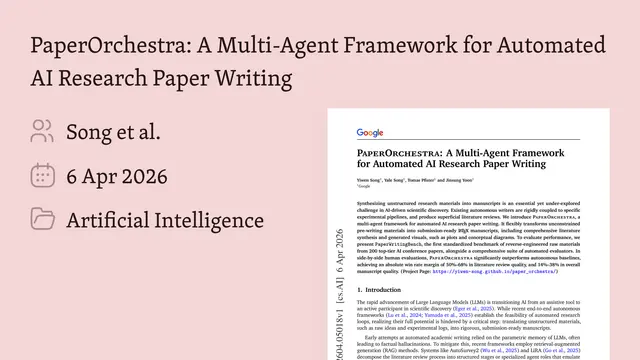
This presentation introduces Agent-Native Research Artifacts (Ara), a new protocol that reimagines scientific publication for the age of AI research agents. Traditional papers discard critical process knowledge and under-specify implementation details, making reproduction and extension difficult for autonomous agents. Ara proposes a four-layer, machine-executable artifact that preserves cognitive logic, executable code, exploration trajectories, and evidence in a structured, queryable format. Empirical evaluation shows Ara significantly improves agent performance on knowledge extraction, reproduction, and extension tasks, while enabling scalable agent-mediated collaboration and continuous verification.Script
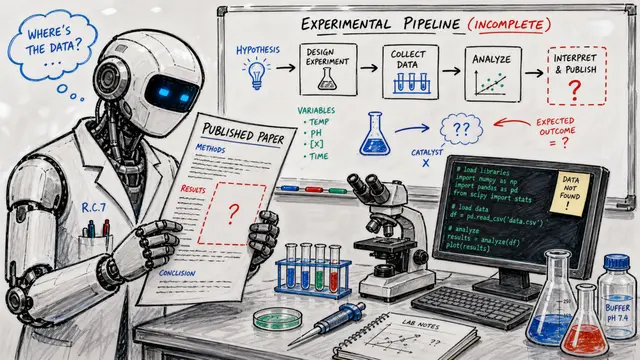
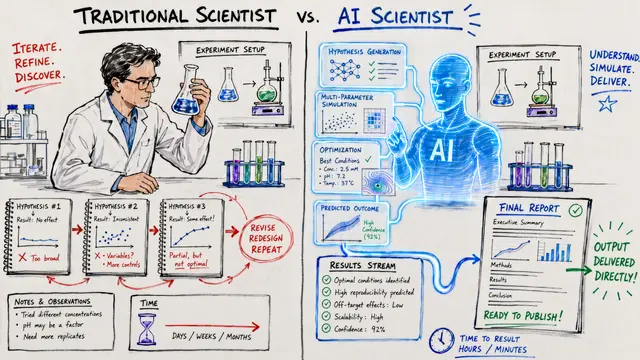
Traditional scientific papers tell a clean story, but they hide something critical. When researchers publish, they throw away all the dead ends, failed experiments, and implementation details that AI agents need to actually reproduce and extend the work. This creates what the authors call the storytelling tax and the engineering tax, two structural deficits that cripple machine-mediated science.
The scale of information loss is staggering. Analysis of reproduction requirements shows that only 45 percent are fully specified in the published PDF, with hyperparameters and code details almost entirely missing. Even more striking, 90 percent of actual research compute is spent on failed trajectories that never make it into the paper at all.
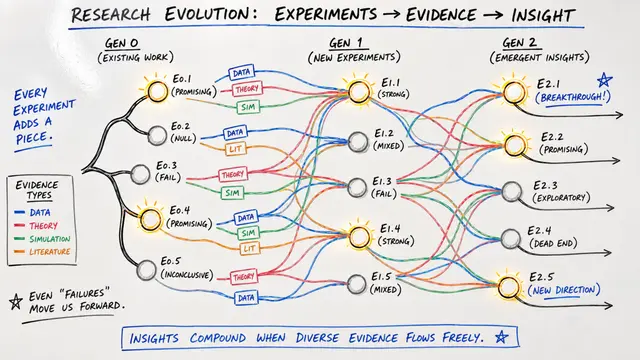
The Ara protocol inverts this structure entirely. Instead of a narrative paper, the primary artifact is a four-layer research object. The cognitive layer captures scientific logic and claims. The physical layer contains executable code with full configurations. The exploration graph preserves every branching decision and dead end. And the evidence layer holds raw, machine-readable results, all cross-linked so agents can trace from claim to code to outcome.
Ara provides three mechanisms to make this practical. A live research manager runs in the background during agent sessions, automatically harvesting context and crystallizing observations with zero overhead. An Ara compiler reconstructs legacy papers into structured artifacts through iterative validation. And seal-gated review establishes three graduated verification levels, from structural integrity to full empirical reproducibility, automating mechanical checks so human reviewers focus only on scientific significance.
The empirical results validate the approach decisively. On knowledge extraction tasks, Ara achieves 93.7 percent accuracy versus 72.4 percent for traditional PDF plus repository, with a 65 point improvement on capturing failure knowledge that papers simply omit. Reproduction success rises from 57 to 64 percent weighted, with the advantage growing larger as task difficulty increases and configuration details become more critical.
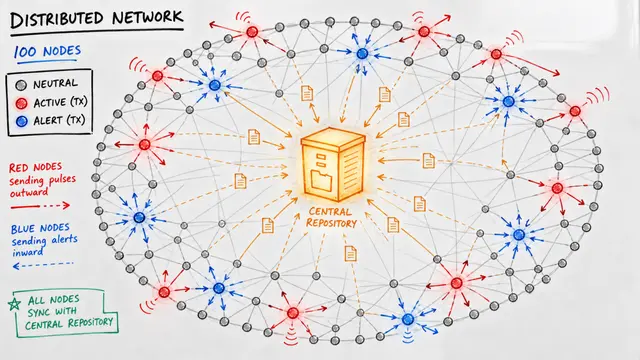
Ara creates a substrate for something larger: artifact-first scientific networks where humans and AI agents both author and extend structured research objects at scale. As agent-mediated research becomes standard, protocols like Ara will be essential infrastructure. You can explore this vision further and create your own research videos at EmergentMind.com.