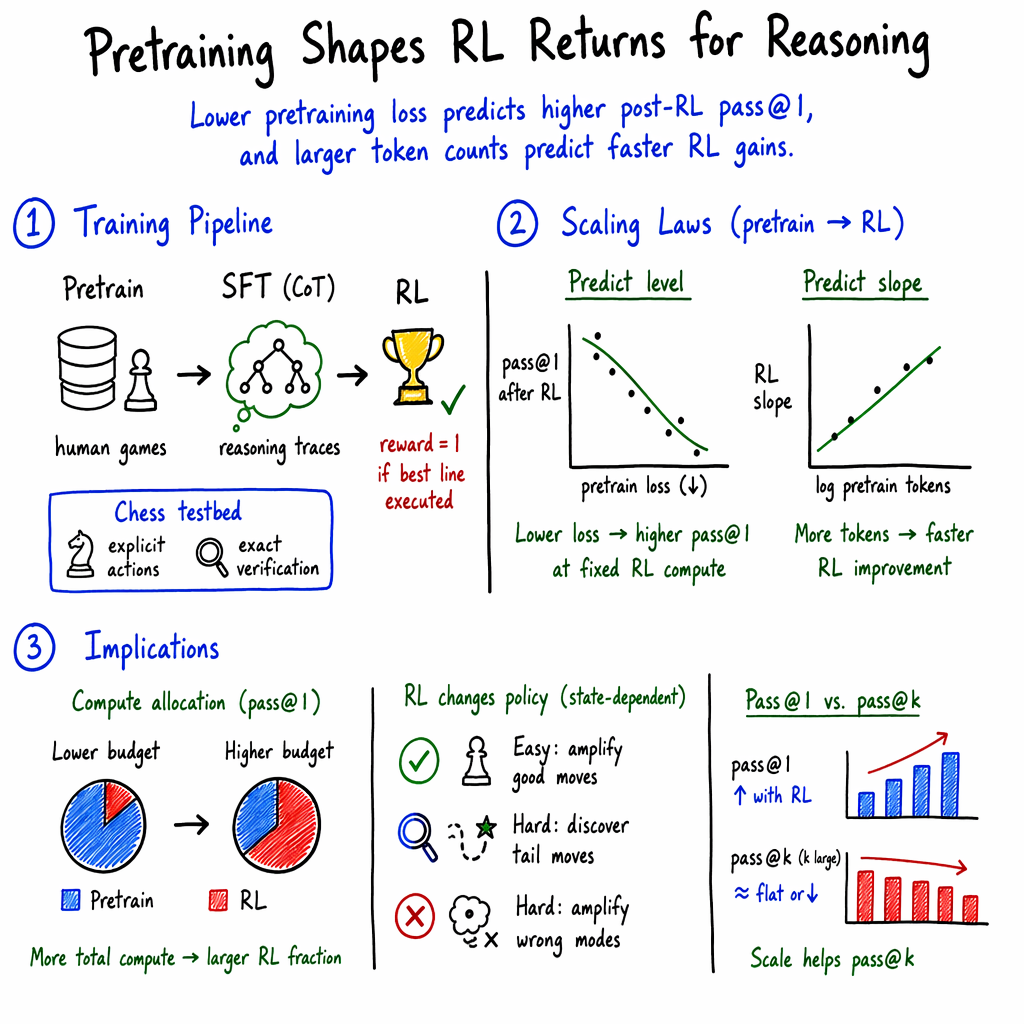
- The paper establishes a joint scaling law that quantitatively links pretraining loss to post-RL reward performance on complex reasoning tasks.
- It demonstrates that optimal compute allocation shifts with scale, with low-compute regimes favoring extensive pretraining and high-compute regimes emphasizing RL.
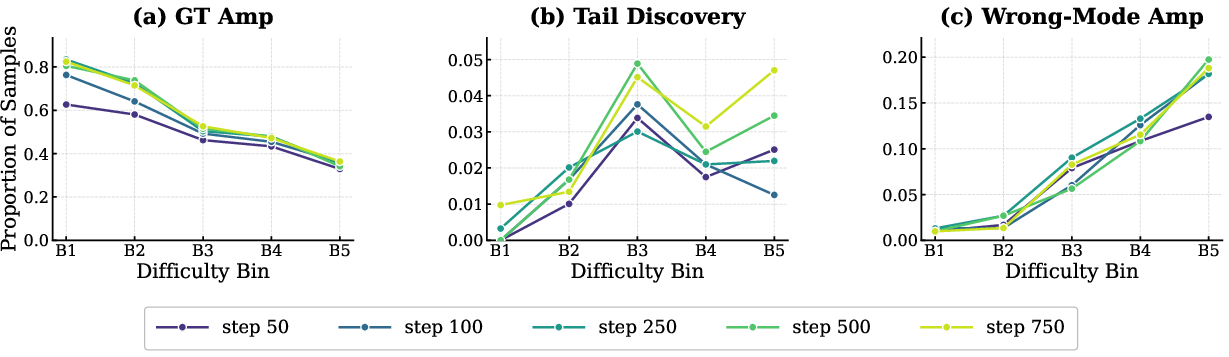
- Mechanistic analysis reveals that while RL amplifies correct moves, it can also promote wrong-mode amplification, highlighting nuanced policy evolution.
Quantitative Characterization of the Pretraining-to-RL Interface in Reasoning: Insights from Chess and Math Domains
Introduction
This paper presents a comprehensive study of the interplay between pretraining and reinforcement learning (RL) in the context of complex reasoning tasks, using chess as a prototypical testbed. While RL post-training has become a standard means to enhance LLMs on challenging tasks, existing research generally considers pretraining and RL in isolation. The paper addresses two central questions: how pretraining choices (model size, data) shape the returns to RL compute, and the mechanisms by which RL restructures model policies. The authors deploy a controlled, synthetic pipeline analogous to LLM workflows—combining pretraining on human games, supervised fine-tuning (SFT) on synthetic reasoning traces, and RL on verifiable chess puzzles—to disentangle these effects and enable systematic scaling analysis.
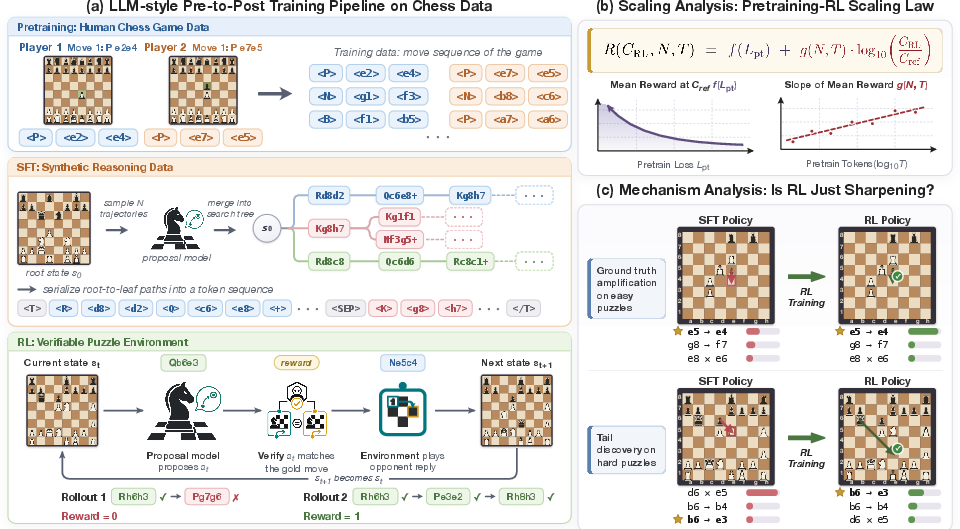
Figure 1: A synthetic framework enables joint scaling analysis from pretraining through RL in chess, showing prediction of RL performance by pretraining and mechanistic analysis of policy evolution.
Controlled Chess Testbed and Training Pipeline
The experimental pipeline mirrors LLM training with distinct roles for each stage:
- Pretraining: Models (5M–1B parameters) are trained autoregressively on sequences of human chess moves, derived from a large-scale, quality-controlled Lichess dataset. The tokenization encodes each move in four tokens following chess notation conventions.
- Supervised Fine-Tuning: The models are fine-tuned on synthetic chains-of-thought—tree-structured reasoning traces constructed via sampling continuations from a pretraining policy and depth-first serialization. Training data is carefully decontaminated.
- Reinforcement Learning: RL is performed on a chess puzzle environment with verifiable, sparse rewards, employing Group Relative Policy Optimization (GRPO). The models are rewarded only upon execution of an entire solution line, making the environment highly sensitive to single-step errors.
Both SFT and RL are evaluated on a stratified test benchmark spanning a range of tactical puzzle difficulties.
Pretraining and RL Scaling Laws: Empirical Findings
The core contribution is the establishment of a joint scaling law connecting pretraining metrics to post-RL performance. The study employs extensive sweeps (model size, token count, RL compute) to support rigorous analysis.
Pre-RL Scaling
IsoFLOP curves demonstrate that, for any fixed model size, downstream performance on tactical puzzles continues to improve with increased pretraining tokens up to the point of compute-optimality for that size. The optimal allocation shifts as compute scales, favoring more tokens relative to parameters at lower scales, and approaching language modeling scaling at larger budgets.
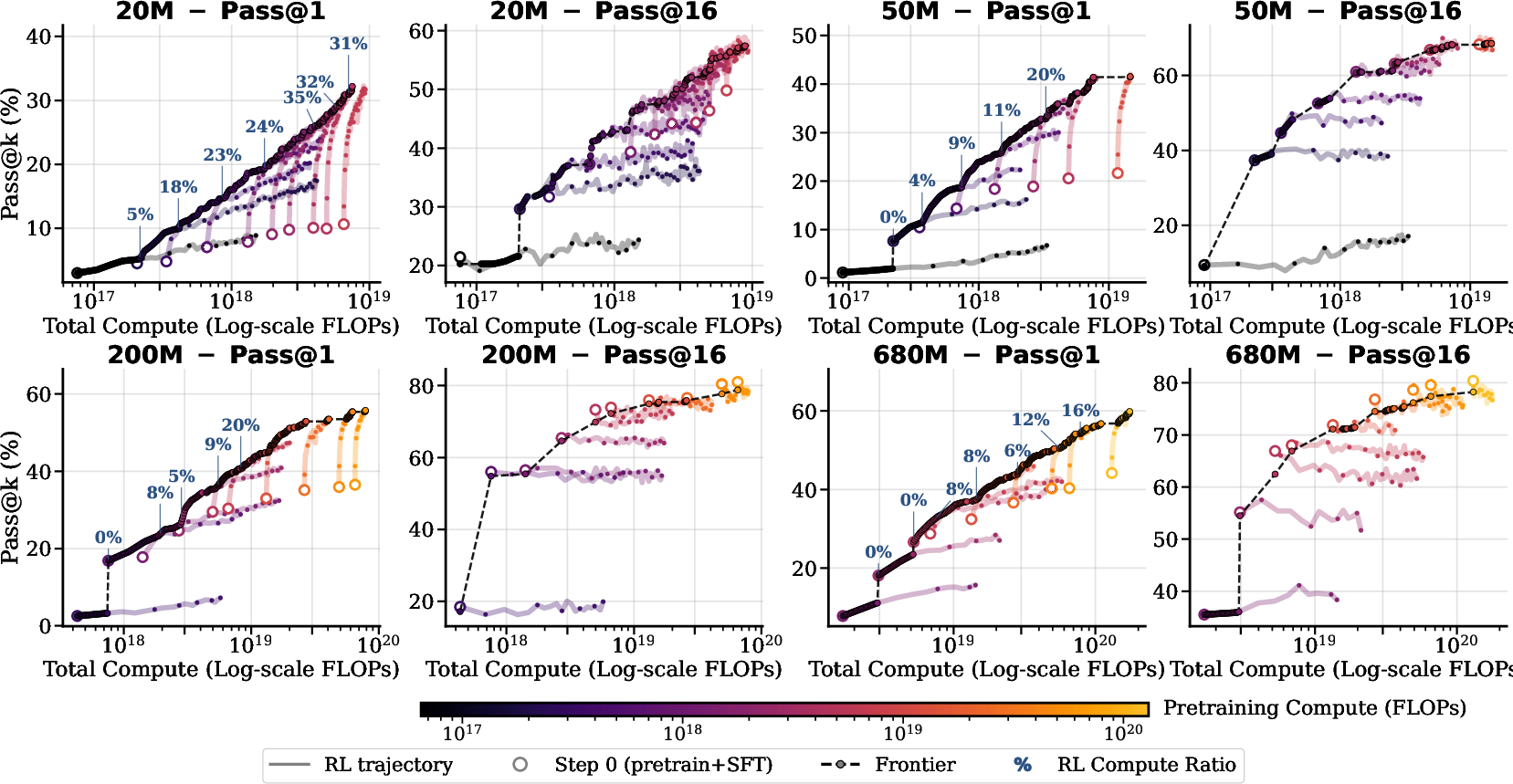
Figure 2: Empirical puzzle benchmark frontiers across pretraining-RL sweeps for various model sizes, mapping out compute allocation effects.
RL Compute Allocation and Scaling Law
Allocating fixed total compute, the analysis shows that:
- In the low-compute regime, allocating a larger fraction to pretraining yields superior downstream performance—RL is highly initialization-limited.
- With higher total compute, more compute should be devoted to RL—diminishing pretraining returns make RL relatively more valuable.
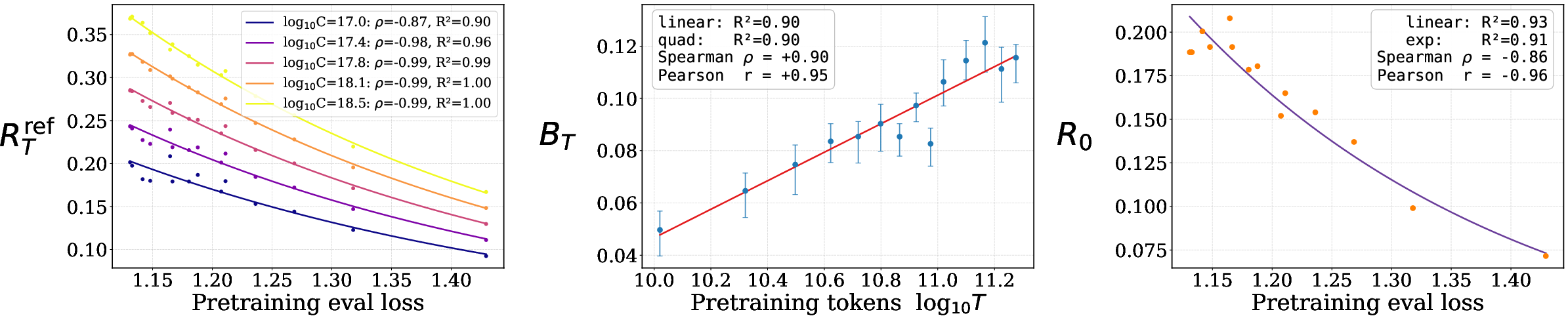
Post-RL performance at a given RL compute is strongly predicted by pretraining evaluation loss. The slope of the RL learning curve increases monotonically with log10T (pretraining token count), indicating that models exposed to more tokens exhibit greater sample efficiency during RL.
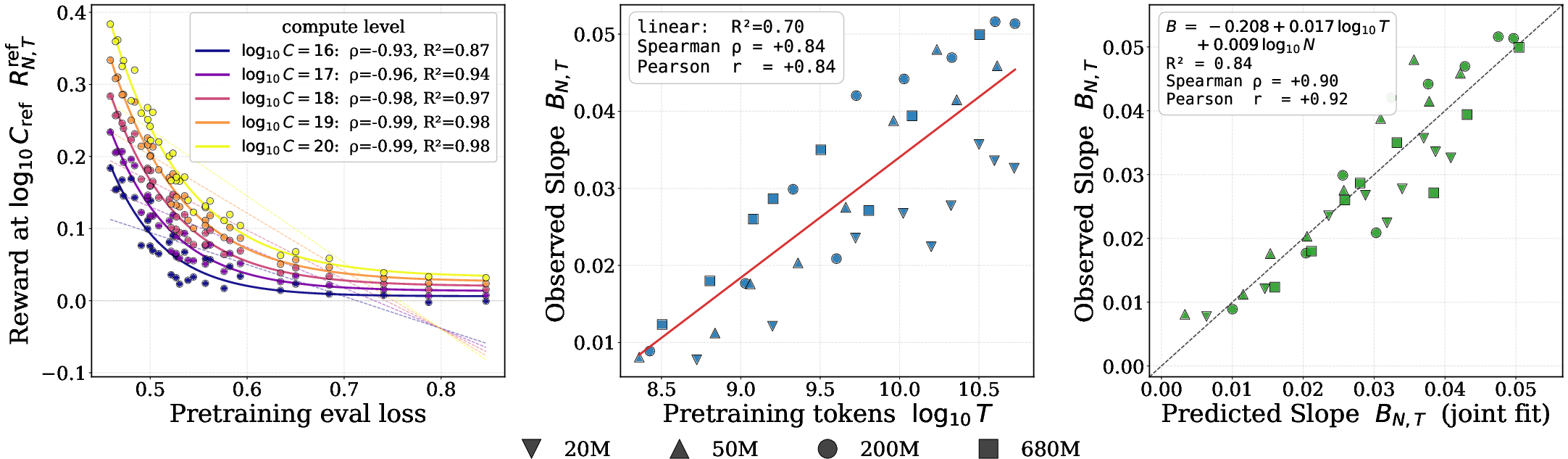
Figure 3: Pretraining properties (such as validation loss) predict RL scaling: lower loss yields better post-RL reward; the RL slope correlates with pretraining tokens.
A log-linear predictive law is developed:
R(CRL,N,T)=f(Lpt(N,T))+g(N,T)(log10CRL−log10Cref)
where R is RL reward, N model size, T pretraining tokens, Lpt pretraining loss, and CRL RL compute. The parameterization robustly predicts unseen runs and enables simulation of compute-optimal frontiers.
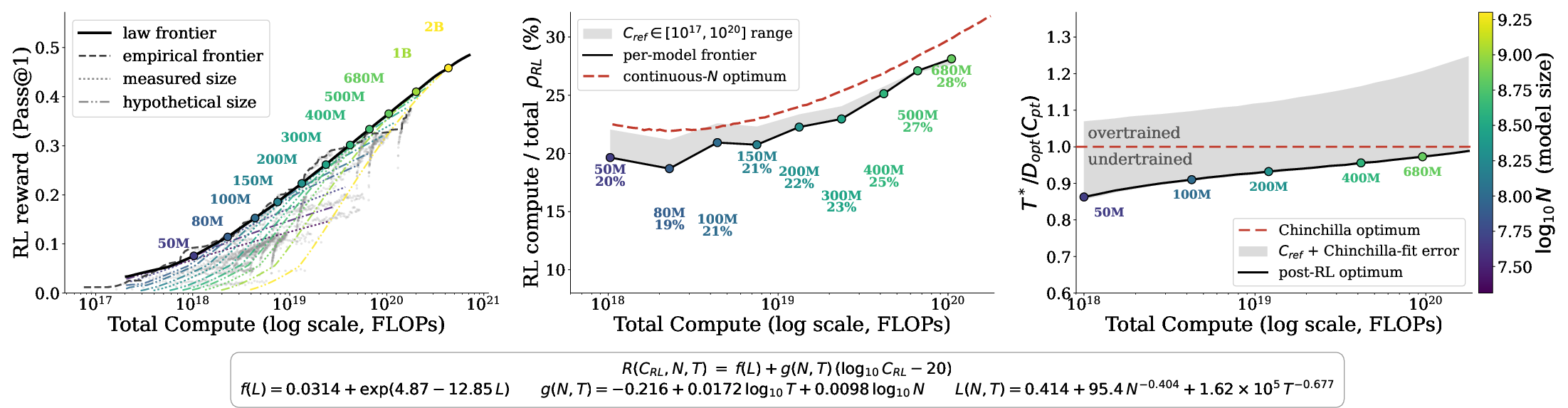
Figure 4: Simulated compute-optimal frontiers: optimal RL-compute fraction increases with budget, matching empirical results; optimal pretraining allocation tracks Chinchilla scaling.
SFT and RL Effects on Broader Metrics
Pass@k metrics highlight that RL primarily improves pass@1 (the ability to solve with one sample), while gains in pass@16 are limited and often dominated by further pretraining or SFT on reasoning traces. This supports the claim that RL tends to sharpen the existing policy rather than broaden its support, especially on easy tasks.
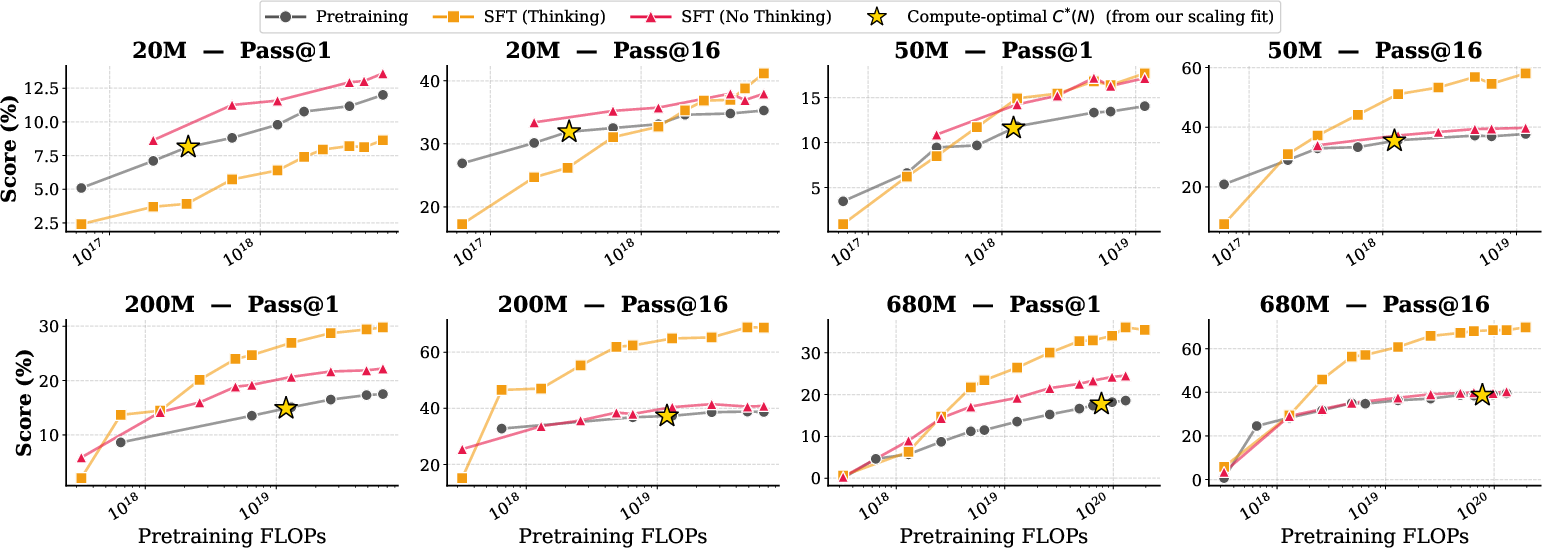
Figure 5: SFT with reasoning traces enhances pass@k diversity; without traces, gains are concentrated on pass@1 only.
Mechanistic Analysis of Post-RL Policy Evolution
The paper provides detailed mechanistic investigations into how RL interacts with the SFT-initialized policy, considering both aggregate and per-decision effects.
Case studies of policy evolution illustrate these effects, showing that even when RL discovers correct moves from the distribution tail, it does not always eliminate competing errors.
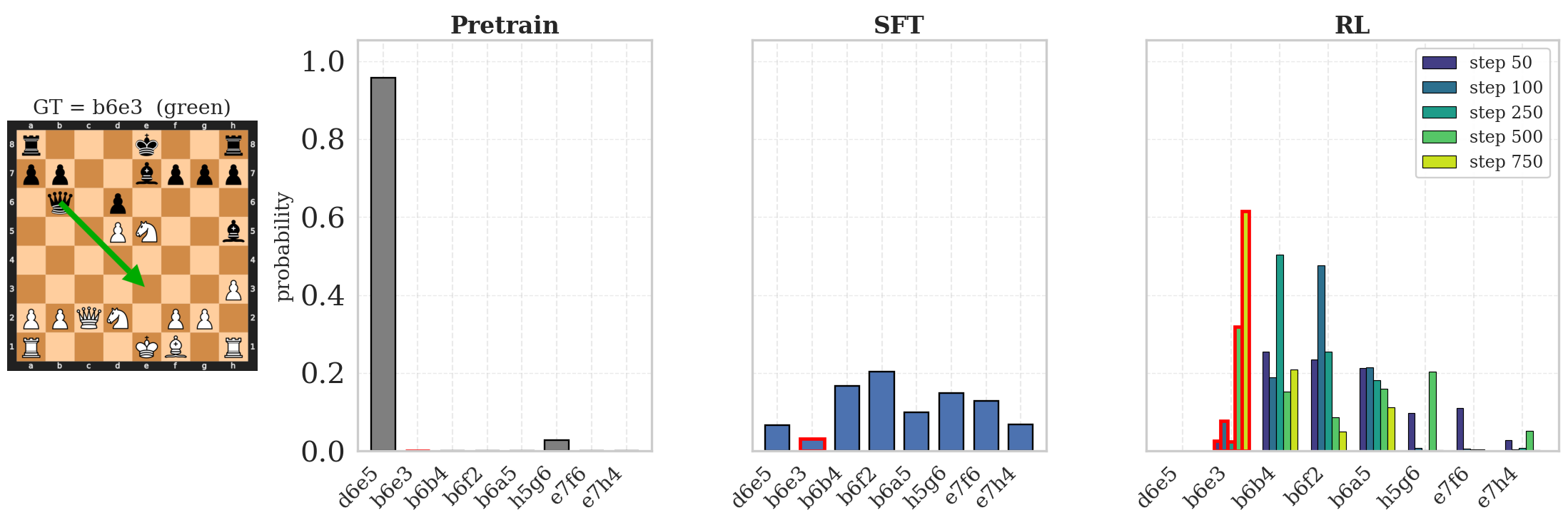
Figure 7: A hard-puzzle example demonstrates tail discovery and co-occurring wrong-mode amplification through RL stages.
Analysis of the chain-of-thought (CoT) structures generated by the models during RL reveals:
Transferability: Scaling Law Patterns in Math Reasoning
The findings are tested in the math domain, training a 1B OLMo-2 LLM on up to 200B tokens of mixed math and general corpora. Results show:
Implications and Prospects
This research has both practical and theoretical implications:
- Compute Allocation: The derived scaling law provides principled guidance for distributing compute between pretraining and RL. RL should be allocated an increasing share as total compute rises, but is only effective after sufficient pretraining exposure.
- Mechanistic Impact: RL is not a uniform sharpening; it can promote new behaviors but also amplify wrong policies, especially where payoffs are sparse or rewards are misaligned.
- Limitations: The chess testbed offers controlled, verifiable insights, but differences in vocabulary and task structure limit direct transference of quantitative exponents to natural language settings. Scaling trends may deviate at larger parameter counts or with different reward structures.
- Further Development: Enhancing RL beyond pass@1 likely requires innovations that expand correct-solution support and reduce wrong-mode amplification, not just further sharpening. Interleaved or adaptive training recipes—rather than rigid two-stage pipelines—may yield better generalization and efficiency.
Conclusion
By constructing an LLM-analogous, verifiable environment in chess, this paper delivers a quantitative account of the pretraining-to-RL interface in reasoning. A rigorous joint scaling law empirically links pretraining metrics to RL improvement rate, providing actionable compute-allocation guidance and mechanistic understanding. Extensions to the math domain indicate that these patterns reflect underlying properties of reasoning-capable models more broadly. Future directions include refined compute-allocation strategies, improved RL methods for broadening policy support, and further investigations into testbed environments for dissecting alignment and generalization challenges in LLMs.