- The paper introduces a flash world model achieving 30–50 FPS real-time simulation through geometric-aware data construction and efficient autoregressive distillation.
- It employs a MoE-based transformer with curriculum pretraining, integrating camera pose signals and dense 3D scene annotations for enhanced spatial and temporal consistency.
- The research demonstrates a low-latency, NPU-optimized inference pipeline that enables diverse applications including video transfer, navigation, and 3D reconstruction.
MoWorld: A Flash World Model
Motivation and Background
MoWorld is introduced as a "Flash World Model," targeting both high-performing and computationally efficient real-time world simulation, a substantial shift from prevailing approaches that emphasize model scaling at the expense of practicality and latency. Unlike conventional video generation models, MoWorld's architecture and system co-design pursue real-time, interactive, camera-controllable world modeling with a holistic approach that addresses data, model, system, and hardware jointly.
The motivation stems from the increasing demand for foundation models that support embodied intelligence, interactive and dynamic environment simulation, and physically consistent world reasoning. Current methods are limited by inference latency, deployment cost, compromised long-horizon consistency, and insufficient geometric control. MoWorld’s design centers on achieving 30-50 FPS simulation and deployment on Neural Processing Units (NPUs), facilitating adoption in real-world and edge-device settings.
MoWorld proposes four main pillars: scalable geometric-aware data construction, curriculum-based spatiotemporal capability learning, efficient distillation for few-step inference, and full-stack deployment-level optimization. This pipeline aims to yield a unified and practical world model enabling high-quality interactive applications.
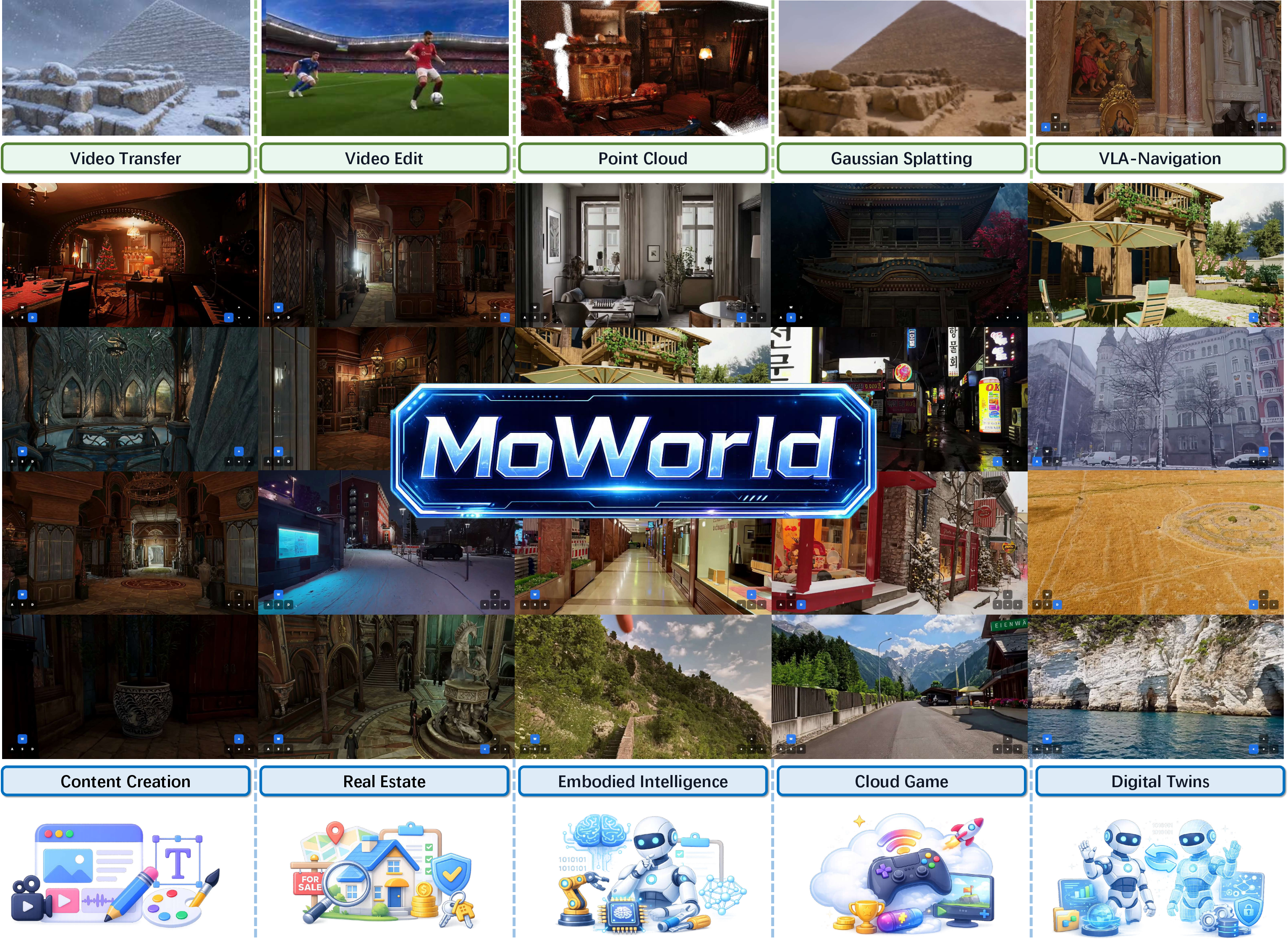
Figure 1: Overview of MoWorld applications across diverse downstream tasks.
Geometric-Aware Data Engine
MoWorld’s training corpus is constructed using a geometric-aware data engine—a marked departure from the ad-hoc video-text pairs commonly adopted in existing datasets. Each sample records temporally aligned camera geometry, scene semantics, and pre-computed representations to ensure consistency and scalability. The pipeline involves four stages: (1) dual-domain data sourcing (real-world/virtual), (2) geometry completion with stringent quality control, (3) vision-language annotation excluding camera parameters from text cues, and (4) latent pre-caching for high-throughput training.
MoWorld emphasizes camera pose supervised data and dense 3D scene annotations, which facilitate downstream tasks such as point cloud reconstruction, spatial reasoning, and robust scene modeling. Proprietary pipelines and a large annotator team guarantee strict quality and consistent geometric priors, which are crucial for robust world model pre-training.
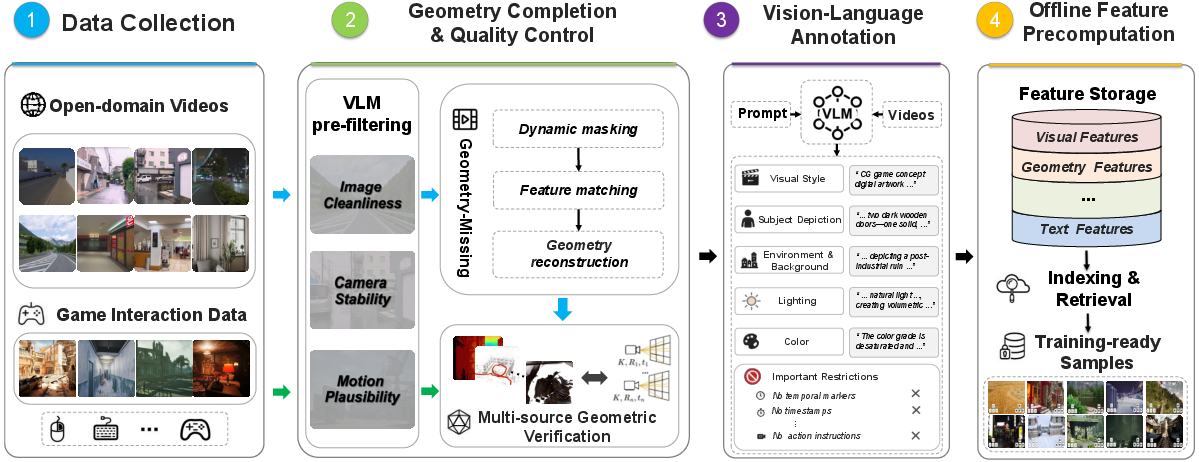
Figure 2: Overview of the MoWorld data engine. Multi-source videos are converted into training-ready samples through geometry completion, data quality control, vision-LLM annotation, and precomputed caching.
Model Pretraining
The MoWorld backbone adopts a Wan2.2-A14B MoE-based transformer trained on NPU clusters. It is jointly conditioned on the initial frame, semantic text, and a camera trajectory signal. The curriculum-based training regime incrementally extends context—starting with short clips for baseline perceptual quality and camera following, scaling to medium and long clips for global scene and long-range spatial consistency.
Critically, camera control is directly injected as dense geometric signals at the patch-token level by projecting Plücker-encoded rays into visual tokens. This encoding ensures that viewpoint, intrinsic/extrinsic parameters, and geometric constraints are tightly integrated with the video latent representation.
Efficient training is achieved via high-/low-noise partitioning (for global/low-level detail), input caching, and optimized parallelism. Distributed attention heads and sequence parallelism (USP) support long context training without quadratic memory scaling, surmounting the inefficiencies of head-only parallel strategies.
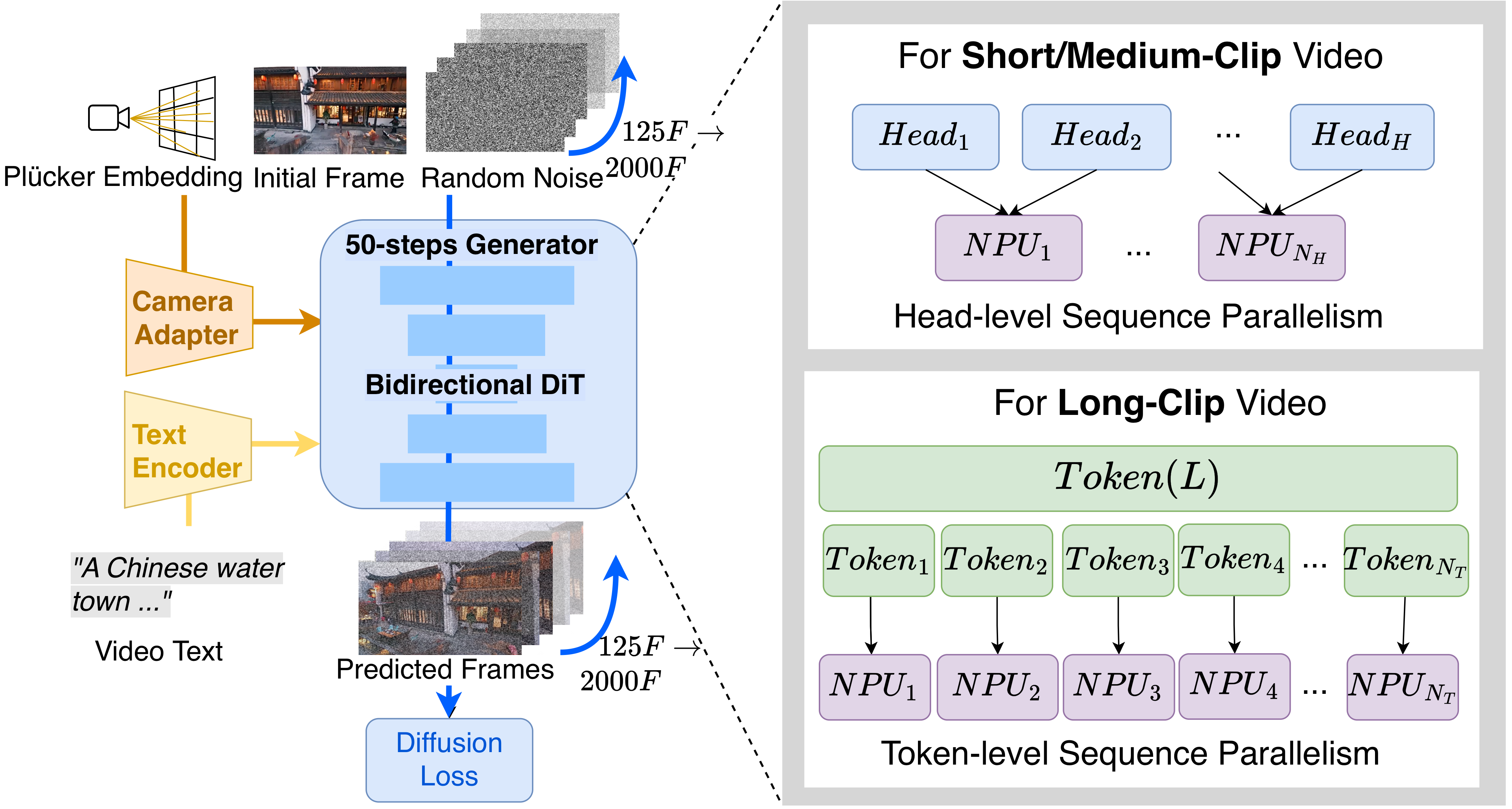
Figure 3: In MoWorld pretraining, a Wan2.2 MoE video foundation model is trained on NPU clusters with sequence parallelism for scalable long-sequence learning; the model is jointly conditioned on the initial frame, text, and camera geometry for controllable long video generation.
Autoregressive Distillation
Bidirectional DiT models are distilled into efficient few-step autoregressive (AR) students, minimizing the inference cost from 50 to 4 denoising steps. The pipeline reformulates bidirectional windowed architectures into self-driven causal DiTs compatible with AR generation.
MoWorld distillation comprises: (1) history context selection by retaining both short-term, global, and camera-related pasts; (2) AR flow matching pretraining for stable history reading and boundary alignment using ground-truth context; (3) self-forcing distillation, exposing the student to its actual AR errors and aligning its trajectory with the teacher’s distribution using distribution-matching gradients. Notably, the method entirely eliminates ODE or multi-step teacher rollout initialization, substantially reducing distillation overhead while improving rollout stability.
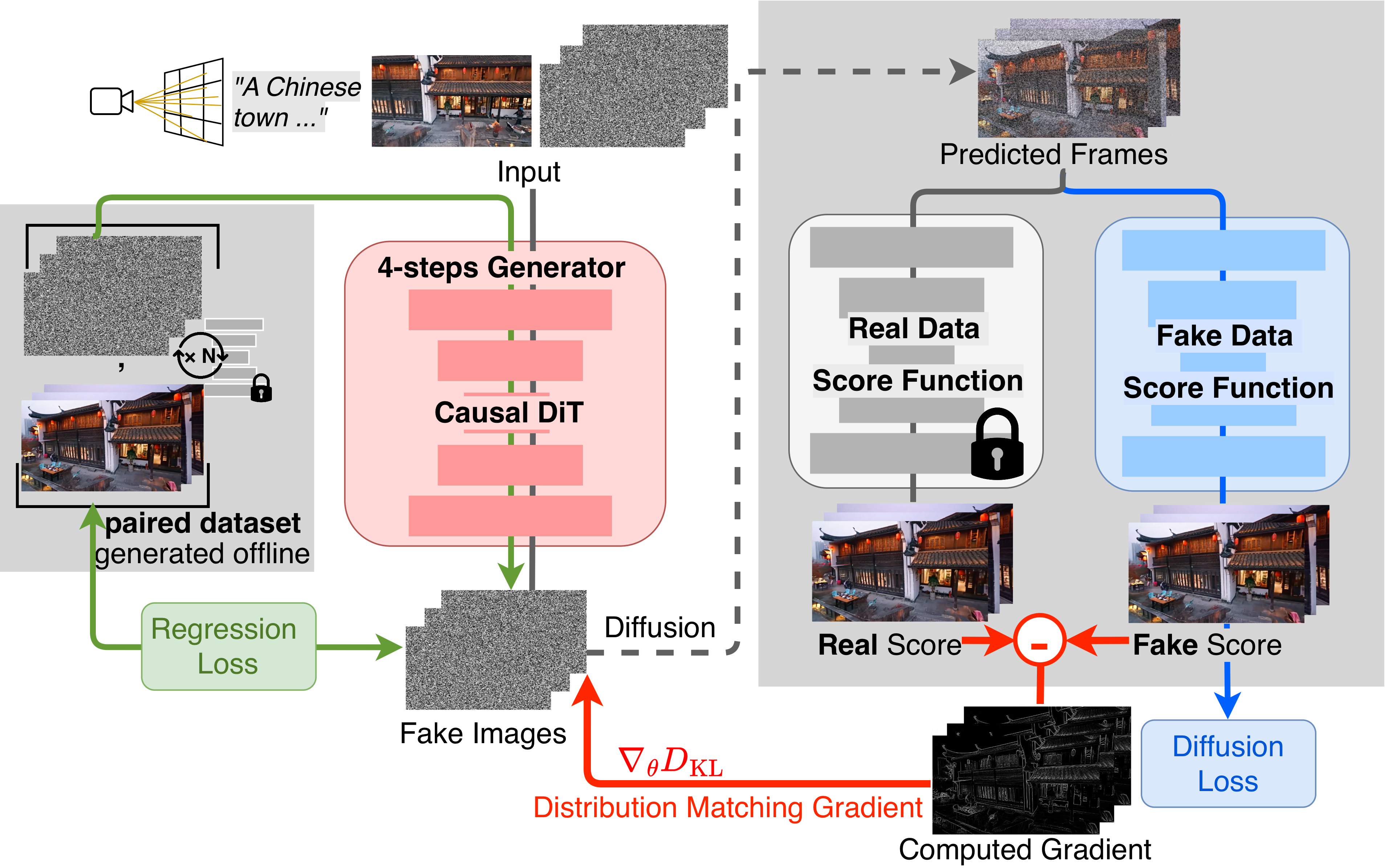
Figure 4: In MoWorld distillation, a unified latent-space distillation objective is applied to compress inference steps and reformulate to a causal DiT for efficient autoregressive generation.
Real-Time Inference Pipeline
MoWorld’s inference pipeline is designed for low-latency, low-memory, and multi-NPU scalability—core to practical deployment. Pipeline-level optimizations include on-demand module loading (encoders offloaded post-conditioning), latent reuse, and continuous output streaming. At the parallelism level, a hierarchical sequence parallelism partitions attention computation across heads and tokens for optimal device utilization.
On the kernel level, dynamic INT8 mixed-precision quantization and fused attention kernels minimize memory movement and execution time. RMSNorm is preferred over LayerNorm for scale stability at lower cost. The result is stable 30–50 FPS real-time simulation, even without dedicated high-end GPUs.
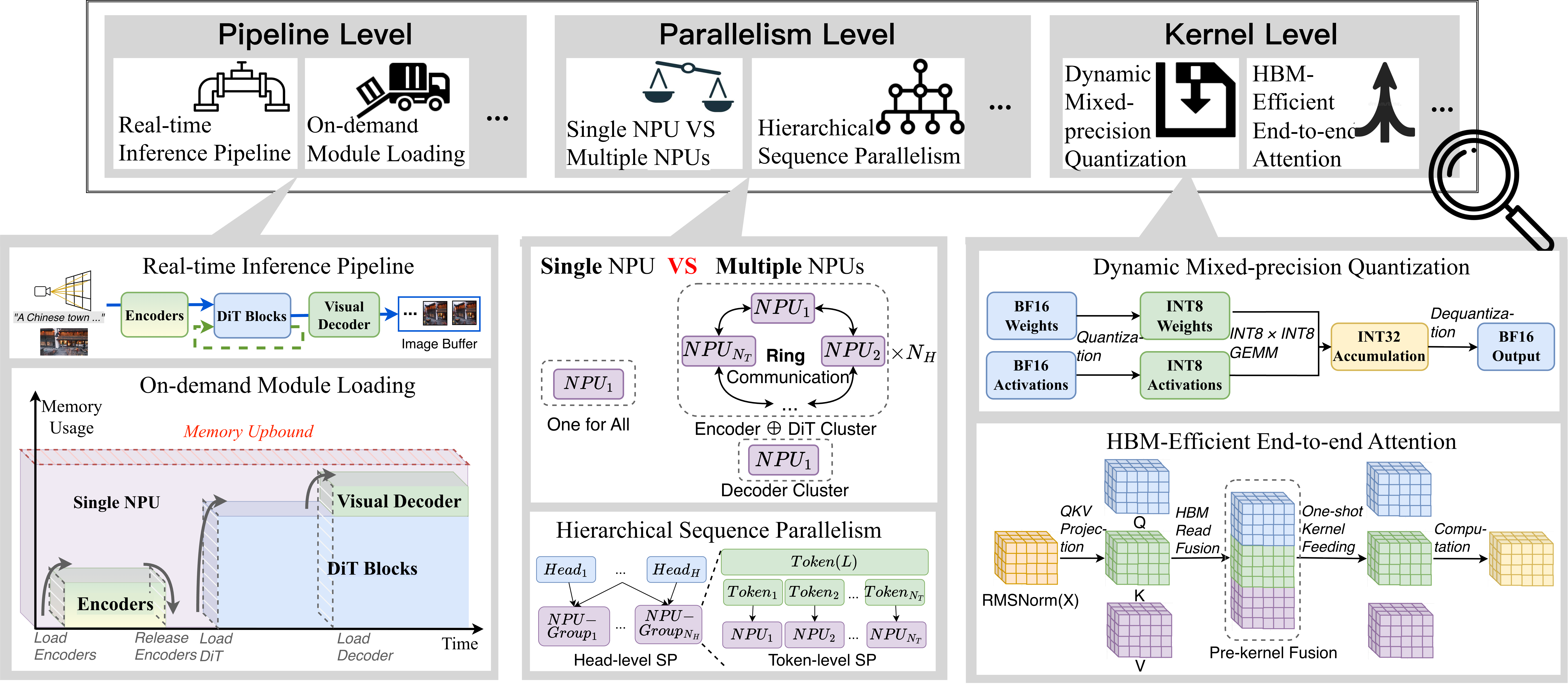
Figure 5: An overview of low-memory, low-latency real-time inference via pipeline-, parallelism-, and kernel-level optimizations.
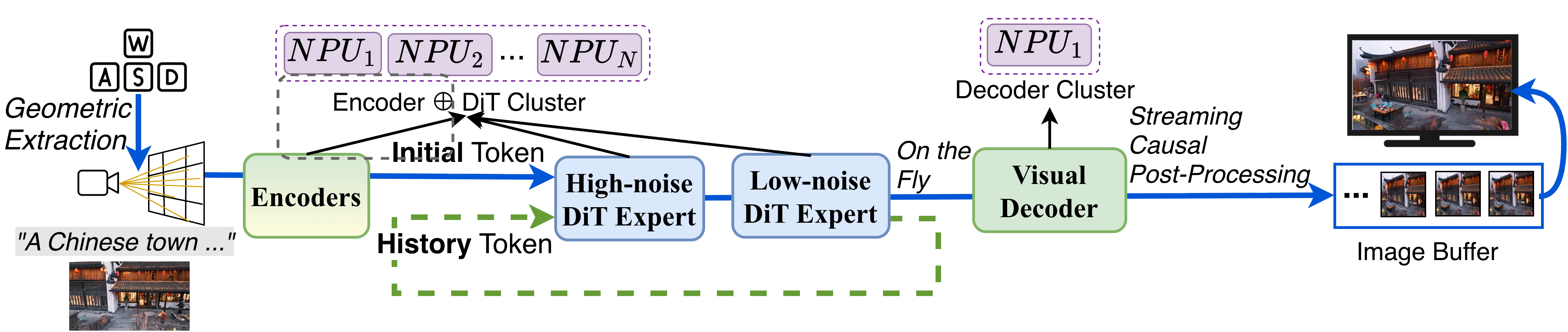
Figure 6: MoWorld real-time inference pipeline across multiple NPUs for scalable, efficient autoregressive generation.
Experimental Analysis
MoWorld outperforms existing camera-controllable video generation and world model baselines across standard benchmarks (VBench-I2V and internal datasets) on subject/background consistency, motion stability, and image-to-video preservation metrics. Quantitative results indicate that MoWorld achieves state-of-the-art aggregate quality and average scores. Qualitative evaluations reveal continuous, high-fidelity, geometrically coherent video under diverse camera trajectories and user interactions—spanning indoor, outdoor, and synthetic domains.
Downstream Applications
MoWorld’s capability as a unified spatiotemporal latent model enables a diverse suite of downstream tasks:
- Video Transfer: Motion/camera trajectory transfer to novel styles with temporal and geometric consistency.
- Editing: Joint content and camera motion editing for consistent cinematic and narrative control.
- Point Cloud/3DGS Reconstruction: Stable multi-view observations permit reliable point cloud construction and 3D Gaussian Splatting with strong cross-view consistency, suitable for renderable assets.
- Navigation: The model acts as a world environment for embodied agents to plan, act, and render visual feedback for navigation tasks.
- Stylistic and Narrative Control: Scene backgrounds and stories are decoupled, supporting reusable spatial foundations and variable dynamic content.
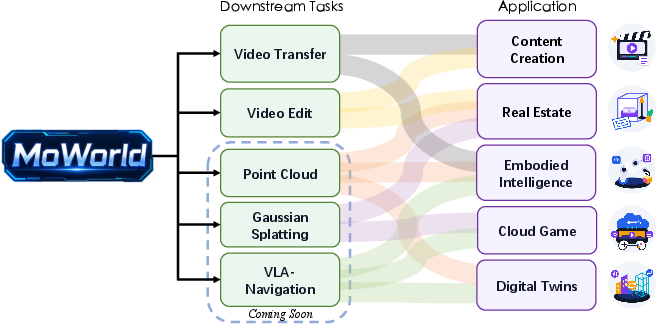
Figure 7: Downstream tasks and applications of MoWorld across diverse domains.
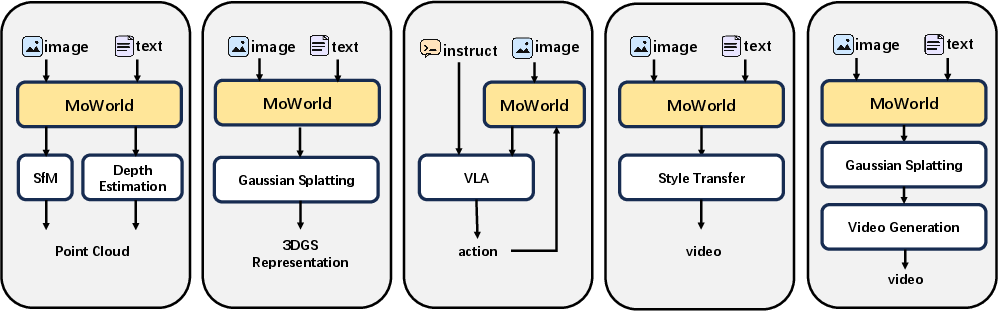
Figure 8: Downstream applications enabled by MoWorld—e.g., point cloud reconstruction, 3D Gaussian Splatting, navigation, and video generation.
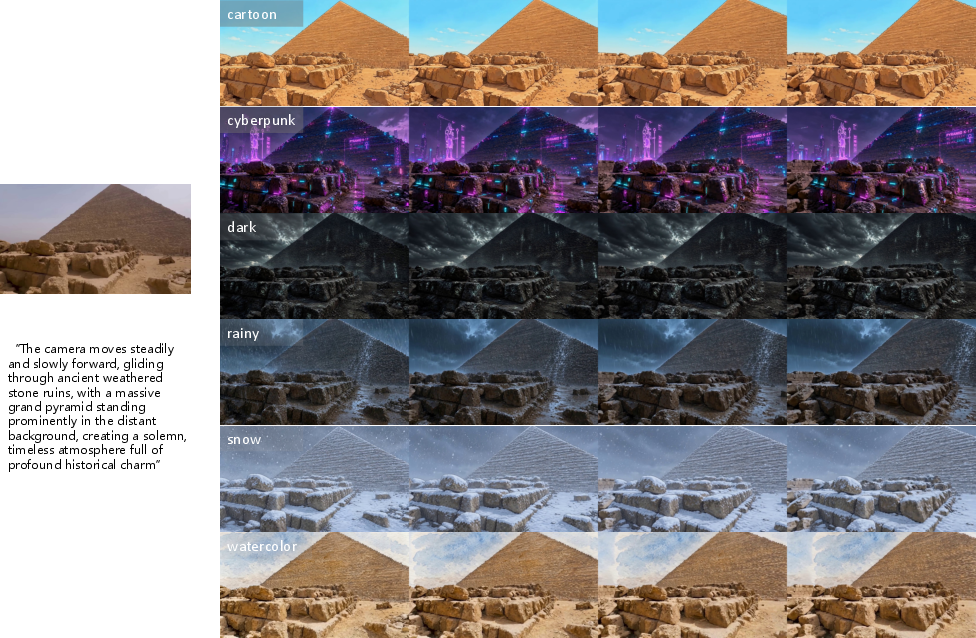
Figure 9: Video transfer results showing style modification while preserving motion and camera trajectory consistency.
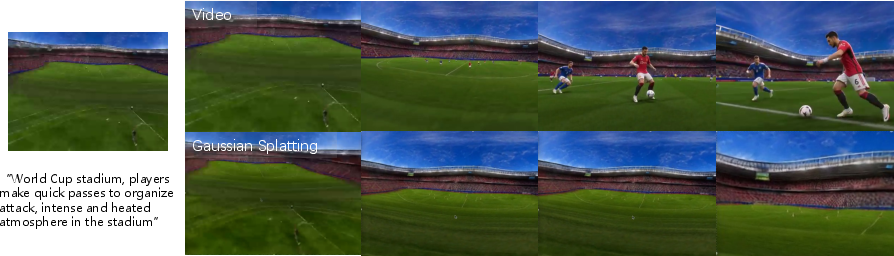
Figure 10: Edited video generated from 3D Gaussian Splatting results, illustrating coherent geometry across camera poses.
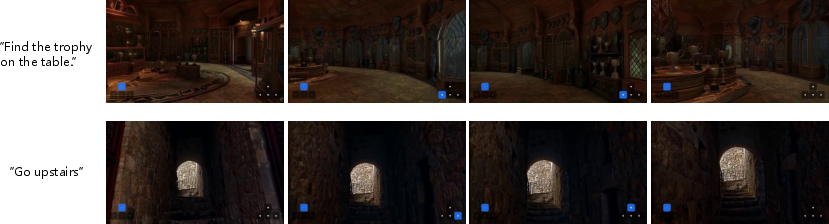
Figure 11: Application to navigation using MoWorld as an environment model for simulating agent trajectories.
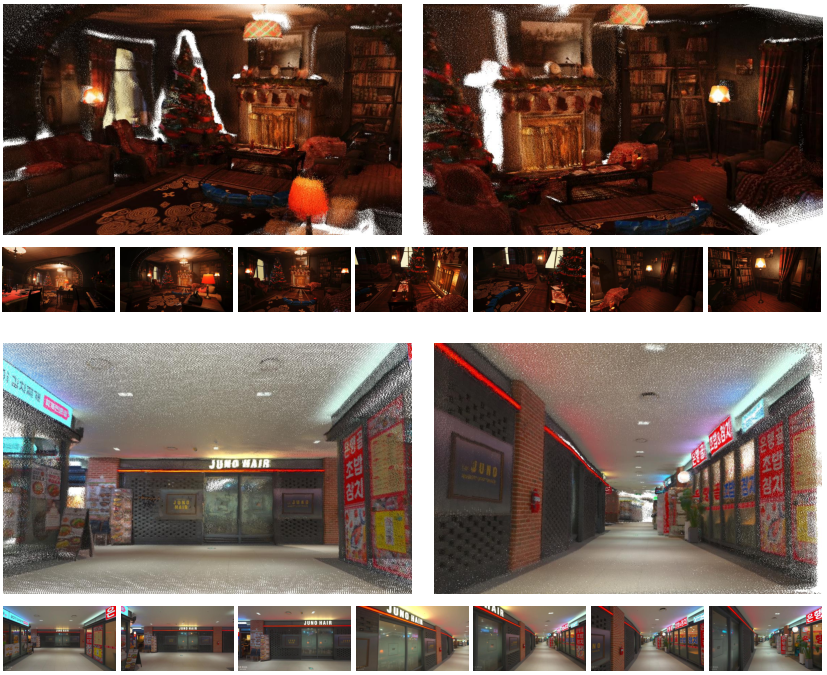
Figure 12: Point cloud reconstruction results from MoWorld-generated videos demonstrating consistent spatial structures.
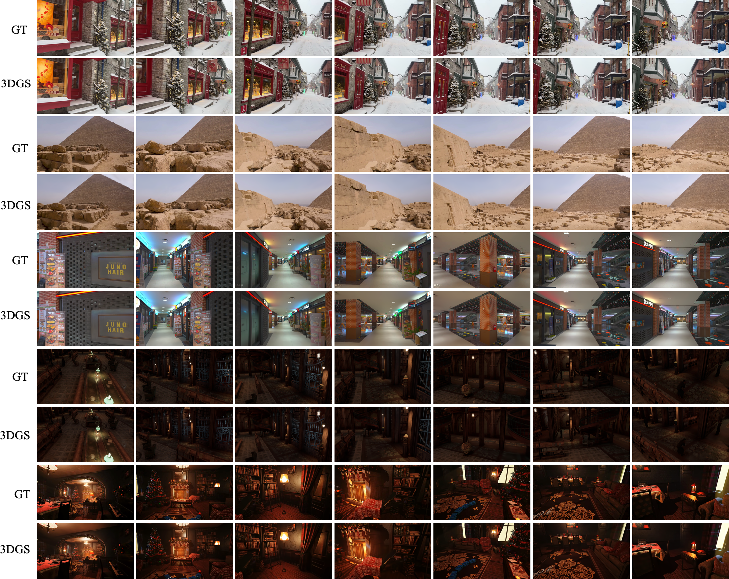
Figure 13: Qualitative comparison of 3D Gaussian Splatting renderings against ground-truth showing strong spatial consistency and geometric fidelity.
Theoretical and Practical Implications
MoWorld's methodological advances validate the feasibility of deploying foundation models for world simulation under real-time constraints. By demonstrating that high-quality, camera-controllable, action-responsive generation is possible at 30–50 FPS with cost-effective hardware, the work undermines the assumption that world modeling mandates excessive computational resources. The integration of geometric priors and explicit trajectory conditioning also provides improved consistency and scene controllability, crucial for embodied AI, robotics, simulation, and digital twin applications.
Notably, the autoregressive distillation and real-time NPU deployment pipeline propose generalizable strategies for future world model system engineering—promoting the decoupling of pretraining, distillation, and inference via modular and hardware-aware designs.
MoWorld’s ability to bridge geometry, language, control, and vision suggests numerous directions for further research, including lifelong online world model learning, spatial-memory-augmented long-horizon generative control, multi-agent simulation, and the unification with multimodal RL agents.
Conclusion
MoWorld advances the state of world modeling by constructing a single, practical, and efficient model that harmonizes high generative quality, geometric and temporal controllability, real-time deployment, and broad downstream applicability. By integrating geometry-aware data construction, scalable curriculum pretraining, efficient few-step AR distillation, and system-level NPU optimization, MoWorld achieves up to 50 FPS real-time interactive video generation, outperforms existing controllable video generation models in both quality and efficiency, and provides a robust foundation for embodied intelligence, content creation, 3D scene reconstruction, and real-time simulation (2607.06216).

