- The paper introduces a residual smoothness criterion to select the physically meaningful ingoing branch in radial black hole equations.
- It leverages analytic Frobenius expansions and SL(2, R) symmetry to relate boundary pole-skipping with horizon regularity.
- Numerical and analytical evidence from JT/AdS2 models and holographic superconductors supports a unified framework for diagnosing quantum chaos.
A Smoothness Principle for Branch Selection in Black Hole Radial Equations
Motivation and Problem Statement
Black hole wave equations, when separated into radial variables, generically reduce to ODEs with regular singularities at the horizon. Such equations possess multiple near-horizon local solutions or "branches," typically corresponding to ingoing and outgoing wave behaviors. A fundamental question, independent of observables, concerns the systematic selection of the physically meaningful branch, especially at special parameter values where the conventional prescription (e.g., quasinormal boundary conditions) becomes insufficient or ambiguous.
Pole-skipping—phenomena in which retarded Green's functions in the boundary theory become ill-defined (0/0 form)—arises precisely at these special points and has been linked to quantum chaos indicators such as Lyapunov exponents. However, the bulk geometric meaning of such ambiguities, and their relationship to horizon regularity and symmetry, has remained to be clarified.
Residual Smoothness Principle and Bulk-Boundary Correspondence
The central proposal of the paper is a residual smoothness criterion for selecting branches of radial ODEs in black hole backgrounds. After removing the leading horizon singularity (typically associated with the ingoing branch), the remaining "residual" radial function is required to be C∞ at the horizon. This single principle is demonstrated to unify and organize three previously distinct aspects:
- Horizon Smooth Continuation: The selection of solutions that are regular behind and across the event horizon.
- Boundary Green Function Ambiguity (Pole-Skipping): The bulk dual description of the ambiguity in the retarded Green function at special loci in parameter space.
- SL(2,R) Representation Structure: The group-theoretic meaning where the physical solution corresponds to the lowest-weight state in the relevant symmetry representation.
In the exactly solvable JT/AdS2 scalar field setting, these aspects can be analyzed analytically, establishing a detailed bulk-to-boundary dictionary:
- The vanishing of the source coefficient A at the boundary (A=0) maps to residual smoothness of one boundary-normalized branch at the horizon.
- The vanishing of the response coefficient B (B=0) corresponds to residual smoothness of the second boundary-normalized branch.
- Simultaneous vanishing (A=B=0) at pole-skipping points corresponds to simultaneous residual smoothness of both branches; here, the boundary ambiguity GR=AB=00 is resolved bulk-wise by an additional free parameter in the local Frobenius expansion near the horizon, which is fixed by requiring continuity with the non-resonant ingoing branch.
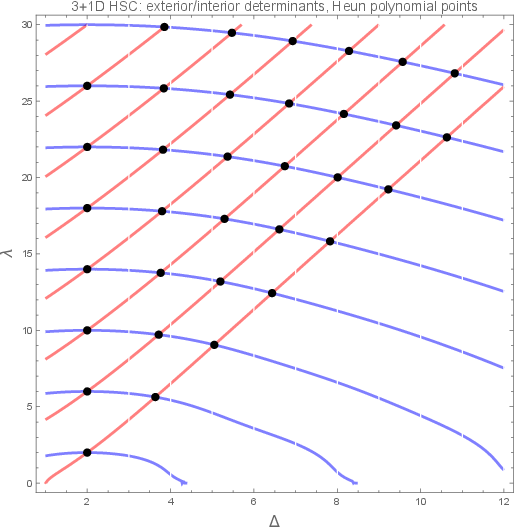
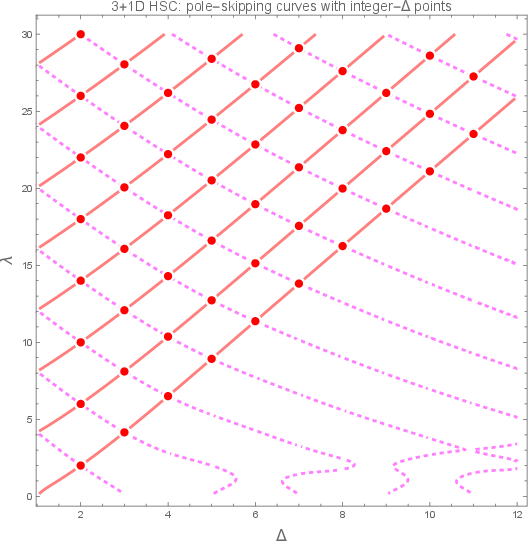
Figure 1: (a) Exterior/interior matching demonstrates loci in parameter space where boundary and horizon smoothness conditions coincide.
Analytic Structure and Resonant Frobenius Expansions
At generic values, the initial condition at the horizon plus a normalization determines a unique ingoing branch. However, at integer resonance values (the pole-skipping lattice), the Frobenius series degenerates, and a nontrivial linear combination of two polynomials solves the residual radial equation. The branch ambiguity seen as the 0/0 indeterminacy of the Green function corresponds, in the bulk, to the presence of an unfixed Frobenius coefficient an at resonance.
Crucially, the physical prescription to select the pure-ingoing branch is to set SL(2,R)0, fixed by requiring the solution to be the smooth limit of the non-resonant ingoing branch. This removes the outgoing-side contaminant and matches both the boundary and horizon data.
Symmetry and SL(2,R)1 Representation Theory
The JT/AdSSL(2,R)2 setup exhibits an SL(2,R)3 symmetry which governs the structure of the scalar wave equation. The physical solution picked out by the residual smoothness criterion is precisely the lowest-weight state in the SL(2,R)4 representation. The descendant ladder generated by the symmetry selects the normalizable (response) branch, while the source branch is a companion solution. The physical pole-skipping mode is a unique ingoing linear combination of these. Thus, the branch selection is fundamentally dictated by the underlying spacetime symmetry rather than by analytic coincidence.
Diagnostic Application: Holographic Superconductors
Applying the residual smoothness criterion as a diagnostic to static holographic superconductor (HSC) models reveals that not every apparent pole-skipping intersection is genuine. In particular, apparent 0/0 Green function indeterminacies can be artifacts of branch collapse: at certain parameter values, boundary-normalized branches that appear distinct at the boundary become linearly dependent at the horizon. Therefore, the criterion for genuine pole-skipping requires:
- Both boundary-normalized branches have residual smoothness (SL(2,R)5) at the horizon.
- The Wronskian of the two branches is non-zero at some point away from the horizon, guaranteeing linear independence.
Intersections failing this independence are not indicative of true pole-skipping or quantum chaos signatures.
Numerical and Theoretical Implications
Strong numerical and analytic support for the residual smoothness criterion is furnished by applying it to both the JT/AdSSL(2,R)6 analytic model and to numerical treatments of holographic superconductors. The criterion proves robust in distinguishing genuine bulk pole-skipping from coordinate or truncation artefacts.
Practically, this principle supplies a clear computational recipe for scanning for pole-skipping points and related signatures in complex, numerically intractable backgrounds. Theoretically, the link to SL(2,R)7 structure indicates the possibility of a unified symmetry-based classification of regular solutions and boundary ambiguities, with potential extensions to more general black hole and quantum chaotic systems.
Conclusions and Prospects
The residual smoothness criterion, implemented by stripping off leading singular horizon behavior and demanding SL(2,R)8 regularity, serves as a canonical branch selection principle for radial black hole equations with regular singular points. This approach:
- Disentangles the boundary 0/0 ambiguity into physically meaningful bulk smoothness conditions.
- Reveals extra Frobenius freedom at resonance, to be fixed by continuity with pure ingoing behavior.
- Shows that boundary pole-skipping is the holographic shadow of horizon smoothness.
- Embeds the physical branch in the mathematical structure of lowest-weight symmetry representations.
- Supplies a robust diagnostic for distinguishing genuine pole-skipping from artefactual or coordinate-dependent effects in complicated holographic models.
Looking ahead, fruitful directions include the extension of this framework to charged or spinning black holes, the development of a symmetry-first approach to solution classification, and the use of these principles as computational guides in large-scale numerical explorations of quantum chaotic dynamics and thermalization in holographic settings. This work thus provides a cohesive geometric and algebraic foundation for understanding, classifying, and computing physical solutions in black hole spacetimes and their dual field theories.

