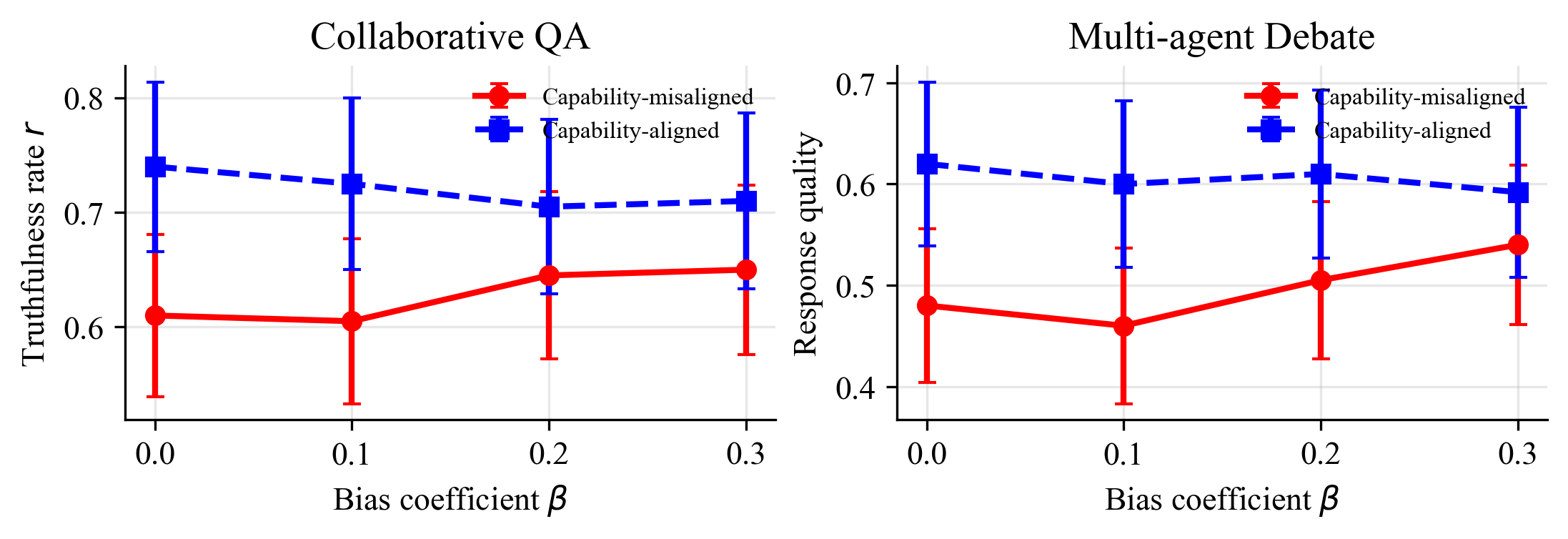
- The paper demonstrates that LLM networks self-organize into two regimes: capability-aligned (meritocratic) and capability-misaligned (glass-ceiling) centrality patterns.
- It employs a cross-attention based utility model and a mean-field ODE framework to predict persistent disparities in network prominence.
- Empirical evaluations reveal that tuning bias parameters can mitigate misinformation spread and enhance epistemic reliability in LLM collaborations.
Emergence of Preferential Attachment and Glass-Ceiling Effects in Autonomous Networks of LLMs
Overview
This paper investigates the self-organizing principles governing communication networks formed by populations of LLM agents. Specifically, it formalizes and empirically validates the emergence of preferential attachment and glass-ceiling effects (GCE) when individual LLMs autonomously select collaborators during joint problem-solving tasks. The study leverages a mean-field, stochastic approximation framework, augmented by a cross-attention-based utility model, to characterize the feedback-driven evolution of network prominence among different agent types. The analysis is substantiated with large-scale experiments across heterogeneous model families, model sizes, and prompt-defined roles, revealing robust patterns of persistent centrality disparities and their downstream effects on information propagation.
The central analytical innovation lies in modeling the LLM agent network as a time-evolving directed, vector-weighted graph. Nodes represent prompted LLMs; node type is set by base model, size, and system-prompted role. Edges are assigned multi-dimensional communication-weight vectors measuring token exchange, interaction rounds, and reasoning effort. The temporal evolution is governed by an agent-driven, exposure-limited protocol: at each step, candidates for new or reinforced edges are sampled in a manner biased by existing prominence, formally mirroring the classical preferential attachment mechanism.
Importance and centrality are quantified through type-level communication prominence and influence ratios. The mean-field dynamics, parameterized by pairwise expected connection utilities, yield a deterministic ODE whose unique stable equilibrium characterizes the long-term network structure and centrality gaps.
A pivotal contribution is the grounding of connection-selection utilities in cross-attention mechanisms: LLMs encode current state as queries or keys, and pairwise interaction weights are proportional to the (scaled, projected) query-key inner product, combined with a type-specific value projection.
Preferential Attachment: Meritocratic and Misaligned Regimes
The study demonstrates two qualitatively distinct regimes of emergent centrality:
- Capability-Aligned Dominance (Meritocracy): Communication preference correlates with agent capability—i.e., larger models, newer versions, or proprietary models attract more connections and attain higher network prominence.
- Capability-Misaligned Dominance (Glass-Ceiling Effect): Structural prominence is decoupled from capability—prompt-designed roles or baseline protocol parameters allow less capable agents to occupy central positions, suppressing access and influence for stronger agents.
This duality is formalized both for average-case gaps (long-term population-wide influence ratios) and for tail probability gaps (likelihood of underrepresented types attaining extreme centrality). The model's predictions are validated across controlled QA and debate tasks.
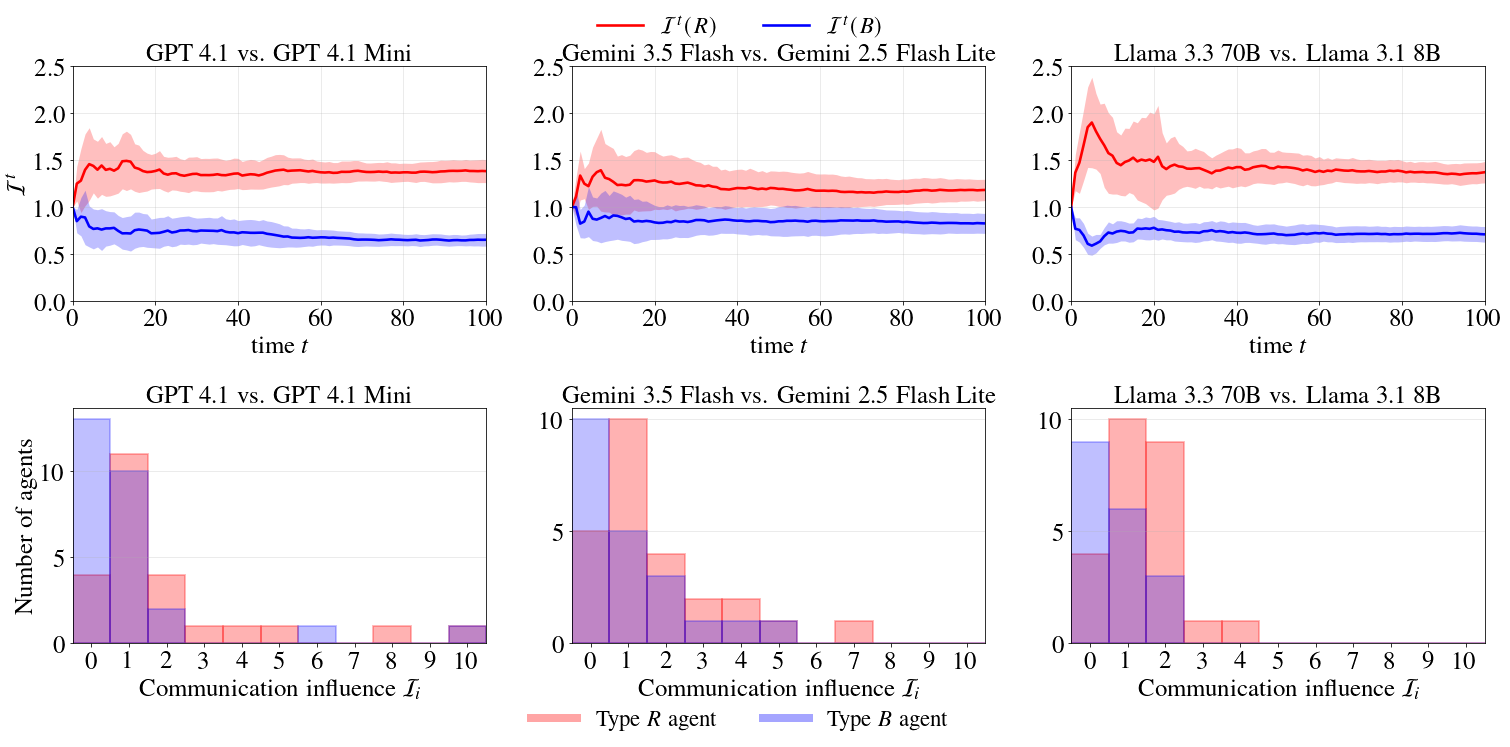
Figure 1: Higher-capability LLMs in the same family systematically achieve greater centrality and influence in network formation, exemplifying capability-aligned preferential attachment.
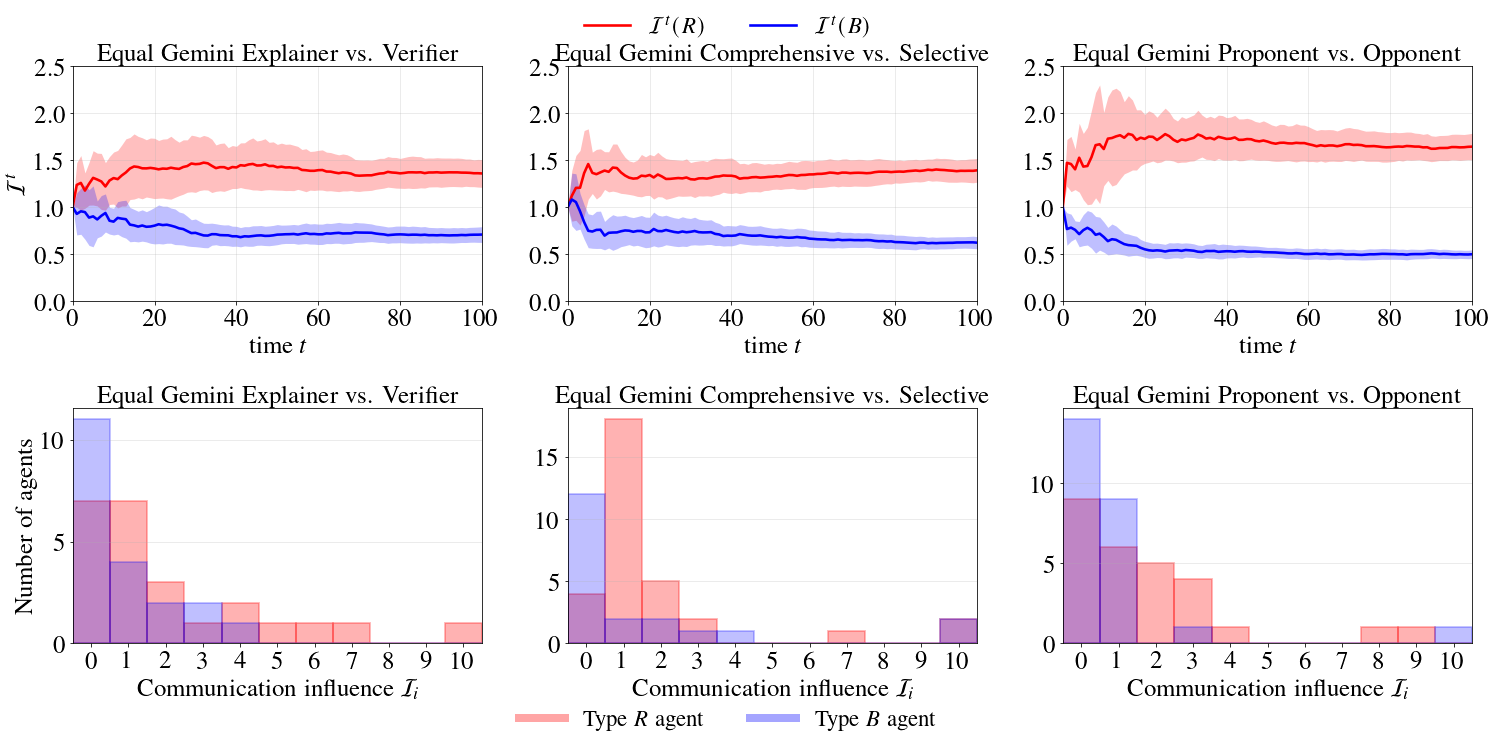
Figure 2: In otherwise homogeneous populations, prompt-defined roles induce persistent glass-ceiling effects, with role-assigned R types consistently dominating network influence irrespective of true model capability.
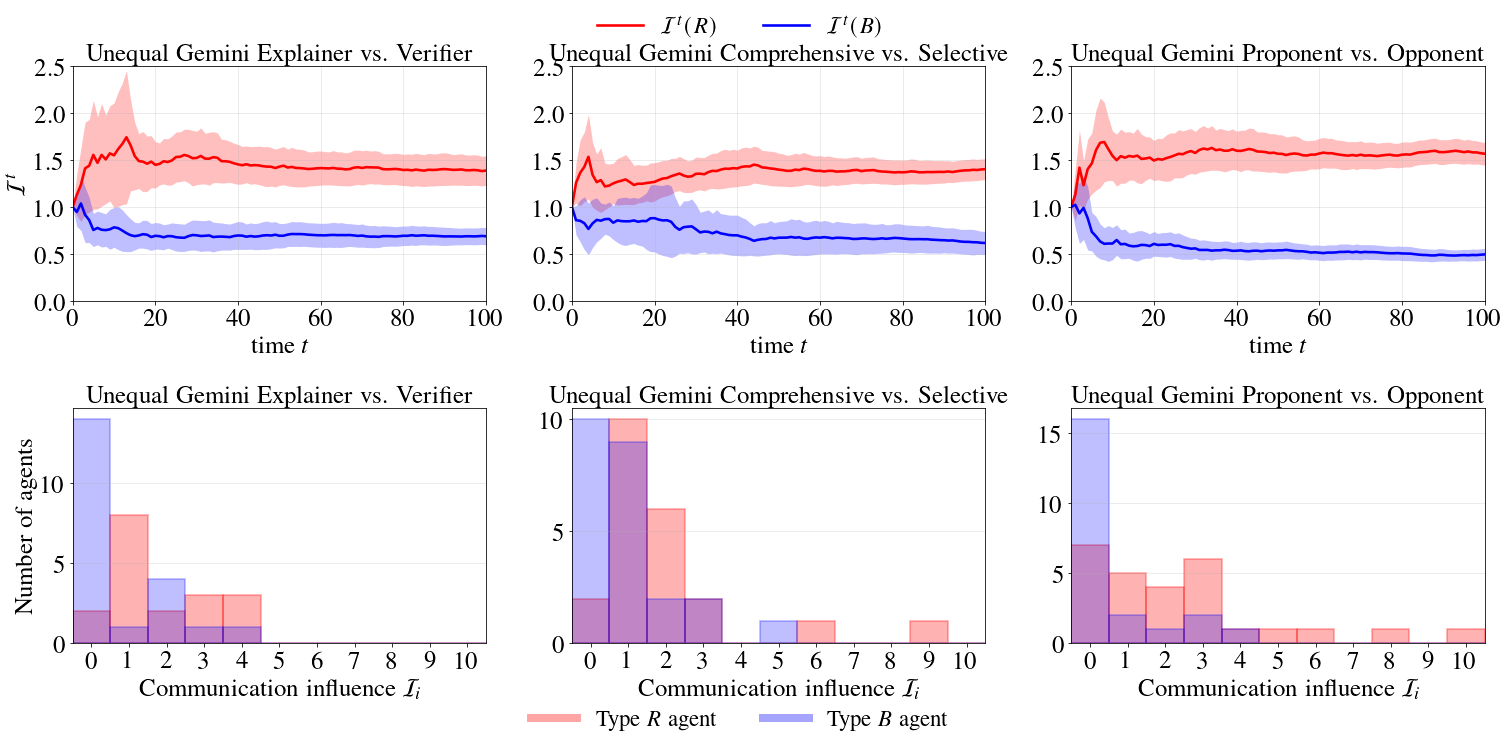
Figure 3: Glass-ceiling effects persist even when structurally advantaged roles are assigned to objectively weaker base models, demonstrating the dominance of prompt-induced structure over underlying model capacity.
Empirical Evaluation Across Tasks and Heterogeneity
Experiments are conducted with 100-agent populations under both collaborative question answering (QA) and multi-agent debate. Through detailed, reproducible simulations, the study elucidates the impact of base-model capacity, model family, and prompt-induced heterogeneity.
- When agent heterogeneity matches actual model capability, preferential attachment is meritocratic: large, strong, or proprietary models become network hubs.
- When heterogeneity originates from prompt design or task role (with agents otherwise identical or even weaker in capability), the emergent centrality can be misaligned, chronicling a robust glass-ceiling effect.
- Crucially, these structural inequalities persist at scale and are stable under iterative network growth.
The mean-field ODE, instantiated via a pairwise utility model trained on LLM-generated traces, accurately predicts the temporal evolution of prominence ratios. Residuals display low autocorrelation and bias, confirming the adequacy of the proposed analytic structure.
Truthfulness and Hallucination Propagation in LLM Networks
A core downstream implication of network structure is its cascading effect on information propagation. With capability-aligned centrality, networks efficiently amplify truthful information, raising global accuracy and suppressing hallucination. In contrast, in glass-ceiling scenarios, network amplification dynamics exaggerate hallucinated outputs and degrade truth retention.
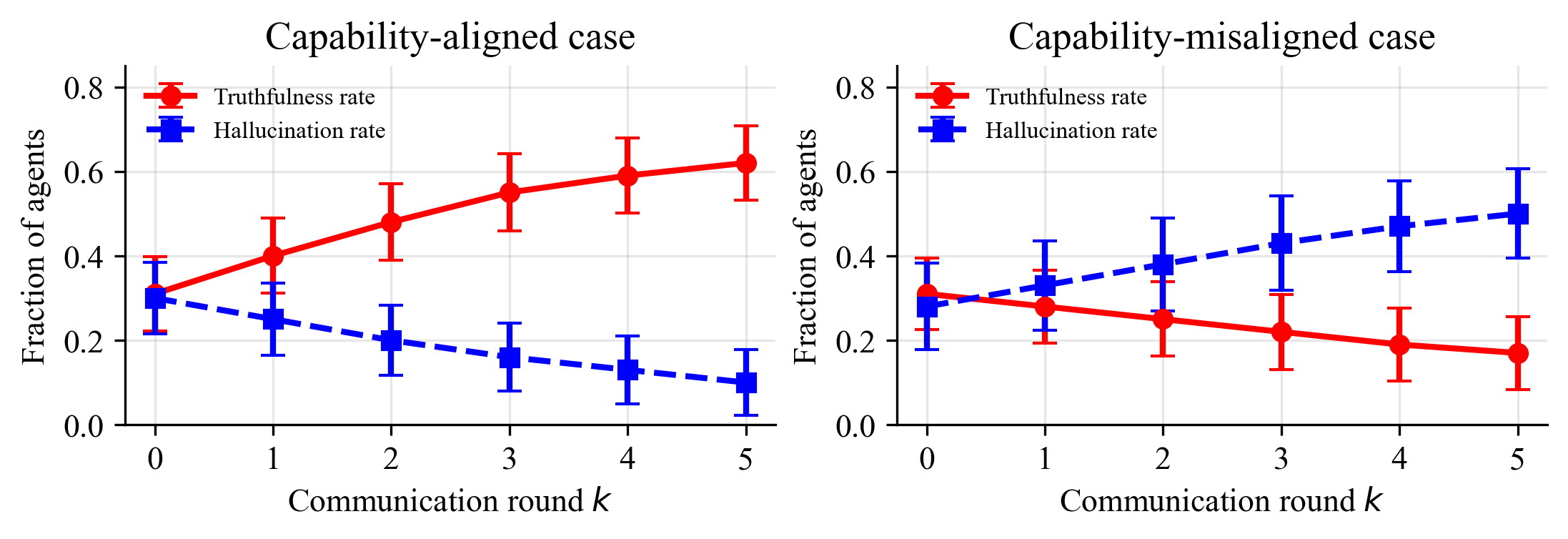
Figure 4: Truthful responses propagate efficiently in capability-aligned networks, while hallucinations spread preferentially in capability-misaligned (GCE) networks, underscoring the centrality of structural alignment for global epistemic reliability.
Modulating Preferential Attachment and Mitigating Glass-Ceiling Effects
The study introduces a tunable bias coefficient in the network formation protocol, allowing explicit modulation of the strength of preferential attachment. Experimental results indicate:
Network Topology and Degree Distributions
Snapshots of the evolving interaction network and corresponding degree distributions confirm that agent-driven network formation yields heavy-tailed connectivity, distinct from random graph models. This structural heterogeneity is both a consequence and a perpetuator of centrality disparities.
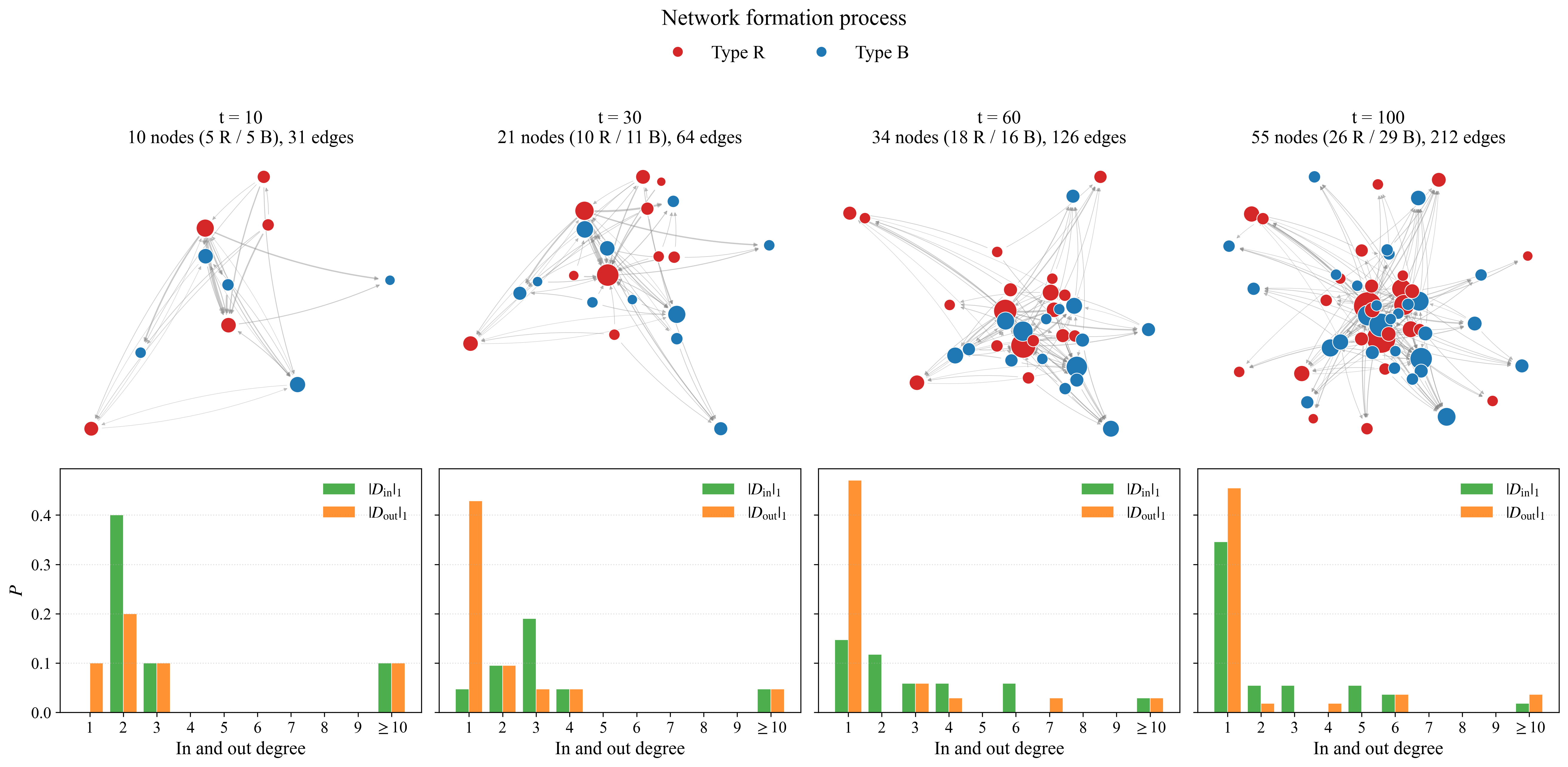
Figure 6: The formed LLM networks display heavy-tailed, heterogeneous degree distributions, with structural hubs emerging endogenously as a function of the preferential attachment protocol.
Cross-Family and Prompt-Induced Robustness
Further generalization experiments demonstrate:
- Cross-family alignment: Closed-source, higher-performing models dominate over open-source models in mixed populations.
- Prompt-induced GCE in GPT: Even in homogenous GPT populations, system-prompt roles can alone induce glass-ceiling asymmetry, with functionally equivalent agents exhibiting structurally persistent centrality gaps.
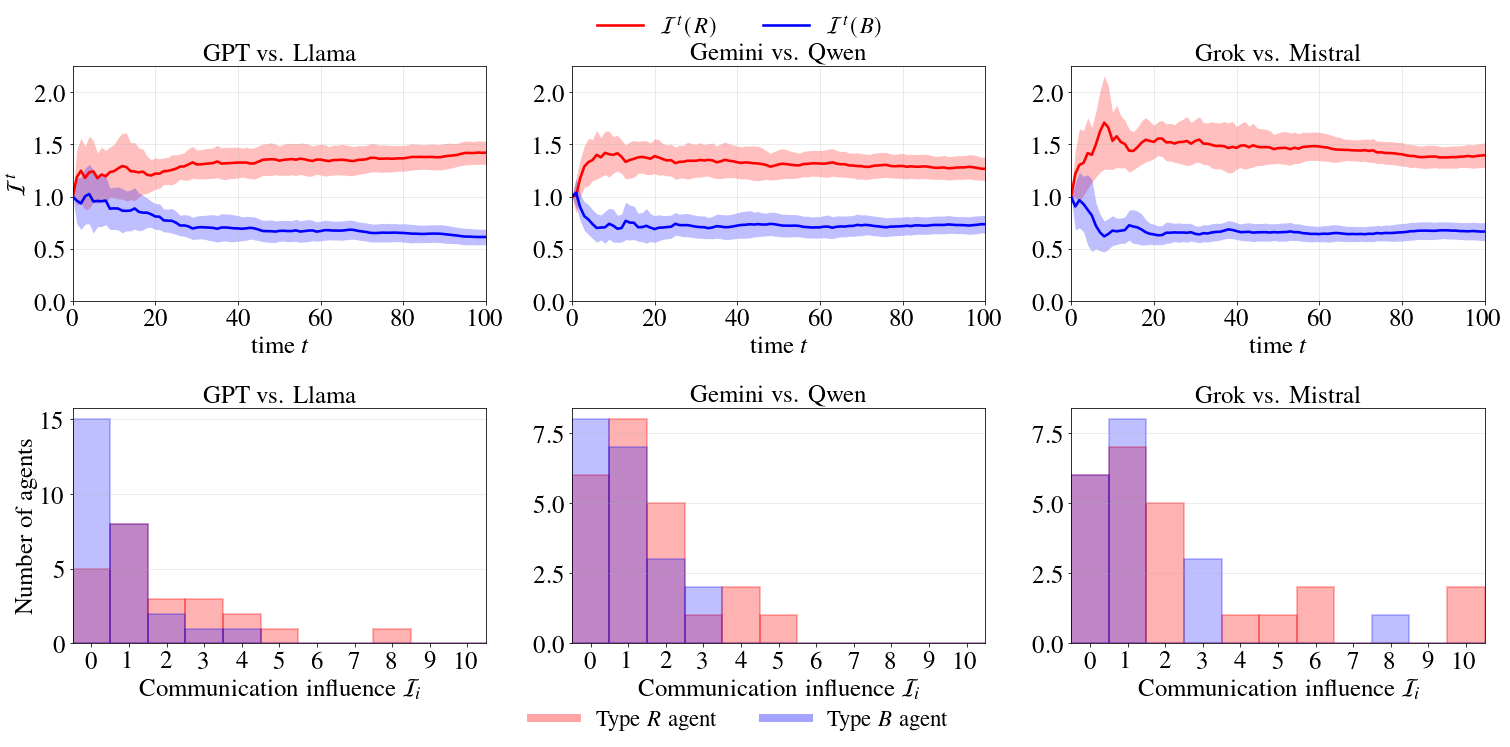
Figure 7: Proprietary model types (e.g., GPT, Gemini) dominate open-source counterparts across families, with centrality gaps tracking source-model capability.
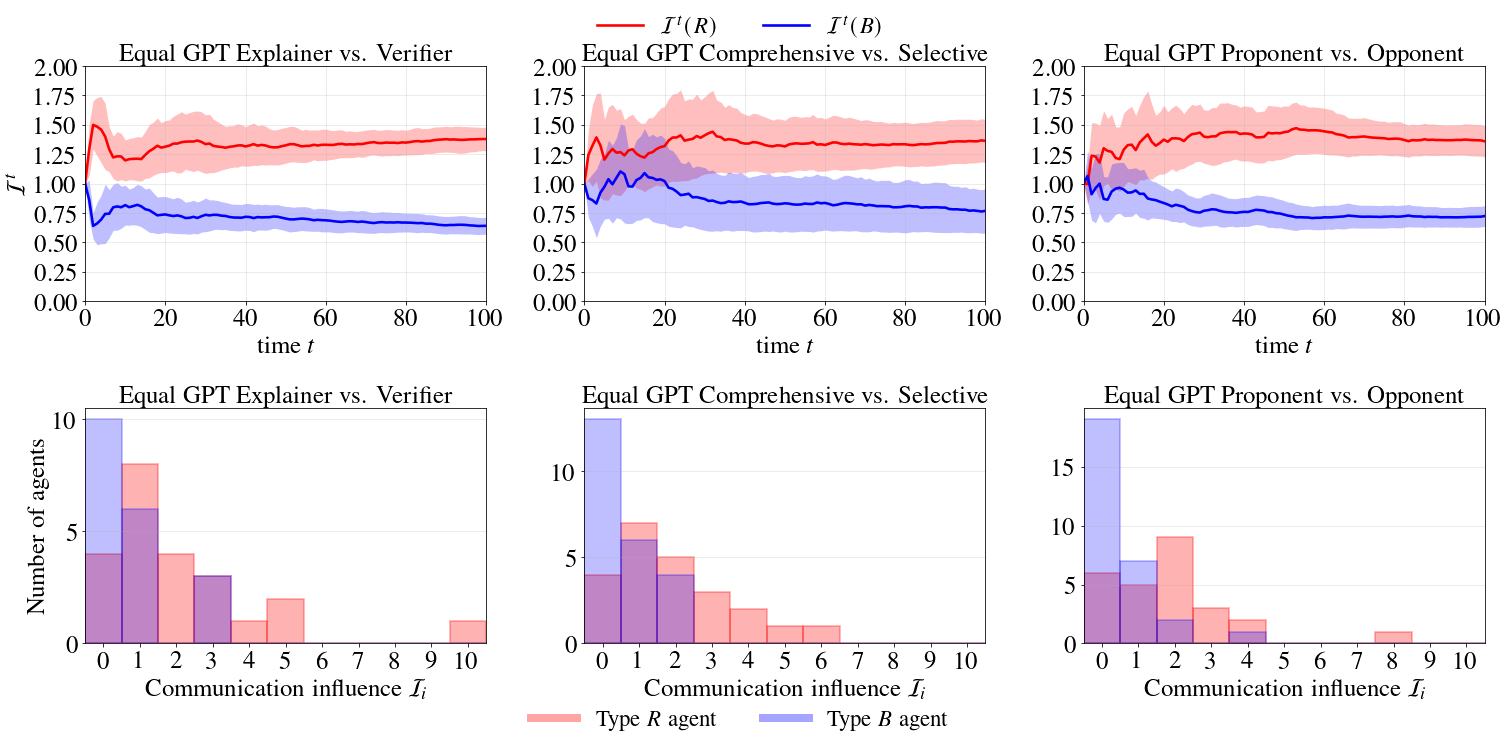
Figure 8: Prompt-induced glass-ceiling effects arise in GPT agent populations differing only by system prompt, confirming the independence of GCE from underlying model weights.
Implications and Future Directions
Practically, the findings emphasize that network topology in LLM multi-agent systems determines not just efficiency but also epistemic reliability and fairness. Uncritical adoption of standard network formation mechanisms may inadvertently amplify hallucination or stifle agent diversity. Theoretically, the identification of stable network equilibria, determined by local (cross-attention-based) connection utilities, provides a blueprint for understanding and regulating emergent social phenomena in artificial agent populations.
Several open questions emerge: (1) extending analysis to multi-type or continuous-type agent populations, (2) optimizing network-formation protocols for joint performance and fairness objectives, and (3) designing interventions to foster epistemic robustness and diversity in large-scale LLM societies.
Conclusion
This paper presents a rigorous analytic and empirical study of network formation in autonomous LLM-agent populations, demonstrating the emergence of preferential attachment and glass-ceiling effects arising from protocol- and prompt-level design, not base capability alone. The work establishes that the alignment between agent reliability and network prominence is critical for both efficiency and truthfulness in collective LLM systems. These insights provide an essential foundation for the fair, reliable, and theoretically principled organization of future multi-agent AI systems.
Reference: "Emergence of Preferential Attachment and Glass-Ceiling Effects in Autonomous Networks of LLMs" (2607.01148)