- The paper introduces Adaptive Search Fallback (ASF) to preserve recall by repurposing filter-failing nodes as traversal bridges in low-selectivity regimes.
- It employs stride sampling to ensure spatial diversity, mitigating directional bias and enabling robust candidate expansion.
- Experimental results show RACORN-1 achieves 9×–26× speedup over HNSW with significant recall improvements compared to ACORN-1.
RACORN-1: Adaptive Recall-Preserving Vector Search at Low Selectivity
Problem Context and Motivation
Modern vector search systems, particularly those supporting Retrieval-Augmented Generation (RAG) and industrial retrieval pipelines, require high-throughput approximate nearest neighbor search (ANN) with hybrid queries—combining vector similarity with structured metadata filters. The Filtered Vector Search (FVS) regime leads to significant challenges in the low-selectivity range (sub-5%), where only a minuscule fraction of the database satisfies the filter predicate. While the classical HNSW with In-filtering and recent ACORN-1 are the dominant paradigms, both demonstrate critical limitations for production systems under low selectivity: HNSW’s latency grows inversely with selectivity, and ACORN-1, though substantially faster at moderate selectivity, suffers catastrophic recall collapse below 1%.
Limitations of Existing Approaches
ACORN-1 achieves its speedup through a filter-first in-graph traversal—permitting only predicate-satisfying nodes for expansion and distance computation, dynamically invoking two-hop expansion to maintain candidate availability (see Figure 1). However, at selectivity s≪1%, the expected number of valid one- and two-hop candidates vanishes, severing graph connectivity and leading to near-zero recall. HNSW, in contrast, incurs superlinear computational cost, since it must expand nearly $1/s$ as many nodes to find enough valid results, but maintains recall.
There are two clear collapse patterns for ACORN-1: (i) an accelerated recall decline below 5% and (ii) near-zero recall below 0.3%. Mechanistically, this is because both one-hop (Ms) and two-hop (M2s) pools’ cardinality become subthreshold, causing expansion stalls (see the theoretical analysis in the paper).
The RACORN-1 Algorithm
To resolve the selectivity-induced recall collapse, RACORN-1 introduces Adaptive Search Fallback (ASF)—a minimalist, in-place extension of ACORN-1 that maintains efficiency while robustly preserving recall.
Adaptive Search Fallback (ASF)
When the candidate pool of one-hop and two-hop predicate-satisfying nodes is insufficient (expansion count falls below a variable threshold), RACORN-1 dynamically repurposes filter-failing nodes as transient bridges (edges through logically ineligible but traversable nodes), thus restoring path connectivity without including them in the final result set. This mechanism ensures that the traversal frontier size remains independent of selectivity, and the bridge allocation (via the bridge_ratio parameter) enables continuous interpolation between the ACORN-1 and HNSW regimes (see Figure 2):
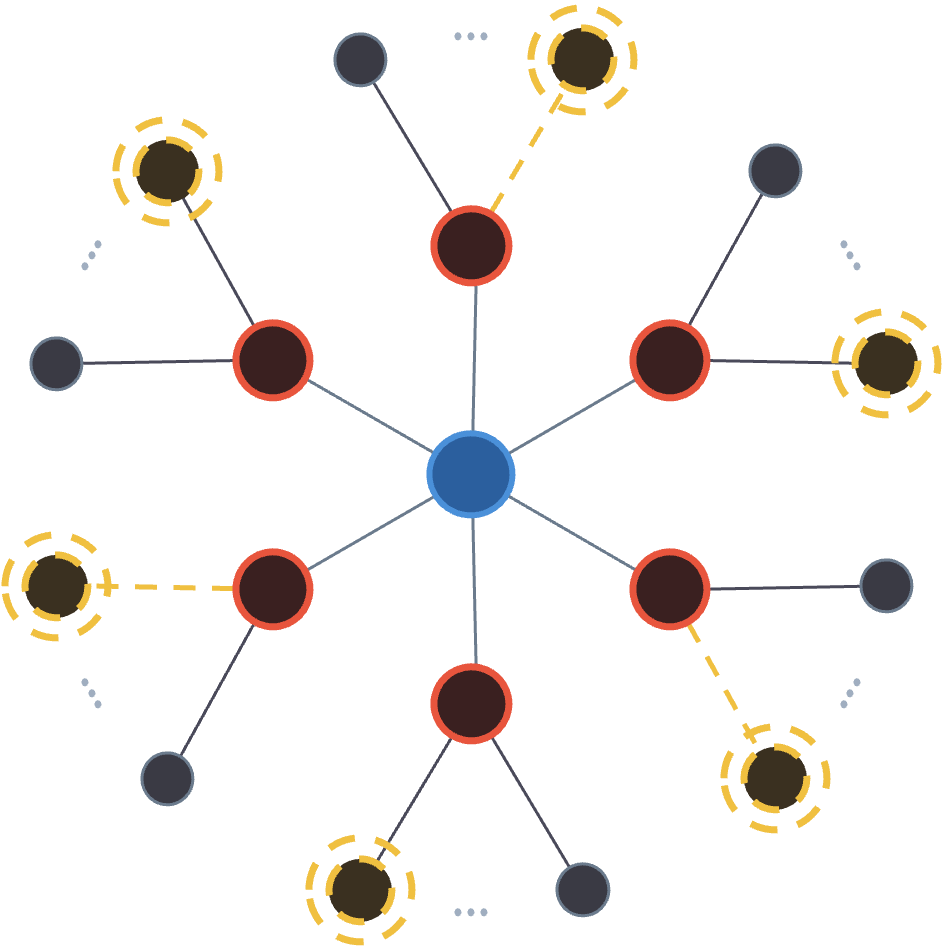
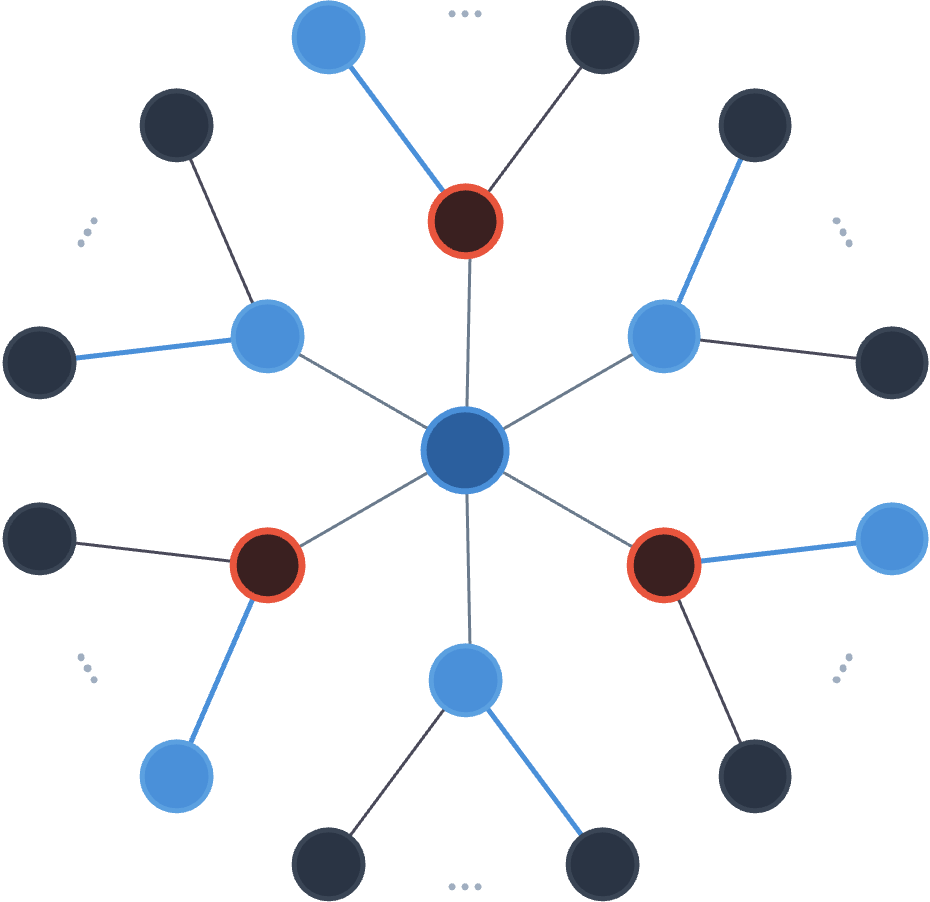
Figure 2: Left: The ASF mechanism admits filter-failing nodes (yellow dashed) as bridges for traversal when the eligible candidate set is insufficient; Right: Stride sampling promotes spatial diversity during expansion.
ASF is complemented by stride sampling, which enforces uniform sampling of bridge and two-hop candidates. This induces radial diversity in the candidate pool, avoiding directional bias and path redundancy, particularly in high-dimensional or modality-skewed graphs.
Algorithmic Structure
RACORN-1 reuses ACORN-1’s search framework, augmenting candidate expansion and bridge selection. In the ASF activation branch, both one-hop and two-hop filter-failing nodes are registered in the visited set to prevent redundant processing. The interplay between bridge_ratio and expansion size is formalized in the analytical lower bound demonstrating that the expected candidate pool size is always at least M⋅b for s<b/M (i.e., expansion size remains robust even as selectivity vanishes).
Theoretical Analysis
The analysis rigorously distinguishes RACORN-1 from ACORN-1 and HNSW along several axes:
- Latency: RACORN-1’s per-node distance computation is decoupled from selectivity, as only bridges necessary for connectivity are explored; visit amplification ratio is tightly predicted by M/b (e.g., at b=1, speedup is M× vs. HNSW).
- Recall: For s<b/M, RACORN-1’s expected expansion size is lower bounded, ensuring no stall in frontier growth. ACORN-1’s corresponding expectation vanishes with $1/s$0, explaining recall collapse.
- Bridge Ratio Trade-off: Lowering bridge_ratio attenuates distance overhead, raising latency savings at potential (but bounded) recall cost. Under adversarial correlation (negative query-filter alignment), smaller bridge_ratio provides optimal operational points.
Experimental Results
Baseline and Comparative Evaluation
The comprehensive empirical study considers 1M and 40M scale datasets (SIFT, GIST, Text2Image), spanning 21 selectivity values and multiple query-filter correlation scenarios. The central findings can be summarized as:
- Latency–Recall Pareto: In the canonical 1%–0.3% selectivity band, RACORN-1 delivers $1/s$1–$1/s$2 speedup over HNSW with recall improvements of $1/s$3 to $1/s$4 over ACORN-1, which otherwise collapses (Figure 1).
- Extreme Low Selectivity: When selectivity falls below critical thresholds, RACORN-1+ (i.e., RACORN-1 with Adaptive Exact Fallback, see below) switches to exact linear scan, guaranteeing recall 1.0 with $1/s$5–$1/s$6 speedup at 1M and $1/s$7 at 40M.
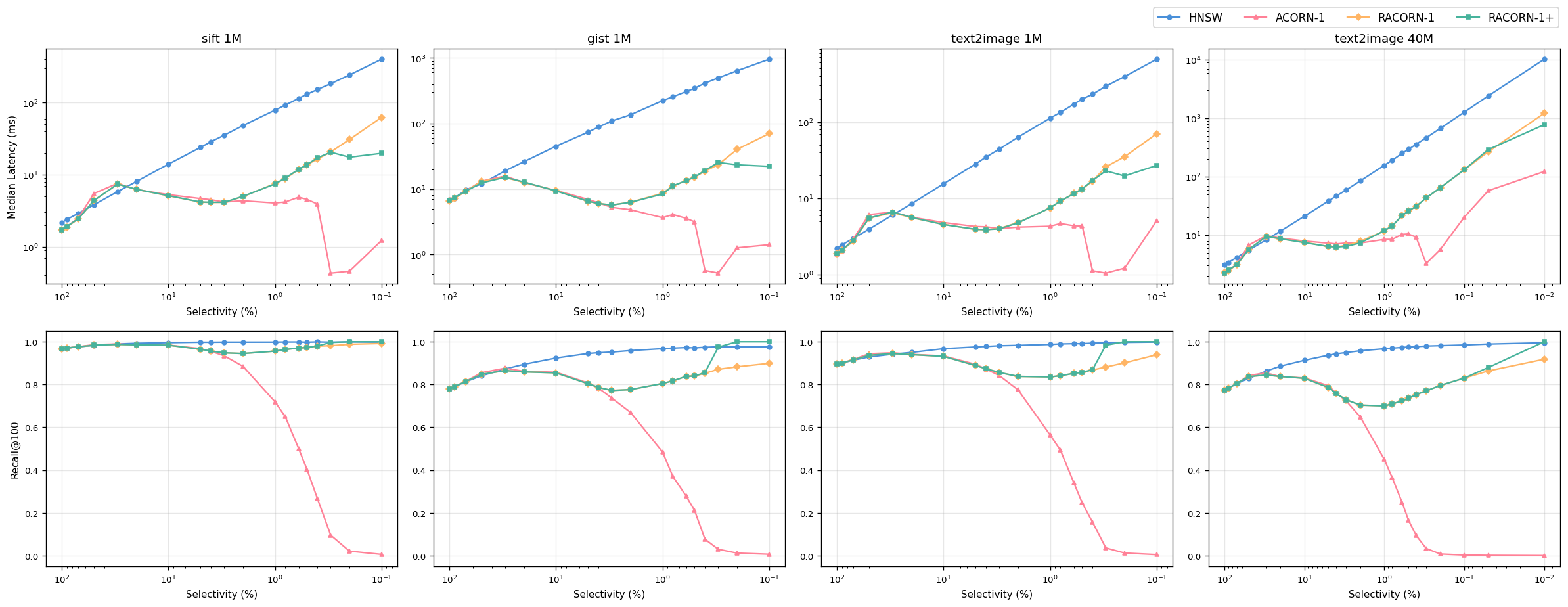
Figure 1: Baseline Pareto comparisons of HNSW, ACORN-1, RACORN-1, and RACORN-1+ across four datasets.
ASF vs Multi-Hop Expansion
Compared to 3-hop expansion, ASF consistently preserves recall in the extreme-low-selectivity regime where simple multi-hop strategies are trapped by expansion bias (Figure 3). Hop count escalation cannot substitute for the topological and stochastic diversity granted by ASF bridges.
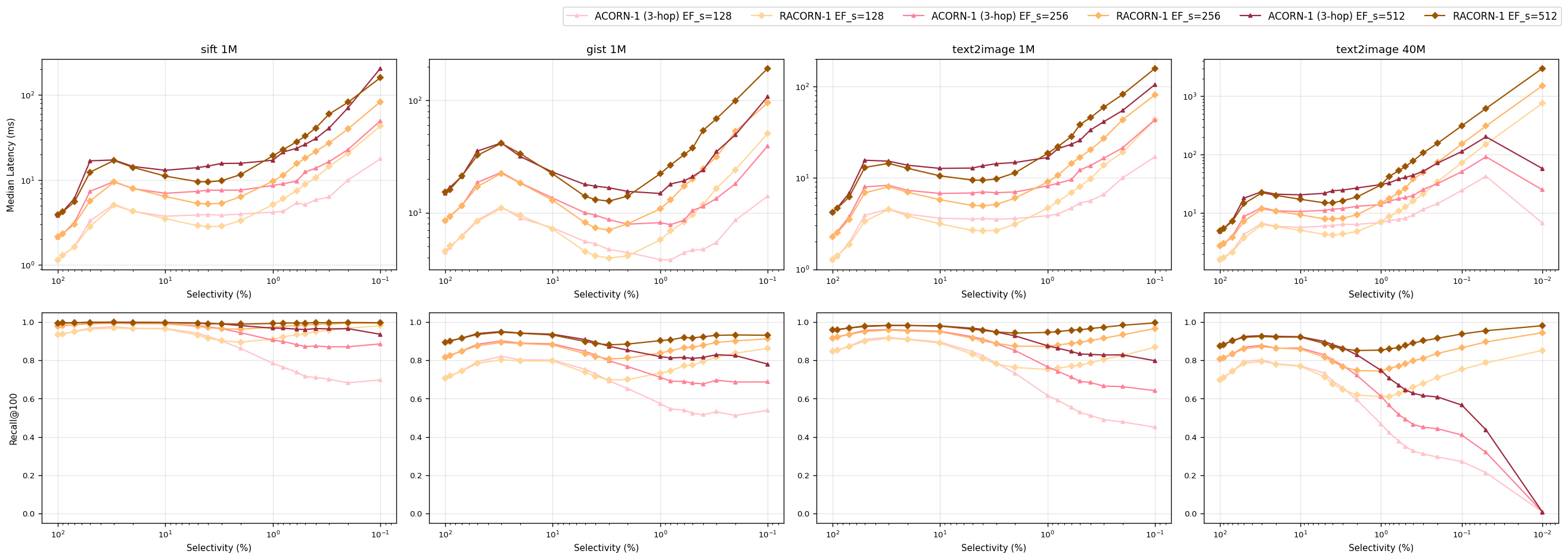
Figure 3: RACORN-1 outperforms ACORN-1 with 3-hop expansion, especially under extreme-low-selectivity, due to its spatial diversity and connectivity resilience.
Query–Filter Correlation Robustness
Under negative correlation (e.g., cluster-based filters orthogonal to query distribution), ACORN-1 completely fails (recall $1/s$8–$1/s$9), HNSW’s latency explodes, but RACORN-1 maintains recall Ms0–Ms1 with a Ms2–Ms3 latency advantage (Figure 4).
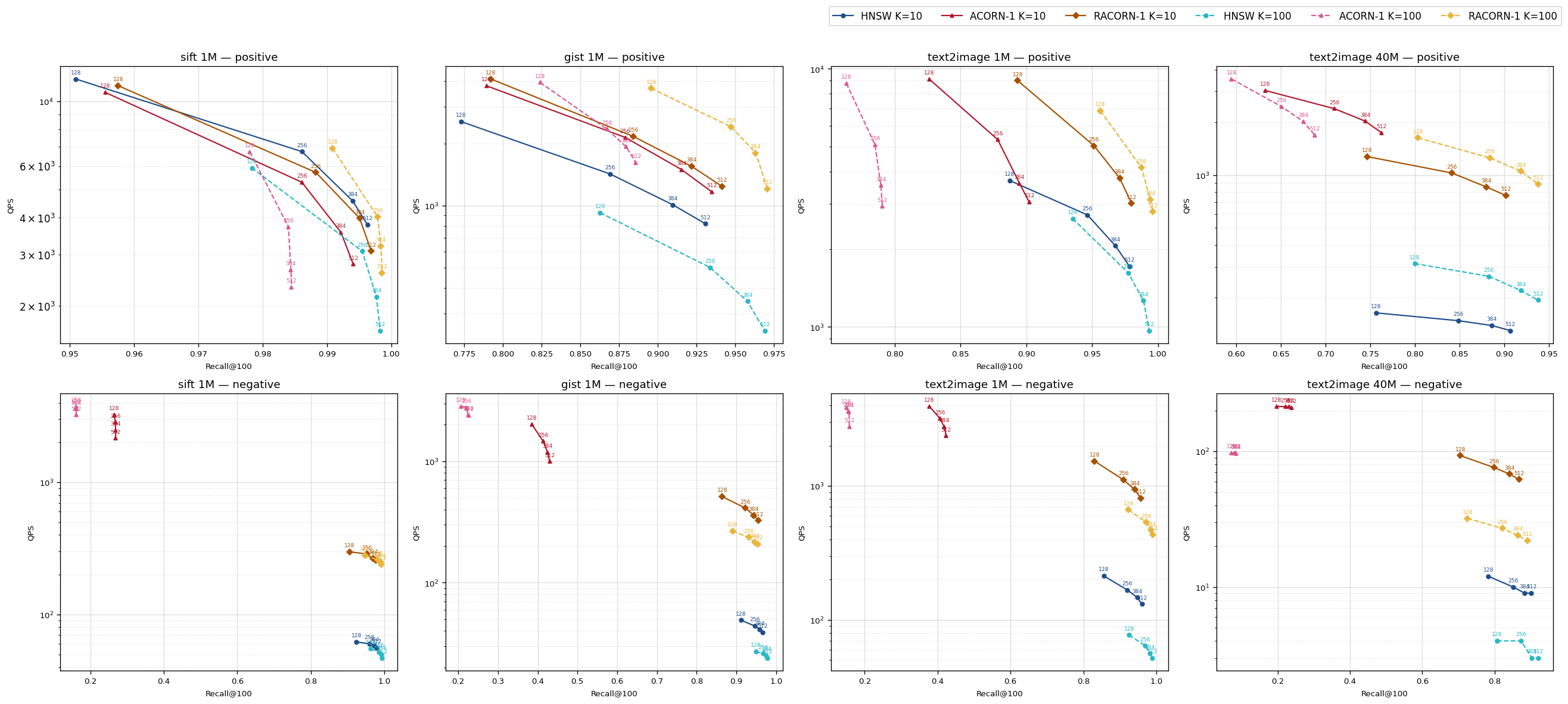
Figure 4: Pareto curves reveal that RACORN-1 is robust under strong negative correlation between query and filter.
Bridge Ratio Sensitivity
For most scenarios, increasing bridge_ratio yields monotonic recall improvements at diminishing returns and moderate latency cost (Figure 5); under adversarial correlation, a smaller bridge_ratio is optimal (Figure 6).
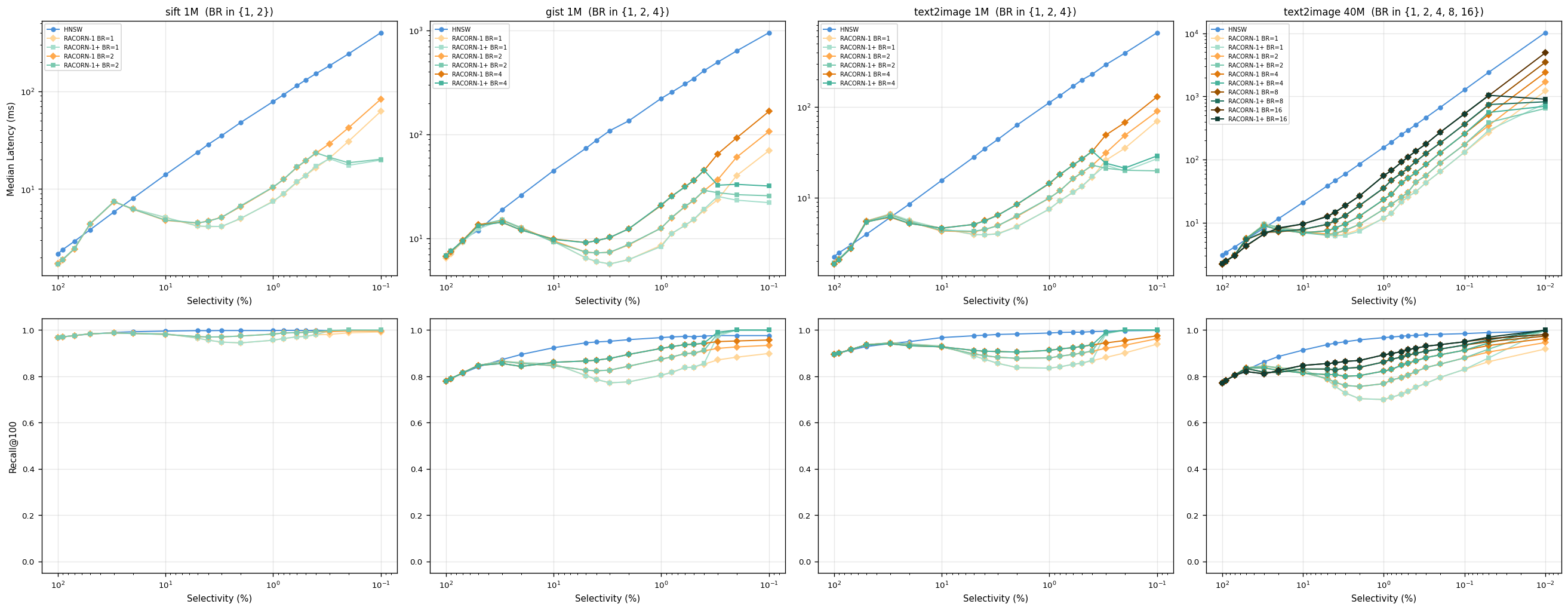
Figure 5: Sweep of bridge_ratio under no-correlation demonstrates how recall can be traded off for lower latency.
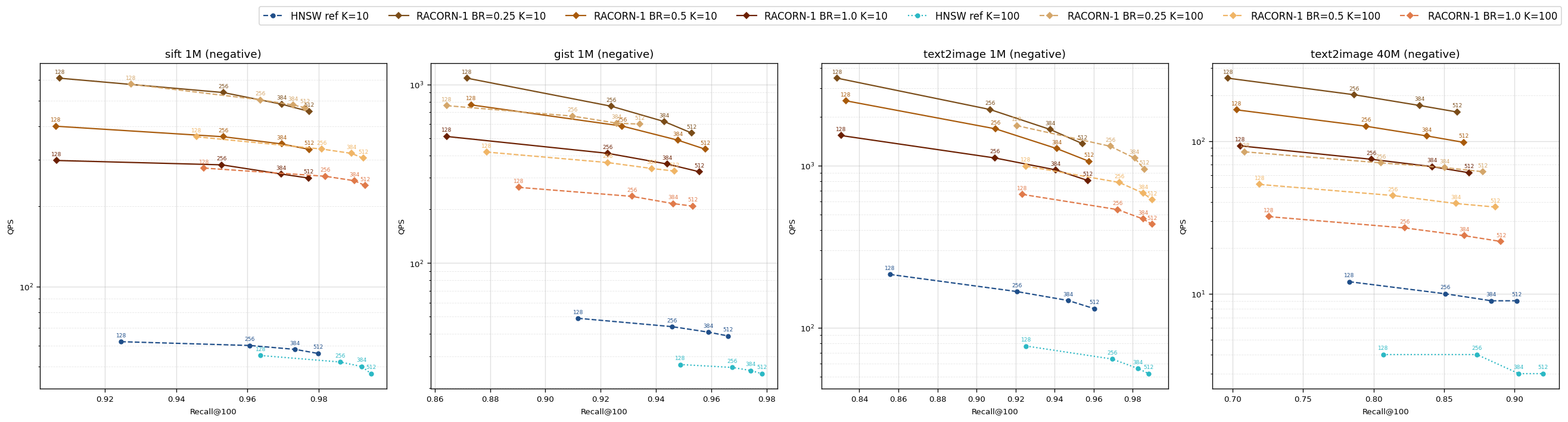
Figure 6: Under negative correlation, latency is minimized with fractional bridge ratios, with negligible recall penalty.
QPS–Recall Pareto
RACORN-1+ establishes a new efficient frontier in the recall–QPS curve at Ms4 selectivity, with Ms5–Ms6 QPS advantage over HNSW at matched recall (Figure 7).
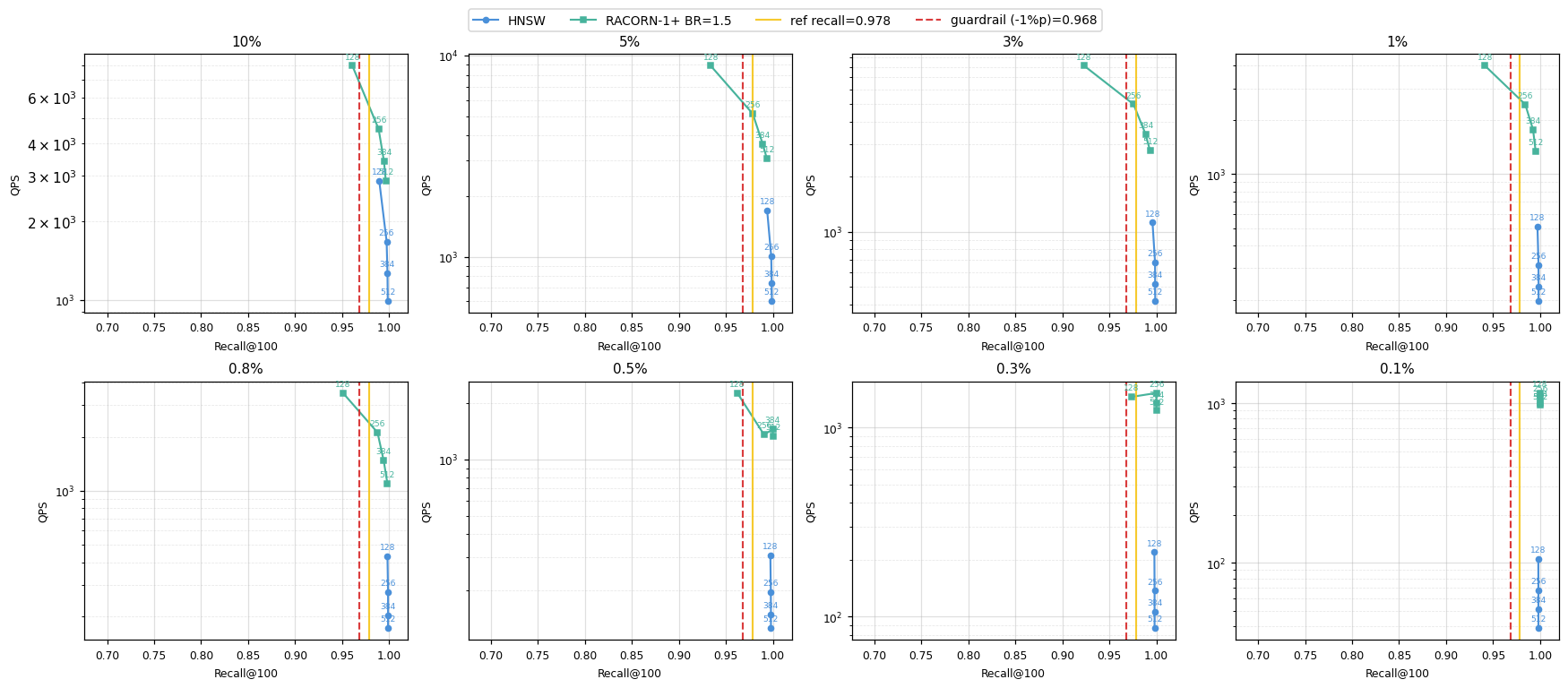
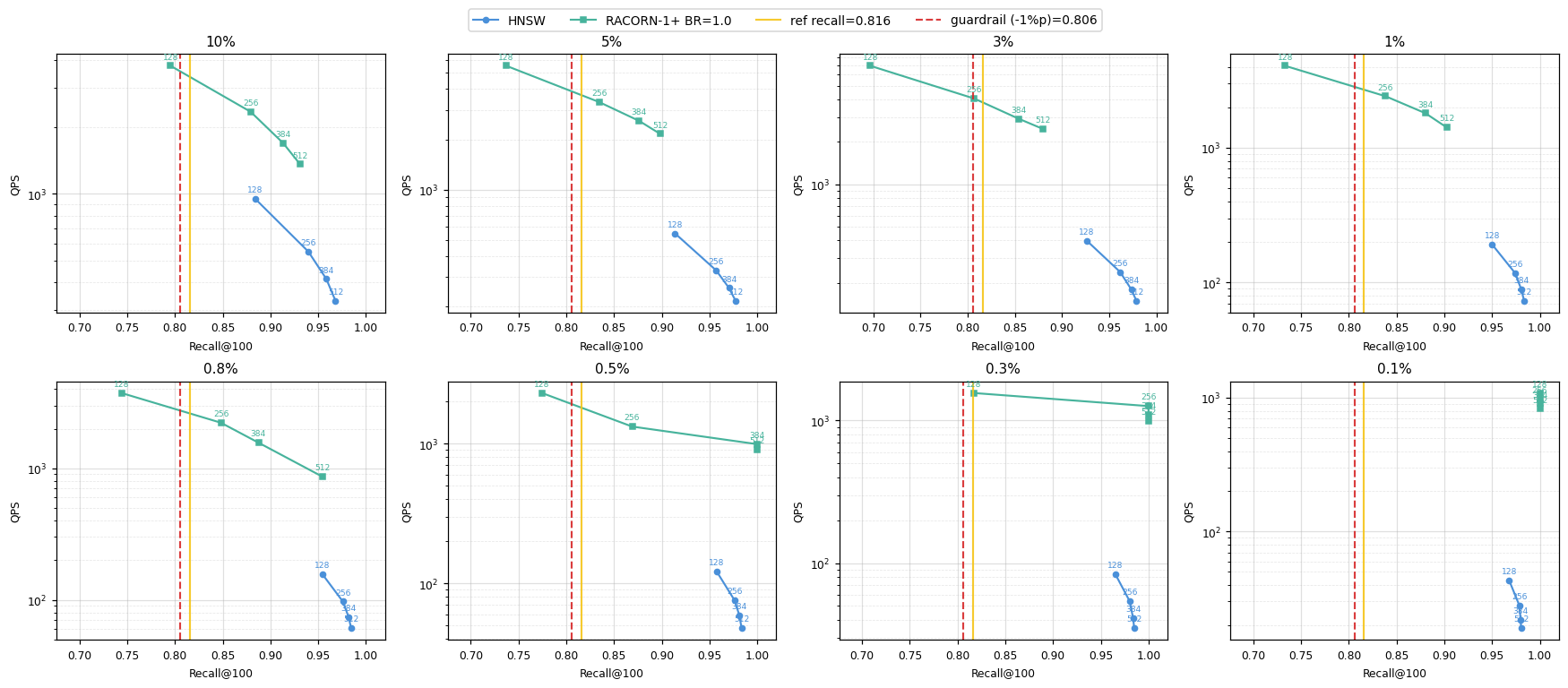
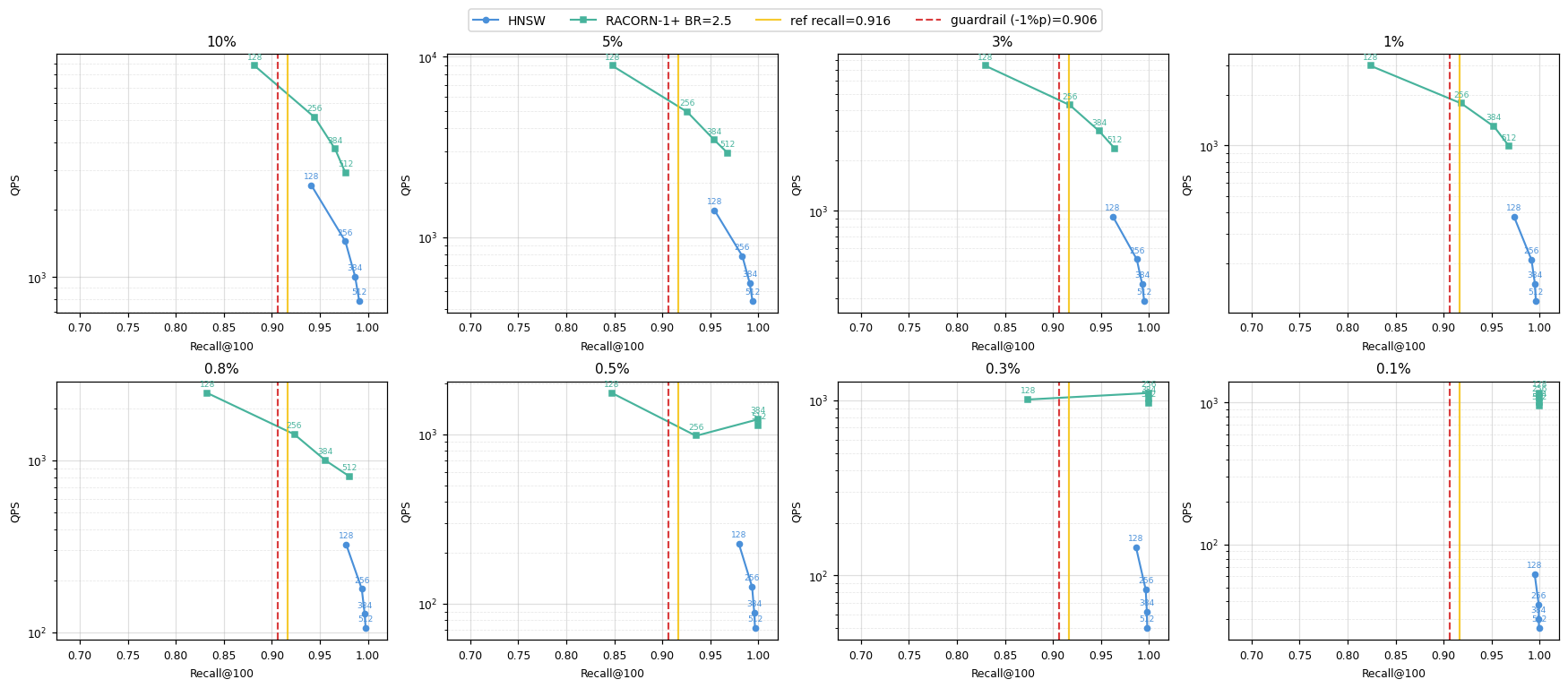
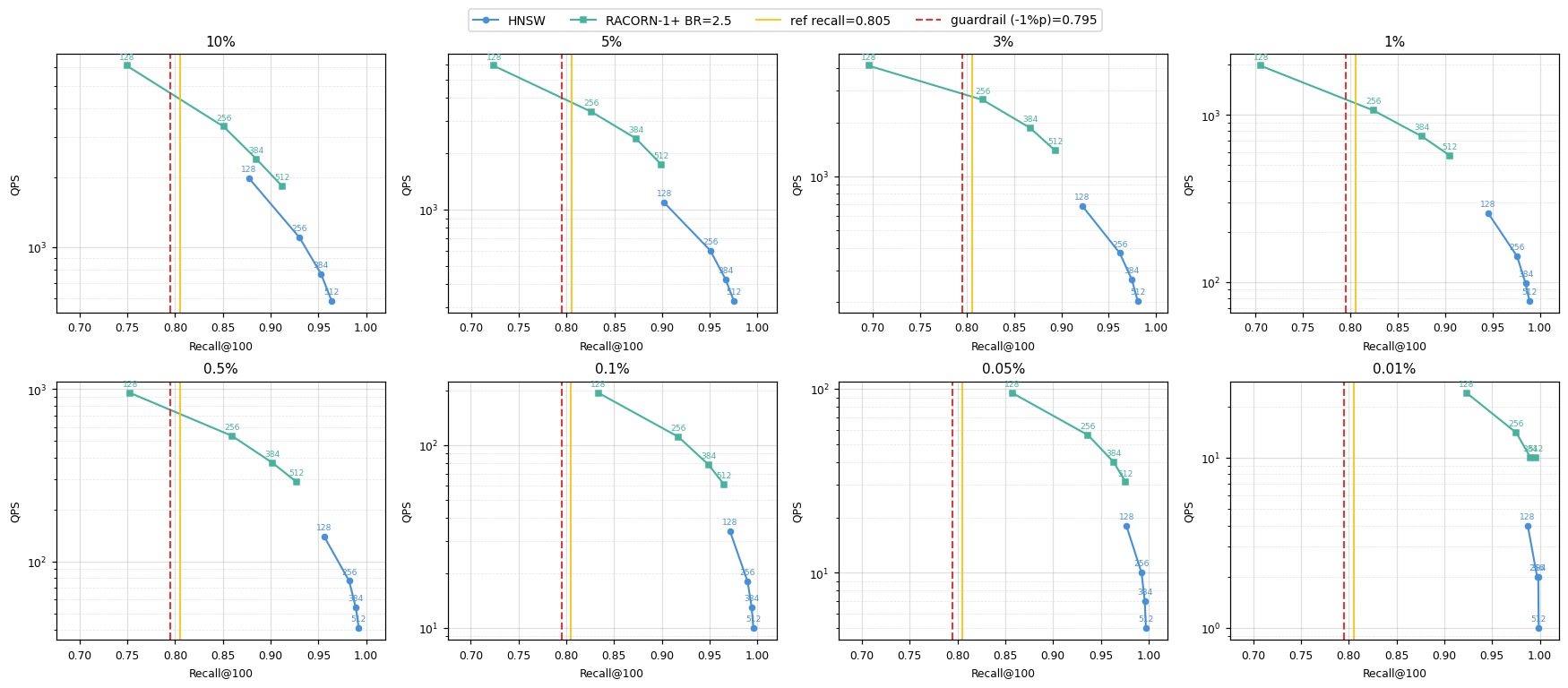
Figure 7: QPS vs. recall illustrates substantial operational advantage for RACORN-1+ in the low-selectivity regime.
Implications and Future Directions
On the theoretical side, RACORN-1 shifts the fundamental recall–latency trade-off curve for in-place graph-based vector search: it demonstrates that robust recall can be preserved without selectivity-dependent cost blowup, provided filter-failing nodes are exploited as traversal bridges with spatial diversity. Practically, deploying RACORN-1 either standalone or with RACORN-1+ (with an appropriate AEF threshold and runtime bridge_ratio) enables scalable FVS even in extreme low-selectivity and adversarially correlated regimes. This is directly relevant to real-world RAG retrieval engines (e.g., Weaviate, Qdrant, Elasticsearch, Vespa) already adopting ACORN-1.
Two main research avenues remain: (i) runtime adaptive determination of bridge_ratio and AEF thresholds leveraging workload statistics and (ii) integration with predicate-aware index construction for further recall gains without latency regression.
Conclusion
RACORN-1 and its variant RACORN-1+ systematically resolve the recall collapse issues of in-place filter-first vector search algorithms in the low-selectivity and adversarial correlation regimes. By re-conceptualizing filter-failing nodes as reusable connectivity bridges and incorporating diversity-enhancing sampling, RACORN-1 ensures selectivity-independent traversal expansion and robust recall with large reductions in end-to-end latency. Empirical results confirm strong recall recovery and substantial QPS gains relative to both ACORN-1 and HNSW, establishing RACORN-1(+)'s value for next-generation hybrid ANN systems (2607.00768).