- The paper presents a novel clique-based index (MCI) that outperforms traditional ANNS systems in high-recall filtering scenarios.
- It leverages geometric transitivity and maximal clique cover to densify local neighborhoods with minimal computational overhead.
- Experimental results demonstrate up to one order of magnitude higher QPS and 10× smaller index sizes compared to state-of-the-art methods.
Maximal Clique Index (MCI) for Arbitrary-Filtered Approximate Nearest Neighbor Search
Introduction and Motivation
Arbitrary-Filtered Approximate Nearest Neighbor Search (AFANNS) is a central primitive for applications such as vector search, semantic retrieval, recommendation, and Retrieval-Augmented Generation (RAG). In this setting, queries combine high-dimensional vector similarity with ad-hoc, unpredictable filtering predicates over data features. Existing ANNS indices, including graph-based (e.g., HNSW, NSG), quantization-based (IVFPQ), and hybrid architectures, are fundamentally ill-suited for AFANNS due to their limited connectivity after predicate-induced filtering and high memory or computation overhead when adapting to these scenarios.
The "MCI: A Maximal Clique Index for Efficient Arbitrary-Filtered Approximate Nearest Neighbor Search" (2604.22171) introduces a new approach: replace extended explicit neighbor storage with a compact, clique-based graph structure that leverages the intrinsic geometry of high-dimensional vector spaces. This enables robust high-recall search for arbitrary predicates, outperforming contemporary systems in both efficiency and space.
Core Technical Contributions
Clique-Based Indexing and Geometric Transitivity
Conventional proximity graph indices cannot guarantee connectivity in the predicate-induced subgraph when the expected number of valid neighbors per node falls below one. ACORN compensates via large expanded (2-hop) adjacency structures, incurring substantial space costs. MCI, by contrast, formalizes a geometric insight: in high-dimensional settings, the local neighborhoods of k-NN graphs form dense, highly transitive cliques. The Maximal Clique Cover (MCC) is leveraged to encode these neighborhoods implicitly:
- Maximal Clique Cover (MCC): Nodes are covered by a minimal set of maximal cliques, with a minimum clique size τ, ensuring robust high-degree neighborhoods even after aggressive filtering.
- Geometric Densification: Starting from a sparse k′-NNG, the local graphs are iteratively densified by progressively relaxing the connectivity threshold (controlled by α), efficiently expanding coverage with only modest computation.
The theoretical underpinnings are established by proving (via the Distance Concentration Phenomenon) that, under typical high-dimensional distributions, neighborhoods of the k-NNG are highly likely to form cliques as density increases. Thus, the large k required for AFANNS can be efficiently approximated from a smaller k′ through clique mining.
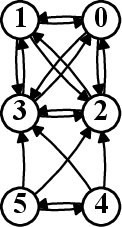
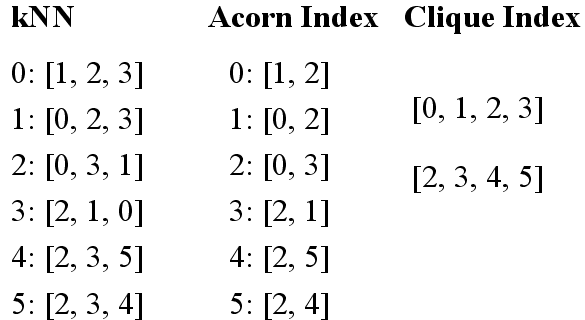
Figure 1: Illustration of k-NNG, ACORN index with two-hop pruning, and MCI's clique-based representation.
Index Construction Algorithm
MCI construction proceeds as follows:
- Sparse k′-NNG Construction: The initial k′-NNG on vectors is built (using NN-Descent).
- Clique Mining (Greedy Algorithm): For each node, mine maximal cliques of size τ0 in local neighborhoods built via densification (τ1-expansion).
- Dual Coverage: Each node is covered not only by its own local cliques but also those of its neighbors, amplifying effective out-degree and ensuring sufficient post-filtering connectivity.
- Handling Outliers and Hubs: Isolated nodes and super-center nodes are addressed with early-termination and clique-pruning, ensuring algorithmic efficiency.
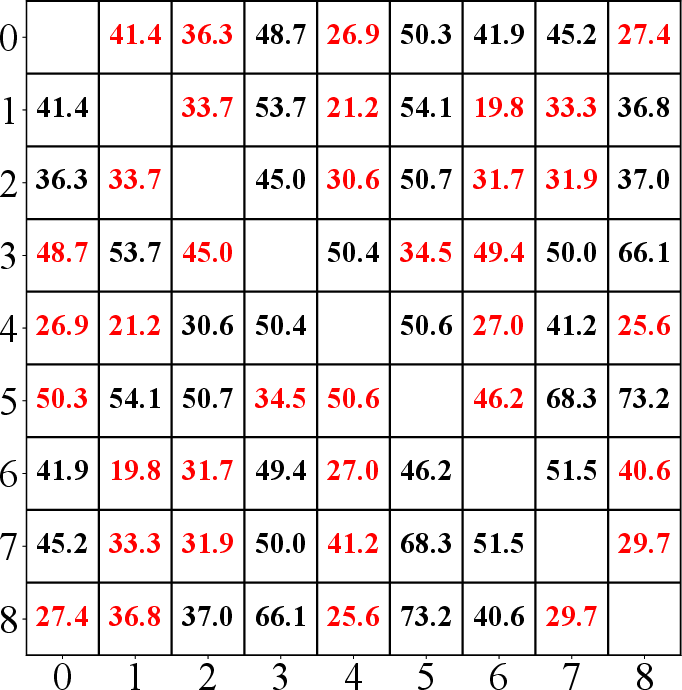
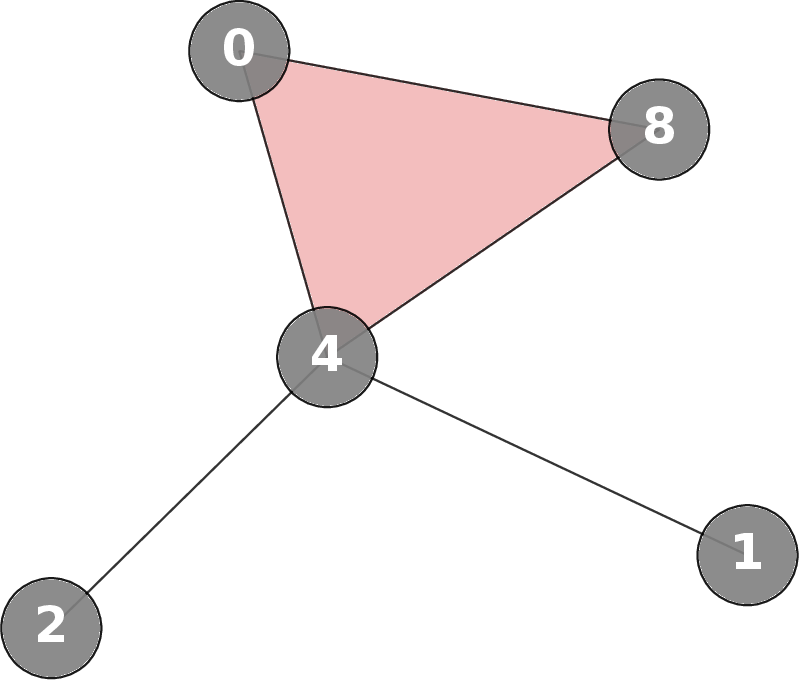
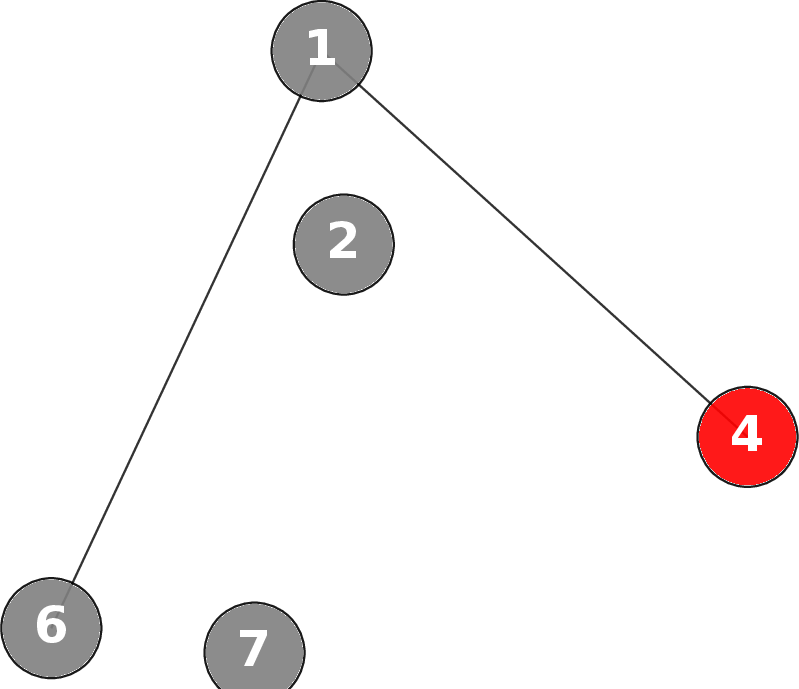
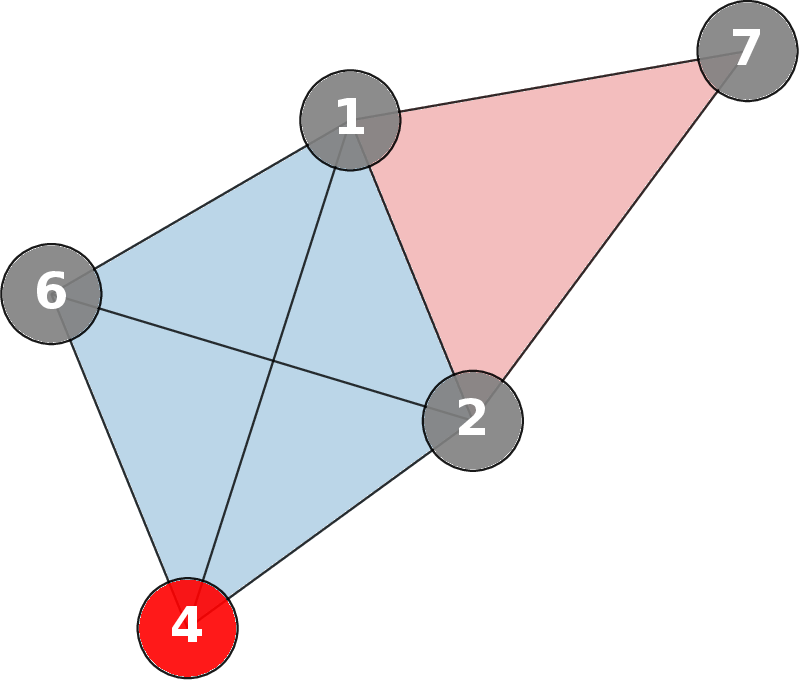
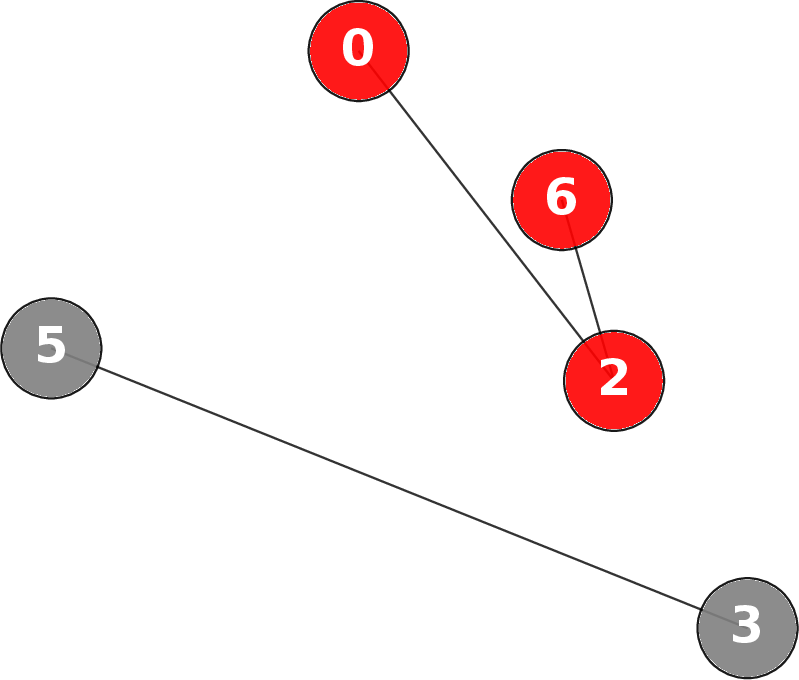
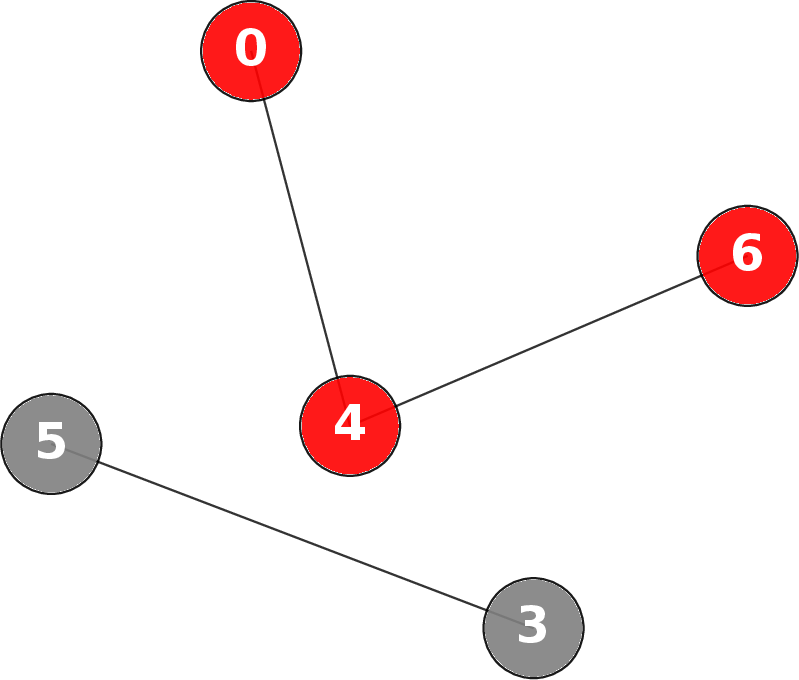
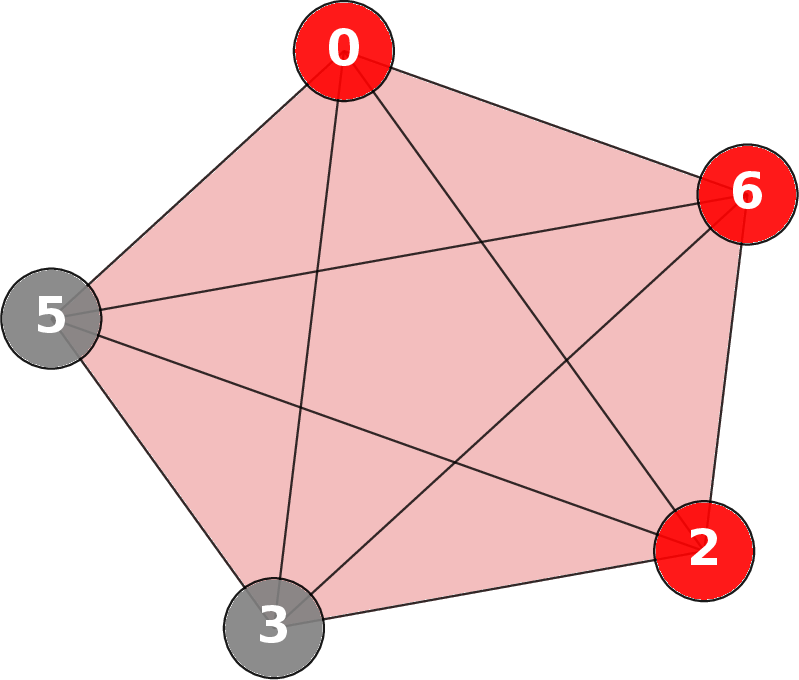
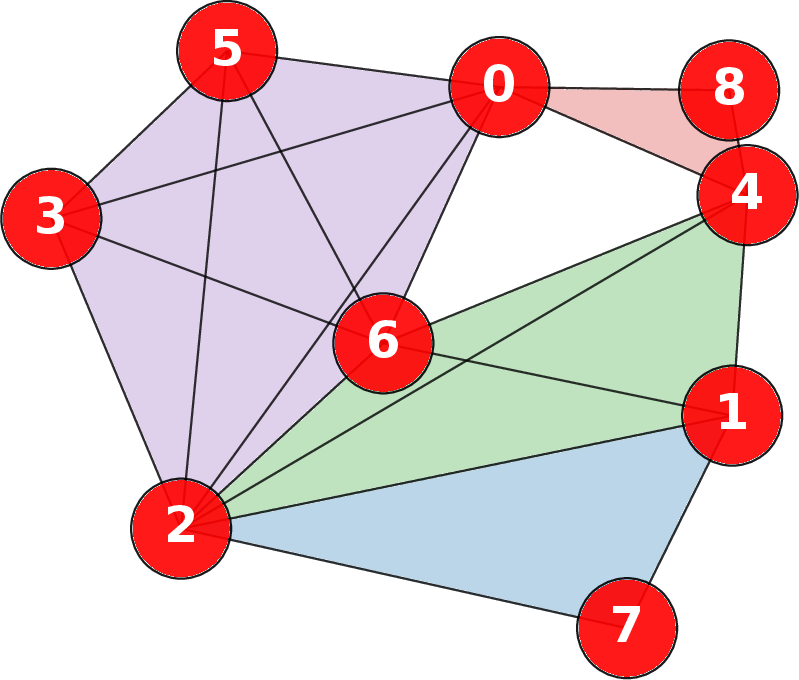
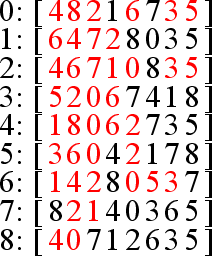
Figure 2: Illustration of the MCI construction algorithm for τ2.
Query Processing with Multi-Seed Beam Search
Predicate-induced subgraphs in AFANNS can be highly fragmented. MCI employs a robust beam search, initialized from τ3 randomly selected valid seeds (scaling τ4 by selectivity), to ensure traversal across disconnected regions. Node expansions proceed via the union of the maximal cliques containing each node, for aggressive neighbor enumeration.
Complexity and Scalability
- Space: Worst-case τ5, but empirical index sizes are much smaller (often τ6 entries).
- Construction Time: τ7, with τ8 for τ9-NNG build and k′0 the (logarithmic) number of densification rounds. Lock-free parallelization achieves high scalability.
- Query: k′1, where k′2 is query selectivity and k′3 the dataset size.
Experimental Results
The evaluation covers ten diverse datasets and compares MCI to ACORN, HNSW (Faiss and Milvus), IVFPQ, and specialized range/keyword-filtered search methods.
Recall/Throughput Trade-off
MCI achieves up to one order of magnitude higher QPS at high recall compared to state-of-the-art baselines under mixed selectivity regimes. For example, at recall@10 k′4 on deep1M, MCI yields k′5 QPS versus k′6 for the best baseline. Notably, ACORN is unable to reach k′7 recall on challenging datasets with low selectivity; MCI remains robust and efficient.

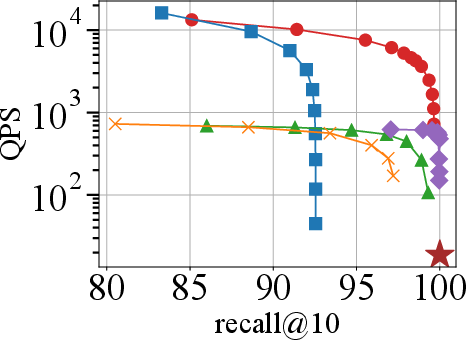
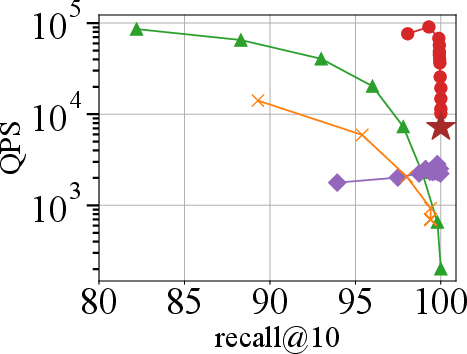
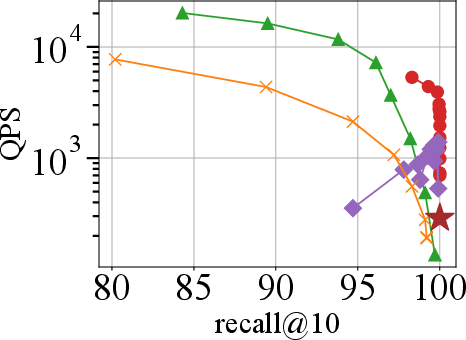
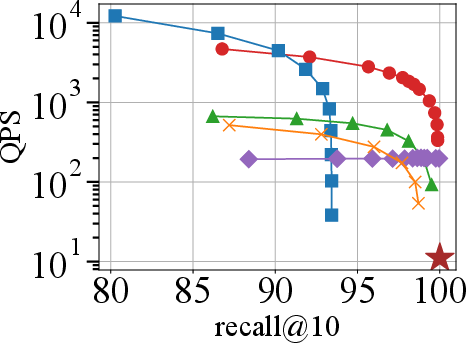
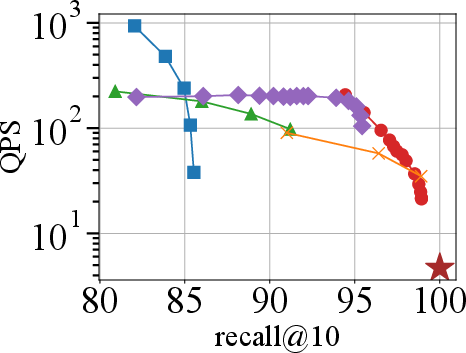
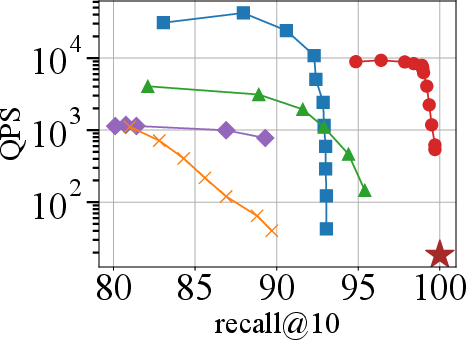
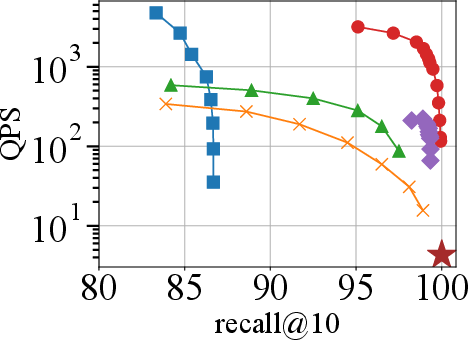
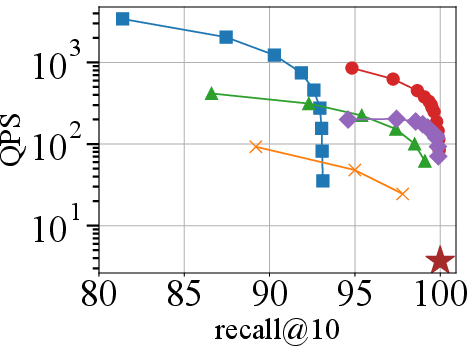
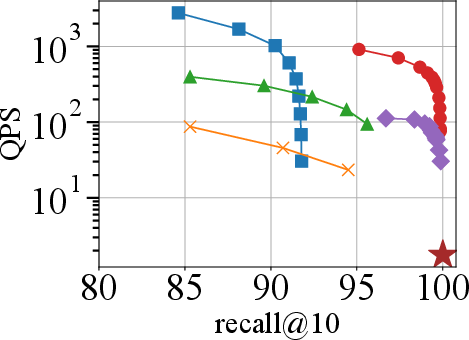
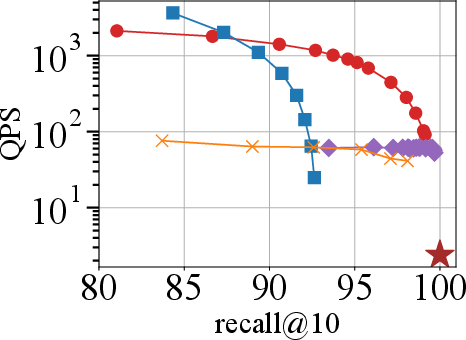
Figure 3: Recall@10 vs QPS of different methods under mixed selectivity.
Index Compactness
MCI delivers up to k′8 lower index size compared to ACORN, and matches/surpasses IVFPQ on storage for most datasets, a remarkable result for a graph-based scheme.
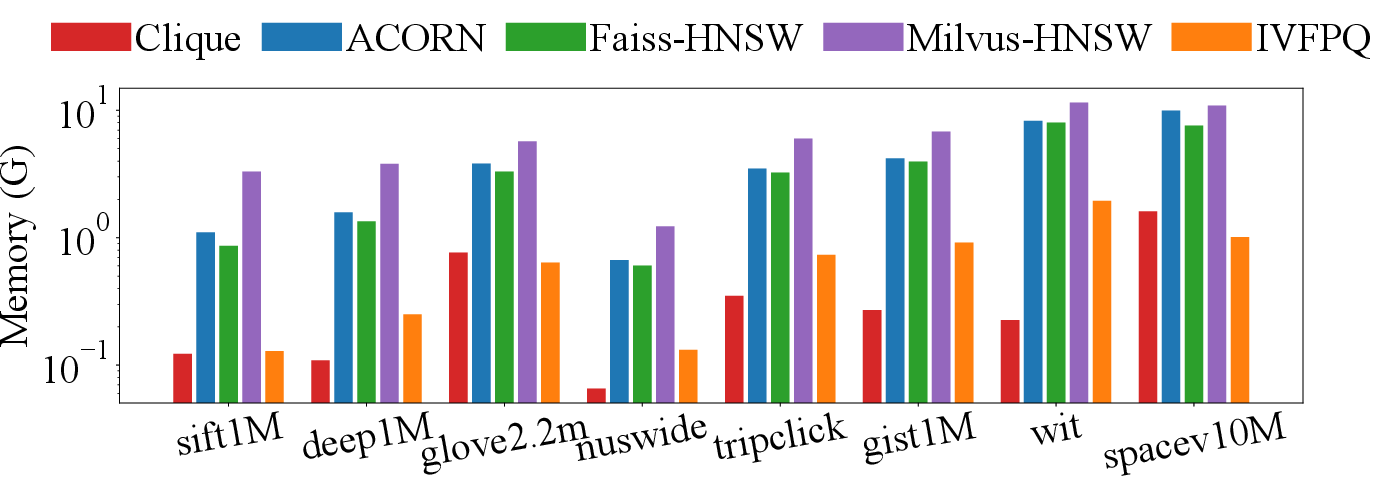
Figure 4: Index size of different methods.
Index Build Speed and Parallelization
Construction times are k′9 that of ACORN (including α0-NNG build and clique mining), and the lock-free approach enables near-linear speedup with increasing thread count.
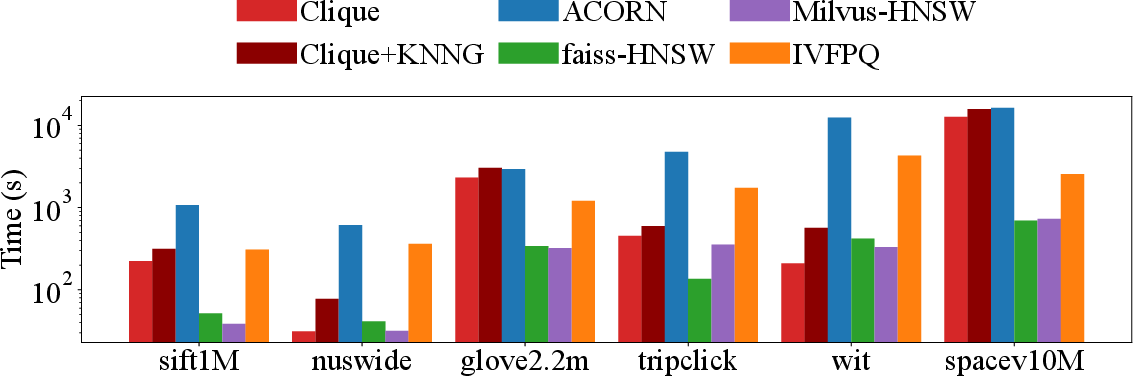
Figure 5: Index construction time of different methods.
Selectivity Robustness
Performance remains high as selectivity α1 ranges from α2 (broad filters) to α3 (extremely narrow filters). MCI's recall remains stable, while competitors often degrade sharply or fail.

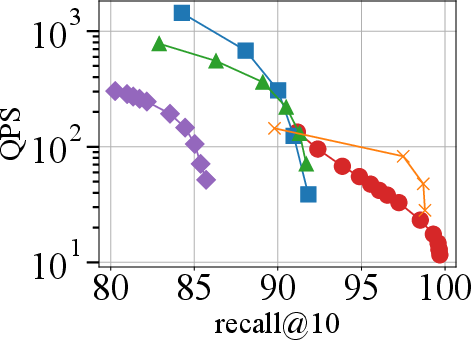
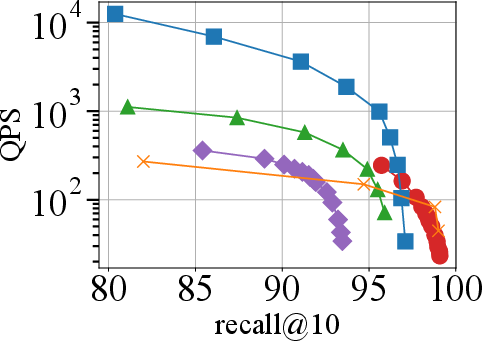
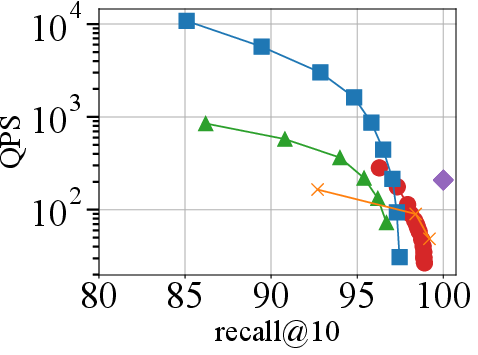
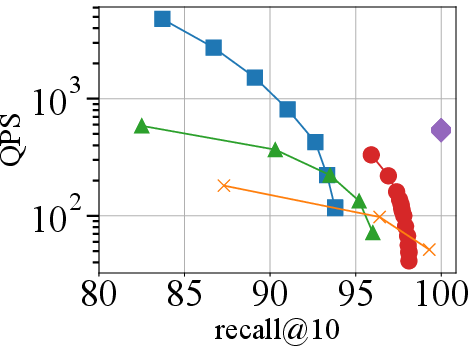
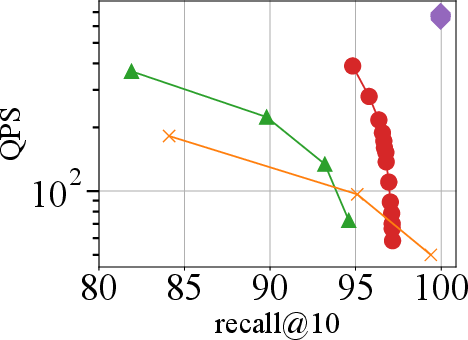
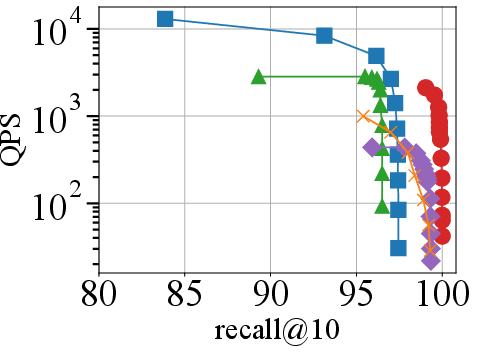
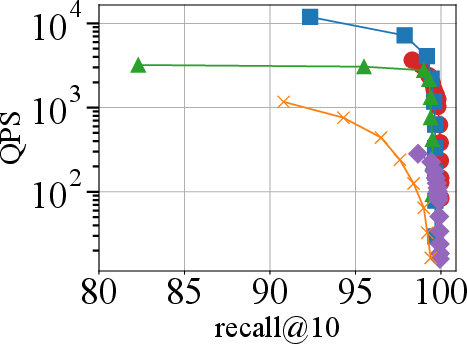
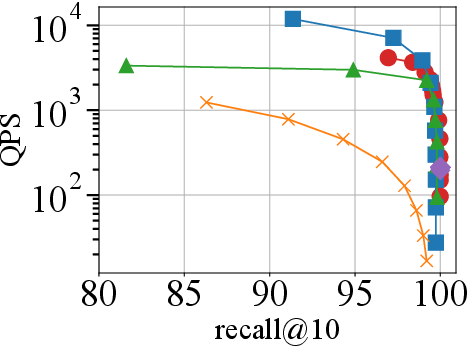
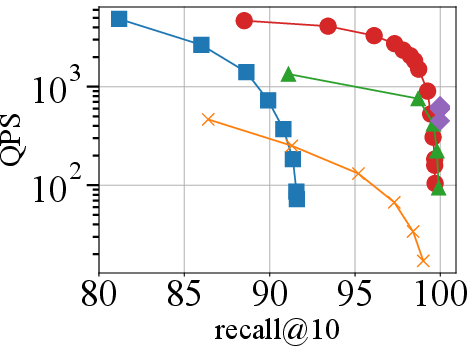
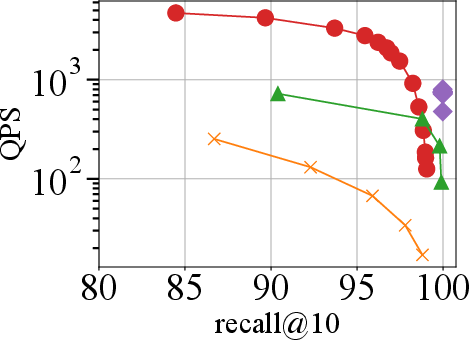
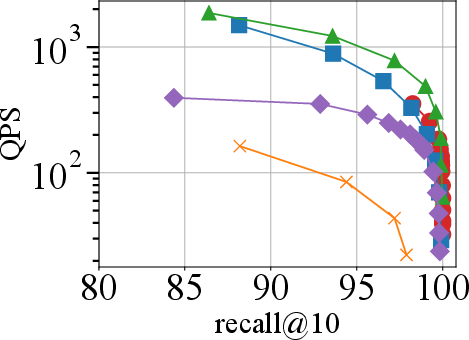
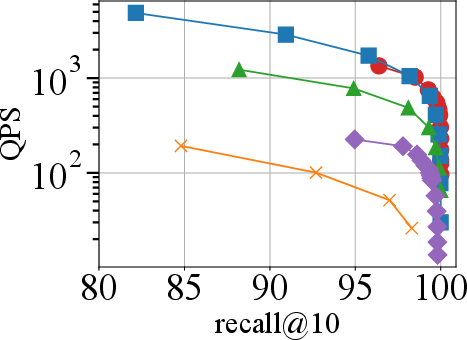
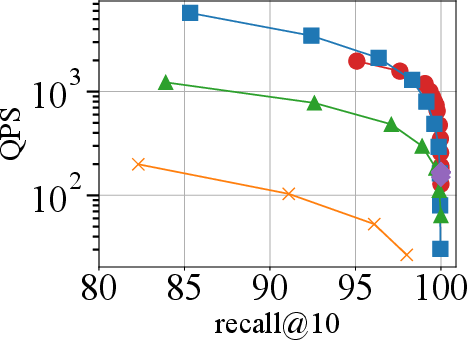
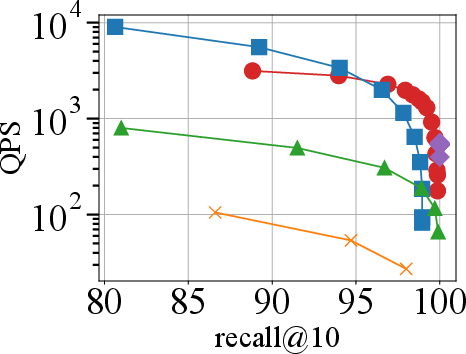
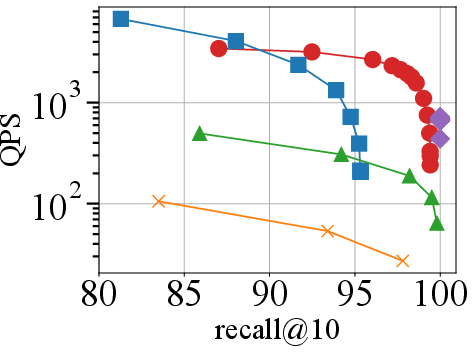
Figure 6: Recall@10 vs QPS of different methods under various selectivity.
Specialized Filtering Tasks
Even against domain-tuned baselines (e.g., iRange, SuperPF, UNG), MCI remains competitive for range and keyword filtering—despite its predicate-agnostic design.

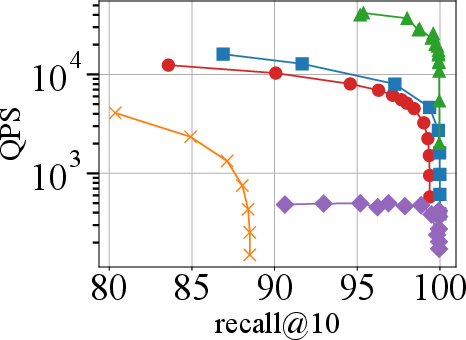
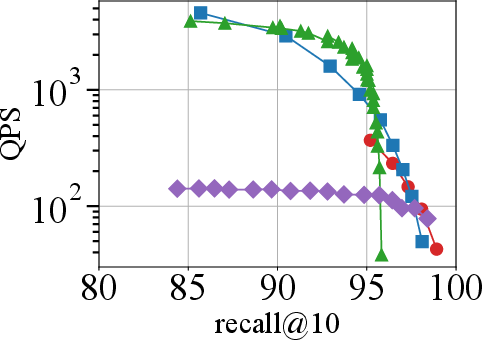
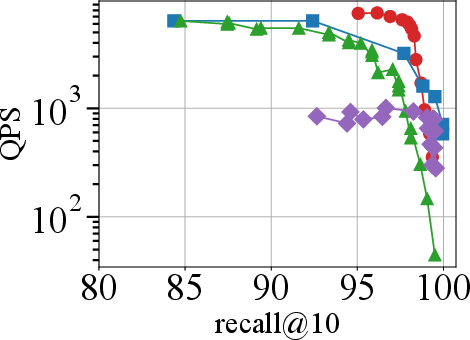
Figure 7: Results of different methods on range filtering.

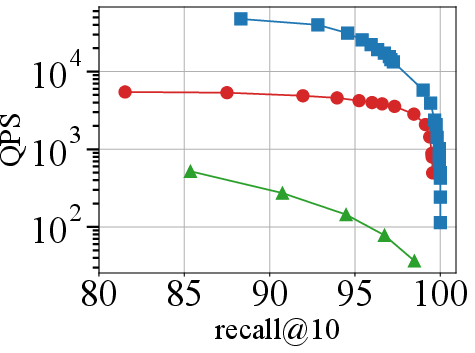
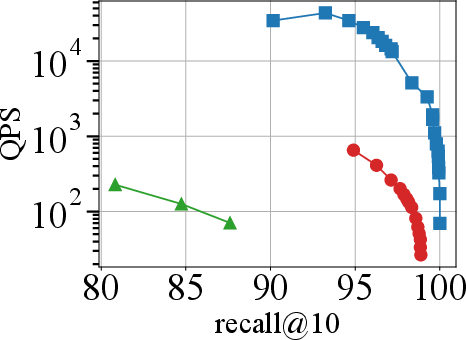
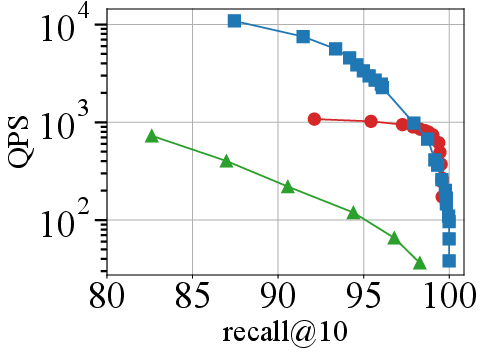
Figure 8: Results of different methods for keywords filtering.
Sensitivity Analyses
Varying core construction parameters (α4, α5), seed count (α6), and clique expansion parameters (α7), MCI shows strong robustness: performance is largely indifferent to α8, modestly improved with larger α9, and insensitive to k0 step size. The effective average out-degree grows substantially larger than k1, providing resilience under filtering (Table~\ref{tab:outdegree}).
Theoretical and Practical Implications
MCI demonstrates that geometric clique structure, when exploited appropriately, can yield connectivity and coverage in high-dimensional data that is otherwise unobtainable without incurring prohibitive memory costs. This insight overturns the assumption that dense indices must be expensive by encoding local transitive structure in a graph representation that is both space-efficient and robust under filtering.
Implications:
- For practical systems, MCI enables efficient, high-recall vector search with arbitrary predicates—critical for real-world RAG, recommendation, and search workloads.
- The index is compatible with dynamic feature and predicate types; it does not require assumptions on metadata distribution.
- The approach provides a new paradigm for graph-based vector search, with direct implications for scalability and adaptability in modern vector databases.
Future Directions
Open avenues for further research include:
- Dynamic Updates: Efficient insertion and deletion without full reindexing, leveraging localized clique mining and maintenance routines.
- Hybridization: Integrating MCI with quantization or hierarchical approaches for further space/time trade-offs.
- Distributed Architectures: Scaling MCI to billion-scale datasets with distributed memory and computation models.
Conclusion
Maximal Clique Index (MCI) introduces a clique-based, density-amplifying index structure that sets a new bar for AFANNS systems. MCI matches or outperforms state-of-the-art graph and quantization-based methods on both general and predicate-specific tasks, especially excelling in the challenging low-selectivity, high-recall regime. This work redefines robust connectivity for high-dimensional, filtered ANNS and establishes clique mining as a practical foundation for future vector search systems.