- The paper introduces a novel agentic AI framework that automates trait extraction in plant phenotyping, drastically reducing manual analysis time.
- It employs a multi-layer architecture combining data, compute, agent, and UI layers to integrate HPC, ViT-based segmentation, and federated orchestration.
- Results show a reduction from 12+ hours to minutes per experiment with secure, reproducible provenance tracking.
Agentic AI Framework for Accelerating Scientific Discovery in Plant Phenotyping
Introduction and Motivation
The presented research addresses a principal bottleneck in high-throughput plant phenotyping: the computational and cognitive effort required for trait extraction and interpretation from massive, multimodal imaging datasets. The Advanced Plant Phenotyping Laboratory (APPL) at Oak Ridge National Laboratory (ORNL) achieves unprecedented throughput via an automated conveyor system imaging hundreds of plants daily across eight modalities and depositing terabytes of data per experiment. However, downstream analysis remains manual, post-hoc, and expert-bound, severely limiting the pace and scope of biological discovery.
The paper introduces an end-to-end agentic AI framework that transforms APPL into an interactive autonomous platform, where scientists interface with AI agents to accelerate time to insight. This approach is situated within DOE's Genesis Mission, targeting the integration of HPC, AI, and automated experimentation for doubling the productivity of U.S. R&D within a decade. The OPAL project’s broader goals include orchestrating federated AI-powered autonomous labs and curating audit-grade provenance for foundational biology models.
System Architecture and Layered Design
The agentic framework comprises four architectural layers:
- Data Layer: Guarantees consistency, persistence, and reproducibility across raw imagery, analysis-ready representations, extracted traits, and model versions, backed by an OPAL data lakehouse and artifact catalog.
- Compute Layer: Facilitates scalable, modality-agnostic trait extraction—normalizing sensor data, ViT-based segmentation, and parallel inference execution via Parsl on the Frontier supercomputer.
- Agent Layer: Implements autonomy and federation, bridging the conversational Co-Scientist Agent and Compute Agent in distinct security domains through a secure streaming channel (S3M).
- UI Layer: Presents a Chainlit-based web chat and dashboard interface, capturing scientific intent in natural language and returning interpretable visualizations and reports.
The framework’s central loop enables scientists to iteratively query, analyze, and refine experimental hypotheses in real-time, reusing established context and computed traits for rapid follow-up questions.

Figure 1: System-level flow from multimodal imagery through AI-ready storage, ViT trait extraction, and agentic reasoning to visualization and interactive analysis.
Data Processing and Trait Extraction
AI-Readiness Pipeline
Heterogeneous sensor modalities (RGB, hyperspectral, thermal, fluorescence, infrared, 3D) require dedicated preprocessing to yield standardized representations. Sensor data are converted to NumPy arrays with unified metadata schemas, associating each datum with experiment identifiers, plant IDs, imaging rounds, and modality tags. Per-plant analysis employs region-of-interest cropping; modalities with multiplexed samples use plant ID-based referencing to ensure unambiguous association.
ViT-Based Segmentation
Trait extraction depends critically on robust plant/background segmentation, especially under high resolution and biological variability. The deployed model is a ViT encoder (\texttt{vit_base}, patch size 8, window size 448), pretrained on ImageNet and fine-tuned on annotated APPL imagery, paired with a convolutional decoder for binary mask generation. Sliding-window inference with overlapping tiles, normalized to ImageNet statistics, generates per-tile masks; blending via Hann windows eliminates edge artifacts. Postprocessing eliminates disconnected noise via connected component analysis, retaining only the largest contiguous plant cluster for trait extraction.
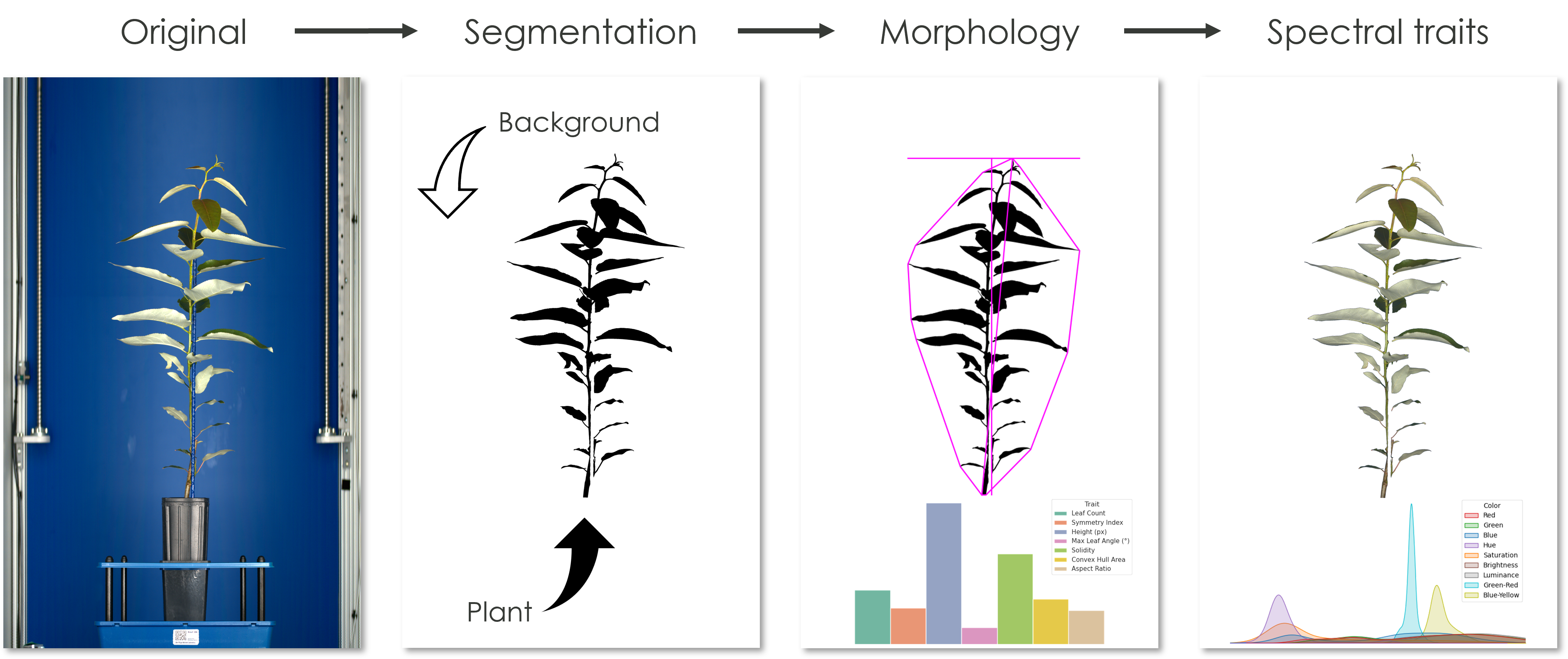
Figure 2: Progression from raw RGB image to plant/background mask, morphological trait computation, and derivation of physiological proxies from spectral and thermal modalities.
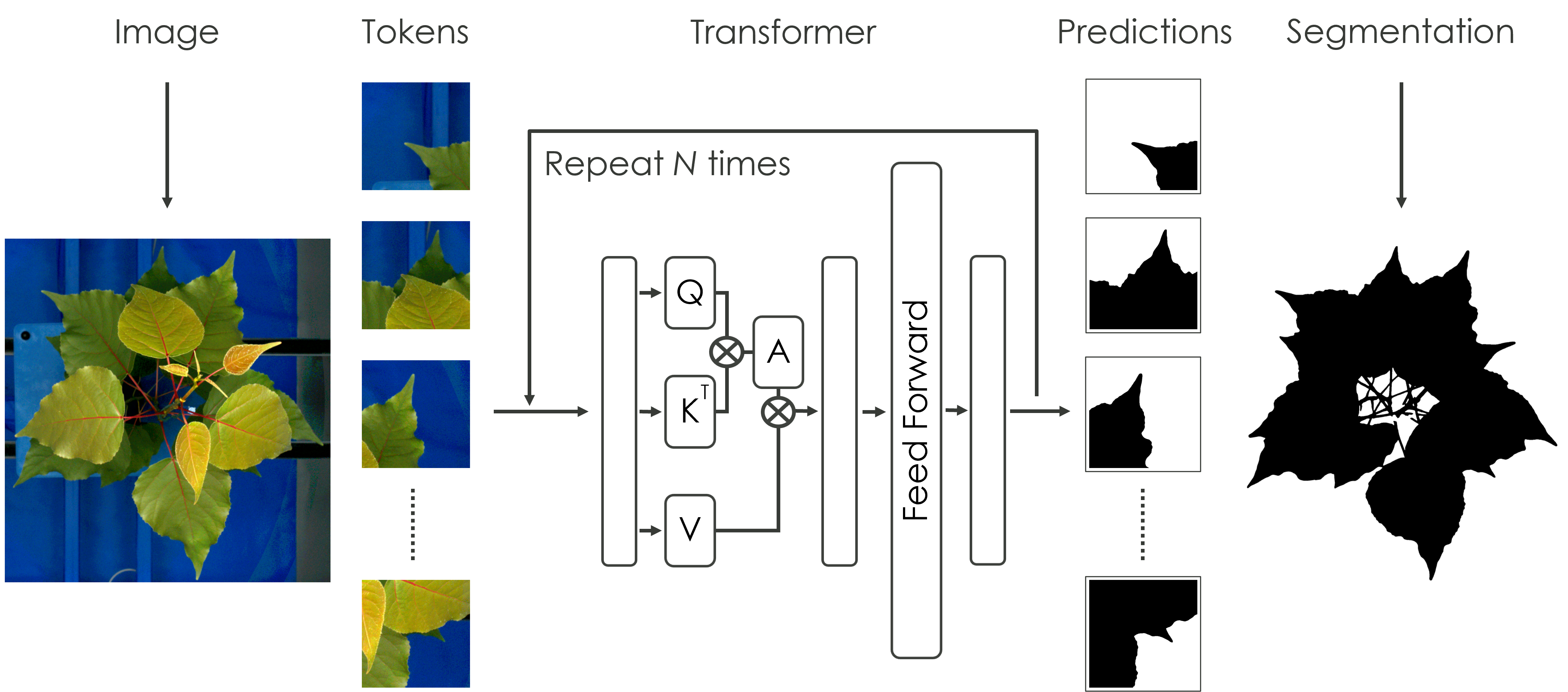
Figure 3: ViT-based segmentation workflow—tiling, per-tile encoding and decoding, blended mask assembly.
Morphological parameters (height, projected leaf area, width, shape indices) are computed from RGB modalities. Physiological proxies (e.g., Fv/Fm, leaf temperature) derive from fluorescence and thermal images. Trait values are aggregated over plant regions via median/mean statistics, yielding tidy, per-plant per-round datasets for subsequent modeling. Intermediate CSVs with full metadata are consolidated into modality-level tables.
Traits requiring direct measurement (photosynthetic rate, stomatal conductance, biomass) will be integrated via multimodal foundation models, currently under development, leveraging both imaging and instrument data streams.
Agentic Framework: Architecture and Implementation
Multi-Agent Federated Design
Academy, a federated agentic middleware, addresses core architectural demands—modular state management, message-passing abstraction, asynchronous execution, and provenance-aware coordination—specifically tailored for scientific environments. Agents encapsulate state, expose behaviors (e.g., plan generation, inference execution), and coordinate across network- and security-domain boundaries.
Conversational Co-Scientist Agent
Serving as a user-facing interface, the Co-Scientist Agent translates natural-language intent into structured analysis plans. Through a Chainlit web interface, guided dialogs capture experiment context, modality, trait selection, and ranking strategies. Ad hoc queries (performance, metadata introspection, validation) are supported. When a plan is finalized, it is serialized to JSON and delegated to the Compute Agent via Academy’s remote action/proxy mechanism.
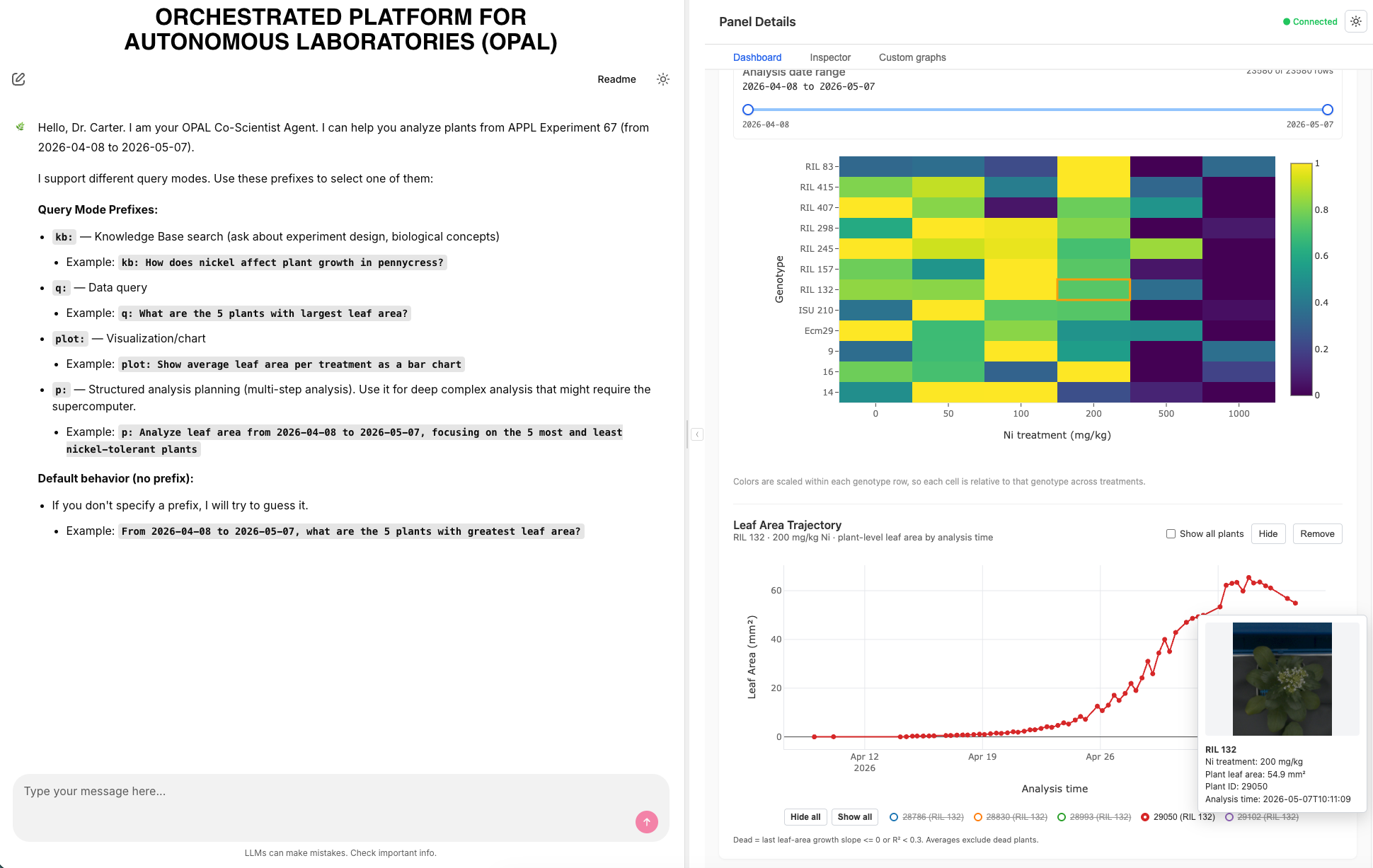
Figure 4: Chainlit web chat and dashboard interface for interactive specification, reporting, and visualization.
Compute Agent Execution
Operating headless on Frontier, the Compute Agent—upon receipt of a plan—retrieves requisite images, executes ViT segmentation (with caching for efficiency), extracts trait values, ranks plant performance, and generates diagnostic visual artifacts. Parsl orchestrates concurrent GPU workloads. Provenance is traced via FlowCept, recording campaign identifiers, input/output parameters, and algorithmic choices for reproducibility.
Secure Cross-Domain Communication
The S3M token-authenticated channel mediates all agent-to-agent exchanges, providing audit-logged, structured interfaces and preserving institutional boundaries. FlowCept ensures traceability from natural-language query to scientific result, enabling detailed provenance for downstream audit and training data curation.
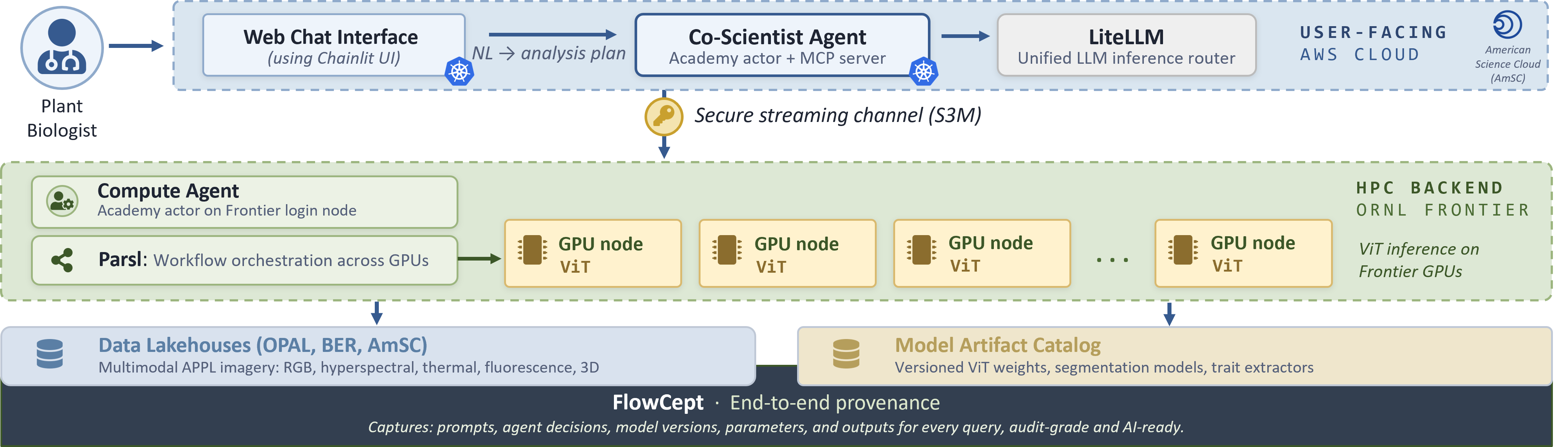
Figure 5: End-to-end agentic architecture with federated execution domains, secure streaming, provenance capture, and scalable inference orchestration across Frontier HPC nodes.
Practical Implications and Numerical Results
Deployment on APPL demonstrates transformative reductions in analysis latency. For 498 plant images (RGB modality), cold queries (full segmentation) completed in 5 minutes; cached trait follow-ups returned in under a minute. Legacy manual workflows (12+ hours per experiment) are replaced by automated pipelines, delivering traits and biological reports within minutes of acquisition. Provenance tracking overhead remains sub-1%.
The framework enables biologists to interactively refine hypotheses in active experimental campaigns, rather than post-hoc. Audit-grade provenance supports reproducibility, data trustworthiness, and scalable training corpora for biology foundation models. The separation of conversational and compute planes, federated orchestration, and rigorous provenance position the system for extension to other modalities, multi-site coordination, and integration with OPAL’s autonomous laboratory network.
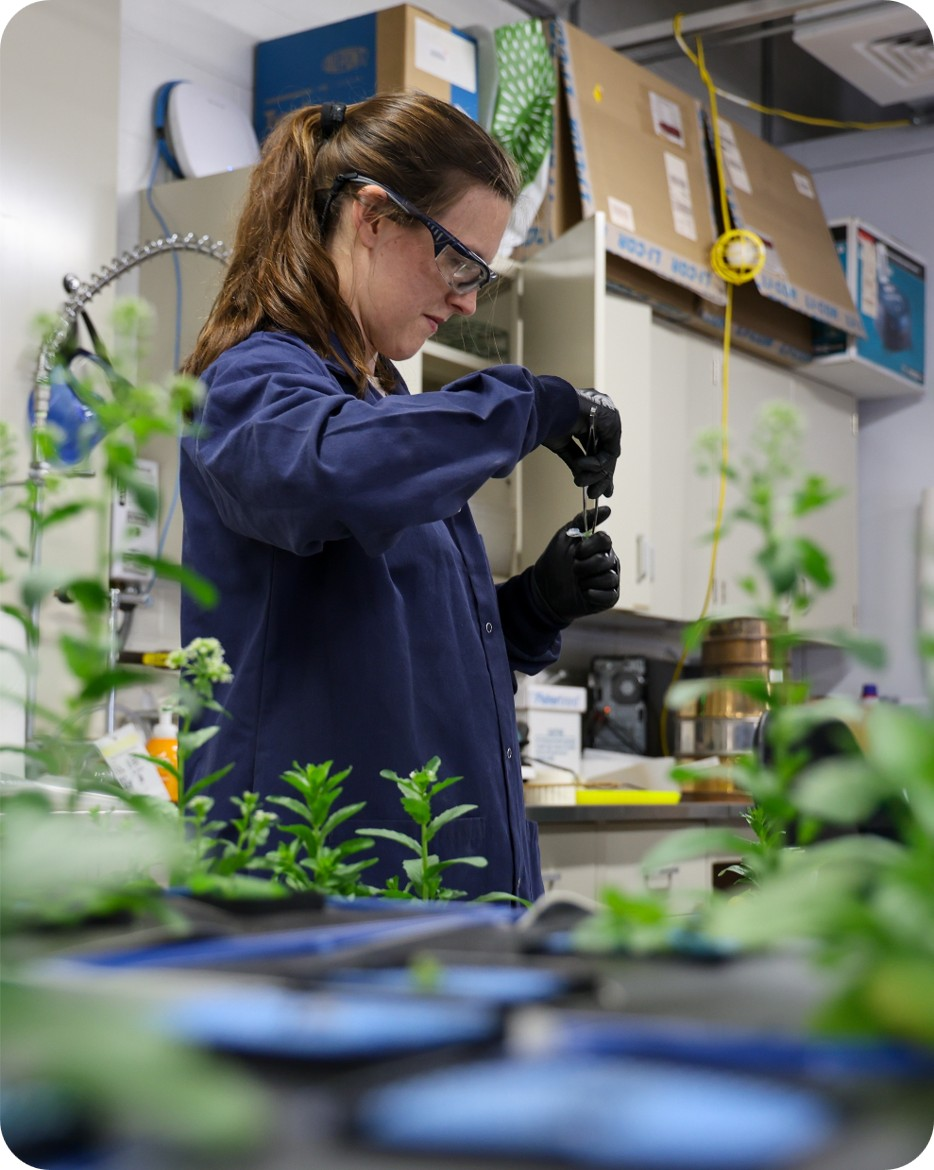
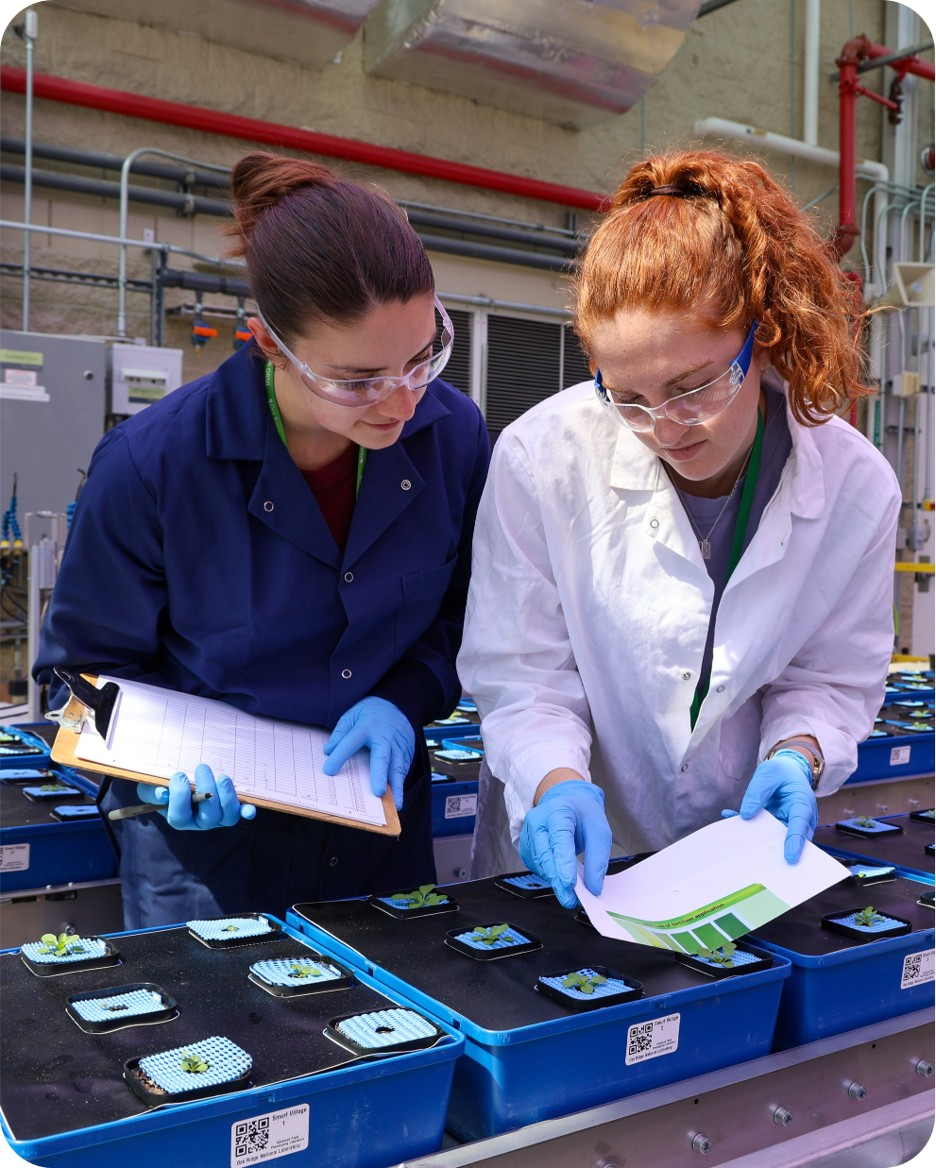
Figure 6: Manual sample preparation and greenness benchmarking—illustrating the bottlenecks targeted for automation and acceleration.
Theoretical and Future Directions
The agentic design demonstrates that infrastructural integration—federation, resource separation, provenance rigor—is the primary constraint in realizing agentic AI for scientific discovery, rather than modeling advances alone. Future work includes extending trait extraction to hyperspectral and 3D modalities, fusing imaging with gas-exchange and mass spectrometry data, further hardening provenance corpora, and scaling agent deployment to coordinate experiments across OPAL’s nationwide federated laboratories.
Conclusion
This research presents a production-grade agentic AI framework that transforms high-throughput plant phenotyping from a data acquisition factory into an interactive, autonomous discovery system. By integrating HPC-scale ViT models, multi-agent orchestration, secure cross-domain communication, and rigorous provenance capture, the framework enables real-time, reproducible decision-making for biologists. The system’s layered architecture and operational experience substantiate its efficacy in collapsing multi-day manual analysis cycles to seconds-scale, interactive workflows, indicating substantial implications for scalable, reproducible, and federated scientific discovery in both plant phenotyping and broader eScience domains.