ENPIRE: Agentic Robot Policy Self-Improvement in the Real World
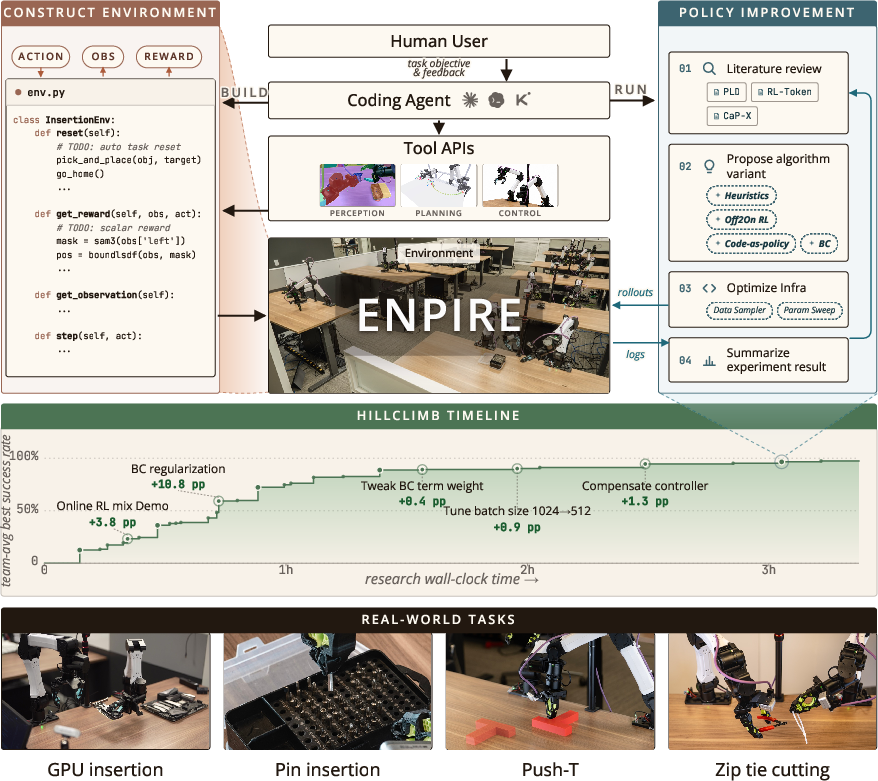
Abstract: Achieving dexterous robotic manipulation in the real world heavily relies on human supervision and algorithm engineering, which becomes a central bottleneck in the pursuit of general physical intelligence. Although emerging coding agents can generate code to automate algorithm search, their successes remain largely confined in digital environments. We conjecture that the missing abstraction to automate robotics research is a repeatable feedback loop for real-world policy improvement: reset the scene, execute a policy, verify the outcome, and refine the next iteration. To bridge this gap, we introduce ENPIRE, a harness framework for coding agents that instantiates this physical feedback routine with four core modules: an Environment module (EN) for automatic reset and verification, a Policy Improvement module (PI) that launches policy refinement, a Rollout module (R) to evaluate policies with one or multiple physical robots operating in parallel, and an Evolution module (E) in which coding agents analyze logs, consult literature, improve training infrastructure and algorithm code to address failure modes. This closed-loop system transforms real-world manipulation learning into a controllable optimization procedure, minimizing human effort while allowing fair ablations across training recipe and agent variants. Powered by ENPIRE, frontier coding agents can autonomously train a policy to achieve a 99% success rate on challenging, dexterous manipulation tasks, such as organizing a pin box, fastening a zip tie, and tool use, a process that further accelerates when we dispatch an agent team on a robot fleet. Our results suggest a practical and scalable path toward deploying coding agents to autonomously advancing robotics in the physical world.
First 10 authors:
Paper Prompts
Sign up for free to create and run prompts on this paper using GPT-5.
Top Community Prompts
Explain it Like I'm 14
Overview
This paper introduces ENPIRE, a system that helps real robots teach themselves to do tricky, hands-on tasks in the real world with very little human help. Think of ENPIRE like a careful coach for robots: it sets up the practice area, lets the robot try, checks how it did, resets the scene, and then helps the robot improve its “game plan” over and over.
Objectives
The researchers wanted to solve two big problems:
- How can we give coding AIs (agents that write and edit code) the tools they need to run real robot experiments without constant human supervision?
- How can we scale this up across many robots working in parallel, and measure how well we use those robots and the AI’s “thinking” (tokens) efficiently?
In simple terms: make robots better at delicate tasks all by themselves, and do it faster by using more robots and smarter AI management.
Methods and Approach
The approach has two main stages and a “team sport” upgrade.
Stage 1: Build a safe, automatic practice environment
Before robots can learn safely and quickly, ENPIRE builds strong foundations:
- Safety boundaries: The robot is only allowed to move within safe zones. Crossing the line means an instant stop and reset, like out-of-bounds in sports.
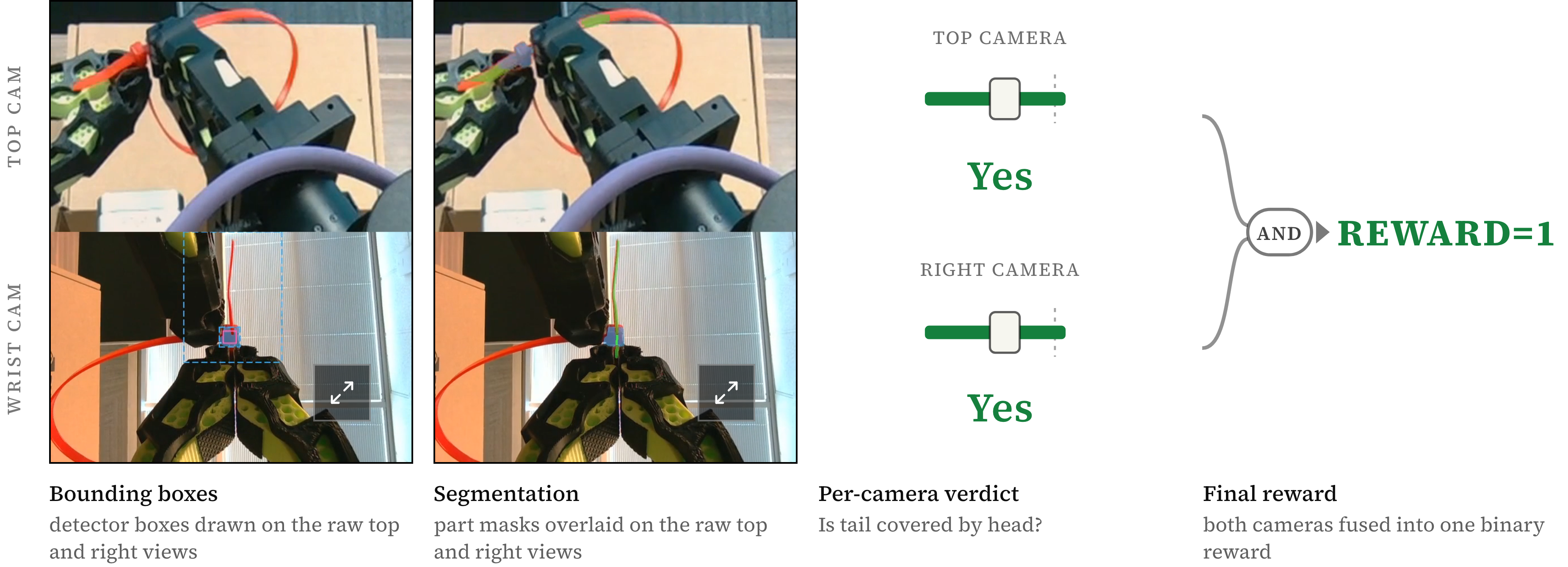
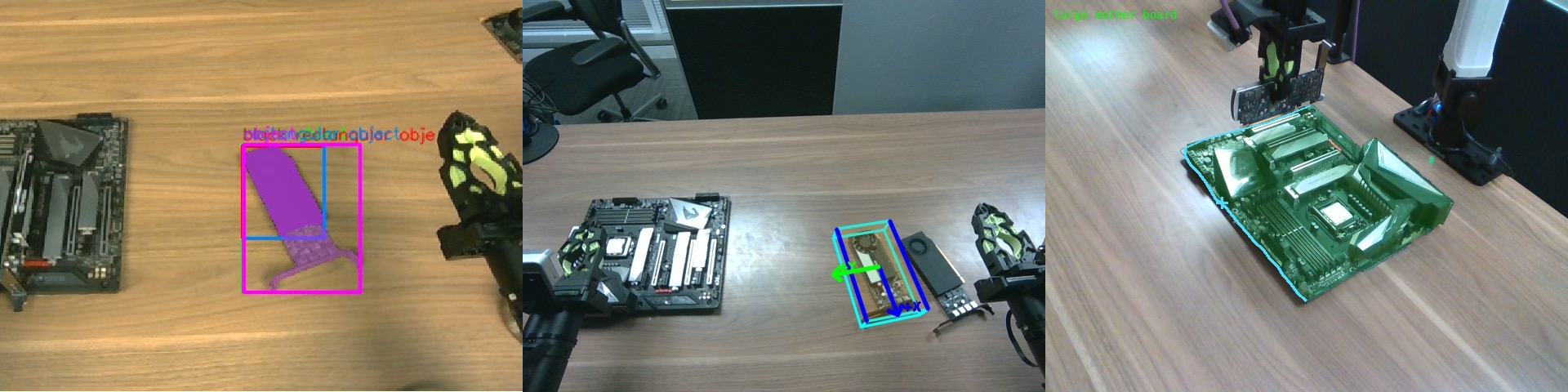
- Automated checking (“verification”): The system creates a simple “reward” signal—basically a yes/no score—using cameras and sensors to tell if the robot succeeded. For example, when inserting a pin, it checks alignment, height, and force.
- Automated reset: After success or failure, robots use a series of moves (like a reset routine) to put everything back to the starting position. This avoids wasting time with a human manually resetting the scene every time.
These pieces form the Environment module and Rollout module. They turn real-world robot practice into a repeatable loop the AI can control.
Stage 2: Let coding agents improve robot policies automatically
A “policy” is the robot’s strategy for how to act based on what it sees and feels. ENPIRE gives coding agents a training codebase and permission to change it. The agents:
- Read logs and watch runs.
- Try ideas from research papers and past experience.
- Edit training code to improve performance.
They use several learning styles:
- Heuristic learning: Handcrafted rules that combine sensing and control (like a set of smart tips).
- Behavior cloning (BC): The robot learns by imitating examples of good behavior.
- Reinforcement learning (RL): The robot learns by trial and error, getting rewards when it succeeds.
- Tool calling and code-based policy synthesis: The AI assembles reusable tools and control blocks like LEGO pieces.
Scaling up: Many robots, many agents
ENPIRE can run across a fleet of robots. Each robot gets its own coding agent to test its own idea. The agents share progress, copy successful code recipes, and drop bad ones—like a team comparing notes and picking the best plays. This “Evolution” module speeds up discovery of winning strategies.
Measuring efficiency: MRU and MTU
To keep score on resource use, the paper defines:
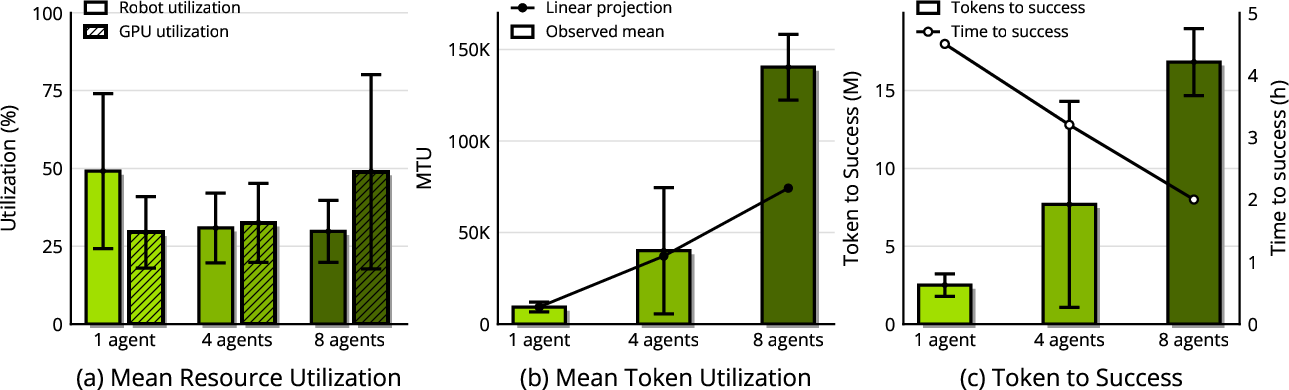
- MRU (Mean Robot Utilization): What fraction of time robots are actually running experiments.
- GPU utilization: How busy the training computers are.
- MTU (Mean Token Utilization): How many AI “thinking” tokens the agents use per minute.
- Token-to-success ratio: How many tokens it takes to get a working robot policy.
These metrics help compare speed versus cost when scaling up to more robots and agents.
Main Findings
Here are the key results and why they matter:
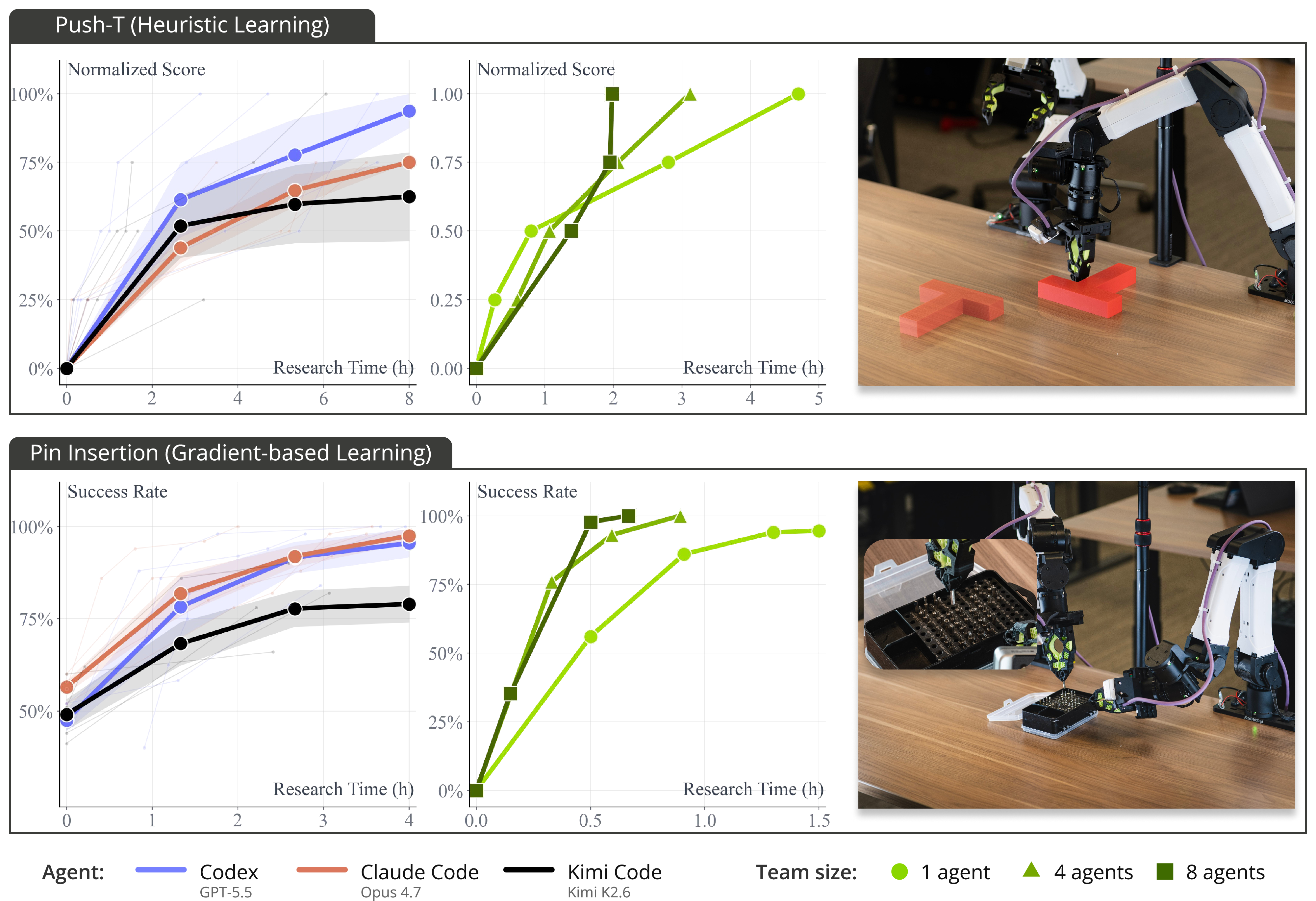
- High success on real, delicate tasks: With ENPIRE, coding agents reached up to 99–100% success on tasks like:
- Push-T (pushing a T-shaped block into place),
- Pin insertion (placing small pins into tight holes),
- GPU insertion (seating a chip into a thin socket),
- Zip tie cutting (grasping scissors and cutting a zip tie).
- This shows robots can learn precision work with minimal human supervision.
- Faster learning with more robots: Using more robots and agents in parallel cut the time to reach high success rates. For example, going from 1 to 8 robots reduced time to near-perfect performance from more than 1.5 hours to about 40 minutes in pin insertion.
- Works across learning styles: ENPIRE handled different ways to learn (heuristics, BC, RL), and agents could mix them to handle tricky corner cases.
- Transferable know-how: Lessons from one task (like pin insertion) helped agents perform better on related tasks (like GPU insertion) when starting fresh.
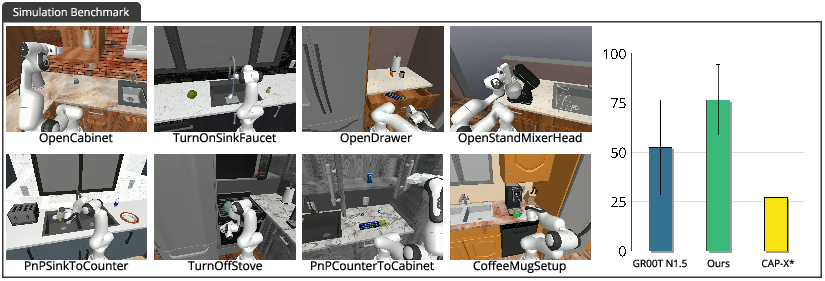
- Simulation boosts and real-world transfer: In the RoboCasa simulator, ENPIRE beat other methods, and strategies learned in simulation (like hovering before grasping) helped real robots succeed at tasks like cutting zip ties.
- New efficiency metrics: MRU and MTU give a clear picture of how well we use robots and tokens, which is important for scaling and budgeting in real labs.
Implications and Impact
- Less human babysitting: By automating reset, checking, and policy improvement, ENPIRE cuts the human time needed to train real robots, making it easier to scale research and deployment.
- A path to general physical intelligence: Robots that can self-improve on real tasks get us closer to machines that can handle many kinds of work in homes, factories, and labs.
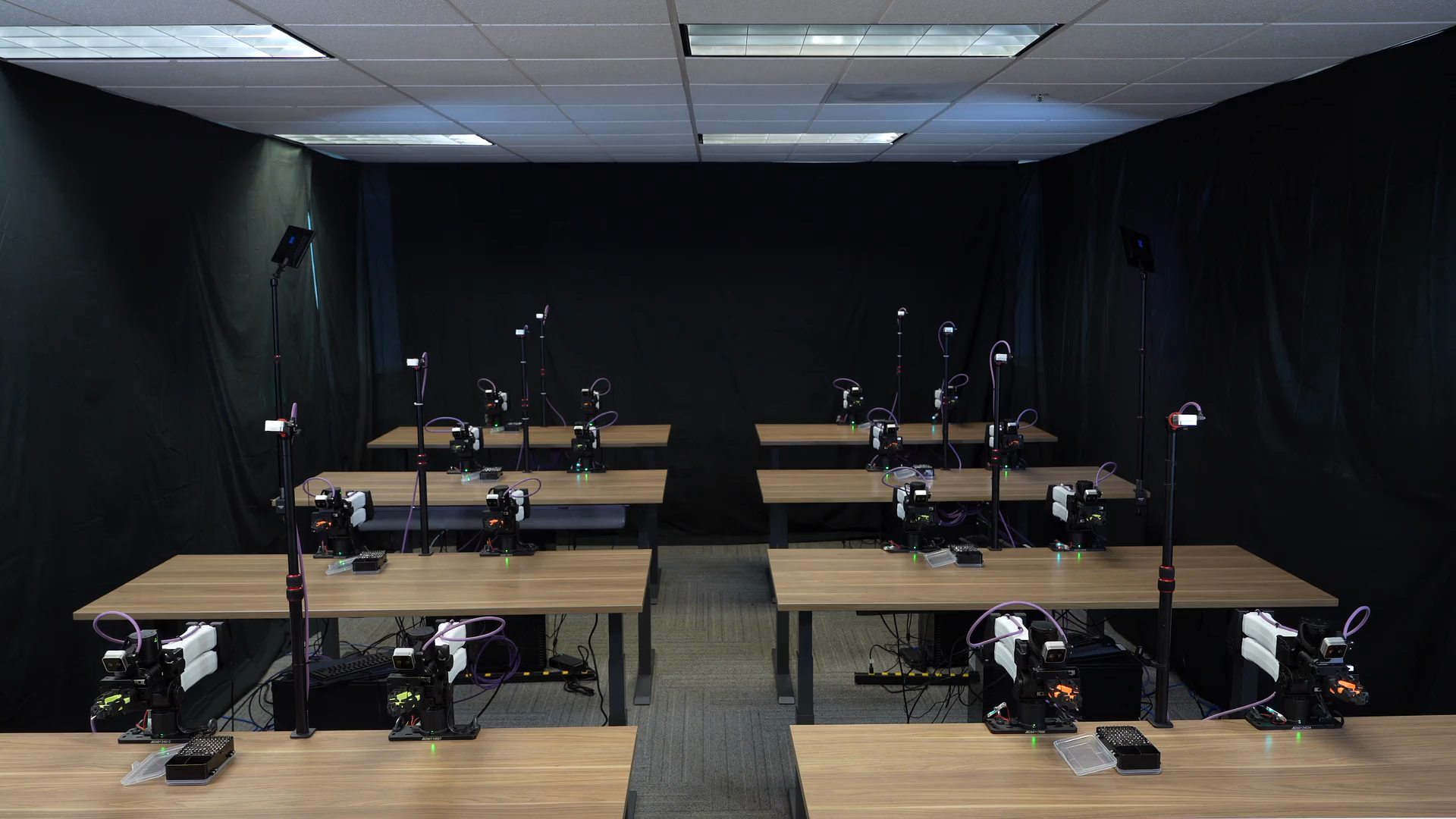
- Practical fleet operation: The team-based, parallel setup shows how companies and labs might run “robot farms” to develop skills quickly.
- Clear trade-offs: Adding more robots speeds things up but uses more AI tokens; MRU and MTU help choose the right balance for speed versus cost.
Simple limitations to keep in mind
- Robots and GPUs aren’t busy 100% of the time: Agents spend some time reading logs, coding, or waiting on the AI, which lowers MRU.
- Token cost grows faster than speed gains at large scale: With many agents, token use can increase more than expected, so teams must manage budgets carefully.
Overall, ENPIRE turns real-world robot training into a clean, repeatable process that coding agents can run mostly on their own. It shows how to scale across fleets, measure efficiency, and achieve high success on delicate tasks—all important steps toward smarter, more capable robots in everyday life.
Knowledge Gaps
Knowledge gaps, limitations, and open questions
The paper proposes an agentic framework for real-world policy self-improvement but leaves several aspects missing or insufficiently resolved. The following list identifies concrete gaps that future work could address:
- Scope and generality of the Environment (EN) module
- No quantitative analysis of how often automated verification misclassifies outcomes (false positives/negatives) across tasks, lighting conditions, and camera placements; lacks receiver operating characteristic (ROC) or calibration curves and how misclassification affects policy learning.
- Absence of standardized protocols or metrics for reset reliability (success rate, latency, failure modes) and how reset failures bias training data or stall learning.
- Unclear portability of safety constraints, verification, and reset procedures across robots with different kinematics, sensors, and controllers; no evaluation on other hardware beyond the YAM arm.
- No study of how much human time is actually required to build and validate EN APIs per task, nor how that scales with task complexity or environment variability.
- Reward design and credit assignment
- Rewards are primarily binary; the paper does not explore dense shaping or uncertainty-aware feedback, nor quantify how reward sparsity affects RL sample efficiency and convergence.
- No safeguards against reward hacking or overfitting to the verification function; no adversarial tests where policies exploit verification blind spots.
- Latency (<150ms) is reported for some reward pipelines, but there is no analysis of how perception/verification latency interacts with control rates and destabilizes contact-rich control.
- Policy Improvement (PI) and Evolution (E) search processes
- The hypothesis space, selection criteria, and stopping rules for the code/algorithm search are not formalized; no description of how exploration vs. exploitation is balanced or how diversity among branches is maintained.
- Lack of ablations attributing success to specific modifications (e.g., BC vs. RL vs. hybrid schedules, hyperparameters); no sensitivity analyses or confidence intervals across seeds.
- Offline and offline-to-online RL usage is mentioned but the provenance, quality, and coverage of offline data are unspecified; no evaluation of distribution shift or conservative RL baselines.
- No mechanism to detect catastrophic regressions (e.g., when code edits degrade safety or performance) beyond average success rate; no rollback or gatekeeping policies described.
- Multi-agent code collaboration via Git is underspecified: conflict resolution, reproducibility of merged branches, and isolation/containment of risky changes are not analyzed.
- Parallel scaling and resource utilization
- MRU and MTU are introduced without formal baselines, variance reporting, or comparisons to classical scheduling/queuing models; no benchmarks to interpret “good” utilization.
- MRU declines with fleet size and token cost grows superlinearly, but the framework offers no scheduling, caching, or batching strategies to reverse these trends; no experiments testing alternative agent coordination schemes.
- GPU utilization is discussed, yet strategies for saturating compute (e.g., parallel training jobs, adaptive batch sizes, or gradient accumulation) are not implemented or evaluated.
- No study of heterogeneity across robots (wear, calibration drift, friction differences) and its impact on policy convergence or fleet scheduling policies.
- Safety and long-horizon robustness
- Safety is treated as kinematic/region constraints; there is no formal verification or runtime monitoring beyond hard limits, nor analysis of near-miss incidents, wear-and-tear, or failure cost.
- The framework grants code write permissions to agents, but there is no description of sandboxes, execution guards, or runtime policy constraints preventing unsafe behaviors or tool misuse.
- Reset-to-critical-phase strategy may introduce distribution shift or bypass earlier subtask failures; no evaluation of whether this harms generalization to full-task runs or long-horizon policies.
- Evaluation methodology and reproducibility
- Success metric allows up to eight retries; no justification or sensitivity analysis to the retry count, nor reporting of one-shot success vs. recovery contributions.
- Claims of 99–100% success and faster convergence than a “frontier” human-in-the-loop method are not supported with statistical tests, standardized benchmarks, or identical task protocols.
- Limited task diversity (PushT, pin insertion, GPU insertion, zip-tie cutting) and a single hardware platform; no evaluation on cluttered scenes, deformable objects, or unstructured environments.
- Prompts, agent configurations, toolchains, hyperparameters, and exact training code changes are not released; reproduction and fair comparisons across coding agents are not possible from current detail.
- Placeholders for websites/resources and missing implementation details (e.g., exact APIs, reset scripts, sensor configurations) hinder external validation.
- Perception and sensing assumptions
- Reliance on “few minutes” of success/failure video for learning verification functions is stated but not analyzed for sample efficiency, annotation requirements, or robustness to domain shifts.
- Force “estimates” are used in some tasks without specifying sensing modality (e.g., inferred from motor currents vs. F/T sensors), calibration procedures, or error characterization.
- VLA and tool synergy
- The reported synergy between VLAs and procedural tools lacks systematic ablations (e.g., VLA-only vs. tool-only vs. combined) and generalization tests across tasks with varying long-horizon complexity.
- No analysis of failure cases where VLA outputs conflict with tool plans, nor arbitration mechanisms or confidence-based switching policies.
- Economic and environmental costs
- The framework quantifies tokens and utilization but omits energy consumption, wear-related costs, and overall cost-per-success metrics; trade-offs between wall-clock speed and total resource costs are not assessed.
- No budgeting or optimization frameworks (e.g., token budgets, robot-time caps) that explicitly constrain the agent and evaluate policy learning under fixed resource envelopes.
- Knowledge transfer and continuous learning
- “Agentic continue learning” is described qualitatively; there is no formal mechanism for summarizing, indexing, and reusing learned procedures across tasks, nor an evaluation of transfer efficiency or negative transfer.
- How prior knowledge interacts with new safety constraints, new verification functions, and different robot morphologies is not explored.
- Long-term deployment and maintenance
- No evaluation of stability over days/weeks, including drift in sensors/actuators, degradation of verification accuracy, or policy performance decay.
- Absence of monitoring, recalibration, and automated maintenance routines for sustained autonomous operation.
These gaps suggest concrete directions: instrument verification and reset reliability; formalize hypothesis search and scaling policies; introduce robust safety/guardrails; broaden tasks and hardware; release reproducible artifacts; and optimize utilization and token efficiency under explicit resource budgets.
Practical Applications
Immediate Applications
Below are specific, deployable use cases that can be implemented with current capabilities described in the paper’s ENPIRE framework (Environment–Policy Improvement–Rollout–Evolution), including its automated reset/verification, agent-driven training, and fleet scaling with MRU/MTU metrics.
- Electronics assembly cell retrofits for precision insertions (e.g., pins, headers, GPU seating) — Sector(s): manufacturing, electronics; Tools/Workflows: EN module for hard safety bounds, automated visual/force verification; auto-reset skills; PI using BC/RL/heuristics; Rollout for on-hardware A/B tests; Evolution via Git-based agent collaboration; MRU/MTU dashboards for ops. — Assumptions/Dependencies: task fixtures, dual camera views, force/torque or proxy sensing; a one-time human-guided environment API build; safe motion constraints; access to frontier coding agents.
- Autonomous “RobOps” for integrators and factory engineering teams — Sector(s): robotics integration, software tooling; Tools/Workflows: Agent harness SDK; GitOps for policy recipes; automated experiment orchestration; utilization dashboards (MRU, GPU, MTU); token-to-success budgeting; policy rollback and cherry-pick merges. — Assumptions/Dependencies: standardized robot control stack; secure repo access; job scheduling on robot/GPU resources; audit logging.
- Quality verification and rework stations with closed-loop reset — Sector(s): manufacturing QA; Tools/Workflows: binary reward synthesis from camera+proprioception for pass/fail; sub-150 ms perception checks; automatic rework/reset cycles to recover from failures. — Assumptions/Dependencies: reliable streaming vision; latency budget met on available compute; well-defined pass/fail criteria.
- Warehouse and kitting micro-tasks (small-part organizing, cable/zip-tie handling) — Sector(s): logistics/fulfillment; Tools/Workflows: code-based policies augmented with VLAs for long-horizon steps; tool-use (scissors) with hover–grasp–act patterns; automated recovery on misses. — Assumptions/Dependencies: safety zones for tool use; dual-view segmentation to avoid false positives; supervised initial task setup.
- University and corporate research labs: automated real-robot learning loops — Sector(s): academia, R&D; Tools/Workflows: immutable Gym-like environment APIs for reproducible experiments; automated rollouts with logs/videos; multi-robot parallelization; MRU/MTU as standard lab KPIs. — Assumptions/Dependencies: shared fleet access; standardized dataset/log schemas; IRB/safety approvals for autonomous operation.
- High-throughput real-world data generation for VLA/BC/RL — Sector(s): AI/ML for robotics; Tools/Workflows: auto-reset to collect diverse on-policy data; offline-to-online RL pipelines; domain randomization at reset; dataset curation from verified success/failure episodes. — Assumptions/Dependencies: storage pipelines for large video/trajectory logs; labeling via automated verification signals; data governance.
- Policy recipe benchmarking and A/B testing on hardware — Sector(s): software/DevOps for robotics; Tools/Workflows: agent-initiated hyperparameter sweeps; per-robot branch testing; merge-on-success workflows; time-to-success and token-to-success scoring. — Assumptions/Dependencies: reliable experiment schedulers; repeatable reset/verification; versioned datasets and models.
- Safety guardrail templates for agentic robot control — Sector(s): safety engineering, compliance; Tools/Workflows: codified hard constraints (workspace, velocity, force caps) as reusable “safety envelopes”; immediate abort and reset mechanisms; incident replay from logs. — Assumptions/Dependencies: calibrated limits per robot/end-effector; fail-safe stop hardware; organizational SOPs for autonomous trials.
- Training and education in modern robot learning operations — Sector(s): education, workforce upskilling; Tools/Workflows: student assignments to design EN (reward+reset) once, then let agents run PI/R/E loops; MRU/MTU as learning objectives for efficient experimentation. — Assumptions/Dependencies: classroom-safe robots; sandboxed agent runtimes; curated starter tasks.
- Vendor-neutral “Environment API” and reset skill libraries — Sector(s): robotics tooling ecosystem; Tools/Workflows: sharable APIs for verification/reset; task packs (pin insertion, Push-T, zip-tie cutting); adapters for common arms (e.g., YAM). — Assumptions/Dependencies: hardware drivers; camera calibration templates; permissive licensing for cross-organization sharing.
Long-Term Applications
These opportunities are plausible extensions that may require improved reliability, scaling, cost-efficiency, or regulatory clarity before broad deployment.
- Self-improving household and service robots for long-tail chores — Sector(s): consumer robotics, hospitality/retail; Tools/Workflows: on-device EN for household tasks (organizing, packaging removal, cable management); autonomous PI using real-world feedback; safe tool use with strict guardrails. — Assumptions/Dependencies: robust generalization in unstructured homes; low-cost sensors; strong safety certifications.
- Closed-loop process optimization across multi-factory robot fleets — Sector(s): manufacturing operations; Tools/Workflows: global Evolution module to share/merge policy recipes across sites; fleet scheduling to maximize MRU/GPU utilization; automatic domain randomization per line configuration. — Assumptions/Dependencies: cross-site data sharing agreements; network reliability; standardized hardware interfaces.
- Agentic lab automation for wet labs and diagnostics — Sector(s): biotech, healthcare labs; Tools/Workflows: EN for pipetting/plate handling with auto-verification via imaging; PI to improve yield/throughput; regulated audit trails of agent decisions. — Assumptions/Dependencies: contamination control; regulatory approval (CLIA/GxP); high-precision vision and metrology.
- Hospital sterile processing and instrument handling — Sector(s): healthcare; Tools/Workflows: safe envelopes for sharps; perception-driven verification (cleanliness, orientation); reset to initial trays; continuous policy improvement from real-world feedback. — Assumptions/Dependencies: rigorous safety standards; integration with clinical workflows; liability frameworks.
- Standardized regulatory and audit frameworks for agentic robot experimentation — Sector(s): policy/regulation; Tools/Workflows: reporting of MRU/MTU, token-to-success, safety events; mandated immutable environment APIs; audit logs of code changes and policy merges. — Assumptions/Dependencies: consensus on metrics; certification bodies for agent frameworks; secure provenance tracking.
- “Robot App Store” for task packs (reset, verification, trained policies, recipes) — Sector(s): software/marketplaces; Tools/Workflows: signed, versioned bundles with EN+PI assets; compatibility matrices per robot; revenue-sharing for contributors. — Assumptions/Dependencies: IP/licensing norms for agent-generated code; interoperability standards.
- Autonomous maintenance and field operations in energy/utilities — Sector(s): energy, infrastructure; Tools/Workflows: manipulation of valves, connectors, clamps; perception-based pass/fail in adverse conditions; recovery and retry strategies; fleet-level learning transfer across sites. — Assumptions/Dependencies: ruggedized robots; low-bandwidth autonomy; strict safety and environmental compliance.
- Cloud “Autoresearch-as-a-Service” for SMEs — Sector(s): cloud robotics; Tools/Workflows: remote access to standardized robot cells; user-provided task specs; agents construct EN then run PI/E; usage billed by MRU/MTU/token budgets. — Assumptions/Dependencies: secure remote operation; SLA for safety and uptime; cost-effective token/model access.
- Safety-certified agent frameworks with formal verification of EN — Sector(s): safety/assurance; Tools/Workflows: model checking for safety envelopes; runtime monitors; conformance tests for verification/reset correctness before PI is allowed to run. — Assumptions/Dependencies: advances in formal methods for perception-in-the-loop systems; standardized test suites.
- Token- and compute-efficient agent stacks for on-prem/edge — Sector(s): AI infrastructure; Tools/Workflows: distilled local coding agents; offline planning with batched updates; cost-aware scheduling that optimizes token-to-success; hybrid local/cloud reasoning. — Assumptions/Dependencies: high-quality small models; efficient tool-use planners; privacy/security requirements.
- Cross-organization knowledge transfer of “training recipes” — Sector(s): consortia, standards; Tools/Workflows: recipe ontologies for BC/RL/heuristics; meta-learning of when to use which method; shared benchmarks and leaderboards using MRU/MTU. — Assumptions/Dependencies: data/model sharing frameworks; anonymization; benchmark governance.
- Retail/food-service robots that adapt policies on-site — Sector(s): QSR/retail automation; Tools/Workflows: EN for station-level tasks (dispense, assemble, package); verification via vision scales/temperature; self-improvement to reduce cycle time/spoilage. — Assumptions/Dependencies: hygienic design; regulatory approvals; robust perception in clutter.
Notes on feasibility across applications
- Many immediate deployments hinge on reliable EN construction: fast, accurate binary verification and robust auto-reset are critical enablers.
- Scaling benefits depend on fleet size and coordination efficiency; token cost grows super-linearly with more agents today, so cost controls and smaller on-prem models are important.
- Safety and compliance require hard constraints, emergency stops, audit logs, and eventually certification of agentic control loops.
- Cross-hardware portability improves with standardized APIs, adapters, and common logging/telemetry for MRU/MTU.
- Human effort is front-loaded into environment design; payback comes from reusing immutable environment APIs across tasks, robots, and sites.
Glossary
- Actor-critic: A reinforcement learning architecture with separate policy (actor) and value (critic) components used to guide updates during training. "the actor-critic policy update rate"
- Autoresearch: An automated, iterative research loop where coding agents generate, test, and refine hypotheses or algorithms with minimal human intervention. "We formalize physical autoresearch for dexterous manipulation as a distinct problem for the coding agent and robotics communities."
- Behavior cloning (BC): A supervised learning approach that trains a policy to imitate expert demonstrations by mapping observations to actions. "including behavior cloning (BC)~\citep{bc}"
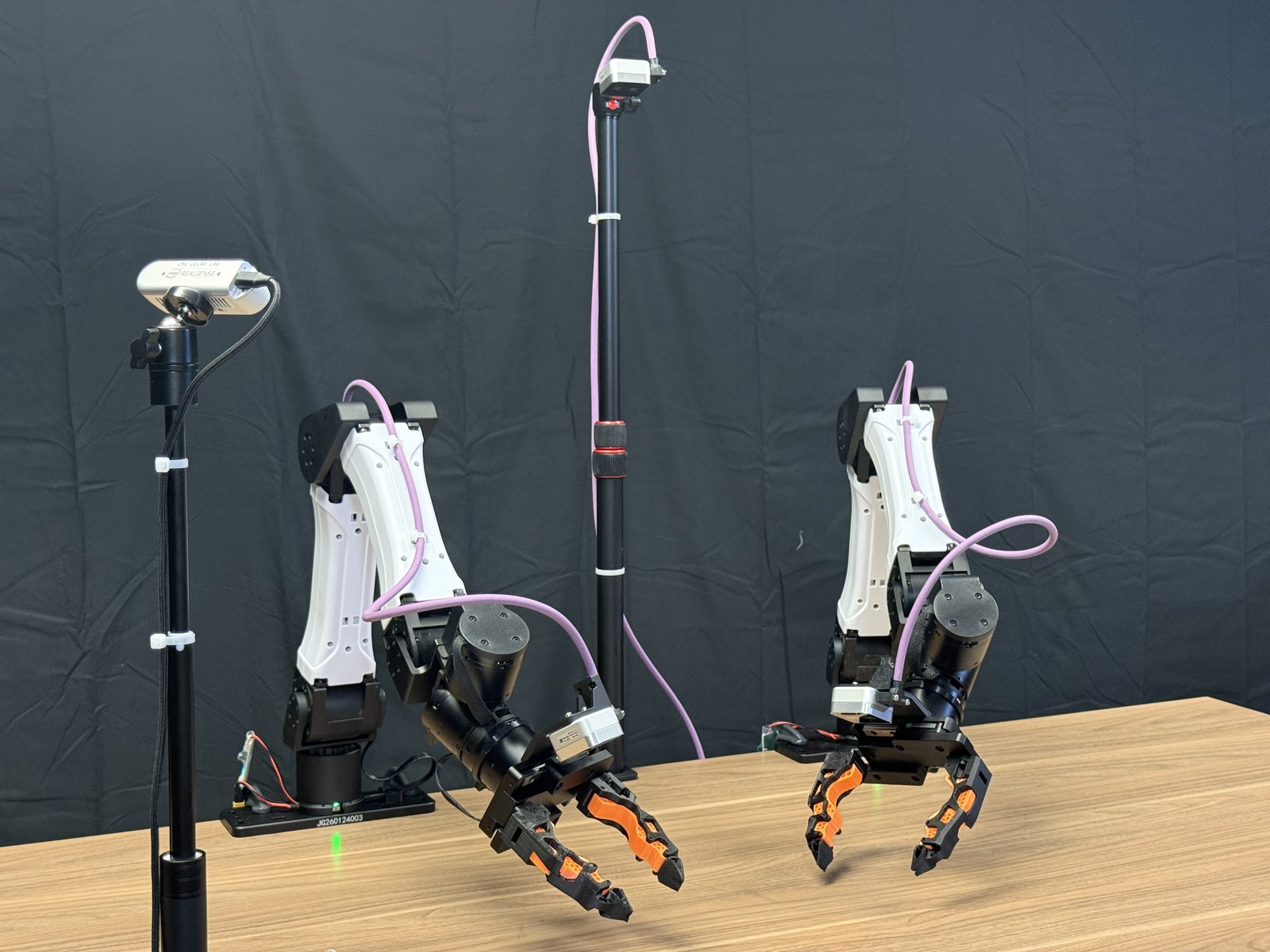
- Bimanual: Refers to a robot with two manipulators/arms capable of coordinated operation. "Our real robot platform is the bimanual 6-DoF YAM robot."
- Contact-rich: Describes tasks involving sustained or complex physical interactions where contact dynamics and forces are critical. "For contact-rich tasks, we employ procedural tool calls inspired by CaP-X~\citep{capx2026}"
- Credit assignment: The process of determining which actions or events contributed to an observed outcome, typically for reward distribution during learning. "a real-time automated verification process for feedback and credit assignment"
- Decentralized: A coordination regime where multiple agents operate asynchronously without a single central controller. "We dispatch a decentralized team of agents to test training recipes asynchronously, sharing and abandoning ideas based on the average success rates."
- Degrees of freedom (DoF): The number of independent parameters that define a robot’s configuration or motion capabilities. "bimanual 6-DoF YAM robot."
- Domain randomization: A sim/real robustness technique that randomizes environment parameters during training to improve generalization. "automatically apply domain randomization during reset."
- End-effector: The tool or gripper at the end of a robot’s kinematic chain that interacts with the environment. "end-effector height"
- Evolution module (E): The component that coordinates hypothesis selection and sharing in a multi-agent setting to accelerate policy improvement. "scale this Evolution module ({E} in {PIRE})."
- Gym APIs: Standardized interfaces (from OpenAI Gym) for interacting with RL environments, including observation, action, and reward signals. "immutable Gym APIs~\citep{gym}"
- Hard safety constraints: Strict operational limits on robot configurations or motions that, if violated, trigger immediate failure and reset for safe real-world operation. "Hard safety constraints"
- Heuristic learning: Policy improvement driven by hand-crafted rules and tool calls rather than gradient-based training. "in simulation using heuristic learning."
- In-context recovery: The capability of a system to adapt and recover within the same episode after a failure or unexpected event. "our metric captures both precision and in-context recovery in the face of environment uncertainty."
- Kinematic behaviors: Motion characteristics of a robot determined by its geometry and joint limits, independent of forces or dynamics. "We restrict the configuration space and kinematic behaviors of the robot to a safe operational limit."
- Mean Robot Utilization (MRU): The fraction of wall-clock research time during which the robot is actively executing experiments. "Mean Token Utilization (MTU) and Mean Robot Utilization (MRU)"
- Mean Token Utilization (MTU): The average rate of language-model token consumption during the autoresearch process, used to assess token efficiency. "Mean Token Utilization (MTU) and Mean Robot Utilization (MRU)"
- Non-deterministic: Characterized by variability across trials; outcomes are not exactly repeatable due to stochastic or time-varying factors. "real-world conditions are non-deterministic and time-varying"
- Non-prehensile: Manipulation that does not involve grasping, such as pushing or sliding objects. "uses non-prehensile movement to align a T-shape block to a goal region"
- Offline-to-online RL: A training paradigm that initializes from offline datasets and continues learning through online interaction. "offline-to-online RL"
- Online reinforcement learning (RL): Learning directly from live interactions with the environment, updating the policy as data is collected. "offline or online reinforcement learning."
- Proprioception: Internal sensing of a robot’s state (e.g., joint positions, velocities, forces) used for control and feedback. "videos and proprioception recordings"
- Reset mechanism: Automated procedures that restore the environment to a defined initial state for the next trial. "a robust automatic reset mechanism"
- Rollout: A single execution of a policy in the environment from start to termination used for evaluation or data collection. "We measure success as the chance of completing a task in one rollout, given a fixed number of retries (here, eight)."
- Token-to-success ratio: A metric reflecting how many language-model tokens are consumed per successful policy or task outcome. "We then calculate the token-to-success ratio"
- Truncation: Early termination of an episode not necessarily due to task completion, often triggered by safety or timeout conditions. "episode termination or truncation"
- Vision-language-action (VLA): Models that integrate visual and linguistic inputs to produce actions for robotic control. "vision-language-action models (VLAs)~\citep{rt1}"
Collections
Sign up for free to add this paper to one or more collections.