- The paper demonstrates that stereo global shutter configurations significantly reduce drift and tracking failures in quadruped SLAM.
- It shows that inertial integration in visual-only pipelines can degrade performance, while LiDAR-visual fusion with tactical-grade IMUs offers bounded drift.
- The study provides concrete design guidelines for sensor selection, emphasizing tailored configurations for the dynamic challenges of legged locomotion.
Introduction
This essay provides a detailed analysis of "Sensor Configuration Matters: A Systematic Evaluation of Multimodal SLAM on Quadruped Robots" (2606.19067). The paper offers an exhaustive empirical study of how sensor modalities and configurations affect SLAM robustness and accuracy under the aggressive and stochastic dynamics characteristic of quadrupedal locomotion. Using the GrandTour dataset, which encompasses a broad spectrum of environmental challenges and motion profiles, the authors systematically dissect the influence of camera modality, shutter technology, IMU tiering, and multi-sensor fusion in visual, visual-inertial, and LiDAR-visual-inertial SLAM frameworks.
Evaluation Framework and Dataset
The evaluation leverages the GrandTour dataset, encompassing seven diverse missions including alpine, urban, underground, and industrial environments.

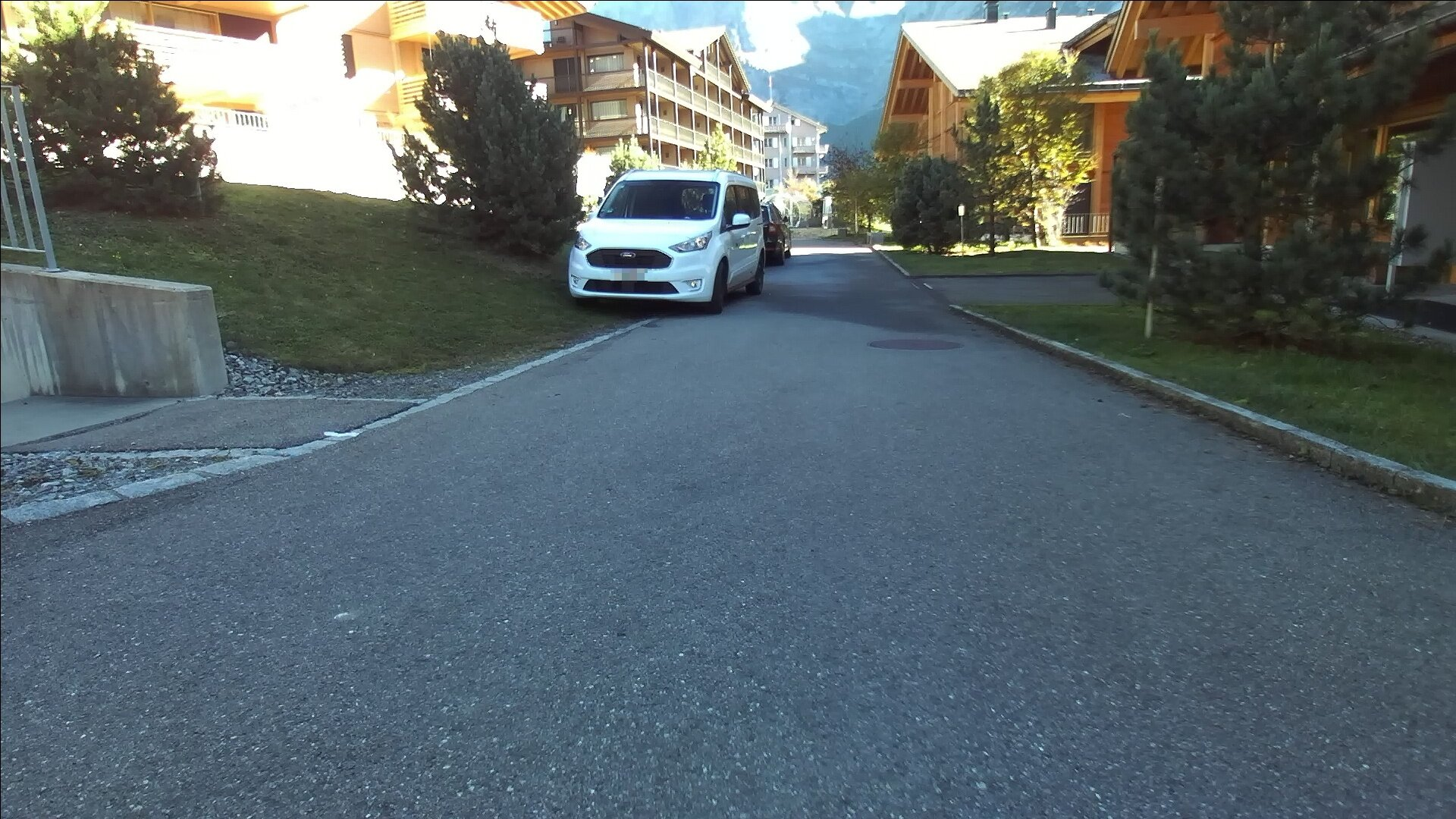
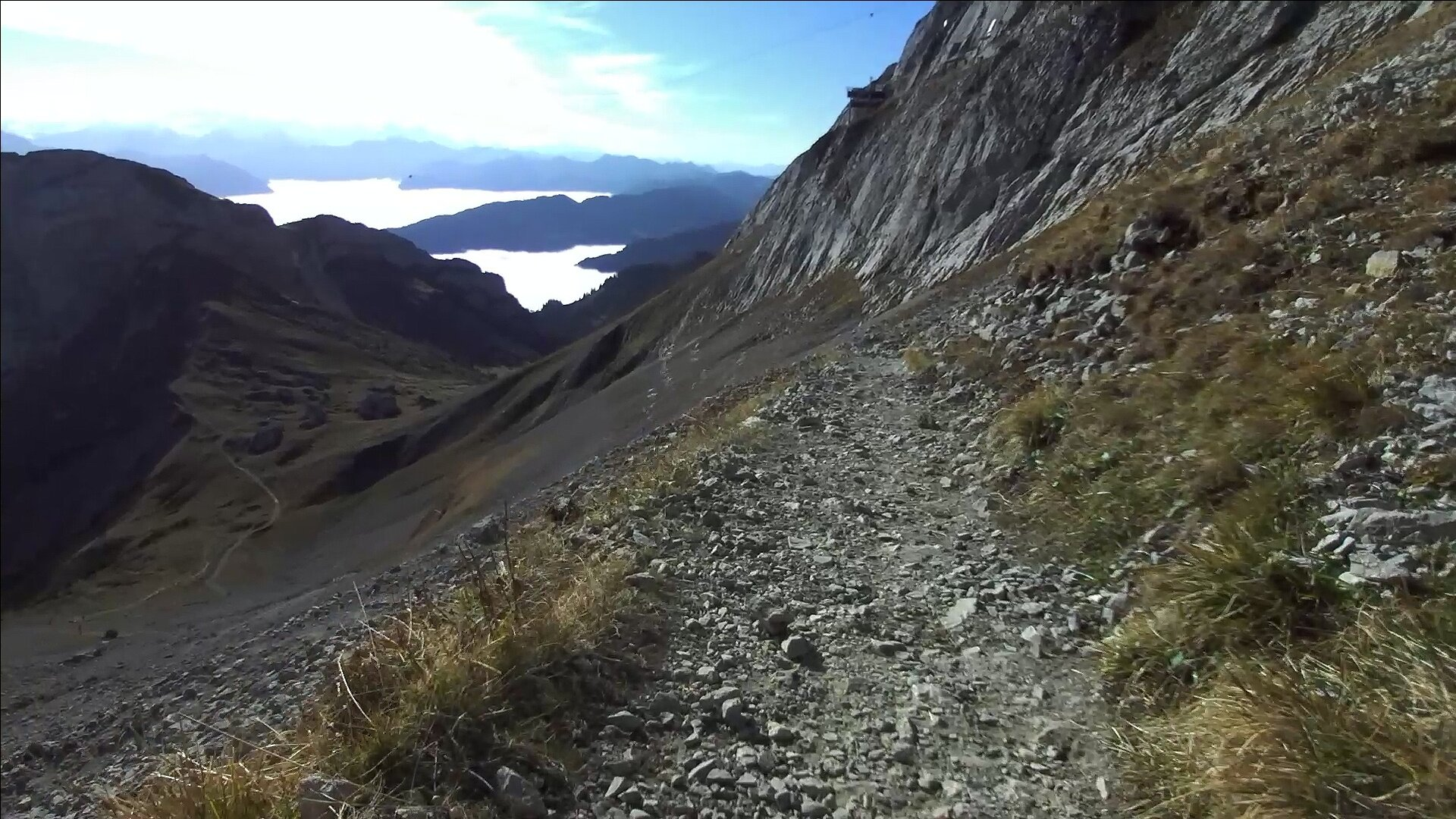
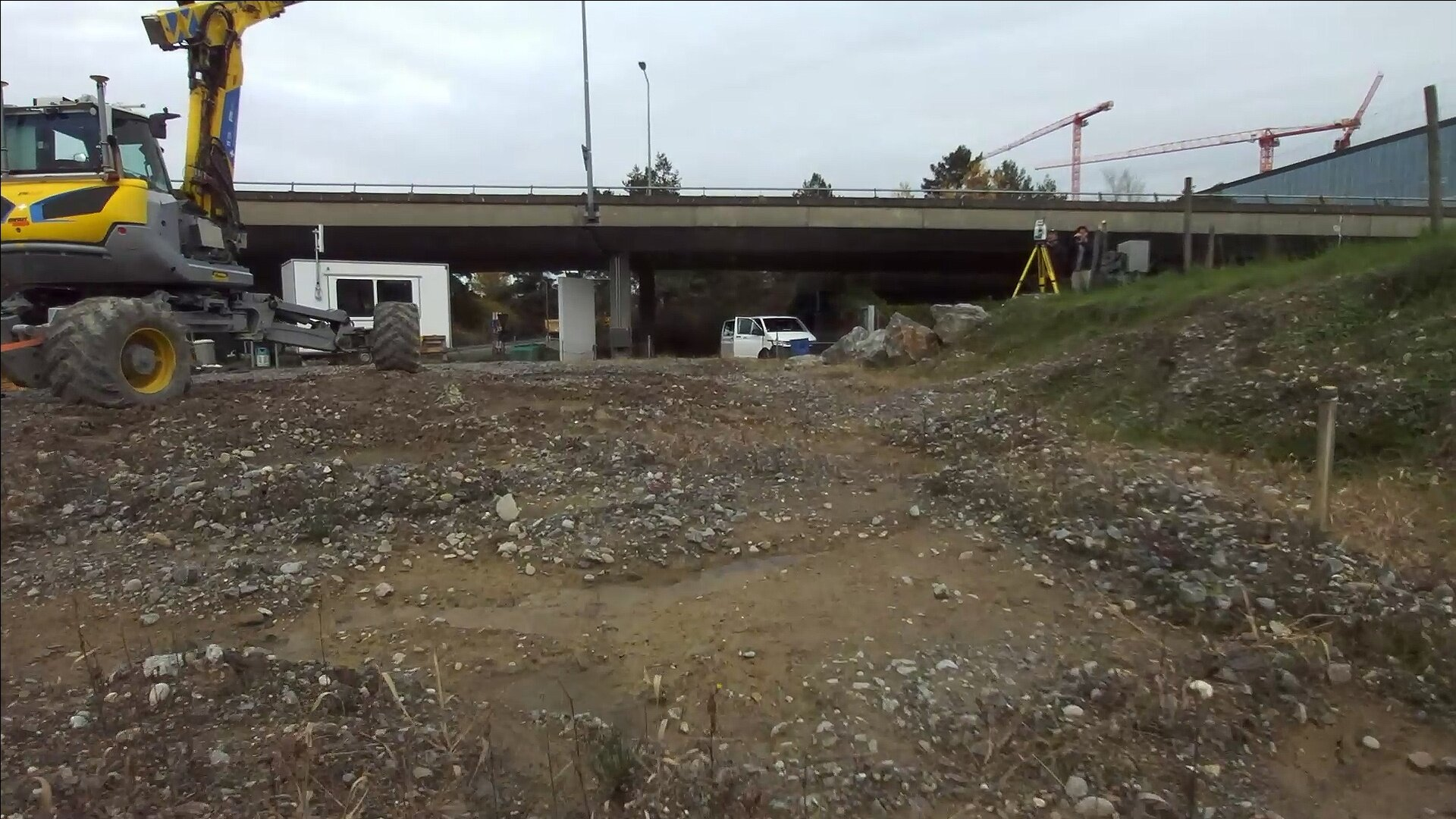
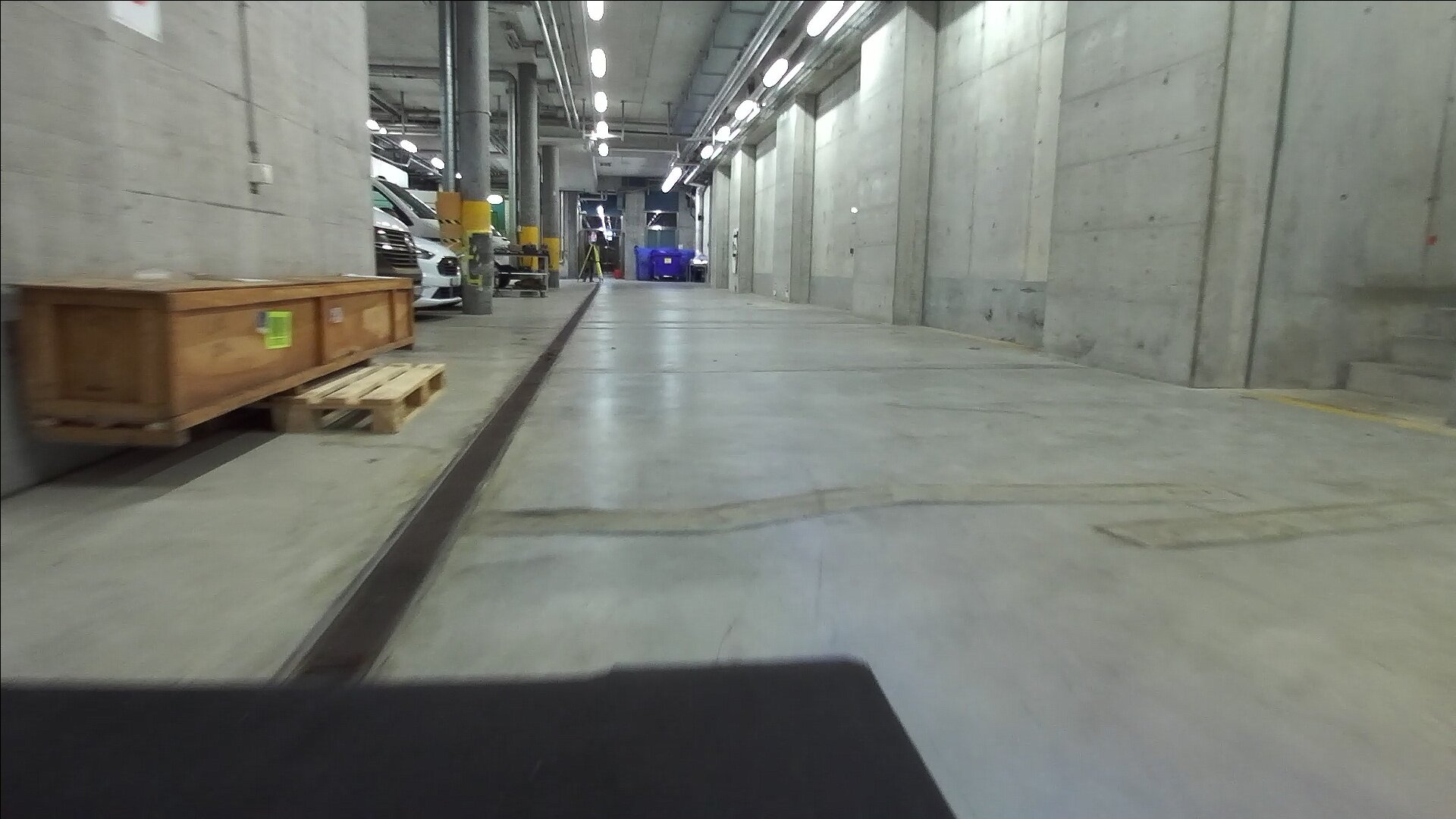
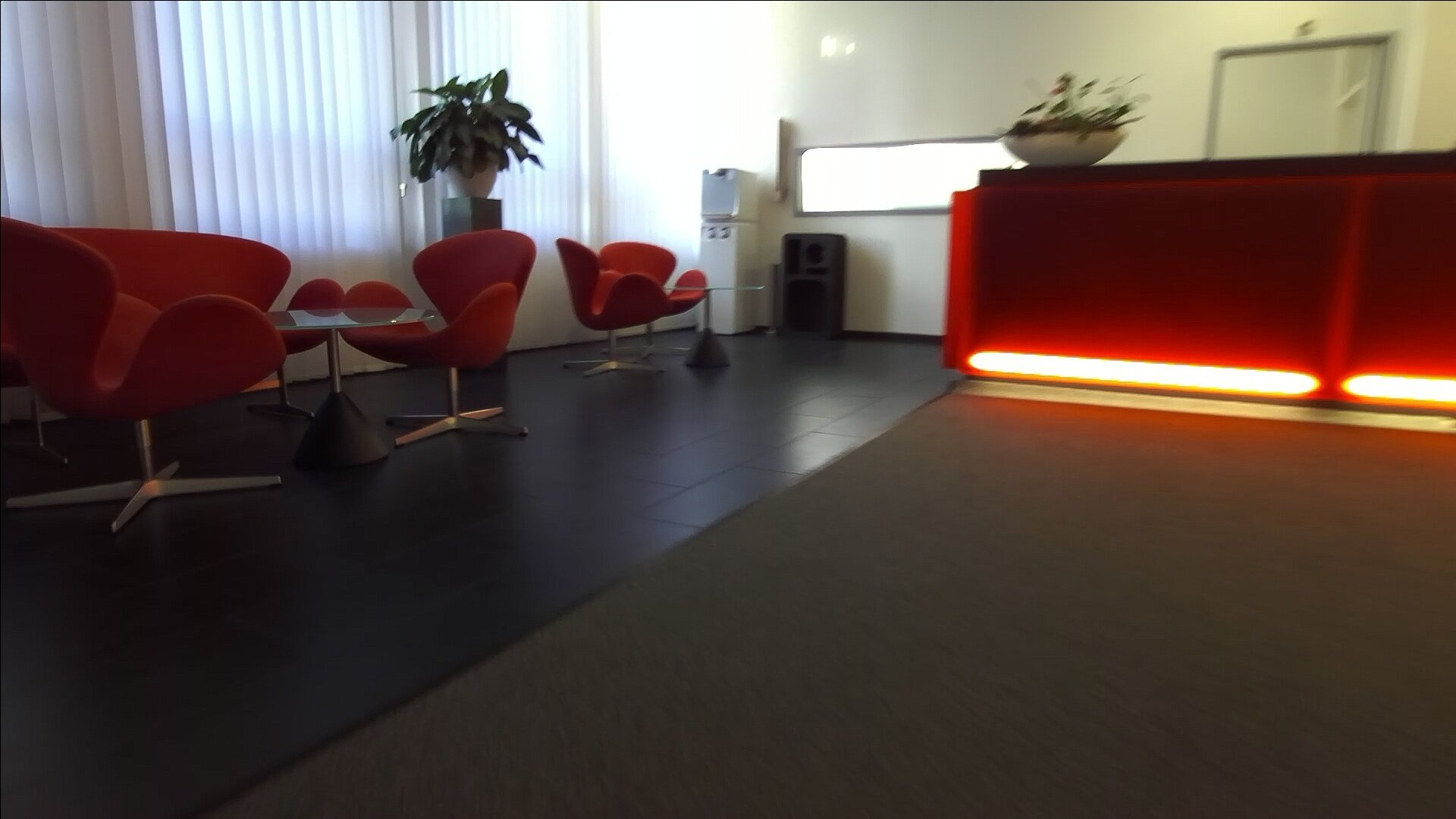
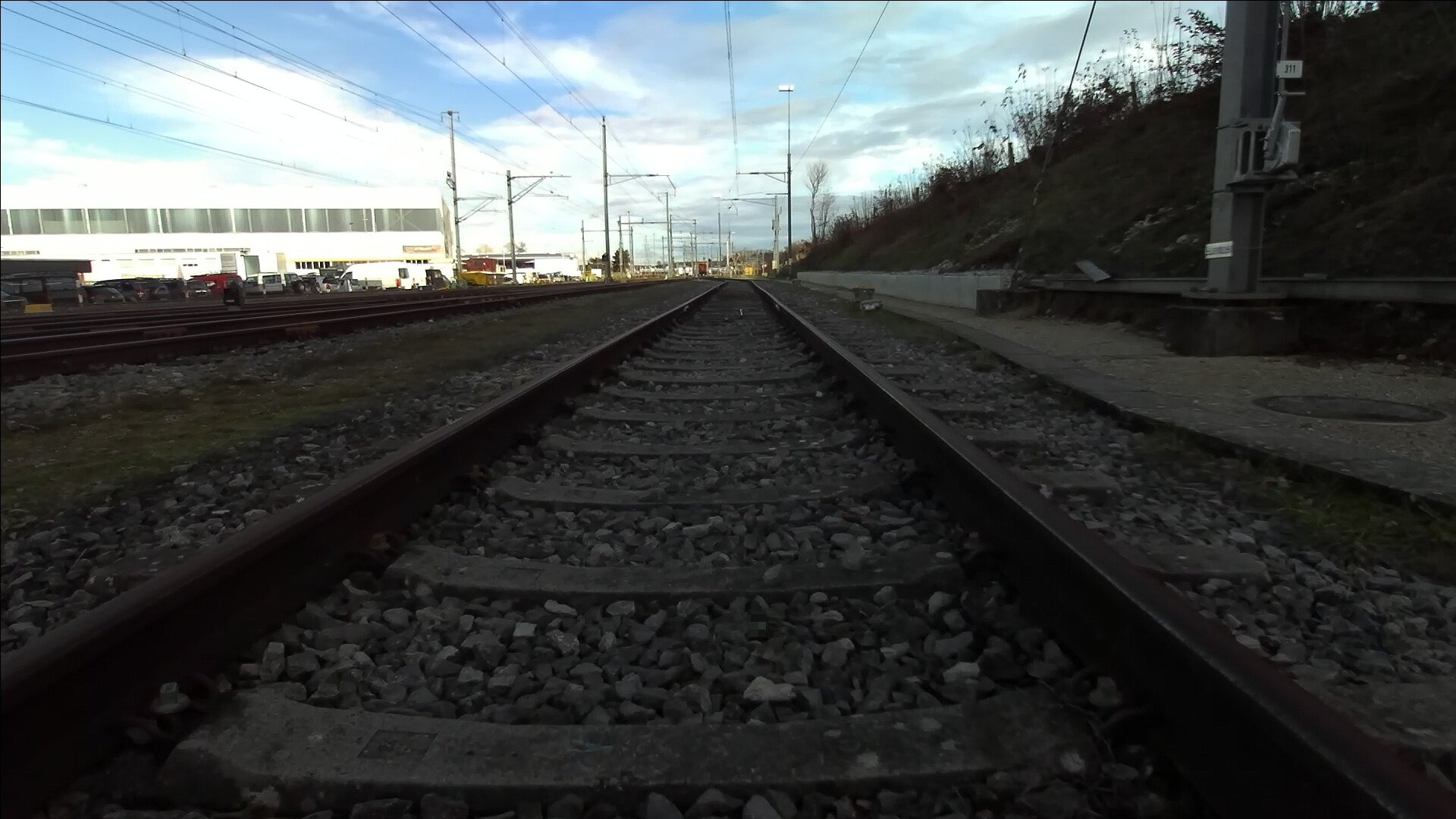
Figure 1: Example images from the selected missions reflecting diverse environments. From left to right: M10, M13, M19, M24, M34, M42, M44.
Four SLAM frameworks are benchmarked: ORB-SLAM3, RTAB-Map, DPV-SLAM, and FAST-LIVO2, spanning both optimization-based and data-driven architectures, with real-time execution and loop closure capabilities. Sensor configurations include a global shutter Sevensense CoreResearch stereo camera, a rolling shutter Stereolabs ZED2i stereo/RGB-D camera, mid-range (ADIS) and tactical-grade (Honeywell) IMUs, and Livox Mid-360 LiDAR. Metrics for evaluation are RMSE of Absolute Trajectory Error (ATE), Relative Pose Error (RPE), tracking robustness (80% mission coverage threshold), and resource consumption (CPU/RAM).
Impact of Visual Modalities
Stereo configurations consistently outperform monocular and RGB-D modes in both ORB-SLAM3 and RTAB-Map. Stereo setups yield significantly reduced drift and higher feature matching accuracy, particularly under rapid rotational and translational dynamics.
Within visual-only baselines, monocular configurations manifest substantial scale drift and frequent tracking failures over textureless, deformable, and repetitive environments. RGB-D modes provide modest improvement but are still susceptible to catastrophic loss of pose during challenging sequences. Stereo visual configurations anchor geometric scale and maintain resilience during mode-switching, sharp turns, and occlusion events.
Shutter Technology Effects
Global shutter cameras demonstrate marked superiority over rolling shutter sensors in mitigating non-rigid geometric distortions and motion blur during high-velocity rotations and abrupt maneuvers. Quantitative analysis across all frameworks reveals global shutter configurations yield lowest mean ATE and RPE, preventing tracking divergence that frequently occurs with rolling shutter exposure.
The difference is vividly illustrated through ORB feature matching statistics during rapid rotation: global shutter maintains nearly an order of magnitude more consistent correspondences than rolling shutter, directly preserving accurate pose estimation.
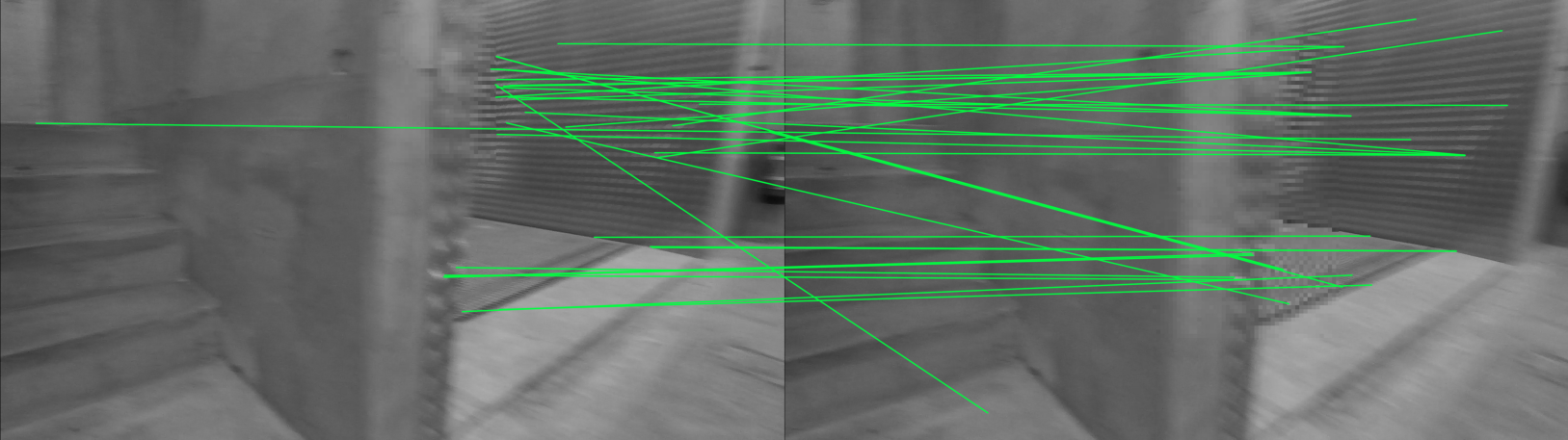
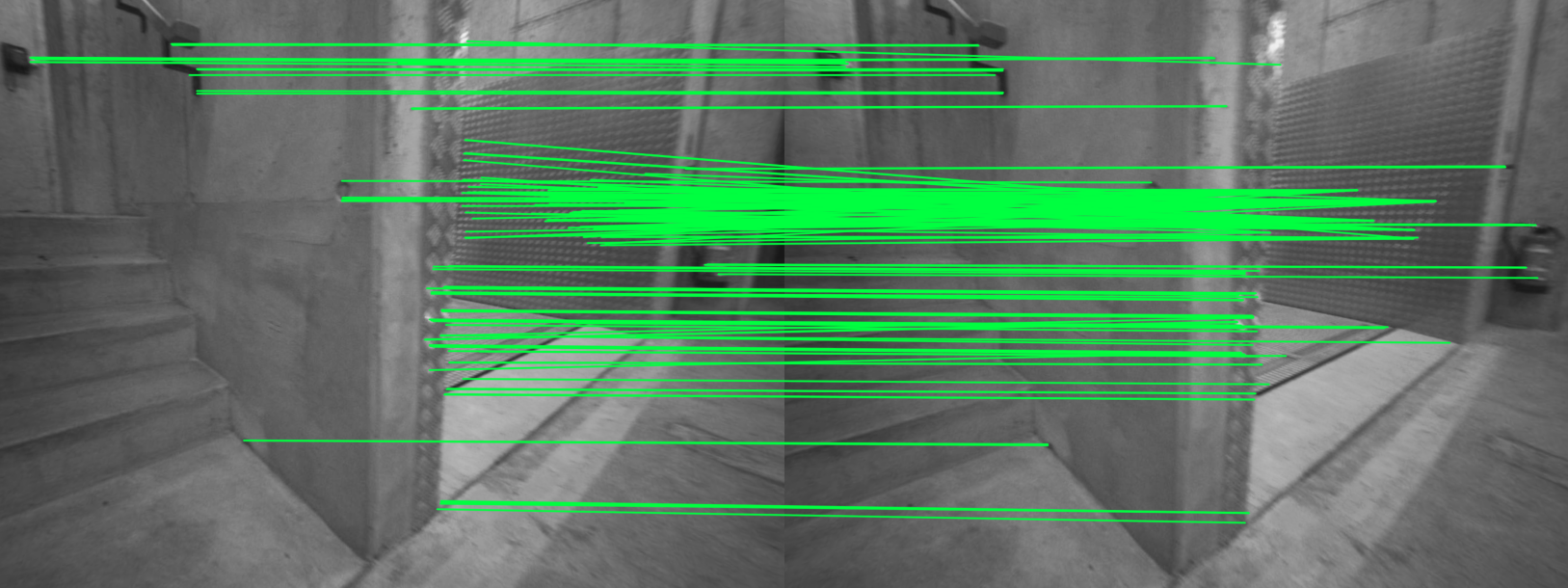
Figure 2: ORB feature matching during high-velocity rotation (M34). The global shutter (bottom) maintains robust tracking with 188 consistent matches, whereas the rolling shutter (top) drops to 33 matches due to motion blur, introducing incorrect correspondences that degrade pose estimation.
Trajectory plots further corroborate global shutter's role in eliminating terminal failures and reducing drift across all SLAM backends during aggressive locomotion.

Figure 3: Estimated trajectories for mission M24 illustrating that global shutter prevents terminal tracking failures during rapid turning maneuvers and reduces drift across all evaluated SLAM frameworks.
Inertial Integration and LiDAR Fusion
Tightly coupled inertial integration proves problematic for optimization-based SLAM frameworks under quadruped-induced mechanical shocks. For visual-inertial configurations, IMU fusion actively degrades tracking robustness, induces numerical instabilities, and propagates estimator divergence during segments marked by high-frequency impacts and intermittent foot contacts. Tracking failures for ORB-SLAM3/RTAB-Map arise precisely in sequences where pure visual configurations remain robust, indicating that, contrary to wheeled platforms, inertial aiding is a liability for vision-dominant pipelines under legged dynamics.
Conversely, multi-modal fusion in FAST-LIVO2 leverages dense LiDAR geometry and high-end tactical-grade IMUs to anchor state estimation, yielding globally bounded drift and consistent robustness. ATE and RPE are minimized, performance variance is suppressed, and tracking is resilient even in visually degraded or structurally repetitive landscapes.
Cross-Framework Comparisons
A summary comparison reveals FAST-LIVO2's LiDAR-visual-inertial pipeline (global shutter + Honeywell IMU) achieves best mean ATE, while ORB-SLAM3 stereo (global shutter) delivers lowest RPE. RTAB-Map yields strong resource efficiency (CPU/RAM), and DPV-SLAM maintains competitive CPU footprint but demonstrates higher error variance and susceptibility in structurally aliased environments.
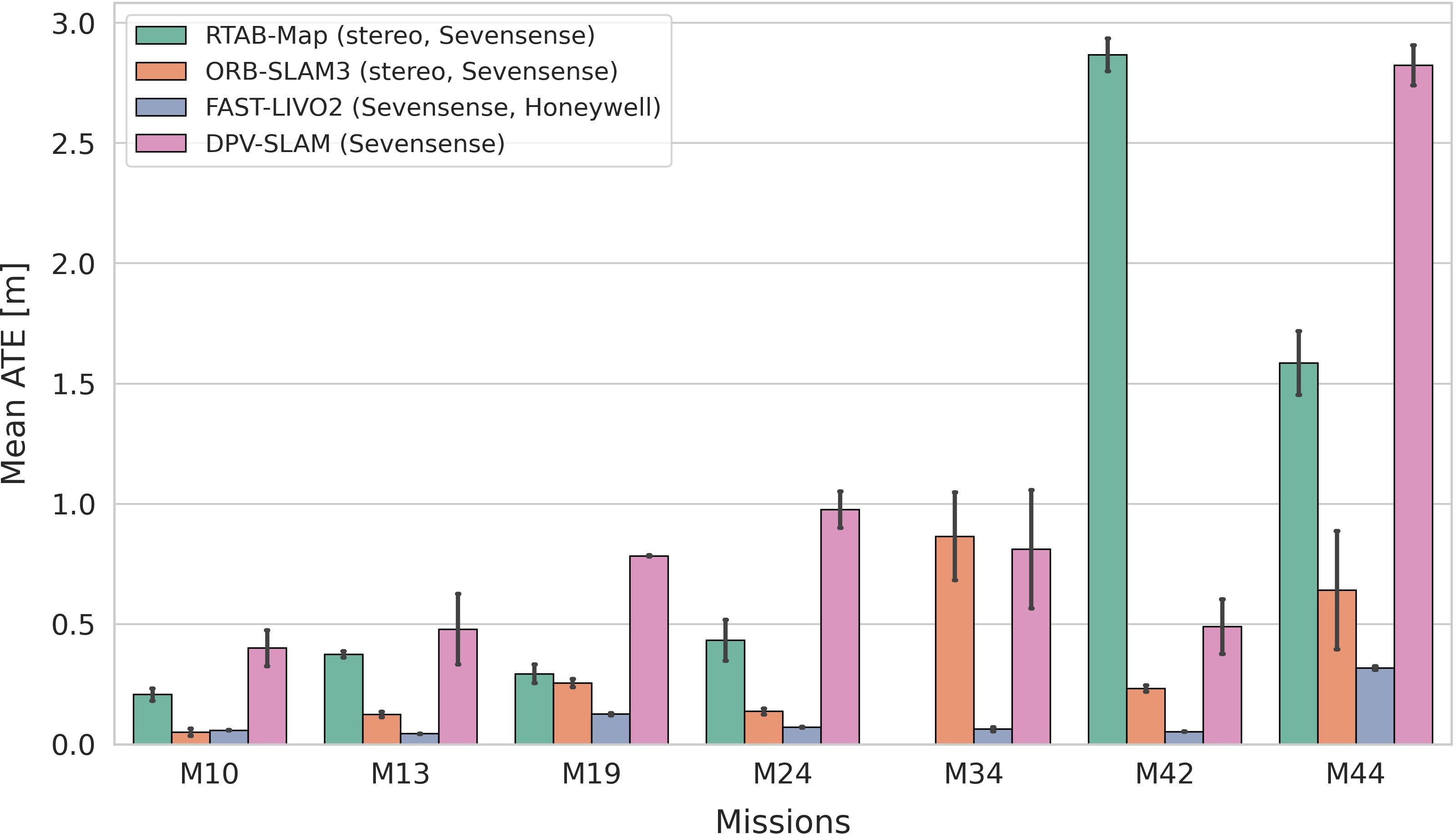
Figure 4: Mean ATE for top-performing configurations. The LiDAR-visual-inertial pipeline (FAST-LIVO2) maintains bounded drift globally, whereas purely visual methods experience localized failures triggered by low texture (M34), aggressive indoor turns (M42), and structural repetition (M44).
Stereo, global shutter configurations without inertial aiding maximize robustness for vision-centric pipelines. LiDAR-visual-inertial fusion with tactical-grade IMUs further improves accuracy for multi-sensor systems, demonstrating high resilience in all missions.
Implications and Future Directions
The findings provide concrete design guidelines for sensor payloads in agile legged systems. For vision-dominant SLAM architectures, stereo cameras with global shutter exposure and exclusion of inertial aiding are paramount for robust localization during dynamic locomotion. For LiDAR-enabled pipelines, tactical-grade IMUs enhance accuracy and estimator stability. The study underscores that hardware selection is not merely a peripheral concern but a primary determinant of tracking robustness and SLAM resilience in quadruped robotics.
Future directions include extension to active perception control, online sensor modality adaptation, and inclusion of event-based cameras. Further algorithmic innovation in filtering and back-end optimization that explicitly models and compensates for leg-induced perturbations could bridge remaining robustness gaps for vision-inertial pipelines. The systematic approach and dataset co-design set a benchmark for reproducible sensor-centric evaluations across other legged and heterogeneous robotic platforms.
Conclusion
The systematic evaluation demonstrates that sensor configuration critically affects SLAM robustness, accuracy, and computational efficiency for quadrupedal robots. Stereo global shutter cameras maximize performance for vision-centric pipelines, while tactical-grade IMU integration benefits LiDAR-based systems. Sensor selection and configuration should be tailored to hardware embodiment and environmental demands; these findings lay foundational guidelines for custom payloads targeting dependable perception in dynamic legged locomotion.