Understanding and Quantifying Banana Coil Magnetic Fields and Forces for Enhanced Optimisation
Published 16 Jun 2026 in physics.plasm-ph | (2606.18029v1)
Abstract: The optimised tokamak-stellarator hybrid concept (Henneberg and Plunk 2024) has the potential to combine tokamak and stellarator advantages to achieve magnetically confined fusion. These compact quasi-axisymmetric designs can have a low aspect ratio and large plasma volume, good particle confinement, and relatively simple coils. Previous work showed that such magnetic configurations can in principle be reproduced by a single type of non-planar "banana coil" alongside the conventional tokamak coilset (Henneberg and Plunk 2025). In this work, we optimise banana coils while also considering engineering constraints beyond simple geometric measures. We quantify the characteristic geometries of force-optimised banana coils and the magnetic fields they generate, and analyse the mechanisms by which forces may be reduced through optimisation.
The paper introduces a controlled model hierarchy that approximates banana coil fields from single-wire to dipole regimes, clarifying force scaling laws.
The study employs the simsopt framework to optimize coil parameters, balancing squared flux error against integrated force magnitude under strict engineering constraints.
The research distinguishes two coil families—train track and Dalí clock—highlighting trade-offs between field error minimization and force reduction for QA hybrids.
Understanding and Quantifying Banana Coil Magnetic Fields and Forces for Enhanced Optimisation
Introduction and Motivation
The paper "Understanding and Quantifying Banana Coil Magnetic Fields and Forces for Enhanced Optimisation" (2606.18029) provides a comprehensive analysis of banana coil design within the context of optimised quasi-axisymmetric (QA) stellarator-tokamak hybrids. The work addresses the underlying electromagnetic phenomena, elucidates practical and theoretical trade-offs in coil design, and advances systematic optimisation of non-planar coils, focusing on engineering constraints essential for feasibility in reactor-scale configurations. The study leverages recent advances in coil optimisation tolerating force constraints and provides parametric analysis for three representative Hybrid equilibria.
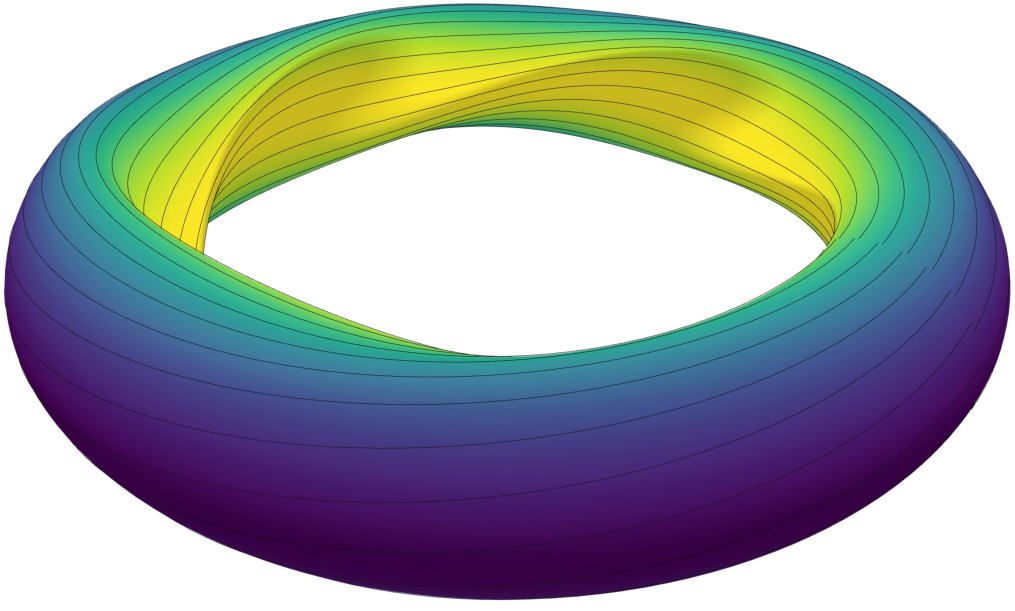
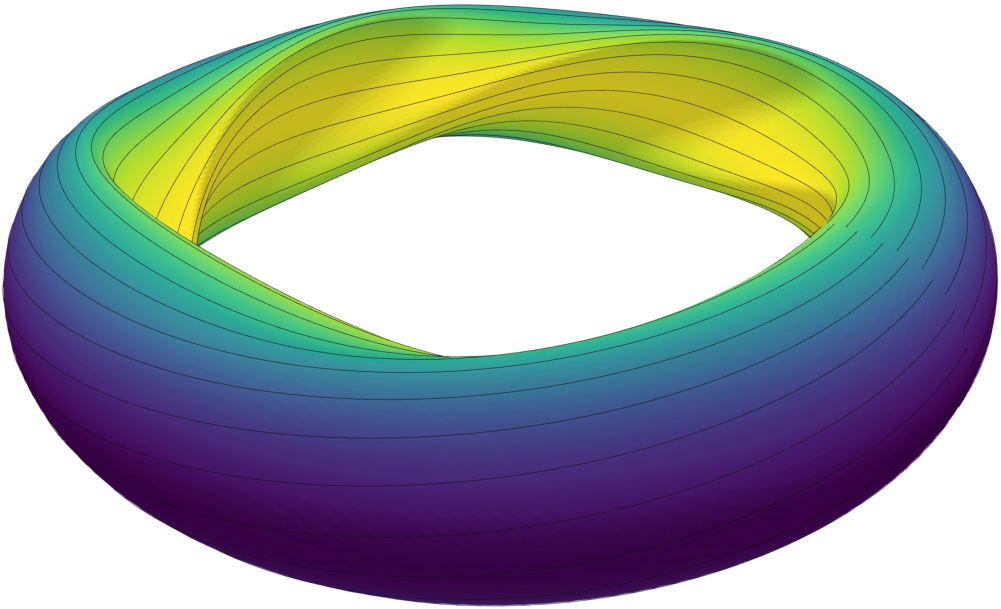
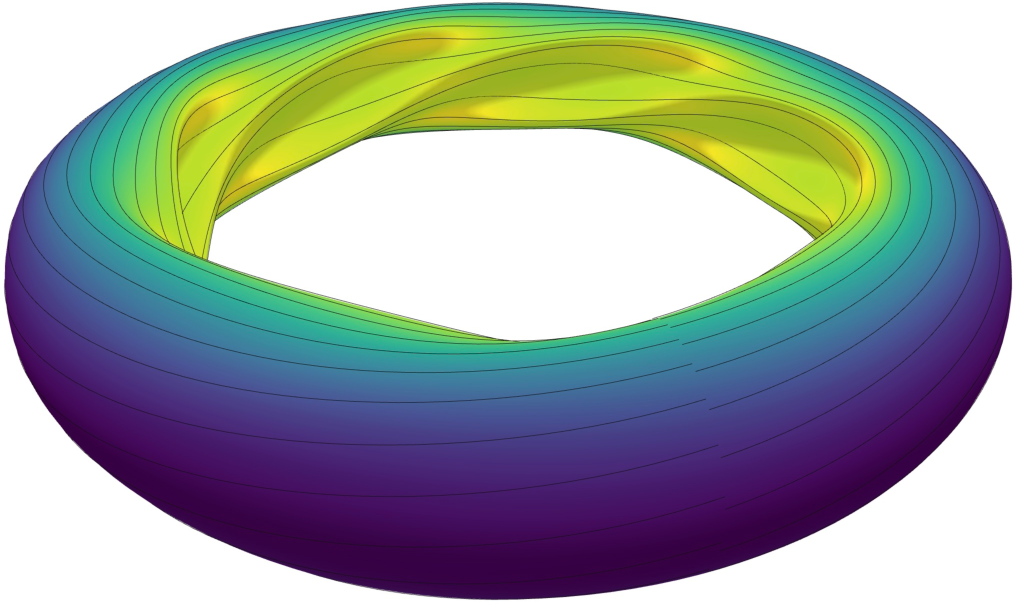
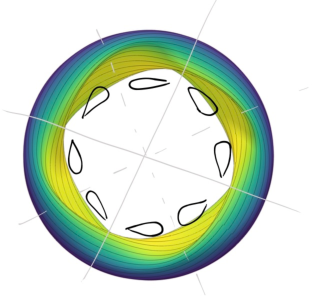
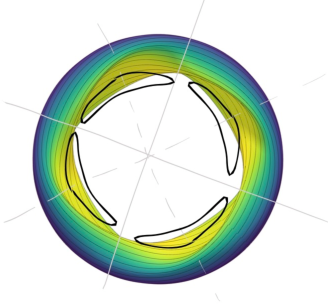
Figure 1: Three hybrid QA equilibria (H1, H2, H3) at identical aspect ratio but with different inboard perturbation geometry and field periods; color indicates magnetic field strength on the plasma boundary.
Analytical Models for Banana Coil Magnetic Fields and Forces
The authors propose a controlled model hierarchy for understanding the magnetic fields produced by banana coils. Depending on spatial regime, the field is well-approximated by:
Single straight wire (B∼I/r) near a coil segment,
Parallel double-wire (B∼I/r2) at intermediate separations,
Magnetic dipole (B∼I/r3) at long range.
The force decomposition at the coil involves self-field, plasma, toroidal field (TF), poloidal field (PF), and mutual coil contributions. For dominant engineering relevance, the Lorentz forces from TF and self-fields at tight coil sections—especially the endpoints—are shown to be most critical.
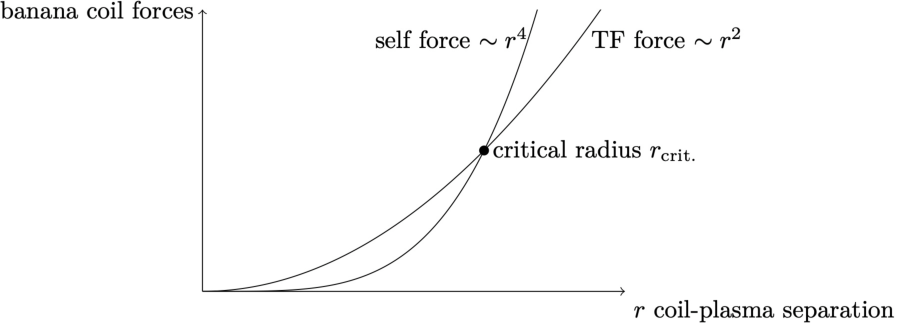
Figure 2: Schematic representation of the spatial dependence of self and toroidal-field forces as a function of coil-plasma separation for a banana coil, including identification of a critical radius rcrit where force contributions balance.
The analysis introduces scaling arguments for force magnitudes as a function of coil current, width, radial placement, and coil-plasma separation. Placement of banana coils inside or outside the TF coil set is quantitatively decided via balancing the TF and self-forces, with an explicit expression for rcrit making trade-offs precise.
Enforcing (Self-)Stellarator Symmetry for Coil Construction
Maintaining stellarator symmetry is essential for the compatibility of coils with the QA hybrid boundary. The study formalises "self-stellarator symmetry" for describing banana coils that, unlike standard modular approaches, require only one coil per field period—efficiently implemented by symmetry relations in Fourier space for the coil shape. This is achieved by constraining x(θ) to be even, y(θ) and z(θ) to be odd in angular parameter θ, guaranteeing invariance under the requisite symmetry operation.
Figure 3: Sketches of mini-banana coils (mirrored, one per half-field period), and self-stellarator symmetric full banana coils (one per field period).
Optimisation Methodology and Coil Parameterisation
Banana coils are optimised in the presence of a pre-established TF/PF coil set using the simsopt framework. The free parameters are the Fourier coefficients subject to symmetry constraints, current magnitudes, and geometric thresholds, with an optimisation target function incorporating:
Squared flux error,
Coil length and curvature,
Minimum coil–coil and coil–plasma distance,
Integrated force magnitude (via regularised electromagnetic force computation).
Explicit constraints are imposed on coil thickness, curvature, distance to wall/other coils, and maximum field error to filter out physically or engineering-infeasible solutions.
Parametric and Statistical Analysis of Force-Optimised Coils
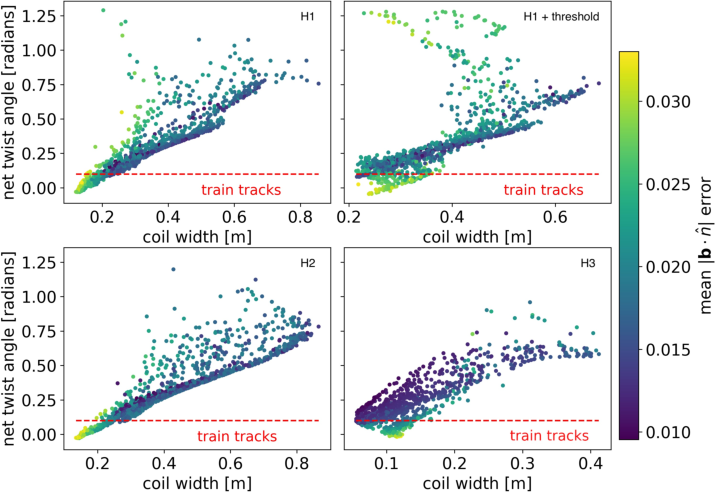
A systematic campaign of automated optimisations yields several thousand force- and field-optimised banana coil solutions across three QA hybrid equilibria. Rigorous classification by geometric descriptors—central width, net twist angle, and coil-plasma distance—reveals two principal coil families:
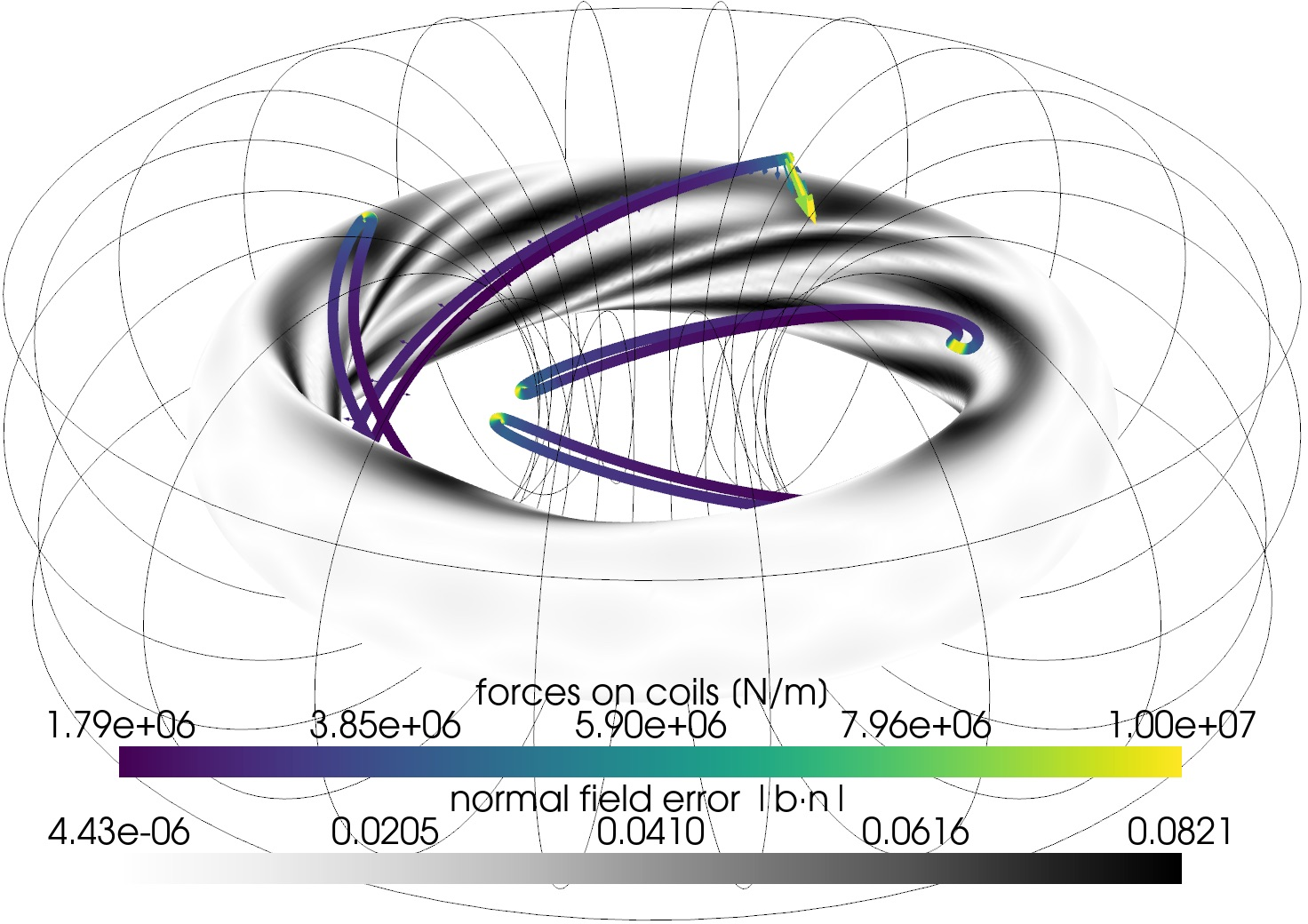
Train Track Coils: Narrow width, small (near-zero or negative) twist angle, closely parallel double filaments oriented nearly perpendicular to the plasma boundary. These exhibit high curvature at endpoints.
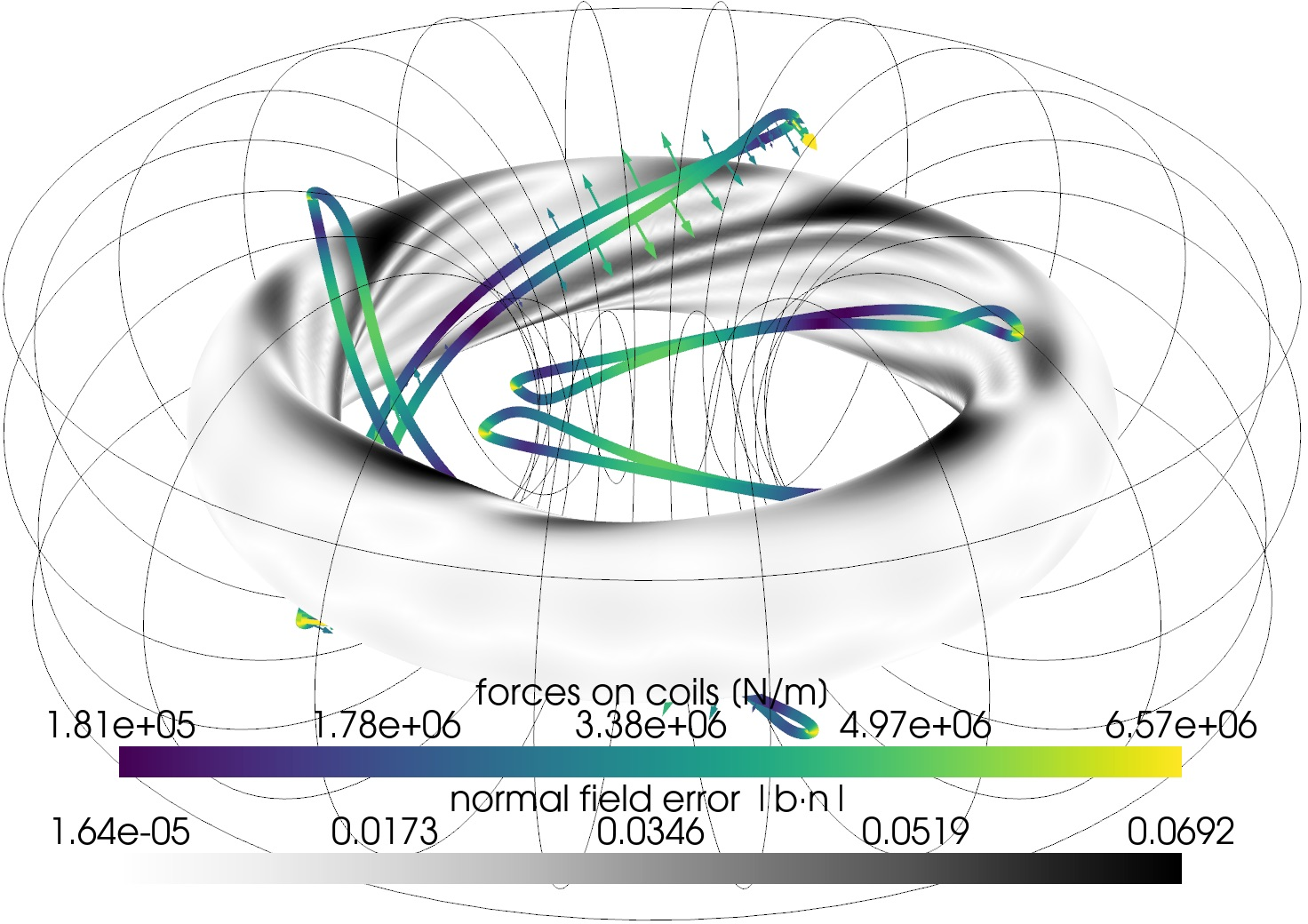
Figure 4: Representative train track coil showing the parallel layout with high endpoint curvature.
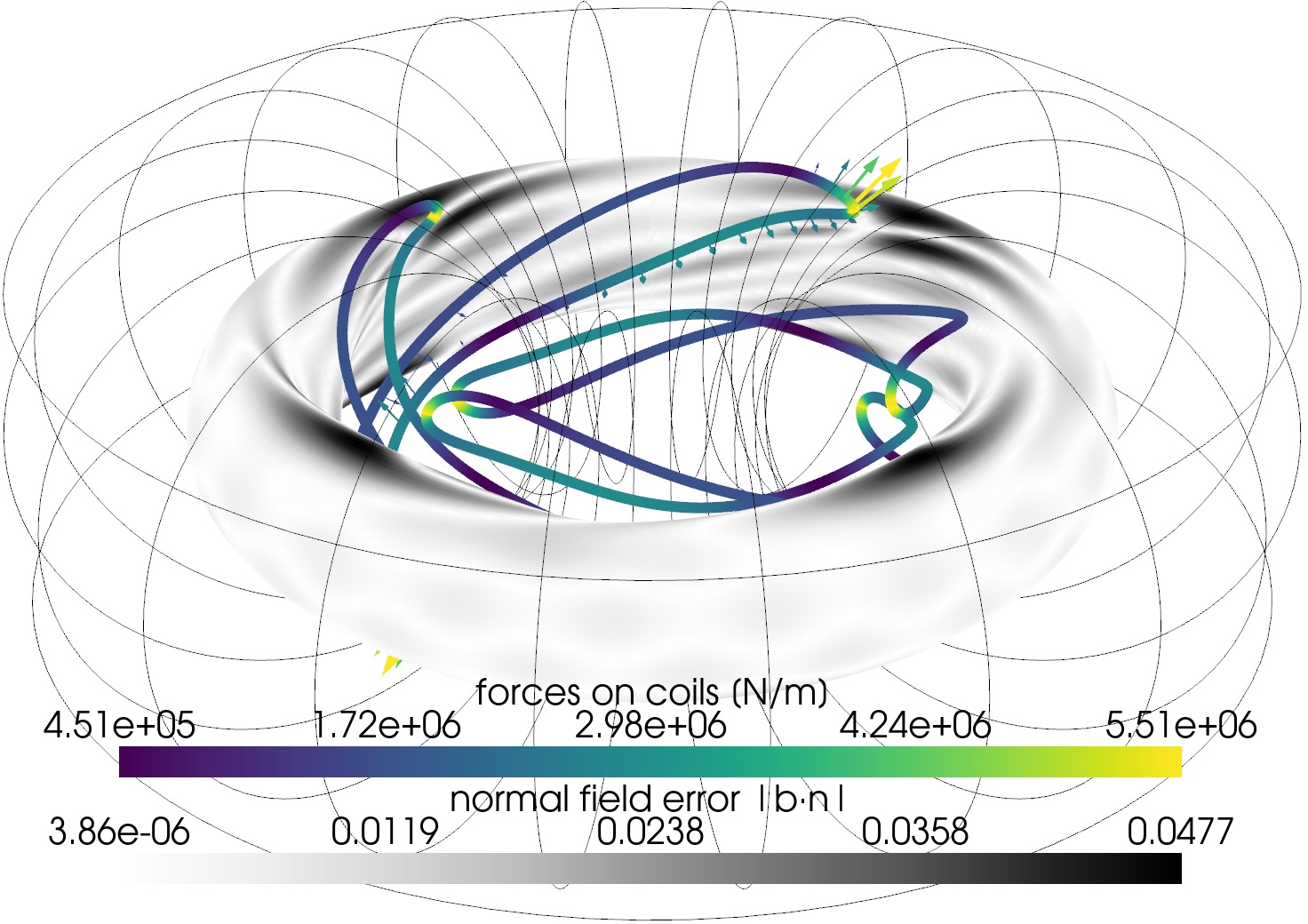
Dalí Clock Coils: Larger width and pronounced twist at the centre, the outer filament forming a wave shape, with endpoints tangent to the surface. These coils achieve reduced maximum curvature at endpoints.
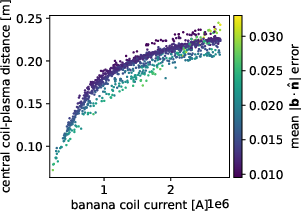
Quantitative analysis of the field error versus coil-plasma distance and current demonstrates that field reproduction improves with distance, but at the cost of increased current and—critically—increased electromagnetic forces owing to both higher current and greater exposure to the TF.
Figure 5: Central coil–plasma distance as a function of banana coil current, color indicating mean field error. The scaling follows r∼I at fixed field strength.
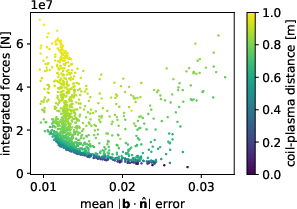
A clear trade-off emerges: lower forces incur higher normal field errors, while optimal field-error solutions tend to higher forces owing to increased coil-plasma separation and current. Force reduction can be achieved by spatial cancellation, favorable coil orientation with the local TF, or limiting the exposure of endpoint regions to high field strength.
Force Distribution and Reduction Mechanisms
The spatial distribution of forces varies between coil families: train track coils show highly localised forces near endpoints, while Dalí clock coils manifest significant force over the extended outer segment. The authors' analysis finds that effective force minimisation arises from either (i) aligning the coil tangent vector with the toroidal field (aligning current direction), or (ii) maximising radial placement of high-force segments, reducing exposure to stronger toroidal field regions.
Figure 6: Coil width versus net twist angle; color scale shows normal field error. The partitioning into train track and Dalí clock families is evident.
Additionally, inclusion of explicit force thresholds in optimisation leads to increased appearance of solutions leveraging spatial cancellation of self- and TF-induced forces, resulting in nontrivial geometrical coil adaptations.
Figure 7: Trade-off between integrated force magnitude and normal field error, colorized by coil-surface distance. Best solutions are at the lower left (low force and low error).
Implications, Limitations, and Future Prospects
The study demonstrates the feasibility and flexibility of optimising non-planar, non-interlinked coils with strong engineering constraints for QA hybrid devices, quantifying inherent geometric trade-offs between field reproduction and force minimisation. The introduced dichotomy in coil families reflects the complexity of the high-dimensional optimisation landscape and provides insights into robust coil design strategies under realistic constraints. However, limitations remain due to the use of regularised self-force models (which may break down for high curvature, small-radius segments), the focus on a small subset of equilibrium boundaries, and the challenge of extending parametric coil descriptors to general cases with significant non-uniformity along the coil.
This work highlights the potential for further tailoring of objective functions (including force, torque, and shear terms) and for better coil geometry representations (possibly avoiding Fourier parameterisations for complex shaping). Future developments will benefit from integration of advanced diagnostics for field error tolerances, the interplay with plasma response, and finer-grained engineering considerations for coil manufacture and support. The theoretical framework established here is extensible to other advanced stellarator concepts and provides a solid basis for future exploration of tokamak-stellarator hybrids [henneberg_compact_2024, schuett_optimization_2025].
Conclusion
By developing analytical and computational tools for quantifying and minimising electromagnetic forces on banana coils, this work advances the practical realisation of low-aspect ratio QA hybrids with simple, repeatable coil sets that satisfy stringent engineering and physics constraints. The detailed interplay of coil geometry, magnetic field structure, and mechanical forces provides critical understanding for advancing non-axisymmetric fusion device optimisation, with direct relevance to future fusion reactor design paradigms.
References:
Annika Zettl, Tobias Schuett, Sophia Henneberg. "Understanding and Quantifying Banana Coil Magnetic Fields and Forces for Enhanced Optimisation" (2606.18029)
S. Hurwitz, M. Landreman, et al., "Efficient Calculation of the Self-Magnetic Field, Self-Force, and Self-Inductance for Electromagnetic Coils" [hurwitz_efficient_2024], "Electromagnetic coil optimization for reduced Lorentz forces" [hurwitz_electromagnetic_2025].
S.A. Henneberg, G.G. Plunk, "Compact stellarator-tokamak hybrid", Phys. Rev. Research, 2024.
T.M. Schuett, S.A. Henneberg, "Optimization of compact quasi-axisymmetric stellarators" [schuett_optimization_2025].
“Emergent Mind helps me see which AI papers have caught fire online.”
Philip
Creator, AI Explained on YouTube
Sign up for free to explore the frontiers of research
Discover trending papers, chat with arXiv, and track the latest research shaping the future of science and technology.Discover trending papers, chat with arXiv, and more.