- The paper constrains higher-dimensional gravity by analyzing gravitational-wave amplitude decay using a hierarchical Bayesian dark-siren framework on GWTC-4 data.
- It identifies strong parameter degeneracies between the effective spacetime dimension (D), crossover scale (R_c), and the Hubble constant (H₀), highlighting sensitivity to prior limits.
- The analysis reinforces consistency with General Relativity while emphasizing the need for deeper galaxy catalogs and improved distance measurements to probe extra-dimensional effects.
Motivation and Theoretical Framework
The paper "Searching for Extra Dimensions with Gravitational Waves: Dark-Siren Constraints from GWTC-4" (2606.14549) investigates the viability of higher-dimensional gravity theories through their impact on gravitational-wave (GW) propagation, leveraging the latest catalog of compact binary coalescence (CBC) events from the LIGO-Virgo-KAGRA GWTC-4 release. The core premise is rooted in models such as the DGP brane-world scenario, which predict scale-dependent amplitude damping for GWs due to propagation into extra spatial dimensions. This phenomenology introduces a dependence of the GW luminosity distance dLGW on both the effective spacetime dimension D and a crossover scale Rc delineating the regime transition between four- and higher-dimensional gravity. The GWTC-4 dataset, analyzed within a hierarchical Bayesian dark-siren framework and associated with the GLADE+ galaxy catalog, provides a statistically rigorous setting to test such deviations from General Relativity (GR).
The analysis operationalizes a parameterization of GW amplitude decay:
dLGW=dLEM[1+(Rc(1+z)dLEM)n]2nD−4,
where dLEM is the standard electromagnetic luminosity distance, n is a fixed phenomenological index, and D,Rc are constrained by GW observations. For standard GR (D=4), dLGW=dLEM; deviations towards D>4 manifest as increased GW amplitude damping for sources at cosmological distances contingent on D0.
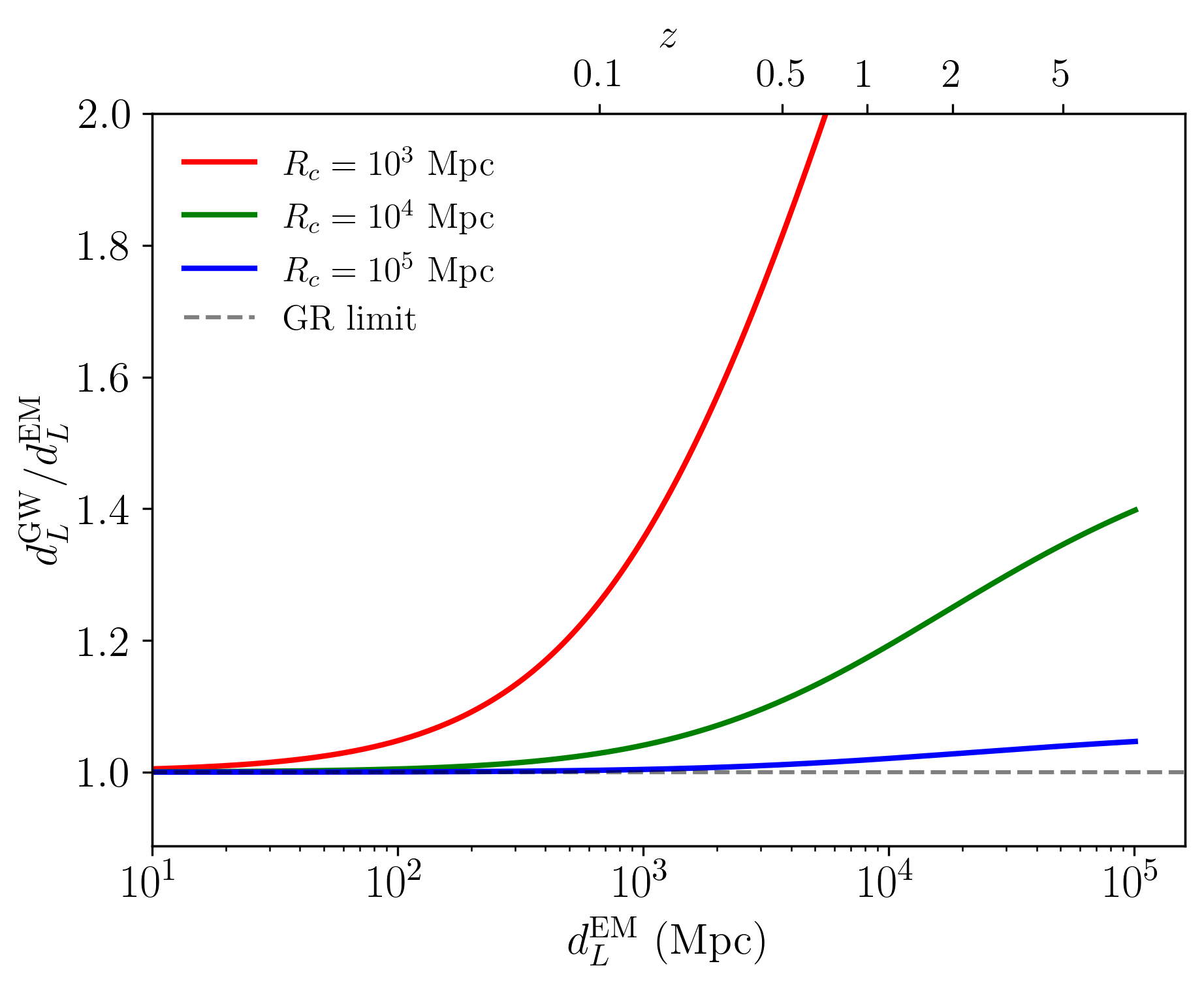
Figure 1: The ratio of D1 versus D2 for D3 across different D4 values, illustrating the onset of extra-dimensional effects.
Methodology: Hierarchical Bayesian Dark Siren Analysis
The study employs a hierarchical Bayesian framework for population-level inference, associating GW-inferred luminosity distances with galaxy redshifts from the GLADE+ catalog. Hyperparameters sampled include D5 (the Hubble constant), D6, and D7, with the matter density fixed to Planck values. The analysis uses 141 CBCs (including both BBH and neutron star events) with posterior samples from standard waveform models and applies two prominent mass-population models: FullPop-4.0 (for unified CBC populations) and MultiPeak (for BBH-specific populations). Redshift distribution priors are constructed from luminosity-weighted galaxy counts and supplemented by uniform-comoving-volume assumptions for catalog incompleteness at high redshift.
Computation is conducted using gwcosmo with GPU acceleration, enabling efficient vectorized inference. Nested sampling with normalizing flows (nessai) is utilized for robust exploration of the parameter space. Both narrow and broad priors on D8 are considered for systematic evaluation, with the D9 prior set to probe the domain where higher-dimensional damping effects are accessible to GWTC-4 distances.
Results: Joint Parameter Constraints and Degeneracies
The principal results include posterior constraints on Rc0 and Rc1, jointly with Rc2 and population parameters. Strong degeneracies are found between Rc3, Rc4, and Rc5; the inferred constraints are prior-limited and sensitive to the adopted bounds for Rc6. For the narrow Rc7 prior (Rc8 km sRc9 MpcdLGW=dLEM[1+(Rc(1+z)dLEM)n]2nD−4,0, dLGW=dLEM[1+(Rc(1+z)dLEM)n]2nD−4,1), the study finds
dLGW=dLEM[1+(Rc(1+z)dLEM)n]2nD−4,2
with the posterior on dLGW=dLEM[1+(Rc(1+z)dLEM)n]2nD−4,3 accumulating near the upper prior limit, indicating poor constraints on the crossover scale. The analysis also demonstrates that increasing the upper bound for dLGW=dLEM[1+(Rc(1+z)dLEM)n]2nD−4,4 substantially weakens constraints on dLGW=dLEM[1+(Rc(1+z)dLEM)n]2nD−4,5, since the relevant population is not sufficiently distant for extra-dimensional effects to manifest.
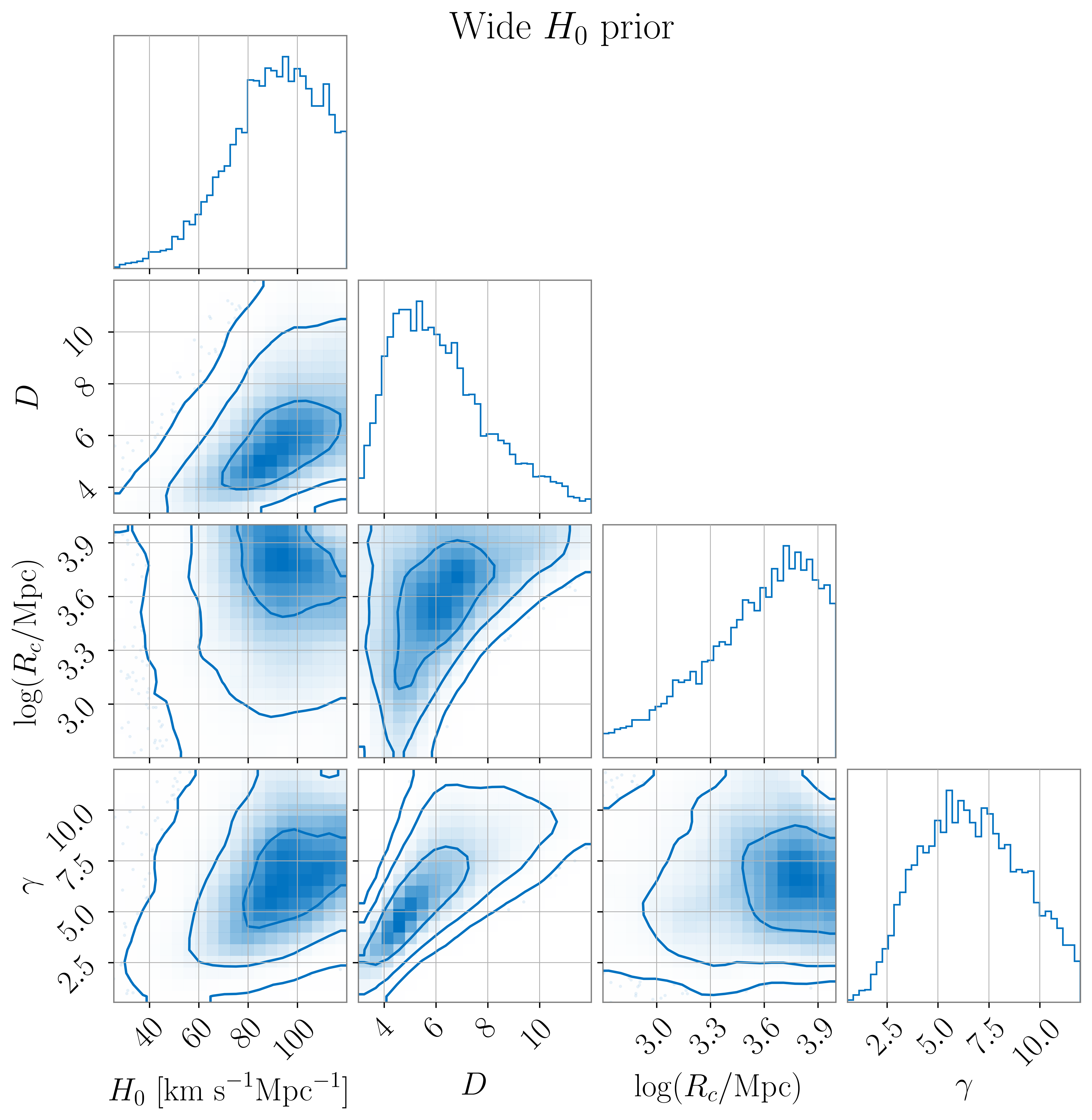
Figure 2: Selected contours for joint posterior distribution on dLGW=dLEM[1+(Rc(1+z)dLEM)n]2nD−4,6, dLGW=dLEM[1+(Rc(1+z)dLEM)n]2nD−4,7, dLGW=dLEM[1+(Rc(1+z)dLEM)n]2nD−4,8, and dLGW=dLEM[1+(Rc(1+z)dLEM)n]2nD−4,9 (merger rate slope) with a wide dLEM0 prior, highlighting parameter degeneracies and boundary effects.
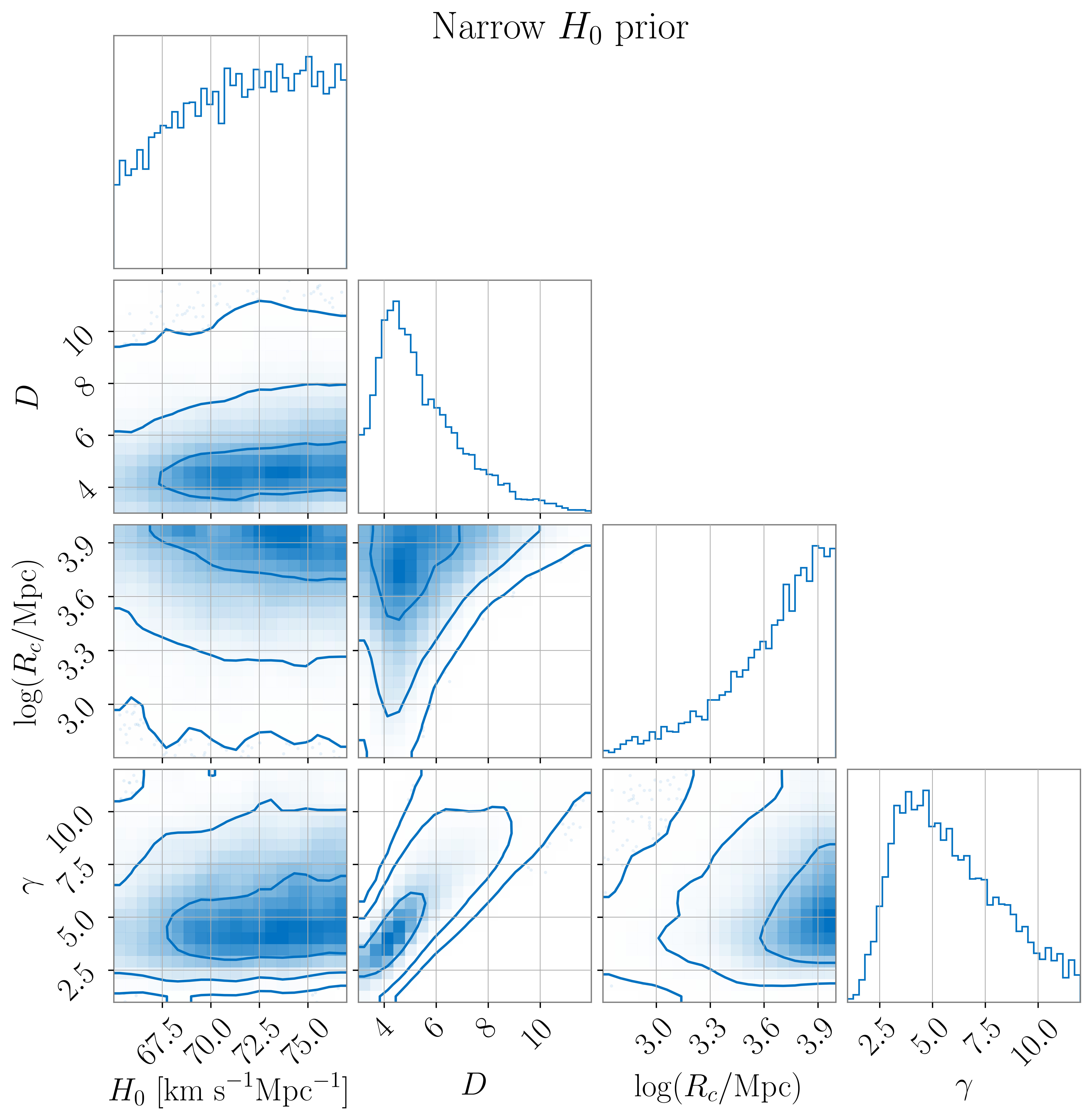
Figure 3: Selected contours for joint posterior distribution on dLEM1, dLEM2, dLEM3, and dLEM4 with a narrow dLEM5 prior, breaking dLEM6--dLEM7 degeneracy and improving constraints.
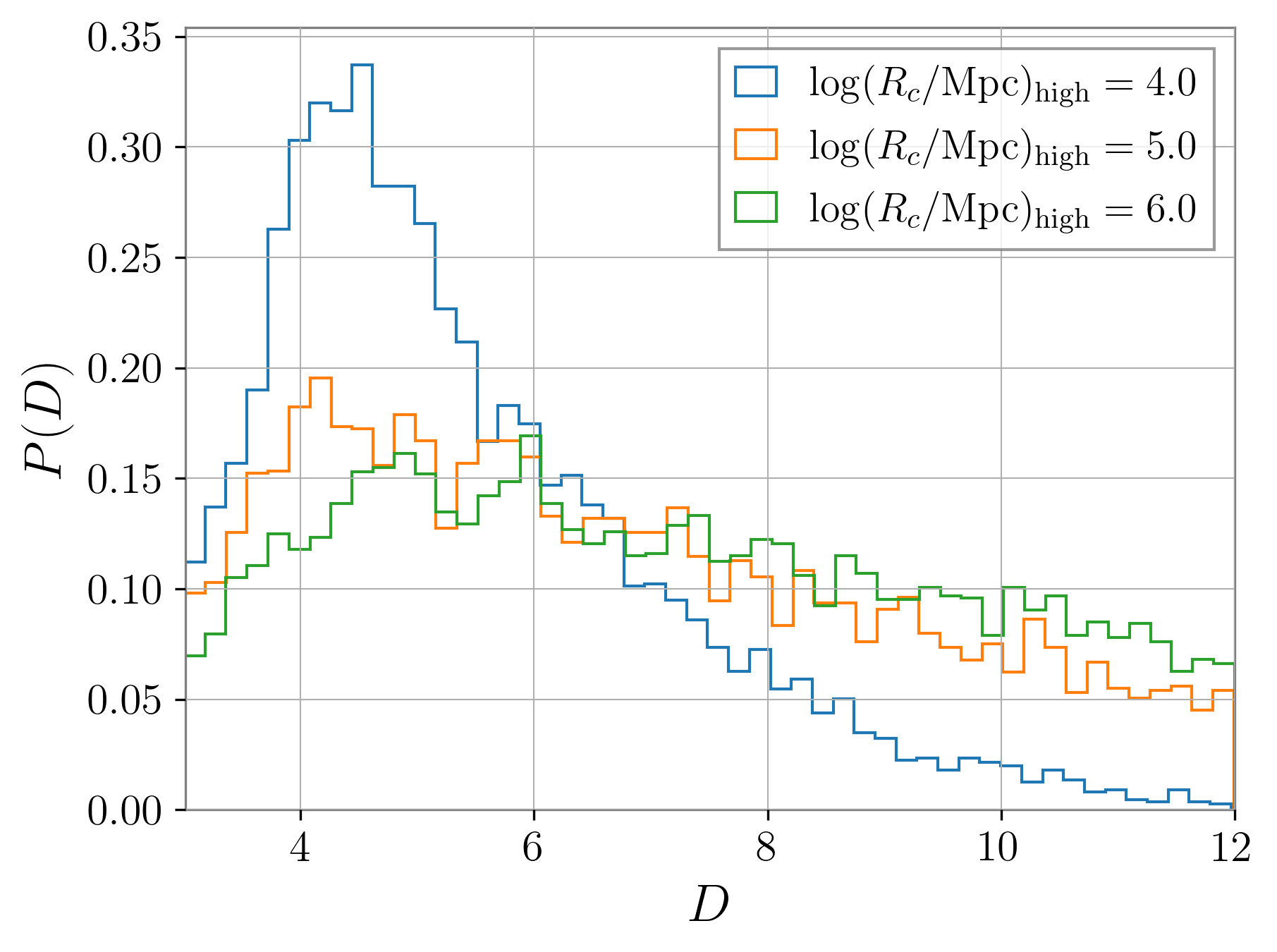
Figure 4: Marginalized posterior distributions for dLEM8 under different upper bounds on dLEM9, demonstrating sensitivity and prior-limited posteriors.
Comparisons between population models show that inclusion of neutron-star-containing events (FullPop-4.0) yields slightly stronger constraints on n0 than BBH-only models (MultiPeak), attributable to more precise distance measurements for nearby events. Systematic variations in galaxy catalog weighting (luminosity versus uniform) or complete omission of catalog data have minimal impact on current constraints, reflecting the incompleteness of GLADE+ at the redshifts relevant to most GW events.
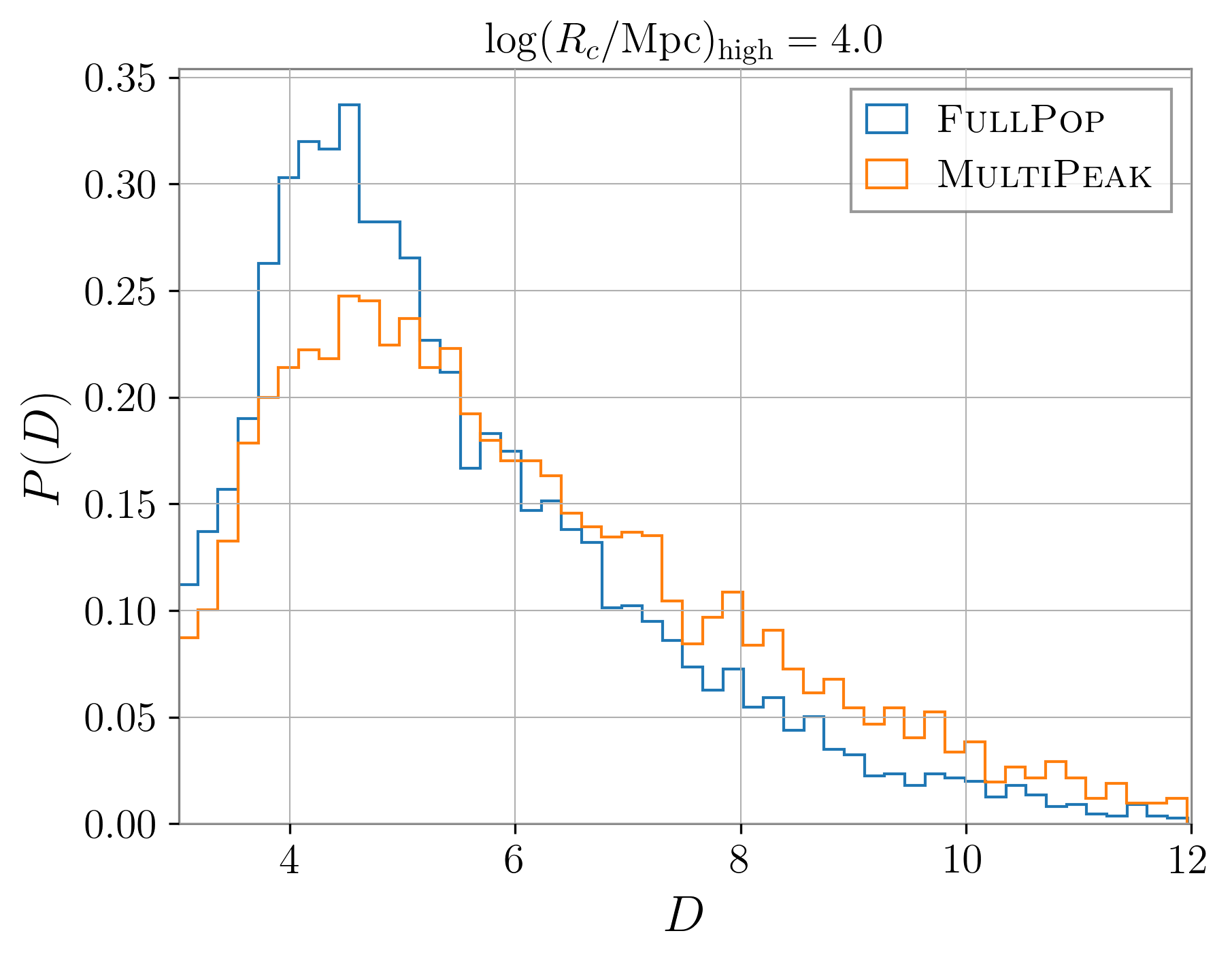
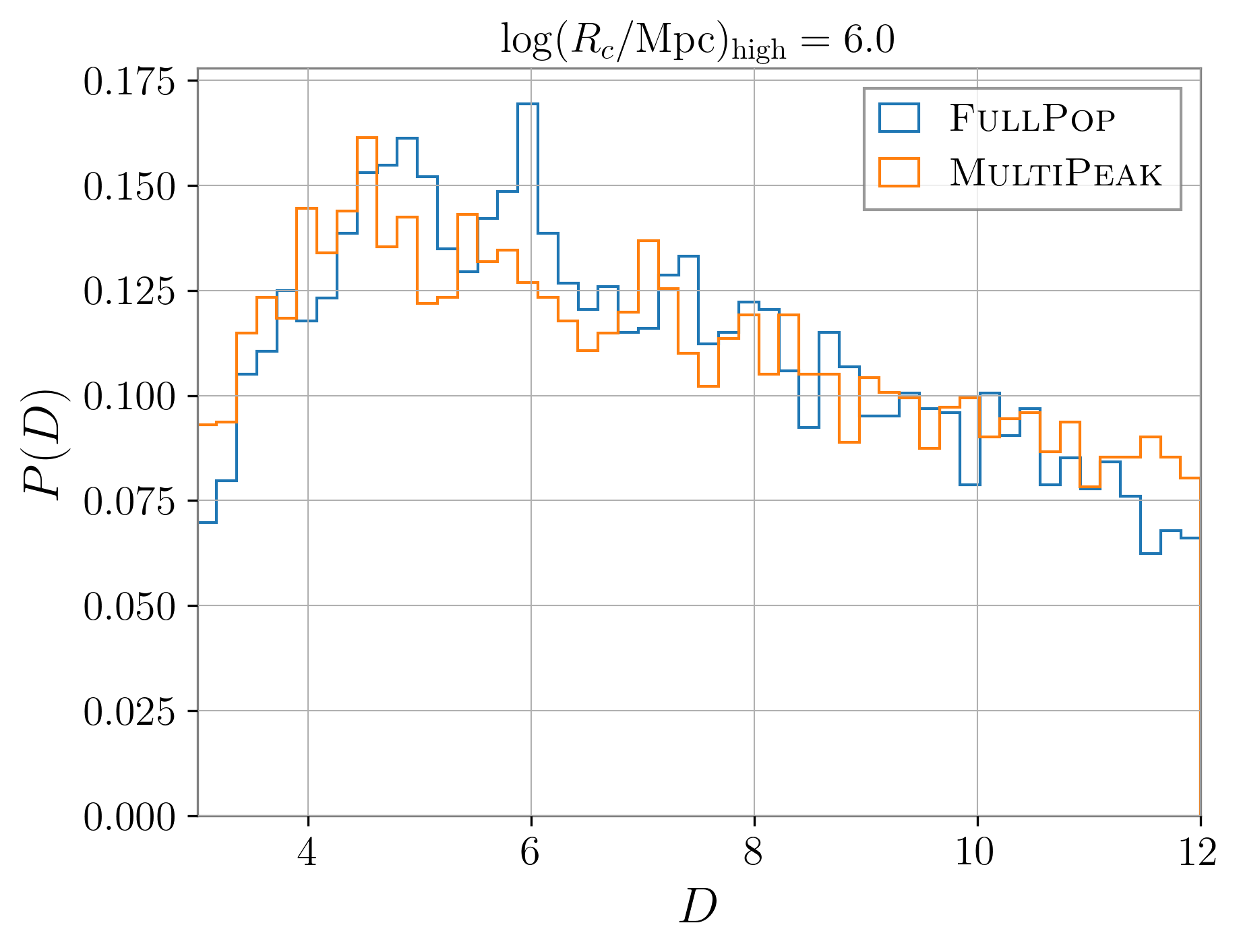
Figure 5: Comparison of n1 posteriors for FullPop-4.0 versus MultiPeak models under different n2 priors; the effect is diminished when n3 is large.
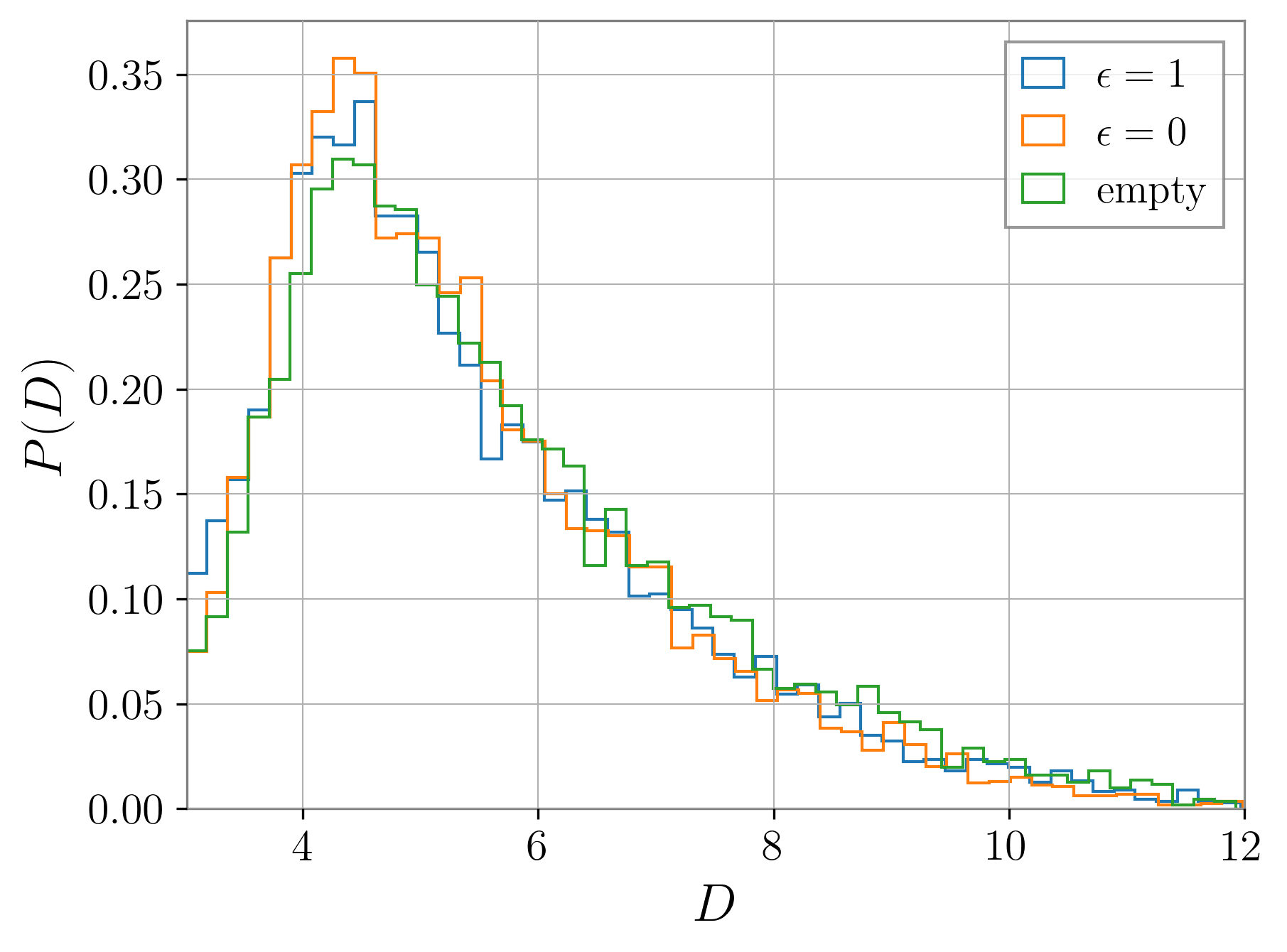
Figure 6: Posterior distributions on n4 for systematic variations in galaxy catalog weighting, confirming marginal impact on current constraints.
Implications and Outlook
The findings show that GWTC-4 dark-siren measurements remain consistent with four-dimensional GR, with n5 well within the n6 region. The constraints are, however, reliant on the chosen upper bound for the crossover scale; the posterior on n7 is prior-limited, indicating that the population distances accessible to current GW detectors are insufficient to probe large crossover scales associated with many higher-dimensional gravity models. Population modeling nuances (event types, mass distributions, and selection effects) play an important role in statistical power.
These results consolidate prior dark- and spectral-siren analyses and reinforce the importance of population distances, mass features, and galaxy catalog completeness for cosmological inference using GW observations. The paper explicitly demonstrates that meaningful constraints on extra-dimensional gravity are only obtainable when the crossover scale is not excessively large relative to the typical GW event distance.
Anticipated advances include deeper galaxy catalogs (DES, DESI, LSST, Euclid), next-generation GW observatories (Einstein Telescope, Cosmic Explorer), and improved localization/distance measurement, which will extend the reach of dark-siren cosmology and enable more robust tests of modified gravity. Special event classes, such as golden dark sirens and strongly lensed GWs, promise enhanced constraints by mitigating host galaxy ambiguities and providing additional cosmological leverage.
Conclusion
The GWTC-4 dark-siren analysis places updated constraints on higher-dimensional GW propagation, finding n8 consistent with GR for crossover scale priors n9. The analysis reveals strong parameter degeneracies and prior sensitivity, especially regarding D,Rc0. Current dataset limitations restrict sensitivity to large crossover scales, and improved constraints will require deeper galaxy catalogs and more distant, better-localized GW events. The results demonstrate the current capability and limitations of GW-based probes for extra-dimensional gravity, establishing a baseline for future cosmological tests with expanding GW and galaxy survey datasets.