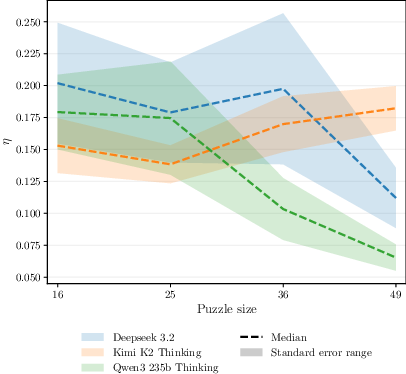
- The paper introduces a novel pipeline to extract structured reasoning graphs and a reasoning-flow efficiency metric (η) to quantify model logic.
- It demonstrates that token count is uncorrelated with efficiency, revealing distinct model strategies and failure modes through graph analysis.
- The methodology enables diagnostic evaluation of LLM reasoning and generalizes to domains such as code generation and mathematical reasoning.
Analyzing the Reasoning Structure of LLMs
Introduction
The paper "Reasoning Structure of LLMs" (2606.03883) critically examines how large reasoning models (LRMs)—a subclass of LLMs optimized for multi-step inference—produce their solutions when solving logic puzzles of controlled complexity. While prior work emphasizes final-answer accuracy and aggregate token count, these metrics obfuscate the qualitative nature of the underlying reasoning process. To address this, the authors propose a methodology for extracting and analyzing structured, verifiable reasoning graphs from free-form textual traces, and introduce a reasoning-flow efficiency metric (η) that captures the concentration and structure of logical flow.
Structured Reasoning Representation
The central technical innovation is a pipeline that decomposes LRM-generated traces into reasoning graphs (Figure 1). Each node denotes an atomic claim, validated via an executable puzzle environment, and each directed edge reflects a deductive dependency or claim restatement detected in the model's stepwise output.
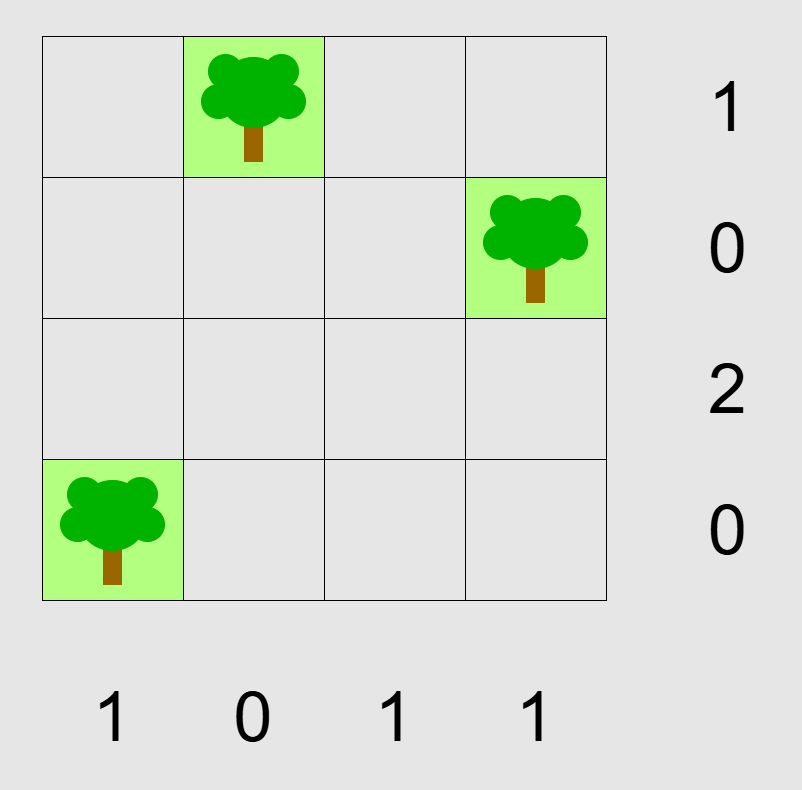
Figure 1: The pipeline extracts a verifiable claim graph from raw LLM traces, supporting fine-grained analysis of the reasoning structure.
This approach contrasts with previous benchmarks that evaluate only final answers or treat stepwise reasoning as uninterpreted text. The authors concretize reasoning as a directed acyclic graph (DAG) and formally define subgraphs that support recovery of the proposed solution, as well as claims used only for verification.
Logic Puzzle Benchmark and Instance Regimes
The analysis is grounded in a benchmark suite of 21 2D grid puzzles (Figure 2), encompassing NP-complete and diverse constraint regimes: placement, connectivity, counting, and Latin-square variants. Puzzle instances are generated with fine control over difficulty (trivial to human-hard), enabling scaling studies for reasoning as a function of complexity. The environment allows deterministic checking of both intermediate and final claims, supporting step-level evaluation.
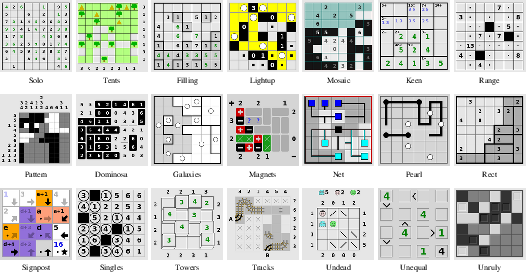
Figure 2: The benchmark suite systematically spans grid puzzles with stringent, scalable constraints across multiple task categories.
Reasoning-Flow Efficiency: η Metric
To move beyond trace verbosity and accuracy, the authors introduce a reasoning-flow efficiency metric, η, which quantifies how concentrated the logical flow is relative to the minimal set of claims required to specify the solution (i.e., solution-supporting claims). η is calculated based on the structural entropy of an absorbing Markov chain defined over the reasoning graph. High η indicates tightly-focused, solution-driven reasoning; low η reflects meandering, redundant, or verification-heavy reasoning.
Efficiency is shown to be uncorrelated with token count, substantiating that longer traces (i.e., more tokens) do not necessarily correspond to higher-quality or more structured reasoning. Instead, model differences—especially in handling intermediate steps or verification—are exposed when controlling for accuracy and output length.
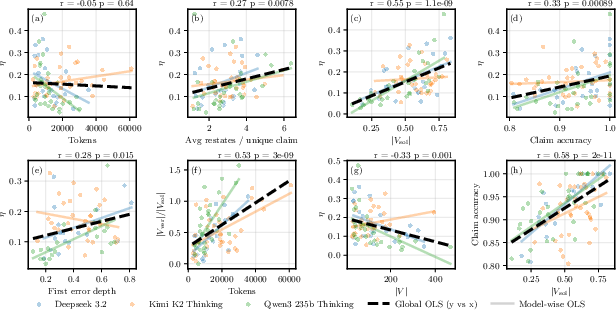
Figure 3: Statistical analysis of reasoning-flow efficiency (η) versus other metrics demonstrates that token count is uncorrelated with efficiency, while efficiency predicts correctness, solution focus, and later error onset.
Empirical Findings
Systematic experiments (see benchmark overview) reveal that as puzzle difficulty increases, all evaluated models—GPT-5, Qwen 3 235B, DeepSeek V3.2, and Kimi K2—exhibit steep declines in accuracy (with a collapse to zero or near-zero on the hardest regimes) while average token count increases by a factor of 4–6×. Crucially, the allocation of extra tokens predominantly results in verification overhead and does not improve either solution rates or reasoning efficiency.
Structural Differentiation
The reasoning graph framework exposes significant intra- and inter-model differences in reasoning patterns:
Redundancy and Recap
The analysis finds that controlled restatement of claims (as opposed to mere repetition) is positively correlated with efficiency, resonating with the notion of “anchoring” via structured recap of key constraints. Thus, not all redundancy is detrimental; some functions as implicit scaffolding that supports correct reasoning.
Implications
Diagnostic Evaluation
The graph-centric pipeline and η1 metric enable diagnostic evaluation of LLMs at a process level, facilitating detection and categorization of failure modes—such as overthinking, spurious verification, or drift—missed by endpoint metrics. This structural characterization supports model selection, interpretability, and the shaping of auxiliary losses in reinforcement learning protocols.
Beyond Puzzles: Generalization
While the experiments target grid puzzles (with deterministic environments enabling atomic claim verification), the methodology extends naturally to other domains with step-verifiable state transitions. Mathematical reasoning, code generation (actionable via unit tests), and agentic tool-use environments are substantive next targets. The structural methodology is model- and domain-agnostic except for the claim and rule definitions.
Potential for Feedback and Training
With continual advances in extraction reliability and computational efficiency, η2 (or similar entropy-based process rewards) can provide structured signals during process-based fine-tuning/optimization. This encourages more focused, solution-driven reasoning rather than brute-force token expansion or verification bloat.
Limitations
The claim/rule extraction pipeline relies on LLM-based agents for semantic parsing and attributing deductive dependencies, introducing a source of heuristic error. Variance and extractor bias are shown to be limited in ablation, but extraction accuracy is not perfect. Additionally, adaptation to new domains and tasks requires definition of domain-specific atomic claims and rules, which, while modular, involves manual engineering.
Conclusion
This paper establishes a framework for rigorous, process-level evaluation of LRM reasoning via the extraction and analysis of verifiable claim graphs. The reasoning-flow efficiency metric (η3) quantifies reasoning structure beyond endpoint outcomes and exposes latent distinctions in model behavior and scaling. These results emphasize the necessity of structured, step-aware metrics in future research on LLM reasoning, especially as models are tasked with ever more complex, multi-step problems.