- The paper introduces a novel analysis on energy extraction using the Comisso–Asenjo reconnection process in NED-deformed rotating black holes.
- It integrates geometric observations, such as shadow size and eikonal QNMs, with dynamic plasma reconnection to constrain the deformation parameter g/M relative to Kerr metrics.
- Comparative analysis with the Blandford–Znajek process shows that CA extraction efficiency and ergoregion modifications yield stringent constraints on beyond-GR effects.
Introduction
The paper "Energy extraction from NED-deformed rotating black holes via the Comisso-Asenjo reconnection process" (2605.26369) investigates energy extraction mechanisms in rotating black holes within general relativity minimally coupled to nonlinear electrodynamics (NED). The work builds on the Ghosh–Walia axisymmetric solution, which introduces a deformation parameter g reflecting the strength of nonlinear electromagnetic effects beyond the standard Kerr metric. The focus is on quantifying how g modifies both the near-horizon spacetime structure and the efficiency of high-energy extraction channels, particularly magnetic reconnection in the ergosphere as formulated by Comisso and Asenjo.
The study leverages a two-pronged approach: geometric calibration using observable features (shadow size and eikonal QNMs) to constrain the NED coupling, and a dynamical computation of energy extraction power, systematically comparing NED and Kerr black hole scenarios. The methodology enables derivation of testable bounds on the deformation parameter, highlighting how present and future observational data can probe or constrain such beyond-GR effects.
Nonlinear Electrodynamics Black Hole Solution
The axisymmetric rotating NED black hole is generated via the Newman–Janis algorithm applied to a Schwarzschild-like seed with a purely magnetic NED source. The key geometric parameter g acts as a magnetic monopole charge, regularizing the solution at small radii and introducing scale-controlled deformations that are negligible asymptotically but significant in the strong-field regime. For g=0, the metric reduces to the familiar Kerr solution.
Analysis reveals that g softens curvature divergences and modifies horizon and ergoregion characteristics. The domain of black hole existence is mapped in the (a/M,g/M) parameter space, showing the interplay between spin and NED deformation in maintaining an event horizon.
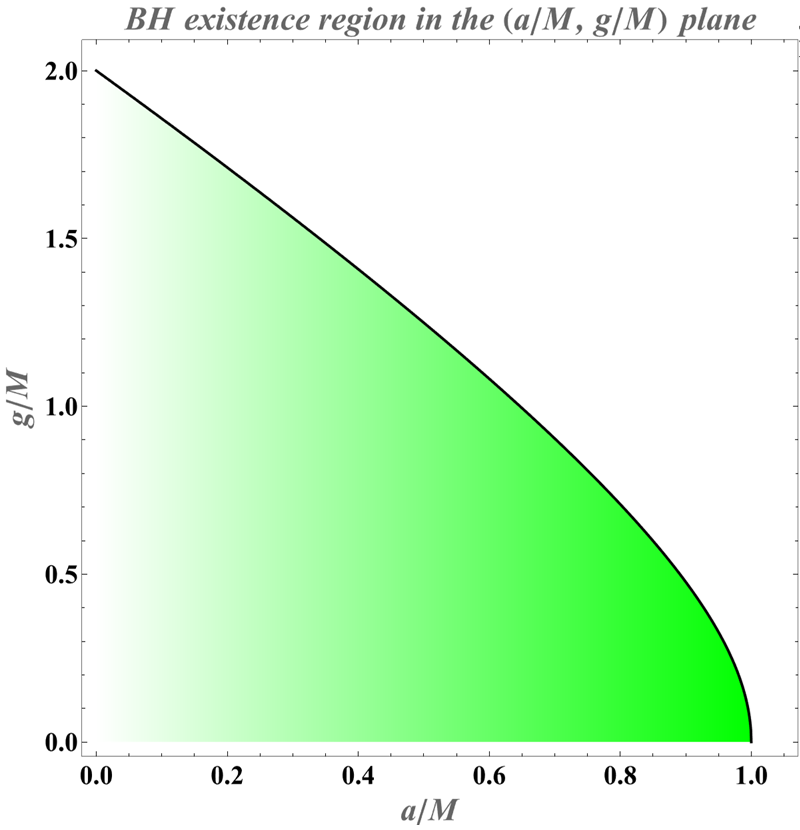
Figure 2: Parameter space of existence for the rotating NED black hole; shaded region admits a horizon, with the extremal boundary connecting the Kerr extremal and NED static limits.
Observational Constraints: Black Hole Shadow, Lensing, and QNMs
Black Hole Shadow and EHT Constraints
The size of the black hole shadow, observable by VLBI campaigns such as the EHT, is determined by the critical photon sphere in the deformed geometry. The deformation parameter g monotonically decreases the shadow size relative to Schwarzschild/Kerr, yielding negative fractional deviations. By enforcing the empirically inferred ∣δ∣≲0.10 threshold for Sgr A*, a robust, spin-independent upper bound of g/M≲1.26 is obtained.
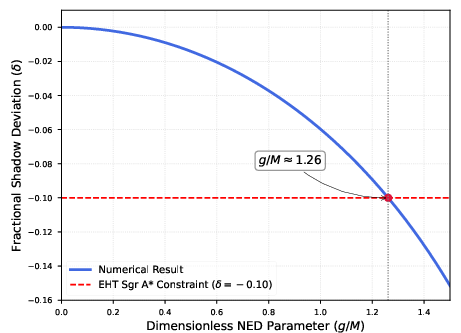
Figure 3: Fractional deviation of the shadow radius vs. g/M, with EHT-based upper bound marked at g0.
Eikonal Quasinormal Modes
Eikonal QNM analysis provides a microphysics-agnostic ceiling on g1. Oscillation frequencies increase and damping rates decrease with rising g2, in even powers, reflecting g3 symmetry. For all g4 allowed by shadow-size constraints, the ringdown spectrum remains within observationally consistent limits.
Geometry and Dynamics of the Rotating NED Black Hole
The study computes closed-form expressions for the ZAMO scalars, horizon location, static limit, and equatorial geodesics in the rotating NED background. The ergoregion thickness g5 and the ISCO radius shift relative to Kerr are characterized for representative values of g6.
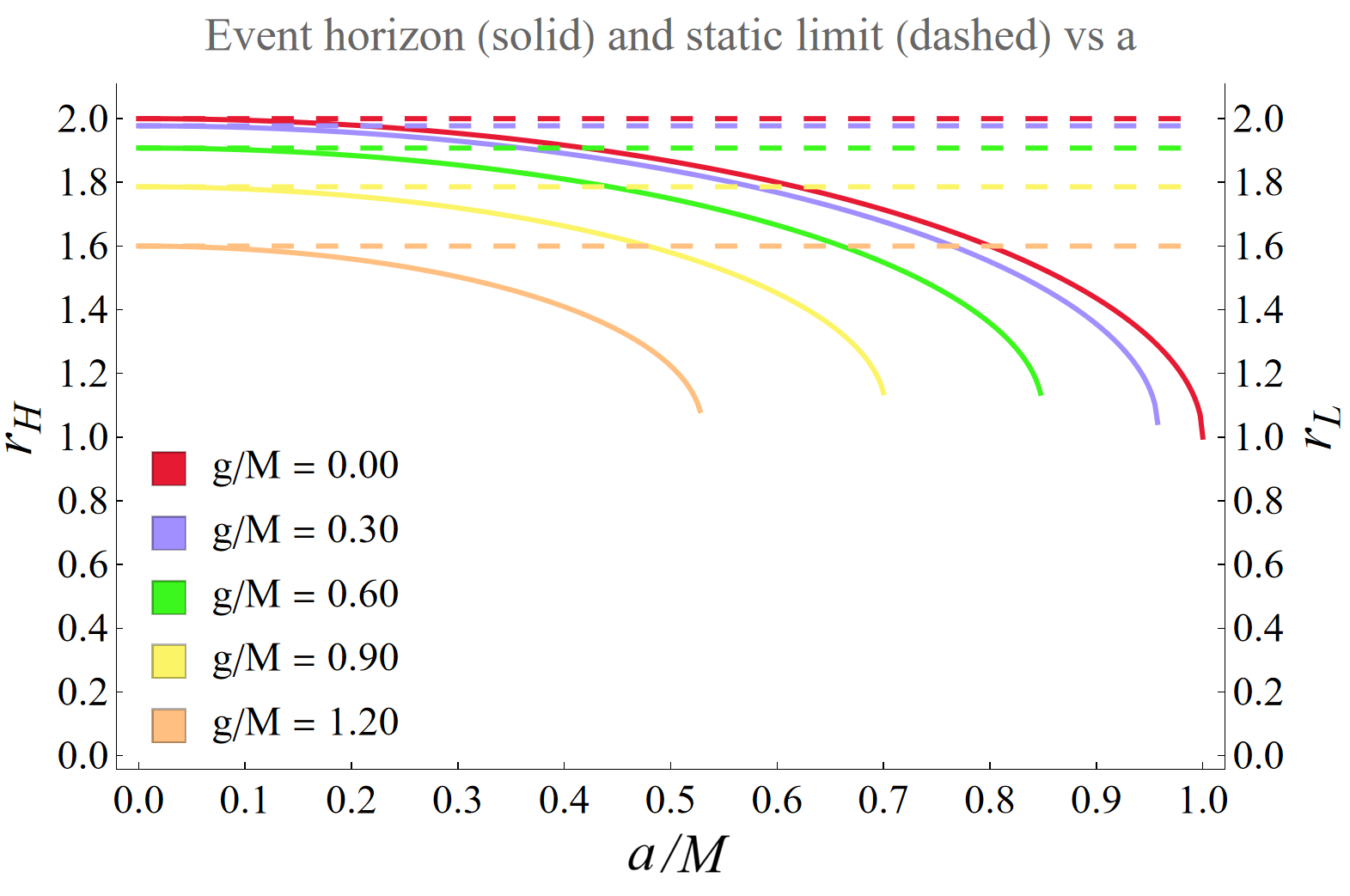
Figure 1: Outer horizon and equatorial static limit g7, g8 as functions of spin at different g9.
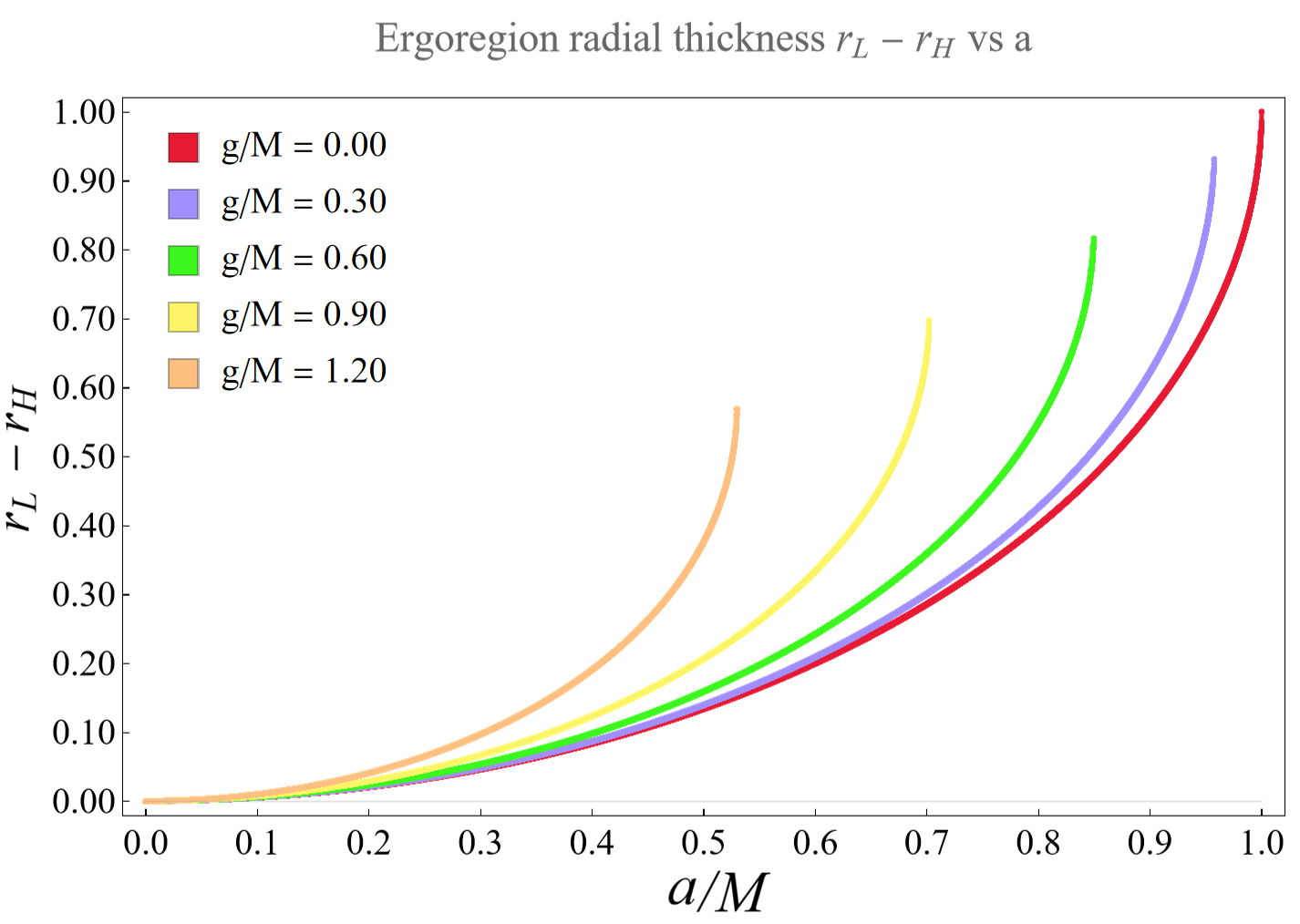
Figure 6: Ergoregion thickness g0 as a function of spin and NED parameter g1.
ISOC and equatorial photon orbits are systematically altered with g2, influencing both dynamics and observable signatures.
Magnetic Reconnection and Energy Extraction via the Comisso–Asenjo Process
Adopting the Comisso–Asenjo (CA) framework, the analysis models fast plasmoid-mediated magnetic reconnection in the equatorial ergoregion of the NED-deformed spacetime. The key theoretical advance is the derivation of per-enthalpy extracted energy at infinity in the ZAMO frame, integrating over the ergoregion, and identifying the parameter windows in which the negative-energy branch (required for extraction) opens.
Extraction efficiency is controlled by the upstream plasma magnetization g3 and the pitch angle g4; azimuthal ejection (g5) and high g6 maximize the negative-energy window and extracted power. The integrated power proxy g7 encodes the net geometric and kinematic modulation of the process.
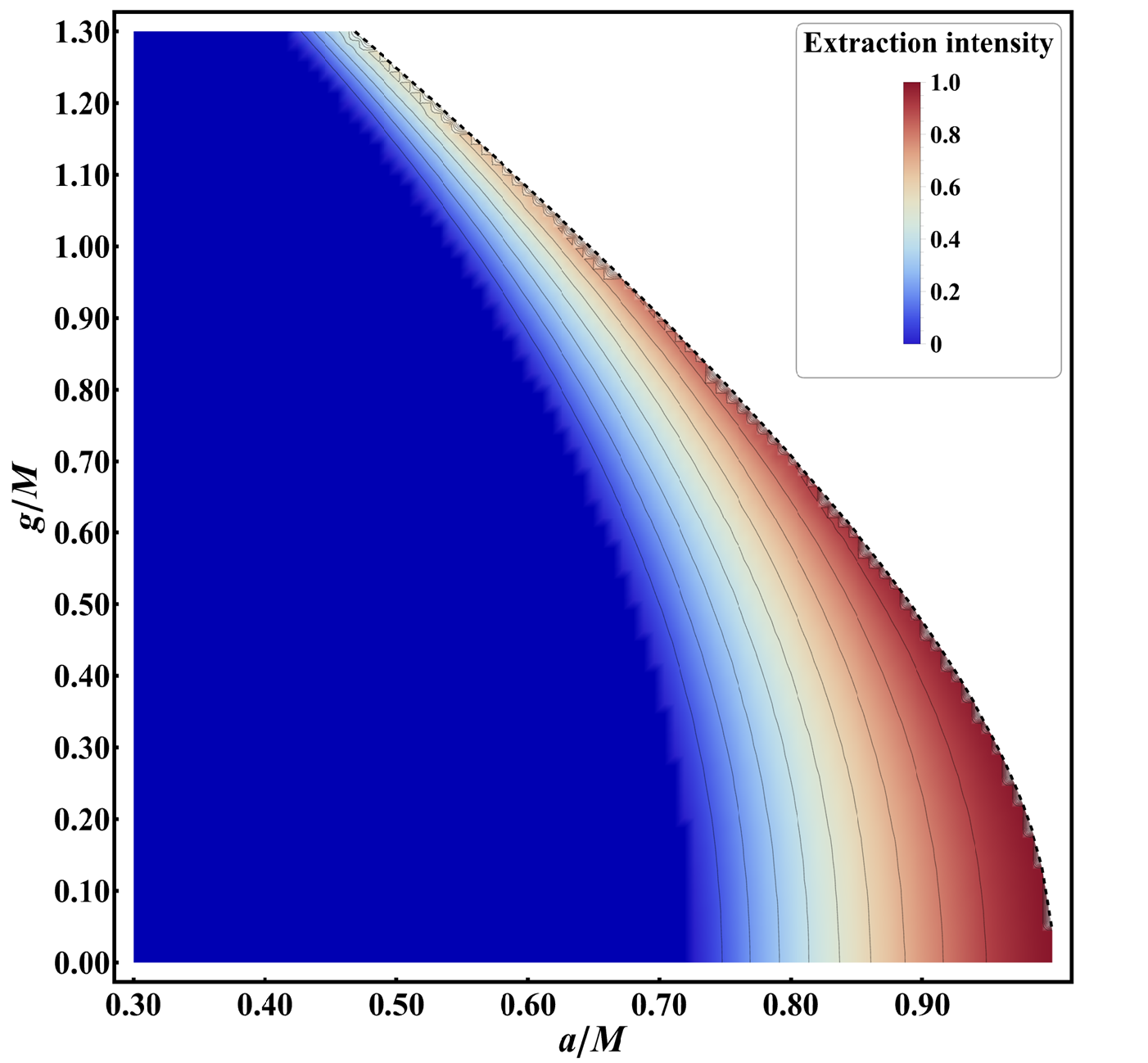
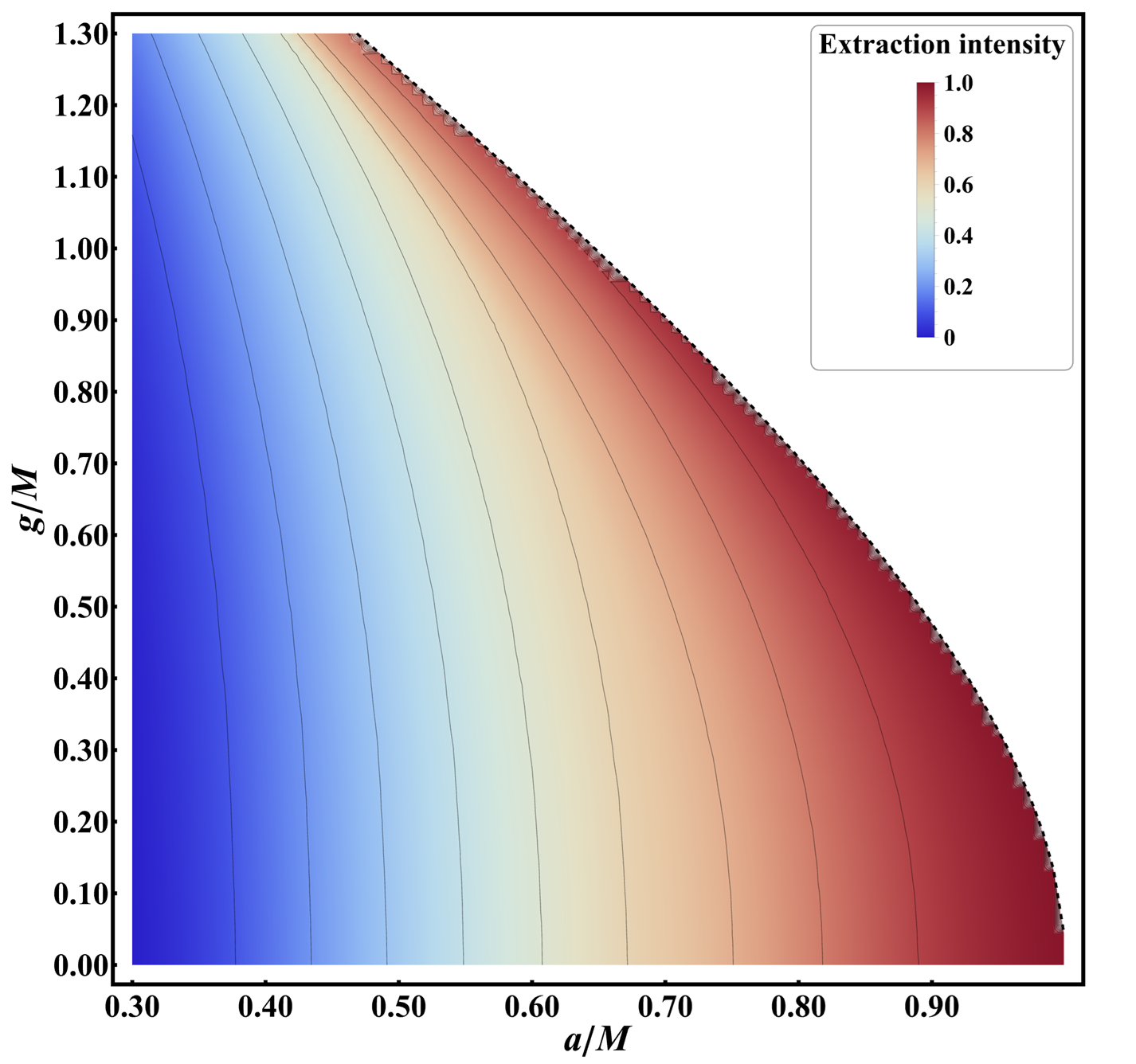
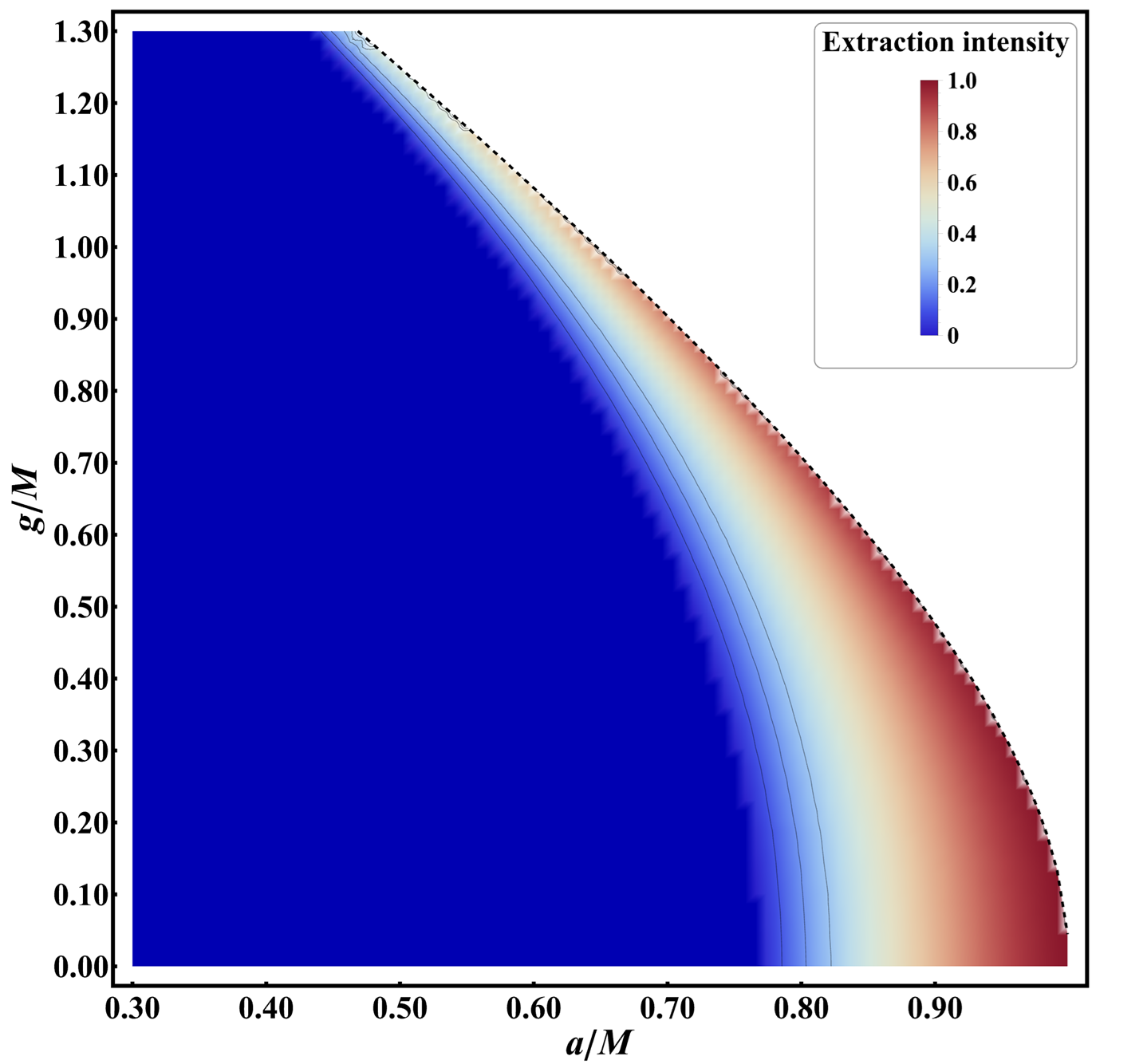
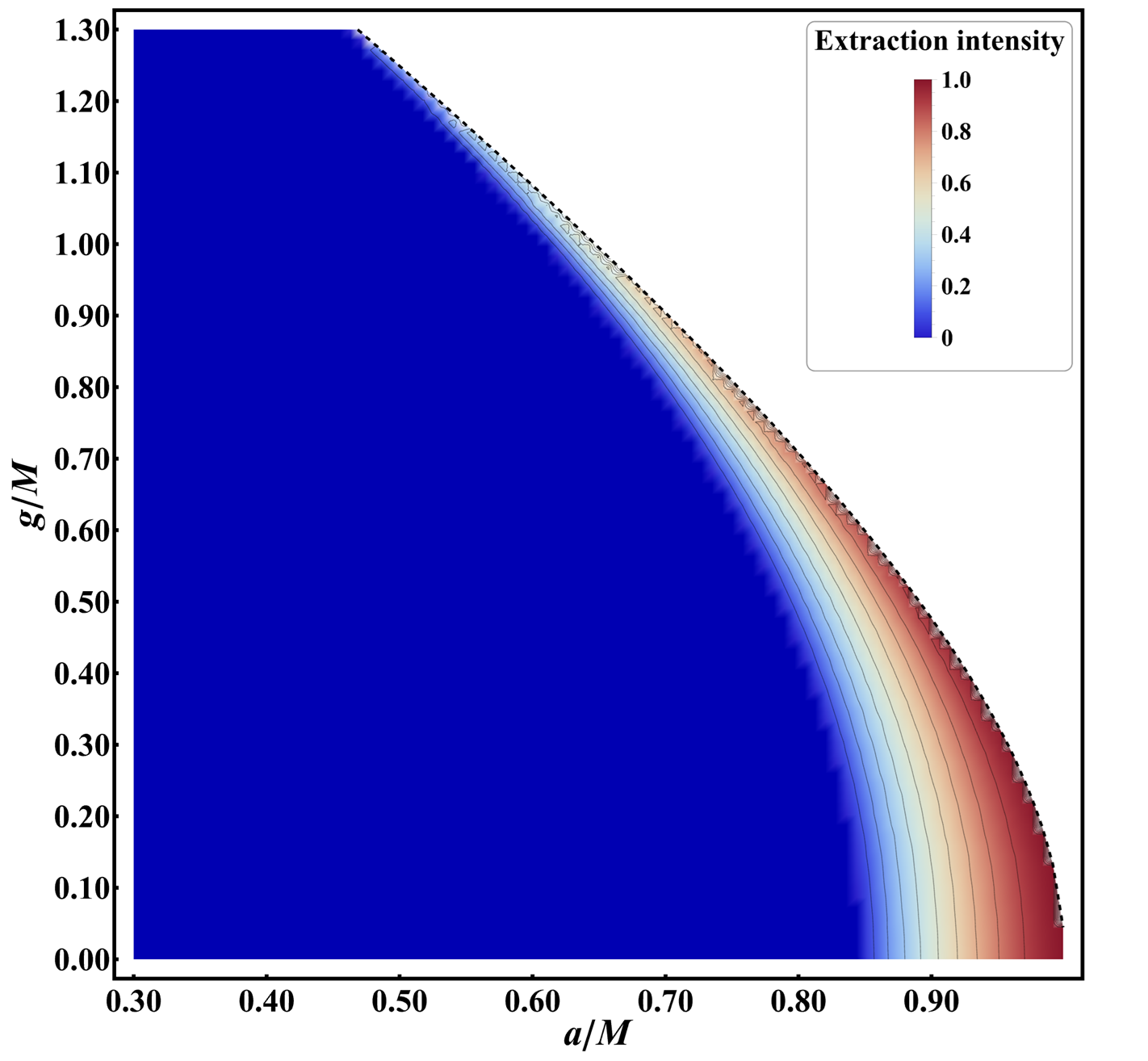
Figure 7: Extraction maps as a function of spin g8 and NED parameter g9 for various plasma parameters, showing allowed regions and power scaling.
A crucial result is the formulation of the discrepancy measure g=00—the fractional difference in extracted power between NED-deformed and Kerr black holes for fixed plasma state—and the associated spin-resolved bound g=01. This operationally constrains g=02 beyond the shadow/QNM ceilings, with tightness increasing for high-spin, high-g=03 systems.
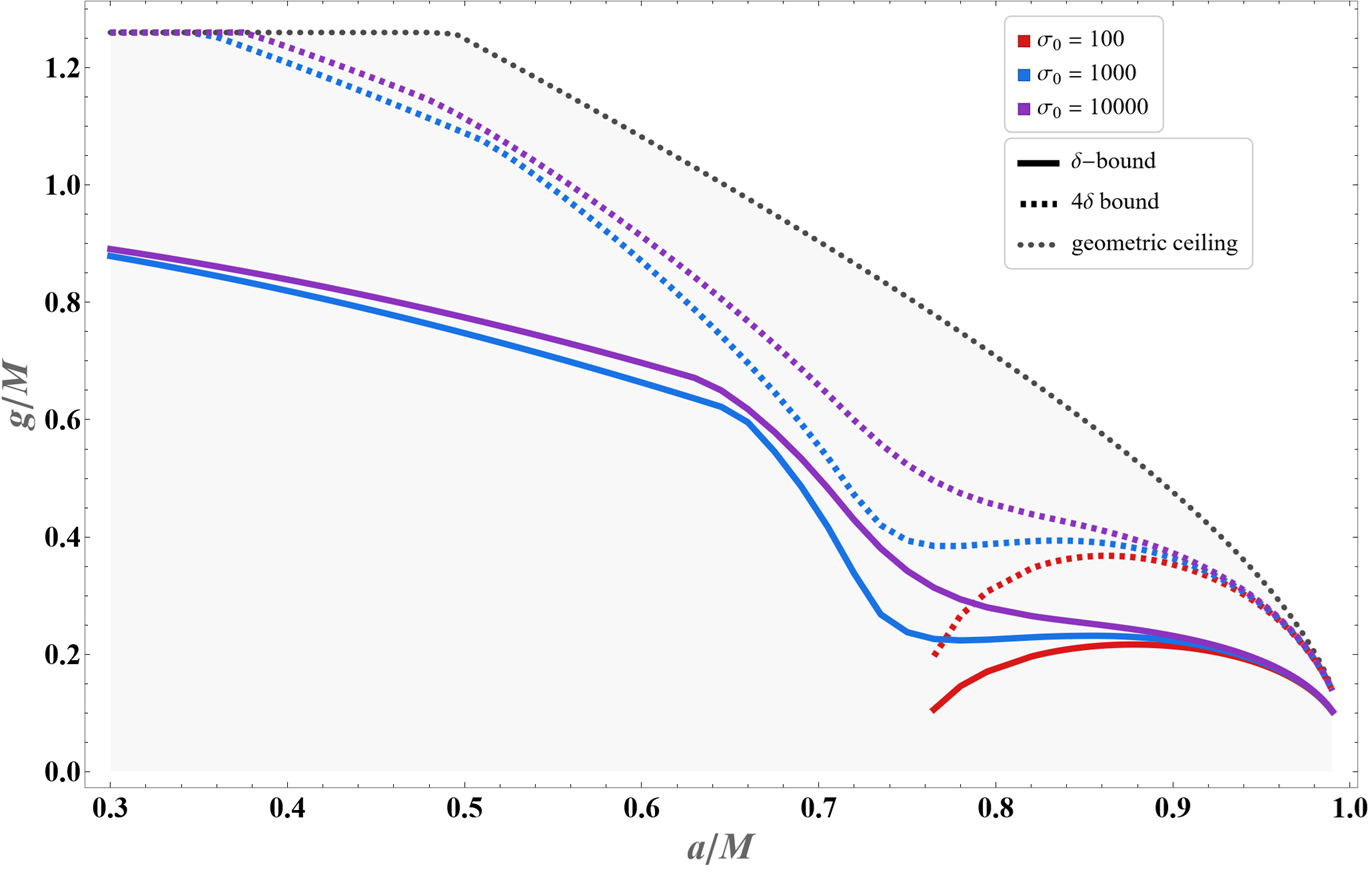
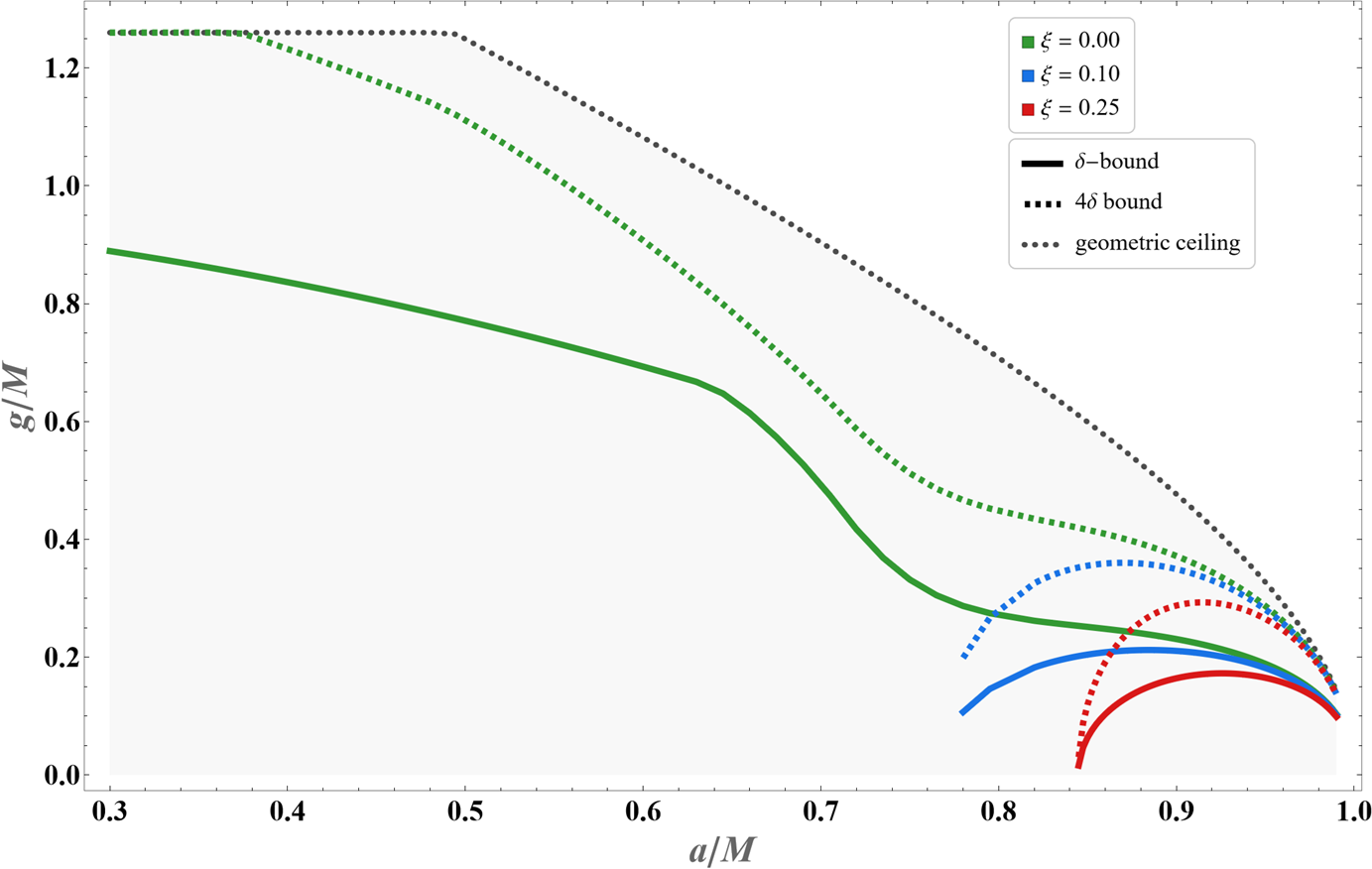
Figure 8: Upper bounds on g=04 from the extraction-based discrepancy criterion, with dependence on spin, g=05, and pitch angle, and comparison to geometric boundaries.
CA/BZ Comparative Analysis
For context, the extracted power from the CA mechanism is benchmarked against the Blandford–Znajek (BZ) process, which depends on the horizon-threading magnetic flux and the horizon angular velocity. The geometric imprint of NED effects enters both via shifts in g=06 and in the location of the horizon.
The reduced ratio g=07 allows geometry-driven CA/BZ comparison, with g=08 favoring CA/BZ at higher values within allowed windows; however, large-scale parameters (e.g., magnetospheric flux state) dominate the absolute hierarchy. The findings indicate that while CA extraction is sensitive to ergoregion geometry, the complementary information offered by both extraction channels enables multifaceted constraints on beyond-Kerr metrics.
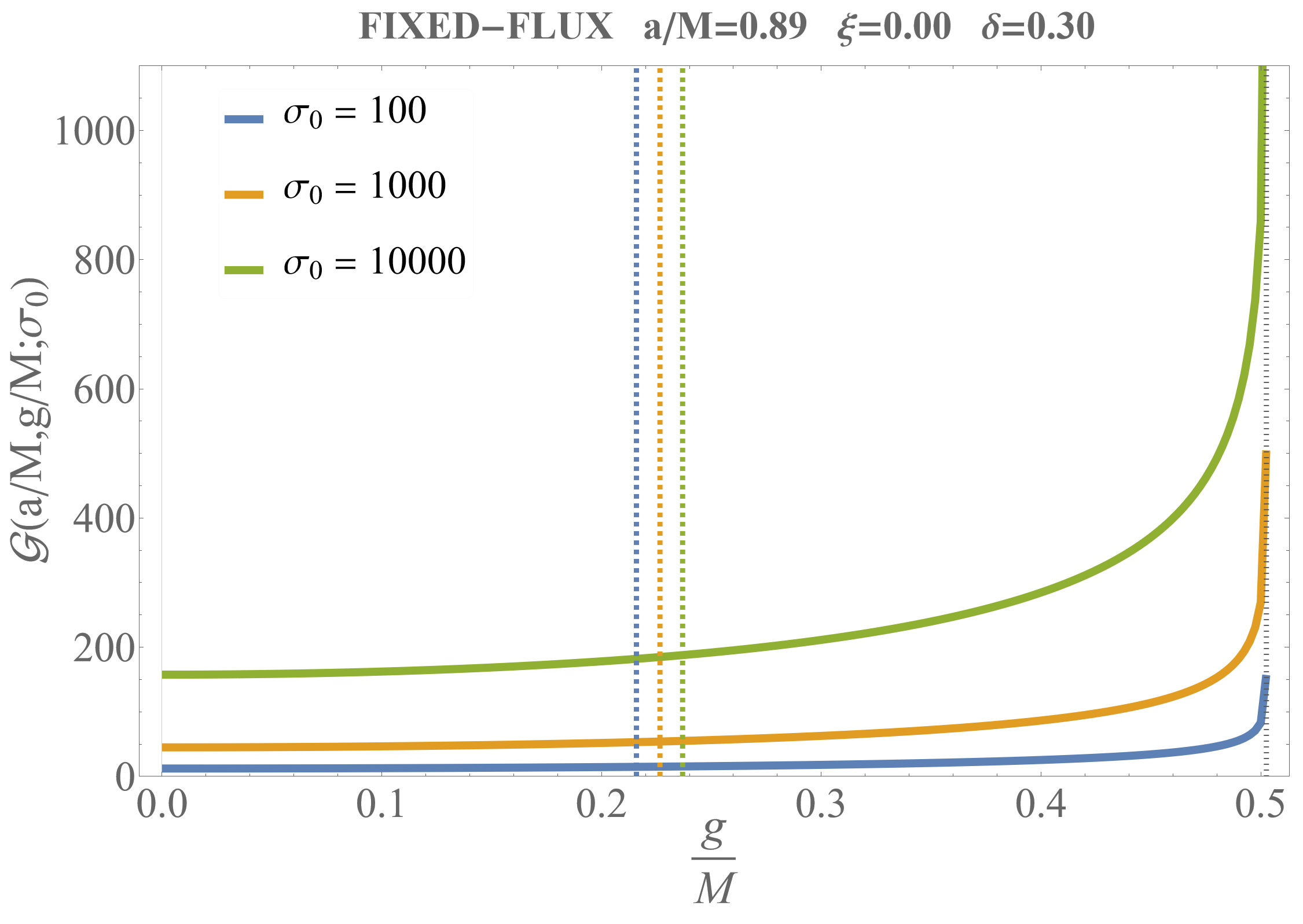
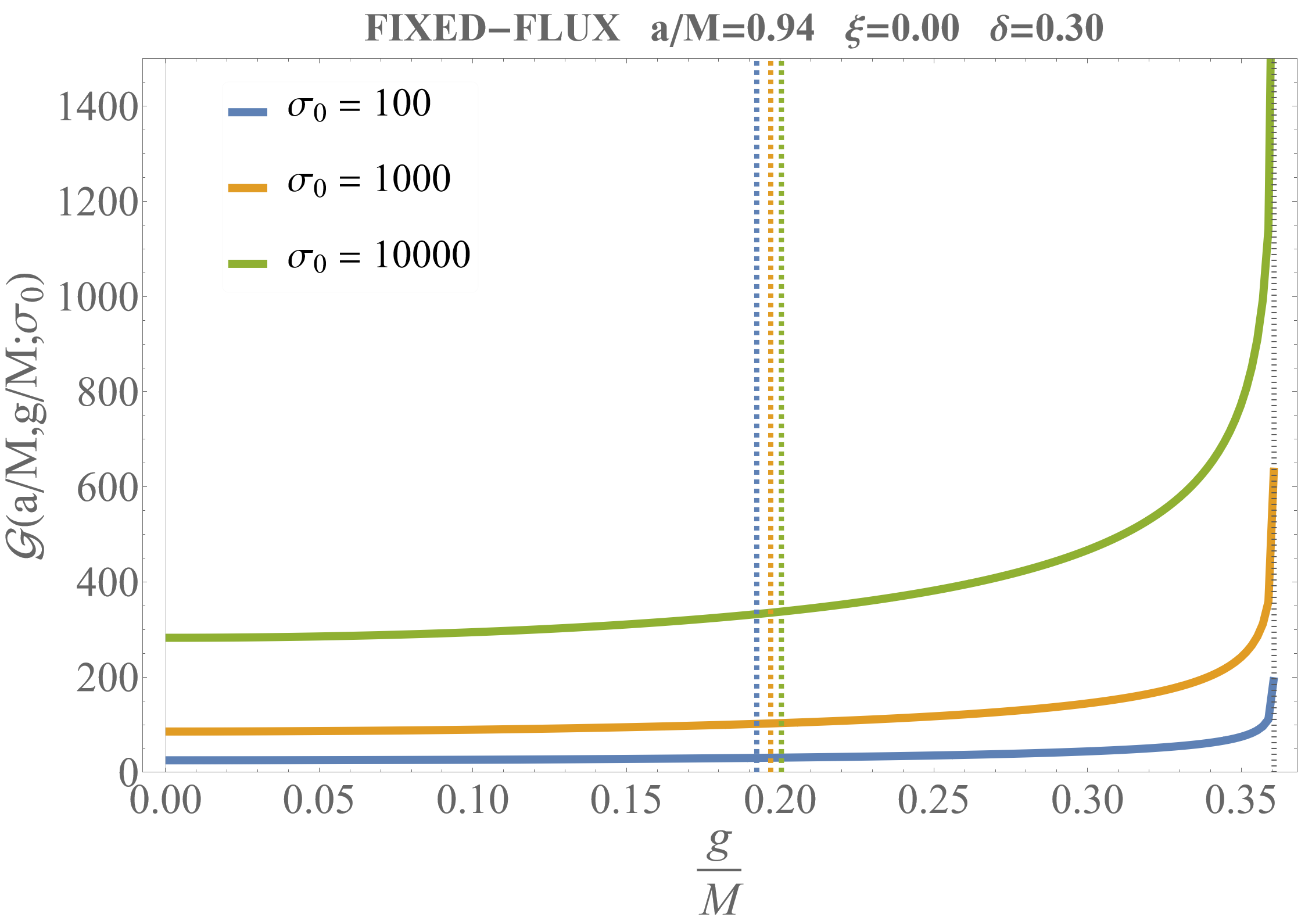
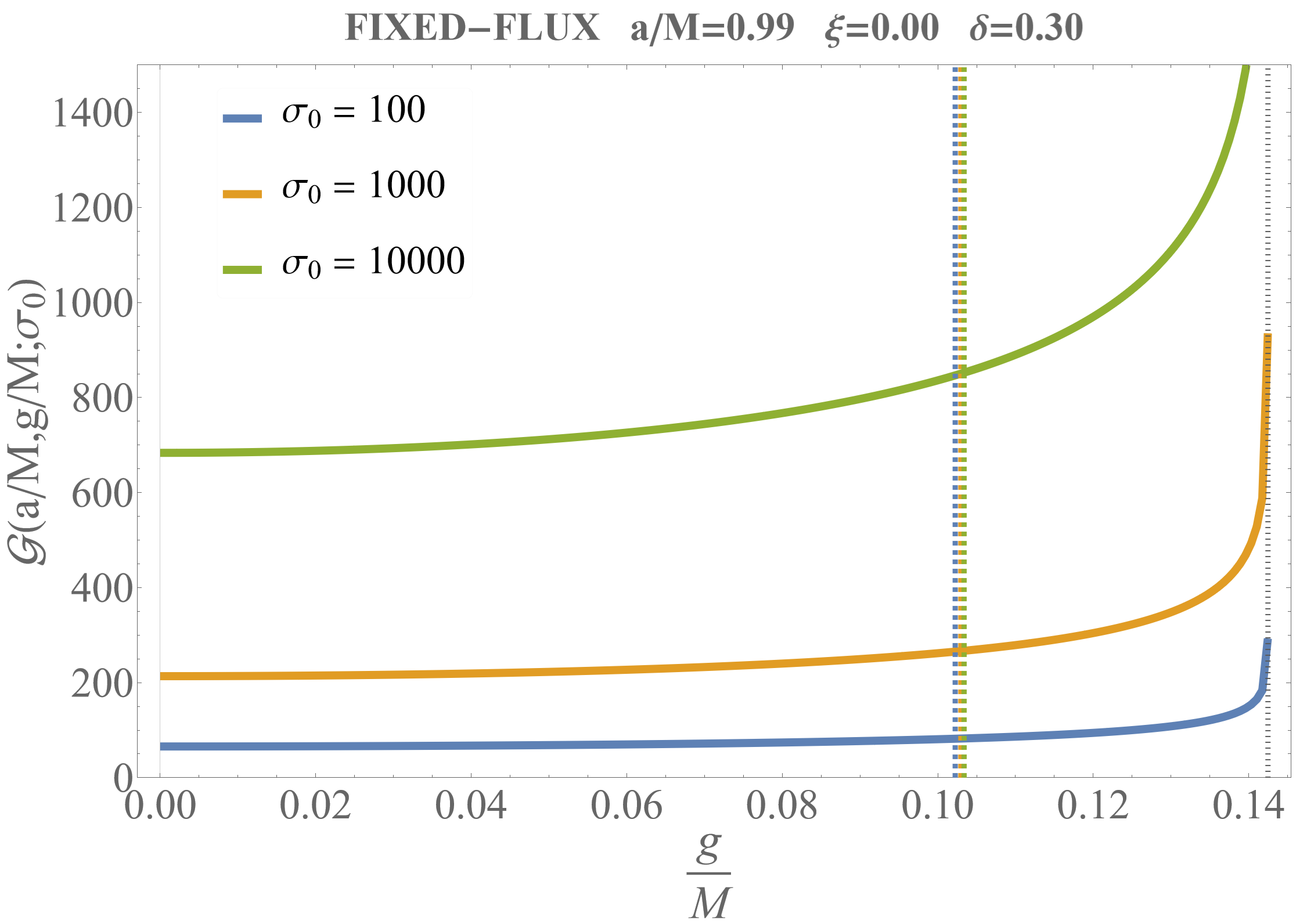
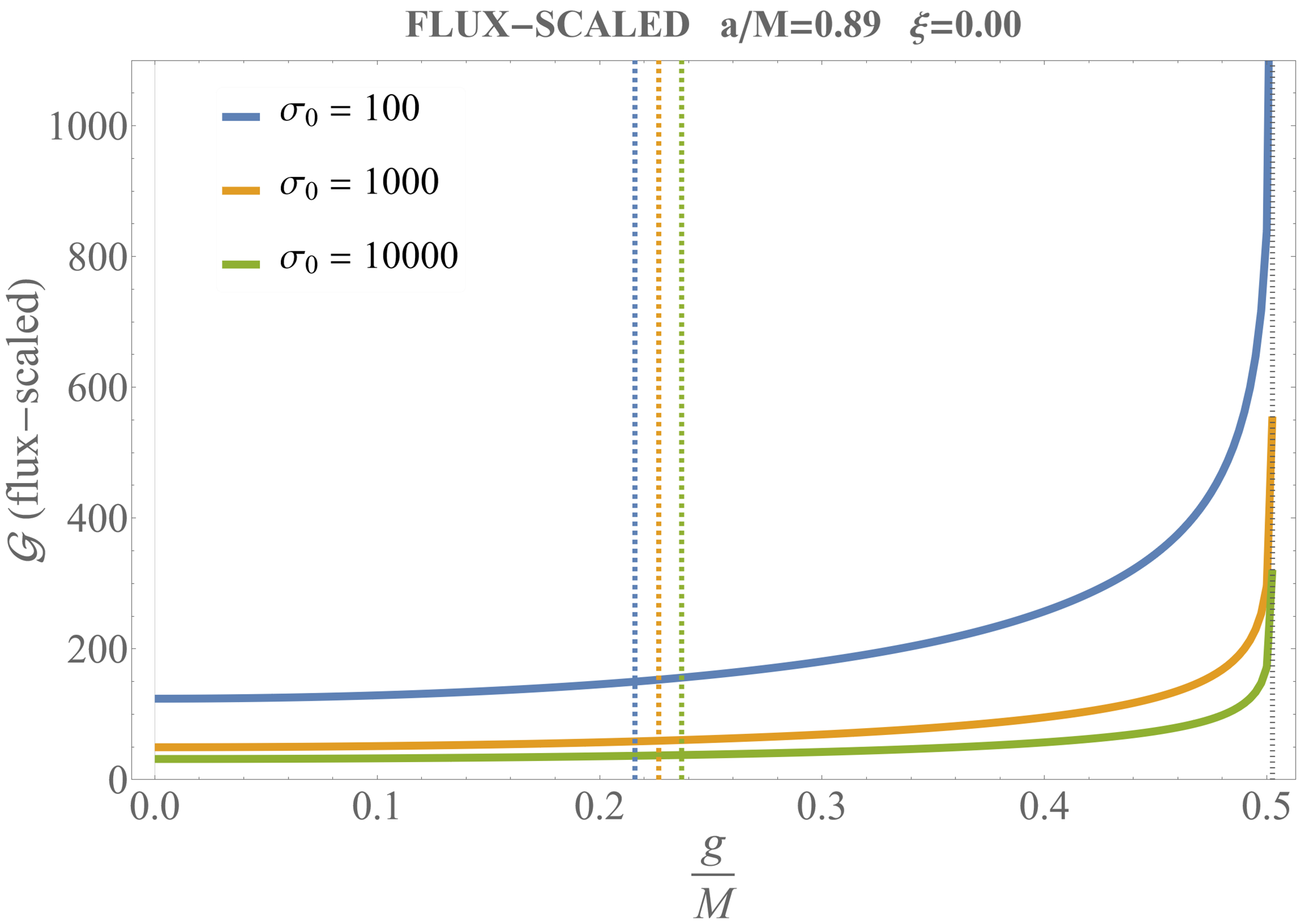
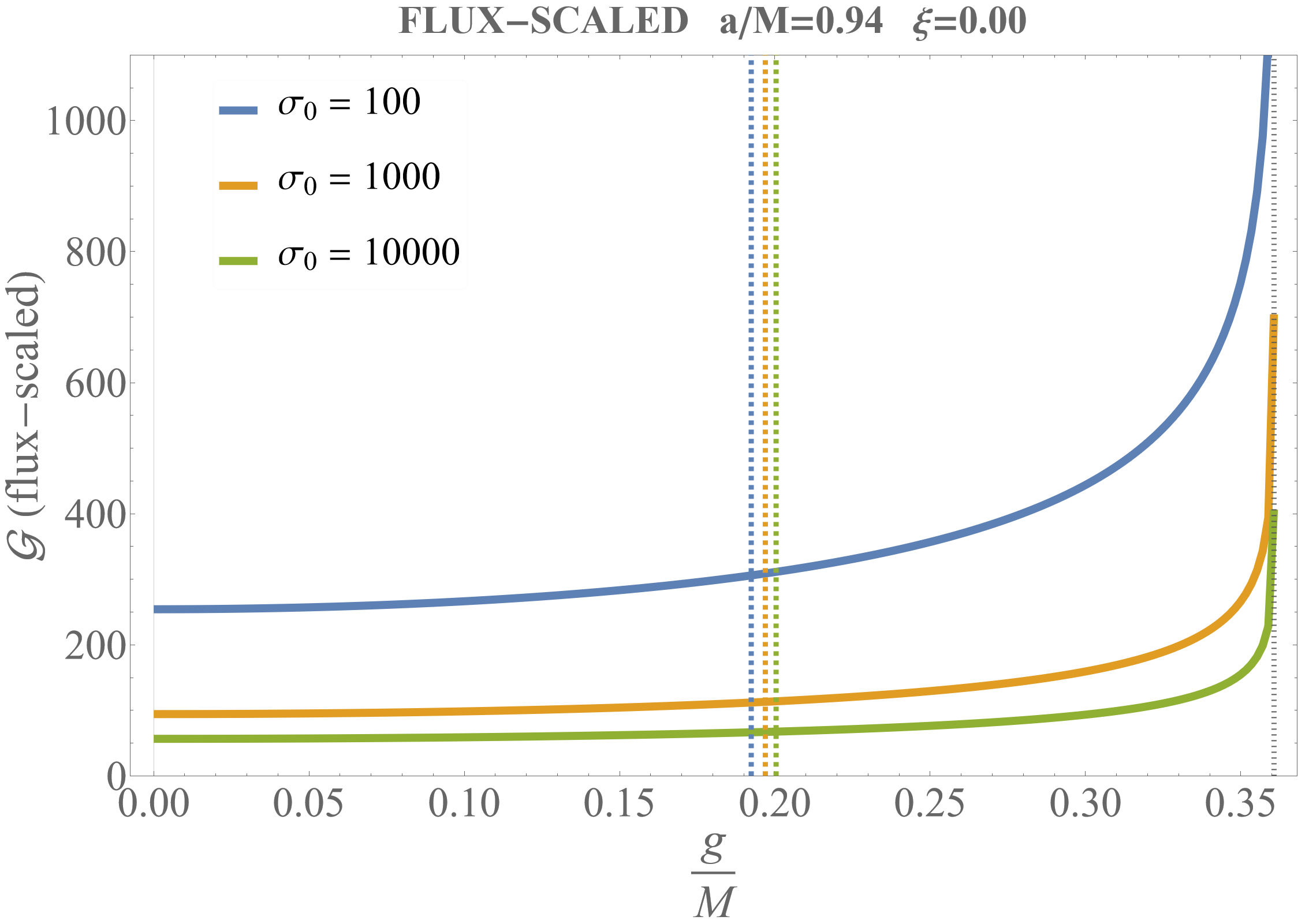
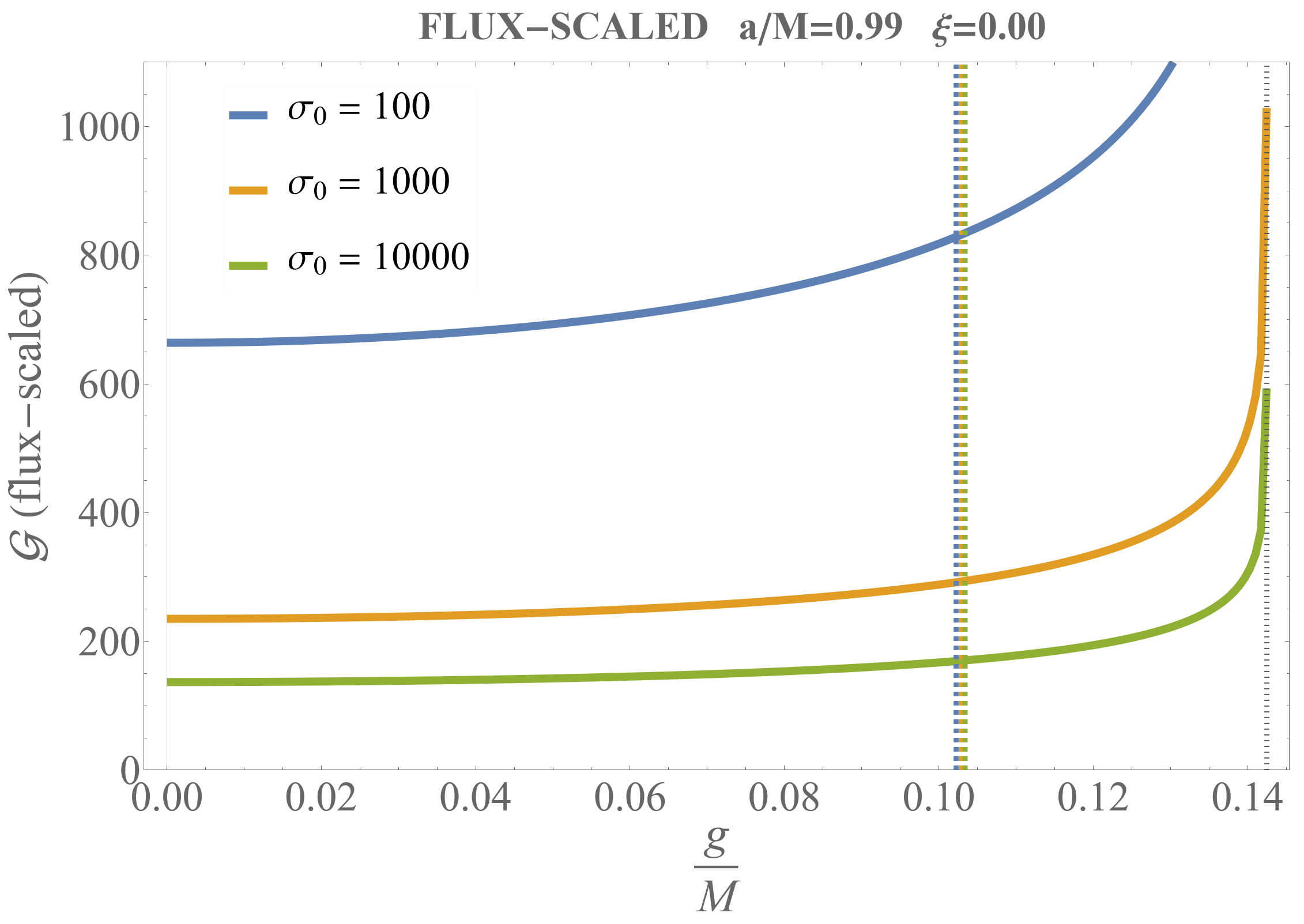
Figure 4: Geometry-driven CA/BZ ratio vs. g=09 for various spins and plasma magnetizations.
Implications, Outlook, and Future Directions
The combination of geometric (shadow/QNM) and dynamical (reconnection extraction) probes yields robust, testable inequalities on NED deformations in rotating black holes. The conservative ceiling g0 from Sgr A* shadow size is further narrowed by extraction-based criteria, especially at high spin and high magnetization. This allows precision constraints from present and next-generation VLBI, polarimetric, and timing data.
The formalism is structured to remain robust against astrophysical uncertainties, as the discrepancy ratios mitigate normalization ambiguities. The approach is directly applicable to forthcoming high-angular resolution imaging, X-ray timing, and population-level AGN studies, particularly in magnetically arrested disk (MAD) systems where plasma and magnetic flux states are independently inferred.
Future developments will include embedding these diagnostics in global GRMHD and kinetic simulations, extending to more general NED models and more complex extraction site geometries, and integrating with multi-messenger constraints. The delineated protocol provides a replicable and theoretically controlled pathway to test for strong-field deviations from general relativity.
Conclusion
This paper systematically demonstrates how high-precision measurements of black hole observables, combined with first-principles plasma physics, can yield stringent, spin-dependent bounds on NED-induced deviations from the Kerr metric. The analytic and numerical framework for reconnection-driven extraction in deformed spacetimes, together with the CA/BZ comparative analysis, constitutes a significant step toward interpreting future horizon-scale datasets in the language of explicit beyond-GR model parameters. By explicitly quantifying the interplay between strong gravity, nonlinear electrodynamics, and magnetized plasma processes, the work bridges fundamental theory and observational astrophysics in the high-curvature regime.