- The paper introduces the geometric mortar contact potential (GMCP) to discretize contact pressure and ensure intersection-free, high-fidelity tactile simulation.
- It integrates GPU-accelerated libuipc with dual-mesh mapping and Isaac Sim/Lab, enabling scalable, parallel, and visually realistic robotic simulations.
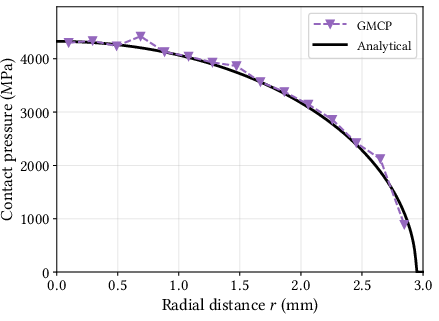
- Quantitative evaluations, such as Hertzian contact tests, confirm the method’s accuracy with relative errors below 8e-4 and alignment with analytical solutions.
Framework Architecture
IsaacIPC is a robotic simulation environment designed to bridge high-fidelity, GPU-accelerated contact physics with advanced photorealistic rendering infrastructure. The framework couples libuipc—a robust incremental potential contact (IPC) solver—with Isaac Sim / Isaac Lab, leveraging a dual-mesh representation to decouple simulation and visual assets. This enables scalable parallel environment rollout while preserving original mesh topology, texture coordinates, and material bindings essential for Omniverse USD/Fabric-based rendering.
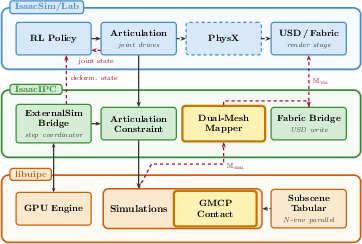
Figure 1: Overview of IsaacIPC’s layered architecture, illustrating the coordination between IsaacSim/Lab, IsaacIPC middleware, and libuipc for parallel and realistic robotic simulation.
Through the external simulation bridge, articulated robot constraints are mapped onto libuipc physics, while mesh mapping interpolates simulation deformations onto the visual mesh per frame. This design supports massively parallel rollout, rigid-deformable coupling, and high-fidelity tactile simulation—all amenable to multi-environment learning pipelines.
IsaacIPC introduces the geometric mortar contact potential (GMCP) as a new tactile contact formulation. Classical mortar methods in finite element analysis produce improved physical interface consistency by weakly enforcing contact constraints through sampled quadrature over nonmatching mesh regions. GMCP adapts mortar methodology, sampling contact over tactile (slave) surfaces and projecting master-side features (triangles, edges, points) to generate area-/length-/point-weighted contact samples. Each sample records slave and master positions, gap distance, and a weighting factor, enabling direct discretization of contact pressure.
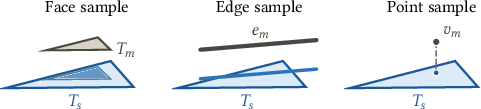
Figure 2: Visualization of contact sampling operations on a slave triangle for GMCP, illustrating projection and clipping of master features.
GMCP employs an IPC-inspired barrier potential on contact samples, ensuring intersection-free physics while increasing contact-pressure accuracy—a critical metric for tactile sensing. Adaptive barrier radii and smooth step weighting facilitate robust coupling, avoiding spurious forces associated with nonmatching mesh discretizations.
Quantitative Evaluation
GMCP performance is validated through classical contact patch and Hertzian contact tests:
IsaacIPC is demonstrated on three canonical contact-rich robotic domains:
- Legged Locomotion: Quadruped robot articulated with rigid bodies and FEM-modeled soft foot pads. Parallel multi-environment rollout and contact-force visualizations enable domain randomization and reset granularity ideal for reinforcement learning pipelines.
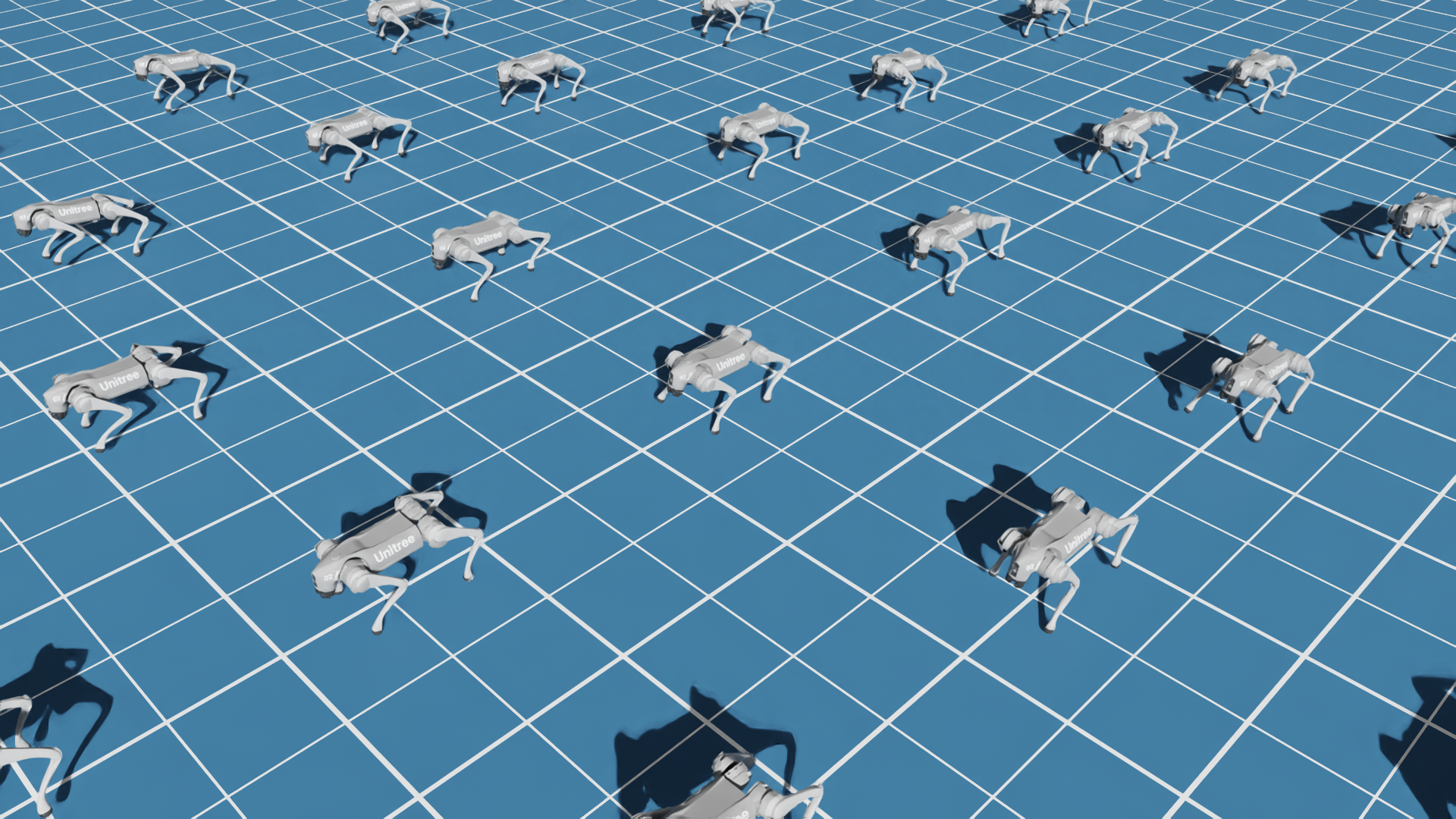
Figure 4: Parallelized simulation of quadruped locomotion environments for scalable robot learning.
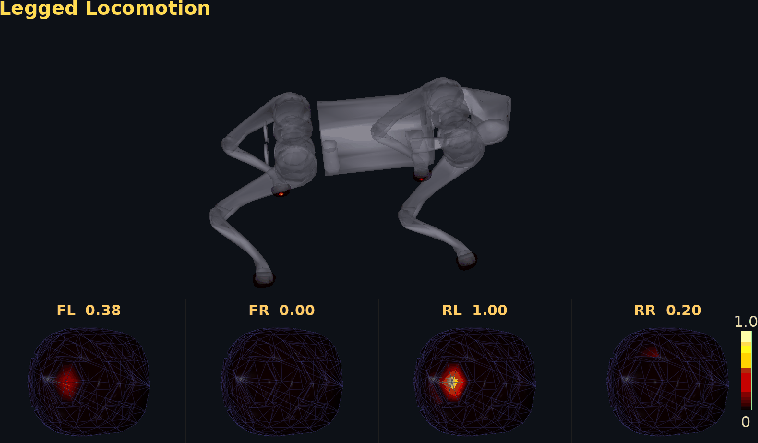
Figure 5: Detailed contact force distribution on quadruped foot pads illustrates tactile accuracy.
- Dexterous Manipulation: The Sharpa Wave hand manipulates a ball using deformable fingertips (FEM). Multi-environment policy rollouts facilitate tactile and contact force benchmarking critical for in-hand manipulation research.
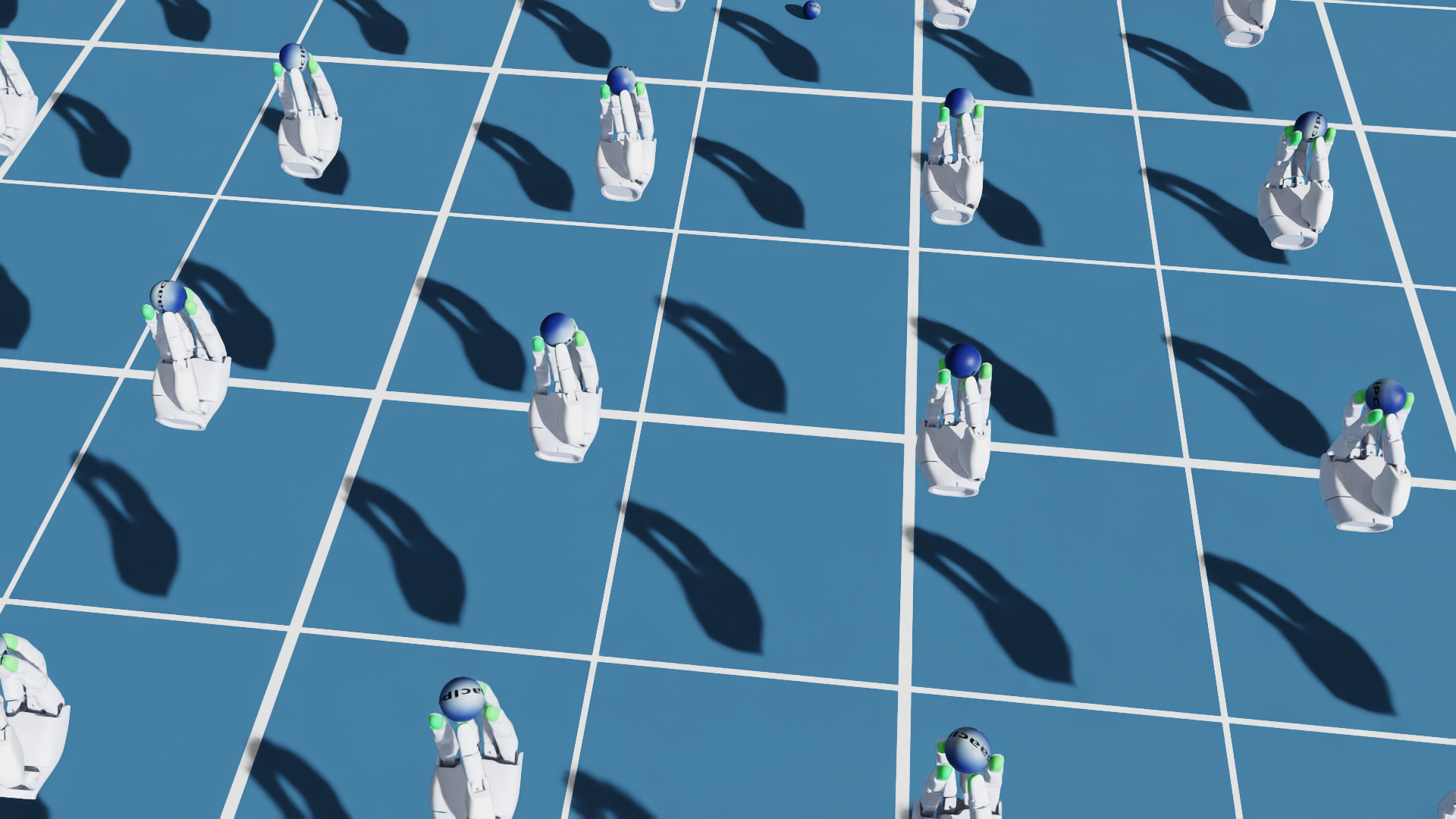
Figure 6: Multi-environment parallel simulation of dexterous hand manipulation tasks.
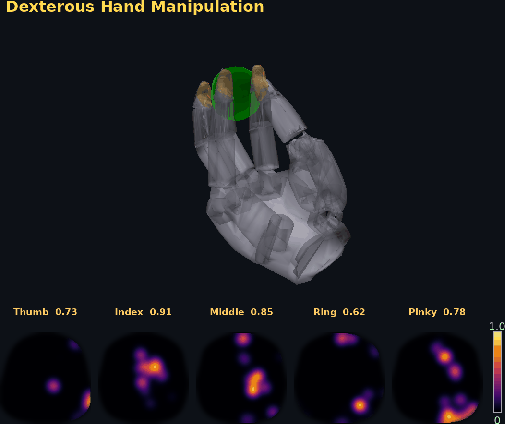
Figure 7: Contact force mapping on manipulator fingertips reveals high-resolution tactile interaction.
- UMI Gripper Manipulation: The Universal Manipulation Interface performs pick-and-place with rigid and soft objects, featuring tactile force mapping on inner gripper surfaces—integral for sensor-driven policy evaluation.
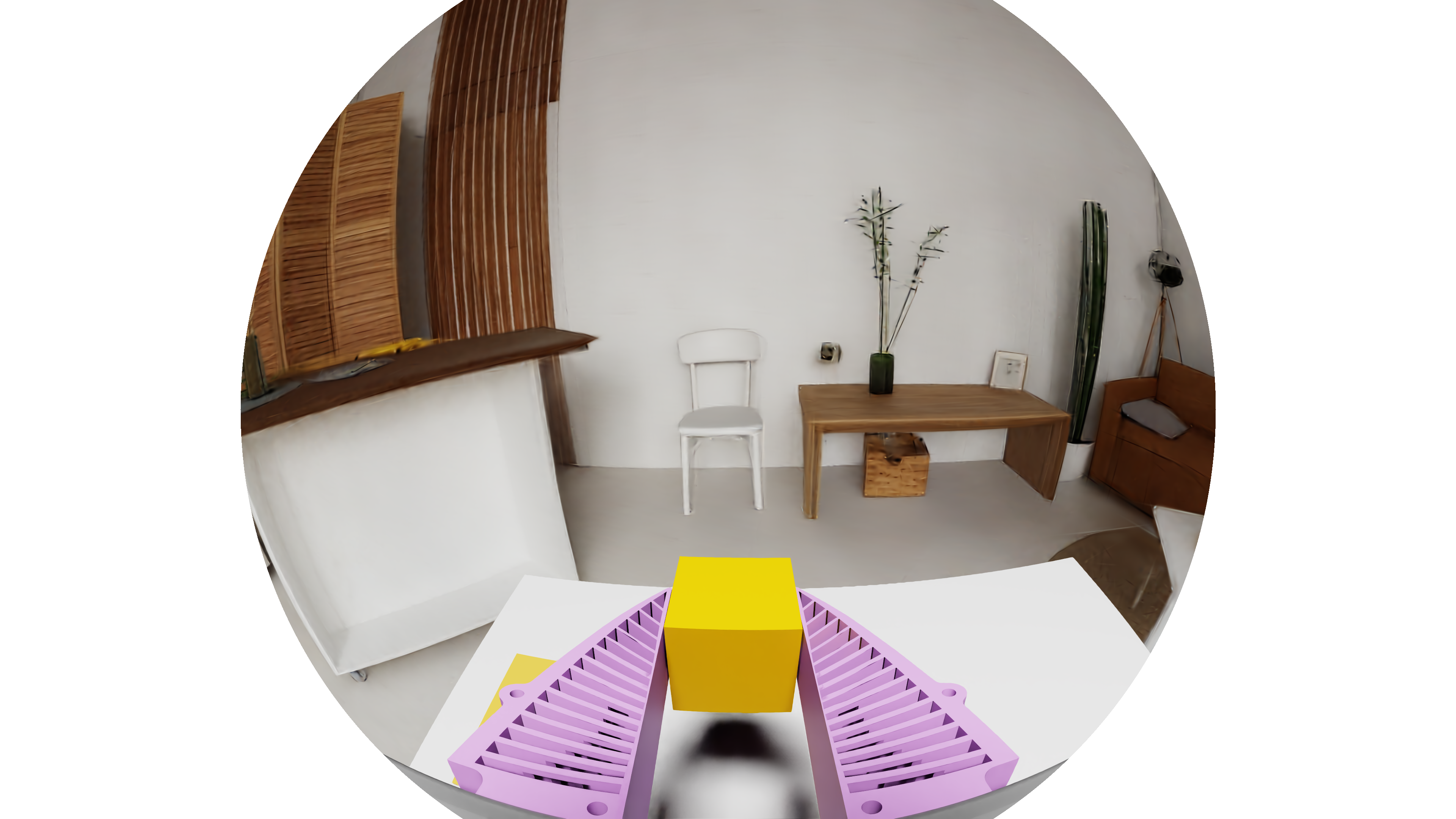
Figure 8: Fisheye rendering of UMI gripper manipulation coupled with realistic scene backgrounds.
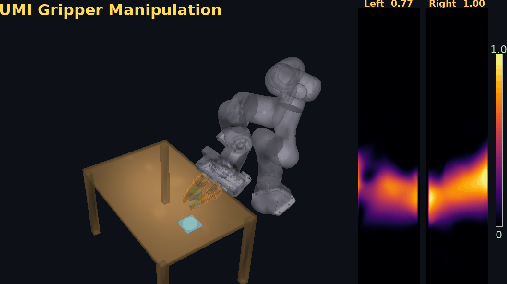
Figure 9: Contact force distribution visualized across the tactile surfaces of the UMI gripper.
Practical and Theoretical Implications
IsaacIPC addresses critical gaps in robotic simulation for embodied intelligence. By coupling robust intersection/inversion-free physics with realistic visual rendering and scalable rollout (enabled via dual-mesh mapping and GPU subscene partitioning), IsaacIPC provides a platform suitable for data collection, policy training, and evaluation in contact-rich and tactile-centric tasks. The GMCP formulation supports direct pressure discretization—a notable advantage for sim-to-real transfer, tactile sensor development, and model-based learning requiring precise contact modeling.
IsaacIPC’s modular design is agnostic to contact models and extensible toward multiphysics scenarios, including fluids, fracture, and coupled effects. Integration with asset generation and large-scale scene reconstruction facilitates synthetic data engines for pretraining embodied foundation models. Remaining challenges include real-time scaling, tangential contact/failure modeling, and increased accuracy for highly nonmatching mesh interfaces or complex topology transitions.
Conclusion
IsaacIPC is a unified framework for high-fidelity contact simulation and realistic rendering in robotics, coupling robust, scalable contact physics with advanced rendering and environment infrastructure. The geometric mortar contact potential enables improved tactile simulation, pressure transfer, and policy evaluation. IsaacIPC’s versatility and accuracy create new opportunities for embodied AI, robotic manipulation, and tactile-driven learning, with anticipated extensions to multiphysics, asset pipelines, and large-scale sensor/model pretraining (2605.24339).