- The paper demonstrates that incivility significantly increases convergence latency, with toxic interactions raising debate rounds by 25% to 142.8% depending on model size.
- The analysis reveals a robust first-mover advantage and that toxic agents win over 60% of debates, highlighting inherent cognitive biases in LLM interactions.
- The methodology employs Monte Carlo simulations with persona manipulation across varied LLMs, providing actionable insights for toxicity mitigation in adversarial settings.
Systemic Costs of Incivility in LLM-Based Multi-Agent Debate: A Technical Analysis
Experimental Framework and Topic Distribution
The study implements a Monte Carlo simulation paradigm using pairs of LLM agents to conduct adversarial debates across a diverse set of topics drawn from idebate.net (Figure 1). Each simulation is an independent trial, permitting statistical evaluation of the effects of incivility on operational efficiency and debate outcome. The framework extends prior work by including models with variable parameter sizes, namely LLaMA (405B), GPT-OSS (120B), and Mistral (24B).
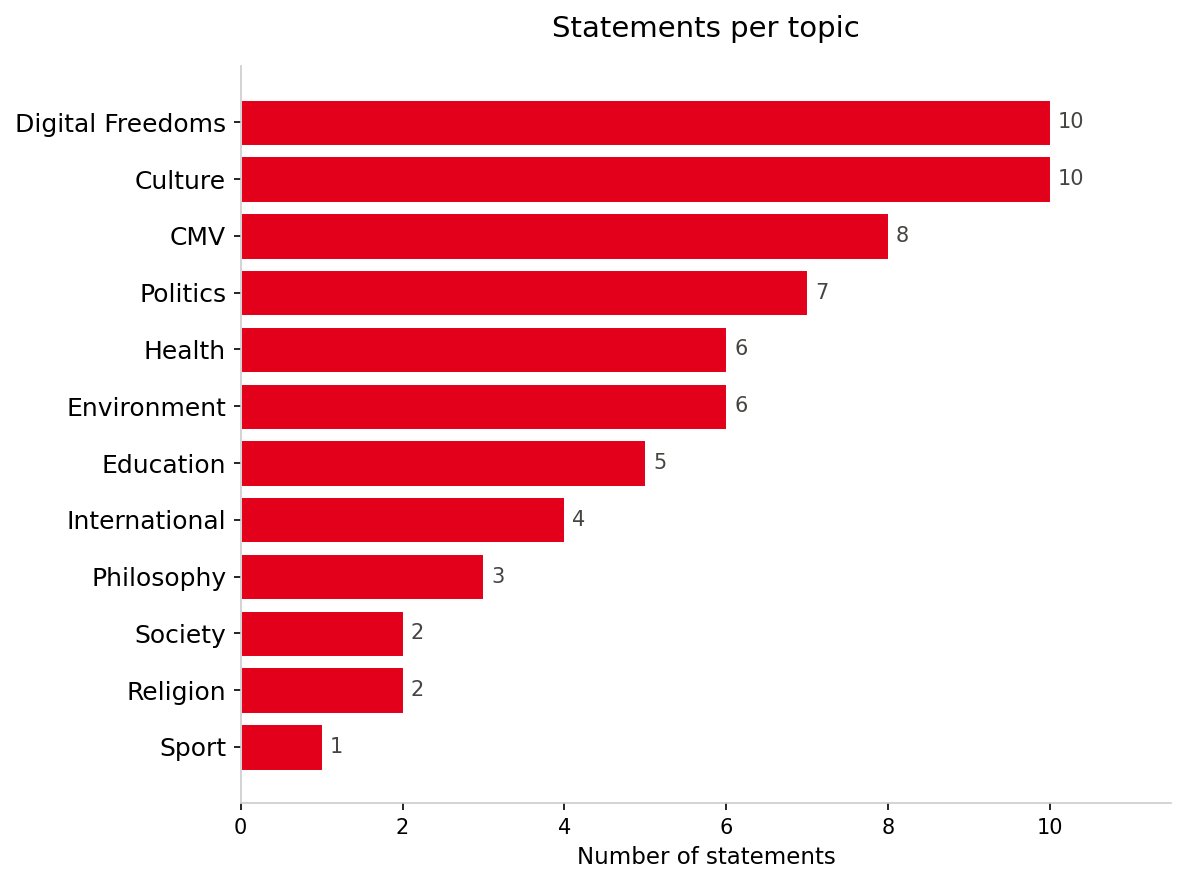
Figure 1: Distribution of Topics across debate sessions, ensuring topic diversity for robustness.
Agents are assigned distinct personas and debate stances, and debates proceed until one agent convinces the other, with convergence latency measured as the number of argument rounds required. Toxicity is operationalized via persona manipulation, enabling granular control and reproducibility lacking in human-subject settings.
Convergence Latency as a Metric of Incivility
The primary empirical finding is a consistent increase in convergence latency with rising toxicity across all tested LLMs, confirming that conversational incivility produces measurable systemic inefficiency. LLaMA exhibits moderate latency (up to 25%) under moderate toxicity, GPT-OSS experiences a substantial 74% increase at heavy toxicity, and Mistral displays extreme sensitivity (142.8% increase with heavy toxicity), accompanied by elevated variance.
Notably, larger models (LLaMA 405B) manifest greater robustness, whereas smaller models (Mistral 24B) are disproportionately affected in both mean and variance of convergence latency, indicating scalability concerns for multi-agent deployments involving smaller LLMs.
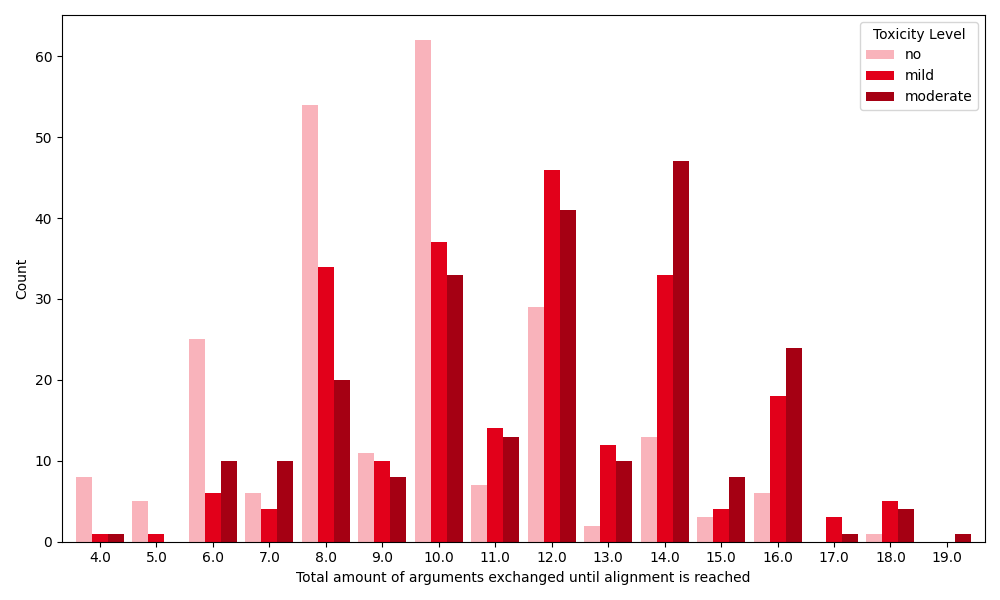
Figure 2: Arguments required until alignment for LLaMA (405B); toxic interactions significantly increase debate rounds.
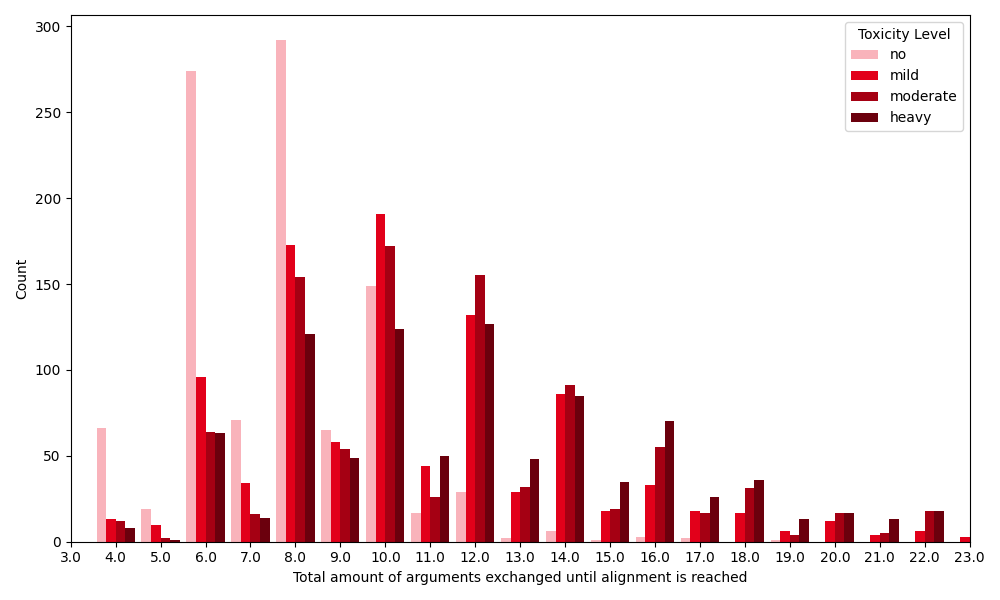
Figure 3: GPT-OSS (120B) shows greater variance and sensitivity to toxicity, with debate durations lengthened.
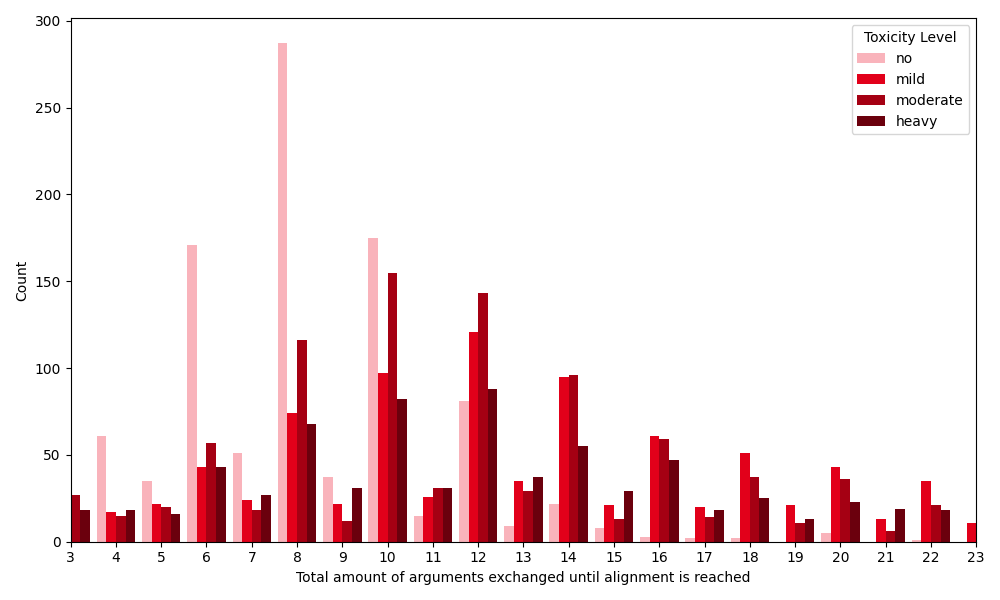
Figure 4: Mistral (24B) demonstrates nonlinear acceleration of latency and high inconsistency under toxic debate conditions.
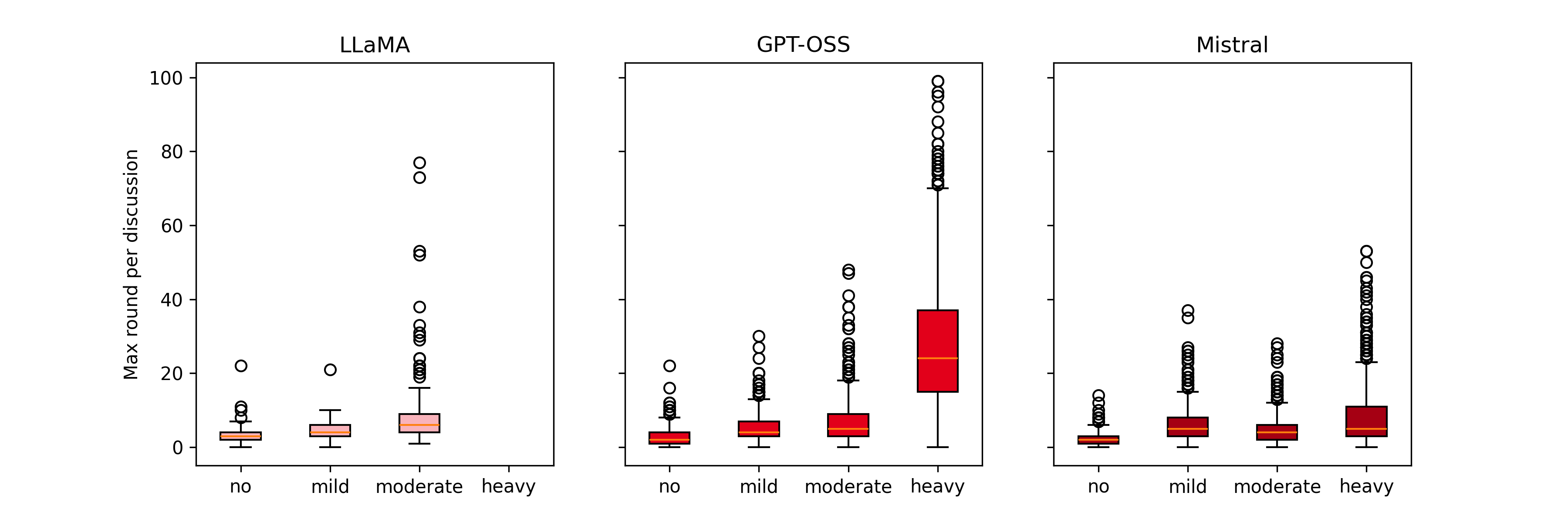
Figure 5: Maximal discussion rounds correlate positively with toxicity, further substantiating latency findings.
Outcome Determinants: First-Mover and Toxicity Advantage
Across models, a robust first-mover advantage emerges. The initiating agent consistently wins far above chance, irrespective of argumentative role, confirming anchoring effects in sequential judgment and alignment with RLHF-induced sycophantic tendencies in LLMs.
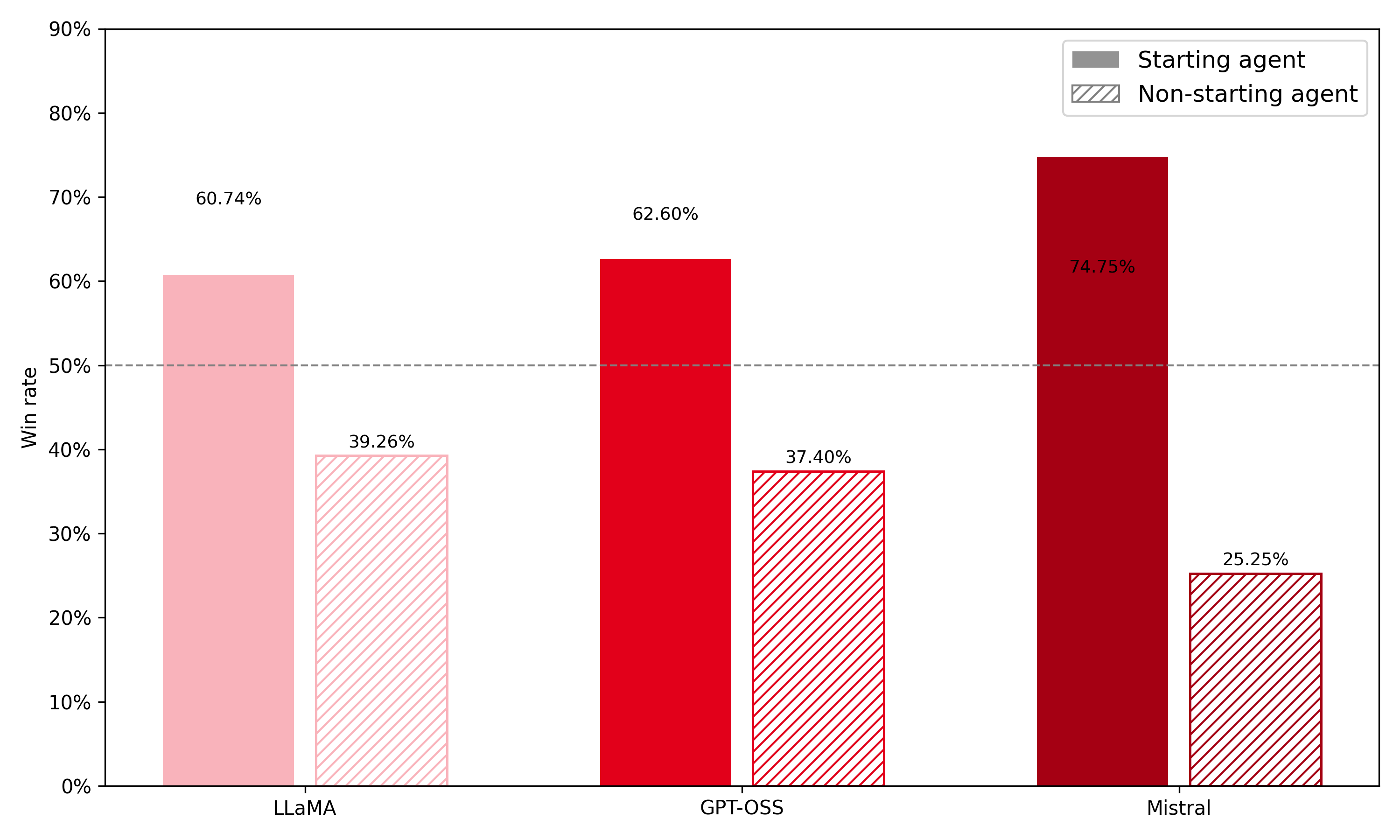
Figure 6: Initiating agent's win rate significantly exceeds baseline, highlighting anchoring bias effects.
Toxic agents further demonstrate a significant persuasive advantage over their non-toxic counterparts, winning a majority (>60%) of debates across roles and models. However, for GPT-OSS, excessive toxicity (moderate/heavy) yields diminishing returns, likely due to refusal mechanisms triggering resistance rather than persuasion. No such effect is observed in LLaMA and Mistral, suggesting model-specific response patterns to toxicity escalation.
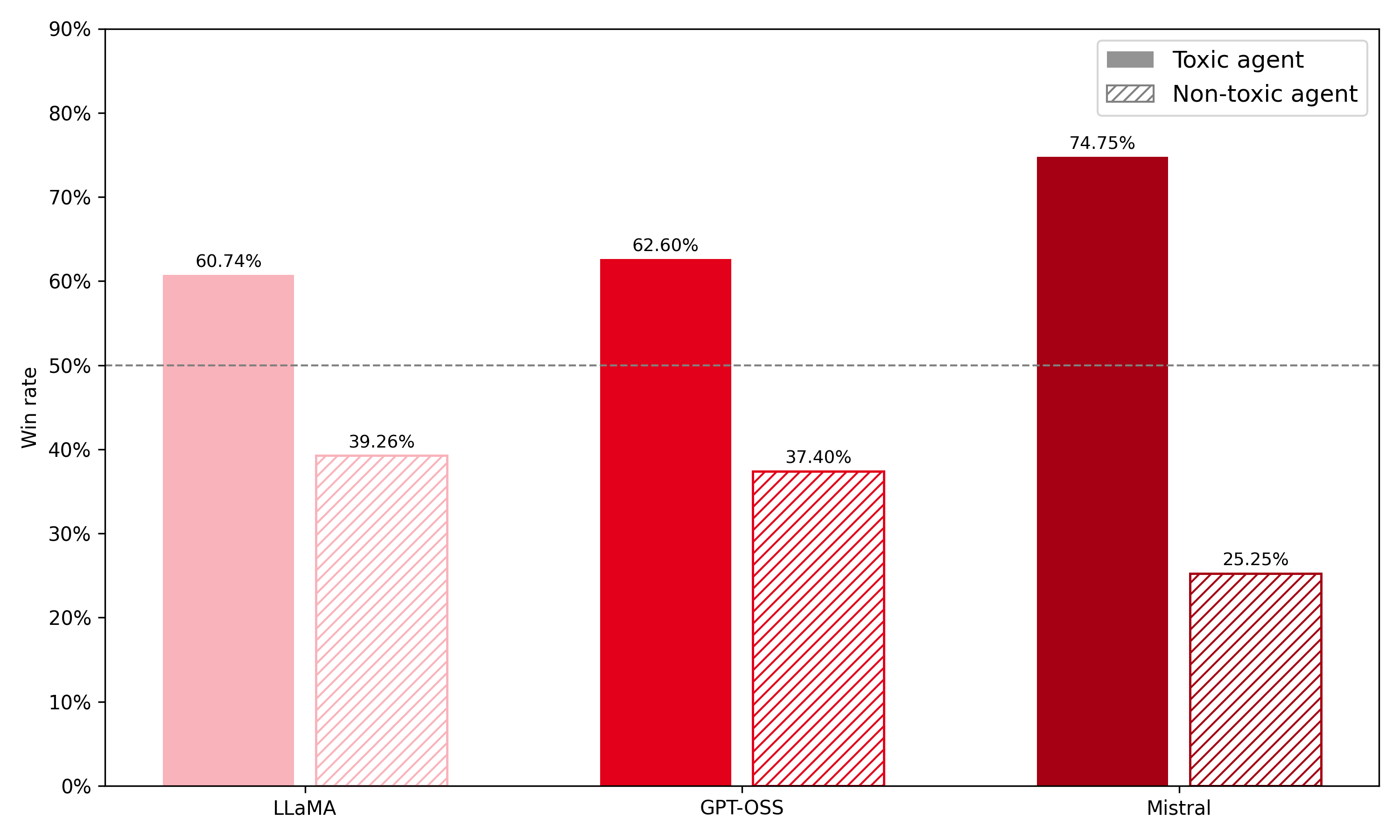
Figure 7: Win rates for toxic agents vastly outpace non-toxic agents, with model-dependent non-monotonicity at extreme toxicity.
Theoretical and Practical Implications
Theory: The study empirically validates incivility-induced convergence latency, confirming agent-based simulation as a scalable proxy for organizational inefficiency. The documented inverse scaling with model parameter count establishes groundwork for the future development of robust, toxicity-resilient multi-agent LLM interaction protocols. The first-mover advantage and toxicity-induced persuasion effects point to cognitive biases deeply embedded in LLM dialog, analogous to human anchoring and social conformity (cf. (Huang et al., 21 May 2025), [(Lou et al., 2024)v2], (Mangold, 9 Dec 2025)).
Practice: Deployment of LLMs in high-stakes, adversarial settings (e.g., organizational negotiation, online moderation) must account for latency costs imposed by incivility, especially for smaller models. Intervention strategies targeting anchoring and toxicity dynamics are required to maintain efficiency and fairness. The framework's reproducibility and ethical safety make it suitable for simulated evaluation of mitigation protocols (e.g., persona restructuring, adversarial prompt filtering).
Future Directions
Further research should explore qualitative transcript analysis to identify topic-specific vulnerabilities to toxic persuasion and extend simulation to multi-party debate configurations involving hierarchical social roles. Integration of demographic persona attributes will support investigation into intersectional effects on social friction and outcome bias. Additionally, systematic evaluation of intervention efficacy (e.g., toxicity countermeasures, dialog moderation) promises actionable insights for operational deployment in human–machine and machine–machine communication networks.
Conclusion
Incivility in LLM-based multi-agent debate is associated with quantifiable systemic costs: increased convergence latency and enhanced persuasive success for toxic initiators. Latency costs are magnified in smaller models, establishing a trade-off between parameter size and robustness. Anchoring and sycophancy mechanisms drive first-mover advantage, while toxicity confers a significant outcome bias. These findings substantiate agent-based simulation as a powerful methodology for computational social science and inform design principles for robust multi-agent AI systems.