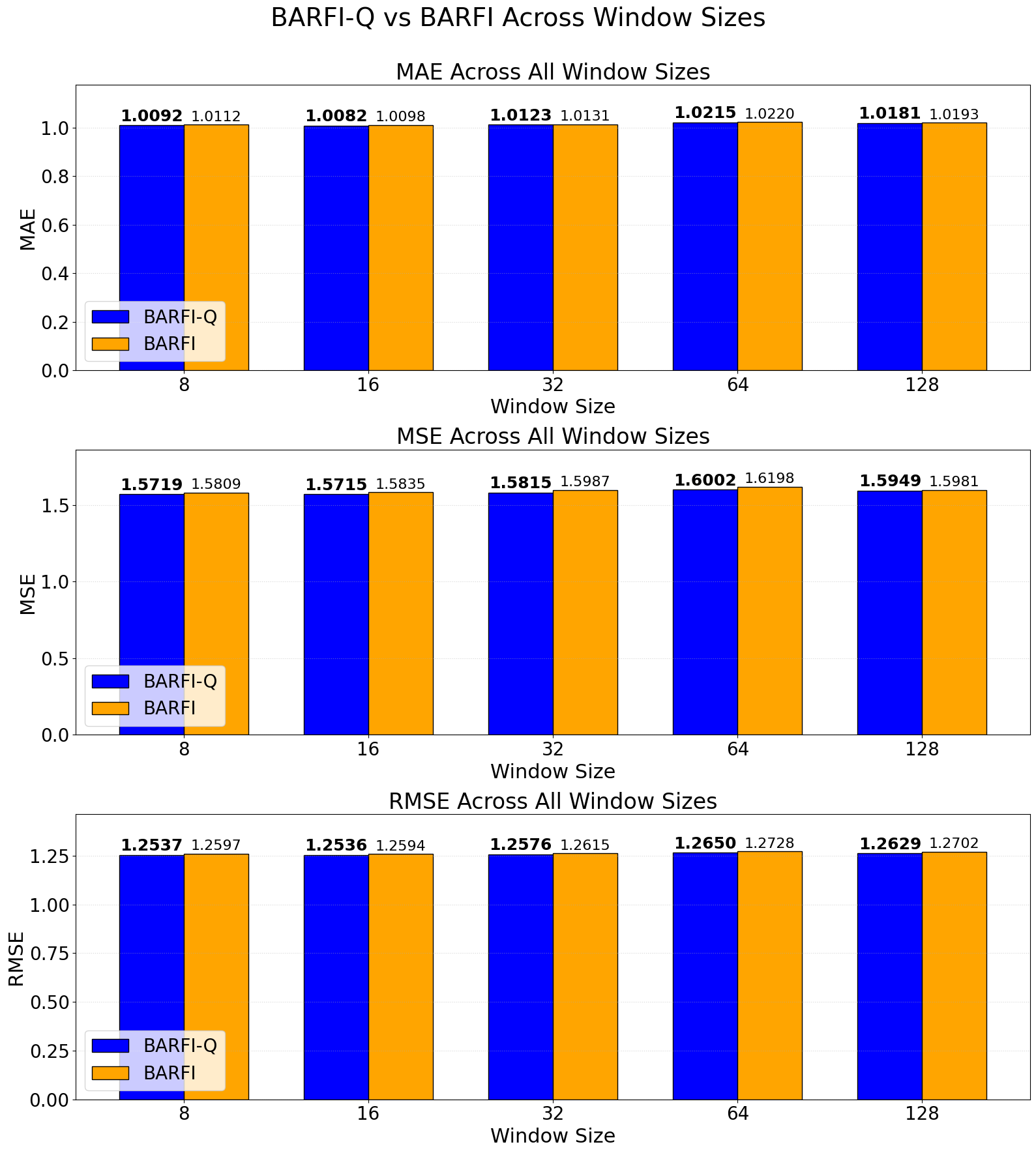
- The paper introduces BARFI-Q, a hybrid quantum-classical framework that uses adaptive block attention to improve forecasting in atom interferometry.
- It combines patch-based temporal embedding, dual-branch transformers, and hierarchical fusion to robustly capture multiscale, heterogeneous data patterns.
- Experimental evaluations show BARFI-Q consistently outperforms traditional models in reducing MAE, MSE, and RMSE across varied forecasting horizons.
Quantum-Enhanced Block Attention Residual Fusion for Atom Interferometric Time-Series Forecasting
Motivation and Background
Atom interferometry produces complex multivariate temporal streams reflecting phase evolution, fringe dynamics, and auxiliary sensor variables. Accurate forecasting of these signals is essential for predictive control, phase correction, and robust quantum sensing, but presents significant challenges due to nonlinearities, multi-scale dependencies, heterogeneous variable interactions, and noise. Classical Transformer-based time-series models (e.g., Informer, Autoformer) have advanced forecasting through modified attention, decomposition, and tokenization, but retain fixed additive residual propagation and do not exploit quantum-inspired latent transformation.
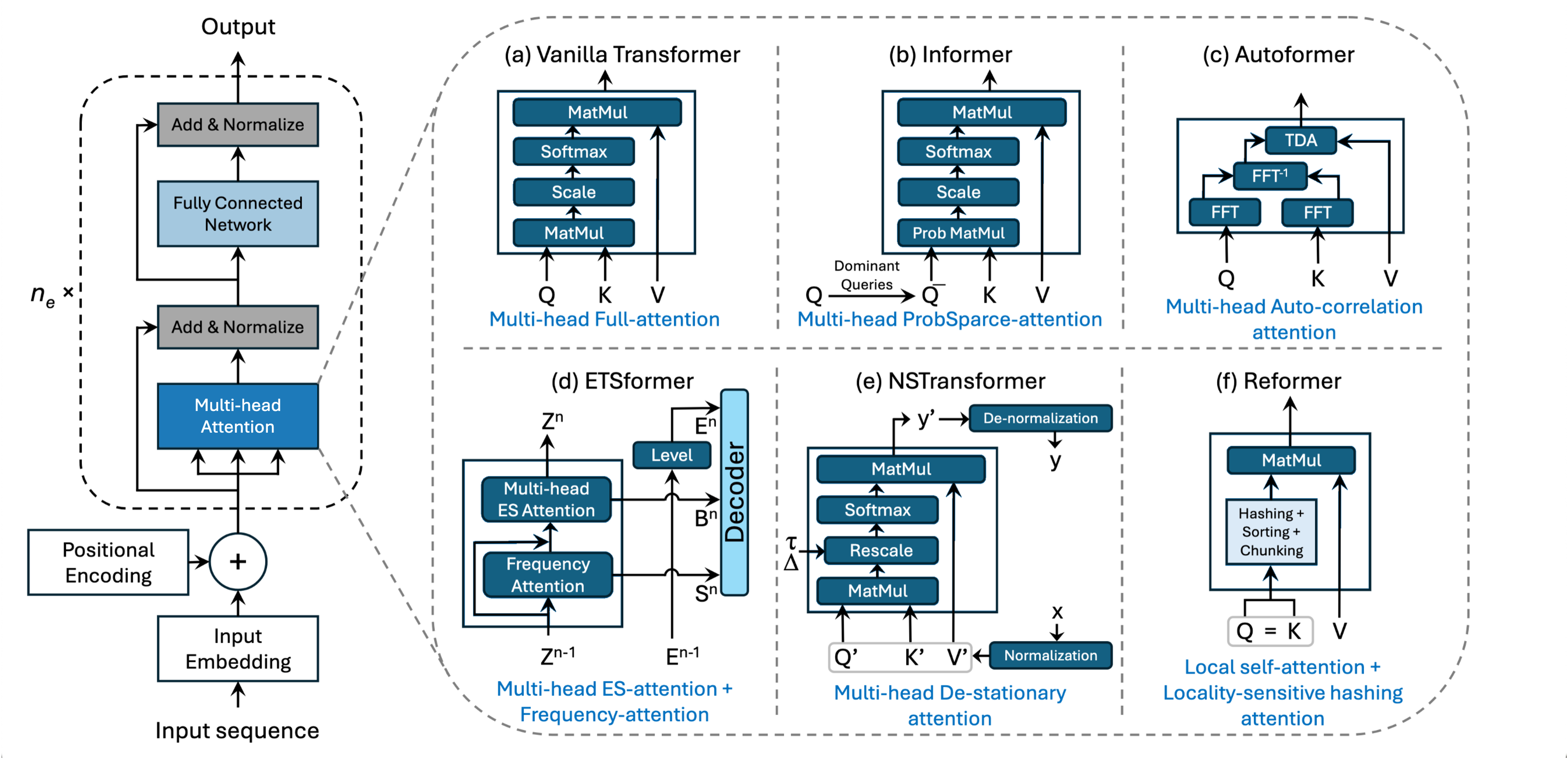
Figure 1: Survey of Transformer-based time-series forecasting architectures and attention mechanisms. Most models improve forecasting through modified attention or decomposition but retain standard additive residual pathways.
BARFI-Q Architecture
BARFI-Q introduces a hybrid quantum-classical predictive fusion framework specifically for atom-interferometric forecasting. Its structure integrates four main innovations:
- Patch-Based Temporal Embedding: Input sequences are partitioned into patch tokens for efficient temporal abstraction and channel-wise representation.
- Dual-Branch Block Attention Residual (BAR) Transformers: Two parallel branches operate: one specializes in short-range temporal fluctuations, the other models long-range dependencies. Each branch replaces standard residual shortcuts with block-level attention aggregation, enabling adaptive retrieval of informative representations from all preceding blocks across depth—mitigating signal dilution and magnitude accumulation.
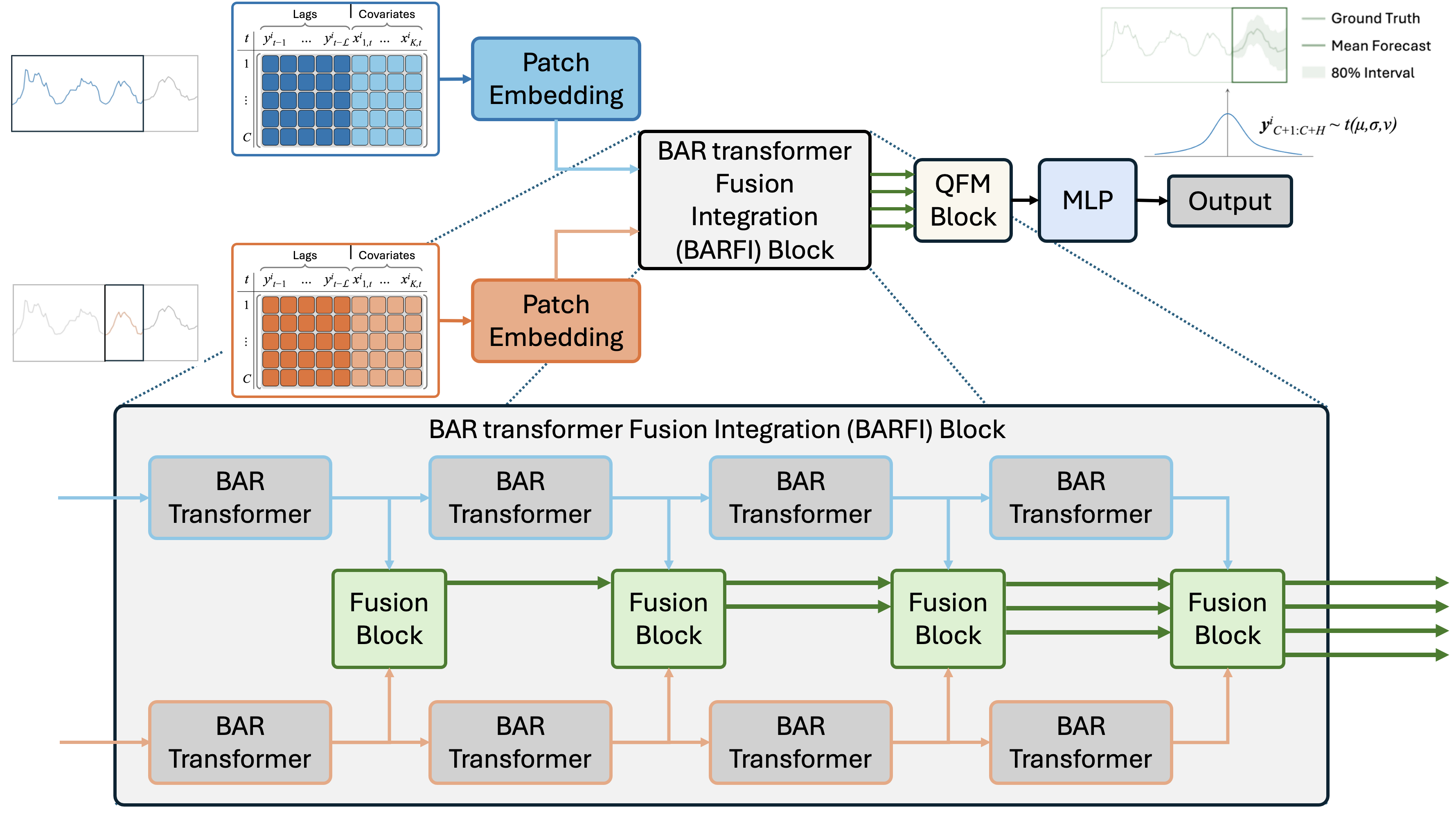
Figure 2: BARFI-Q architecture overview: patch embedding, dual BAR Transformer branches, hierarchical fusion, quantum feature mapping, and forecasting head.
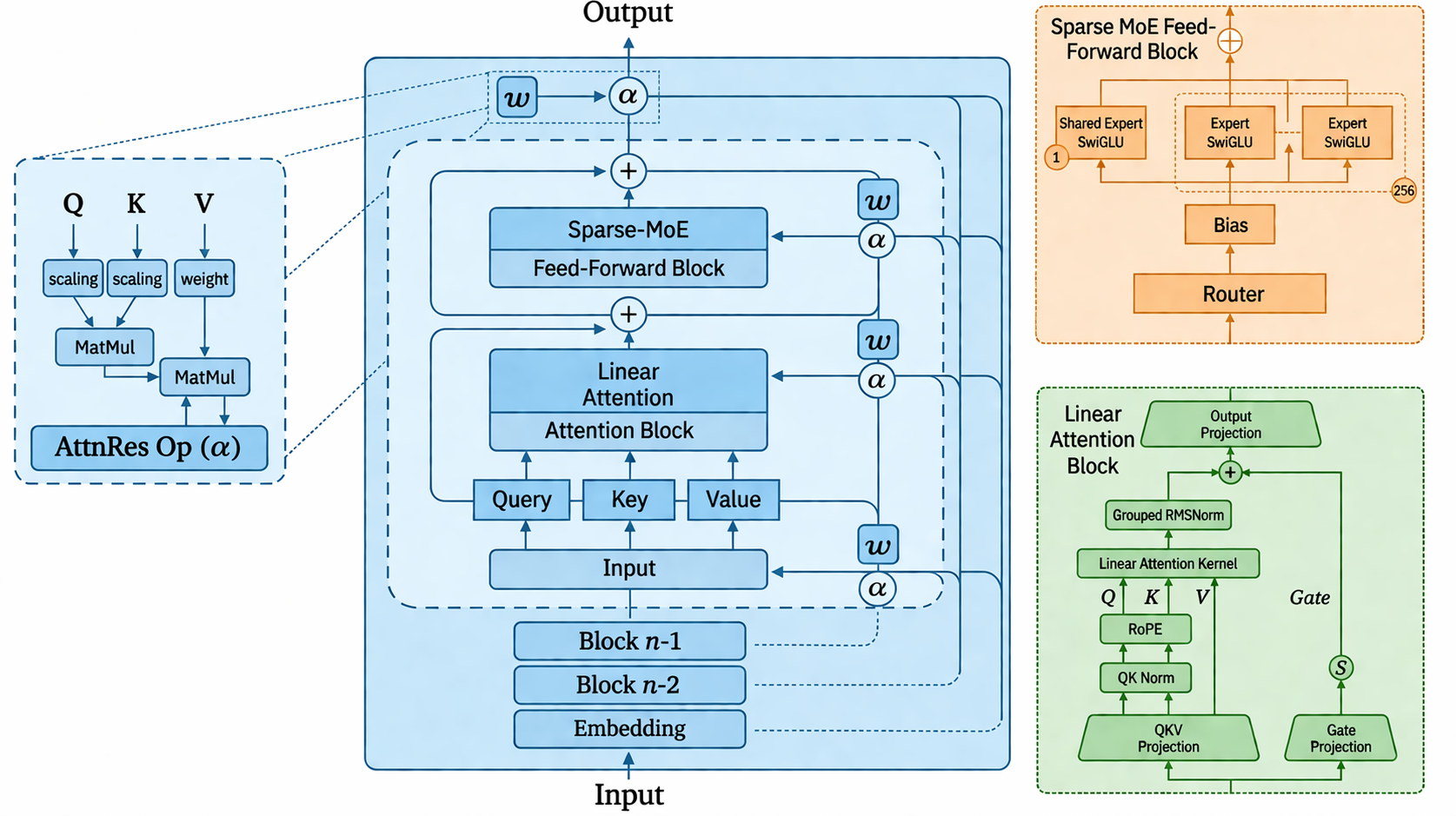
Figure 3: Dual-Branch BAR Transformer module: adaptive residual aggregation via block-level attention, rotary encoding, linear attention, sparse MoE feed-forward blocks.
- Hierarchical Fusion: Branch-specific features are concatenated and projected into a common latent space, followed by multiscale channel attention and spatial attention refinement. This block progressively aligns and recalibrates temporal, channel-wise, and structural cues from heterogeneous streams.
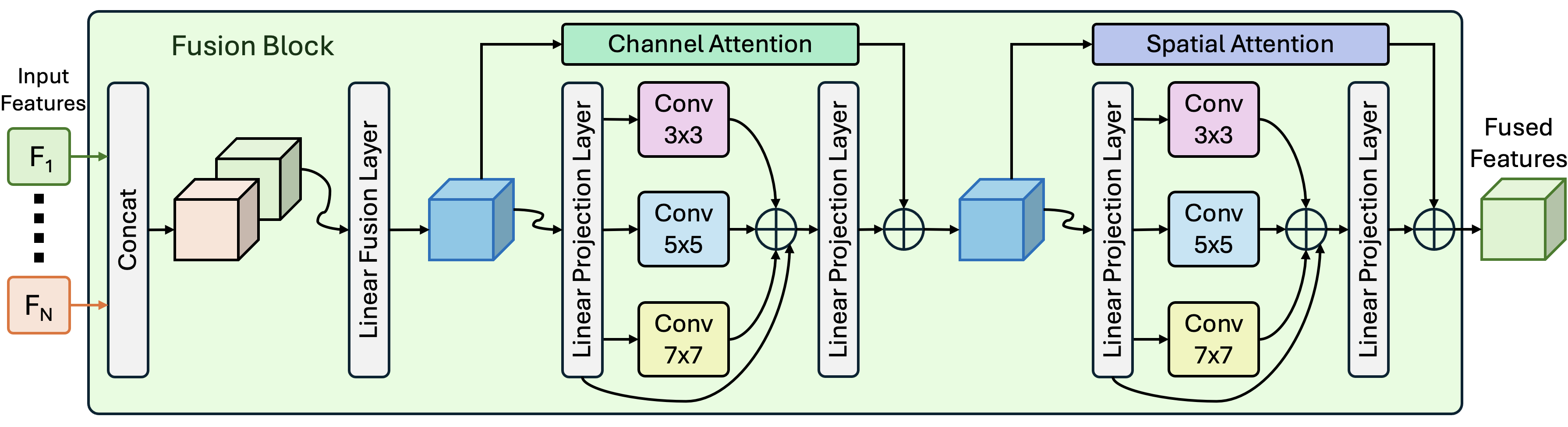
Figure 4: Hierarchical fusion block: multiscale channel and spatial attention applied to concatenated branch outputs, producing a refined fused representation.
- Quantum Feature Mapping (QFM) Module: The fused latent representation is projected into quantum-compatible formatting and processed by multiple quantum feature-mapping heads via parameterized rotations and entangling operations. Measurement-based features are aggregated through a residual mixer and refined before predictive decoding.
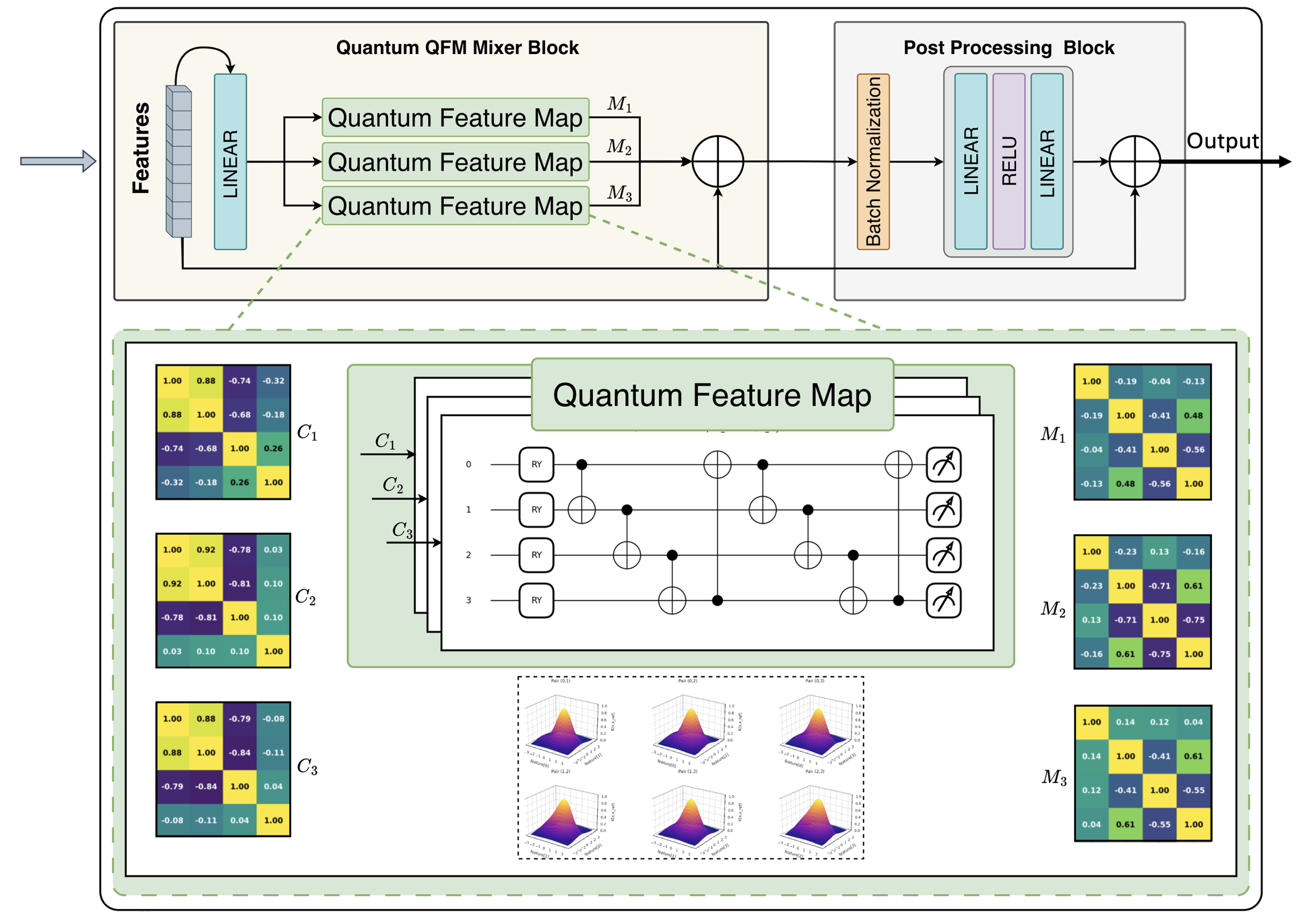
Figure 5: Quantum Feature Mapping (QFM) block: quantum rotation encoding and entanglement, measurement aggregation, and post-processing for enhanced latent feature extraction.
Mathematical and Theoretical Properties
The BAR aggregation mechanism formalizes adaptive cross-depth retrieval as a softmax-weighted convex combination of block summaries, avoiding uncontrolled magnitude growth. The QFM module transforms classical features to bounded quantum measurement vectors, with component-wise latent stability provable under standard boundedness and Lipschitz continuity assumptions.
BARFI-Q generalizes standard residual propagation: as block compatibility scores concentrate, BAR reduces to fixed residuals, otherwise enabling adaptive information routing optimized for multiscale forecasting scenarios.
Experimental Evaluation
BARFI-Q is evaluated on multivariate atom-interferometric datasets drawn from systems operated under arbitrary rotation and acceleration. The forecasting targets are wrapped residual phases represented in circular space ([cos(δϕ),sin(δϕ)]), avoiding discontinuities.
Key metrics: MAE, MSE, and RMSE on wrapped angular error across repeated runs and historical window sizes.
Performance Highlights:
Fusion and Quantum Module Ablations
Ablation studies isolate the contribution of hierarchical fusion and QFM:
- Complete fusion (Channel Attention + Spatial Attention) outperforms CA-only, SA-only, and fusion-less variants with high statistical confidence.
- QFM module analysis demonstrates that a 4-qubit, angle-encoded architecture provides richer feature separability and improved forecasting accuracy, as evidenced by representation-level AUC diagnostics.
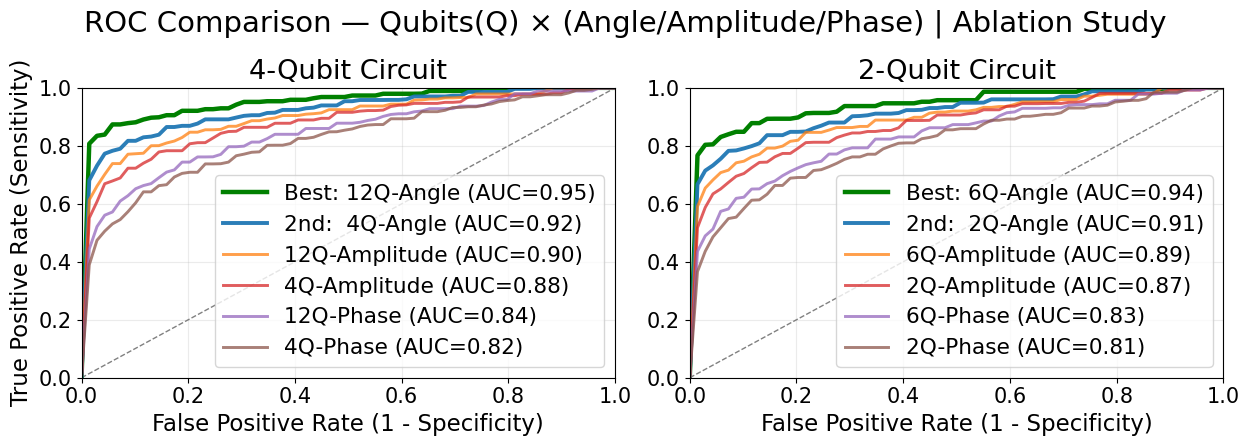
Figure 7: AUC-based comparison of quantum circuit sizes and encoding strategies; angle encoding in 4-qubit circuits yields highest separability.
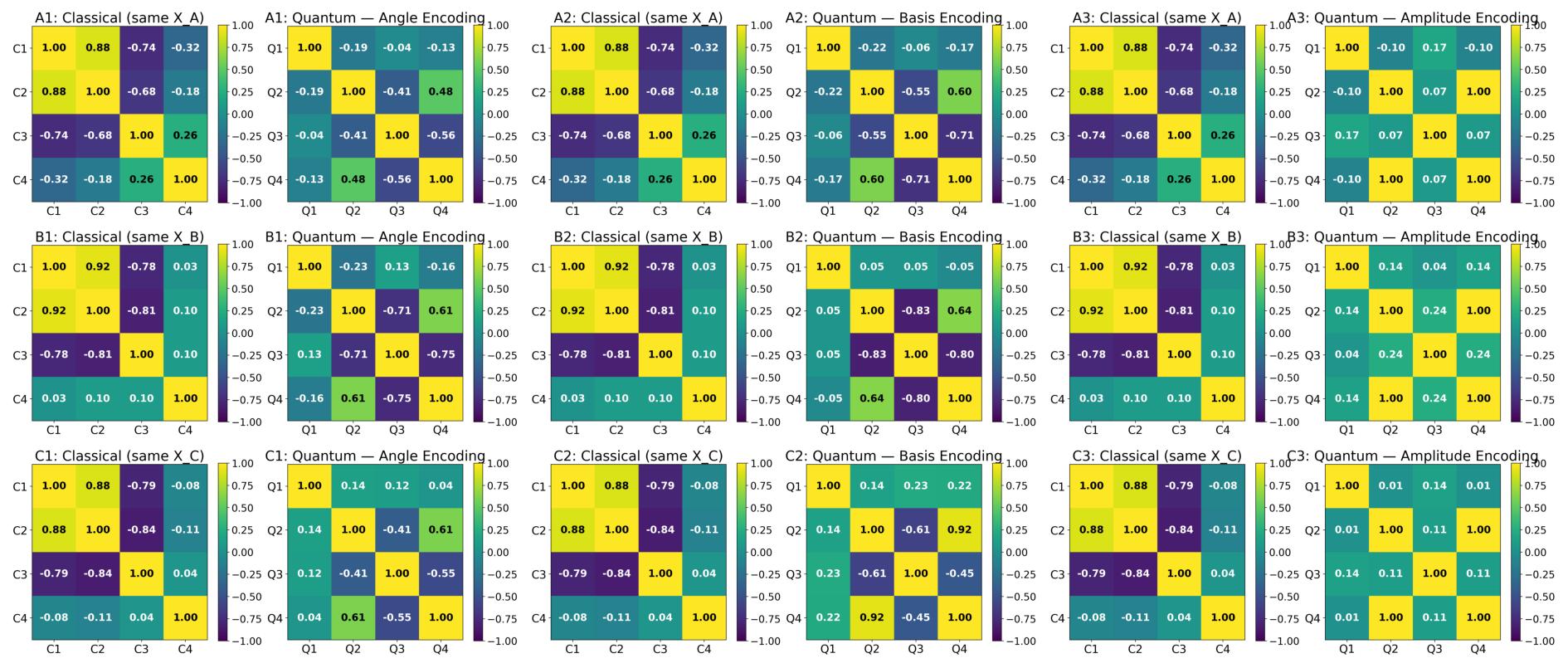
Figure 8: Quantum feature map correlations: angle encoding reduces classical redundancy while preserving structured cross-channel dependence.
Quantum Weight Landscape: Empirical evaluation suggests that a moderate configuration (N=4,L=4) optimally balances expressiveness and regularization, avoiding inefficiencies and instability of overly complex circuits.
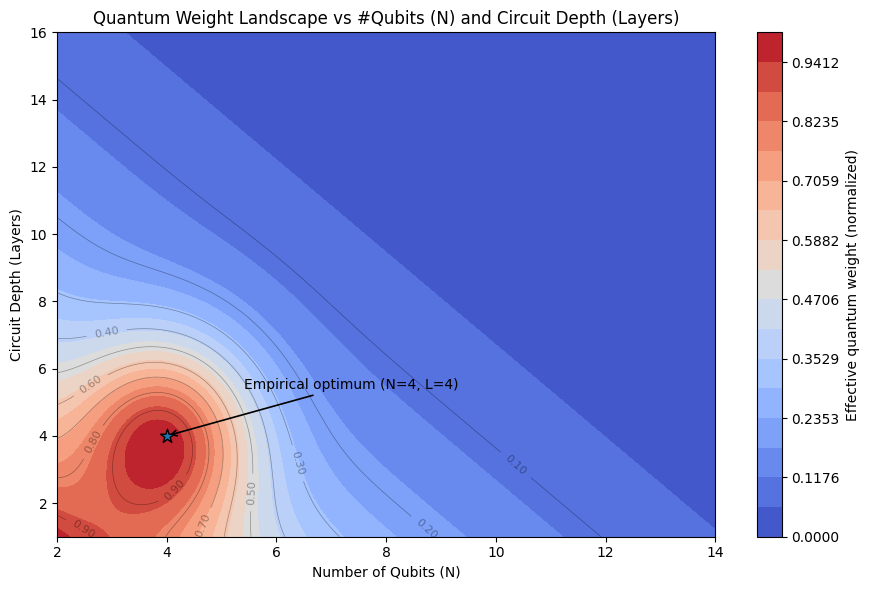
Figure 9: Quantum weight and regularization landscape as a function of qubit number and circuit depth.
Qualitative Analysis
Fringe reconstruction experiments validate that BARFI-Q's forecasts maintain accurate oscillatory trends, phase alignment, and amplitude preservation, outperforming competing methods including PatchTST and iTransformer.
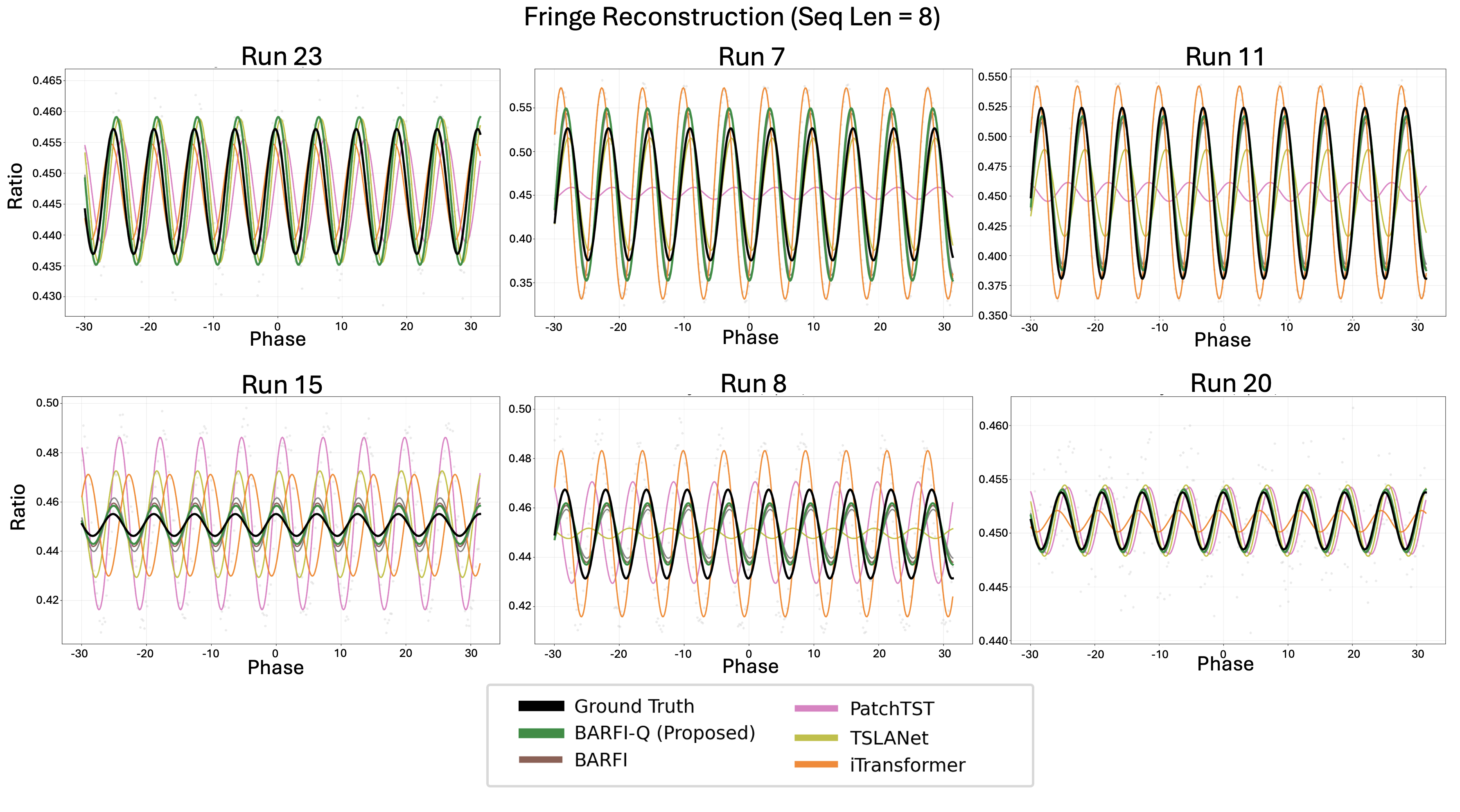
Figure 10: Fringe reconstruction for SeqLen=8: BARFI-Q shows closest match with ground-truth phase, oscillatory trend, and amplitude profiles.
Implications and Future Directions
BARFI-Q demonstrates that for atom-interferometric time-series forecasting, adaptive block-level residual routing, cross-stream hierarchical fusion, and quantum-enhanced latent transformation lead to substantial improvement in predictive performance, stability across variable temporal contexts, and physical plausibility in signal reconstruction.
Practical Implications:
- Predictive monitoring and phase-correction in quantum sensing benefit from fusion-driven temporal modeling and latent enhancement.
- The architecture paves the way for real-time forecasting pipelines in scientific sensing systems where heterogeneous, noisy, and multiscale data prevail.
Theoretical Implications:
- Replacing uniform additive residuals with attention-based block aggregation addresses information loss and signal dilution endemic to deep temporal models.
- Hybrid quantum-classical feature modules offer novel representational flexibility for scientific data, suggesting broader applicability in domains with structured, coupled dynamics.
Outlook in AI:
Future research can extend BARFI-Q to broader quantum sensing applications, uncertainty-aware objectives, and on-device quantum-assisted inference, supporting intelligent compensation and anomaly forecasting in advanced measurement systems.
Conclusion
BARFI-Q integrates patch-based temporal embedding, dual-branch block attention residuals, hierarchical fusion, and quantum feature mapping in an end-to-end framework, achieving state-of-the-art multivariate time-series forecasting for atom interferometry. Adaptive residual aggregation, fusion-guided feature refinement, and quantum-inspired latent enhancement jointly address the limitations of classical temporal models, marking a pivotal advance in forecasting architecture for complex scientific instrumentation (2605.05394).