- The paper presents the architecture and scientific rationale behind SPEC CPU2026, emphasizing determinism and portability.
- It details enhanced benchmark diversity with 52 tests and introduces a novel rolling round-robin rate for multi-core evaluation.
- The study highlights rigorous engineering improvements, including extensive cross-platform validation and modern ISO compliance.
SPEC CPU: The Next Generation – An Expert Synthesis
Introduction
The paper "SPEC CPU: The Next Generation" (2605.01575) presents the architecture, methodology, engineering, and scientific rationale for the creation of SPEC CPU2026, the latest evolution of the industry-standard CPU benchmarking suite. This iteration is shaped by contemporary hardware trends, open-source software practices, and the rigor demanded by both academia and industry. The suite expands the benchmark set, modernizes the code base, enhances workload representativeness, and introduces new methodologies for multi-core and heterogeneous system evaluation.
Historical Context and Design Principles
SPEC CPU2026 continues a lineage of CPU benchmark suites that have defined comparative architecture research for decades. The suite’s scope remains natively compiled C/C++/Fortran code, measured in both single- and multi-threaded configurations. The exclusion of managed runtimes, motivated by JIT variance and portability concerns, and the uncompromising requirement for deterministic workload execution, remain central. This fidelity and result validation are core differentiators from other suites and are enforced to guarantee scientific and industrial credibility.
The committee’s philosophy explicitly rejects both microbenchmark myopia and synthetic abstractions that fail to model genuine application behavior. The suite targets real-world, widely-used open source applications, hardened via rigorous adaptation stages to ensure determinism, portability, and longevity.
Methodology and Benchmark Pipeline
Benchmark candidates for CPU2026 were sourced through an open, multi-year campaign (CPUv8 search), leveraging community, industrial, and academic ecosystems. The pipeline requires:
- Elimination of all sources of non-determinism (e.g., true RNGs replaced with PRNGs, enforcing stable sort semantics).
- Removal of platform-specific code, e.g., architecture-dependent intrinsics or hand-written assembly, in favor of standards-compliant code.
- Aggressive isolation from the execution environment, e.g., removing OS-dependent behavior, direct system queries, and non-user-space execution.
- Exhaustive cross-platform validation covering x86, ARM, POWER, RISC-V (Linux, Windows, macOS), built with both community (GCC/LLVM) and vendor compilers.
- Legal hygiene and upstream citations for all source and data, aligning with commercial distribution requirements.
The suite adopts contemporary ISO standards (C18, C++17, Fortran 2018), removing deprecated constructs and non-standard extensions to maximize forward and backward compatibility.
Major Enhancements in SPEC CPU2026
- Increased Suite Scale and Application Diversity: The suite now comprises 52 benchmarks—up from 43 in CPU2017—expanding application domains and code footprints, and encompassing a wider range of microarchitectural bottlenecks. Notably, there is a deliberate emphasis on front-end-stressed integer workloads, reflecting the code complexity and scale observed in current general-purpose software.
- Enhanced Parallelism: Multithreaded integer workloads are introduced for the first time, addressing previous criticisms regarding the dearth of such benchmarks in earlier suites.
- Rolling Round-Robin Rate (RRR): A novel standardized methodology for multi-programmed, heterogeneous workload evaluation, enabling reproducibility and comparability for throughput studies on modern many-core architectures. RRR deterministically schedules all N benchmarks across M cores, cyclically, eliminating sample and schedule imbalance.
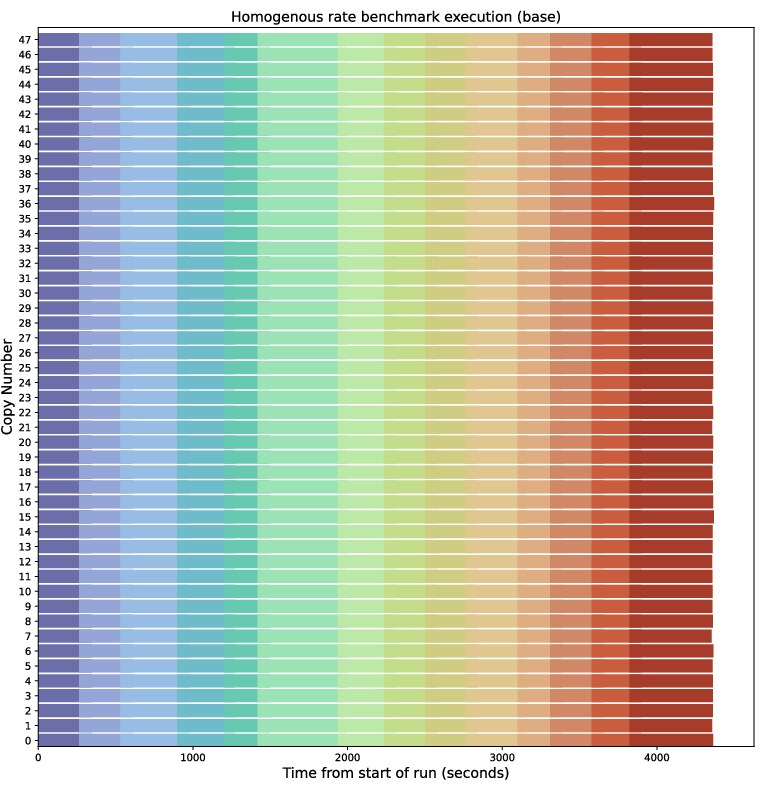
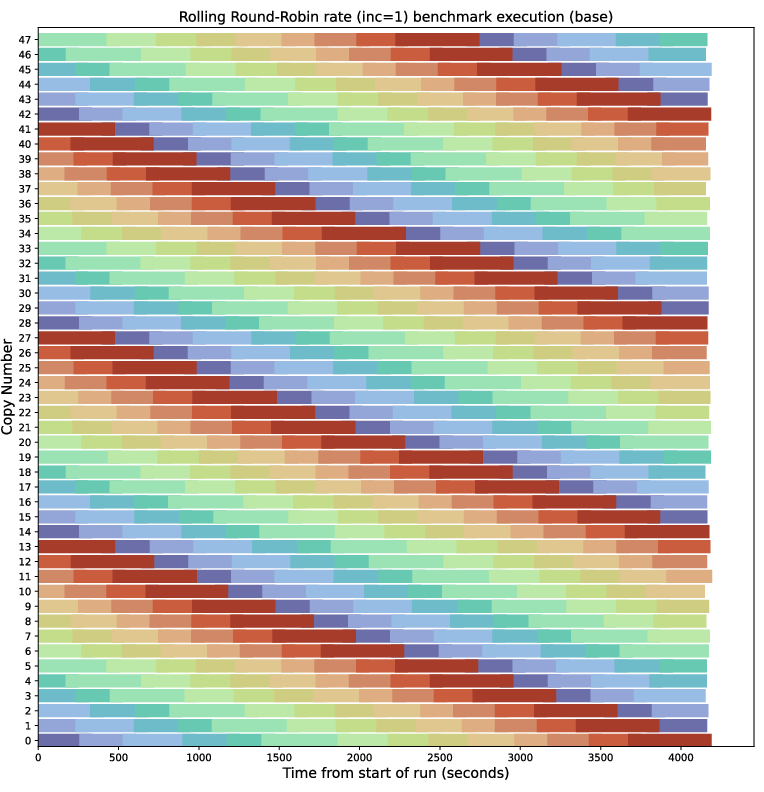
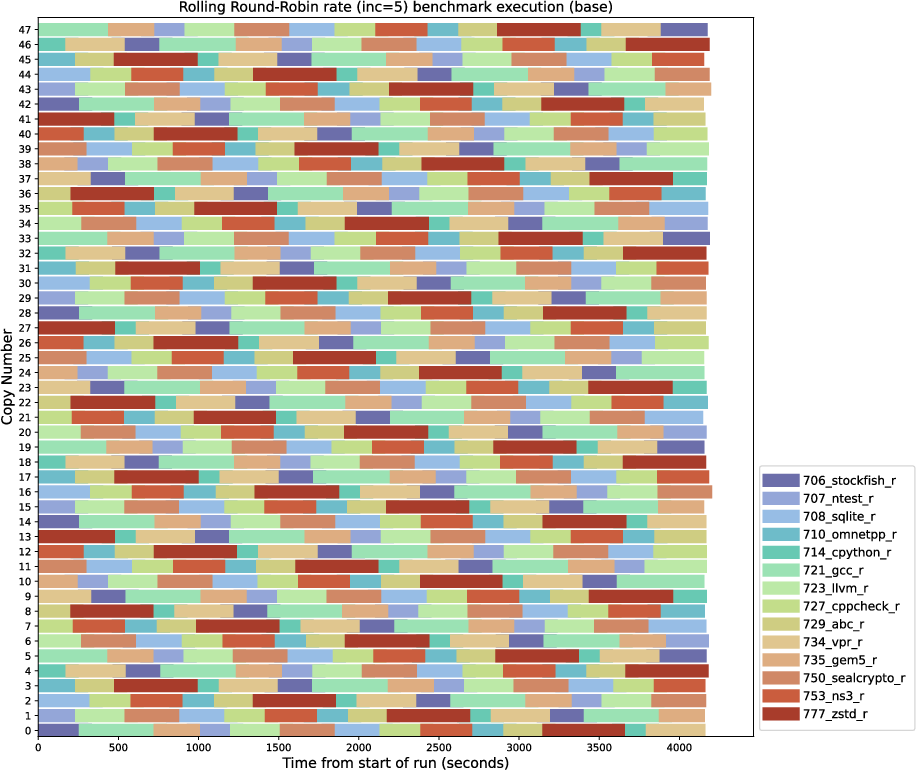
Figure 1: The classic homogeneous (refrate) schedule, fundamental to historical SPECrate methodology.
Analytical and Validation Frameworks
BBV Recurrence and Phase Analysis
The suite employs high-resolution Basic Block Vector (BBV) analysis to capture dynamic program phase transitions and code path diversity, which guides workload curation and validates representativeness. Self-similarity plots visualize the behavioral redundancy or diversity within and across selected workloads.
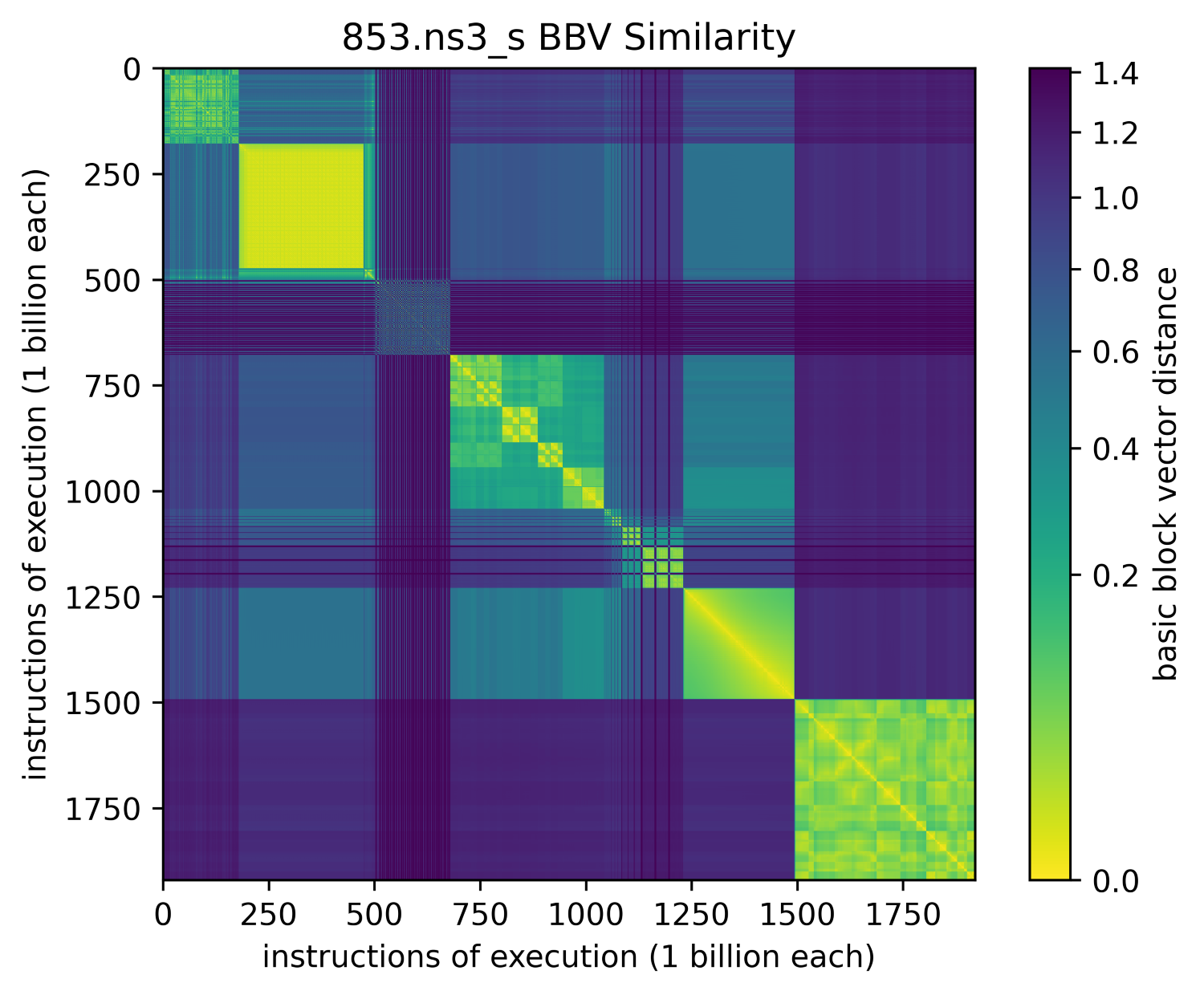
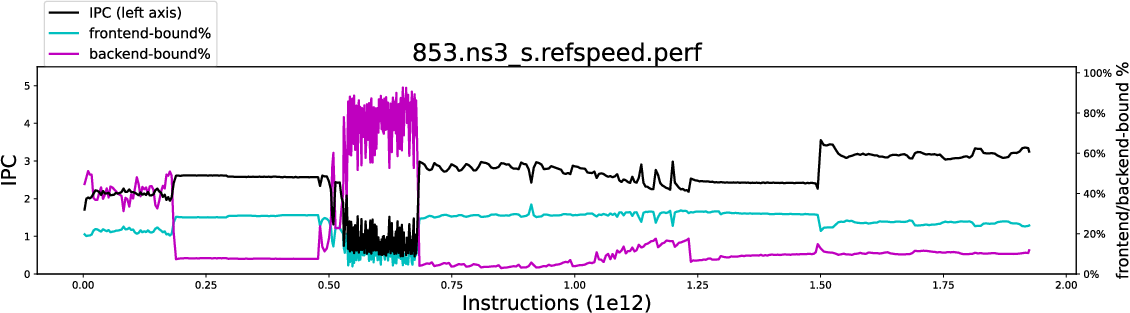
Figure 2: BBV recurrence and performance trace for 853.ns3; program phase boundaries and microarchitectural bottlenecks align with workload transitions, informing input diversity curation.
PMC-based Microarchitectural Characterization
A comprehensive set of PMCs is collected for all benchmarks, broken down into IPC, frontend-bound, backend-bound, bad speculation, and retiring cycles. This detailed microarchitectural breakdown demonstrates not only the diversity of bottlenecks but also highlights specific behavioral classes (e.g., high ITLB miss rates, backend memory bandwidth saturation, high speculation penalties in branchy code).
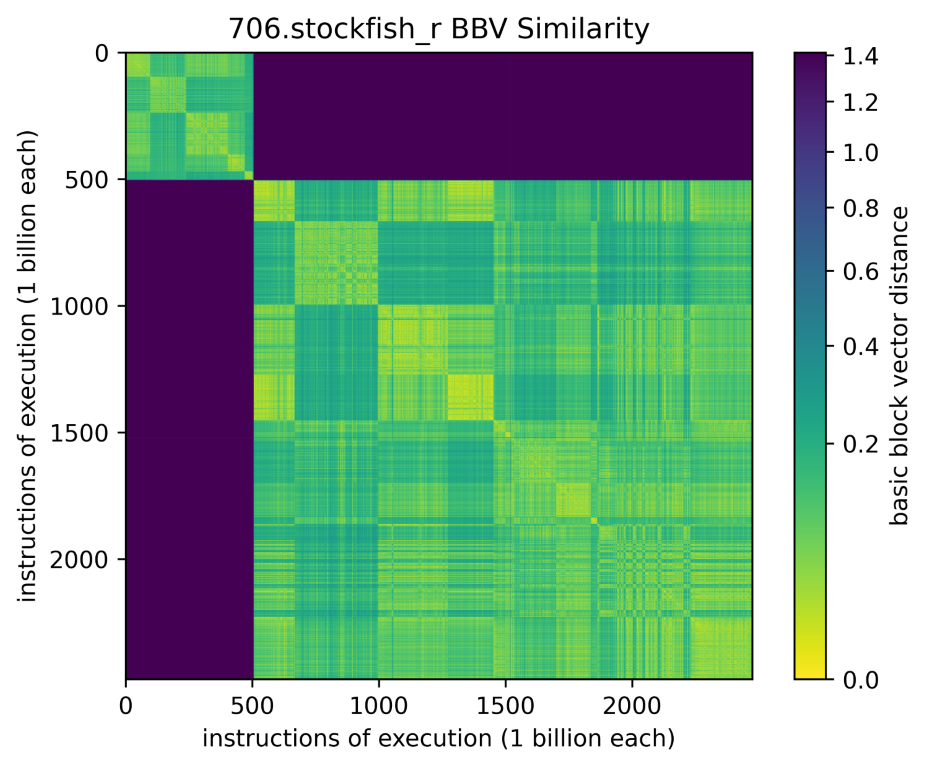
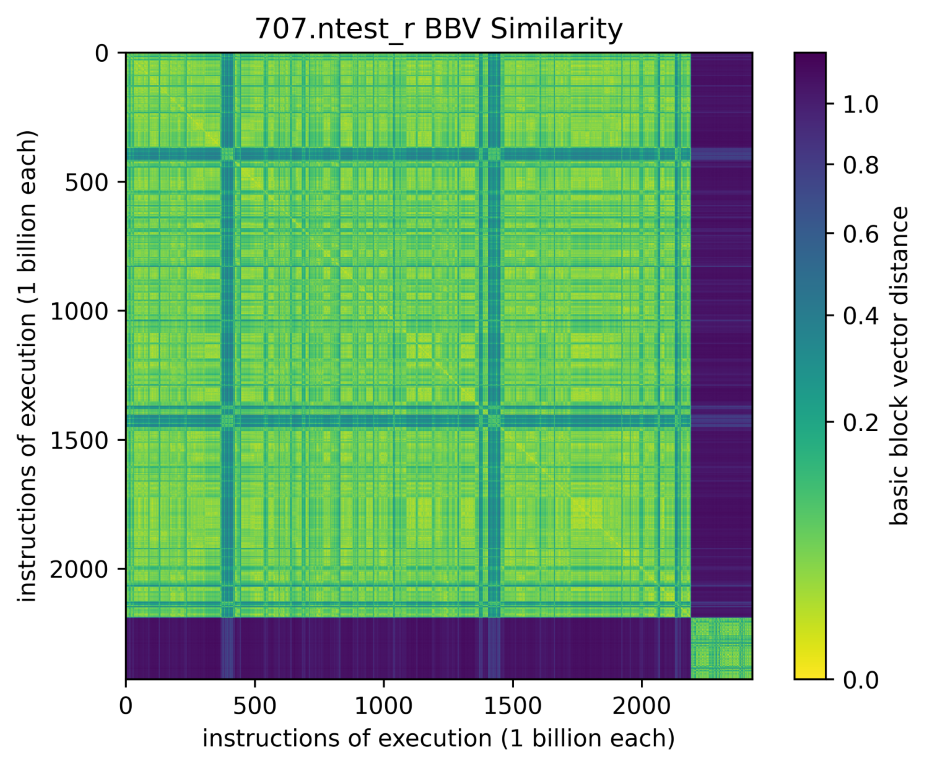
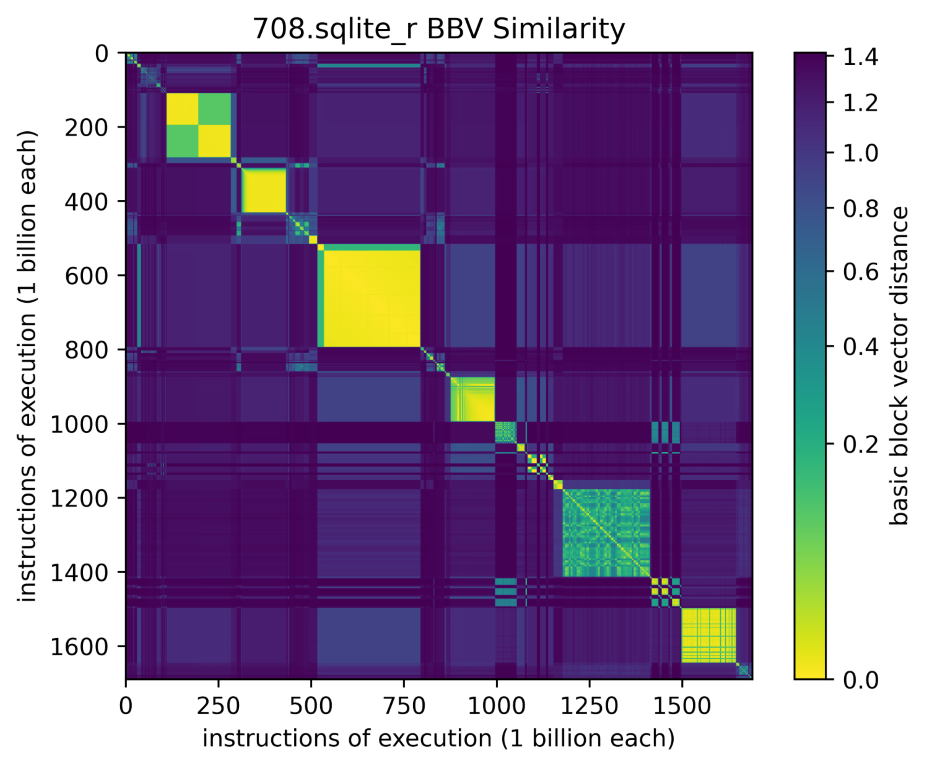
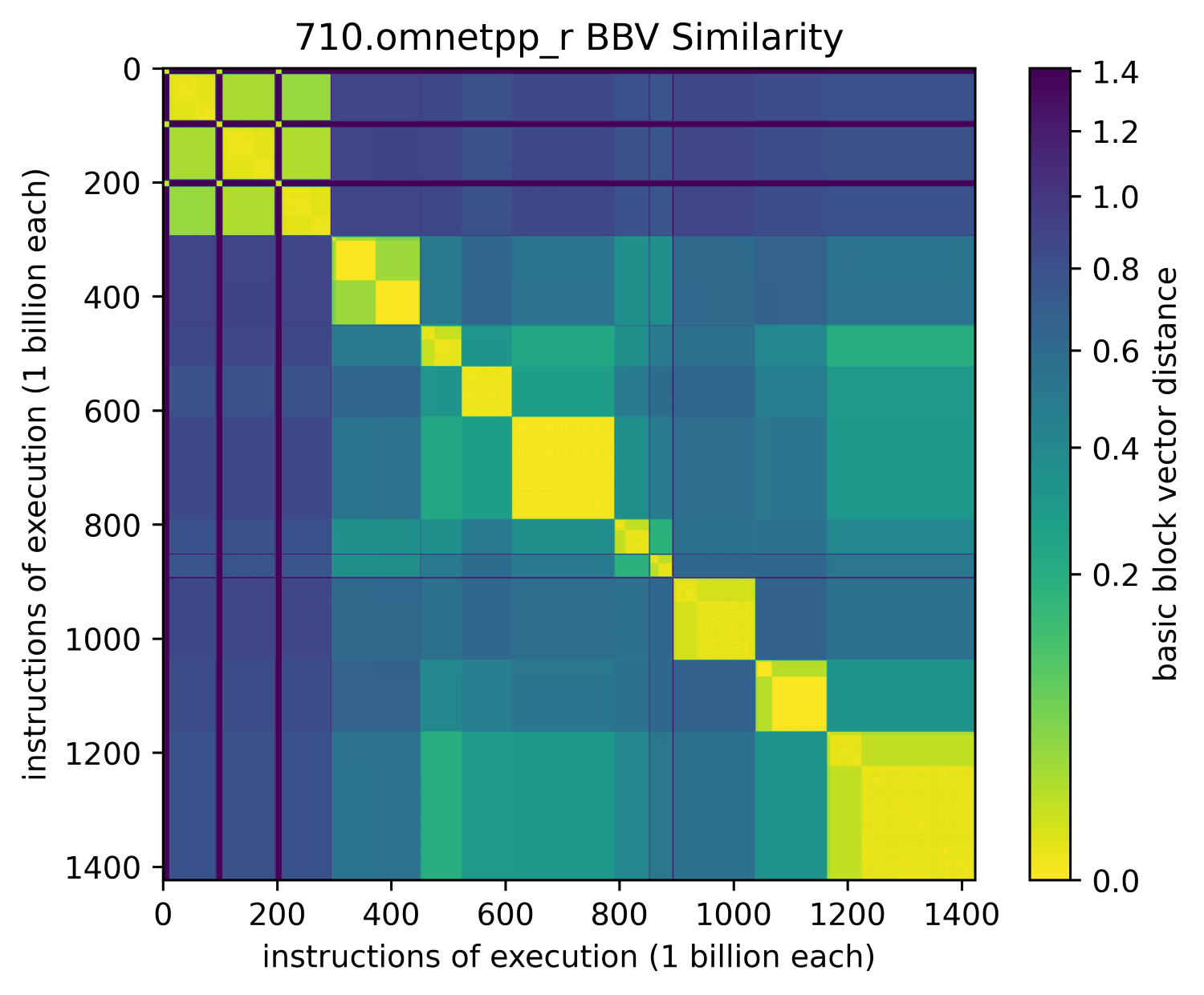
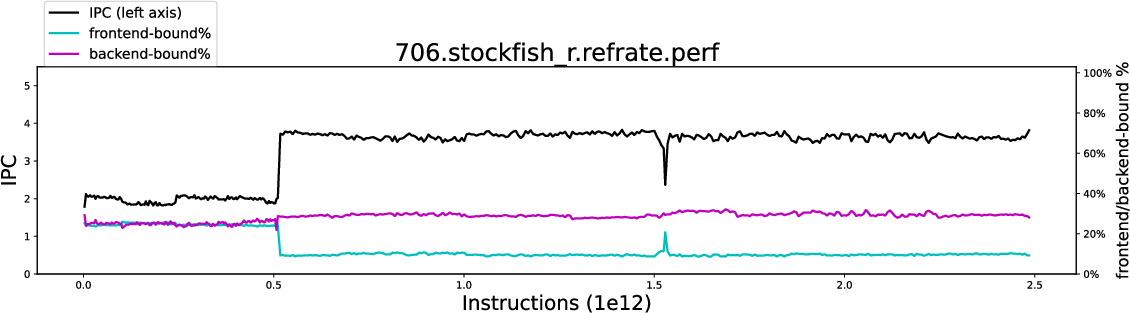
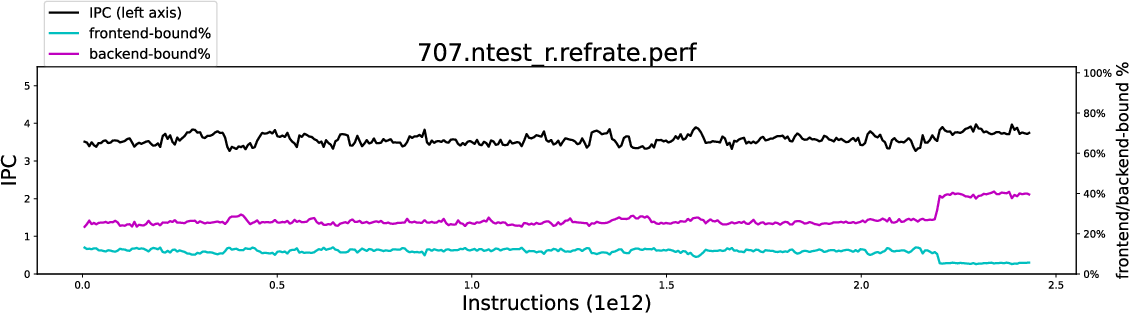
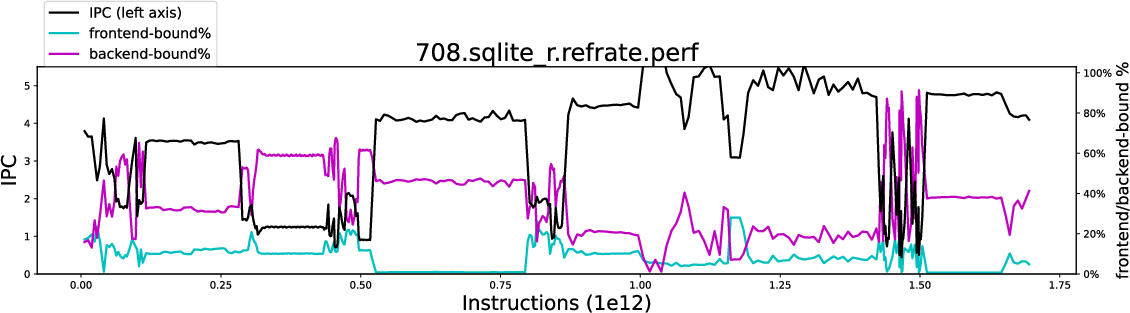
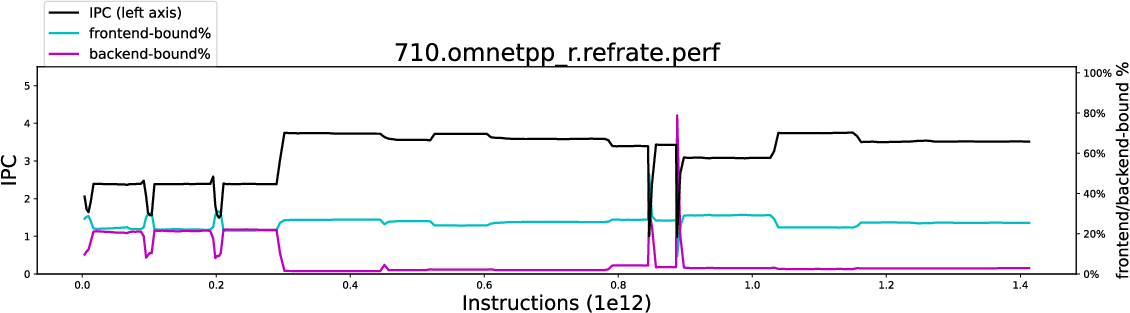
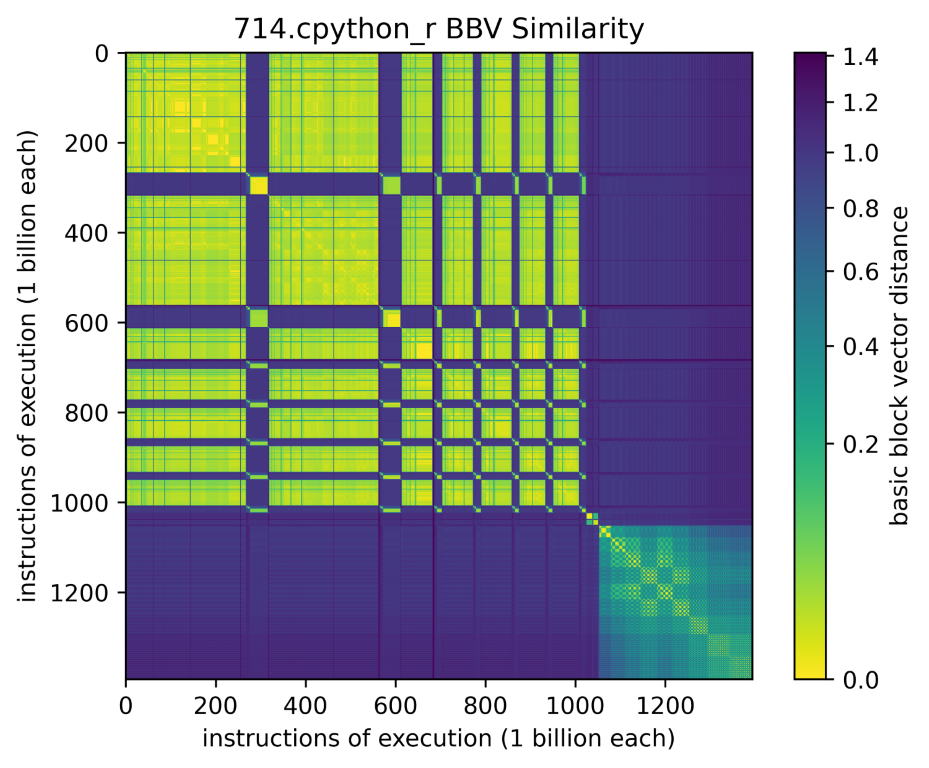
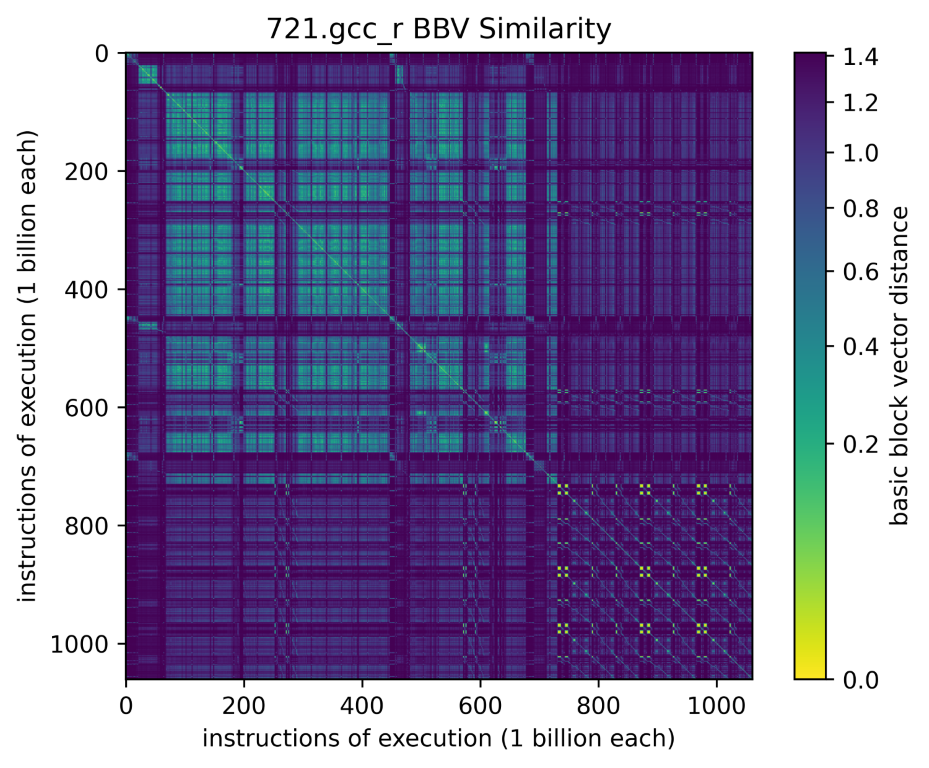
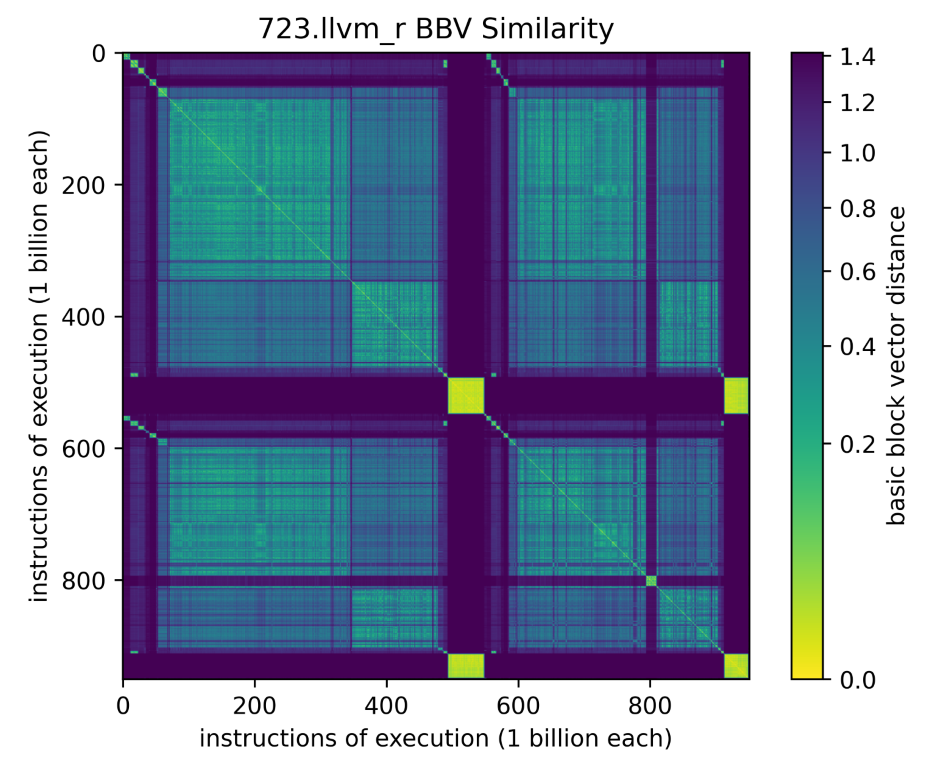
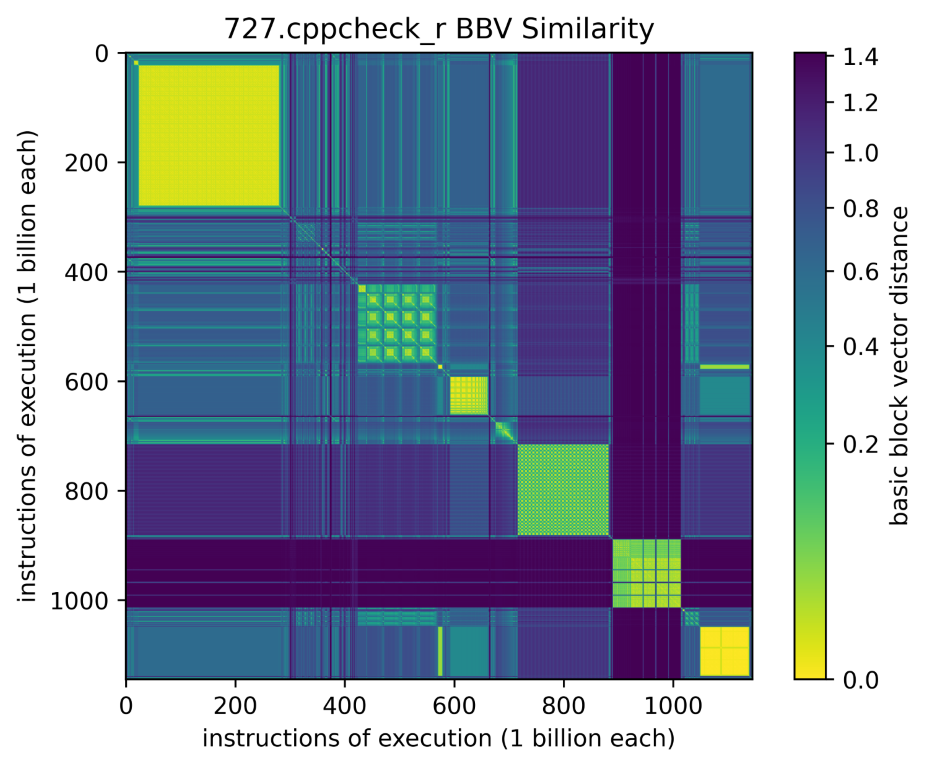
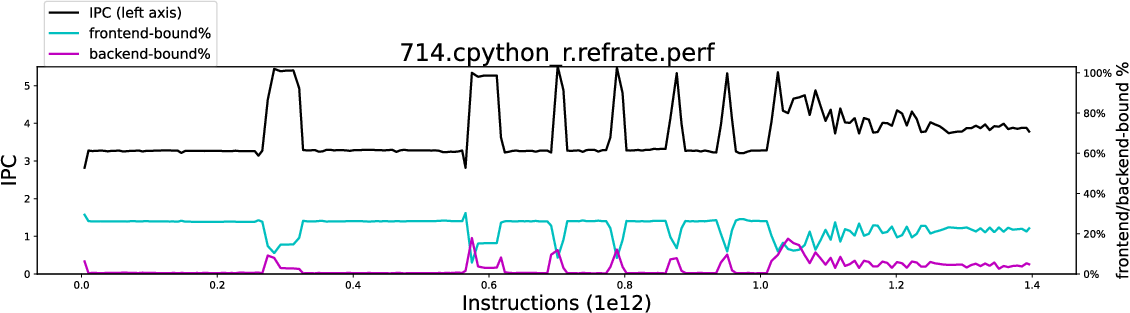
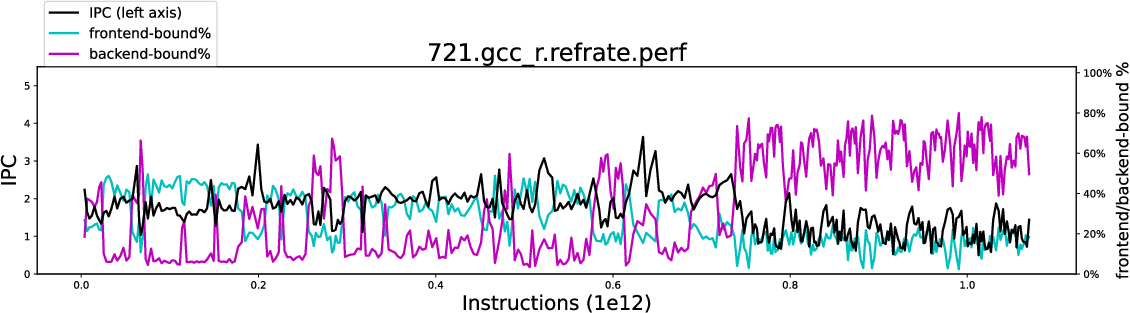
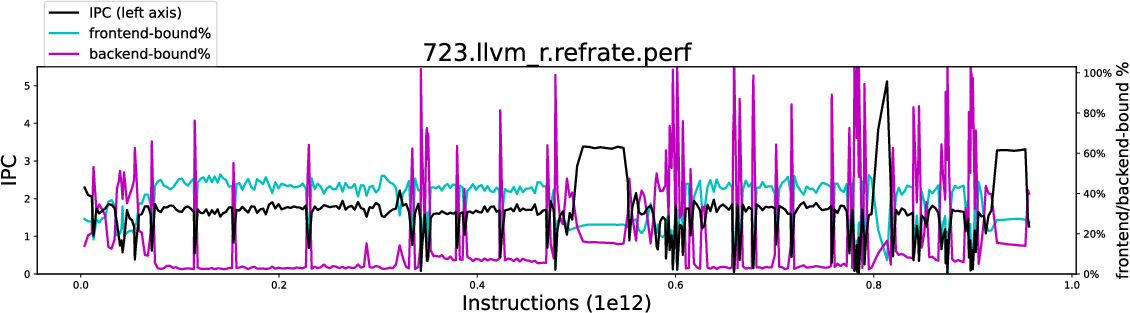
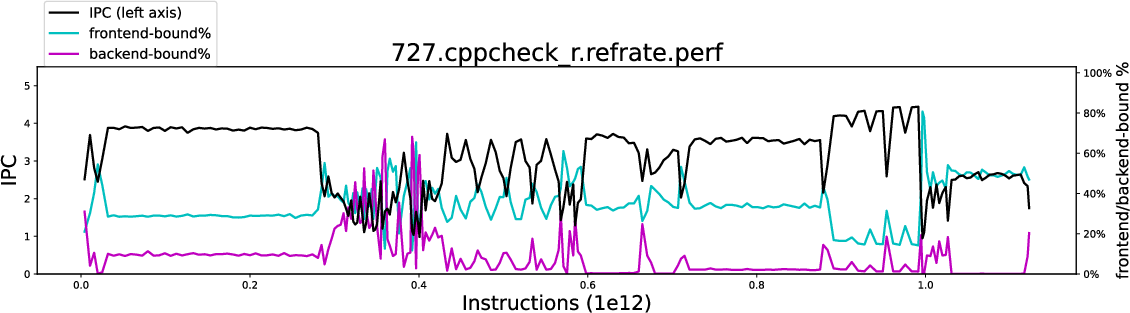
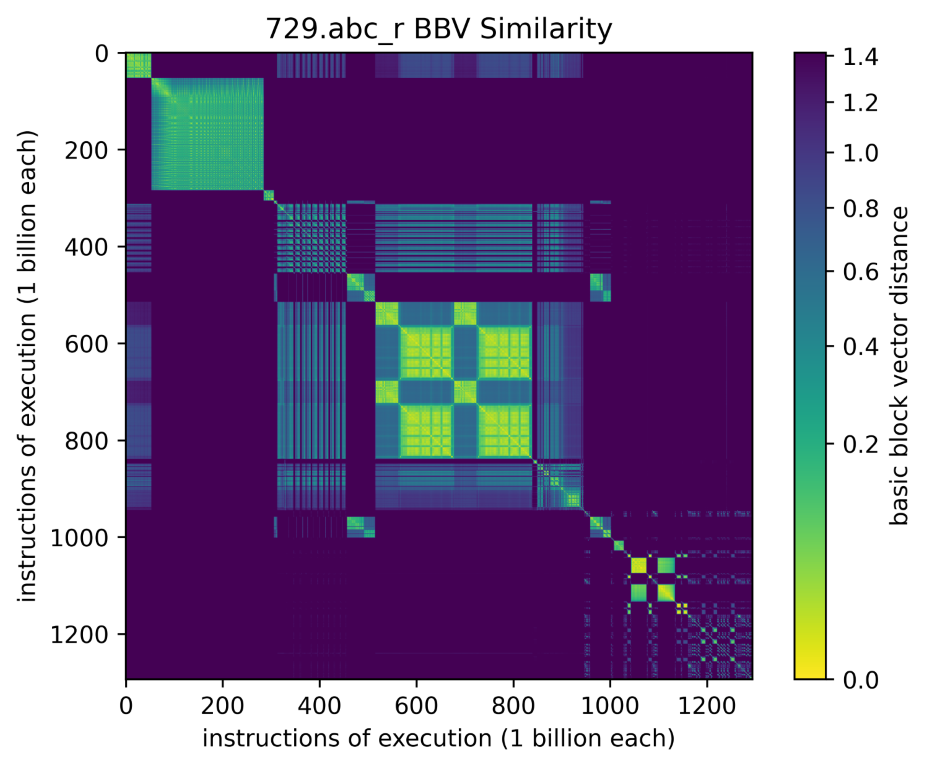
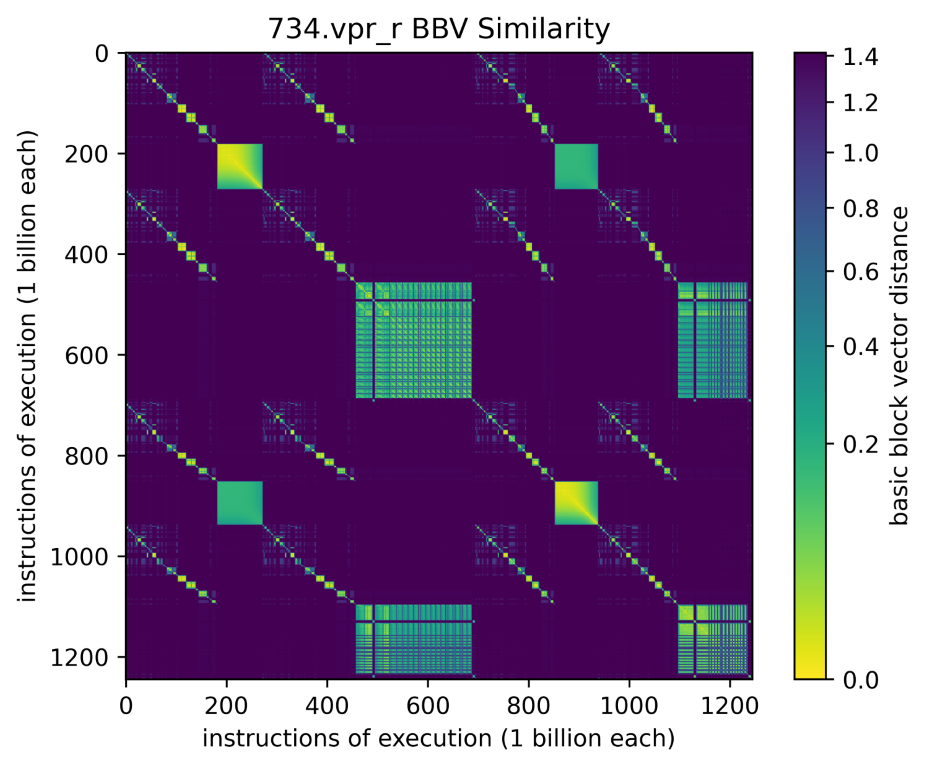
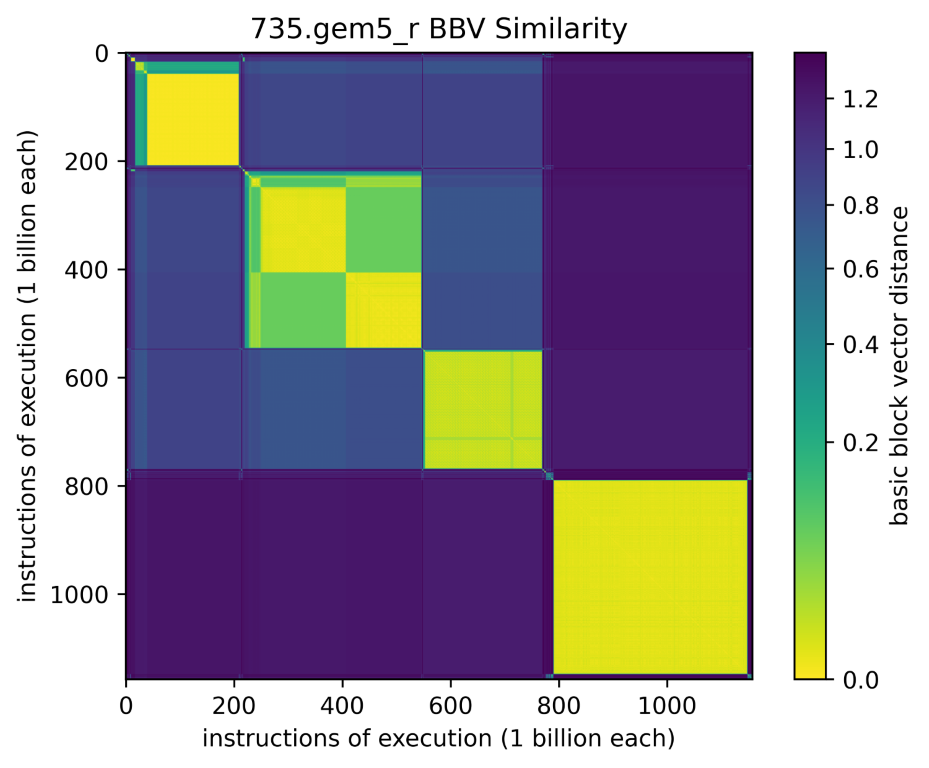
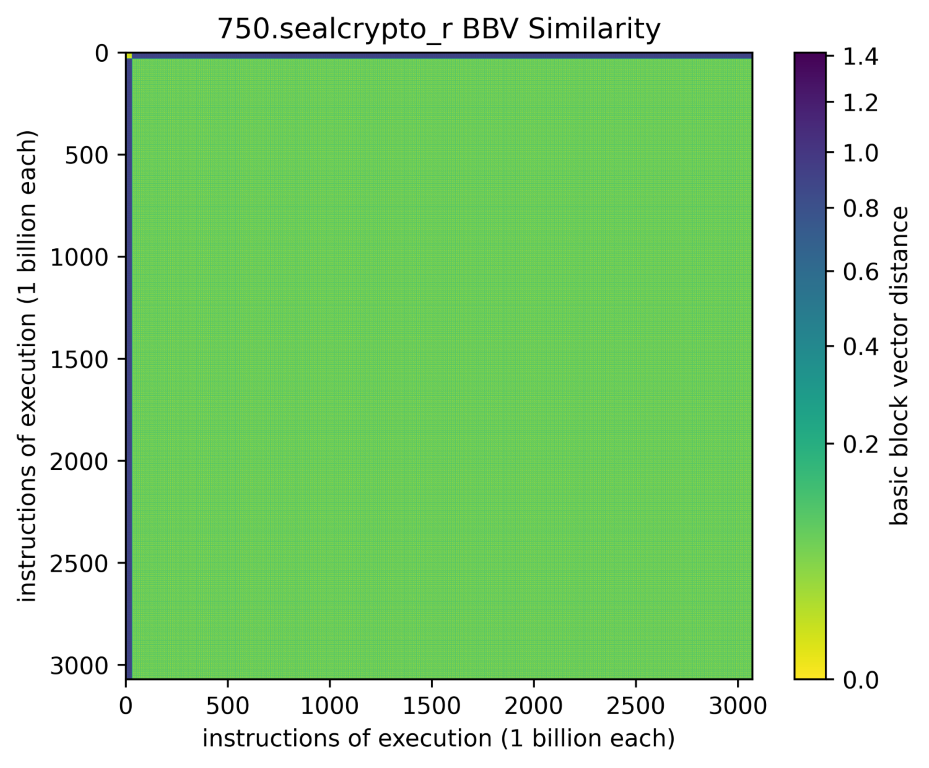
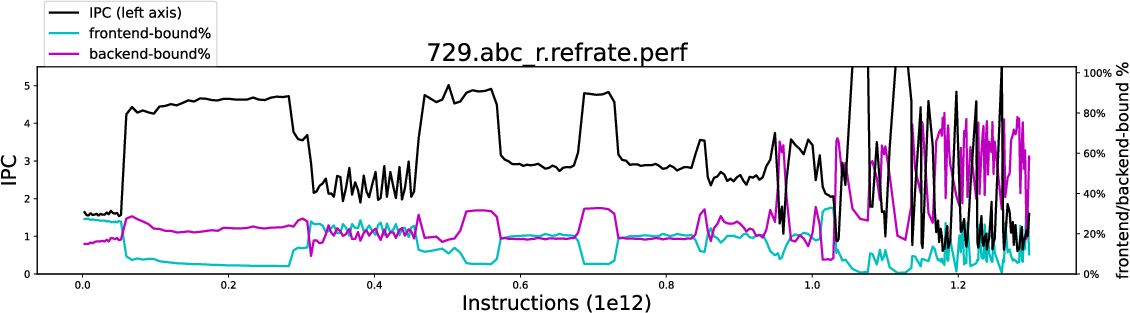
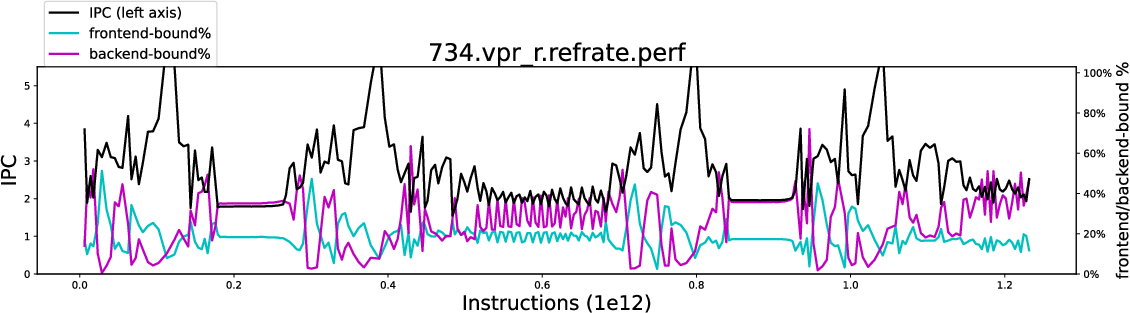
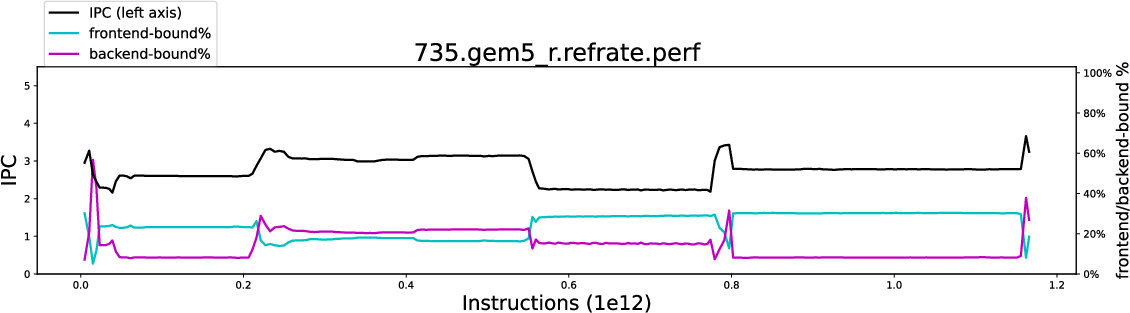
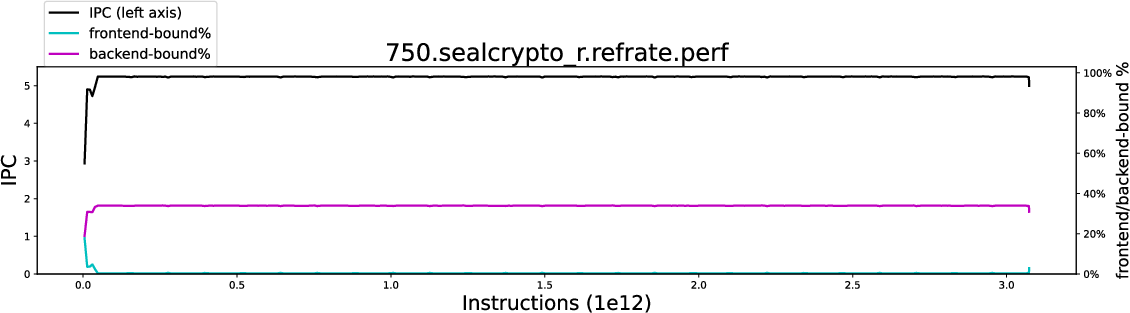
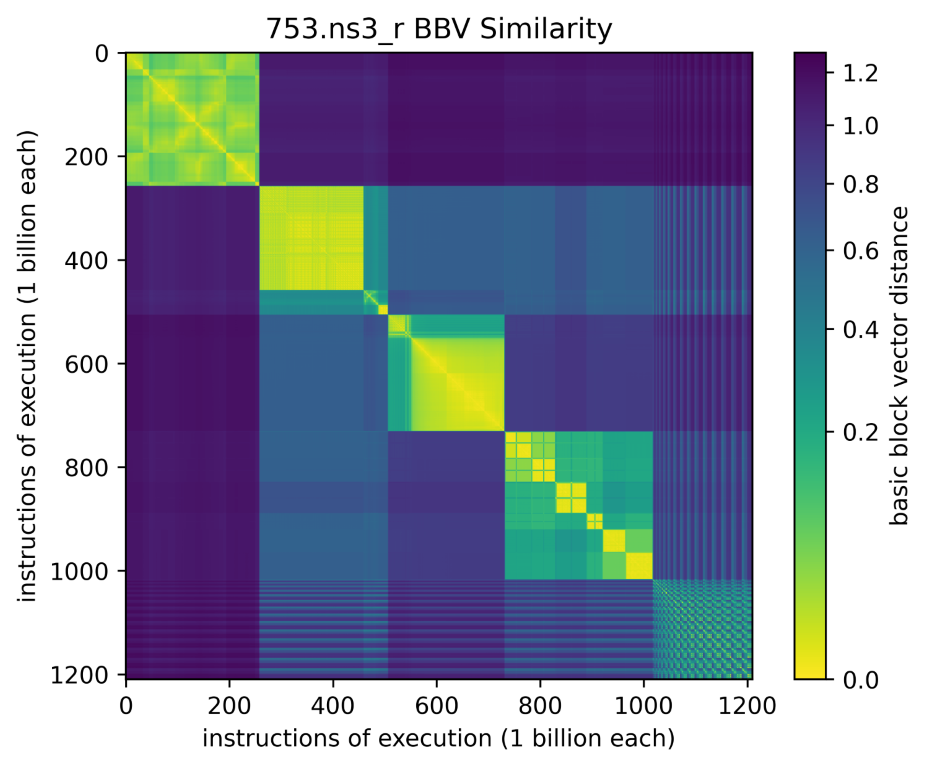
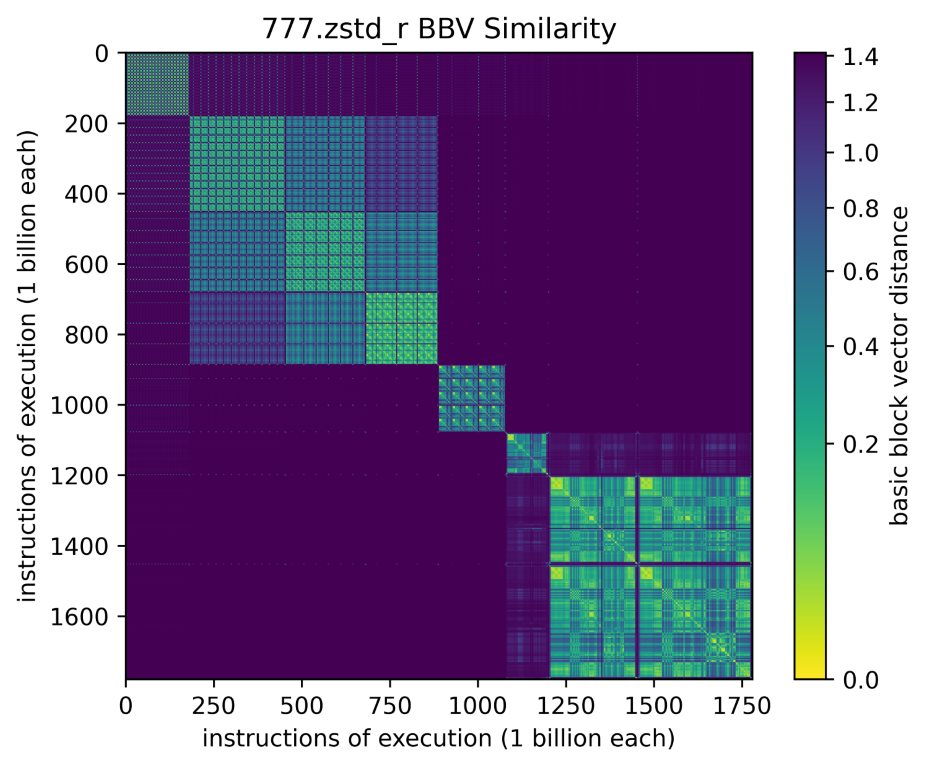
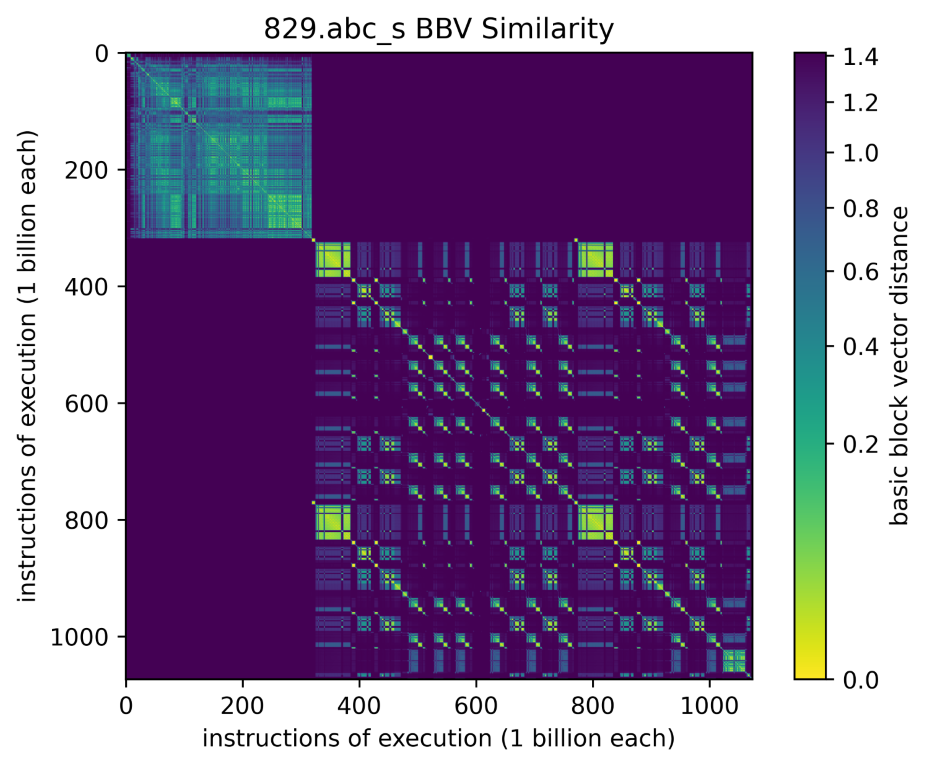
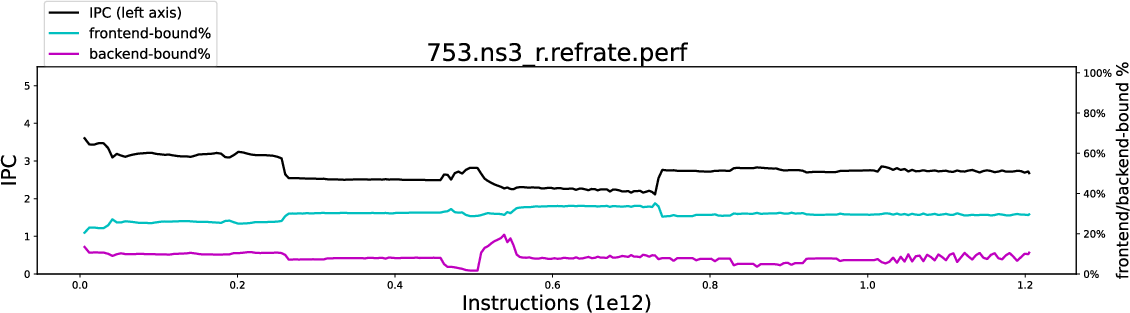
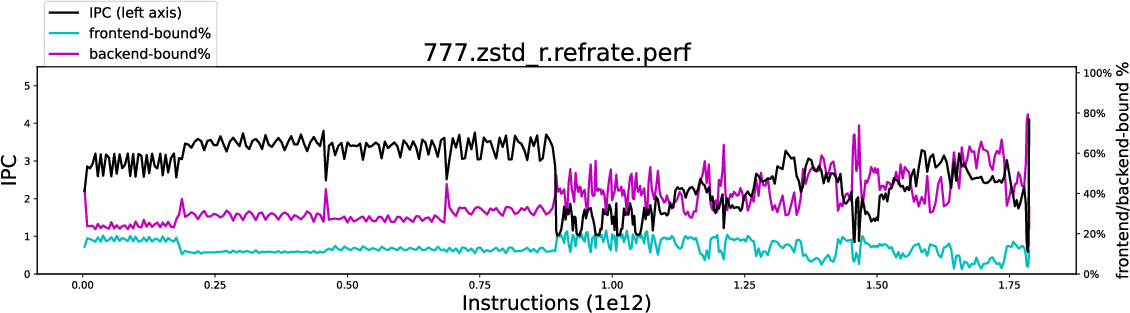
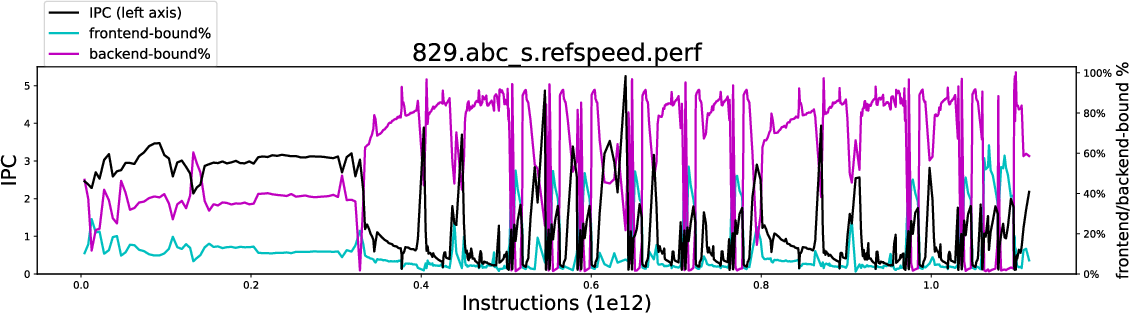
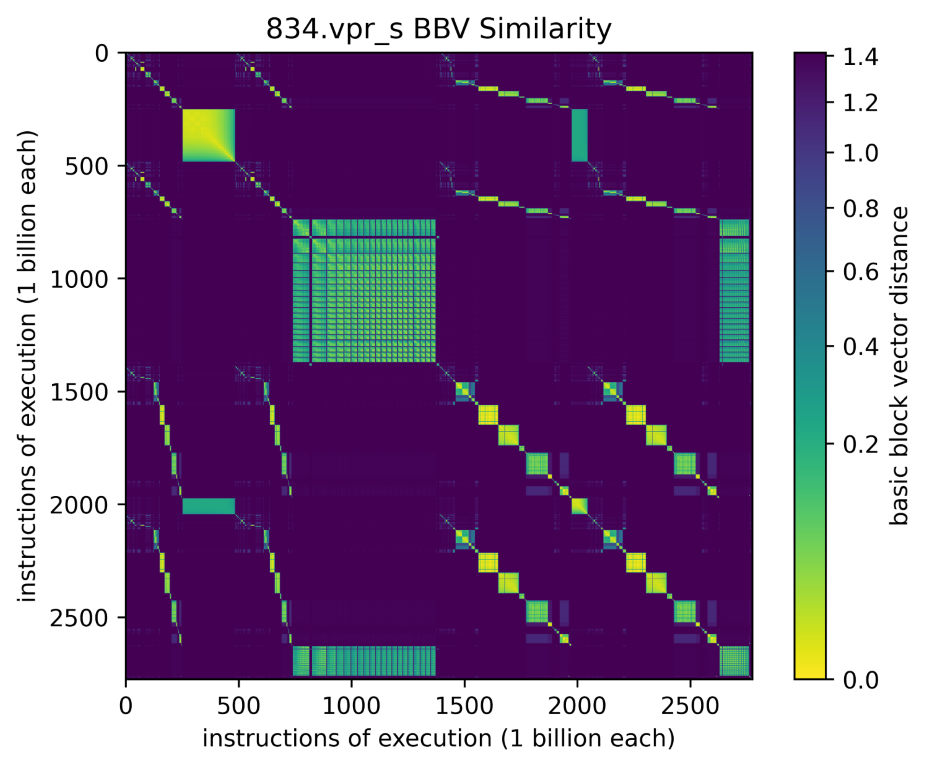
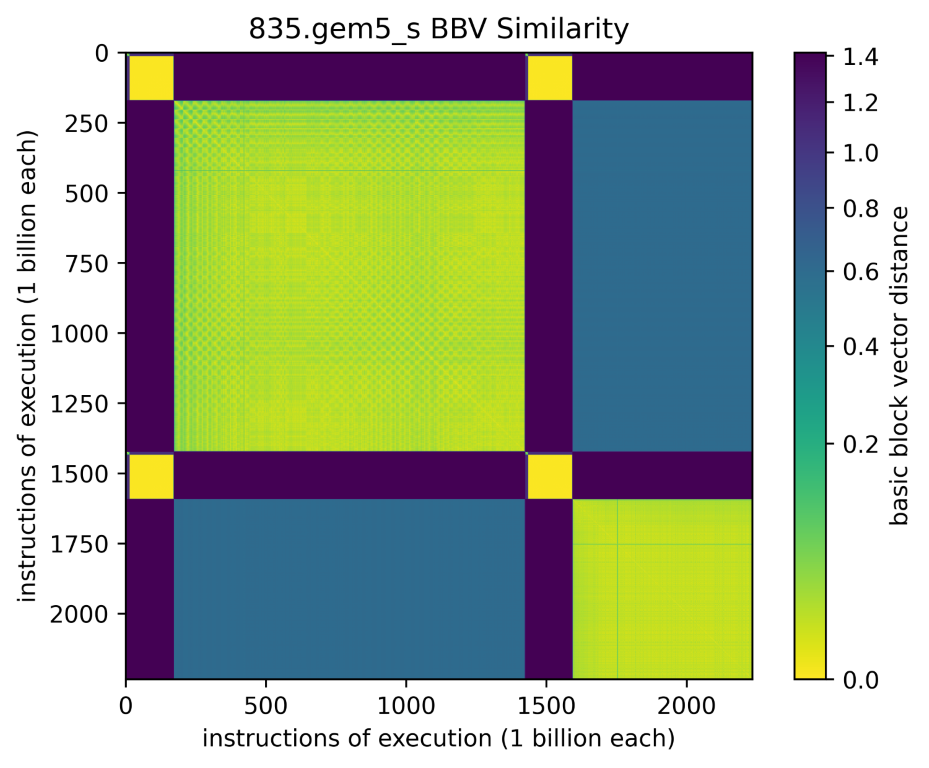
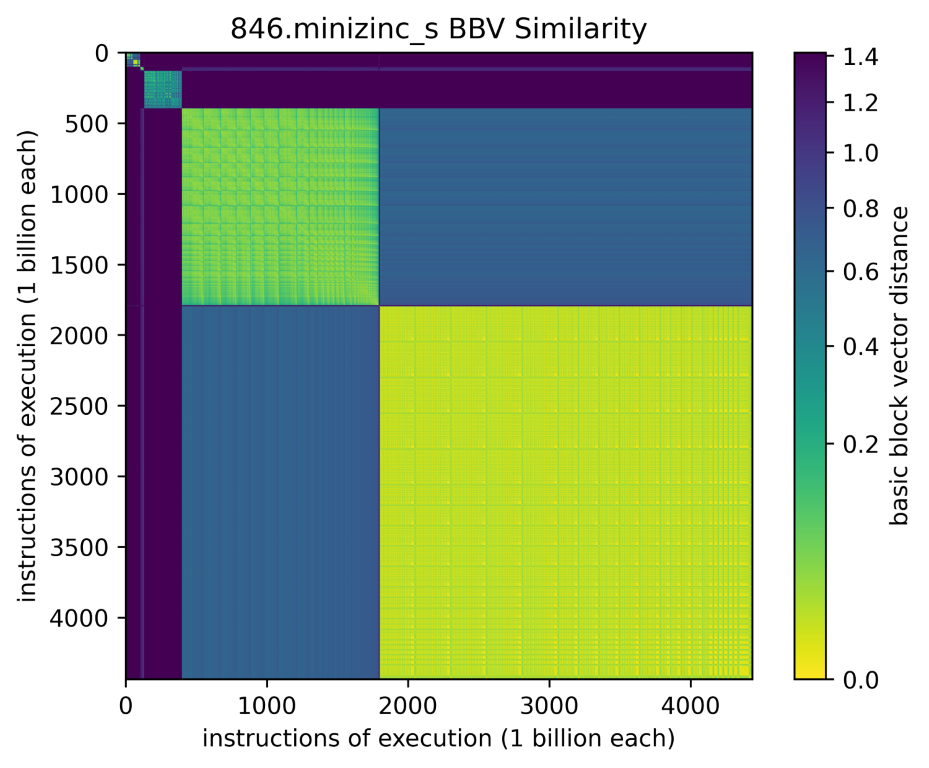
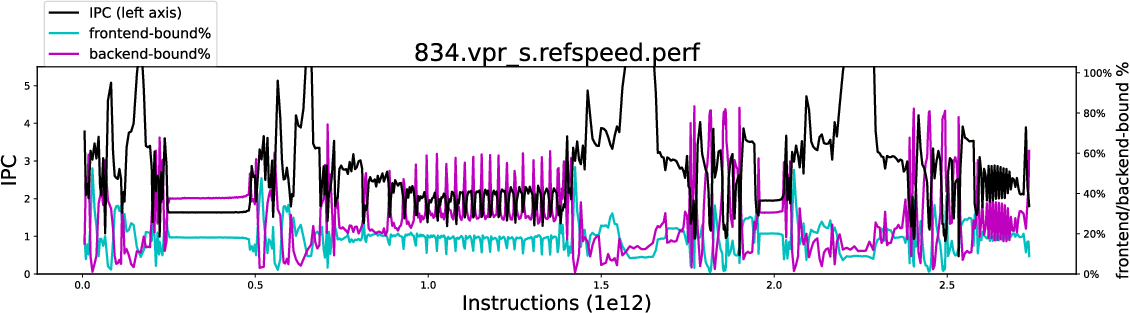
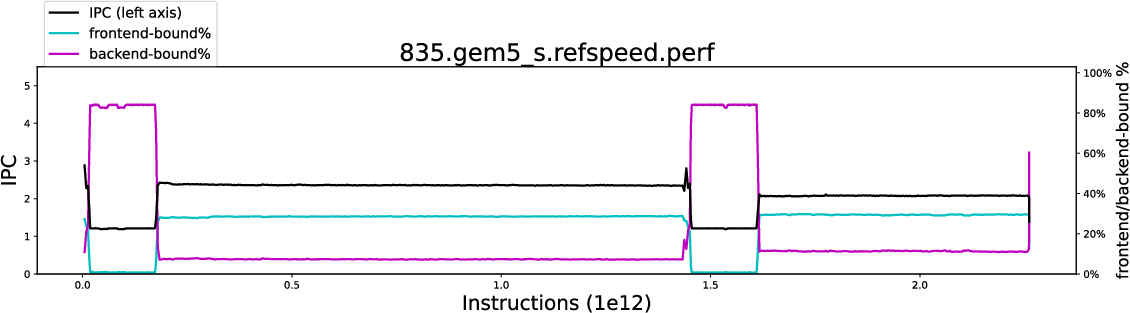
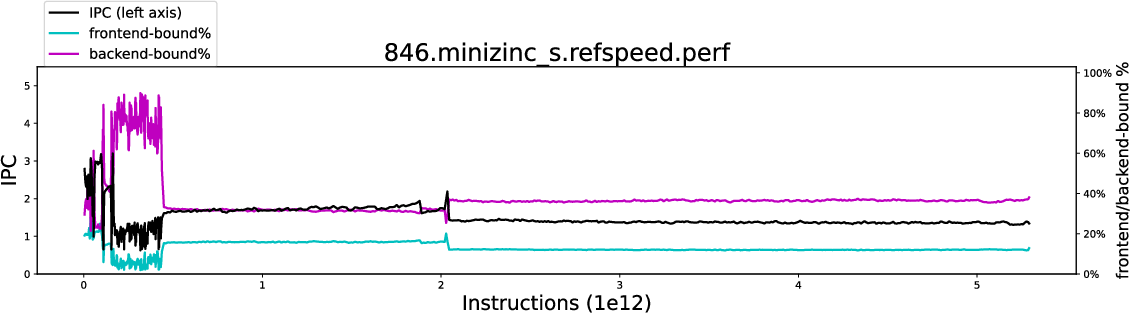
Figure 3: Integer suite BBV and performance plots; the suite elicits broad coverage of frontend, backend, and speculation-dominated phases, with clear input diversity.
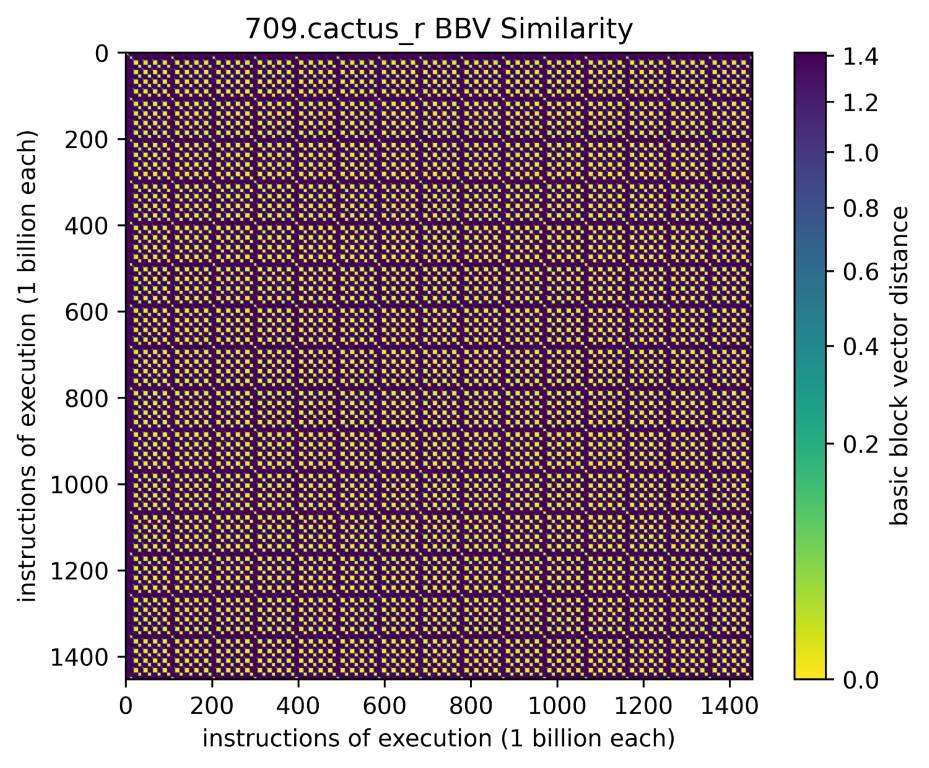
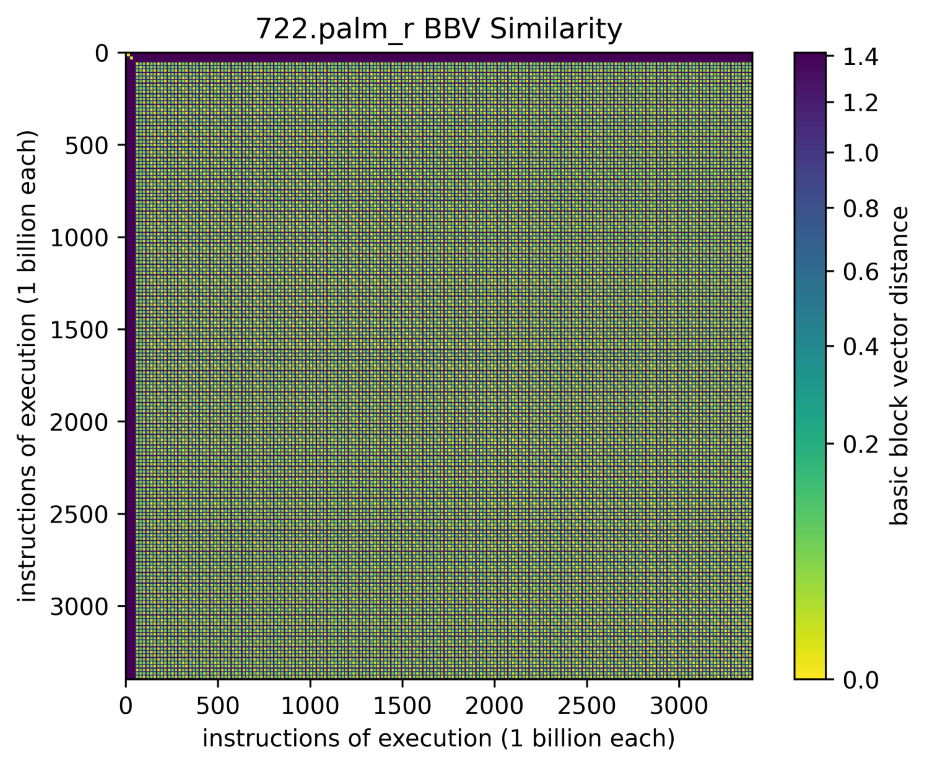
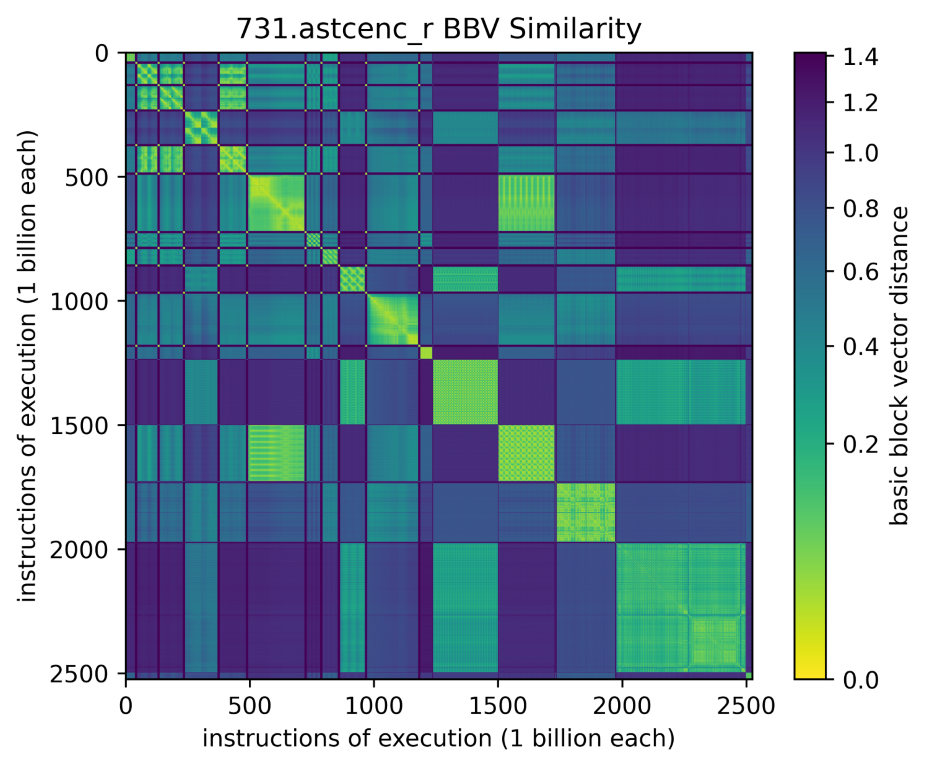
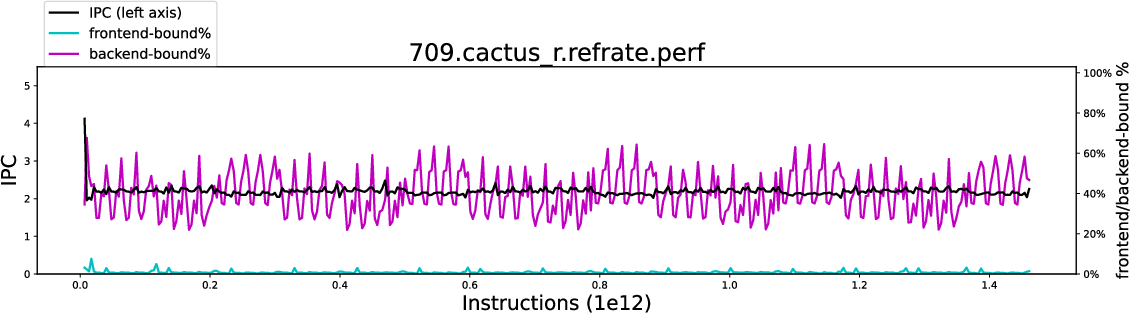
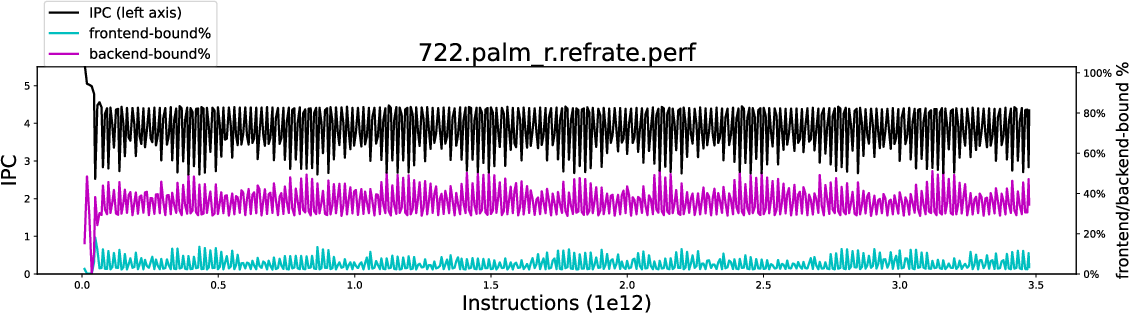
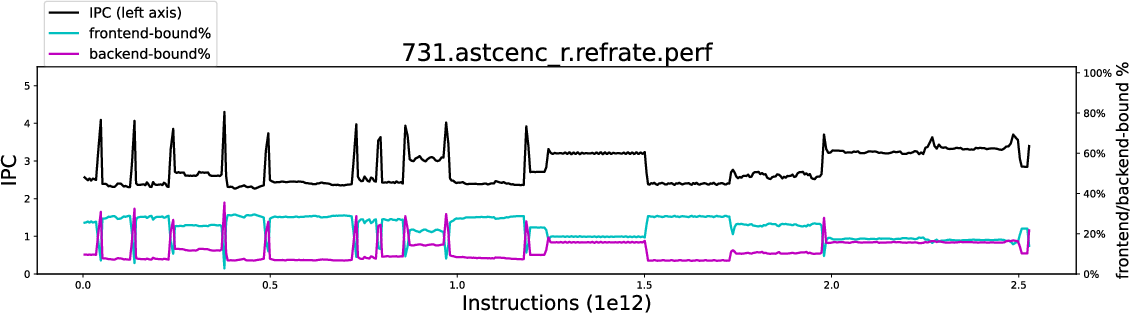
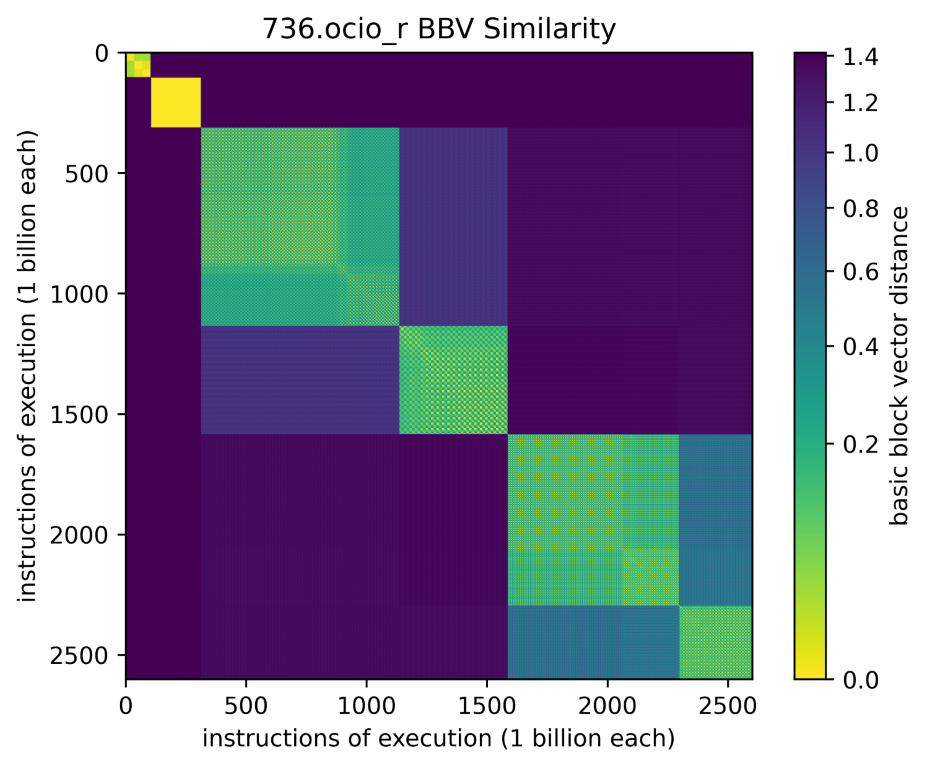
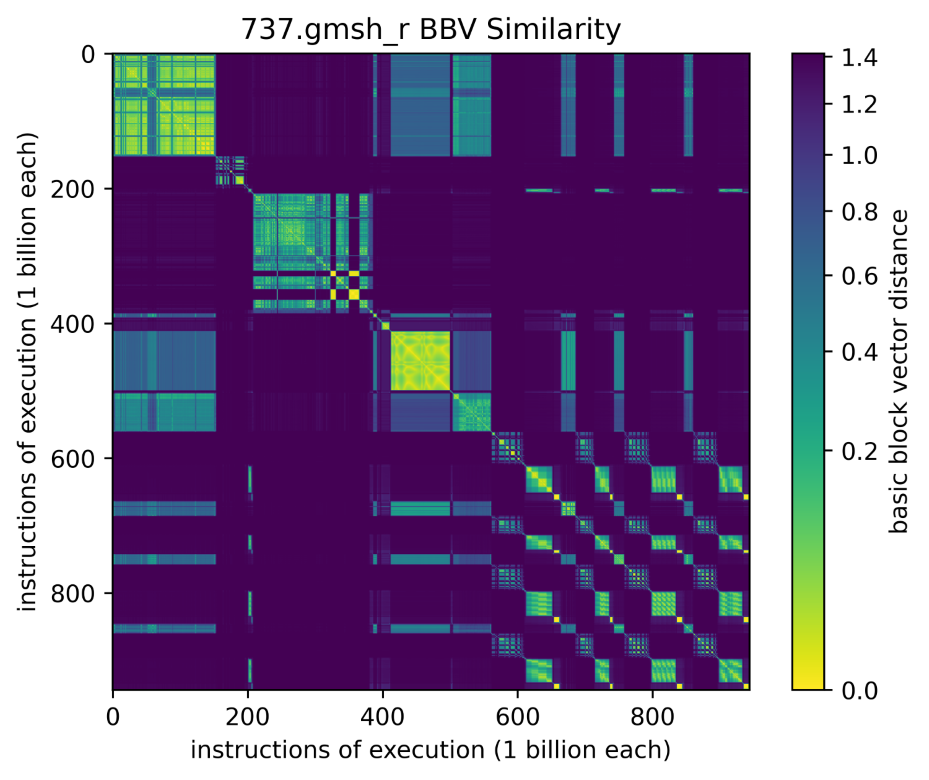
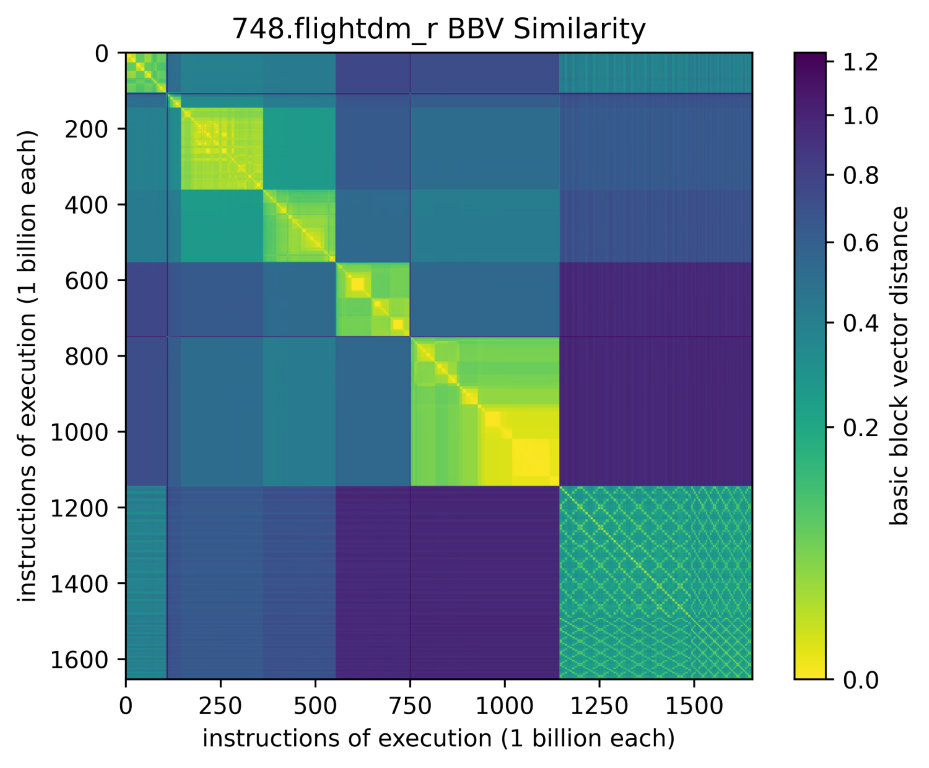
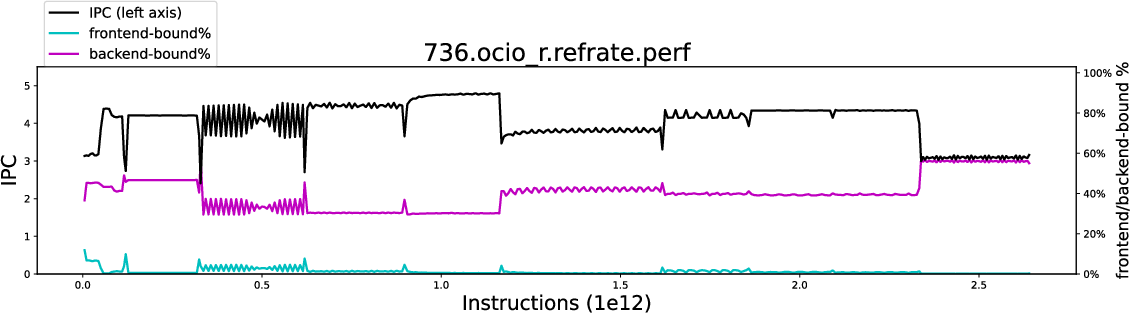
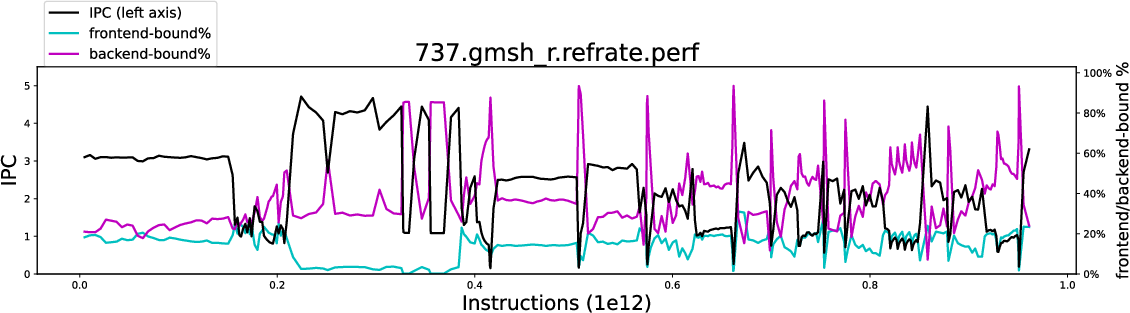
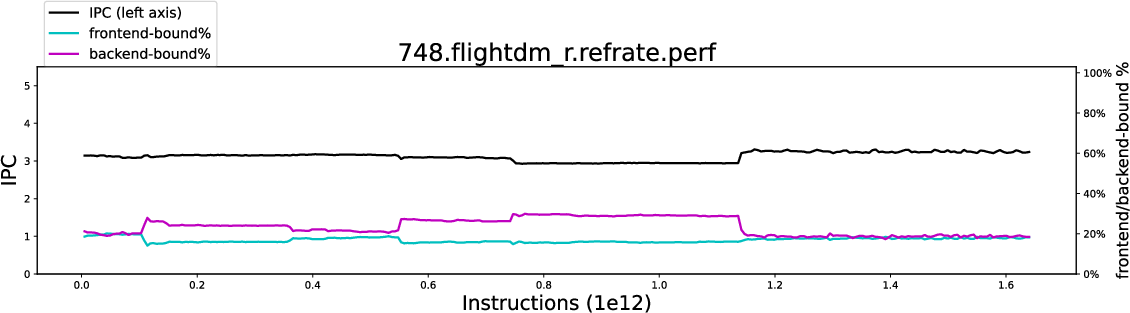
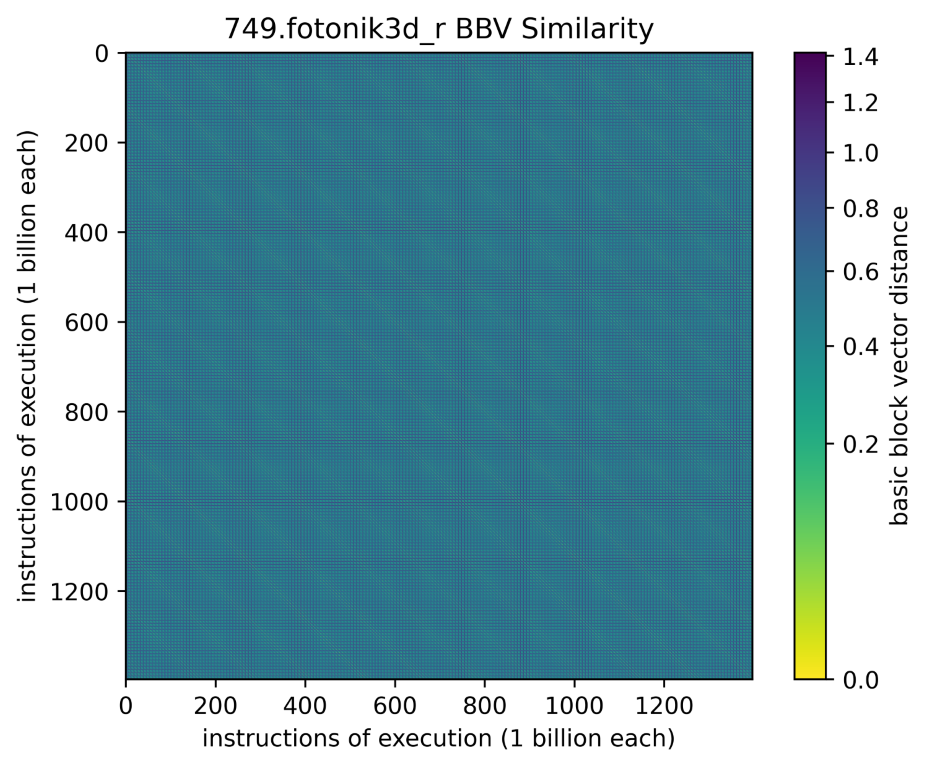
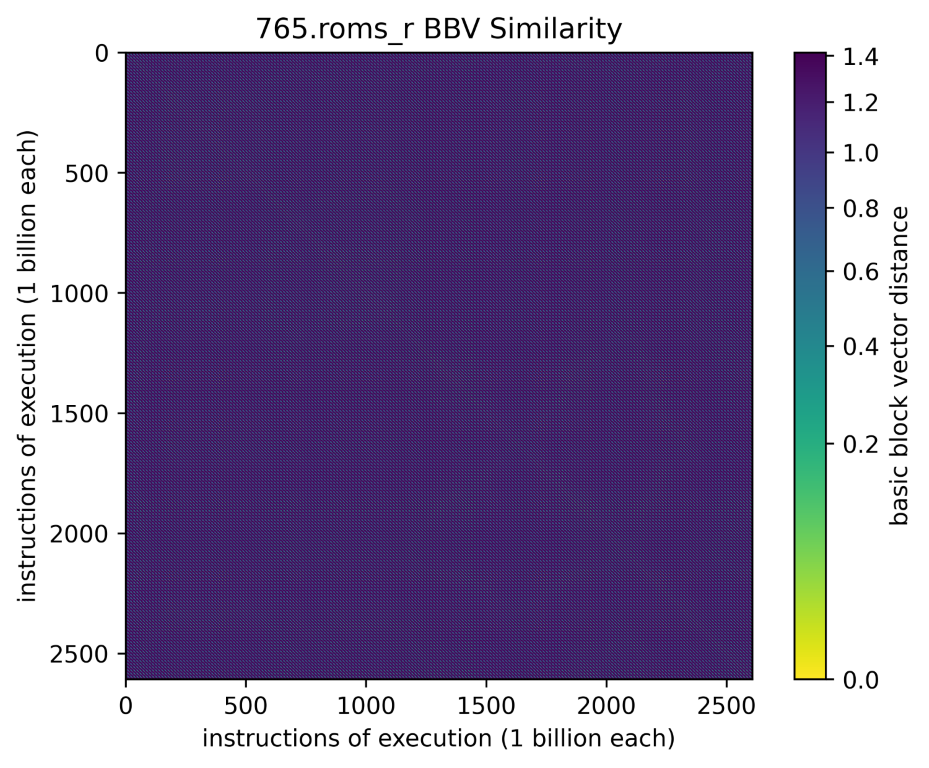
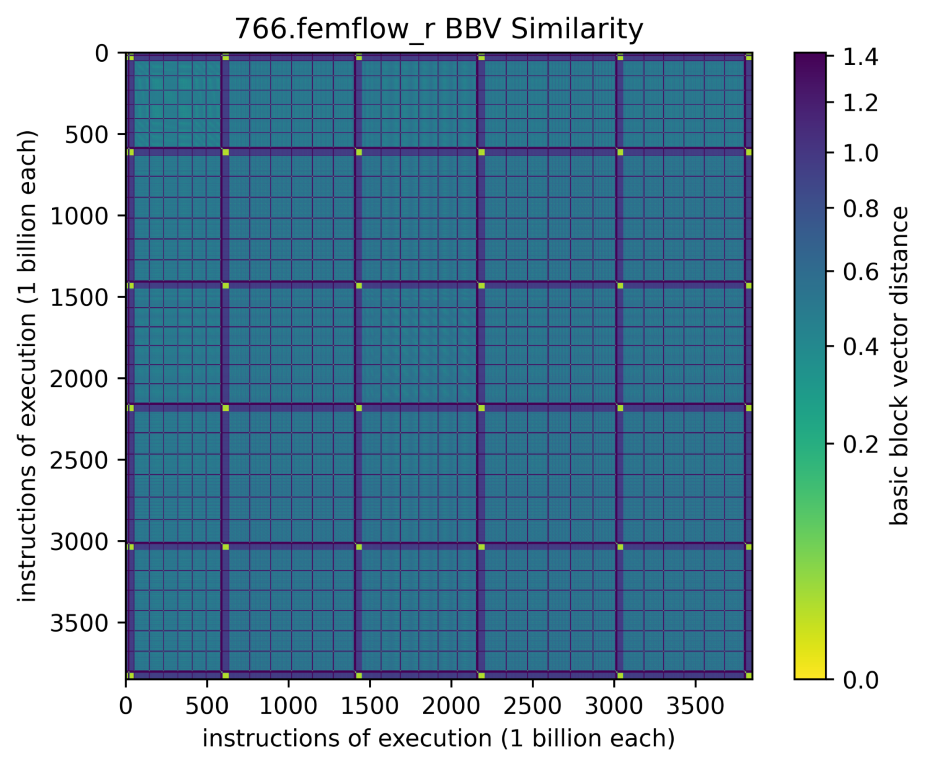
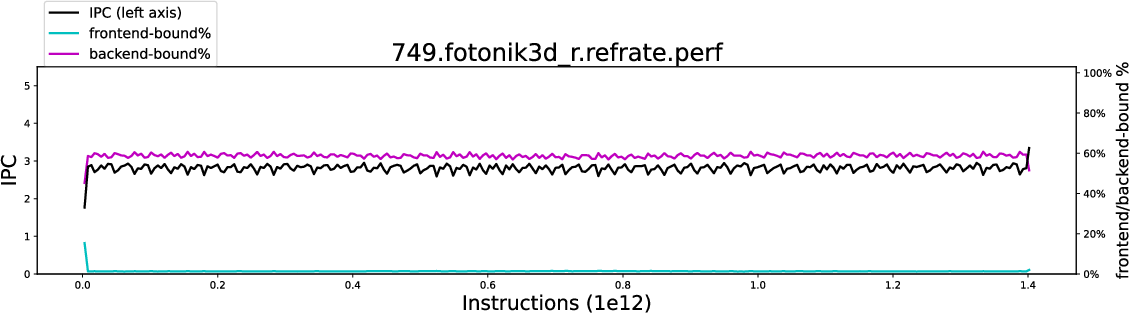
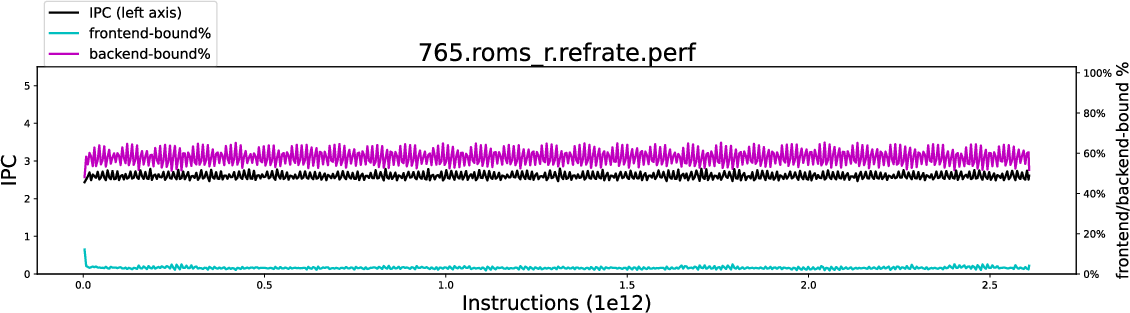
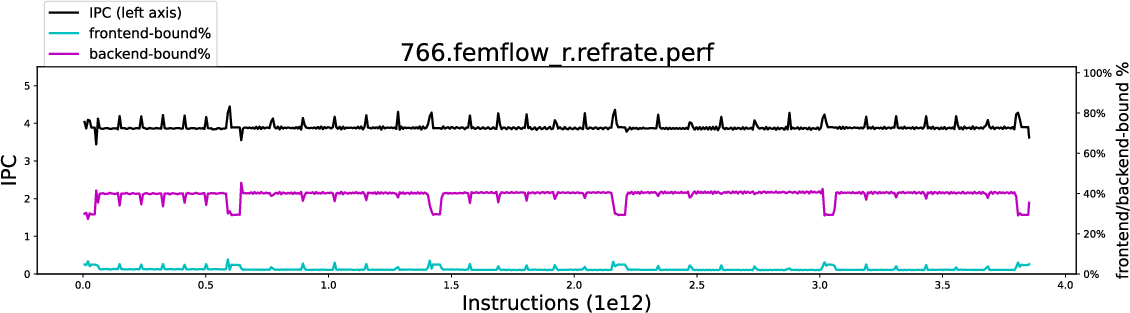
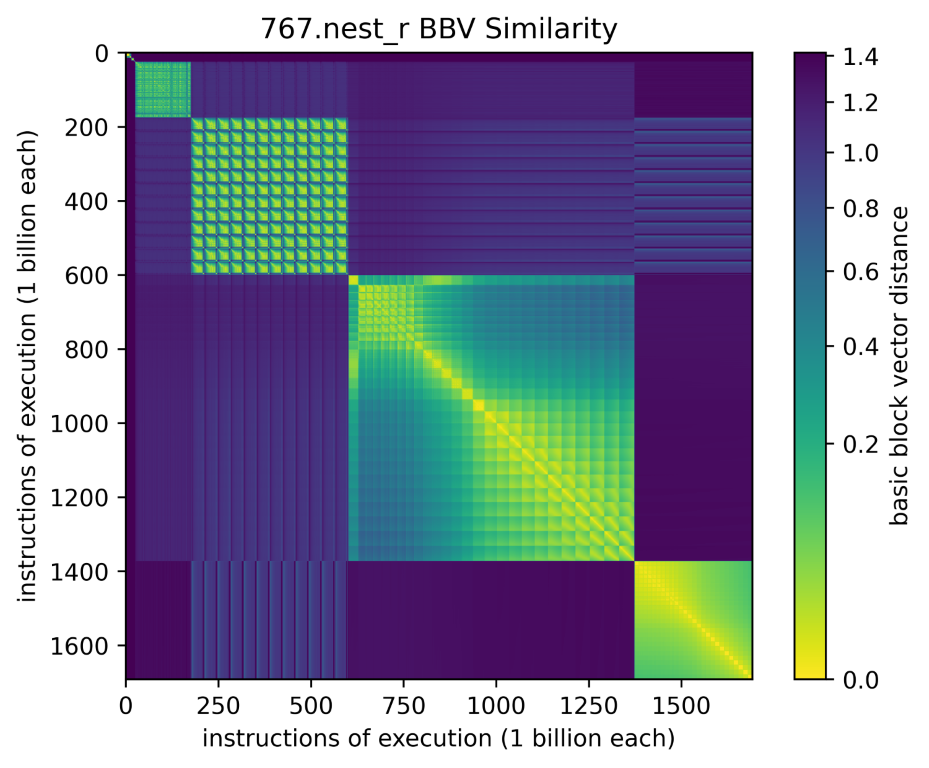
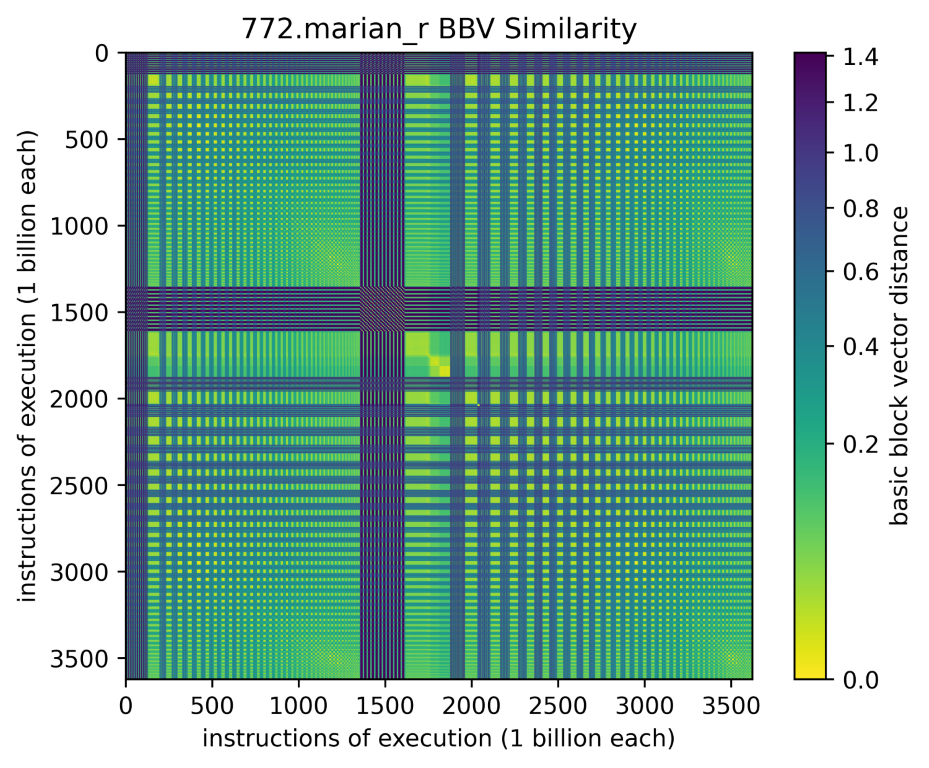
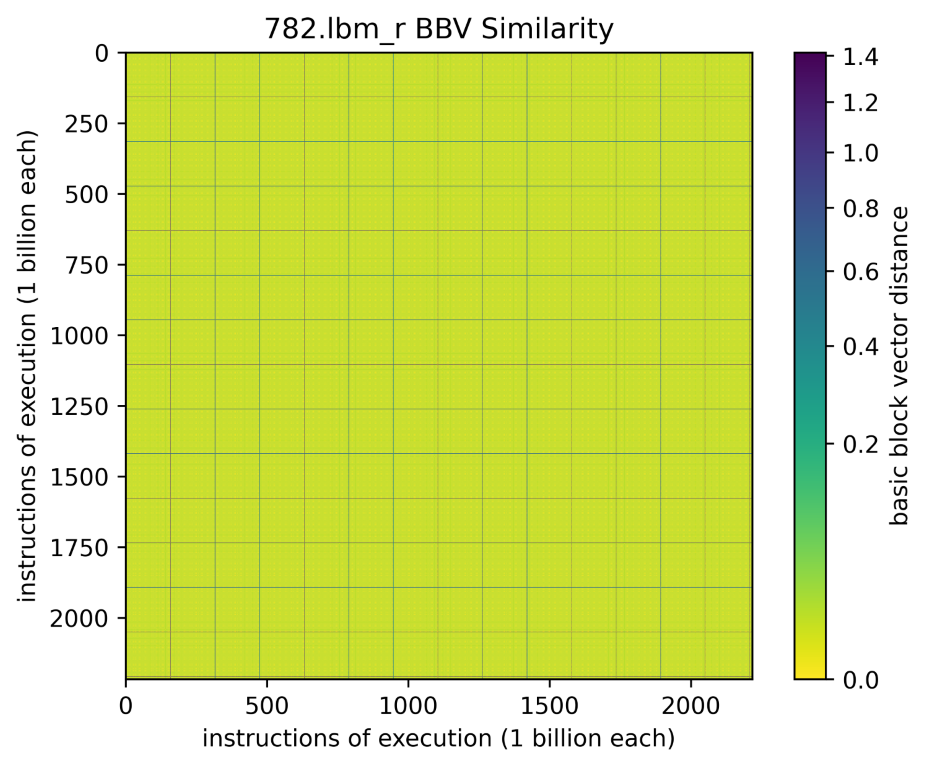
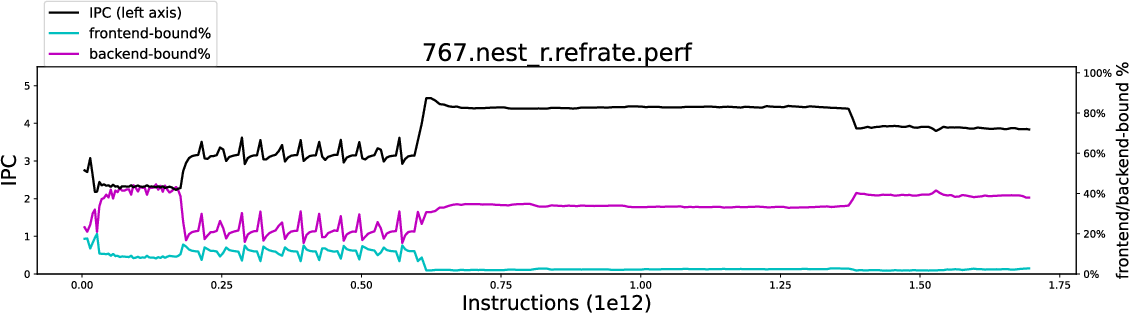
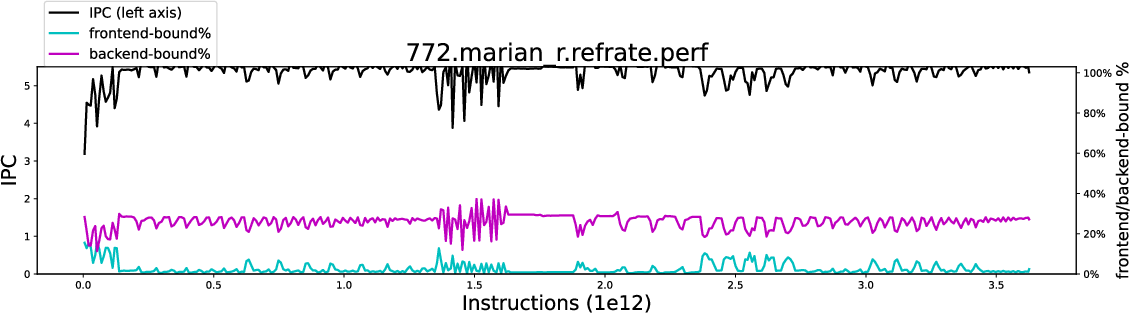
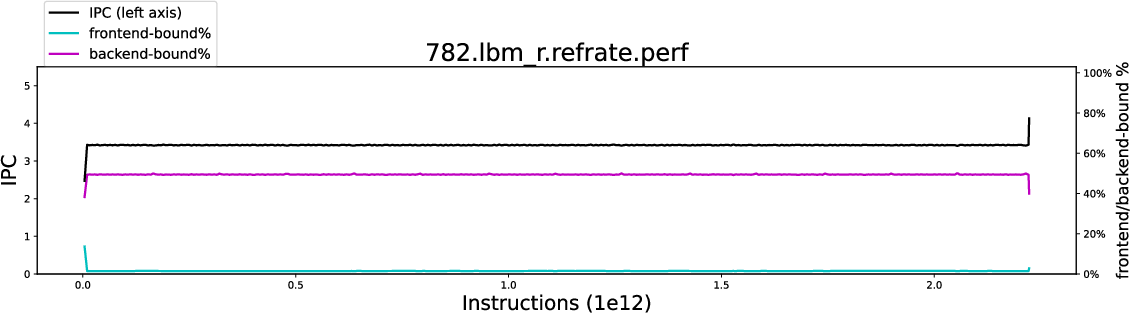
Figure 4: Floating point suite BBV and performance plots, revealing primarily backend-bound behavior but with notable exceptions.
Threaded and Task-based Parallelism
Threaded benchmarks leverage OpenMP, C++ std::thread, Fortran DO_CONCURRENT, and process-based parallelism. The inclusion of compiler-based buildbenchmarks (gcc and llvm), each invoking thousands of parallel tasks, further strengthens coverage of real software parallelization patterns.
Engineering for Portability and Longevity
All benchmarks are modernized for ISO compliance, warning-free builds, and systematic elimination of undefined behavior. The refactoring addressed:
- Endianness neutrality, resolving latent software or data bugs revealed on big-endian POWER (AIX) systems.
- Windows (MinGW/MSVC) validation, requiring deep rewrites for filesystem, datatype, and OS interface compatibility.
- Code hardening via static warnings, ASan/TSan, hardware-assisted ARM MTE, uncovering and fixing code and memory safety defects.
This hardening process regularly and reciprocally benefits upstream communities, with numerous correctness and performance patches adopted by original maintainers.
Heterogeneous Multiprogramming: RRR Schedules
Classical SPECrate homogeneous multi-copy benchmarking is increasingly misaligned with real system workload mixes—cloud, datacenter, and agentic deployments never run N instances of the same code. RRR provides a standardized, deterministic, and reproducible methodology where each workload executes on each core, exposing cross-benchmark interference and resource contention. By rotating workload orderings, RRR enables high-fidelity studies of resource sharing, OS scheduling, and the fairness/throughput trade-offs central to modern system evaluation. Critically, this eliminates both sample and schedule imbalance, addressing deep methodological flaws in countless ad-hoc prior studies.
Figure 1: Standard refrate schedule execution (left), and two RRR variants with increasing stride (center, right) illustrating flexible exploration of multi-program workload mixes.
Upstream Impact and Practical Lessons
Concrete upstream improvements were realized through this process, such as:
- Memoization and division strength reduction in NEST yielding a 10% runtime reduction.
- Data structure optimization in MiniZinc’s std::vector lowered runtime by 7%.
- Resolved cross-platform memory layout bugs in Gmsh, flightdm, and minizinc.
- Multi-threading data races identified and resolved in nest and gmsh using TSan and MTE.
The effort to engineer for both portability and determinism brings tangible improvements not just to the suite, but to the broader open source community.
Theoretical and Practical Implications
By establishing a substantially richer, more diverse, and methodologically principled suite, CPU2026 catalyzes advances on several research frontiers:
- Architectural innovation: enables rigorous evaluation of frontend, backend, speculative, and synchronization optimizations against complex, contemporary code.
- Parallel scheduling and resource management: RRR empowers fair, repeatable studies on real-world multiprogramming.
- Software toolchain research: rigorous memory safety checking and code hardening surface latent issues in widely-used scientific codes.
- OS and hypervisor scheduling: the expanded analytical harness and program phase visibility foster robust OS and cloud scheduler innovation.
Directions for Future AI Benchmarking
The paper critically discusses the difficulties of including LLMs, AI inference, cryptography, and modern codecs within such portable, equal-work, deterministic harnesses. Removing architecture-specific optimizations frequently destroys representativeness. The authors hint that future suites may admit hybrid approaches—a permissioned set of optional architecture libraries accompanying reference code—to bridge this gap without undermining benchmarking rigor. This will be essential as AI workloads and domain-specific accelerators continue to reshape general-purpose workload profiles.
Conclusion
SPEC CPU2026 marks a foundational recalibration of benchmarking principles to align with the realities of modern software and hardware. Through principled application selection, modern engineering, and novel workload methodologies such as RRR, CPU2026 establishes a new baseline for robust, comparable, and actionable evaluation in both academic research and industrial development. As both architectural and software systems grow in complexity and heterogeneity, the suite’s expanded analytical harness will be instrumental in advancing performance research agendas, informing future processor and OS design, and ensuring reproducibility and fairness in performance reporting across the compute landscape.