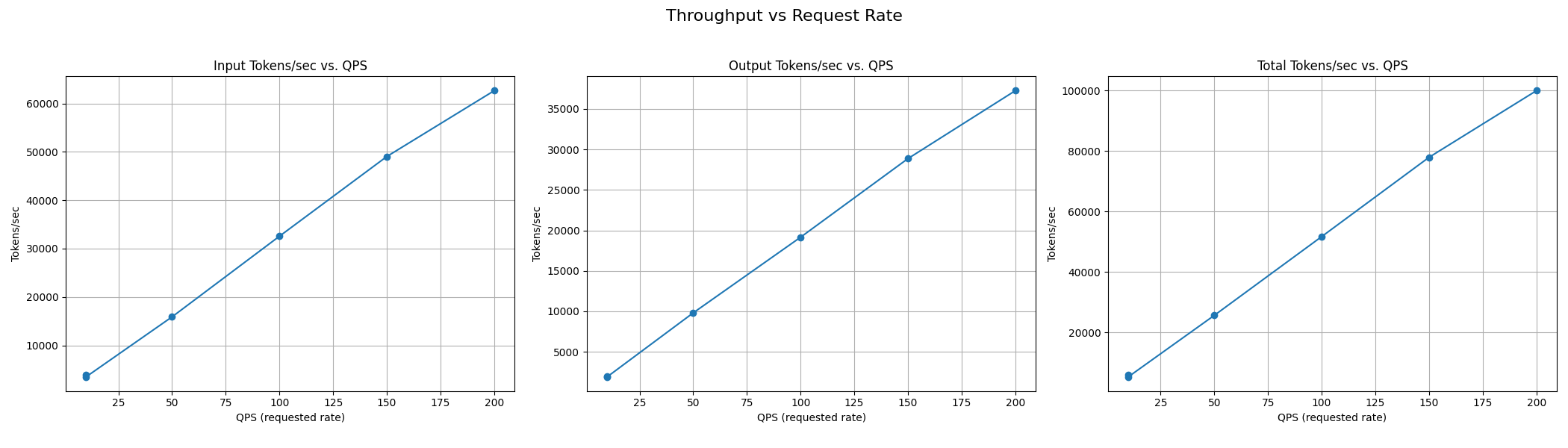
- The paper identifies major measurement bias in LLM inference benchmarks caused by single-process, event loop-based tools.
- It demonstrates that a distributed multi-process architecture significantly improves throughput accuracy and reduces client-side latency.
- The study introduces Normalized Time Per Output Token (NTPOT) as a robust metric for reproducible, cross-model performance evaluation.
Identification and Mitigation of Systemic Measurement Bias in Production LLM Inference Benchmarks
Introduction
This paper ("Identifying and Mitigating Systemic Measurement Bias in Production LLM Inference Benchmarks" (2605.24217)) rigorously analyzes and resolves fundamental flaws in the benchmarking methodologies used during production-scale inference for LLMs. As LLMs have transitioned from research prototypes to operational deployments governed by strict Service Level Objectives (SLOs), the accuracy of throughput and latency measurements at high concurrency has become crucial. The authors reveal that the widespread use of single-process, event loop-based Python tools introduces substantial measurement bias, severely distorting latency and throughput metrics due to client-side queuing bottlenecks. This work formalizes the architecture behind unbiased benchmarking, empirically quantifies systemic errors, and proposes a robust framework for reproducible evaluation at production scale.
Systemic Measurement Bias in Benchmarking Architectures
Benchmarks such as vLLM Bench, SGLang Benchmark, and NVIDIA GenAI Perf typically use single-process, asyncio-driven designs subject to Python's Global Interpreter Lock (GIL), which serializes token processing even under high concurrency. By modeling the client as an M/G/1 queue, the paper demonstrates that as request arrival rates (λ) approach the event loop’s service capacity (μ), the utilization factor (ρ=λ/μ) nears unity, causing client-side wait times (Wq) to diverge. These delays are misattributed to server-side latency, causing inflated Time to First Token (TTFT) and Time Per Output Token (TPOT) metrics and resulting in false diagnoses of backend bottlenecks.
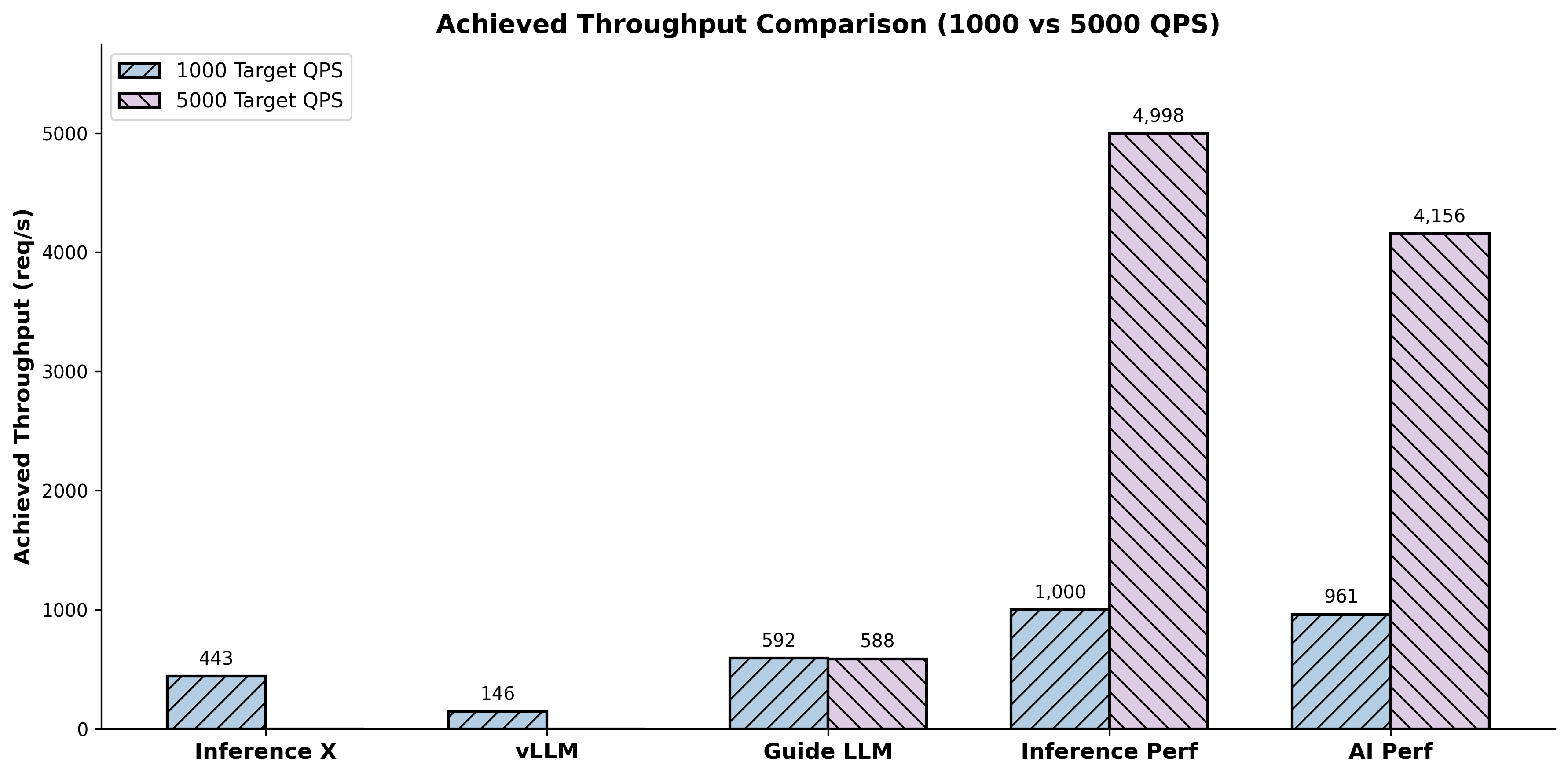
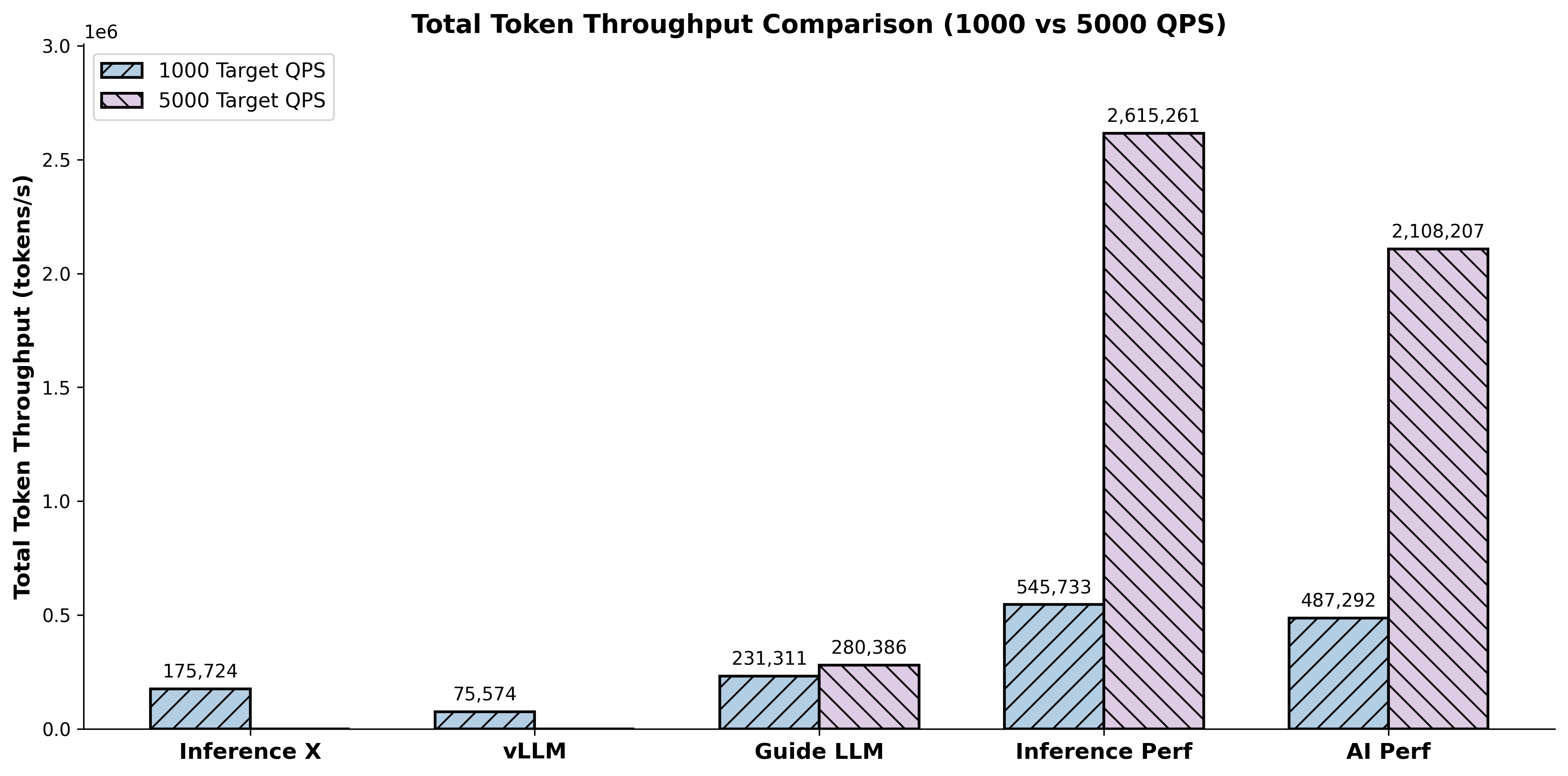
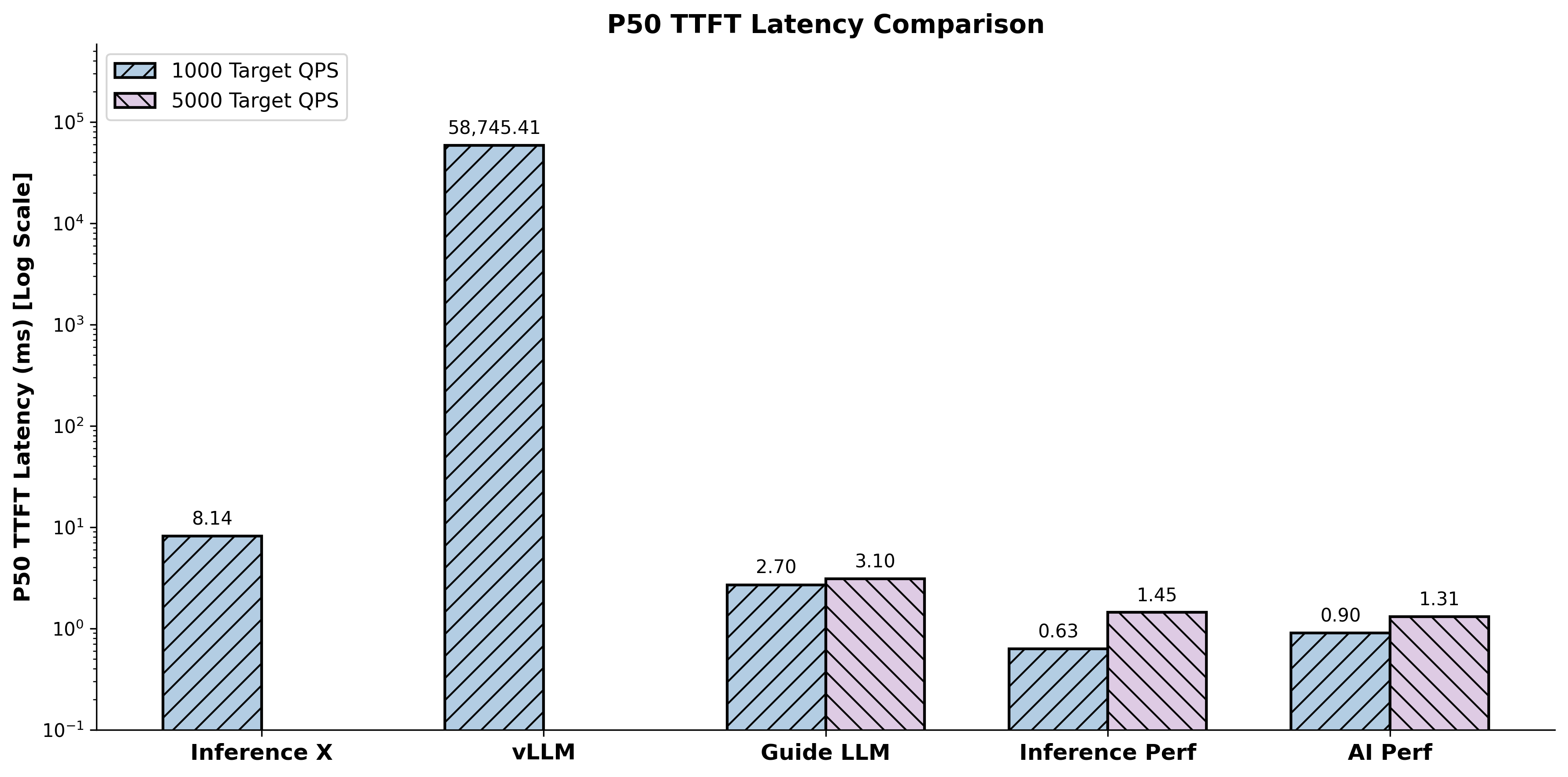
Figure 1: Throughput measured in QPS, illustrating catastrophic rate failures in single-process tools as concurrency escalates beyond 1,000 QPS.
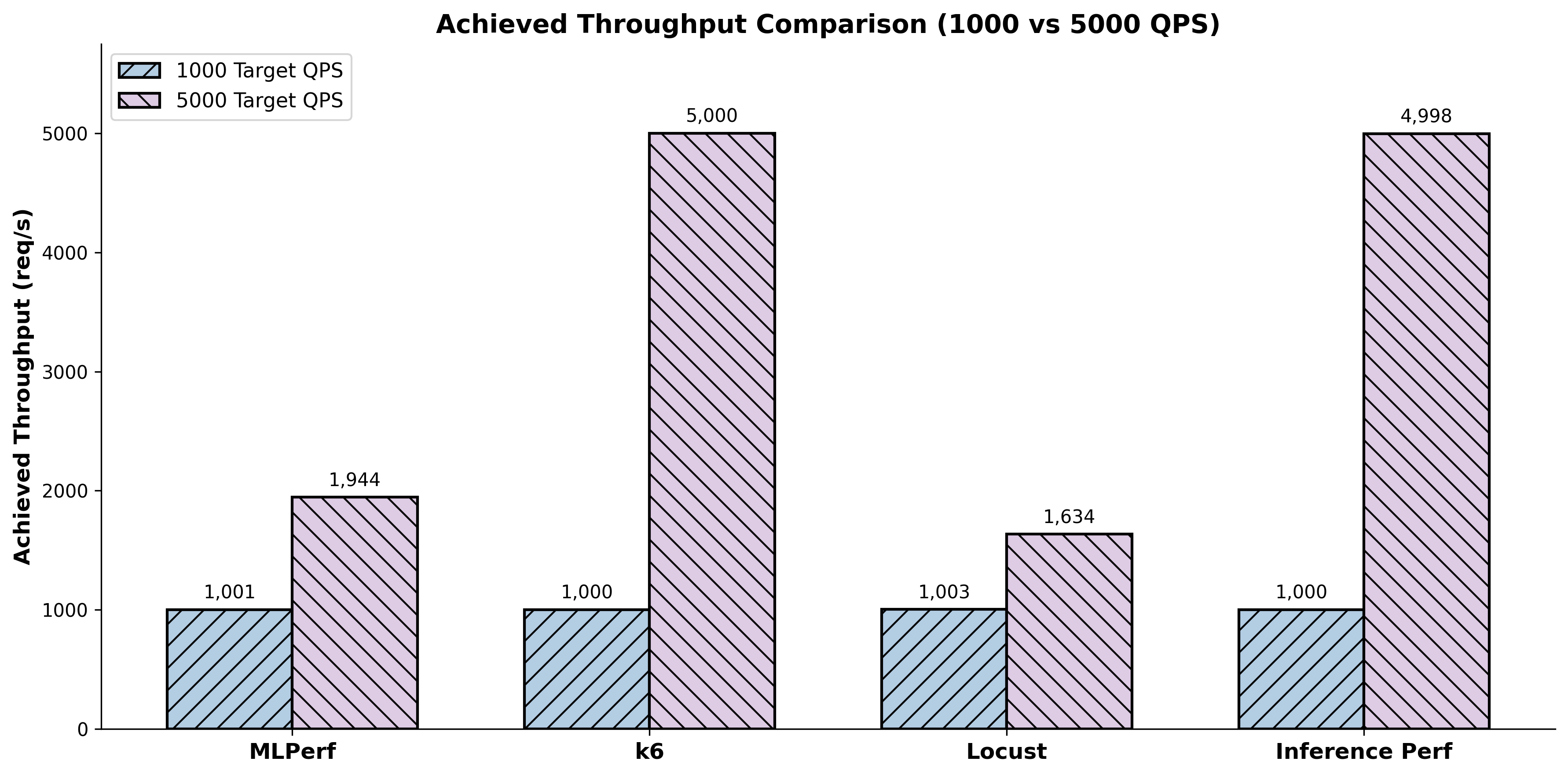
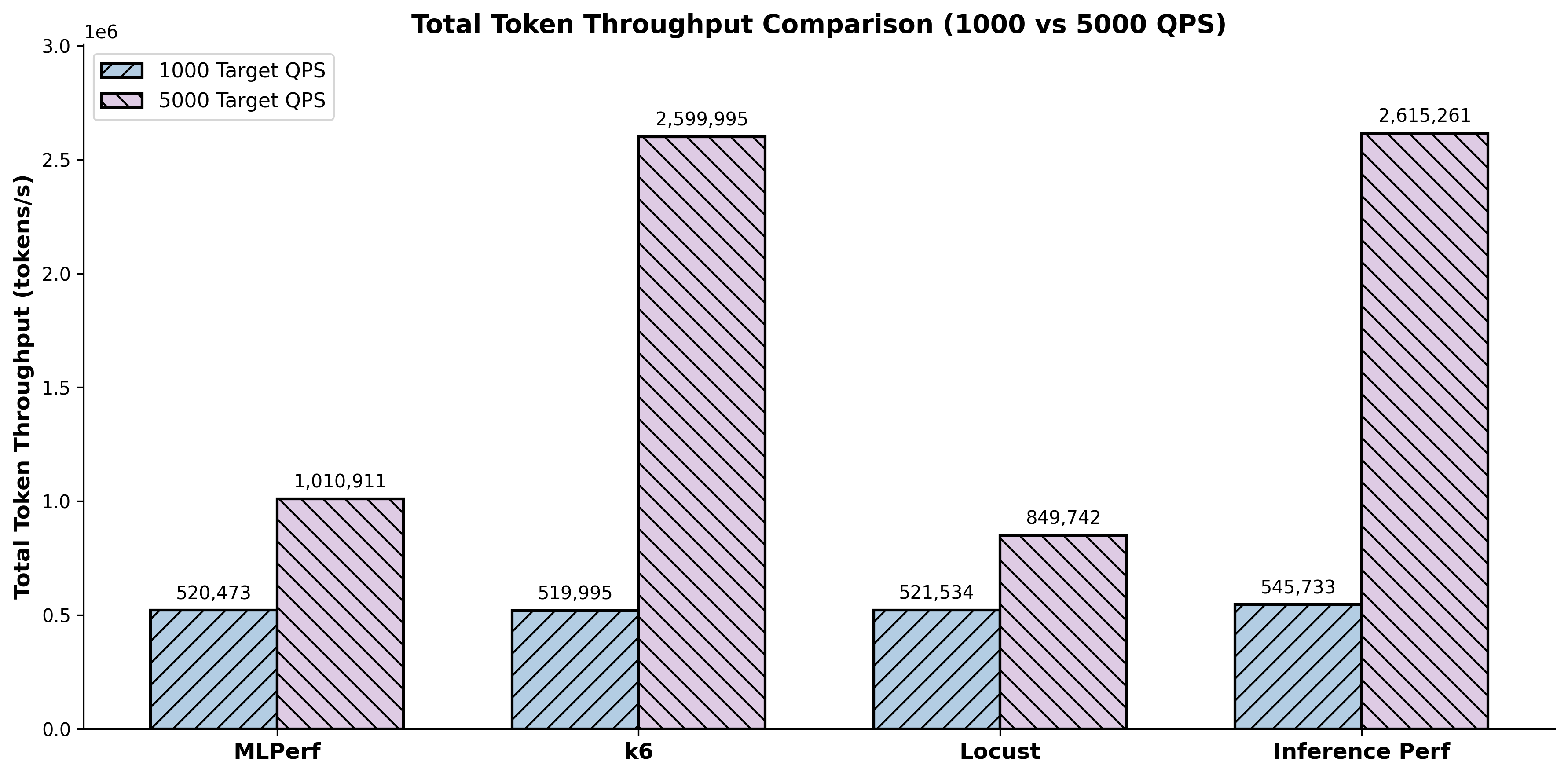
Figure 2: Token throughput measured at scale, demonstrating 7x–24x measurement capacity advantages for distributed multi-process benchmarking.
By empirical evaluation against a computationally trivial inference simulator, it is shown that single-process tools saturate well below their requested QPS, with observed throughput dropping by orders of magnitude and latency overheads reaching tens of seconds due solely to client-side constraints. Multi-process approaches, such as Inference Perf, sustain load fidelity up to thousands of QPS, validating the architectural necessity of distributed execution.
Latency Profiling and Saturation Detection
The evaluation of LLM inference systems requires comprehensive latency profiles, exposing the entire throughput-latency tradeoff as the system traverses from optimal operating conditions to saturation and eventual degradation.
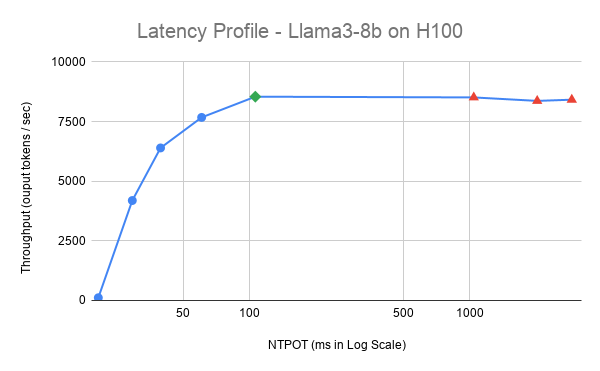
Figure 3: Latency profile illustration, delineating the ideal operating zone, saturation point, and post-saturation regimes impacting SLO compliance.
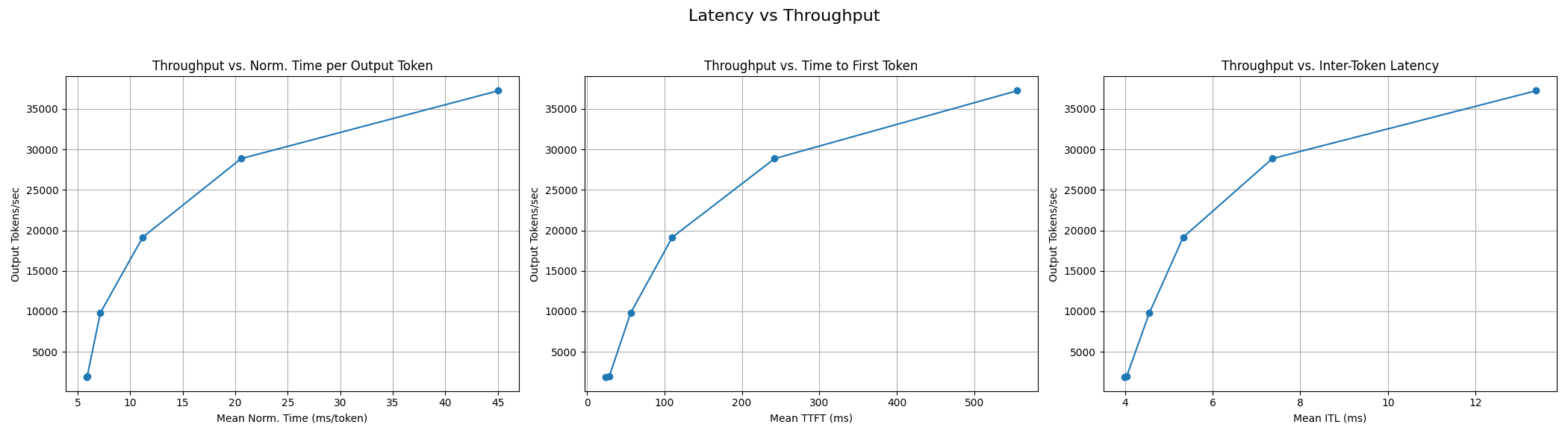
Figure 4: Throughput versus latency profile for the Gemma-3-1b-it model on 8xH100 GPUs, capturing saturation dynamics.
Static, single-point measurement methods ignore the nonlinear queuing penalties incurred near hardware saturation, undermining architectural optimization. The paper introduces Normalized Time Per Output Token (NTPOT): NTPOTi=NiLi
where Li is end-to-end latency and Ni the total number of output tokens. NTPOT robustly amortizes queue contention, prefill penalties, and decoding latencies, enabling cross-model and cross-dataset comparisons, particularly relevant for production workloads with diverse prompt and output profiles.
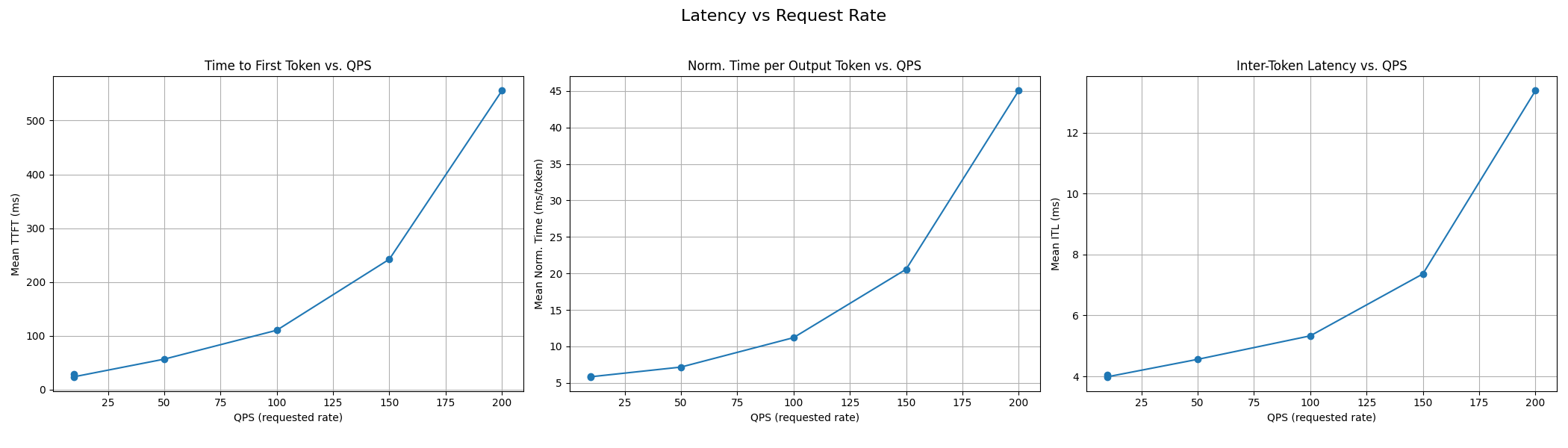
Figure 5: Latency vs QPS chart showing how NTPOT normalizes latency growth and reveals saturation onset independent from raw sequence lengths.
Confounding Variables and Reproducibility Anti-Patterns
The paper extensively documents factors that confound reproducibility and benchmarking validity:
- Client-Side Utilization Constraints: Single-process tools fail to hit requested QPS, with inflated latencies due to GIL-induced event loop saturation.
- Concurrency-based Load Generation: Defining load via thread count masks failure to reach true target QPS and artificially smooths latency profiles.
- Sampling Parameter Variance: Adjusting parameters such as temperature changes the arithmetic intensity of decoding, causing up to 21% throughput variance even with identical hardware.
- Prompt Dataset Handling: Variations in prompt processing (truncation, randomization) across tools can induce up to 50% discrepancies in token counts, severely impairing cross-tool comparability.
- Prefix Caching: Server-side caching optimizations are often unreported or inconsistently enforced, introducing variance in TTFT and NTPOT measurements.
Distributed, Multi-Process Evaluation Framework
To eliminate systemic bias, the authors present a distributed evaluation framework with rigorously partitioned multi-process load generation. Each process makes use of asyncio coroutines but operates well below its individual CPU utilization threshold, thus averting event loop saturation. The architecture (Figure 6) allows parameterized orchestration across available vCPUs, ensuring strict adherence to target QPS, preserving scheduling precision, and dispatch throughput.
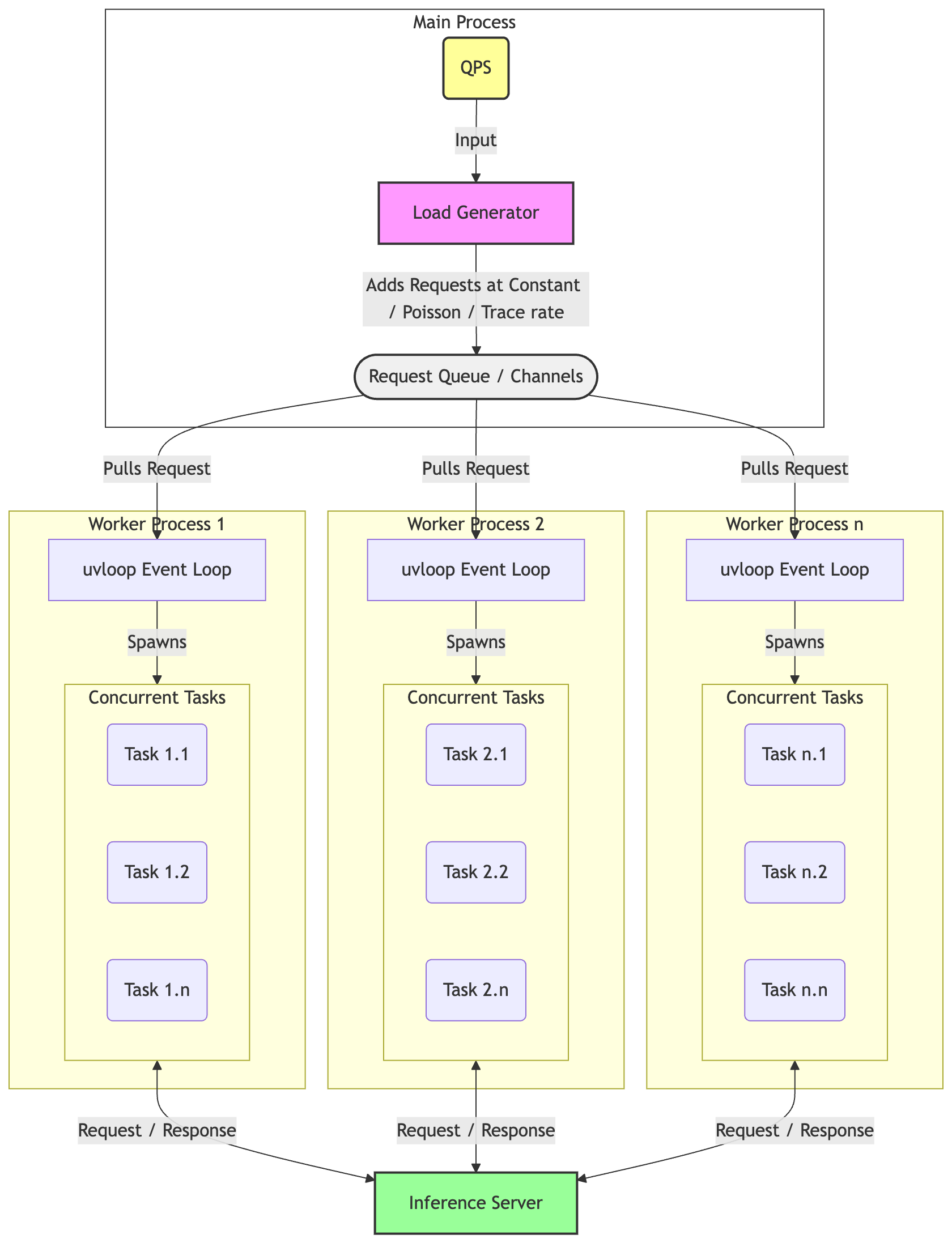
Figure 6: Multi-process request workflow depicting load distribution via a main orchestration process and n worker processes, overcoming single-process limitations.
The framework supports modular regulation of concurrency, comprehensive metric reporting, configuration archiving for strict reproducibility, and vertical scaling beyond 10,000 QPS per node. Empirical results place the proposed system on par with Go-based load generators (Grafana k6) and superior to Python- or C++/Python hybrid solutions such as Locust and MLPerf under extreme concurrency.
Empirical Outcomes and Numerical Highlights
Quantitative results underscore the paper’s bold claims:
Production Engineering Implications and Future Directions
The architectural shift toward distributed benchmarking is vital for the empirical optimization of inference infrastructure. Accurate identification of hardware saturation points enables fine-tuning of resource allocation, traffic shaping, and batching strategies, directly impacting SLO-compliant service design. NTPOT offers a standardized metric for cross-model and cross-workload evaluation, critical in environments supporting heterogeneous deployments and retrieval-augmented generation.
Critical future directions include:
- Multi-node Distributed Load Generation: Scaling benchmarks to >100,000 QPS will necessitate horizontally coordinated, clock-synchronized frameworks capable of evaluating multi-datacenter deployments.
- Prefix Caching Isolation: Standardizing datasets to enforce precise cache hit ratios allows mathematical assessment of serving engine optimization.
- Non-Uniform Traffic Distribution Modeling: Incorporation of heavy-tailed arrival distributions and bursty workloads will enhance resilience testing under real-world chatbot traffic dynamics.
Conclusion
This study analytically exposes fundamental measurement bias in incumbent LLM inference benchmarking tools—bias that renders production-side latency profiles unreliable and throughput metrics misleading. By rigorously modeling client-side evaluation as a queuing system and validating the multi-process distributed benchmarking framework, the paper operationalizes robust, reproducible metrics and profiles. The adoption of Normalized Time Per Output Token further enables unified latency accounting across complex inference pipelines. These advancements establish the methodological foundation required for evaluating and optimizing AI infrastructure in real-world, high-concurrency environments.