- The paper demonstrates that SPEC CPU2026 broadens microarchitectural stress profiles, with L1I miss rates increasing by 2.53× over CPU17.
- The paper employs PCA-based clustering and case studies to identify representative subsets that retain up to 99.9% of behavioral diversity.
- The study benchmarks CPU26 against DCPerf and MLPerf, revealing distinct sensitivities to compiler, allocator, and ISA variations in modern workloads.
SPEC CPU2026: Microarchitectural Characterization and Cross-Suite Positioning
Introduction and Motivation
The paper "SPEC CPU2026: Characterization, Representativeness, and Cross-Suite Comparison" (2605.03713) addresses the need for precise CPU benchmarking in an era where accelerator-centric architectures dominate many ML workloads, yet CPUs remain critical in orchestrating and efficiently running datacenter services. The work presents a comprehensive, cross-ISA, cross-platform analysis of the SPEC CPU2026 (CPU26) suite, unpacking its behavioral coverage versus SPEC CPU17 (CPU17), as well as its position relative to production-representative suites such as DCPerf and MLPerf. Through quantitative studies, clustering-based representativeness analyses, and system case studies, the authors deliver substantive evidence on how CPU26 broadens coverage of modern CPU bottlenecks, identifies redundancy, and supports practical, realistic architectural evaluation.
Behavioral Expansion and Microarchitectural Stress in CPU26
SPEC CPU26 is intentionally designed with substantial divergence from CPU17 and previous generations, retaining only 3 legacy integer and 6 floating-point programs, while introducing 29 new, domain-relevant workloads across compiler toolchains, simulation, cryptography, and modern services. The suite's rate and speed categories present higher instruction counts (up to 17.9× increase in INT speed), significantly increasing simulation and evaluation complexity.
Microarchitecturally, CPU26 expands pressure regions essential for modern CPUs, as evidenced by higher L1 instruction cache (L1I) and translation lookaside buffer (TLB) miss rates, increased dynamic instruction volume, and a shift in bottleneck sensitivity.
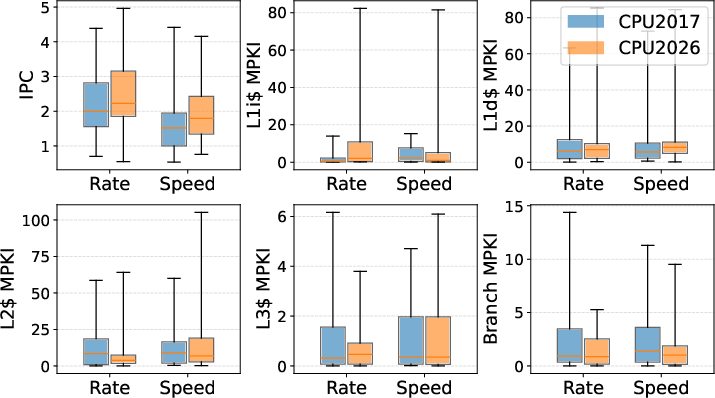
Figure 1: Key performance metric comparison between SPEC CPU26 and CPU17. SPEC CPU26 broadens L1I\$ miss coverage.
As shown above, CPU26 grows L1I MPKI by 2.53× over CPU17, with similar expansions in data-side TLB MPKI. Importantly, branch miss rates are reduced in CPU26, a direct result of eliminating pathological outliers (e.g., 505.mcf_r).
Redundancy Analysis and Representative Subset Identification
The authors apply PCA-based dimensionality reduction followed by hierarchical clustering to quantify behavioral similarity and select minimally redundant subset representatives for each suite category.
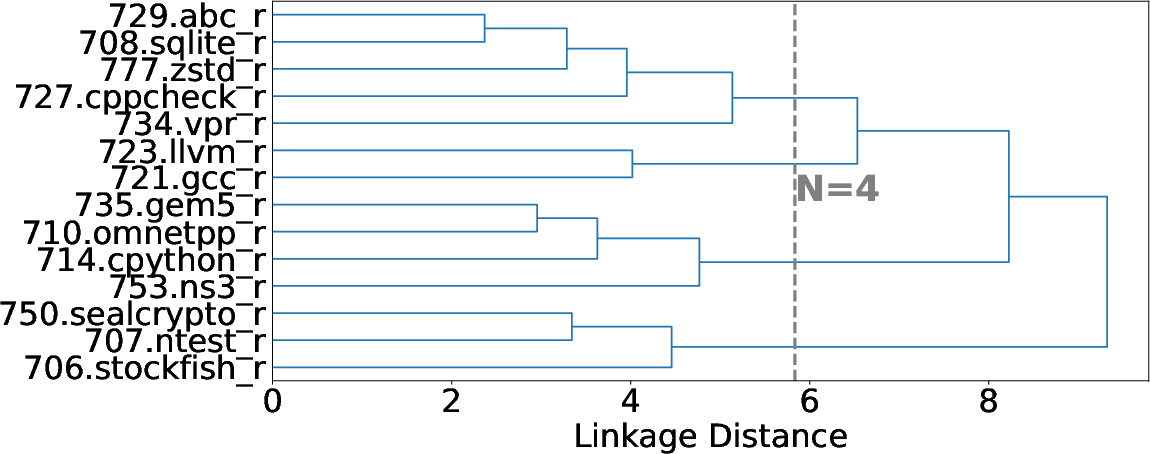
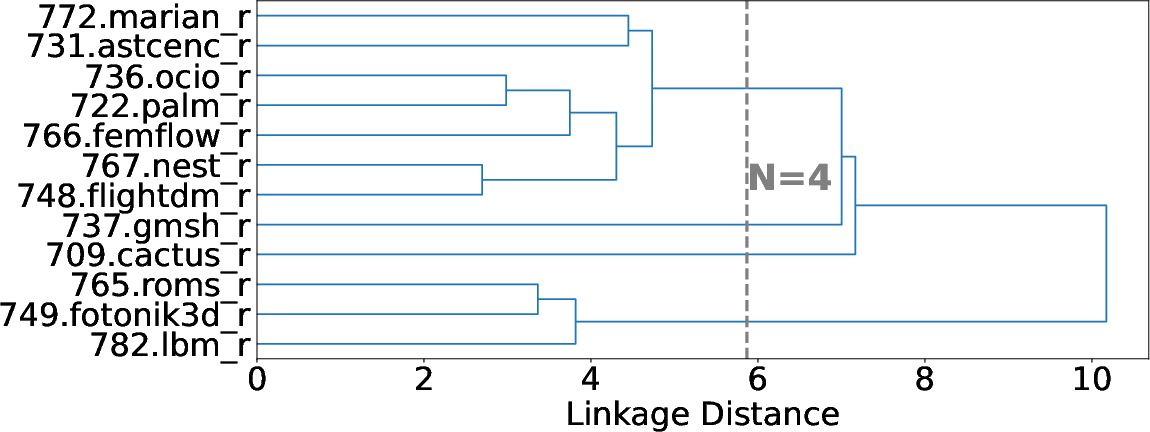
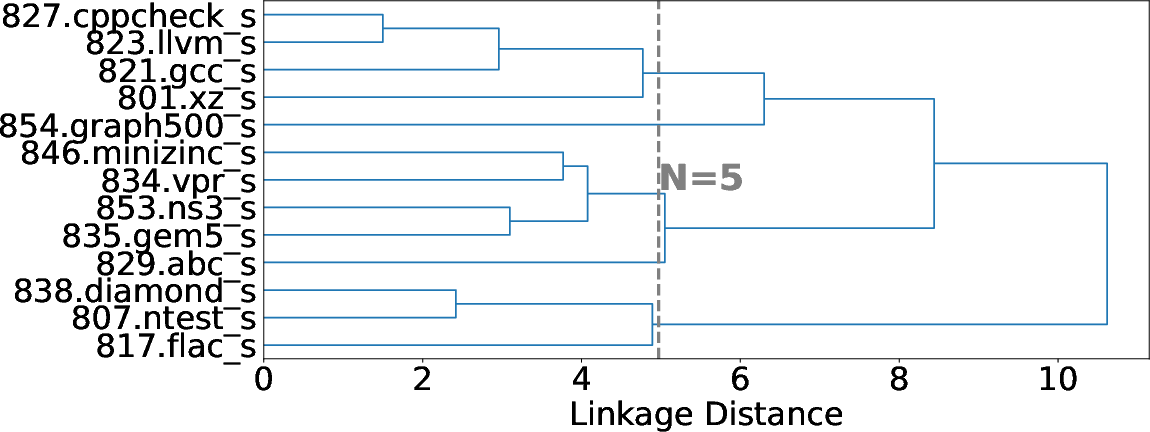
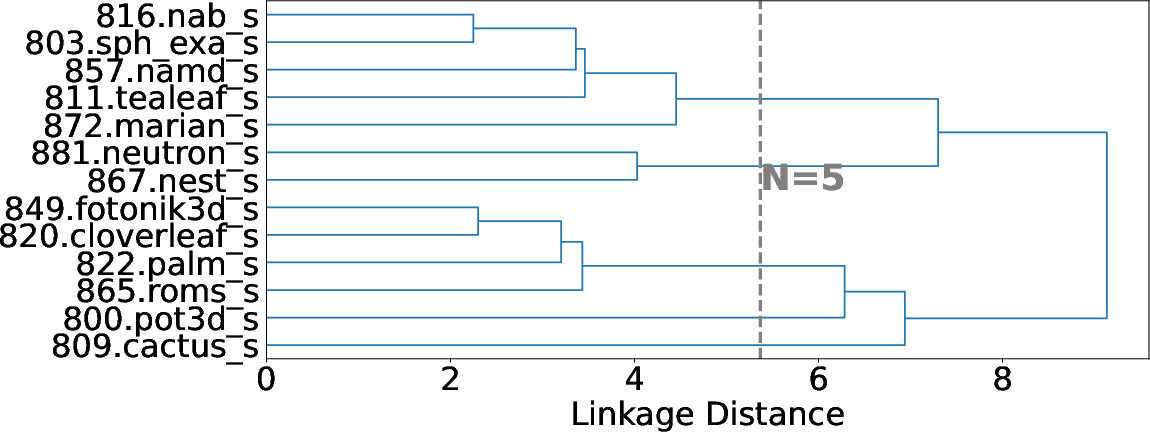
Figure 2: Dendrogram showing similarity between SPEC CPU26 workloads; shorter linkage distance indicates higher similarity.
Cutting the dendrogram at an empirically justified distance, the authors select representative workload subsets which retain 96.4–99.9% of the full-suite behavioral diversity, according to performance fidelity measured on geometric-mean scores. This enables rigorous design-space exploration at a fraction of the simulation or emulation cost.
Cross-Suite Comparison: CPU26, CPU17, DCPerf, MLPerf
A multi-dimensional PCA is used to embed benchmarks from CPU17, CPU26, DCPerf, and MLPerf suites, producing clear separation between general-purpose (SPEC) and production/ML-oriented (DCPerf, MLPerf) workloads.
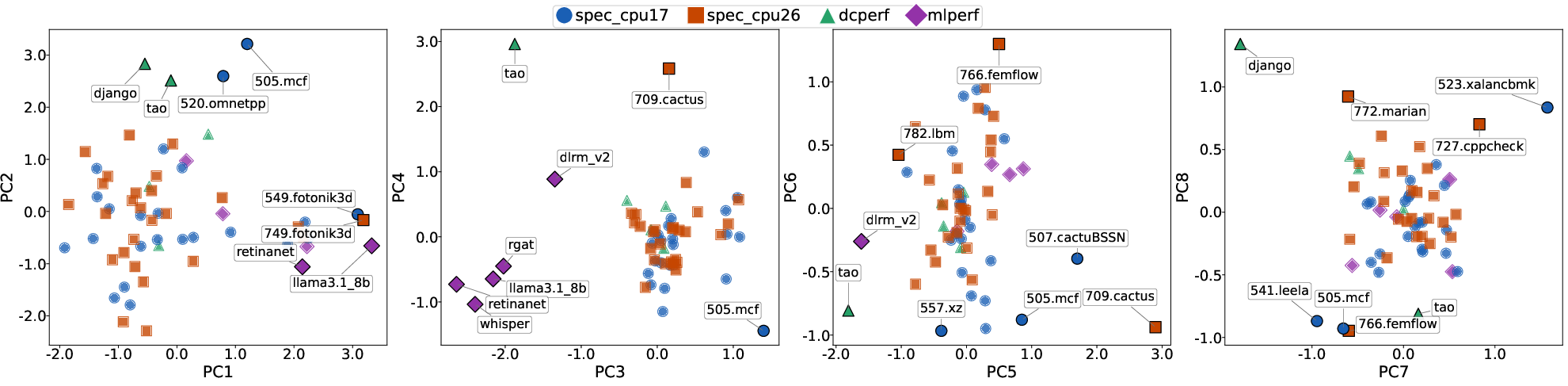
Figure 3: Principal Component analysis of SPEC CPU17, CPU26, DCPerf, and MLPerf reveals separation in behavioral space and clarifies suite outliers and unique workloads.
CPU26 prunes the pathological outliers from CPU17 (e.g., 505.mcf_r), resulting in more stable and representative coverage. MLPerf is segregated by its elevated vector operation fraction and memory bandwidth requirements (PC3 axis), DCPerf is identified by pronounced frontend (L1I, iTLB) pressure, while CPU26 is shown to move toward but not subsume these production-oriented stress profiles.
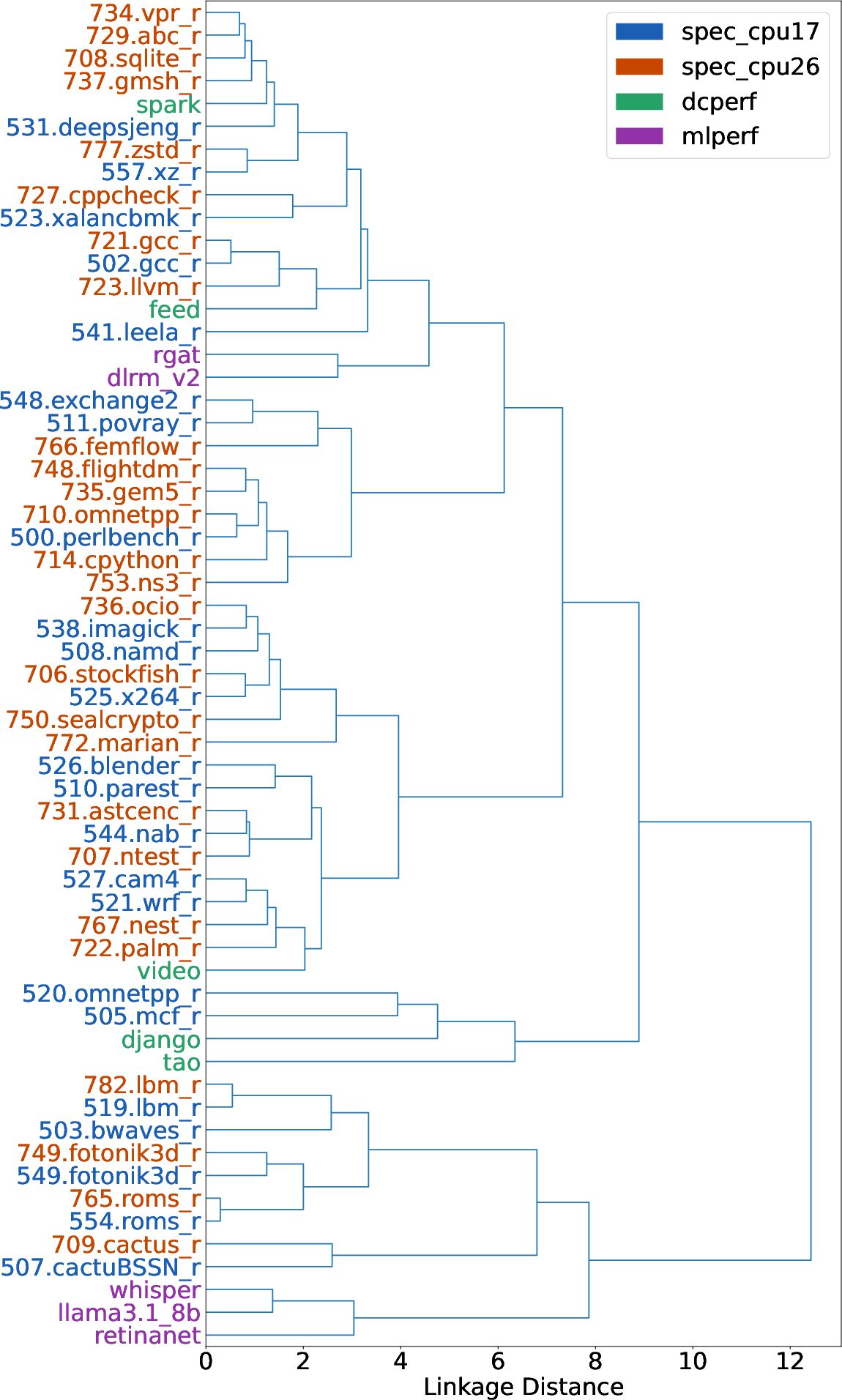
Figure 4: DCPerf and MLPerf exhibit microarchitectural behaviors distinct from SPEC CPU suites, as evidenced by clustering distance.
This manifests quantitatively: vector instruction ratio in MLPerf is nearly 30%, orders of magnitude above SPEC. CPU26 INT increases L1I MPKI 2.53× over CPU17, but DCPerf workloads push L1I and frontend metrics substantially higher. Still, CPU26 closes the gap in instruction footprint, memory usage, and translation complexity relative to CPU17.
System Configuration and Architectural Case Studies
The suite's practical value is demonstrated in several architectural studies:
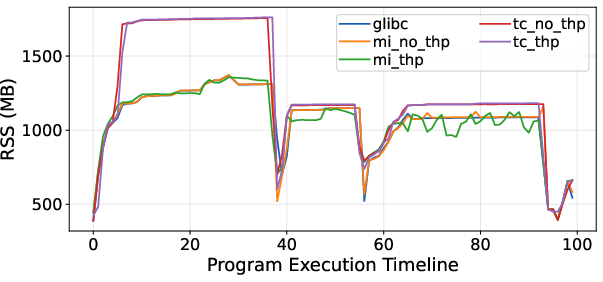
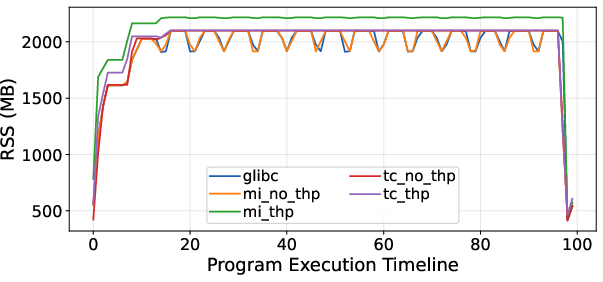
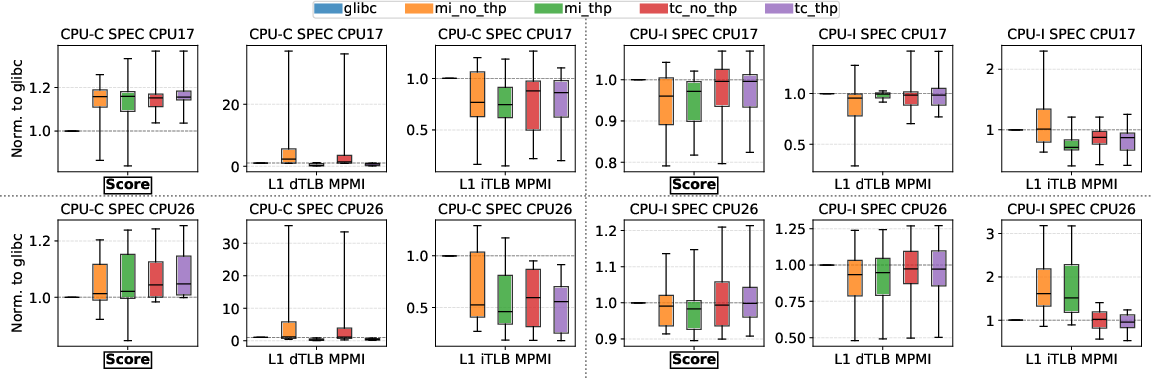
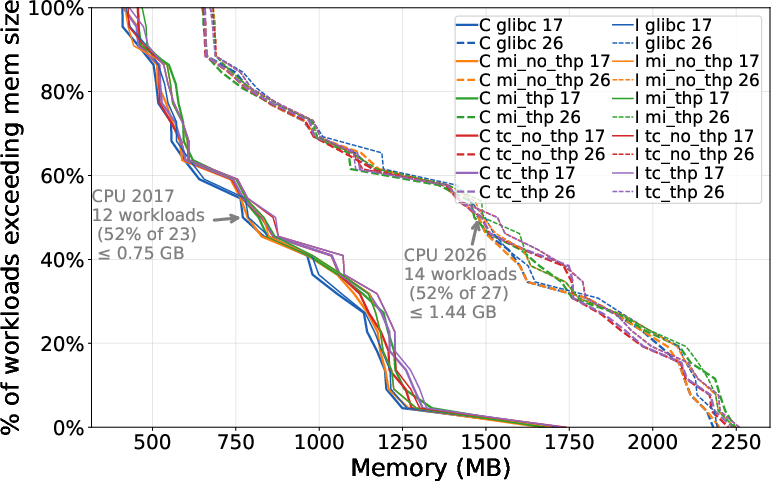
Figure 6: Suite-level working set size is similar across platforms, but allocator choice significantly alters per-workload memory residency.
- Prefetching: CPU26 exhibits higher average IPC gains (1.15×) from prefetcher activation than CPU17, demonstrating more robust exposure of bandwidth-mitigated latency.
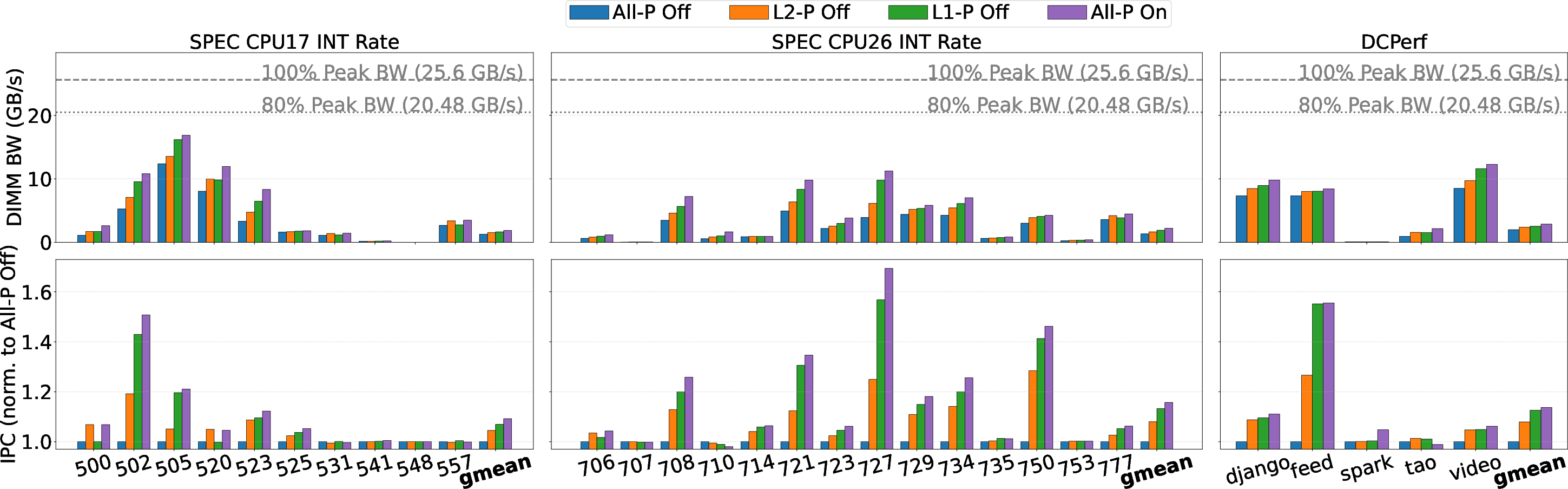
Figure 7: SPEC CPU26 achieves higher IPC via improved DIMM bandwidth utilization under aggressive prefetching compared to CPU17.
- Compiler Sensitivity: Modern compiler generations (e.g., gcc-13 vs. gcc-15) deliver larger performance variation on CPU26 than on CPU17, primarily because compiler optimizations yield deeper reductions in instruction count.

Figure 8: SPEC CPU26 shows greater cross-compiler performance sensitivity (normalized to gcc-13) than CPU17, due to higher instruction reduction.

Figure 9: Per-workload instruction count changes reveal pronounced compiler sensitivity in CPU26, especially on workloads such as 706.stockfish_r.
- Cross-ISA Variation: CPU26 demonstrates increased variance in retired instructions across x86_64 and AArch64 platforms, thus more effectively exposing ISA sensitivity than CPU17.

Figure 10: CPU26 shows broader cross-ISA instruction count spread compared to CPU17, indicating higher architectural sensitivity.
- Scalability/SoC Interconnect Characterization: With 22 scalable Speed workloads, CPU26 sustains higher score scaling at 40 threads versus CPU17; however, monolithic die designs show advantages for synchronization-intensive SPEC17 workloads.
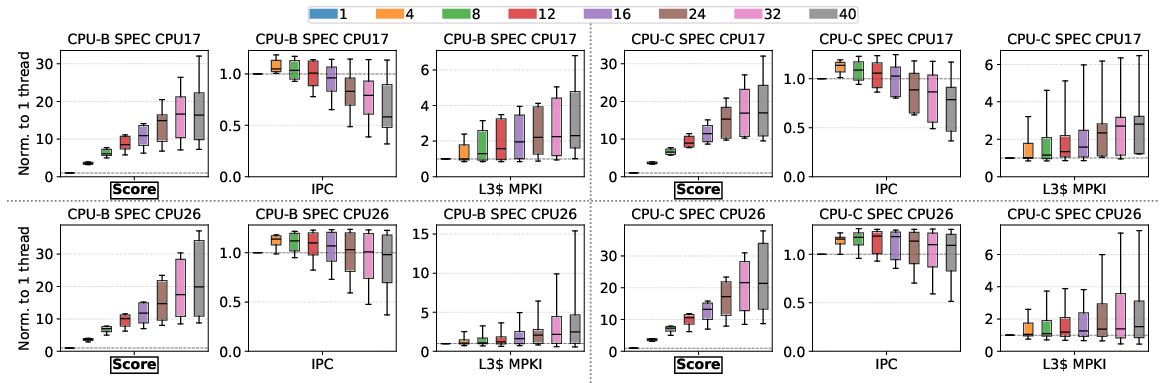
Figure 11: On 40-core platforms, CPU26 shows improved scalability, but CPU17 more frequently highlights communication-bound (monolithic-favoring) cases.
- Proxy Design via RRR Mode: By mixing complementary workloads using round-robin staggered runs, CPU26 can be configured to approximate datacenter profiles (e.g., matching DCPerf IPC to within 13.7%).
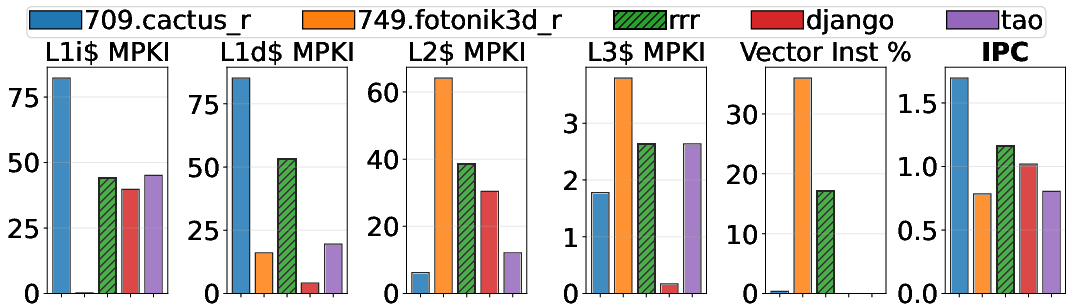
Figure 12: RRR mode allows synthesizing IPC/cache pressure profiles that closely approximate DCPerf behavior using carefully selected CPU26 workloads.
Implications, Limitations, and Theoretical Outlook
This paper demonstrates that while accelerators continue to transform the AI workload landscape, general-purpose CPU evaluation remains non-trivial and must co-evolve with emerging bottlenecks—particularly frontend pressure, translation overhead, and working set growth. CPU26 marks a substantive advance in targeting these stress points while maintaining general-purpose applicability, offering a practical basis for cross-platform, ISA, and compiler research, as well as simulation subsampling via behavioral clustering.
Strong numerical claims underline this, such as 4–5 member subsets attaining 96.4–99.9% suite coverage and demonstrably increased platform/compiler/allocator sensitivity. Importantly, CPU26 does not function as a superset of datacenter or ML-depth suites—DCPerf and MLPerf maintain extreme domain-specific behaviors in L1I, L2, and vector operations beyond the reach of general-purpose workloads.
The work supports the perspective that robust CPU research must leverage both broad coverage (as in CPU26) and production-grounded, domain-focused benchmark suites to correctly position microarchitectural innovation. As real-world cloud AI deployments increase CPU-accelerator orchestration demands, future benchmarking efforts will need to further fuse cross-suite, multi-mode, and heterogeneity-aware evaluation approaches.
Conclusion
SPEC CPU2026 provides an expanded, modernized, and analytically justified platform for rigorous CPU benchmarking. By systematically characterizing behavioral coverage across nine platforms, analyzing redundancy, and positioning the suite relative to domain-driven workloads, the paper establishes CPU26 as an effective, representative evaluation foundation. The suite's ability to expose allocator, compiler, ISA, prefetch, and scaling sensitivities enables robust architectural analysis, while case studies on proxy workload design illustrate extensibility into heterogeneous and production-mimicking evaluations. Ongoing progress in workload composition and hybrid benchmarking (blending CPU26 with DCPerf/MLPerf or similar) will be essential for holistic system design and optimization in future AI-centric datacenter environments.