Wigner functions, negativity volumes, and experimental generation of Pegg-Barnett phase-operator eigenstates
Published 25 Apr 2026 in quant-ph | (2604.23086v1)
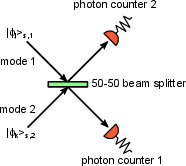
Abstract: In this paper, we study the non-Gaussianity of the eigenstates of the Pegg-Barnett phase observable. By computing the Wigner functions of the eigenstates, we confirm that they take negative values in specific regions of the phase space. The Pegg-Barnett phase-operator eigenstates lie on a finite-dimensional Hilbert space. Thus, we examine how their negativity volumes depend on the dimension of the Hilbert space. Moreover, we present a quantum-optical circuit that generates these eigenstates and identify single-photon detection as the origin of their non-Gaussianity. To investigate a more realistic experimental implementation, we introduce imperfect single-photon detectors with non-unit efficiency into the circuit and evaluate the dependence of the detection probability, the output-ideal fidelity, and the negativity volume of the approximate eigenstate output from the circuit on the detector efficiency. Finally, as a practical application, we consider a phase-estimation experiment of an arbitrary unknown state by injecting both the unknown state and a known Pegg-Barnett eigenstate into a 50-50 beam splitter and individually counting the numbers of photons emitted from its two output ports.
The paper demonstrates that Pegg-Barnett eigenstates exhibit pronounced non-Gaussianity, evidenced by diverging negativity volumes in their Wigner functions.
It outlines a quantum-optical circuit using multi-mode squeezed vacuum, beam splitters, and single-photon detection to generate these states under experimental constraints.
The study highlights practical challenges in scaling Hilbert space dimensions, impacting both phase estimation protocols and the fidelity of generated states with imperfect detectors.
Wigner Functions, Negativity Volumes, and Experimental Generation of Pegg-Barnett Phase-Operator Eigenstates
Summary and Context
This work systematically investigates the non-Gaussian properties of eigenstates associated with the Pegg-Barnett (PB) phase operator, defined within finite-dimensional Hilbert spaces. The analysis centers on the Wigner functions of these states, the quantification of their non-Gaussianity via negativity volumes, and practical considerations regarding their quantum-optical generation, including the role of imperfect photon detection. Furthermore, the study explores their applicability in quantum phase measurement protocols.
Definition and Properties of Pegg-Barnett Phase-Operator Eigenstates
The Pegg-Barnett phase operator, constructed in a (s+1)-dimensional Hilbert space, resolves foundational difficulties in quantum phase observables for photonic systems by defining phase states as equally-weighted superpositions of photon-number (Fock) states:
∣ϕm⟩s=s+11n=0∑seinϕm∣n⟩
with ϕm determined by equal spacing over the interval [0,2π). These states serve as approximate analogs to ideal phase-defined states, which are unattainable due to the absence of Hermitian phase operators in infinite-dimensional settings.
Wigner Function Analysis and Scaling
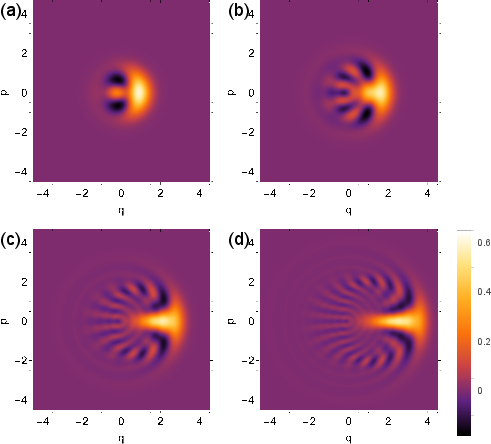
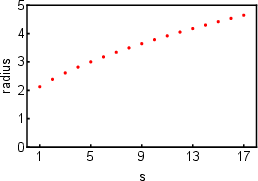
The Wigner function, computed for PB eigenstates, reveals interference-like patterns with regions of negativity, confirming pronounced non-Gaussianity. As the Hilbert space dimension s increases, these patterns become increasingly fine-grained, and both the spatial radius of the non-zero regions and the negativity volume markedly increase, indicating more pronounced non-classicality.
Figure 1: Two-dimensional plots of the Wigner functions W(q,p;s,0) for the states ∣ϕ0⟩s in the q-p plane, illustrating increasing complexity and spatial extent with increasing s.
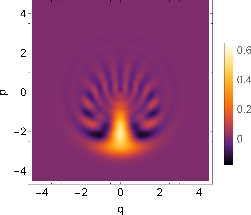
Figure 2: Two-dimensional plot of ∣ϕm⟩s=s+11n=0∑seinϕm∣n⟩0 for the state ∣ϕm⟩s=s+11n=0∑seinϕm∣n⟩1, with the Wigner function pattern rotating as the phase increases.
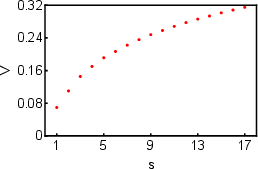
Numerical results demonstrate that the negativity volume diverges in the large-∣ϕm⟩s=s+11n=0∑seinϕm∣n⟩2 limit, and the spatial support of the Wigner function expands correspondingly.
Figure 3: Plot of negativity volume ∣ϕm⟩s=s+11n=0∑seinϕm∣n⟩3 versus Hilbert space dimension ∣ϕm⟩s=s+11n=0∑seinϕm∣n⟩4, showing monotonic growth with ∣ϕm⟩s=s+11n=0∑seinϕm∣n⟩5.
Figure 4: Radius of ∣ϕm⟩s=s+11n=0∑seinϕm∣n⟩6 as a function of ∣ϕm⟩s=s+11n=0∑seinϕm∣n⟩7, revealing monotonic expansion as dimensionality increases.
This scaling underlines the difficulty in physically generating eigenstates with sharply-defined phase in large-dimensional spaces.
Quantum-Optical Generation and Experimental Constraints
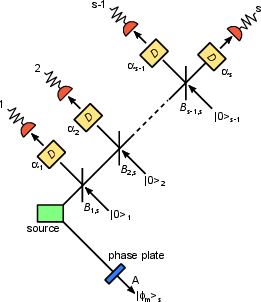
The paper details a quantum-optical circuit for the approximate generation of PB phase-operator eigenstates, leveraging multi-mode squeezed vacuum, sequential beam splitters, displacement operations, and projective single-photon detection. The single-photon detection constitutes the primary source of non-Gaussianity, as all other elements (linear optics, phase plates) are Gaussian-preserving.
Figure 5: Schematic illustration of the circuit for approximate generation of ∣ϕm⟩s=s+11n=0∑seinϕm∣n⟩8, highlighting the process flow from squeezed vacuum to single-photon detection and phase modulation.
Inclusion of realistic, imperfect single-photon detectors introduces critical dependencies:
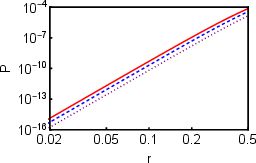
The probability ∣ϕm⟩s=s+11n=0∑seinϕm∣n⟩9 for simultaneous "click" events on all detectors decreases rapidly, scaling as ϕm0 for squeezing parameter ϕm1 and dimensionality ϕm2, thus becoming vanishingly small for large ϕm3.
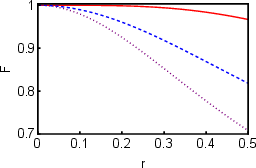
The fidelityϕm4 between the post-selected output and the ideal PB eigenstate is strongly dependent on detector efficiency ϕm5.
Figure 6: Probability ϕm6 for all four imperfect detectors clicking, as a function of squeezing ϕm7, weakly dependent on efficiency ϕm8.
Figure 7: Fidelity ϕm9 between output state and equal-amplitude superposition, showing strong sensitivity to [0,2π)0.
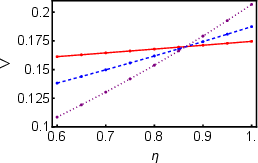
The negativity volume of the output state increases with detector efficiency, but exhibits a non-trivial dependence on [0,2π)1 for suboptimal [0,2π)2.
Figure 8: Negativity volume [0,2π)3 for the approximate state [0,2π)4 as a function of detector efficiency [0,2π)5, for multiple squeezing parameters.
Cumulatively, these results highlight severe practical challenges in generating PB eigenstates as [0,2π)6 grows, fundamentally restricting experimental phase-state preparation to low-dimensional spaces.
Phase Measurement Applications
The prepared PB eigenstates offer a robust reference for quantum phase estimation. The paper outlines a protocol in which an unknown state and a PB reference are interfered via a 50-50 beam splitter; photon-number statistics from the output ports enable estimation of unknown phase parameters.
Figure 9: Schematic of the phase-estimation experiment, facilitating estimation of unknown phase [0,2π)7 via reference beam interferometry.
A practical limitation arises: with increasing [0,2π)8, the number of distinct detection outcomes and associated probabilities becomes substantial, leading to significant resource overhead. The problem of efficient statistical extraction and phase inference is nontrivial, and optimizing such protocols represents an open challenge.
Theoretical and Practical Implications
The findings solidify the connection between quantum phase operator physics and non-Gaussian state engineering. The divergence of negativity volume as [0,2π)9 is consistent with the impossibility of constructing Hermitian phase operators in infinite-dimensional Hilbert spaces, corroborating theoretical expectations. Experimentally, the results underline the key bottlenecks arising from single-photon detection probability scaling and detector fidelity, which constrain phase-state synthesis to modest dimensions.
From a broader perspective, PB phase-operator eigenstates—with their uniquely defined phase and large photon-number variance—offer potential utility in precision quantum metrology, quantum state tomography, and foundational studies in quantum optics. However, practical implementation will require advances in photon detection and error mitigation strategies.
Conclusion
The comprehensive analysis affirms the non-Gaussian nature of PB phase-operator eigenstates and elucidates their scaling properties, experimental accessibility, and application limitations. The difficulties associated with non-Gaussian state generation and the rapidly vanishing success probability for large Hilbert space dimensions reflect deep theoretical constraints. Future progress necessitates the development of more efficient phase-estimation protocols and enhancements in photon detection technology to fully exploit PB phase states within quantum information processing and quantum metrology architectures.
“Emergent Mind helps me see which AI papers have caught fire online.”
Philip
Creator, AI Explained on YouTube
Sign up for free to explore the frontiers of research
Discover trending papers, chat with arXiv, and track the latest research shaping the future of science and technology.Discover trending papers, chat with arXiv, and more.