- The paper highlights that GSE supply chain limitations, particularly in copper and specialty materials, critically constrain the pace of power system expansion.
- It employs cohort-based Weibull modeling, BOM intensity profiling, and supply chain tracing to quantify both deployment and replacement dynamics.
- Scenario analysis shows that trade disruptions and rapid load growth exacerbate equipment shortages, emphasizing the need for coordinated industrial resilience.
Grid-Supporting Equipment Supply Chains as Constraints on Power System Expansion
Background and Motivation
Accelerated expansion of the power grid, driven by electrification in industry, transport, and especially the rapid scaling of AI-oriented data centers, is imposing unprecedented pressures on underlying infrastructure. This paper posits that Grid-Supporting Equipment (GSE)—encompassing transformers, converters, inverters, Power Conversion Systems (PCS), Uninterruptible Power Supplies (UPS), and EV charger PCS—is not a passive infrastructure layer but a deployability bottleneck, whose manufacturability is explicitly constrained by critical upstream supply chains and materials.
Conventional power system planning frameworks neglect GSE as an explicit constraint, frequently assuming that equipment can be deployed as needed. This abstraction mischaracterizes system feasibility, as recent evidence indicates significant lead-time escalations and supply gaps even in transformer procurement (Figure 1).
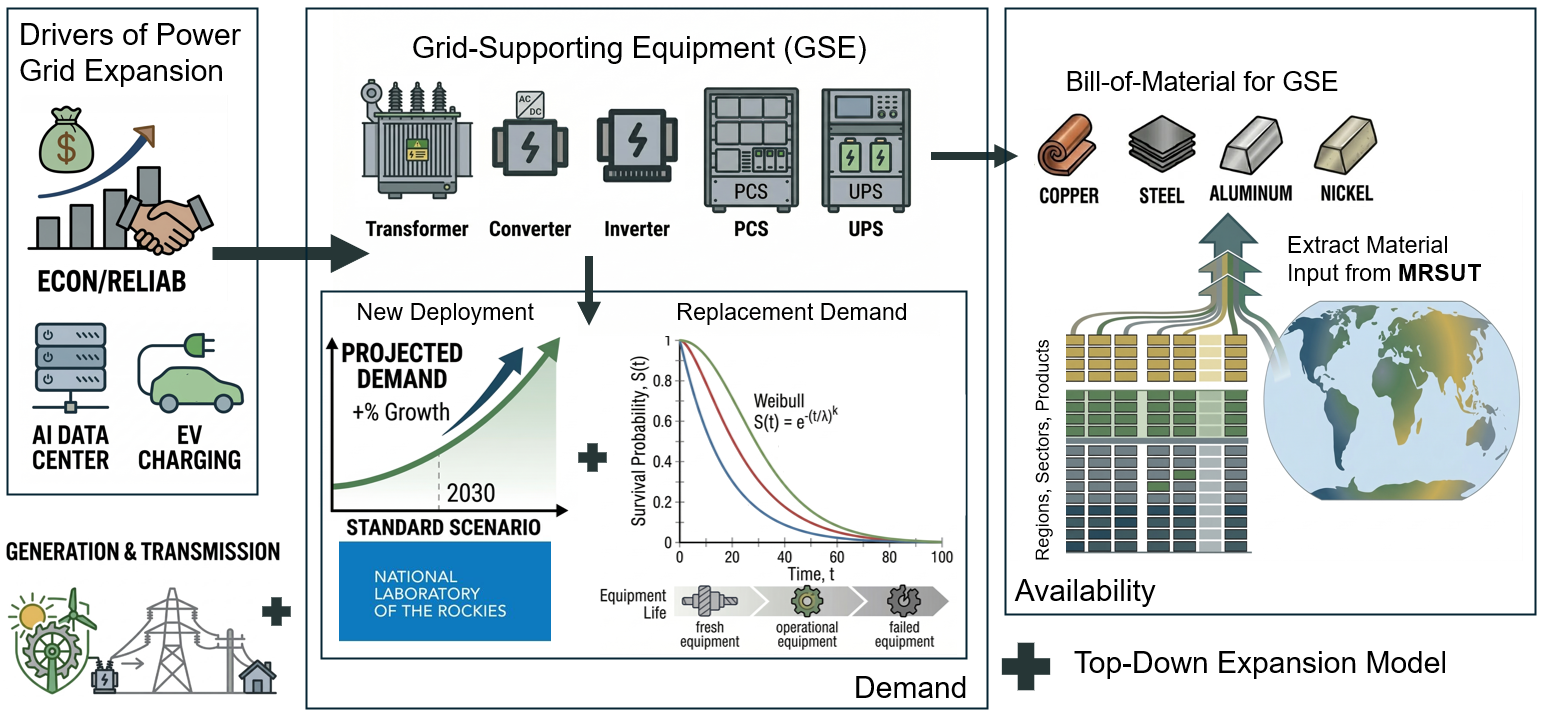
Figure 1: Conceptual depiction of intertwined grid expansion drivers, GSE demand, BOM translation, and upstream supply chain tracing forming the explicit top-down expansion constraint.
Integrated Methodological Framework
The authors integrate dynamic stock-flow modeling, BOM-based material accounting, Multi-Regional Supply-Use Table (MRSUT) tracing, and expansion optimization. Key technical advances include:
- Cohort-based Weibull survival modeling: GSE assets are modeled with equipment-specific lifetime distributions, quantifying both new deployment and replacement demand. Substantial heterogeneity is captured, with electronics-intensive GSE showing shorter mean lifespans relative to electromagnetic transformers (Figure 2).
- Bill-of-Materials (BOM) intensity profiling: Empirically harmonized BOMs are compiled across GSE classes, enabling conversion from electrical capacity units to physically grounded material requirements, distinguishing bulk (steel, copper, aluminum) and specialty (nickel, zinc, silver, manganese, silicon) dependencies (Figure 3).
- Supply chain embedding via EXIOBASE MRSUTs: Demand is traced through layered input-output relationships, exposing regional concentration and import reliance, crucial for scenario analysis of trade disruptions (Figure 4).
- Lexicographic expansion optimization: Deployable GSE is allocated according to a hierarchy that prioritizes grid-critical assets, proportionally forms functional equipment bundles, and exposes unmet demand as bottleneck indicators.
Quantification of Stock, Demand, and Replacement Dynamics
Historical and projected GSE deployments highlight two interacting dynamics:
- Transformer Dominance and Stock Turnover: Long-lived transformers, with broad age distributions, require substantially increasing replacement relative to new-build demand as the historical fleet matures. Demand-side scaling (e.g., data centers) further exacerbates transformer requirements (Figure 5).
- Rapid Proliferation of Power-Electronic GSE: Solar PV inverters, wind converters, battery PCS, data center UPS, and EV charger PCS are characterized by steep year-over-year growth post-2015, short lifetimes, and fast replacement cycles. Replacement-driven unmet demand emerges much sooner and is more volatile, amplifying exposure to deployment bottlenecks under pessimistic lifetime conditions (Figure 2).
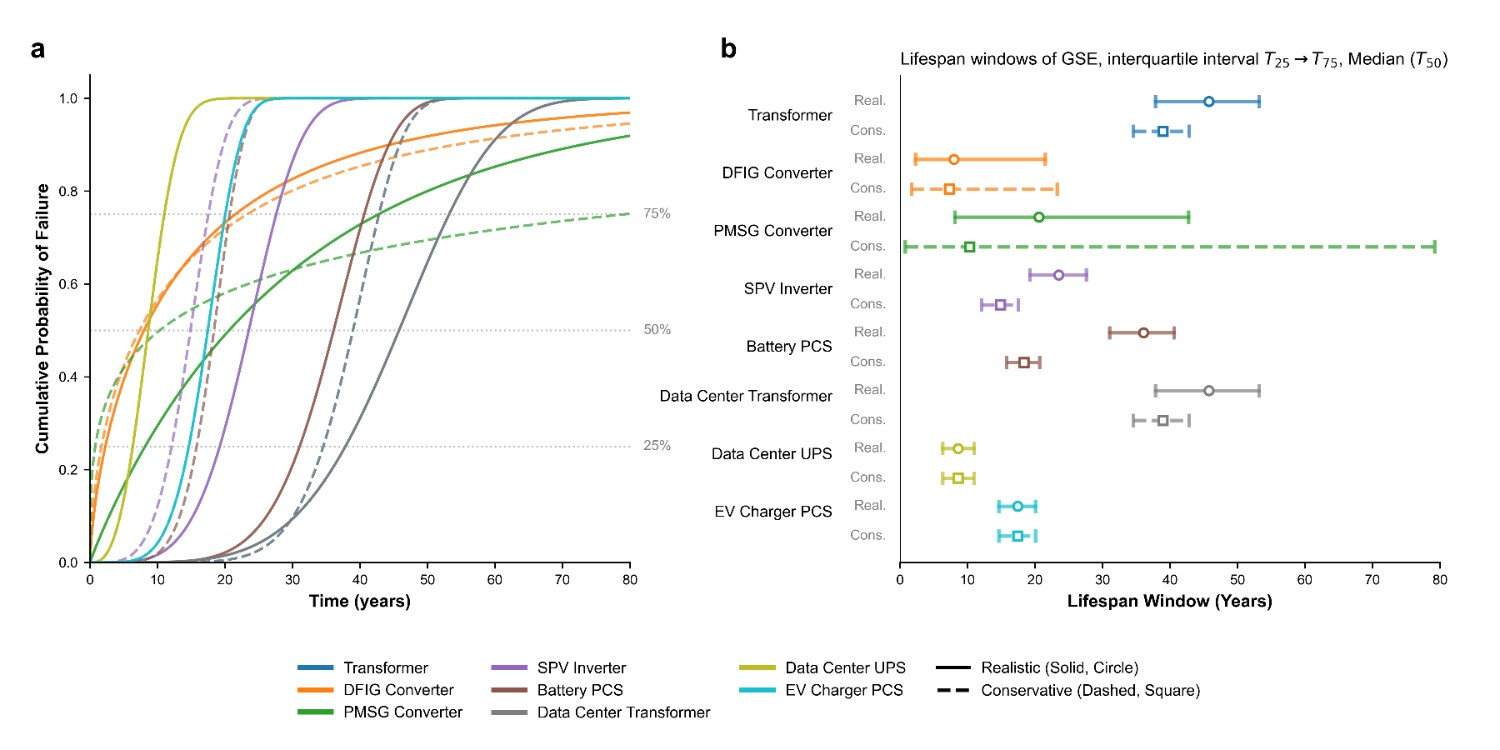
Figure 2: Weibull-distributed cumulative failure probability for GSE classes; electronics-centric GSE exhibit marked early-life replacement windows relative to transformer assets.
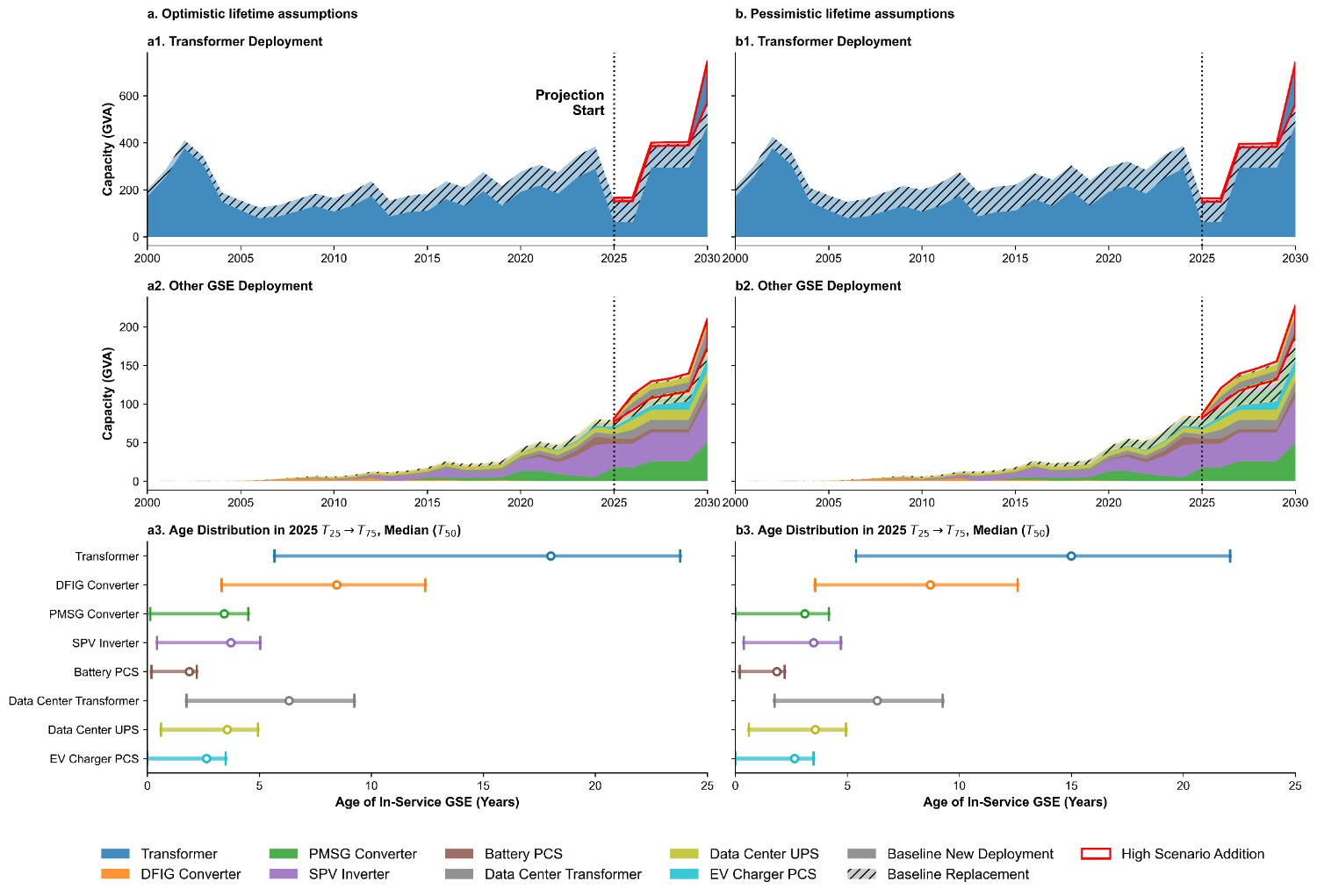
Figure 5: Age structure and capacity addition trajectories under optimistic and pessimistic lifetime assumptions; replacement demand overtakes new deployment in transformers by 2030.
BOM and Material Intensity Analysis
Material intensity factors per GSE unit are highly heterogeneous. Bulk transformers are steel-dominant (1030 kg/MVA), whereas data-center transformers exhibit much higher copper and aluminum intensities. PV inverters and wind converters demonstrate substantial cross-technology variance—PMSG converters are most copper-intensive, DFIG converters are aluminum-dominant, and battery PCS/EV charger PCS create broad-based demand across all three metals. Specialty materials, despite low total tonnage, serve non-substitutable functions in specific GSE architectures and amplify supply-chain fragility under high-demand scenarios (Figure 3).
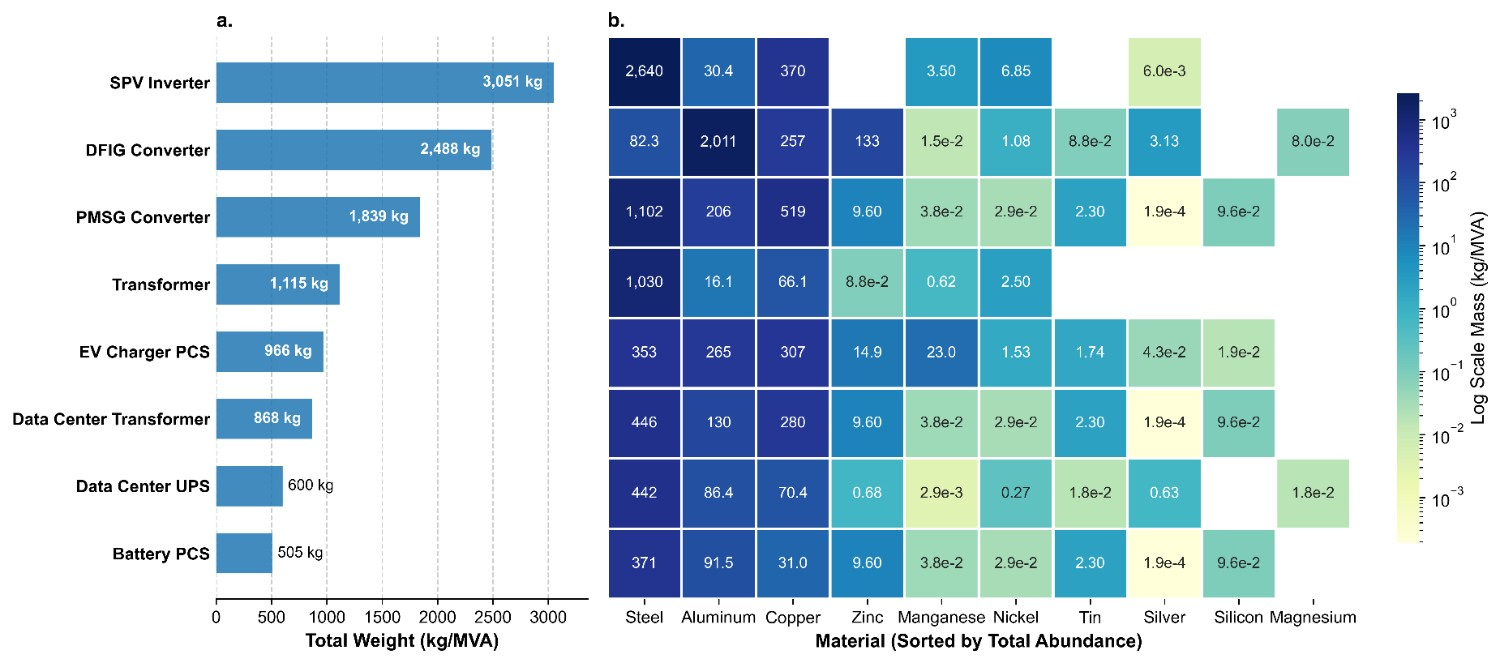
Figure 3: BOM profiles for eight GSE types; log-scale reveals intensity diversity and specialty material dependencies.
Supply Chain Analysis and Material Sourcing
MRSUT-based tracing demonstrates:
- Bulk materials (steel, aluminum): Remain predominantly sourced domestically within the U.S., but copper import reliance increases to ~40% by 2030, rendering the grid susceptible to non-U.S. supply interruptions.
- Specialty materials (nickel, manganese, zinc, silver): Exhibited much higher import dependence, with supply clustered in Canada, Mexico, Russia, and other regions for zinc/silver, and widely distributed for manganese/nickel.
Total material requirements for GSE manufacturing are projected to increase across all categories. Import sensitivity and regional concentration heighten vulnerability, especially under trade-disruption scenarios (Figure 4).
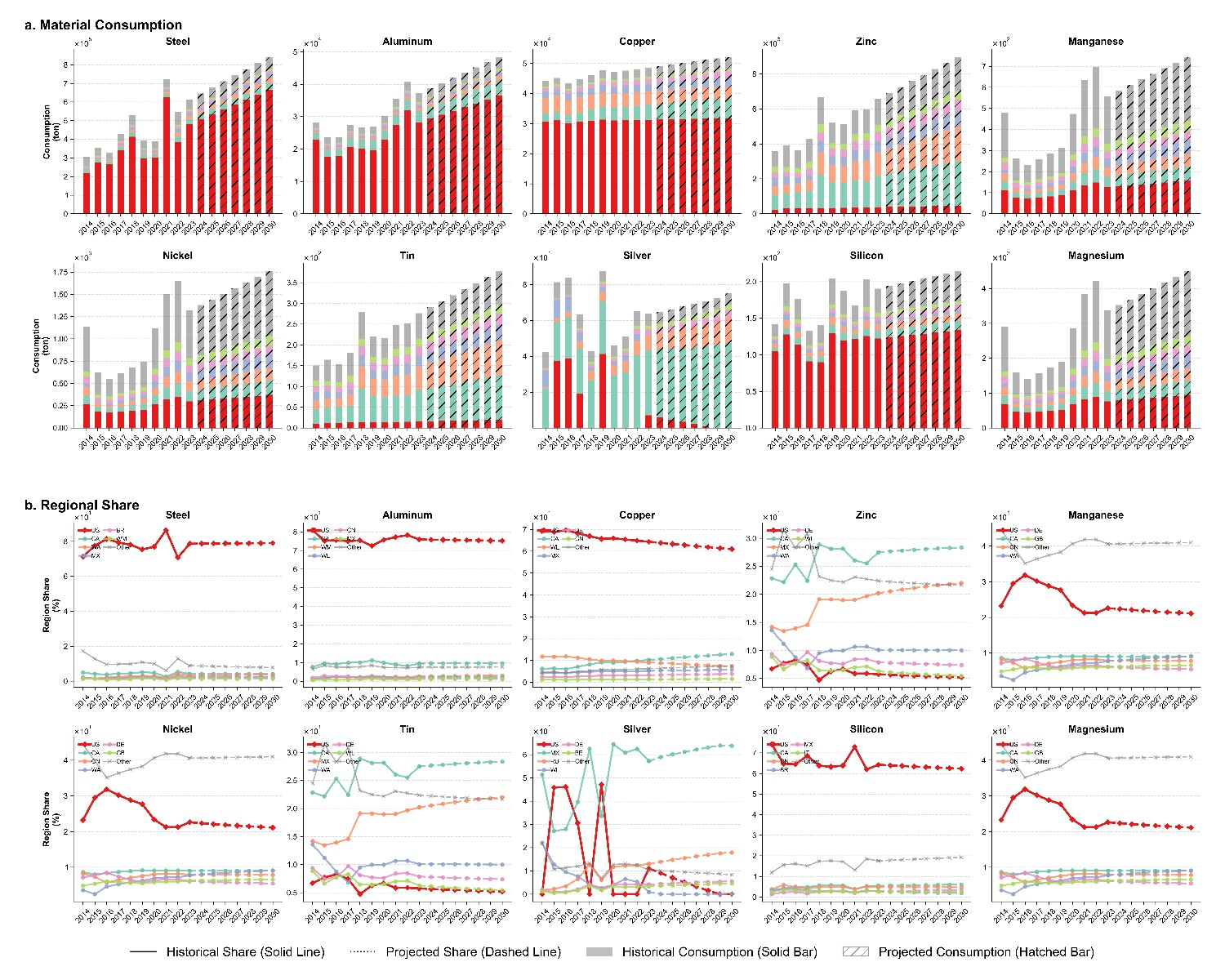
Figure 4: Temporal evolution of material consumption for GSE production and regional supply shares; copper import concentration rises precipitously.
Scenario Analysis: Unmet Demand and Bottleneck Evolution
Embedding material-constrained GSE supply in expansion modeling yields:
- Baseline scenario (optimistic lifetimes): Aggregate GSE demand is fully met only through 2026. By 2030, unmet GSE demand reaches 120.3 GVA (16%) in the baseline and 269.6 GVA (28.5%) in the high-growth scenario. Shortages manifest first in non-transformer supply-side electronics (PMSG converters, SPV inverters) and load-side GSE (data center UPS, EV charger PCS), with transformer shortages emerging only under sustained high growth or pessimistic lifetime assumptions.
- Material Bottlenecks: Copper becomes the first fully binding constraint from 2027 onward. Steel and nickel approach saturation by 2030, especially under high-growth or disruption conditions. Specialty material constraints are latent but may intensify if bulk material availability is alleviated.
- Trade Disruption Sensitivity: Trade restrictions amplify transformer shortages disproportionately, increasing aggregate unmet demand by 73.0 GVA and transformer gap by 77.4 GVA in 2030. Copper, nickel, and manganese binding thresholds are further exacerbated (Figure 6).
- Grid-Enhancing Technologies (DTR): Operational upgrades like dynamic transformer rating alleviate transformer-specific bottlenecks by up to 10%, but are insufficient to address dominant GSE shortages in supply-side electronics and load-side power conditioning (Figure 7).
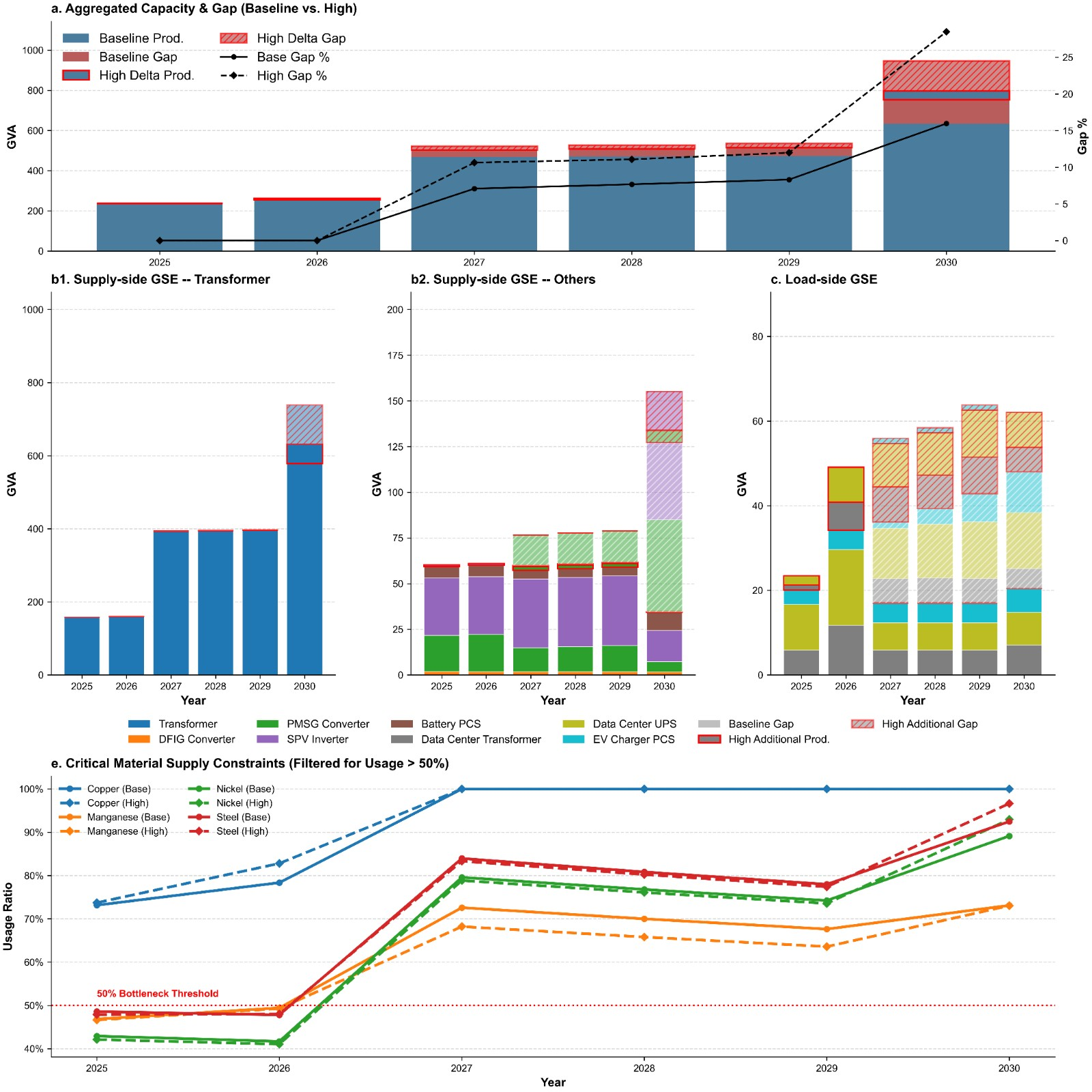
Figure 7: Scenario outcomes with optimistic lifetimes; DTR mitigates transformer gaps, but non-transformer shortages and copper bottleneck persist.
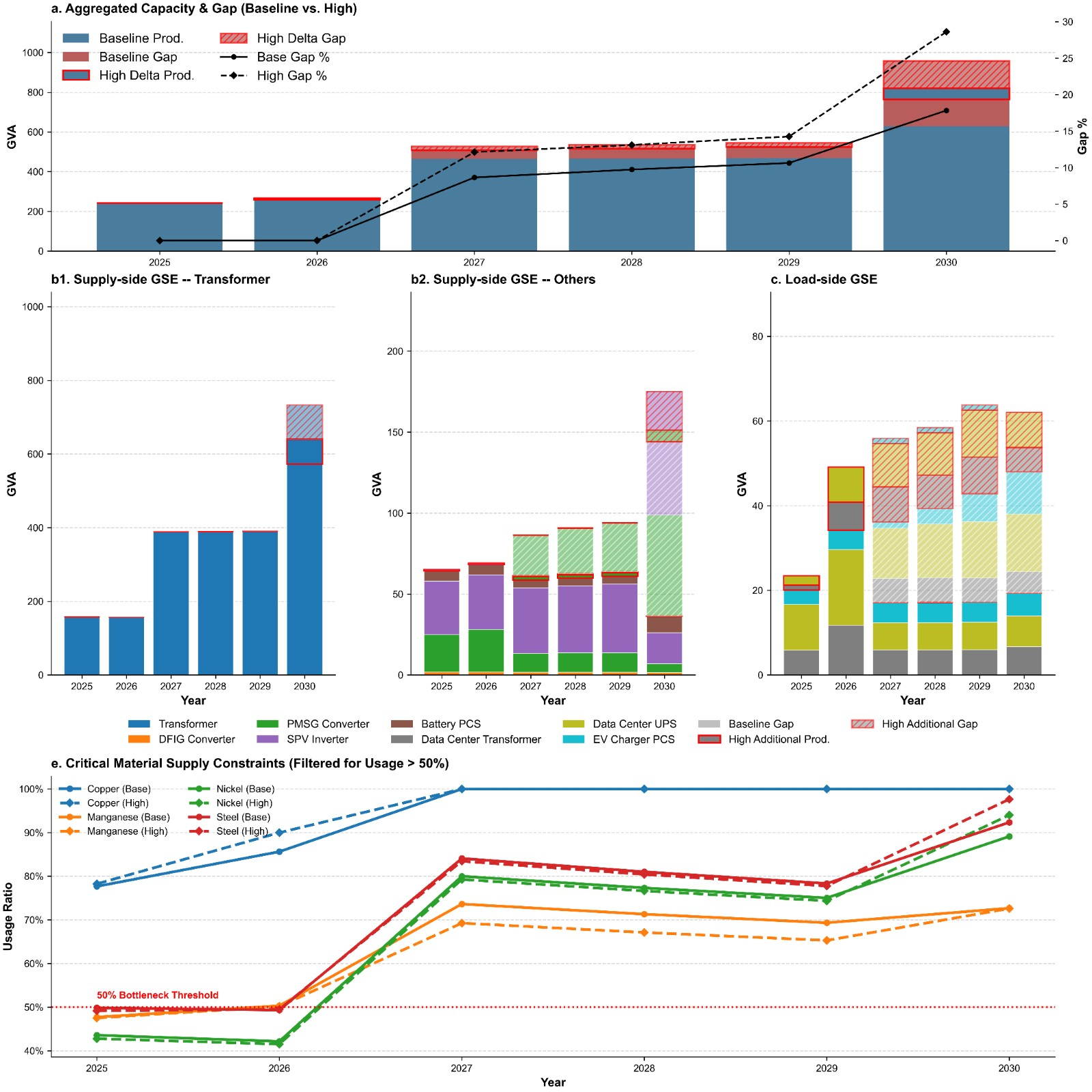
Figure 6: Scenario outcomes with pessimistic lifetimes; trade disruption disproportionately exacerbates transformer gaps, with copper, nickel, and manganese reaching near exhaustion.
Implications and Future Directions
Practical
The explicit modeling of GSE constraints necessitates a paradigm shift in infrastructure planning:
- Industrial Coordination and Modularity: Standardization and modularization of GSE can attenuate manufacturing throughput bottlenecks and facilitate substitution.
- Lifetime Extension: Extending service life of both transformer and power-electronics GSE may temporally relieve pressure on supply and facilitate smoother stock turnover.
- Procurement and Domestic Manufacturing: Domestic and allied manufacturing capacity, procurement coordination, and material exposure monitoring are critical to building supply chain resilience.
- Circularity and Refurbishment: Near-term impacts of recycling are limited due to metallurgical specialization and manufacturing bottlenecks; efforts should focus on refurbishment, parts harvesting, and requalification of secondary components.
Theoretical
Explicit inclusion of material and equipment constraints in power system expansion frameworks transforms the planning problem into a joint optimization over deployment timing, replacement, manufacturability, and supply chain resilience. Planning under endogenous scarcity replaces cost or capacity-centric models, compelling the integration of industrial policy and grid expansion in both research and practice.
Future developments will require further granularity in modeling plant-level throughput, real-time adaptive procurement, substitution technologies for critical materials, and endogenous price responses.
Conclusion
This study robustly establishes that the pace of power system expansion is fundamentally constrained by the manufacturability, replacement timing, and upstream material availability of Grid-Supporting Equipment. Copper emerges as the primary bottleneck, with steel, nickel, and specialty materials forming tiered constraints. Operational interventions, while effective for transformers, are insufficient to mitigate broad-based GSE shortages, especially under high load growth and trade disruption. Effective grid modernization and electrification require explicit attention to GSE deliverability, supply chain exposure, and coordinated industrial resilience strategies (2604.18411).