- The paper introduces TopoSim, a unified framework that integrates network topology into LLM-driven social simulation for efficient and realistic agent dynamics.
- It employs topology-induced update coordination to group structurally similar agents, reducing LLM token usage by up to 91.7% while maintaining key social metrics.
- Role differentiation using Personalized PageRank prioritizes influence among agents, achieving over 90% trajectory similarity to real-world opinion shifts.
Topology-Aware LLM-Driven Social Simulation: Efficient and Realistic Agent Dynamics
Introduction
The manuscript "Topology-Aware LLM-Driven Social Simulation: A Unified Framework for Efficient and Realistic Agent Dynamics" (2604.18011) introduces TopoSim, a framework that systematically integrates graph-theoretic structure into LLM-powered social simulations. Unlike conventional methods, which treat social networks as fixed scaffolds for textual interaction, TopoSim makes network topology intrinsic to agent update processes. The methodology facilitates both computational efficiency and augmented fidelity of emergent social phenomena, supporting simulations at scales previously unattainable for LLM-based models.
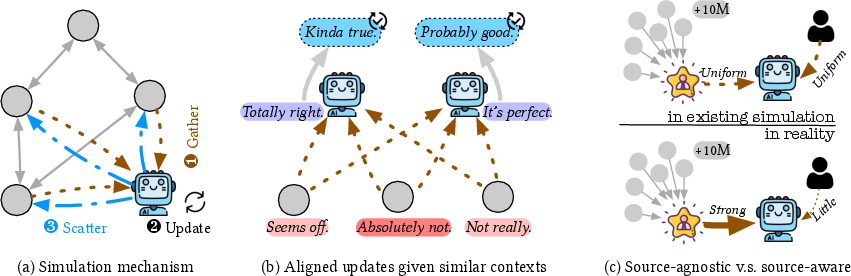
Figure 1: Agent behaviors and interaction patterns are coupled with network structure.
Framework Overview
TopoSim is instantiated through two core modules: topology-induced update coordination and topology-aware role differentiation. The update coordination component identifies agents with analogous structural positions and similar local contexts, consolidating them into units that share LLM inference. This significantly reduces redundant computation, as is evident in observed agent opinion trajectories that converge for structurally similar vertices.
Role differentiation operationalizes heterogeneous influence by leveraging Personalized PageRank (PPR) scores computed on the network, aligning agent update sensitivity with their topological prominence. This approach introduces architectural asymmetry into message aggregation, counteracting the uniform influence paradigm common in earlier work.
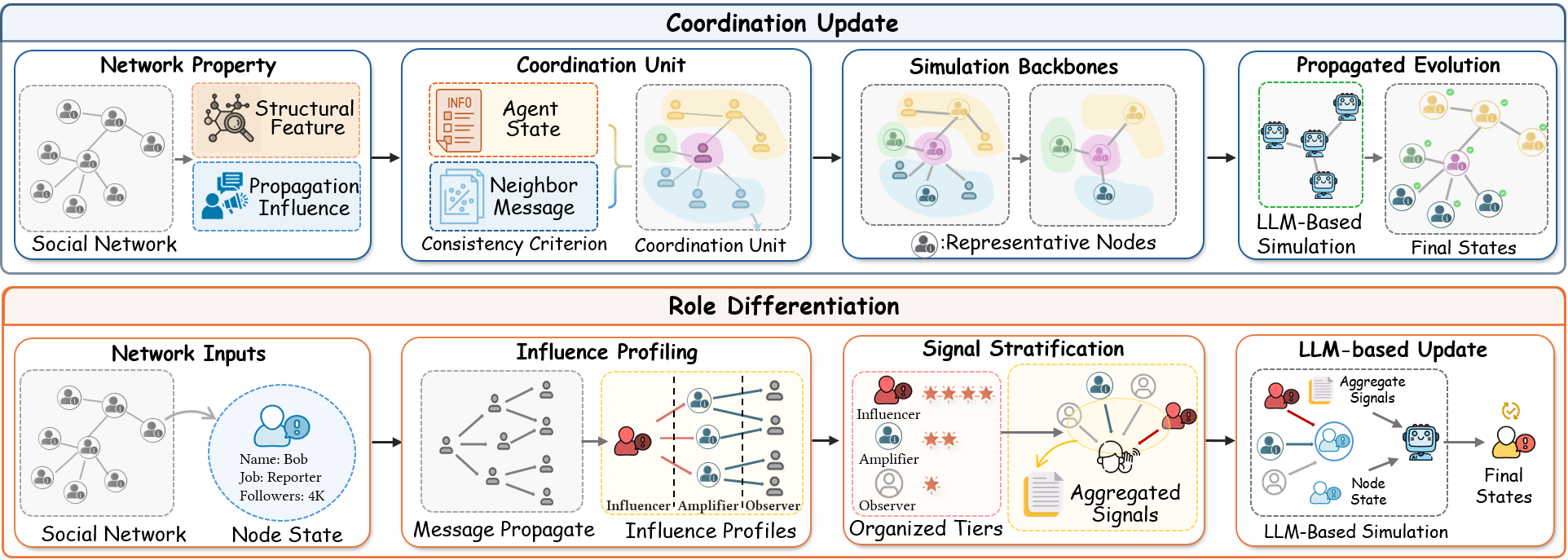
Figure 2: Coordinated LLM updates (top) and emergent role differentiation (bottom) in TopoSim.
Topology-Induced Update Coordination
Simulations in social systems typically exhibit redundancy across structurally equivalent agents—a phenomenon TopoSim rigorously quantifies. By embedding nodes with methods such as struc2vec, candidate groups are constructed based on cosine similarity in the embedding space, filtered further by alignment of agent states and neighborhood opinion distributions (measured via Jensen–Shannon divergence and Euclidean distance, respectively). The resultant consistency score κij enables flexible unit formation with a controlled trade-off between cost savings and approximation fidelity.
Simulation proceeds at the unit level: a single LLM prompt is constructed from the context and states of a representative agent, then shared across all unit members. This structure-aware inference backbone not only maintains macro-level dynamical indicators but also allows the simulator to scale efficiently.
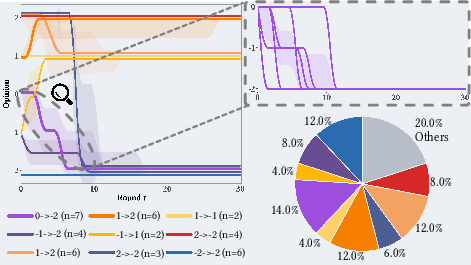
Figure 3: Consistency analysis of opinion update trajectories in ECS-50 simulation.
Role Differentiation and Asymmetric Influence
To emulate asymmetric influence, TopoSim employs PPR as an endogenous, topology-grounded weighting for message sources. Neighbor messages are binned into prioritized groups based on their PPR-derived importance for each target agent, and the LLM prompt is augmented with explicit prioritization cues rather than raw weights. This mechanism results in emergent heterogeneous roles—central agents exert greater influence while peripheral agents are less impactful—thereby mirroring empirically observed social topology effects.
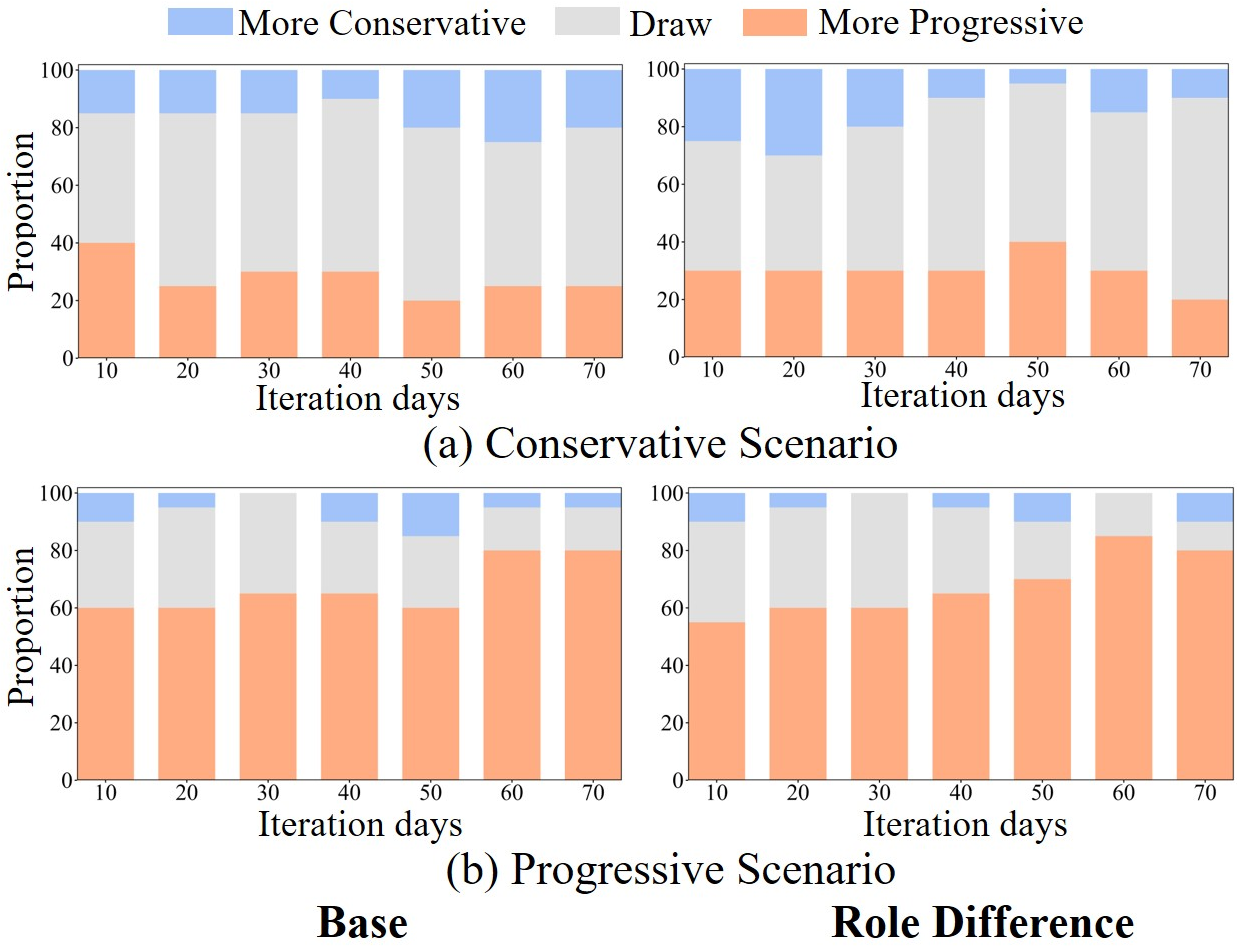
Figure 4: Topology-aware role differentiation on OASIS.
Experimental Results
Efficiency and Fidelity
TopoSim is benchmarked across EchoChamberSim (ECS), OASIS, and FDE-LLM frameworks with both synthetic and real-world datasets. For ECS (50–5000 nodes), OASIS (196 nodes), and FDE-LLM (206 nodes), TopoSim attains up to 91.7% reduction in LLM token usage compared to full-agent baselines, with only minor loss (under 0.2) in polarization and agreement metrics at all scales.
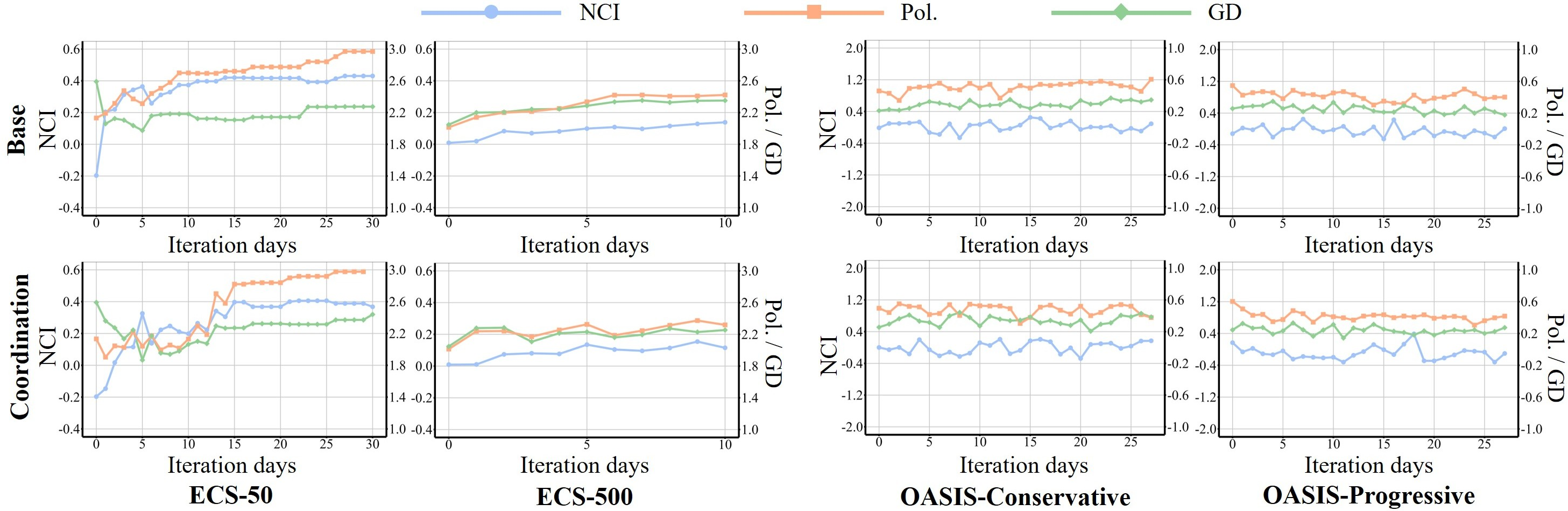
Figure 5: Impact of Update Coordination on Social Dynamics Across ECS and OASIS.
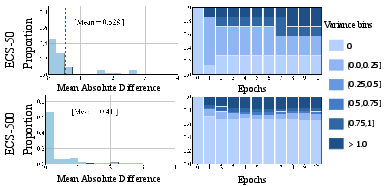
Figure 6: Node-level consistency diagnostics on ECS.
Realism of Social Dynamics
Role differentiation drives the simulator to more faithfully reproduce nuanced opinion shifts—especially notable on datasets reflecting real-world temporal changes. On FDE-LLM (Weibo), mean opinion trajectories generated by role-differentiated TopoSim maintain >90% trajectory similarity to ground truth across extended simulation periods. Standard LLM-based or naive coordinated models fail to sustain such realism, diverging significantly in later epochs.
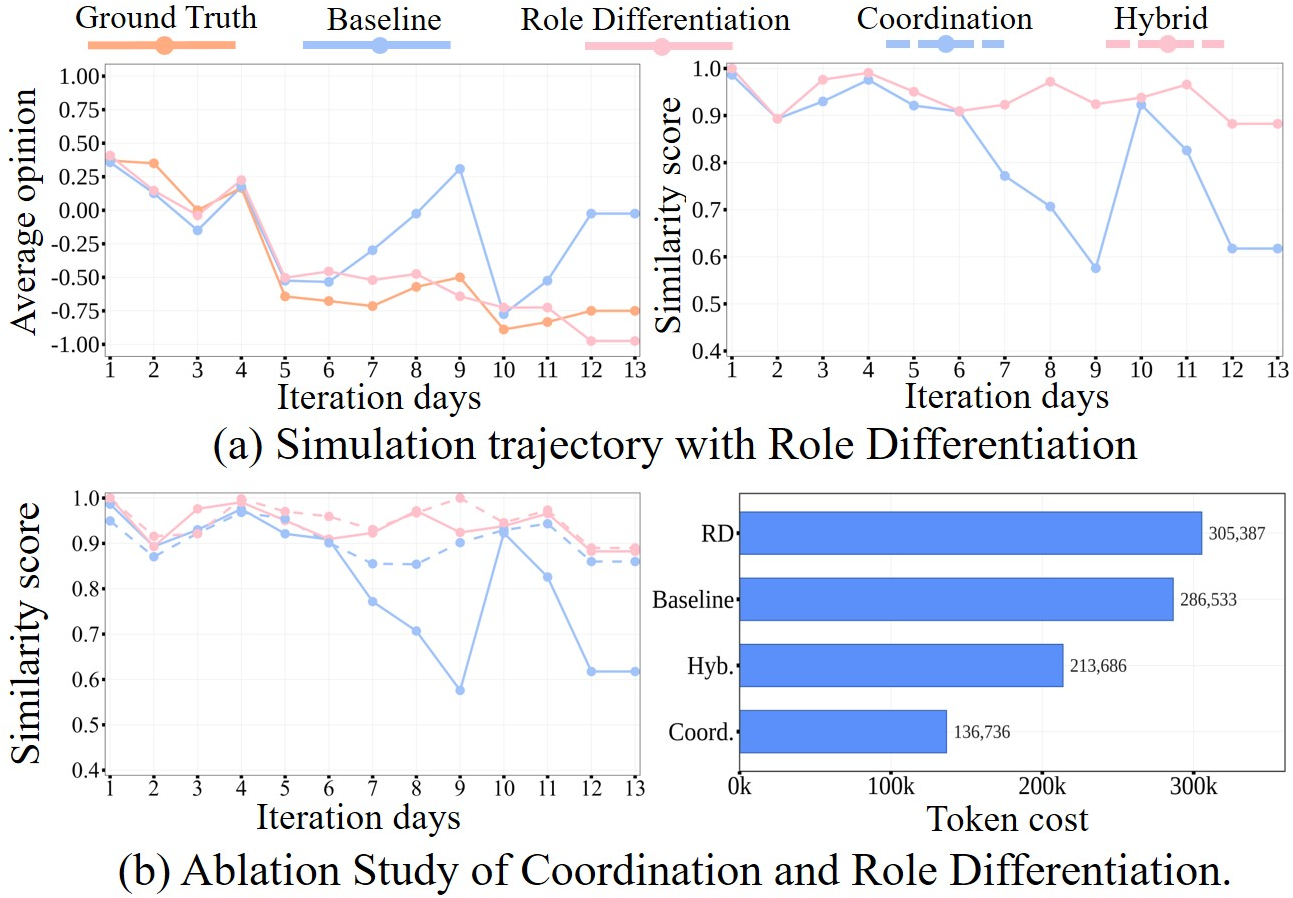
Figure 7: Role Differentiation Effect and Ablation Study on Real-world dataet.
Robustness and Scalability
TopoSim’s core mechanisms are invariant across different LLM backends (gpt-4o-mini, Qwen-Plus, DeepSeek-V3.2), as demonstrated by near-identical macro-level metric dynamics in parallel runs. The architecture supports simulation on graphs of up to 5000 nodes with stable fidelity–cost trade-off, confirming that its efficiency gains scale sublinearly with graph expansion.
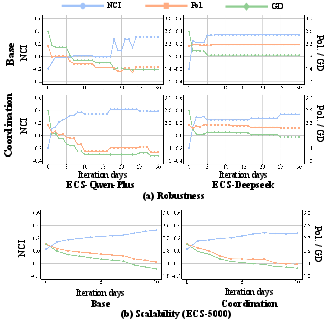
Figure 8: Cross-LLM robustness and scalability on ECS.
Theoretical Analysis
An analysis based on Lipschitz continuity of the LLM-driven transition operator bounds the approximation error introduced by coordinated updates: for units with strong alignment in state and neighbor distributions, the mismatch in macro-behaviors is proportional to this within-unit heterogeneity, remaining controlled as units are made sufficiently tight. This establishes a formal basis for the empirically observed stability-efficiency trade-off.
Implications and Future Directions
This work operationalizes the principle—long established in classical network science—that macro-social dynamics are downstream of latent topological constraints and influence pathways. By making these constraints explicit at simulation time, TopoSim closes the gap between phenomenological agent-based models and network-informed, high-fidelity population simulations. The demonstrated token efficiency enables exploration of larger-scale phenomena without nonlinear computational cost, which is crucial for investigating the emergence of complex social patterns (polarization, hierarchy, cascades) at realistic population sizes.
An immediate line of extension is to support dynamic, evolving networks and to endogenize edge formation and dissolution, allowing simulation of socio-structural coevolution. Additionally, integrating richer structural signals (e.g., multilayer, signed, or temporal networks) would further enhance realism and the range of achievable social phenomena.
Conclusion
TopoSim introduces a provable, efficient, and realistic paradigm for LLM-powered social simulation by integrating topology into both update and influence dynamics. The framework’s mechanisms unlock unprecedented simulation efficiency and structural fidelity, facilitating investigation of emergent social phenomena at previously inaccessible scales. The results substantiate a foundational advance toward uniting graph theory, agent-based models, and language-model-driven reasoning within a single, scalable framework (2604.18011).

