- The paper presents a novel extension of hidden zeros and 2-split properties from tree-level to loop-level Feynman integrands in the Tr(φ³) model.
- It employs a diagrammatic shuffle factorization method that leverages kinematic orthogonality to achieve exact factorization of amplitudes.
- The approach offers new computational tools with the potential to generalize to related theories such as NLSM, YM, and GR.
Hidden Zeros and 2-Split Properties of Loop-Level Feynman Integrands in Tr(ϕ3) Model
Introduction and Motivation
Recent advances in scattering amplitude theory have revealed novel structural properties at tree level, notably hidden zeros and $2$-split behaviors, in models such as Tr(ϕ3), NLSM, YM, and GR. Hidden zeros are loci in kinematic space where the amplitude vanishes identically under specific conditions, while $2$-split refers to the exact factorization of an amplitude into products of lower-point off-shell currents, without the necessity of pole residues. These phenomena signal refined constraints beyond locality and unitarity, and have been linked to geometric underpinnings in S-matrix theory. The present paper extends these properties to loop-level Feynman integrands in Tr(ϕ3), utilizing diagrammatic methods and shuffle factorization—a mechanism that relies on local vertex structure and the summation over shuffle permutations.
Shuffle Factorization Mechanism at Tree Level
The core of the analysis is the Shuffle Factorization Along a Specific Line (SFASL) property. The tree-level Tr(ϕ3) amplitude is governed by cubic vertices, and the propagation along chosen lines admits a factorization when summing over ordered shuffles of A-lines and B-lines—defined by prescribed kinematic orthogonality:
ka⋅kb=0∀a∈A,b∈B
Under this, the summation over shuffle permutations of propagators along a fixed line leads to a product structure, decoupling A and $2$0:
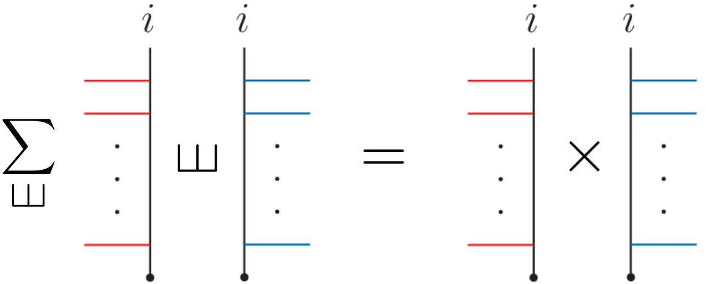
Figure 1: Factorization along the line $2$1 when summing over shuffle permutations; red and blue lines denote $2$2 and $2$3 components.
This SFASL is recursively established and is insensitive to the internal/external nature of the lines or their attachments, reflecting true locality of the mechanism.
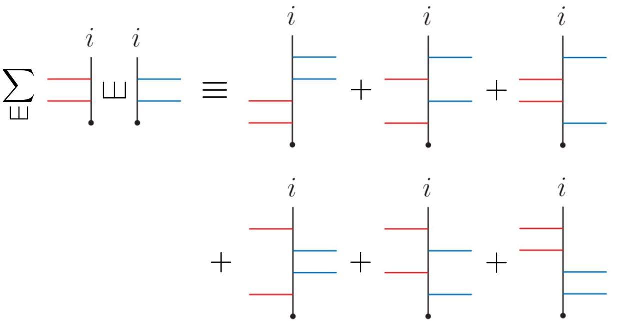
Figure 2: The meaning of summing over shuffle permutations—preserving relative orderings of $2$4 and $2$5 components.
Explicit examples demonstrate this property. For instance, when only two lines are considered, the shuffle sum collapses to a product of related propagators:

Figure 3: Simple shuffle factorization for two lines: $2$6.
Further generalizations confirm the result for larger groupings, under similar constraints:

Figure 4: Recursive extension of shuffle factorization for multiple $2$7-lines, establishing the decoupling.
Hidden Zeros and Exact $2$8-Split at Tree Level
Given the SFASL, hidden zeros manifest as total amplitude vanishing when external sets satisfy the mutual orthogonality condition. Each diagram has a partitioning between $2$9 and Tr(ϕ3)0 lines, and after summing over all possible divisions, the amplitude becomes proportional to an on-shell factor, enforcing vanishing:
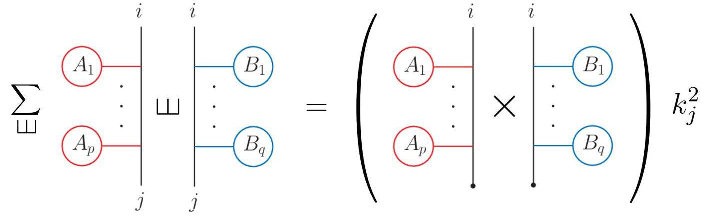
Figure 5: Diagrammatic interpretation of hidden zero: sum factorizes as Tr(ϕ3)1 times decoupled products and vanishes for on-shell Tr(ϕ3)2.
For Tr(ϕ3)3-split, relaxing the zero condition by removing one leg from Tr(ϕ3)4 yields an amplitude that factorizes into products of amputated Berends-Giele currents, each built from the remaining Tr(ϕ3)5 and Tr(ϕ3)6 subsets:
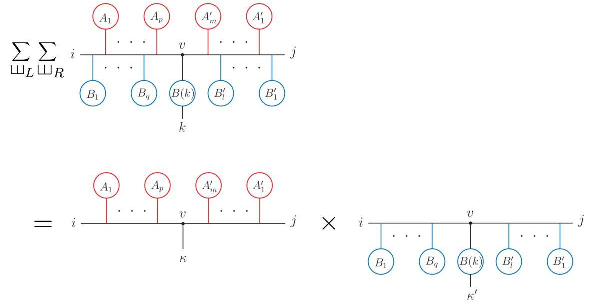
Figure 6: Diagrammatic interpretation for Tr(ϕ3)7-split involving two independent shuffle permutations.
Loop-Level Generalization: Tr(ϕ3)8-Loop Analysis
The paper shows that SFASL extends naturally to 1-loop Feynman integrands, provided the loop momentum is chosen from the Tr(ϕ3)9-side in the diagram. The propagators on loops attached to the line $2$0 become $2$1-lines under the kinematic constraint $2$2.
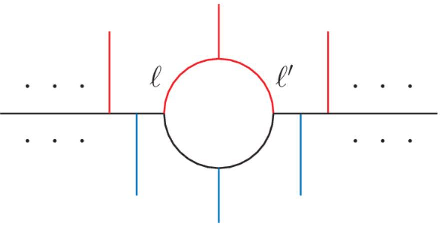
Figure 7: Convention for loop momentum—only $2$3-side momenta are valid choices for maintaining the kinematics.
The shuffle factorization persists at 1-loop, now with contributions from new loop-dependent factors; the locality ensures independence from $2$4.
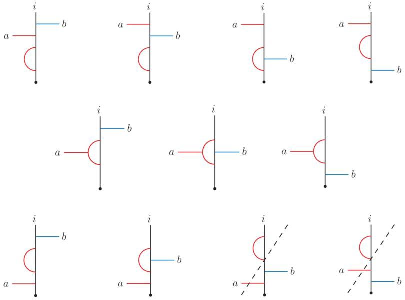
Figure 8: Effective diagrams at $2$5-loop, organizing shuffle permutations and loop attachments.
The diagrammatic treatment slices $2$6-side contributions, applies SFASL, and reattaches, yielding factorizations even with loop entanglement.

Figure 9: Processing the first line of Figure 8 by cutting, factorizing via SFASL, and reattaching.
The analysis extends to cases with more intricate loop structures, always discarding diagrams corresponding to scaleless integrals for physical consistency.

Figure 10: Treatment for the second line in Figure 8, demonstrating factorization with more complex loop momenta.
Cases with massless bubble configurations are systematically handled by endpoint redefinition and subsequent factorization:

Figure 11: Treatment for third line in Figure 8, handling incomplete shuffle sets.
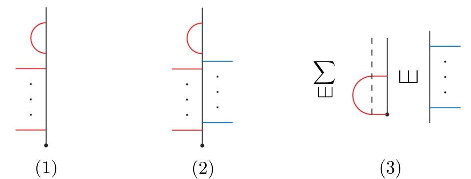
Figure 12: General procedure for managing massless bubbles and scaleless diagrams.
Hidden Zeros and $2$7-Split at Loop-Level
Imposing the loop-level kinematic constraints, the amplitudes vanish identically—a direct generalization of the tree-level hidden zero. The $2$8-split structure at 1-loop is more intricate: the $2$9-point, Tr(ϕ3)0-loop integrand decomposes into two terms, each manifesting a Tr(ϕ3)1-split form, with loop contributions residing on different sides.
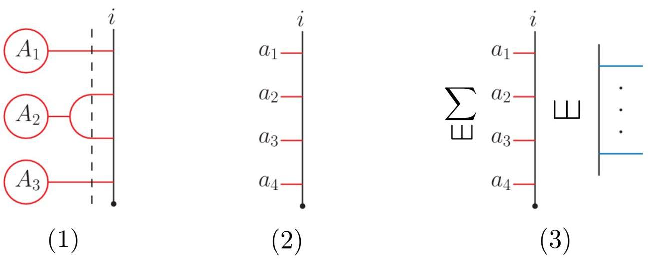
Figure 13: Example of Tr(ϕ3)2-side configuration for loop attachments.
This decomposition survives at arbitrary loop order, yielding Tr(ϕ3)3 terms for an Tr(ϕ3)4-loop integrand, each reflecting a Tr(ϕ3)5-split structure; the loop attachments and replacements are organized via the number of loops on Tr(ϕ3)6 or Tr(ϕ3)7 sides. The precise Tr(ϕ3)8-split formulae generalize the tree-level case and establish a rigorous hierarchy of decoupled structures.
Higher-Loop Extension and Structural Features
Multi-loop generalizations are direct by the same SFASL, extending the kinematic conditions to all loop momenta. When loops are independent (not sharing propagators), the arguments apply without modification; entangled loops, such as sharing a propagator or forming nonplanar structures, still admit factorization due to the local vertex manipulation.
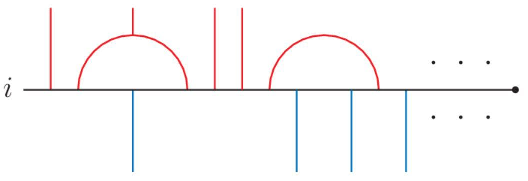
Figure 14: Illustration of independent loops along Tr(ϕ3)9.

Figure 15: Two-loop entangled case via shared propagator—application of SFASL.

Figure 16: Nonplanar three-loop scenario, demonstrating robustness of factorization.
Scaleless contributions at higher loops are discarded as in the 1-loop case. The multi-loop Tr(ϕ3)0-split formula expresses the full Tr(ϕ3)1-loop integrand as a sum of Tr(ϕ3)2 terms, each displaying the split structure and reflecting possible loop distributions between subsets.

Figure 17: Two-loop scaleless terms and endpoint redefinition for complete factorization.
Implications and Prospects
The establishment of hidden zeros and Tr(ϕ3)3-split for loop-level integrands in Tr(ϕ3)4 carries several theoretical implications. First, the simplicity and locality of the kinematic conditions point to a universal combinatorial-geometric structure in the S-matrix, reinforcing the insights from associahedron and CHY formalisms. Second, the Tr(ϕ3)5-split formulae provide new computational tools for amplitude bootstrap strategies at loop level, potentially simplifying the construction of all-loop integrands.
The generality of the SFASL mechanism implies that similar techniques may apply to NLSM, YM, GR, and related models, with suitable generalizations to their vertex structure and kinematic spaces. The local diagrammatic treatment opens prospects for connecting to global geometric approaches (e.g., Amplituhedron, positive tropical Grassmannian), possibly clarifying the interplay of locality and surfaceology in amplitude theory.
The physical interpretation of loop-containing split terms remains an open problem—these objects differ from standard integrands due to off-shell external legs and omitted diagrams (e.g., missing bubble structures). Their relevance to the full S-matrix and unitarity awaits further exploration.
Conclusion
Via a local Feynman-diagram method based on SFASL, hidden zeros and Tr(ϕ3)6-split properties are extended from tree-level to loop-level Feynman integrands in Tr(ϕ3)7. Loop-level conditions and factorization procedures are demonstrated to be both simple and a natural generalization of the tree-level case, yielding explicit Tr(ϕ3)8-term Tr(ϕ3)9-split formulae for A0-loop integrands. The approach offers new pathways for amplitude construction, model generalization, and geometric interpretation in quantum field theory. Further investigation of the physical significance of loop-containing split terms and extension to broader classes of models is encouraged.